


22, Apr 2025
Barista Coffee Unveils ‘Mango’s Got Talent’ to Celebrate Summer Across India
New Delhi, 22nd April 2025 – Barista Coffee Company, India’s second-largest coffee chain with over 465+ outlets across 160+ cities, is bringing the ultimate summer indulgence to its patrons with the launch of its vibrant Mango Festival – “Mango’s Got Talent.”

Mango holds a special place in the hearts of Indians. The king of fruits is celebrated for its rich, indulgent flavor and limited seasonal availability. It is one of the most eagerly awaited fruits of the year carrying deep cultural and emotional significance—evoking memories of carefree summer days, childhood treats, and the vibrant buzz of local markets.
In a tribute to this iconic fruit, Barista has launched a specially curated mango-themed celebration, blending nostalgia with innovation to offer guests a refreshing and memorable seasonal experience.
In celebration of the king of fruits in all its splendor, this carefully planned festival offers a cool selection of drinks and treats with mango flavors that will cool you off and make you feel happier. The Mango Cream Cheese Pastry, Mango Affair, and Mango Bubble Rush are the three thrilling star products that are highlighted.
“Mango’s Got Talent is our way of celebrating the joy of summer with a fruit that is loved by all. We wanted to create something that not only reflects the season but also delights our customers with every visit. This festival is a perfect blend of nostalgia, creativity, and indulgence,” Rajat Agrawal, CEO of Barista Coffee, expressed his thoughts about the launch.
The Mango’s Got Talent campaign, which combines innovation and flavor to provide consumers with a delectable respite from the heat, is curated to inspire joy, nostalgia and the distinct character of Indian summers. All Barista cafés are currently hosting the Mango’s Got Talent festival.
- 0
- By Team

22, Apr 2025
MAHLE: Bionics Boosts Air Conditioning Efficiency
MAHLE presents a pioneering bionic radial blower for automotive air conditioning systems that improves efficiency while significantly reducing noise development. The development, which has been specially designed for vehicles with challenging installation space, has been guided by an example from nature: The aerodynamic shape of the fan blades has been modeled after the fins of a penguin, which glide swiftly and quickly through the water. Thanks to this innovative design, the bionic fan is 4 decibels (dB) or 60 percent quieter in comparison to similar components. At the same time, it is around 15 percent more efficient as the motor requires less energy due to the optimized design. MAHLE is setting a new benchmark with this innovation. “The development of the new bionic radial blower underscores our comprehensive systems expertise in thermal management and benefits from the use of artificial intelligence,” said Jumana Al-Sibai, member of the MAHLE Group Management Board and responsible for the Thermal and Fluid Systems business unit. The bionic radial blower can be used in all passenger car classes as well as in light and heavy-duty commercial vehicles. The technology group is presenting the innovation to the public for the first time at the Auto Shanghai trade fair in China. The motor show is taking place from April 23 through May 2, 2025 at the National Exhibition and Convention Center (NECC) in Shanghai.
Modeled on nature and AI-supported design
Evolution has equipped the penguin with fins that allow it to glide through the water with minimal resistance and, therefore, ultrahigh efficiency. The fin shape served as a model in the optimization process of the impeller of our radial blower,” said Dr. Uli Christian Blessing, Vice President R&D Thermal and Fluid Systems at MAHLE. The Group has already used nature as a guide on several occasions in the past. The bionic cooling plate and bionic high-performance fan for electric vehicles enable the automotive supplier to improve efficiency considerably.
The most crucial factor in the rapid development process was a company-owned AI tool. “The application of artificial intelligence has been enormously useful in the optimization of the bionic radial blower. Our engineers guided the AI and provided it with data and information, enabling it to create more than 30 million virtual designs in a very short time,” explained Uli Blessing. “Internally, we are referring to this as ‘superhuman engineering’.” The MAHLE engineers were able to use this to work out the perfect shape and positioning of the fan blades and quickly produce prototypes.
Space-saving and efficient solution
The bionic radial blower sits in front of the evaporator and makes the design of the air conditioner symmetrical and narrow. This creates more space for other components, a crucial advantage especially in battery electric vehicles. This development by MAHLE therefore represents an innovative alternative to conventional fans.
MAHLE at Auto Shanghai 2025
Visitors to Auto Shanghai can see the new bionic radial blower for the first time at the MAHLE stand in Hall 1.2 of the National Exhibition and Convention Center in Shanghai. Also to be discovered are the bionic high-performance fan for particularly demanding fuel cell and battery electric vehicles, as well as the bionic battery cooling plate for electrified vehicles. At the center of the 300 m2 MAHLE stand is a technical demonstrator that provides a simple and clear explanation of the importance and the connection between the electric powertrain and thermal management system. Electrification, thermal management, and components for efficient, clean combustion engines are the three fields of the future that MAHLE is pursuing as part of its strategy MAHLE 2030+ for the future of mobility.
22, Apr 2025
World Earth Day Urges United Action for a Sustainable Future

By Mr. Praveen Kakulte, CEO, Powercon Group
“As we mark World Earth Day, we are reminded that the challenges we face are not just environmental, but deeply interconnected with the way we live and grow. The increasing demand for energy, food, and infrastructure is coming up against the limits of our planet’s resources, and the impacts of climate change are becoming ever more apparent. It’s clear that we need to rethink traditional growth models.
Renewable energy is central to this transition, but adopting it at scale is only part of the solution. We must also focus on improving efficiency, storage, and accessibility. Governments must take decisive action through forward-thinking policies, targeted incentives, and robust infrastructure investments to create an enabling environment for sustainable growth. Their leadership is critical in setting the pace of change and driving large-scale transformation. Currently, nearly 80% of the world’s energy still comes from fossil fuels; this underscores both the scale of change needed and the immense opportunity we have to accelerate the energy transition.
This year’s theme, ‘Our Power, Our Planet’, reinforces that sustainable change requires a shared commitment. When industries, governments, and communities come together with purpose and urgency, we can build a future where both people and the planet thrive.”
22, Apr 2025
CII and CAMS Unveil Report on B30 Locations at 18th Mutual Fund Summit

- Significant Growth in B30 AuM: B30 locations now contribute 18% of the industry’s total Assets under Management (AuM).
- Equity Asset Expansion: Equity assets in B30 cities have shown robust momentum, registering 46% growth, sustaining their share at 26.4%, in line with T30 markets.
- Investor Base Surge: B30 locations command a 58% share of the retail investor base, growing at a pace faster than T30 regions.
- SIP Revolution: B30 cities have outpaced T30 locations in new SIP registrations, recording a CAGR of 64% and increasing their SIP contribution share from 49% in FY’23 to 58% in FY’25.
- Gross Inflows Boom: FY’25 has seen B30 cities recording more than double the gross inflows into equity schemes compared to FY’23.
- Digital and Advisory Evolution: While Mutual Fund Distributors (MFDs) remain central to B30 growth, Registered Investment Advisors (RIAs) are making meaningful strides, powered by increasing digital adoption.
Speaking on the occasion, Mr Rishi Kumar Bagla, Chairman, CII Western Region said, “The report is a testament to the success of regulatory foresight and collaborative industry efforts. It’s encouraging to witness Bharat investing confidently, backed by access, awareness, and advisory.”Mr Anuj Kumar, Managing Director, CAMS, added, “This comprehensive report on the B30 locations provides invaluable insights into the untapped potential of these markets. The B30 universe with a collective equity AuM share in excess of 26% sums up the potential of the market. While B30 locations continue to grow on the back of MFDs, digital adoption has led to RIAs making noticeable inroads into these markets. These insights will empower key stakeholders to effectively tap into the B30 markets, driving future growth and expanding financial access to a wider audience and make informed decisions.”
22, Apr 2025
MIT WPU Unveils Hydrogen and Biodiesel Innovations Ahead of Earth Day
Mumbai/Pune: MIT World Peace University (MITWPU) has made significant advancements in sustainable energy research, with two pioneering projects: a novel process for generating green hydrogen directly from sugarcane juice and an innovative batch reactor system for biodiesel production using agro waste based heterogeneous catalysts. These developments underscore MITWPU’s commitment to India’s green energy transition and sustainable future. 
The university has developed a unique process to generate hydrogen from sugarcane juice using microorganisms, which also converts carbon dioxide into acetic acid, making it more sustainable. This research supports Government’s Green Hydrogen Mission and offers sugar industries an opportunity to produce hydrogen, reducing dependence on imported fossil fuels.
A patent has already been submitted for this technology. This project proposal has been submitted to the Ministry of Non-Conventional Energy (MNRE) for funding. The centre of excellence on green hydrogen has also been submitted to MNRE, Government of India.
Dr Bharat Kale, Emeritus Professor & Director of Material Science [COE]s said “The university’s bioprocess operates at room temperature using sugarcane juice, sea water, and wastewater, contributing to global efforts to reduce hydrogen costs to $1/kg. Unlike conventional water-splitting methods, this process generates valuable byproducts, ensuring zero discharge and making it a viable solution for India’s energy transition. We are seeking industry partners for lab-scale development and eventual technology transfer.”
The work on hydrogen storage is also in progress using Metallo-organic framework (MOF). The MOFs for hydrogen storage and CO2 captures has been focused intensely.
The university aims to support industries in scaling up the technology, which could be commercially viable within a year. The project is led by researchers Dr. Sagar Kanekar, Dr. Bharat Kale, Dr. Anand Kulkarni, Prof. Niraj Topare, Dr. Santosh Patil, Dr. Dev Thapa, Dr. Biswas and Dr. Ratnadip Joshi.
In addition, MITWPU has developed an operational efficient batch reactor system for sustainable biodiesel production using an agro-waste-based heterogeneous catalyst. This catalyst and system have been patented which has offered an environmentally friendly solution by eliminating waste generation and utilizing agricultural residues into affordable and efficient catalyst. The porous structure of the catalyst increases surface area, improving efficiency and give thermal stability during production.
Dr Kale added: “Biodiesel produced through this system serves as an economical alternative to fossil fuels. The patent covers both the catalyst and process design, ensuring efficiency in production. While industry partnerships are still in discussion, commercialization is expected within six months of technology transfer. Large-scale biodiesel production will rely on industry adoption, supported by government policies. The process contributes to India’s efforts to reduce greenhouse gas emissions and transition to renewable energy, particularly in states like Punjab and Haryana, where biomass burning is a concern.”
These projects are spearheaded by Prof. Niraj Topare, Dr. Santosh Patil, and Dr. Bharat Kale. Both innovations highlight the sustainable energy solutions, offering viable alternatives to fossil fuels while supporting India’s green energy transition. The university continues to seek industry collaborations to accelerate the commercialization of these technologies.
21, Apr 2025
Essensai067 Opens Its Doors to a City-First Space for Joy, Culture, and Community
21st April 2025, Bengaluru – Essensai067, a culture and community-first destination, officially opened its doors in Whitefield on April 20, drawing thousands on its debut day. More than just a retail space, Essensai067 brings together food, fashion, art, music, and green living to offer Bangalore a new way to gather, slow down, and connect. Built in the heart of Kannamangala, it isn’t a mall. It’s a feeling — one rooted in joy, belonging, and everyday celebration.
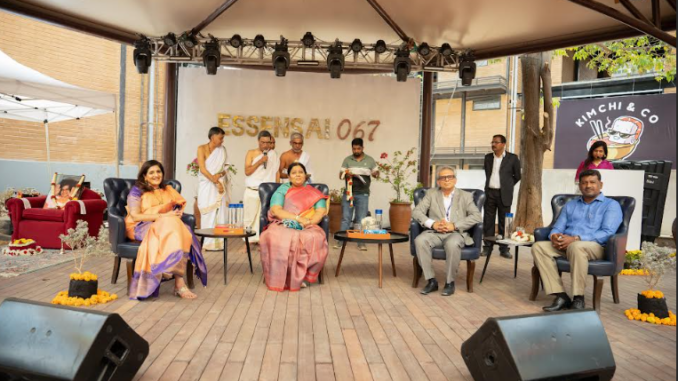
Spread over 5.16 acres, 50% of which was open and green space, Essensai067 became a welcome respite from an urban life that tends to rush. Guests entered through a water-inspired cave entrance and stepped into a space full of life. There was a pet-friendly plaza, a next-generation adventure and pet park, peaceful wellness zones, and a natural amphitheatre that came alive on launch night.
The brand name “Essensai” was a blend of “Essence” and “Sai”, paying homage to divine energy. The number “067” was steeped in local significance, derived from the pincode of the area in its earliest days. It rooted this visionary initiative in the heart of Whitefield and paid tribute to the people who inhabit and flourish there. It wasn’t so much about creating something new; it was about celebrating what was already there, taking it up, and making it remarkable.
With more than 1.5 lakh sq. ft. of leasable space and almost 20 brands going live in the first phase, Essensai067 had already started creating ripples. International behemoths such as IKEA co-existed with hyper-local gems such as Puppawcino and Barnhouse, creating a stunningly diverse retail and dining experience. Seventy percent of the space was already leased, evidence of the faith that brands had in this game-changing format.
But the real power of Essensai067 went far beyond profit. Its true impact lay in influence and intention. The initiative would create 750 direct employment opportunities and over 3,000 indirect jobs. And as Whitefield continued to develop as Asia’s startup hub, Essensai067 was not just positioning itself as a cultural hub but an economic driver as well. With close to 9,650 daily visitors anticipated, Essensai067 was not just a destination, it was becoming a part of Whitefield’s everyday beat.
On April 20, Essensai067 came alive under the stars with an unforgettable launch event. The legendary Usha Uthup took the stage at the amphitheatre, infusing the space with the same spirit it was built on — joy, unity, and rhythm. The performance was preceded by an intimate dinner at Barnhouse, the in-house culinary treasure, where invitees, business partners, and community leaders assembled to celebrate a new dawn. This followed on the heels of a heavenly debut performance by flute legend Pt. Hariprasad Chaurasia, who had previously visited the space earlier this year, establishing the stage for what lay ahead.
And that was just the start. With more than 300 handpicked events scheduled annually — ranging from pop-up bazaars and art exhibitions to wellness fairs and pop-up concerts — Essensai067 was going to be a thumping cultural hub of Bangalore. A living, evolving canvas for the best of what our communities have to offer.
“Essensai067 was never going to be just another development,” explained Haresh M Mirpuri, Essensai067 founder. “It’s a place that reflects the soul of Whitefield and gives back to the people who call it home and live here. Today, we didn’t just launch a new venue. We launched a space for joy, connection, and belonging.”
Architecturally, Essensai067 stood out as a benchmark in thoughtful design. Essensai067 was very likely the greenest shopping place ever constructed in India. Climate-sensitive building design, over 750kW of power through solar energy generation, net zero water discharge and 100% water reuse had it serving as a case study in environmental-intelligent growth. Recycled soil blocks from onsite excavation cut back on the carbon footprint, and more than 100 of the 120 existing trees onsite were tenderly relocated.
The true essence of Essensai067 lies in its people — the dreamers, creators, and community it was built for. It is a home for small businesses and local artists, offering flexible spaces, rotating pop-ups, and public art that give creators something rare; a real stage, with a real audience, in a space that values their voice.
Essensai067 is more than a destination. It is a statement — that cities deserve spaces that inspire, include, and reflect who we are.
Opening to the public on 27th April 2025, a new chapter begins for Bengaluru.
17, Apr 2025
Delhi Gets Project Approvals Worth INR 4,000 Crore, announces Smt. Rekha Gupta, Hon’ble Chief Minister of Delhi at PHDCCI’s 120 years celebration
PHDCCI is the foremost Chamber of Commerce which is honoured to have Smt. Rekha Gupta, address its members, post her assuming the office as the Hon’ble Chief Minister of Delhi. The Hon’ble CM shared that she has approved projects worth ₹4,000 crore for transformation of the National capital and she aims to set it as an example for the globe by transforming Delhi & make it an epitome of development , while speaking PHDCCI’s event celebrating 120 years of its legacy at PHD House, New Delhi.

On PHDCCI’s 120-year-old legacy, she appreciated the Chamber and said, that this is an institution that has consistently contributed through dialogue and action on how to take India’s industries forward. She urged the members to come forward and contribute towards Delhi’s development as that gives each one a golden chance to serve the Nation.
Hon’ble Chief Minister further emphasized that government support, policy, and infrastructure are the three key pillars for the growth of industry. And if we work on these areas, our industries can grow significantly. I’m hopeful that together we can make Delhi a world class city where any businessman can thrive, with real ease of doing business and strong government support. This will help in revenue and employment generation.
She also expressed her vision for revamping ISBTs, modernizing hospitals, and reforming the education system and discussed that we must plan not just for today, but for the future. The population density here is high, so we need to develop technologies that can help resolve these challenges.
She assured that the Delhi Government will act as a strong facilitator in making Delhi more beautiful and VIksit.
Shri Hemant Jain, President, PHDCCI informed that PHDCCI From 1905 has played a role in shaping India’s industrial policies, to the post-liberalization boom of the 1990s, where it facilitated global integration, it has been at the forefront of India’s economic narrative. It has adapted, innovated, and grown, from representing traditional industries to championing the cause of MSMEs, Startups, and emerging sectors like digital commerce, green energy, and advanced manufacturing
Shri Rajeev Juneja, Sr. Vice President, PHDCCI congratulated the Chief Minister on her new role and thanked her for attending a PHDCCI event in this capacity for the first time. “Your presence today signifies a new chapter of collaboration between industry and the government. As we celebrate 120 years of our legacy, we look forward to working closely with your leadership to create a stronger industrial ecosystem in Delhi and contribute to the vision of a Viksit Bharat,” he added.
Dr Ranjeet Mehta, CEO & SG, PHDCCI, proposed the formal vote of thanks.
17, Apr 2025
HDFC Bank Parivartan covers 298 border villages under rural development initiatives
Hyderabad, April 17, 2025: HDFC Bank, India’s largest private sector bank, under its CSR arm Parivartan, has covered 298 border villages across the country under its rural development initiatives. These clusters of villages are located in border areas of Assam, Arunachal Pradesh, Bihar, Gujarat, Himachal Pradesh, J&K, Ladakh, Rajasthan, Sikkim, Uttar Pradesh, and Uttarakhand. The Bank plans to extend its reach to 150 additional border villages in the years to come. These initiatives are aligned with national development goals outlined in the Centre’s Border Area Development Programme and Vibrant Villages Programme.

Border area villages along the northern and northeastern Himalayan regions and the western desert stretches often grapple with unique challenges including difficult terrain, restricted access to essential services and economic vulnerabilities due to their remote locations. Parivartan has impacted the lives of approximately five lakh individuals in these areas through targeted need-based interventions.
The Bank implements two key types of projects in these areas:
1) Holistic Rural Development Programme (HRDP): This approach focuses on clusters of 15-20 contiguous villages over a span of 36-48 months. It integrates multiple aspects, including rural development, education, skill development, financial inclusion, health & hygiene, and natural resource management.
2) Focused Development Programme (FDP): This initiative targets specific areas of intervention, achieving concentrated impact in one sector.
HDFC Bank’s Parivartan initiative is committed to strengthening rural communities across border areas such as Lower Dibang Valley and Shi Yomi in Arunachal Pradesh; Baksa and Udalguri in Assam; Kishanganj, West Champaran and Madhubani in Bihar; Banaskantha, Kutch, and Patan in Gujarat; Ladakh; Chandel in Manipur; East Jaintia Hills in Meghalaya; Fazilka and Pathankot in Punjab; Barmer in Rajasthan; Gyalshing West and Pakyong in Sikkim; Pilibhit in Uttar Pradesh; and Chamoli in Uttarakhand.
Speaking about the initiative, Mr. Kaizad Bharucha, DMD, HDFC Bank said, “We are committed to creating meaningful impact in India’s border villages by providing access to technology-enabled education, improved agricultural productivity, renewable energy, and livelihood opportunities. By aligning with national development goals, we collaborate with local communities, NGOs, and government bodies to build stronger, self-reliant, and vibrant communities that contribute to India’s economic and social fabric.”
“A holistic approach to rural development is not merely desirable, but an absolute necessity, especially in border areas.” said Nusrat Pathan, Head – Corporate Social Responsibility at HDFC Bank. “We ensure that progress in one sector reinforces and amplifies positive outcomes in others, thereby maximising the impact of our interventions.”
14, Apr 2025
United Way Bengaluru Partners with Marvell to Drive Community Development in Bagepalli Taluk through ‘Rural Rising’ program
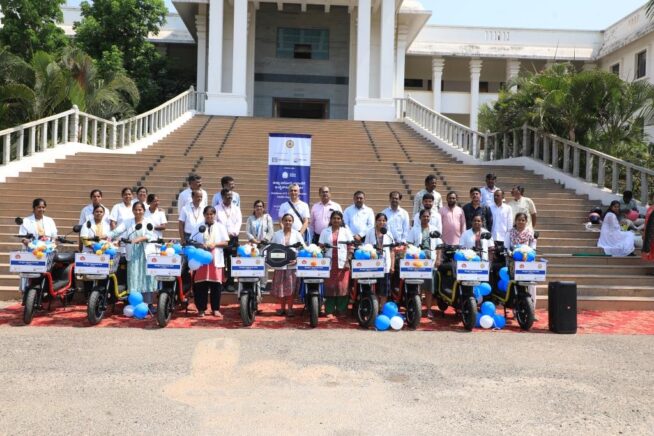
Bengaluru April 14, 2025: United Way Bengaluru (UWBe) collaborates with Marvell’s CSR support to implement ‘Rural Rising’, an integrated rural development program in the Bagepalli, Chikballapura district, Karnataka. The partnership is driven by a collective vision to uplift the communities with a commitment to enhancing education, health and sanitation, livelihood, and the environment.
The ‘Rural Rising’ program, now in its second year of implementation in Bagepalli has improved the quality of early child care and development services, supported school infrastructure, promoted drinking water, improved the health and sanitation standards and livelihood enhancement resources such as solar lights, and E-bikes to Public Health Centres (PHCs) to improve National Health Mission services. Distinguished delegates and community leaders graced the occasion, including Mr. Navin Bishnoi, Country Head, Ms. Bharathi Kanuj, CSR Head, Mr. Ganesh Karnatakam, Finance Controller and Mr. Anshuman Ray, Head -Human Resources from Marvell India, Venkata Sudhakar Namala, Sr. Vice President, United Way Bengaluru, representatives of Gram Panchayats, and the local community.
Under the program, several key interventions have been implemented to ensure quality education- 3 Anganwadi Centres (AWCs) have been constructed to create a safe and conducive environment for children (0-6 years), pregnant and lactating mothers, and adolescent girls. Additionally, a total of 17700 sanitary napkins have been distributed along with 8 incinerators installation in two years, toilet refurbishment has been undertaken at 6 government schools and 5 Water ROs of 50 LPH each have been installed in schools and 6 community RO units to ensure access to safe drinking water.
Further, recognizing the significance of clean energy, 428 solar streetlights are installed to promote sustainable energy practices across 3 Gram Panchayats. Rural Rising has also extended mobility support by providing 9 e-bikes to Public Health Centres (PHCs) and 1 basic life support ambulance vehicle to Taluka hospital, Bagepalli.
‘Our commitment to rural development is rooted in the belief that education, income stability, clean energy, and access to safe drinking water are the key pillars for transforming communities. Our partnership with United Way Bengaluru towards the ‘Rural Rising’ program is a testament to our commitment to driving sustainable change for rural communities and building a more self-sufficient future for the community’, said Navin Bishnoi, AVP and Country Manager, Marvell India .
‘A key feature of the Rural Rising flagship program lies in the ‘collaboration’. By working with local authorities and involving community members, the program ensures that local voices and needs are included in the development process. This approach helps identify key issues and priorities, creating an implementation plan that matches the community’s specific needs’ said Rajesh Krishnan, CEO, of United Way Bengaluru.
11, Apr 2025
Hack-O-Mania 25: A Groundbreaking 30-Hour Hackathon at NMIMS Chandigarh
Chandigarh, 8th April 2025 — The much-anticipated Hack-O-Mania 25, a dynamic 30-hour inter-university hackathon, successfully concluded on April 5, 2025, at the School ofTechnology Management and Engineering, NMIMS Chandigarh. The event brought together bright minds from top universities across India and provided a platform for undergraduate students to demonstrate their skills in Artificial Intelligence (AI), Machine Learning (ML), and Full Stack Development.

Focused on addressing real-world challenges through technology, Hack-O-Mania 25 featured four compelling problem statements:
1. Predictive Maintenance Systems for Smart Cities
2. AI-Powered Legal Document Analysis with Fraud Detection
3. AI-Based Traffic Optimization and Navigation
4. Personalized AI-Driven Learning and Assessment Systems
The event attracted participants from prestigious institutions such as Thapar University, UIET Panjab University, Punjab Engineering College (PEC), Chitkara University, Amity University, and Chandigarh University. The students worked relentlessly to develop innovative technological solutions, showcasing their problem-solving prowess and technical acumen.
The distinguished panel of judges included Dr. Kundan Munjal, Chief Operating Officer of Zenmonk Tech Ltd., Mohali, alongside Mr. Harindar Singh and Mr. Harsh from Infosys.Projects were assessed on five core criteria: Innovation (25%), Technical Implementation (30%), Feasibility and Scalability (20%), Presentation and Communication (15%), and User Interface/User Experience Design (10%). The coveted first-place title was awarded to Team Hustlers Hive, with a cash prize of ₹10,000, a trophy, and certificates. The first and second runner-up teams were awarded a combined ₹13,000 and certificates for their exceptional contributions. Every participant received e-certificates in recognition of their efforts.
dditionally, winners and runners-up were given internship opportunities, exclusive branded merchandise, and other exciting prizes, with Verka serving as the official Community Partner for the event.
The success of Hack-O-Mania 25 underscores NMIMS Chandigarh commitment to fostering innovation and excellence in the field of technology. The hackathon served as a powerful platform for interdisciplinary learning and collaboration, creating a lasting impact on the participating students and setting a high benchmark for future student-led tech events.


