


25, Sep 2026
Loyalty Juggernaut Advances Responsible AI with ISO/IEC 42001 Certification
British Standards Institution certifies the AI management system governing GRAVTY®’s pioneering Agentic Systems portfolio.
PALO ALTO, Calif., Sept. 25, 2026 /PRNewswire/ — Global loyalty technology leader Loyalty Juggernaut today announced that it has achieved ISO/IEC 42001:2023 certification for its Artificial Intelligence Management System, which governs the development, deployment, oversight and continual improvement of AI capabilities within its GRAVTY® platform. The certified scope encompasses AI systems using supervised and unsupervised learning and large language models to support hyper-personalized engagement, fraud management, loyalty intelligence, autonomous decision-making and loyalty operations.
An internationally recognized management system standard, ISO/IEC 42001 provides a structured framework for managing AI-related risks while promoting responsible governance, transparency, accountability and security throughout the AI lifecycle.
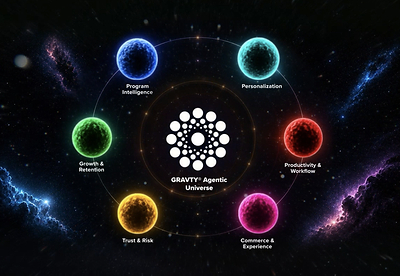
Within this certified management system, GRAVTY® brings together six Agentic Systems designed to help loyalty programs continuously sense, analyze, decide, act and learn:
- Program Intelligence System: Transforms program data into actionable insights, forecasts and strategic recommendations.
- Personalization System: Orchestrates individualized offers and experiences at scale.
- Growth and Retention System: Identifies opportunities to acquire, engage, retain and grow customers.
- Commerce and Experience System: Connects loyalty, commerce and customer experiences across the loyalty ecosystem.
- Trust and Risk System: Detects anomalies, mitigates fraud and strengthens program integrity.
- Productivity and Workflow System: Automates complex operational workflows and augments human decision-making.
“Agentic AI marks a fundamental shift from systems that provide intelligence to systems that interpret conditions, recommend strategies, take coordinated action and learn from outcomes,” said Kalpak Shah, Co-founder and Chief Technology Officer at Loyalty Juggernaut. “ISO/IEC 42001 certification validates the rigorous management system behind our AI innovation, giving clients greater confidence that GRAVTY®’s AI capabilities are developed and deployed with strong governance, transparency, security, accountability and human oversight.”
“AI will play an increasingly important role in shaping the future of loyalty, but innovation must go hand in hand with trust and responsible governance,” said Dr. Nejib Ben Khedher, Head of Emirates Skywards. “Loyalty Juggernaut’s ISO/IEC 42001 certification provides an important level of assurance as we explore next-generation capabilities within GRAVTY®. Ultimately, our focus is on using AI to create greater value for our members while ensuring that transparency, accountability and trust remain at the heart of how we innovate.”
The certification builds on Loyalty Juggernaut’s broader commitment to enterprise-grade security, privacy, reliability and responsible innovation.
About Loyalty Juggernaut
Loyalty Juggernaut is the leading provider of enterprise loyalty technology. Its cloud-native, patented GRAVTY® platform enables brands to design, operate and continuously optimize sophisticated loyalty ecosystems at scale. Loyalty Juggernaut serves clients across airlines, hospitality, retail, financial services, telecommunications and diversified business groups worldwide.
About Emirates
Founded in 1985, Emirates is a global connector of people, places and economies. Based in Dubai, the airline’s global network serves more than 146 destinations in 81 countries across six continents. Its luxurious amenities, regionally inspired gourmet cuisine, award-winning in-flight entertainment system and the unmatched hospitality of its iconic multilingual cabin crew have made Emirates one of the world’s most recognized airline brands.
Media Contact: media@lji.io

- 0
- By Sai Krishna

24, Sep 2026
Europe’s Largest NING SERVICE Experience Center Opens in Norway
OSLO, Norway, Sept. 24, 2026 /PRNewswire/ — On 24 September 2026, CATL opened its largest NING SERVICE centre outside Asia in Oslo, extending its battery lifecycle service network in Europe.

The 8,000 square metre centre will serve Norway and the wider Nordic region, providing battery services, training local technicians and supporting circular economy efforts across the region.
Norway is one of the world’s most advanced EV markets. In August, battery electric vehicles made up 98.7% of new passenger car registrations, and electric buses accounted for more than 60% of bus and coach registrations. As this fleet grows and ages, demand for battery diagnostics, repair and life extension is rising. The Norway Centre is built to meet it.
Full-lifecycle battery services
- Drawing on CATL’s R&D and manufacturing expertise, NING SERVICE covers the full battery lifecycle: testing, maintenance, repair, insurance, second life and recycling. Its services span transport, energy storage and robotics.
- NING SERVICE is helping shift the aftermarket from replacing batteries to repairing them, and has cut turnaround for complex repairs from 72 to 48 hours.
- Its deep repair capability covers 76.8% of EV models and applies CATL’s production-line quality standards. The Intelligent Eagle Eye System, used in more than 150 repair facilities, provides full traceability and quality control.
- The centre will also serve as a brand experience space and sales agent for emerging electric applications, including vessels, eVTOL aircraft and robotics. NING SERVICE already manages agency sales for CATL’s ecosystem partners, such as AutoFlight and Galbot.
Circularity and local skills
CATL launched the Global Energy Circularity Commitment (GECC) in strategic partnership with the Ellen MacArthur Foundation. In line with its vision, NING SERVICE is building an aftermarket ecosystem that keeps batteries in use for longer and returns their materials into new batteries.
“In a circular economy, batteries stay in use at their highest value for as long as possible, and their materials are recovered to make new ones. Inspection, maintenance and repair services are an important part of making that happen at scale,” said Miranda Schnitger, Climate Lead at the Ellen MacArthur Foundation.
The centre will create skilled green jobs and become NING SERVICE’s main training hub in the Nordics. Drawing on a training network across 39 European countries and a team of 14 experienced instructors, it will offer courses certified by CATL and practical training for local technicians. NING SERVICE also plans to work more closely with Norwegian universities and technical institutions to build local expertise.
Bringing service closer to customers
CATL is expanding its local presence worldwide through local infrastructure and ecosystem partnerships. The Norway Centre will be a key hub in NING SERVICE’s European network, bringing high-quality service closer to customers in line with its promise to be “Your Nearby New Energy Service Expert.”
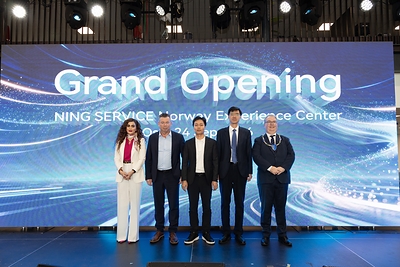
“CATL brings technology, industry expertise and a trusted brand. Combined with YES-EU’s local knowledge and service capabilities, we can build a stronger battery service ecosystem across the Nordics and support the long-term growth of Europe’s EV market,” said Benedikt G. Gudmundsson, Founder and Chairman of YES-EU Group.
“Customers are at the heart of everything we do at NING SERVICE. Working closely with our local partners, we will provide reliable battery lifecycle services that meet the needs of Norway’s EV market and support its continued electrification,” said Bruce Li, President of Quality Systems, Aftermarket Business Division, CATL.
NING SERVICE operates 1,394 service locations across 85 countries and regions. It aims to reach 100 countries and regions by 2027 and 10,000 service locations by 2030.
 View original content to download multimedia:https://www.prnewswire.co.uk/news-releases/europes-largest-ning-service-experience-center-opens-in-norway-302889738.html

24, Sep 2026
IBSAT 2026 MBA Entrance Exam Schedule Announced for Admissions Across 9 Campuses
ICFAI Business School has announced its exam dates and invites MBA/PGPM aspirants to explore case-based learning, the IBSAT National Mock Test, and merit scholarship opportunities
HYDERABAD, India, Sept. 24, 2026 /PRNewswire/ — ICFAI Business School (IBS) has announced the IBSAT 2026 for admission in 9 IBS Campuses. ve. IBSAT serves as a single application pathway for admission opportunities across the institution’s nine campuses. IBS Hyderabad, IBS Bangalore, IBS Jaipur, and IBS Dehradun offer the MBA program, and IBS Mumbai, IBS Pune, IBS Gurgaon, IBS Ahmedabad, and IBS Kolkata offer the PGPM program. IBSAT 2026 MBA entrance examination is scheduled on the first 4 weekends of December 2026.
Application Deadlines:
Tests 1 & 2: December 1, 2026
Tests 3 & 4: December 8, 2026
Tests 5 & 6: December 15, 2026
Tests 7 & 8: December 22, 2026
Due to limited slot capacity for each test window, candidates are advised to apply early to secure their preferred exam date and time.
IBSAT 2026 Test Dates Schedule
|
Test |
Test Day |
Date |
Slot |
Test Mode |
|
Test 1 |
Saturday |
5th December,2026 |
Slot -1 | 11 AM -1 PM Slot -2 | 3 PM – 5 PM |
Remote Proctored Online |
|
Test 2 |
Sunday |
6th December,2026 |
Slot -1 | 11 AM -1 PM Slot -2 | 3 PM – 5 PM |
Remote Proctored Online |
|
Results will be announced on Monday, 7th December, 2026 for both the above test dates. |
||||
|
Test 3 |
Saturday |
12th December,2026 |
Slot -1 | 11 AM -1 PM Slot -2 | 3 PM – 5 PM |
Remote Proctored Online |
|
Test 4 |
Sunday |
13th December,2026 |
Slot -1 | 11 AM -1 PM Slot -2 | 3 PM – 5 PM |
Remote Proctored Online |
|
Results will be announced on Monday, 14th December, 2026 for both the above test dates. |
||||
|
Test 5 |
Saturday |
19th December,2026 |
Slot -1 | 11 AM -1 PM Slot -2 | 3 PM – 5 PM |
Remote Proctored Online |
|
Test 6 |
Sunday |
20th December,2026 |
Slot -1 | 11 AM -1 PM Slot -2 | 3 PM – 5 PM |
Remote Proctored Online |
|
Results will be announced on Monday, 21st December, 2026 for both the above test dates. |
||||
|
Test 7 |
Saturday |
26th December,2026 |
Slot -1 | 11 AM -1 PM Slot -2 | 3 PM – 5 PM |
Remote Proctored Online |
|
Test 8 |
Sunday |
27th December,2026 |
Slot -1 | 11 AM -1 PM Slot -2 | 3 PM – 5 PM |
Remote Proctored Online |
|
Results will be announced on Monday, 28th December, 2026 for both the above test dates. |
||||
Selection briefing will be held in January 2027.
Candidates who opt for early slots have more time to prepare for the selection process, which will be held at IBS Hyderabad’s lush green campus. Early test takers can plan their journey based on their convenience and budget.
Management Aspirants seeking admission in two-year full-time MBA/PGPM programmes of ICFAI Business School (IBS) for the 2027–29 academic session can choose any dates mentioned above.
Management candidates can also apply through a valid scorecard of CAT, XAT, NMAT by GMAC™ or GMAT™, subject to applicable admission requirements.
IBSAT 2026: Key Examination and Admission Details
IBSAT is a national-level management aptitude examination conducted by the ICFAI Foundation for Higher Education (IFHE). The test is designed to assess candidates across areas relevant to management education, including verbal ability, reading comprehension, quantitative aptitude, and data adequacy and data interpretation.
The key details are as follows:
- Examination: IBSAT 2026
- Programme: MBA/PGPM, two-year full-time programme
- Academic session: 2027–29
- Examination month: First Four Weekends of December 2026
- Application fee: ₹1,800
- Application process: Online registration through the official IBSAT website
For more information, candidates may visit https://ibsat.org/.
Eligibility Criteria for IBSAT 2026
Candidates seeking admission to the MBA/PGPM programmes at ICFAI Business School (IBS) are required to meet the following eligibility criteria:
- Graduation in any discipline with 50% or above marks, with English as the medium of instruction.
- Completion of a minimum of 15 years of education under the 10+2+3 or 10+2+4 pattern.
- Candidates whose graduation was not conducted in English must submit a valid TOEFL, NELT, or IELTS score, as per the applicable institutional requirements.
- Final-year undergraduate students may also apply, provided they complete their graduation requirements within the prescribed deadline.
- Candidates admitted provisionally must submit the required academic documents and proof of graduation within the timeline specified by the ICFAI Business School admission team.
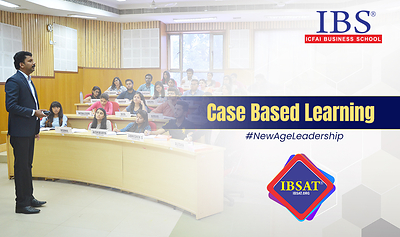
Case-Based Learning: Connecting Management Concepts with Business Practice
Emphasis on case-based learning is one of the key features of the academic approach at ICFAI Business School (IBS). Through the use of real-world and simulated business situations, students are encouraged to examine managerial challenges, evaluate alternatives, and understand the implications of business decisions.
The ICFAI Business School (IBS) academic ecosystem incorporates management cases, classroom discussions, analytical exercises, and practical applications to help students develop a broader understanding of business functions and organisational decision-making.
IBSAT National Mock Test: An Opportunity to Strengthen Exam Preparation
To support MBA aspirants in their preparation for IBSAT, ICFAI Business School (IBS) has introduced the IBSAT National Mock Test 2026, an online proctored practice initiative designed to help candidates become familiar with the examination format and assess their preparation.
The upcoming IBSAT National Mock Test series is scheduled on the following dates:
- September 26, 2026
- October 24, 2026
- November 21, 2026
- December 9, 2026
The IBSAT National Mock Test comes with prizes. The first prize is INR 2 lakhs, the second prize is INR 1 lakh, the third prize is INR 50 thousand, and from 4th to 100th rankers will get INR 5000.
Rs 10 Crore Scholarship Programme for MBA/PGPM Aspirants
As part of its admission initiatives for the 2027–29 academic session, ICFAI Business School has announced a scholarship programme worth ₹10 crore. The programme includes 500 scholarships of ₹2 lakh each, subject to the applicable scholarship terms and conditions.
The scholarship initiative is intended to provide financial assistance to eligible students and recognise academic performance. Candidates applying through IBSAT 2026, as well as eligible applicants using CAT, XAT, NMAT by GMAC™ or GMAT™ scores, may be considered under the applicable scholarship guidelines. Scholarships via IBSAT will be declared after every slot, and CAT/XAT/NMAT by GMAC™/ GMAT scholarship will be declared in the month of January 2027.
Through its management education programmes, ICFAI Business School (IBS) aims to provide students with exposure to business concepts, case discussions, professional interactions and practical learning opportunities.
Apply for IBSAT 2026
With the IBSAT 2026 examination scheduled for December, MBA aspirants are encouraged to review the eligibility criteria, complete their applications within the prescribed timeline, and make use of available preparation resources.
Candidates can access the official registration portal, examination updates, National Mock Test information, and scholarship details at:
Website: https://www.ibsat.org/
Registration: https://admissions.ibsindia.org/ibsat/index.aspx
Contact Us:
IBS Admission Office
Plot No. 65, Nagarjuna Hills
Punjagutta, Hyderabad – 500082
Telangana
Ph: 040 – 23440963 (5 lines)
Toll Free:1800 425 55 66 77
E-mail: ibsat@ibsindia.org
 View original content to download multimedia:https://www.prnewswire.com/in/news-releases/ibsat-2026-mba-entrance-exam-schedule-announced-for-admissions-across-9-campuses-302889608.html

24, Sep 2026
Gastops and Vestas Renew Agreement for MetalSCAN Oil Debris Monitoring Technology
HAMBURG, Germany, Sept. 24, 2026 /PRNewswire/ — Gastops, a global leader in intelligent condition monitoring solutions, today announced the renewal of its long-term supply agreement with Vestas Wind Systems A/S, one of the world’s leading wind turbine manufacturers.
Announced today at WindEnergy Hamburg 2026, the new long-term agreement will see Gastops continue supplying its MetalSCAN oil debris monitoring technology for use across Vestas’ turbine platforms.
The agreement extends a successful collaboration between the two companies and reinforces MetalSCAN’s role in supporting turbine reliability, condition monitoring, and predictive maintenance initiatives across the wind energy sector.
MetalSCAN is an online oil debris monitoring technology that provides real-time insight into machinery health by detecting and monitoring metallic wear within lubricated systems. The technology helps operators identify developing issues earlier, supports condition-based maintenance strategies, and reduces the risk of unplanned downtime.
Beginning January 1, 2027, Gastops will continue supplying MetalSCAN technology to support equipment health monitoring across Vestas’ turbine platforms.
“The wind industry continues to focus on reliability, performance, and maximizing the value of existing assets,” said Dirk Kusters, Business Development Manager at Gastops. “We are proud to continue our relationship with Vestas and support operators with technologies that provide earlier insight into equipment condition and more informed maintenance decision-making.”
“This agreement reflects the confidence Vestas has placed in MetalSCAN technology over many years of collaboration,” said Brennan West, Vice President, Energy, Marine & Land at Gastops. “Real-time condition monitoring continues to play an increasingly important role in modern maintenance strategies, and we look forward to supporting Vestas and its customers in the years ahead.”
The renewal represents another important milestone for MetalSCAN, which has been deployed across aerospace, marine, energy, and industrial applications worldwide. To date, more than 50,000 MetalSCAN sensors have been delivered globally to help operators improve equipment availability, reliability, and safety.
About Gastops
Gastops is the world’s leading provider of intelligent condition monitoring solutions used in Aerospace, Defence, Energy, and Industrial applications to optimize the availability, performance, and safety of critical assets. We offer peace of mind to our customers with innovative online monitoring sensors, at-line analysis, complex modeling and simulation, world-class laboratory testing, engineering, design, and MRO services that predict performance to enable proactive operating decisions. We have been providing powerful insights into the condition of critical equipment since 1979. Gastops is the intelligence inside what moves you.
Media Contact
media@gastops.com
+1 (613) 744-3530
 View original content:https://www.prnewswire.co.uk/news-releases/gastops-and-vestas-renew-agreement-for-metalscan-oil-debris-monitoring-technology-302889348.html

24, Sep 2026
Branch Expands AI Measurement With ChatGPT Ads Attribution Across App, Web and Desktop
New support helps advertisers connect paid ChatGPT Ads campaigns with organic AI traffic and every other customer acquisition channel
MOUNTAIN VIEW, Calif., Sept. 24, 2026 /PRNewswire/ — Branch, the linking and measurement partner for growth-focused brands, today announced support for ChatGPT Ads attribution across mobile apps, websites and desktop applications. As a measurement partner to ChatGPT Ads, advertisers can use Branch to measure customer activity generated by campaigns running in ChatGPT and connect that activity to installs, app opens, conversions and other downstream business outcomes.

As AI becomes a new channel for customers to discover brands and make purchasing decisions, marketers need to understand how paid campaigns and organic AI visibility contribute alongside search, social and the rest of their media mix. With Branch, advertisers can link mobile, web-to-app and web journeys to ChatGPT Ads campaigns, attribute down-funnel app and web activity, and pass selected conversion events back to OpenAI for optimization.
“AI discovery is becoming part of the broader customer journey, not a separate marketing category,” said David Karnstedt, CEO at Branch. “Marketers should be able to see how paid ads, organic referrals, web visits, app activity and other marketing touchpoints connect to conversions. That is the measurement foundation Branch has built over the last decade.”
Branch is designed to support measurement across the customer journey:
- Attribute app installs, reengagements and post-install events generated by ChatGPT Ads
- Measure web visits and conversion events originating from ChatGPT Ads campaigns
- Deep link users from ChatGPT into relevant app and web content, preserving context and creating more relevant customer journeys
- Share advertiser-selected events with OpenAI for campaign reporting and optimization
- Analyze ChatGPT Ads performance including cost and conversion data alongside other paid, owned and organic channels in Branch
- Measure paid ChatGPT Ads campaigns alongside organic traffic from ChatGPT and other AI platforms
- Understand how AI-driven touchpoints contribute across the customer journey
Branch’s comprehensive channel coverage, cross-platform and cross-device architecture, and full-funnel measurement give marketers a foundation for testing ChatGPT Ads as a growth channel while connecting those experiments to real conversion and revenue outcomes. As AI reshapes how customers discover, evaluate and engage with brands, Branch gives marketers a unified way to measure performance across apps, websites, devices and emerging paid and organic channels.
About Branch
Branch powers every touchpoint with links that work and insights that prove it. From click to conversion, Branch helps brands create connected customer experiences and measure performance across apps, websites, devices and channels. Branch has been selected by more than 100,000 apps since 2014, including many of the world’s leading brands.
Media contact
Paula Mantle
press@branch.io
 View original content to download multimedia:https://www.prnewswire.co.uk/news-releases/branch-expands-ai-measurement-with-chatgpt-ads-attribution-across-app-web-and-desktop-302888555.html

24, Sep 2026
Citrea Acquires Crest to Bring Zcash-Style Privacy to Bitcoin
Paving the way for a future where the easiest way to use Bitcoin is privately
GEORGE TOWN, Cayman Islands, Sept. 24, 2026 /PRNewswire/ — Citrea, the Bitcoin application layer backed by Founders Fund and Galaxy Ventures, today announced the acquisition of Crest, a self-custodial private Bitcoin wallet. Citrea and Crest aim to make private Bitcoin effortless, intuitive, and practical for everyone.

With a market capitalization exceeding $1.5 trillion, Bitcoin’s transparent public ledger has turned user balances, counterparties, and transaction histories into surveillance targets. The consequences of this transparency will only compound as the asset class grows and surveillance technology improves.
Today, Bitcoin users seeking privacy must either forfeit self-custody, navigate expert-only technical workflows or swap into alternative privacy assets. Networks like Zcash already demonstrated the immense demand for simple and intuitive privacy. With this acquisition, Citrea commits its resources to bring that same effortless privacy standard to Bitcoin.
Built on Citrea’s Bitcoin-secured execution environment, Crest will set a new benchmark for mobile, self-custodial Bitcoin privacy. To drive this vision forward, Crest founder Meliksah Gurtemel joins Citrea as Product Lead, reflecting a shared belief that privacy should be the easiest and most natural way to interact with Bitcoin.
“Solving Bitcoin privacy is the single largest unlock for meeting real user demand on a Bitcoin layer,” said Orkun Mahir Kılıç, Co-founder and CEO of Chainway Labs, a core contributor to Citrea. “Crest is built to be the primary gateway for onboarding users and liquidity from the Bitcoin and privacy ecosystems into Citrea. Acquiring Crest aligns our entire team behind a vision that will generate the most value and adoption for our broader network.“
In the coming weeks, Crest will launch its Bitcoin mobile wallet with auto-shielding, private BTC transfers, and seamless cross-chain onboarding from Bitcoin and Ethereum. Crucially, the wallet will enable private cross-chain swaps where BTC can pay EVM addresses in USDC or ETH privately. Over time, the acquisition aims to extend private BTC utility across Citrea’s broader ecosystem.
Users can join the waitlist at https://crestapp.xyz/
About Citrea
Citrea is the Bitcoin application layer, enabling institutions and users to access Bitcoin capital markets. The platform aims to expand Bitcoin’s financial utility while remaining anchored to the network’s security model. Citrea is backed by investors including Founders Fund, Galaxy, Maven 11, Delphi Digital, Erik Voorhees, Balaji Srinivasan and more.
For more information, please visit: Citrea website | Citrea X Account
About Crest
Crest is the world’s simplest private Bitcoin mobile wallet, bringing zero-knowledge privacy pools to Bitcoin via Citrea. Built to eliminate the technical frictions of legacy privacy tools, Crest makes self-custodial Bitcoin privacy intuitive and practical. Featuring automatic shielding, private BTC transfers, private cross-chain payments and an intuitive mobile interface, Crest is establishing the new standard for effortless, self-custodial Bitcoin privacy.
For more information, please visit: Crest website | Crest X Account
 View original content to download multimedia:https://www.prnewswire.co.uk/news-releases/citrea-acquires-crest-to-bring-zcash-style-privacy-to-bitcoin-302889418.html

24, Sep 2026
Ondo Launches Intelligent Portfolios, Powered by BlackRock, Bringing Portfolio Strategies Onchain
New Ondo Intelligent Portfolios will offer portfolio tokens based on portfolio strategies developed by BlackRock for Ondo, bringing professionally designed portfolios delivered as single onchain tokens for eligible investors outside the United States.
NEW YORK, Sept. 24, 2026 /PRNewswire/ — Ondo Finance today launched a new onchain product category: Ondo Intelligent Portfolios, curated portfolios delivered as single onchain transferable tokens. The three portfolio tokens launched today are based on portfolio strategies powered by BlackRock, developed by BlackRock for Ondo, marking the first time eligible onchain investors can access exposure to such strategies through a single token.

Diversified, professionally constructed strategies have historically required brokerage accounts and traditional fund structures. Now, delivered as peer-to-peer transferable tokens from Ondo, these onchain portfolios become accessible to eligible non-US investors in permitted jurisdictions through the wallets, exchanges, and DeFi applications they already use.
Distribution is only part of the story. Bringing portfolios onchain can unlock novel capabilities: rebalancing that executes automatically at the smart contract level, portfolios that are fully programmable and composable with the broader onchain economy, and the potential to combine asset classes within a single token. Ondo Intelligent Portfolios establishes the infrastructure to bring portfolios based on leading asset managers’ strategies onchain.
“Tokenization creates new ways for portfolio strategies to be delivered through digital infrastructure. Diversified portfolio strategies can be incorporated into tokenized investment products, enabling eligible investors to access diversified allocations through a single instrument. It shows how established portfolio construction approaches can be delivered through new channels and technologies.” – Lisa O’Connor is Global Head of the Model Portfolio Solutions team and the Co-CIO for Global Solutions within the Multi-Asset Strategies group at BlackRock
Three custom portfolio strategies addressing three specific needs are launched today across income, allocation, and thematic strategies:
- BLKHIon: Ondo High Income Powered by BlackRock
- BLKDIGon: Ondo Diversified Growth Powered by BlackRock
- BLKGRWon: Ondo High Growth Powered by BlackRock
“Portfolios like these have never been available onchain. Now, they are made accessible onchain, transferable at any time, and usable across DeFi. This launch represents an important milestone in the development of onchain investment products. By incorporating strategies drawn on BlackRock’s longstanding portfolio construction experience into tokenized investment structures, eligible investors in supported jurisdictions can obtain exposure to diversified portfolio allocations through a single token. “ – Ian De Bode, Acting CEO and President, Ondo Finance
Holding a portfolio token provides economic exposure to the portfolio’s underlying basket. Each portfolio token is issued by Ondo Global Markets and tokenized by Ondo Finance. Investors mint or redeem a single token to hold a weighted basket of tokenized assets, without buying, weighting, or rebalancing individual positions themselves. Holdings, weights, and every rebalance are visible onchain, and the tokens are transferable peer-to-peer across wallets, exchanges, and DeFi protocols.
Ondo intends to expand the product line with additional onchain portfolios over time.
About Ondo Finance
Ondo Finance is a blockchain-based platform focused on tokenizing real-world assets and bringing institutional-quality financial products onchain. By bridging traditional finance and decentralized infrastructure, Ondo aims to make capital markets more accessible, transparent, and efficient.
About Ondo Global Markets
Ondo Global Markets is an issuance and redemption platform for tokenized publicly traded U.S. stocks and ETFs. It enables investors outside the United States to gain economic exposure to these assets by minting, transferring, and redeeming securities-backed tokens. Each token is fully backed by the corresponding stock or ETF (together with cash in transit).
About BlackRock
BlackRock’s purpose is to help more and more people experience financial well-being. As a fiduciary to investors and a leading provider of financial technology, we help millions of people build savings that serve them throughout their lives by making investing easier and more affordable. For additional information on BlackRock, please visit www.blackrock.com/corporate
 View original content to download multimedia:https://www.prnewswire.co.uk/news-releases/ondo-launches-intelligent-portfolios-powered-by-blackrock-bringing-portfolio-strategies-onchain-302889272.html

24, Sep 2026
From diagnosis to treatment, ZEISS introduces innovations across ZEISS Retina Workflow at EURETINA 2026
ZEISS Medical Technology advances its ZEISS Retina Workflow with digital and surgical enhancements, and new imaging technologies, including:
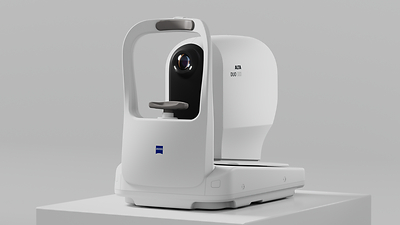
- Diagnostics: ZEISS expands its retinal imaging portfolio with the new ZEISS ALTA DUO 300, combining OCT and fundus imaging in a single device.
- Visualization: New HMDmd CR3, head-mounted 3D digital display technology, connects with ZEISS ARTEVO 850 to provide advanced visualization with exceptional ergonomics.
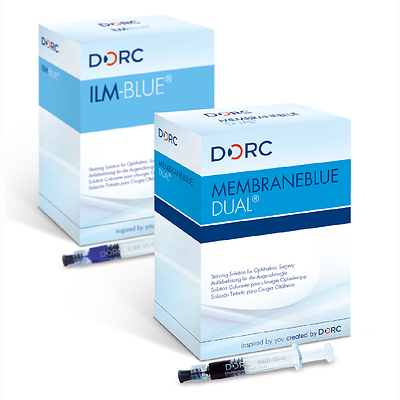
- Surgical Treatment: DORC ILM-BLUE® and DORC MEMBRANEBLUE-DUAL® reach the 3 million milestone, demonstrating the broad use of the vitreoretinal surgical dyes for ILM and ERM staining. The two-dimensional cutter DORC TDC VELOCE from ZEISS continues to demonstrate solid improvements in 27G vitrectomy procedures. One brand: The journey for DORC and ZEISS has arrived at a successful juncture, bringing the DORC brand under the single brand of ZEISS, representing an important milestone in the evolution of the ZEISS Retina Workflow.
JENA, Germany, Sept. 24, 2026 /PRNewswire/ — ZEISS Medical Technology, one of the world’s leading medical technology companies, announced expansive developments across its comprehensive ZEISS Retina Workflow at the European Society of Retina Specialists (EURETINA) congress, spanning retinal imaging, surgical visualization, digital workflow technologies and vitreoretinal surgery. The innovations further strengthen ZEISS’s ability to support eye care professionals and retina specialists across the continuum of retinal care, from diagnosis and treatment planning to surgical intervention and ongoing patient management.
“The growing complexity of retinal care is placing unprecedented demands on retina specialists, who must interpret expanding volumes of clinical data while making timely decisions for their patients,” says Andreas Völker, Head of the Ophthalmology Strategic Business Unit, ZEISS Medical Technology. “With today’s advancements across our ZEISS Retina Workflow, we’re helping clinicians navigate that complexity with greater confidence, efficiency and connectivity, enabling more informed decisions and a more seamless and personalized care experience for their patients, from diagnosis through treatment and follow-up.”
“I see daily how aligning imaging, analytics, and patient data improves our efficiency in clinical routine and surgery. Seeing all relevant data in one place supports real-time, data-driven decisions. This clarity helps streamline our daily practice, shorten procedure times, and improve outcomes, while also enhancing patient trust and engagement from screening through follow-up,” says Matthias Bolz, Director of the Clinic of Ophthalmology at Kepler University Clinic Linz, Austria.
ZEISS simplifies imaging with expansion of its retinal portfolio with new ZEISS ALTA DUO 300, combining OCT and fundus imaging in a single device
ZEISS continues to expand its retinal imaging portfolio with the ZEISS ALTA DUO 300, a simplified, fully automated multimodal imaging solution designed for everyday retinal care, combining OCT and fundus imaging in a single device to streamline image acquisition and enable more efficient access to essential retinal diagnostic information. Complementing the advanced diagnostic capabilities of ZEISS CIRRUS OCT and ZEISS CLARUS fundus imaging systems, the new ZEISS ALTA DUO 300 broadens the company’s imaging portfolio and provides eye care professionals with greater flexibility in selecting the imaging solution that best aligns with their clinical and practice needs. Together, these solutions reinforce ZEISS’s commitment to supporting retinal care across the continuum of diagnosis, monitoring and treatment.
New HMDmd CR3 extends advanced visualization options for ZEISS ARTEVO 850
ZEISS announces a new head-mounted 3D digital visualization option with plug-and-play connectivity to the ZEISS ARTEVO 850 surgical microscope, providing advanced visualization with exceptional ergonomics. The head-mounted display HMDmd CR3 is the lightest head-mounted display in its class, seamlessly provides surgeons with all of the digital visualization capabilities and data overlays of the ZEISS ARTEVO 850, including DCA, SmartDoF, AutoExposure, adjustable light temperature of RGB LED, and support for immersive 3D visualization. The HMDmd CR3 provides an additional option to view surgical procedures, offering a more holistic approach to visualization for the ZEISS ARTEVO 850. The enhanced immersive experience of the combined technologies enables surgeons to place their full concentration on what matters most – their patients.
3 million times trusted: DORC ILM-BLUE and DORC MEMBRANEBLUE-DUAL offer effective staining, high purification and optimal injection characteristics; used with ZEISS ARTEVO 850’s digital filters for more distinct, visually enhanced surgical view
DORC ILM-BLUE® and DORC MEMBRANEBLUE-DUAL® passed the 3 million mark1 this year, demonstrating the trust of ophthalmologists worldwide in using DORC surgical dyes for inner-limiting membrane (ILM) and epiretinal membrane (ERM) staining. Used in conjunction with the digital filters of ZEISS ARTEVO 850 surgical microscope, the dyes support enhanced visualization and contrast of ILM and ERM, providing a more distinct and visually enhanced surgical view for surgeons.
By injecting DORC ILM-BLUE into the vitreous cavity, the ILM will be clearly stained and easily distinguished from the underlying, unstained retina and can be removed selectively. The DORC MEMBRANEBLUE-DUAL 2-in-1 dye stains both the ILM and the ERM membrane in vitreoretinal surgery, without compromising the staining effect within one injection. In either use case, with their integrated carrier 4% PEG solution, the DORC ILM-BLUE or DORC MEMBRANEBLUE-DUAL dyes can be injected into a BSS-filled eye and sink immediately as a cohesive ball to the fundus of the eye and only stain the targeted tissue without diffusion throughout the whole globe.
DORC TDC VELOCE from ZEISS continues to demonstrate solid improvements in 27G vitrectomy procedures
With the strength of DORC EVA and DORC EVA NEXUS sales surpassing 3,000 installed units worldwide, ZEISS continues to focus on meeting more customers’ requirements. One year after its successful introduction in select European countries, the new 27G two-dimensional cutter (TDC) continues to expand its availability in more regions. The latest clinical data suggests advantages of the DORC TDC VELOCE compared to its predecessor DORC TDC. Increased flow with the 27G DORC TDC VELOCE can result in up to 41% shorter core vitrectomy time, suggesting greater procedural efficiency during the procedure.
“Building on its predecessor, the new vitrectomy cutter DORC TDC VELOCE takes the combination of safety and efficiency to an unprecedented level,” says Mitrofanis Pavlidis, MD, director of Augencentrum Köln and co-developer of the DORC TDC VELOCE.
One brand: ZEISS is the partner in ophthalmology.
The journey for DORC and ZEISS to come together as one team over the past years has arrived at a successful juncture, bringing the DORC brand under the single brand of ZEISS, representing an important milestone in the ongoing evolution of the ZEISS Retina Workflow.
The move to one brand brings new focus and simplification to our customer relationships and a unified brand experience across all touchpoints with the company. Customers will receive the same exceptional products, quality, and service that they rely on today, including their same trusted contacts, contracts, and support, with a single point of contact for their comprehensive ophthalmic needs, and expanded portfolio access for complete ophthalmic care.
“DORC is now ZEISS,” says Dominik Beck, PhD, Head of Business Sector Surgery Posterior Segment at ZEISS Medical Technology. “For some time, we have been operating as one team, united by a shared commitment to advancing patient care. Today, that shared purpose is reflected in a single brand: ZEISS. We are proud to bring together our expertise, innovation, and dedication under a name that has earned the trust of customers worldwide for more than 175 years.”
Mark your calendar for opportunities to attend expert talks at EURETINA
Retina Forum 2026 (Wednesday, Sept. 30) – ZEISS’s Gerrit Naus, Head of Field of Business Retina Robotics, will speak on the panel “Surgical Robotics & the Future of Ophthalmic Surgery,” and ZEISS’s Kevin Langton, Head of Retina Workflow Chronic Disease Management, will speak on the panel “AI Guided Therapy for Retinal Disease: What Does Commercial Success Look Like?”
EURETINA Innovation Spotlight (EIS) 2026 (Wednesday, Sept. 30) – ZEISS’s Dominik Beck, PhD, Head of Business Sector Surgery Posterior Segment, will speak during the session “Innovations in Retinal Surgery and Imaging,” to deliver his presentation, titled: “Advancing retinal care in imaging and surgery.”
Breakfast symposium (Friday, Oct. 2): ZEISS will host an educational session followed by panel discussion, “Innovative Synergies Part 1: Visualizing Retinal Vasculature: Angiography-Driven Insights in Retina Practice with OCTA, FA and ICGA,” from 9:45 to 10:45 AM CEST (UTC+2:00), in room: Strauss 1. The session will be moderated by Matthias Bolz, MD, (Austria), and Andreas Pollreisz, MD, (Austria), along with panelists Enrico Borrelli, MD, (Italy), and Javier Montero, MD, (Spain). No pre-registration required.
Lunch symposium (Saturday, Oct. 3): ZEISS will host an educational session followed by panel discussion as Part 2 of the Innovative Synergies series, “Integrating Cutting-Edge Visualization and Vitrectomy Technologies for Complex Case Management,” from 1:00 to 2:00 PM CEST (UTC+2:00), in room: Strauss 1. The session will be moderated by Matthias Bolz, MD, (Austria), along with panelists Rodolfo Mastropasqua, MD, (Italy), Lars-Olof Hattenbach, MD, (Germany), and Shohista Saidkasimova, MD, (UK). No pre-registration required.
Meet the Experts – Session 1 (Thursday, Oct. 1): “The Frictionless Retina Clinic: Expert Insights on Imaging-Driven Decisions,” will be held from 2:30 to 3:00 PM CEST (UTC+2:00), in the ZEISS booth, led by Navin Sakhuja, MD, (India). No pre-registration required.
Meet the Experts – Session 2 (Friday, Oct. 2): “United Innovation: A Two-Expert Dialogue on Cutting-Edge Visualization and Vitrectomy Technologies,” will be held on from 1:15 to 1:45 PM CEST (UTC+2:00), in the ZEISS booth, led by Peter Stalmans, MD, (Belgium), and Mitrofanis Pavlidis, MD, (Germany). No pre-registration required.
Meet the Experts – Session 3 (Saturday, Oct. 3): “Seeing More, Deciding Better: Expert Approaches to Imaging-Guided Retina Care,” will be held from 12:30 to 1:00 PM CEST (UTC+2:00), in the ZEISS booth, led by Thanapong Somkijrungroj, MD, (Thailand), and Gábor Márk Somfai, MD, (Switzerland). No pre-registration required.
To learn more about the latest portfolio advancements from ZEISS, visit the ZEISS booth (B50) in Hall B of the Vienna Congress & Convention Center, at the European Society of Retina Specialists (EURETINA) congress in Vienna, from Oct. 1-4, or see ZEISS’s dedicated website for the latest information about ZEISS’s opportunities for engagement at EURETINA.
1Sales figures represent cumulative global sales as of February, 2026. Always refer to the Instructions for Use (IFU) for proper application and safety information.
Not all products, services or offers are approved or offered in every market and approved labeling and instructions may vary from one country to another. For country-specific product information, see the appropriate country website. Product specifications are subject to change in design and scope of delivery as a result of ongoing technical development. The statements of the healthcare professionals reflect only their personal opinions and experiences and do not necessarily reflect the opinion of any institution that they are affiliated with. The healthcare professionals alone are responsible for the content of their experience reported and any potential resulting infringements. Carl Zeiss Meditec AG and its affiliates to not have clinical evidence supporting the opinions and statements of the health care professionals nor accept any responsibility or liability of the healthcare professionals’ content. The healthcare professionals have a contractual or other financial relationship with Carl Zeiss Meditec AG and its affiliates and have received financial support.
Contact for investors
Sebastian Frericks
Director Investor Relations
Carl Zeiss Meditec AG
Phone: +49 3641 220 116
Mail: investors.med@zeiss.com
Contact for the press
Frank Smith
Head of Global Communications
Ophthalmology, Carl Zeiss Meditec Inc.
Phone: +49 3641 220 331
Mail: press.med@zeiss.com
Company Profile
Carl Zeiss Meditec AG (ISIN: DE0005313704), which is listed on the TecDAX and SDAx of the German stock exchange, is one of the world’s leading medical technology companies. The Company supplies innovative technologies and application-oriented solutions designed to help doctors improve the quality of life of their patients. The Company offers complete solutions, including implants and consumables, to diagnose and treat eye diseases. The Company creates innovative visualization solutions in the field of microsurgery. With 5,784 employees worldwide, the Group generated revenue of €2,228m in fiscal year 2024/25 (to 30 September).
The Group’s head office is located in Jena, Germany, and it has subsidiaries in Germany and abroad; more than 50 percent of its employees are based in the USA, Japan, Spain and France. The Center for Application and Research (CARIn) in Bangalore, India and the Carl Zeiss Innovations Center for Research and Development in Shanghai, China, strengthen the Company’s presence in these rapidly developing economies. Around 39 percent of Carl Zeiss Meditec AG’s shares are in free float. Approx. 59 percent are held by Carl Zeiss AG, one of the world’s leading groups in the optical and optoelectronic industries.
For further information visit: www.zeiss.com/med.

 View original content to download multimedia:https://www.prnewswire.co.uk/news-releases/from-diagnosis-to-treatment-zeiss-introduces-innovations-across-zeiss-retina-workflow-at-euretina-2026-302888784.html

24, Sep 2026
GLOBAL FIGHT LEAGUE SIGNS SEVEN-FIGURE LOI FOR FIRST INDEPENDENTLY OWNED FRANCHISE
Non-Refundable Initial Payment Helps Support Planned Q4 Proof-of-Concept Event in Argentina and GFL’s Staged League Launch
LAS VEGAS, Sept. 24, 2026 /PRNewswire/ — Global Fight League (OTC: GFLE) (“GFL” or the “Company”), the international team-based mixed martial arts league, today announced the signing of a seven-figure binding Letter of Intent (“LOI”) with investor and entrepreneur Ryan Brockbank for the rights to own and operate the first independently owned GFL franchise.
Under the signed LOI, Brockbank has agreed to acquire the franchise rights for a seven-figure purchase price. GFL has received and deposited a non-refundable initial payment toward the transaction, with the remaining balance payable in 2027.
The funding will help support an international proof-of-concept event in Argentina during the fourth quarter of 2026 and the league’s preparations for its first full season of competition in 2027. Additional details regarding the Argentina event will be announced in the coming week.
GFL’s four founding teams—in New York, Los Angeles, Miami and London—are currently owned and operated by GFL. Brockbank’s independently owned franchise is targeted to begin competition in 2028, with its home market, team name and identity to be announced.
As GFL’s first third-party franchise commitment, the agreement expands the ownership and capital base supporting the league’s launch and long-term growth. GFL is also engaged in discussions with other prospective ownership groups regarding additional team franchises in other markets. While there can be no assurance that these discussions will result in completed transactions, the Company views third-party franchise ownership as an important component of its growth strategy.
“This is a significant milestone for Global Fight League,” said Vince Hesser, Executive Chairman of GFL. “A notable, seven figure commitment has been made to acquire the rights to own and operate a GFL team franchise, and GFL has received a non-refundable initial payment toward that purchase. We believe this demonstrates meaningful commercial interest in the franchise model we are building for the benefit of MMA athletes, fans and GFLE shareholders.”
“From the beginning, our vision for GFL has extended beyond producing individual fight events,” said Darren Owen, Commissioner of GFL. “We are building a global, team-based sports property where franchise owners can represent major markets, develop their own rosters and fan bases, and participate in the league’s broader economics. Ryan’s commitment helps establish that ownership foundation, supports the league’s launch and advances preparations for our first full season of competition.”
Under the contemplated transaction, Brockbank would receive territorial rights in a market to be subsequently announced, together with the right to own and operate a GFL team and participate in revenues available to member franchises, subject to the execution and terms of definitive agreements.
Ryan Brockbank is an entrepreneur and business executive with more than 28 years of experience building and operating companies across construction and property development. His background includes founding and leading multimillion-dollar businesses and investing in substantial development projects.
“I see tremendous potential in what GFL is building,” said Brockbank. “The opportunity to establish a team from the ground up and participate in the growth of a new team-based model for professional MMA is extremely compelling to me. This is a long-term investment, and we plan to build a first-class team that its community can rally behind. Not many opportunities arise to become a sports team owner, and I am excited to make this exceptional investment.”
Additional information regarding Brockbank’s franchise, including its home market, team name, branding, management and eventual roster, will be announced as GFL prepares for team expansion of the league in the 2028 season.
About Global Fight League
Global Fight League (OTC: GFLE) is an international sports entertainment company developing a professional team-based mixed martial arts league built around city- and market-based franchises. GFL’s model is designed to combine professional MMA competition with team identity, localized fan engagement, live events, media distribution, sponsorship, licensing and franchise ownership.
For more information, visit www.mmagfl.com.
Forward-Looking Statements
This press release contains forward-looking statements within the meaning of applicable federal securities laws. Statements other than statements of historical fact—including statements regarding the anticipated completion of the franchise transaction, payment of the remaining purchase price, execution of definitive franchise documentation, the planned proof-of-concept event in Argentina, GFL’s planned first full season of league competition, the franchise’s anticipated participation in the 2028 GFL season, discussions with prospective franchise owners, potential additional franchise transactions, future market and team announcements, league development and future commercial opportunities—are forward-looking statements.
Forward-looking statements are based on management’s current expectations, estimates, assumptions and beliefs and are subject to risks and uncertainties that could cause actual results, events or performance to differ materially from those expressed or implied by such statements. There can be no assurance that the contemplated franchise transaction will be completed on the anticipated terms or timeline, that discussions with other prospective franchise owners will result in completed transactions, that the planned Argentina event or first full season will occur as anticipated, that the franchise will commence competition in 2028, or that the Company’s development and commercial objectives will be achieved.
Readers are cautioned not to place undue reliance on forward-looking statements, which speak only as of the date of this release. Except as required by applicable law, the Company undertakes no obligation to publicly update or revise any forward-looking statements as a result of new information, future events or otherwise.
Media & Investor Relations Contact
Global Fight League (OTC: GFLE)
Communications Department
Email: pr@mmagfl.com
Website: www.mmagfl.com
 View original content:https://www.prnewswire.co.uk/news-releases/global-fight-league-signs-seven-figure-loi-for-first-independently-owned-franchise-302888408.html

24, Sep 2026
As Banks Pivot to Agentic AI, Feedzai Unveils Farol to Transform Fraud Analysis and Cut Investigation Times
Embedded AI agent brings autonomous reasoning directly into core workflows, eliminating the integration gap stalling financial institution AI pilots.
NEW YORK and LISBON, Portugal, Sept. 24, 2026 /PRNewswire/ — Feedzai, the global leader in AI-native financial crime prevention, today launched Farol, an embedded AI agent engineered to slash fraud investigation latency and sharpen threat detection across risk operations in banking. The launch lands as fraud grows costlier to fight on every front. Mandatory reimbursement rules are increasing loss exposure, while technology spend and manual review costs keep climbing. Farol is built exactly to alleviate those pressures – an always-on agent that lets fraud teams do more without adding resources, fundamentally changing how they work. Integrated directly into Feedzai’s RiskOps Studio, Farol delivers conversational intelligence, automated rule performance analytics, and contextual case summarizations, all within the software stack analysts already use.

Feedzai’s agentic AI innovation addresses a critical operational bottleneck in institutional risk management. While 68% of financial institutions are actively testing agentic AI, according to Feedzai research, most deployments fail to yield operational efficiencies because third-party AI models operate in isolation from real-time transaction data. Farol solves this fragmentation by embedding directly into existing risk workflows in order to deliver full context, transparent audit trails, and autonomous execution capabilities without disrupting core infrastructure.
“Having a single, intelligent interface to handle data retrieval, insight generation, and production-ready rule suggestions fundamentally transforms how we refine our fraud strategies,” said Justinas Rekus, Fraud Prevention Business Owner at SEB, a leading northern European financial services group with international presence in more than 20 countries worldwide.
Feedzai Farol launches with a number of purpose-built skills including:
- Risk Strategy – Interrogates and analyzes rule sets to surface actionable insights, including identifying rules that are generating noise without catching fraud, and recommending sharper thresholds to enhance performance. Management of rule hygiene becomes a task that takes minutes and not days.
- Investigations – Retrieves and summarizes alert data in moments, giving analysts the context they need to work cases faster and with greater conviction, proven to reduce alert handling times by 20%.
- Knowledge – An always-on product expert built into the workflow. Users can ask Farol how to do anything on the platform and get the answer instantly, without ever leaving the user interface to find it.
- SAR Drafting – Drafts Suspicious Activity Reports (SARs) up to 12x faster by cutting the manual effort of compiling and summarizing information.
“Fraud investigation is one of the clearest near-term use cases for agentic AI. An agent with direct access to case data and analyst tools removes the manual work of assembling that data, driving faster resolution without adding headcount. Longer term, agents that flag which rules generate noise without catching fraud let teams tune detection logic continuously, not just during periodic reviews,” said Sam Abadir, Research Director, Risk, Financial Crime, and Compliance at IDC.
The Farol agent builds on Feedzai’s track record of pioneering AI for financial crime prevention, from operationalizing machine learning and explainable model outcomes to real-time cross-channel risk decisioning and federated network intelligence. Feedzai Farol operates within each financial institution’s own environment, so the information and insights it surfaces stay inside the customer’s estate, multiplying the impact of fraud teams and helping them solve the problems that matter most.
“Fraud teams don’t need another tool to check; they need an agent that already knows their environment and the problems they want to solve,” said Pedro Barata, Chief Product Officer at Feedzai. “The Feedzai Farol agent puts actionable intelligence directly in the hands of the people fighting fraud every day. It surfaces the right information faster, takes repetitive work off their plate, and gives analysts the speed and confidence to act, so banks can focus on what matters, which is keeping their customers safe.”
To learn more about Feedzai and Farol, visit www.feedzai.com/farol-agentic-riskops.
About Feedzai
Feedzai powers trust in global finance. We protect people and payments using trusted AI to detect and prevent financial crime, fraud, and money laundering in real time, so money moves safely. Every year, the world’s top banks, payment networks, and acquirers use Feedzai’s technology to safeguard more than one billion consumers and $9 trillion in payment volume. Learn more at feedzai.com.
Media Contact:
 View original content to download multimedia:https://www.prnewswire.co.uk/news-releases/as-banks-pivot-to-agentic-ai-feedzai-unveils-farol-to-transform-fraud-analysis-and-cut-investigation-times-302888316.html