


9, Sep 2026
Negative Impacts From Growing Use of AI Set to Worsen, Say Professional Investors
Robocap research finds the technology will be detrimental to ESG issues and cost jobs over the next three years
Sept 09: New global research1 with institutional investors and wealth managers managing assets of $513 billion from leading fund manager Robocap, finds almost all (97%) believe the negative impact from AI on major ESG issues – such as energy consumption and weakening of democratic rights – will worsen over the next three years.
More than two-fifths (44%) of respondents say these negative impacts will dramatically increase, while 53% they will worsen slightly.
Further, while 71% of investors say there is enough transparency around the potential impact on ESG issues from certain AI technology and programmes, 29% say the level of clarity is poor.
The study – which covered global senior executives at insurance asset managers, pension funds, family offices and wealth managers – also reveals widespread concern about the erosion of job security by AI in the financial sector.
More than two-fifths (43%) of investors say AI will impact all finance roles to some extent; 38% say it will fundamentally redefine every role, while creating reconstructing some roles; and 5% expect all finance roles will ultimately be replaced by AI.
When asked to identify the biggest threats from the burgeoning technology, 87% of research participants say the biggest threat from technology is autonomous AI systems making decisions without human intervention, while 71% point to technological vulnerabilities and the potential for AI to be hacked or manipulated.
Seventy percent are concerned about the potential for AI to be used for surveillance or control purposes; almost two thirds (64%) note the ethical implications and potential misuse of AI; and 62% identify issues with privacy and data security.
However, despite concerns about the growing impact from AI, survey participants also highlight multiple positive outcomes from the technology.
When asked to rank the benefits from AI, the majority (59%) of investors say it will increase production output rates, followed by improving manufacturing flexibility and bettering product quality and consistency.
Jonathan Cohen, Founder and CIO at Robocap, said: “There is a growing recognition among institutional investors that the opportunities presented by AI are accompanied by significant responsibilities. While investors remain highly optimistic about AI’s potential to improve productivity, efficiency and innovation across industries, they are equally aware of the challenges relating to energy consumption, governance, privacy, security and the future of work.
“Our research findings suggest that investors expect companies developing and deploying AI technologies to demonstrate strong governance frameworks, transparency and accountability. As AI adoption accelerates, success will not be measured solely by technological capability, but also by how effectively organisations manage the societal and environmental implications of these powerful tools.
“Importantly, investors do not see these concerns as a reason to step back from AI. Rather, they view responsible innovation as essential to unlocking the technology’s long-term value. The companies best positioned for sustainable growth will be those that combine cutting-edge AI capabilities with robust risk management and a clear commitment to ethical development.”
The Robocap UCITS Fund, which is a thematic equity fund focusing on pure-play robotics, automation and AI listed stocks globally, was launched in January 2016 and is managed by a London based specialist team. It has delivered compound annualised net returns (CAGR) of 15.38% and a net return of 359.95% since its inception.
- 0
- By Neel Achary

9, Sep 2026
FPT Brings the Art of Marine Propulsion to the Cannes Yachting Festival
Sept 09: FPT, the Iveco Group company dedicated to the design, production, and sale of powertrains and solutions for on- and off-road vehicles, as well as marine and power generation applications, is ready to cause a sensation once again at the Cannes Yachting Festival alongside its official distributor Bimotor. The event is scheduled for September 8-13, 2026, in the beautiful city of the French Riviera.
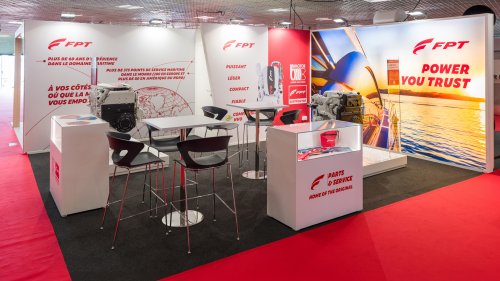
Spread between Vieux Port and Port Canto, the Cannes Yachting Festival brings together the world’s most prestigious yachts and beautiful sailing vessels from one end of the legendary Croisette to the other, and it is an unmissable event for the most renowned operators, as well as being the ideal setting to present marine engines dedicated to the recreational segment.
FPT is indeed experiencing exponential growth in interest and customers in this very market area, thanks to the remarkable and world-renowned characteristics of its products: reliability, efficiency, torque density, and high power-to-weight ratio.
One of the emblems of this commercial success is the star of the stand (Palais 079, 32 NU): the N67 570 EVO presented for the first time with the exclusive top cover by Van Orton, the renowned Italian creative duo whose vibrant, impactful pop style is globally recognized. Launched at Agritechnica 2025, the partnership between FPT and Van Orton is now expanding to marine engines as well.
N67 570 EVO – Van Orton top cover limited edition
The new fruit of FPT’s collaboration with Van Orton is a striking engine cover, made by employing their peculiar, kaleidoscopic perspective to create a unique visual narrative, inspired by the groundbreaking Pop Art movement of artists such as Andy Warhol and Roy Lichtenstein. The result masterfully blends precision engineering with artistic vision, giving the usually “undercover” FPT engines one more reason to be admired.

N67 570 EVO – Best-in-class performance in its power range
With its 6.7-liter displacement, the N67 570 EVO marine engine generates up to 419 kW, delivering maximum torque at low RPMs and rapid load response, setting performance benchmarks in its category. Purpose-built for marine applications, its architecture features engine and turbocharging cooling systems tailored specifically for maritime operations. To simplify installation, key components – including the oil cooler, oil pump, water pump, and blow-by system – are fully integrated into the engine design. Maintenance is made straightforward via advanced diagnostics, while extended oil and filter service intervals of up to 300 hours significantly reduce downtime.

N67 570 EVO – Technical Specifications
Cylinder layout: 6L
Turbocharger: TCA
Displacement [liters]: 6.7
Injection system: Common Rail
Max power [hp @ rpm]: 570 @ 3000
Dry weight [kg]: 721
Full specifications are available
on the FPT website.
FPT has had a presence in the marine propulsion market since 1965, offering a complete range of class-leading engines with displacements from 3 to 15.9 liters, and rated engine power of between 85 and 1,000 hp, while the specific yacht lineup ranges from 230 to 1,000 hp. Designed to power vessels from 8 to 24 meters, FPT’s range of marine engines meets the requirements of a wide range of boat types, from pleasure boats to light-, medium- and heavy-duty vessels.
Every day in Italy, two new boats powered by FPT marine engines are launched. The presence of over 200 service points in the Mediterranean area is a strong guarantee of continuous support and a prompt response to any issues.
FPT is a brand of Iveco Group N.V. (EXM: IVG), dedicated to the design, production, and sale of powertrains and solutions for on- and off-road vehicles, as well as marine and power generation applications. Over 8,000 people across ten production sites and ten R&D centers work for FPT all around the world. Active in nearly 100 different countries, its global sales and its Customer Service department supports all Brand customers. The extensive product offering includes six engine ranges with power outputs from 30 hp to over 1,000 hp, transmissions with torque up to 500 Nm, and front and rear axles from 2.45 to 32 tonne GAW (Gross Axle Weight). FPT offers the most complete line-up of natural gas engines for industrial applications on the market, with power outputs ranging from 50 to 520 hp. A dedicated ePowertrain division is accelerating the path towards net zero-emissions mobility, with electric drivelines, battery packs, and battery management systems. This extensive offering, and its strong focus on R&D, makes FPT a world leader in industrial powertrains and solutions. For more information, visit www.fptindustrial.com.
9, Sep 2026
AAEON Release Micro-ATX Duo with Intel Core Ultra Desktop Processors
The MAX-Q870A and MAX-H810A showcase AAEON’s agile approach to supporting diverse market needs.
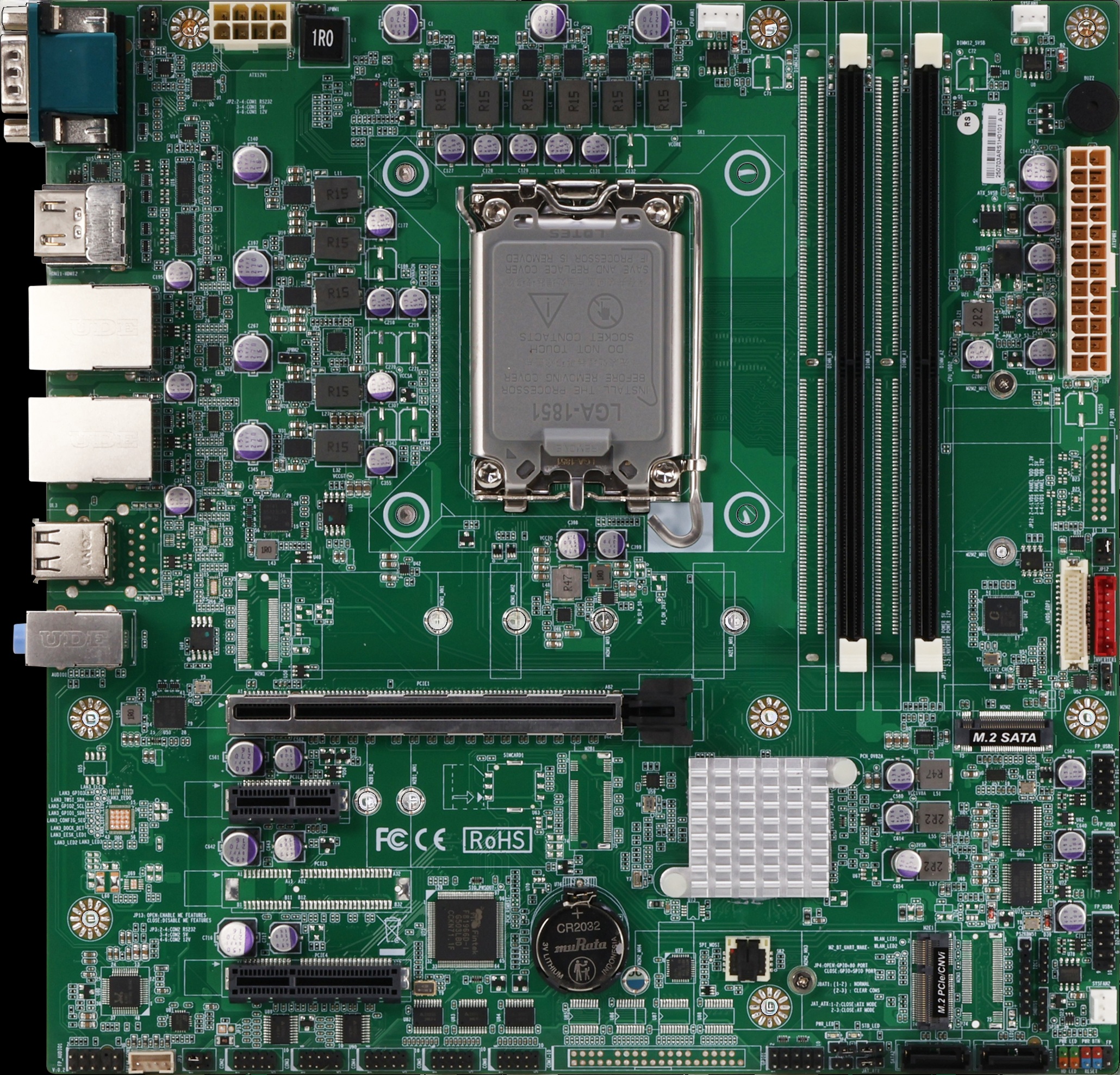
Taipei, Taiwan – Sept 9: AAEON (Stock Code: 6579), announced the release of two new Micro-ATX industrial motherboards featuring Intel® Core™ Ultra 200S Series Processors (formerly Arrow Lake-S), the MAX-Q870A and MAX-H810A.
The two boards are compatible with a range of Arrow Lake-S CPUs, with the MAX-Q870A supporting up to 125W SKUs and the MAX-H810A supporting up to 65W SKUs. This difference reflects the market positioning of the two boards, with the former marketed for advanced AI and machine vision use and the latter for more cost-efficient industrial automation and HMI applications.
The MAX-Q870A provides four CU/U-DIMM slots for up to 256GB DDR5, with storage options including two M.2 M-Key slots with NVMe support and two SATA 6Gb/s ports with RAID 0, 1, 5 support. The board also provides simultaneous support for four PCIe devices through one PCIe Gen 5 x16, two PCIe Gen 4 x4, and one PCIe Gen 4 x1 slot. For both Wi-Fi and 5G module support, the board offers an M.2 E-Key slot with CNVi support and M.2 B-Key slot.
The board’s rear I/O features three LAN ports, two of which run at 2.5GbE speed, six USB 3.2 Gen 2 (Type-A) ports, and one DB-9 port for RS-232/422/485. Joining these are four physical display outputs, two HDMI 2.1 and two DP 1.4a, all of which grant 4K resolution at 60 Hz. On top of this, the MAX-Q870A’s internal connectors grant access to a co-lay 40-pin LVDS/eDP connector. Additional internal I/Os include pin headers for an additional eight USB, a box header for five RS-232 interfaces, and a DIO 8-bit.
The MAX-H810A, meanwhile, is designed to deliver the essential features required for modern industrial automation and HMI applications at a cost-efficient price point. In addition to its Arrow Lake processor support, the board can host up to 128GB DDR5 via two CU/U-DIMM slots, with storage available through dual SATA 6Gb/s ports with RAID 0, 1 support and an M.2 M-Key slot. For expansion, the board comes with PCIe Gen 5 x16, PCIe Gen 4 x4, and PCIe Gen 4 x1 slots, as well as an M.2 E-Key for wireless module support.
The MAX-H810A’s rear I/O features two USB 3.2 Gen 2×1 (10Gbps), two USB 3.2 Gen 1×1 (5Gbps), and two USB 2.0 ports. Alongside these are dual 2.5GbE LAN ports, both HDMI 2.1 and DP 1.4a, and a DB-9 port for RS-232/422/485. The board also offers the same LVDS/eDP connector, DIO 8-bit, and box header for five RS-232 interfaces as its counterpart, with six USB 2.0 interfaces also available through pin headers.
Both the MAX-Q870A and MAX-H810A support Windows® 11 and Linux Ubuntu 24.04.2, and hold the unusual distinction of -20°C to 60°C operating temperature ranges, an upgrade on the 0°C to 60°C for AAEON’s previous Micro-ATX offerings.
Both platforms are now in mass production, with samples available via the AAEON eShop.
8, Sep 2026
transcosmos launches trans-AI Chat, a generative AI chatbot, in Indonesia
|
Sept 08: transcosmos announced the official launch of trans-AI Chat, a generative AI-powered chatbot, in Indonesia. Unlike conventional chatbots that rely on predefined scripts and conversation flows, trans-AI Chat leverages the capabilities of large language models (LLMs) to understand conversational context, recognize customer intent, and generate dynamic, human-like responses.
The solution offers a range of intelligent capabilities that enable organizations to create more proactive, data-driven customer experiences. These include AI Follow-up Message Automation, which automatically sends personalized follow-up messages such as order status updates or product recommendations based on previous interactions; AI Evaluation, which continuously monitors AI responses to ensure accuracy, consistency, and alignment with the company’s knowledge base; and Unknown Keyword Detection, which automatically identifies new questions, phrases, or topics the AI cannot yet answer, enabling organizations to continuously enrich and improve their knowledge base. One of trans-AI Chat’s key differentiators is its intelligent escalation capability, which seamlessly transfers conversations to human agents whenever empathy, complex decision-making, or specialized support is required. The complete conversation history and contextual information are automatically passed to the agent, eliminating the need for customers to repeat themselves. Developed around the concept of collaborative intelligence, this approach enables seamless collaboration between AI and human agents while ensuring a consistently high-quality customer experience across every touchpoint. Designed with high implementation flexibility, trans-AI Chat can be deployed across a wide range of industries, including banking, telecommunications, retail, FMCG, and automotive. The solution is particularly well suited for managing high volumes of customer interactions, ranging from financial service simulations and account management to interactive lead qualification. As a leading CX and digital business services provider, transcosmos delivers integrated solutions that support various aspects of clients’ business operations in the Indonesian market. The company has earned several accolades, including Platinum Winner for Contact Center Operations and Silver Winner for Employee Engagement at the ICCA Awards—cementing its role as a key player in Indonesia’s CX and BPO industries. transcosmos reaffirms its ambition to be a strategic partner for digital transformation in Indonesia. |

8, Sep 2026
Samsung’s Pioneering Foldable Vision Transforms the Global Mobile Landscape
Gurugram, Sep 08: Since Samsung Electronics pioneered the foldable phone category in 2019, the market has grown into a dynamic arena where global mobile brands now compete. To mark this milestone, Samsung has launched “Welcome to Foldables,” a large-scale digital OOH campaign featuring the Galaxy Z8 series across major cities worldwide. The campaign extends a warm welcome to a rapidly expanding market while reaffirming Samsung’s longstanding leadership in the category.

The foldable has firmly established itself as an intuitive daily companion, supported by continuous advancements in thinness, durability, multitasking, camera performance, and software optimization. This sustained progress has earned the trust of consumers worldwide. Millions of users now rely on Galaxy foldables, with the latest Galaxy Z8 series available across 106 global markets.
The global campaign is rolling out across six iconic landmarks, including Times Square in New York, Piccadilly Circus and Outernet in London, Shibuya Station in Tokyo, and COEX K-POP LIVE and KT Square in Seoul.
Through this campaign, Samsung showcases the confidence built over eight generations of engineering refinement and the enduring market leadership established under the name ‘Fold’. Samsung’s ‘Fold’ has grown into a symbol of mobile innovation and a benchmark for the foldable smartphone market.
Samsung has continually refined the foldable user experience through dedicated craftsmanship and close attention to user feedback. The Galaxy Z8 series has helped transform foldables into versatile daily essentials, combining advanced hardware engineering with software optimization, Galaxy AI integration and seamless connected experiences across the Galaxy ecosystem. This innovation heritage is brought to life through the campaign’s three central themes: ‘Ultra Thin’, ‘The World’s Lightest Fold’ and ‘Built to Outlast.’ Together, the messages reflect Samsung’s continued focus on making foldables thinner and lighter while advancing the durability expected from an everyday smartphone.
What began as a bold new form factor has grown into a category attracting greater investment from across the mobile industry. For Samsung, growing competition and consumer choice are signs of the category’s continued momentum – and new reasons to keep pushing foldable innovation forward. ‘Welcome to Foldables’ is both a welcome to that next chapter and a reminder of the generations of experience that helped bring the category here.
8, Sep 2026
OGP Introduces SmartScope E18 High-Capacity Benchtop Video Measurement System
Compact, fully automatic 3-axis system delivers expanded XY measuring range for manufacturers with limited floor space
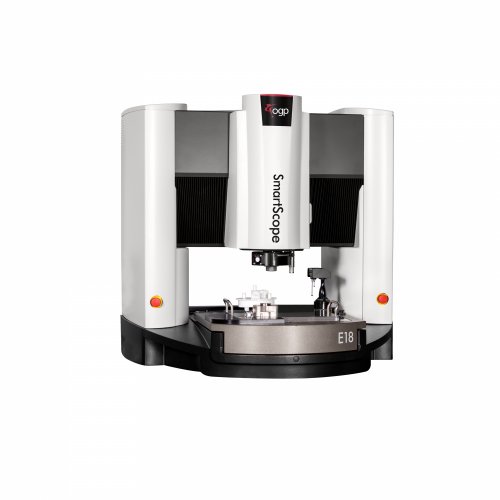
Sept 08: Optical Gaging Products (OGP®), a leading manufacturer of precision optical and multisensor metrology systems, has introduced SmartScope® E18, a high-capacity benchtop video measurement system that delivers fully automatic 3-axis measurement performance in a compact footprint.
SmartScope E18 combines a generous XY measuring range with a space-efficient benchtop design for manufacturers that need automated dimensional inspection without dedicating significant floor space to a measurement system. Its compact design makes it well suited for production environments, quality laboratories, and other applications where available space is at a premium.
At the heart of the SmartScope E18 is OGP’s IntelliCentric™-E fixed-lens optical system, which provides high-resolution imaging for precise video measurement. VIRTUAL ZOOM™ technology further enhances image detail and measurement capability, helping operators efficiently inspect a wide range of part features.
“With its 300 x 300 mm stage in a benchtop format, SmartScope E18 brings the capabilities manufacturers need for automated video measurement into a compact and cost-effective platform,” said Shreyansh B Hippargi, Managing Director, QVI India. “By maximizing the available XY measuring range while minimizing the system footprint, the E18 gives manufacturers a practical way to increase measurement automation without compromising valuable production space.”
Advanced Illumination Comes Standard
SmartScope E18 includes a comprehensive LED lighting system as standard equipment. Coaxial, substage profile, and SmartRing™ illumination provide flexible lighting options for highlighting different part features and optimizing image contrast during measurement.
Built for Measurement Stability
A new, compact fixed-bridge design combined with a heavy-duty base provides a rigid, stable structure engineered to support accurate, repeatable measurements. The system’s orthogonal construction helps maintain measurement stability while keeping the overall footprint compact.
Multisensor Capability
For applications requiring more than video measurement, SmartScope E18 can be equipped with an optional touch probe, extending the system’s capabilities to provide multisensor measurement coverage. This allows manufacturers to combine optical and tactile measurement within a single automated platform.
With its combination of high XY capacity, automated 3-axis video measurement, advanced LED illumination, rigid construction and optional multisensor capability, SmartScope E18 provides manufacturers with a versatile inspection solution when measurement performance and floor space are equally important.
Metrology Software Capability
As with all E-Series systems, the SmartScope E18 comes standard with easy-to-use Measure-X software. For applications requiring full 3D capability and other advanced software functionality, ZONE3 software is now also available on SmartScope E-Series systems.
SmartScope E18 is available through OGP Authorized Representatives worldwide. To find your local OGP Representative, visit ogp.com/find-a-rep
8, Sep 2026
MENA Fintech Association Welcomes Wise as a Corporate Member to Advance Cross-Border Payments and Global Financial Connectivity Abu Dhabi, UAE

Abu Dhabi, UAE – Sept 08 – The MENA Fintech Association (MFTA), the region’s leading not-for-profit fintech industry body and globally ranked among the top fintech associations, has welcomed Wise, the global technology company building the best way to move and manage the world’s money, as a new corporate member. The partnership brings together Wise’s global payments infrastructure and MFTA’s regional network to support the continued evolution of cross-border payments and financial connectivity across MENA.
Wise joins MFTA as international money movement becomes increasingly central to the region’s digital economy. Growing trade, digital commerce, workforce mobility, and cross-border business activity are driving demand for payment infrastructure that is faster, more transparent, and more cost-effective.
Serving around 19 million customers globally, Wise processed more than $240 billion in cross-border transactions during the last financial year, helping customers save more than $3 billion in fees. Its infrastructure connects directly to domestic payment systems across multiple markets, enabling faster international transfers while reducing complexity and improving transparency.
Beyond its consumer and business offering, Wise Platform enables banks and financial institutions to embed international payment capabilities into their own products and services. This allows financial institutions to provide faster, more transparent cross-border experiences while leveraging Wise’s global payments infrastructure.
The partnership comes at an important time for MENA, where financial institutions, fintechs, regulators, and businesses are working to modernize payment infrastructure and strengthen the region’s connection to global financial markets. As part of its engagement with MFTA, Wise will contribute its expertise to initiatives focused on payments, financial infrastructure, cross-border commerce, and digital financial inclusion.
Mohamed Mansour, CEO of Wise UAE, commented:
“Joining the MENA Fintech Association marks a key step in Wise’s continued engagement in the UAE and across the wider region. As more people and businesses live, work and trade across borders, the need for international payments that are fast, transparent and low-cost has never been clearer. We look forward to working with MFTA, regulators, policymakers and industry partners to support an open, connected and more transparent ecosystem, and to help make moving money internationally more convenient for customers across the region.”
Nameer Khan, Chairman of the MENA Fintech Association and Founder of Fils, added:
“The way money moves across borders is becoming increasingly important to the competitiveness of modern economies. As trade, talent, and capital move more seamlessly between markets, the infrastructure supporting these flows must evolve with them. Wise has demonstrated at significant global scale what faster, more transparent international payments can look like, and we look forward to bringing that expertise into our network and supporting the continued development of more connected payment ecosystems across MENA.”
As part of the MFTA network, Wise will collaborate with banks, fintechs, financial institutions, regulators, and technology providers across the region. The collaboration will support dialogue around cross-border payments, payment infrastructure, digital inclusion, and the technologies enabling more efficient global money movement.
Together, MFTA and Wise aim to contribute to a more connected financial ecosystem where businesses and individuals can move money across borders with greater speed, transparency, and accessibility.
4, Sep 2026
India’s Data Centre Boom Signals a New Phase of Digital Growth
New Delhi, Sep 4: India’s fast-growing data centre industry is quietly becoming an important part of the country’s digital and economic transformation. Behind everyday activities such as online payments, video streaming, cloud applications, e-commerce and artificial intelligence services are large-scale facilities that store, process and manage vast amounts of data.

The country is witnessing a sharp rise in investment in data centre infrastructure as businesses and technology companies prepare for rapidly increasing demand for computing capacity. Domestic conglomerates, global technology firms and specialised operators have announced investments exceeding $250 billion, reflecting growing confidence in India’s digital economy.
The expansion is being driven by several factors, including rising internet usage, the rapid adoption of cloud services, digitalisation across businesses and the growing use of artificial intelligence. As companies generate more data and adopt increasingly sophisticated digital tools, the need for reliable computing infrastructure within India is also increasing.
Artificial intelligence is expected to become one of the biggest drivers of future demand. AI applications require significant computing power, particularly for training and running advanced models. As businesses across sectors begin using AI for customer service, financial services, manufacturing, healthcare, logistics and software development, demand for high-performance data centres is likely to increase.
Despite the scale of investment, the direct contribution of the sector to India’s overall GDP is expected to remain relatively modest. Moody’s Ratings estimates that data centre capital expenditure could add around 0.10 percentage point to nominal GDP during the construction phase in 2025, while related investment in power generation could contribute another 0.03 percentage point.
By 2030, the direct contribution of the data centre industry is projected to stabilise at around 0.13 per cent of GDP. The relatively limited contribution reflects the capital-intensive nature of the industry, where large investments are required but the number of permanent jobs created is comparatively small.
However, the wider economic impact could be considerably larger. Data centre projects generate demand for construction, electrical equipment, cooling systems, networking, security, engineering, maintenance and other specialised services. The expansion can also create opportunities for Indian manufacturers if a greater share of the equipment and components is produced domestically.
This localisation could become one of the most important benefits of the data centre boom. Building stronger domestic supply chains would allow India to retain more economic value from the investments while creating additional opportunities for manufacturing and technology companies.
Employment in the sector itself is expected to remain focused on specialised skills. Data centres require professionals in areas such as cloud computing, cybersecurity, network management, electrical engineering, artificial intelligence and facilities management. At the same time, the businesses that depend on this infrastructure could create much broader employment opportunities as digital services expand.
Power availability will remain another important consideration. Data centres operate continuously and require substantial electricity for computing and cooling. Moody’s expects the sector to account for less than 5 per cent of India’s electricity demand by 2030, suggesting that it is unlikely to create a nationwide power constraint. However, reliable transmission and distribution infrastructure around major data centre clusters will be essential.
The growing demand for electricity could also encourage investment in renewable energy, energy storage and more efficient cooling technologies as companies seek to manage operating costs and reduce environmental impact.
The benefits of the data centre boom are also likely to be felt at the city and state level. Locations offering reliable power, strong internet connectivity, skilled workers and favourable business conditions are increasingly competing to attract large projects. New data centre clusters can bring investment into supporting infrastructure while creating demand for engineering, construction and technology services.
India’s data centre expansion, therefore, is about much more than building large facilities filled with servers. These centres provide the foundation for cloud computing, artificial intelligence, digital payments, online commerce, software services and a growing range of technology-driven businesses.
The immediate contribution to GDP may appear modest, but the longer-term opportunity could be much bigger if India succeeds in developing local suppliers, skilled talent, reliable energy networks and innovative digital businesses around the sector.
For India, the real value of the data centre boom will ultimately be measured not only by how much infrastructure is built, but by how effectively that infrastructure helps businesses grow, technology develops and the country strengthens its position in the global digital economy.
4, Sep 2026
NIELIT, Intel India Roll Out Agentic AI Programmes to Build India’s Future-Ready Workforce
India’s workforce is set to receive a new skilling push in emerging Artificial Intelligence technologies, with the National Institute of Electronics and Information Technology (NIELIT) and Intel India launching a joint initiative focused on Agentic AI. The programme was announced at a National Leadership Dialogue in New Delhi that brought together policymakers, educators, industry representatives and skilling experts to examine how rapidly advancing AI systems are changing the requirements of jobs and education.
The dialogue placed particular emphasis on the transition from conventional and generative AI to agentic systems that can reason, plan and carry out complex tasks while operating under human oversight. Participants discussed the need to move beyond theoretical AI education towards practical, industry-linked learning, including updated curricula, faculty development, experiential training and AI-enabled learning environments. Shri Shashi Shekhar Vempati, Chairperson of the Central Board of Film Certification, said continuous learning and employability would become increasingly important as technology transforms workplaces, while stressing the value of real-world exposure for young professionals.
The partnership has introduced two skilling tracks with different levels of technical focus. Agentic AI for Everyone is designed to familiarise learners with AI agents, workflow automation and multi-agent systems, using no-code platforms to explore productivity, business transformation and intelligent decision-making. The second programme, Engineering Agentic AI Systems, is aimed at learners seeking deeper technical capabilities, covering agent architecture, tool integration, orchestration, memory and deployment through no-code, low-code and coding-based frameworks. Together, the programmes are intended to provide learners with hands-on experience in developing and using agentic systems.
NIELIT Director General Dr. Madan Mohan Tripathi said the collaboration combines NIELIT’s nationwide reach with Intel’s technology expertise to take emerging AI education to more institutions and learners. Shri Sudeep Shrivastava, COO of the IndiaAI Mission and Joint Secretary, MeitY, highlighted the importance of developing a strong AI talent pipeline through industry-led training, AI-focused educational programmes, AI Data Labs and closer industry-academia engagement. Intel also stressed that skills, adaptability and human judgment will remain critical as AI systems become more capable. The initiative is expected to widen access to practical Agentic AI training and strengthen India’s talent base for an increasingly AI-driven economy.
4, Sep 2026
Ten-Nine Technologies Moves to Commercial-Scale Production of TENIX – its ‘Anti-Aging’ Battery Additive
TULSA, Oklahoma | Sept 04:Ten-Nine Technologies, an advanced materials company based in Tulsa, Oklahoma, is scaling production of TENIX, its patented cathode additive, as the battery industry’s shift toward manganese-rich chemistries accelerates. Ten-Nine describes TENIX as “anti-aging for batteries.”
Every time batteries charge and disc harge, unwanted chemical by-products build up inside them – the same process that makes your phone run hot, an EV’s range shrink, a laptop need charging more often, and power tools lose their punch.
TENIX stops that aging process at the source. It’s blended directly into a battery’s cathode material during manufacturing – taking up just 0.5–2% of its weight, or roughly 0.5–2kg for every 100kg of cathode, which is about what’s in a typical EV battery pack.
It drops into cathode production lines that manufacturers already run, so adopting it requires no new equipment and no battery redesign. At its current production capacity of 100 tons, Ten-Nine can supply enough TENIX to treat between 50,000 and 200,000 typical EV battery packs.
In third-party testing, TENIX delivered over 75% more charge-discharge cycles, extending a typical EV battery’s life from a 150,000-mile warranty baseline to more than 265,000 miles. That longer life translates into roughly 40% lower cost per kilowatt-hour delivered over a battery’s lifetime, while 10% lower internal resistance means faster charging and less energy wasted as heat.
TENIX can also cut a battery’s heat output by around 40% over its lifetime – a benefit that is becoming increasingly critical as AI-driven data centers push backup batteries harder than ever.
This momentum comes as the battery industry is increasingly shifting toward manganese-rich cathodes – a cheaper, more abundant, and more geographically secure alternative to the cobalt- and nickel-heavy chemistries that dominate EV batteries today.
Manganese-rich cathodes also offer a far more secure supply chain than the nickel- and cobalt-heavy chemistries they could replace. Manganese is mined widely across Africa, South America, and Southeast Asia, rather than concentrated in a handful of countries, making it far less exposed to the geopolitical pressure points that increasingly worry battery manufacturers and policymakers alike.
Manganese-rich cathodes have also long been held back by poor cycle life, exactly the problem TENIX is built to solve. Ten-Nine believes the shift could reshape the global cathode supply chain the way LFP did twenty years ago.
Paige Johnson, Founder and CEO of Ten-Nine Technologies, said:
“Just like people, batteries age. Products of chemical decomposition build up during use, limiting a battery’s performance and lifetime, and until now that’s just been treated as an unavoidable cost of doing business. I’m a chemist so I wanted to fix that at the source rather than build a whole new battery to work around it. TENIX has a unique surface chemistry that disrupts that aging process, giving batteries more power and significantly longer life. I started this company in the back of a warehouse in Tulsa with $100,000 and four grams of material in a flask. I never imagined we’d end up here, but I always believed that if the chemistry was right, it would matter to a lot of people’s lives. That’s still what gets me up in the morning.”
Ten-Nine is currently in evaluation trials with battery manufacturers that together represent more than half of the world’s battery production volume, and is now accepting orders for 2026–27 delivery from its own production facility in Tulsa.
The company holds 67 granted patents protecting its core cathode chemistry, and has no direct competitor offering a cathode additive of its kind – the nearest points of comparison, silicon anode and solid-state electrolyte technologies, solve different problems in different parts of the battery entirely. TENIX works across battery types used in all sectors including electric vehicles, defense equipment, power tools, and grid-scale energy storage.
Ten-Nine Technologies was founded in 2014 by Paige after a local angel investor offered her $100,000 to pursue her research independently. The company’s name traces back to its original incorporation as “10-9 LLC”: 10⁻⁹ is nano, representing the scale of the surface chemistry Ten-Nine engineers; 10⁹ is a billion, representing the number of lives Paige believes better batteries can improve. That original $100,000 has since grown into $45 million raised to date, funding Ten-Nine’s transition from a lab experiment into a commercial-scale manufacturer.