


6, Aug 2026
Why STEM Education Needs to Reach Students Long Before They Think About Careers
-Mary Ellen Randall, CEO of IEEE
If you spend enough time with young people, you start to notice something. They are excited to learn about the world. But the way they learn is different. My grandchildren are very comfortable with using technology, however, as a grandparent, I have seen it firsthand. They are accustomed to learning in shorter bursts, through games, videos and social media, formats that center interaction and exploration rather than passive instruction.
Their interest is shaped not just by what they learn, but how they experience it. That matters more now than it did just a decade ago.
Emerging technologies are moving from theory to application at a rate that is much faster than in previous generations. Today’s kindergarteners will never know a world in which artificial intelligence wasn’t broadly available to everyone. Even once esoteric ideas like quantum computing aren’t abstract concepts with far-off implications for this cohort. If we wait until college or even high school to introduce students to these ideas, we are already behind.
The challenge is not a lack of interest. Research shows that fascination with STEM peaks between the ages of 11 and 15. And yet, there is a notable absence of engineering-related content for this age group.
At the same time, the vast majority of jobs, nearly 80% will require STEM skills in the next decade.
Closing that gap requires follow-through. Young people are highly adaptable, but we need to rethink how we teach if we want to reach them effectively.
This is where organizations like IEEE have a responsibility and an opportunity.
We are in a unique position as a global community of technologists, engineers, and educators. We have the expertise, but more importantly, we have the ability to connect that expertise across disciplines and across generations.
The IEEE Future Tech Explorers Challenge launched earlier this year with the goal to find new ways to teach these concepts. This challenge was designed to tap the collective ingenuity of the entire IEEE community and the rules were carefully designed so that participants were not locked into a single way of learning or a single solution to the problem.
There is no one-size-fits-all approach. One of the big lessons of my time working in disaster response through IEEE MOVE is that every disaster is different, and the local needs of every place impacted by a storm is different.
I think that lesson applies to the future of education too. What works for one student or in one classroom may not work for another. The power of IEEE’s community isn’t that it can produce a single right answer, but that it can produce many approaches, suitable for different learning styles, cultures, and contexts.
If we want the next generation to be ready for what comes next, we need to meet them where they are — earlier, more creatively, and with a willingness to rethink how we teach. The interest is already there. Our job is to make sure the opportunity is there as well.
|
- 0
- By Neel Achary

6, Aug 2026
Researchers demonstrate first fully solution-processed solid-state polariton laser
University of Turku, Finland | Aug 06: Researchers have demonstrated a solid-state organic laser microcavity fabricated entirely by solution processing. The device operates in the strong light–matter coupling regime, where light and matter form hybrid states called polaritons. This makes the platform not only a new type of solution-processed laser but also a powerful way to study nonlinear polariton interactions.
Solid-state lasers are used in many modern technologies, from telecommunications and sensing to medical diagnostics and data storage. However, their fabrication often requires complex and energy-intensive manufacturing methods. This new work shows that organic laser devices can be made in a much simpler way, by coating each layer from a liquid solution rather than depositing it in vacuum.

“Our main result is that we can make a complete solid-state laser microcavity using only solution processing. This is important because it shows that simple and scalable fabrication can still produce the high optical quality needed for advanced laser physics,” says Associate Professor Konstantinos Daskalakis from the University of Turku in Finland.
In the new device, both the mirrors that trap light and the organic light-emitting layer were fabricated by spin coating. The high quality of the microcavity allowed the researchers to reach the strong light–matter interaction regime, where light and molecules mix together and form hybrid states called polaritons.
These polaritons allow the device to operate as a polariton laser. In simple terms, this means that the laser-like emission is produced through the collective behaviour of light and matter together, rather than by light alone.
“The exciting part is that we are not only making a simple solution-processed structure but also a working solid-state polariton laser. This gives researchers a much more accessible way to study these devices,” says Postdoctoral Researcher Hassan Ali Qureshi.
The study conducted by researchers at the University of Turku also revealed an unusual behaviour when the laser was driven strongly. Instead of emitting only from the centre of the excited area, the light redistributed outward and formed a ring-like pattern. This effect was reversible and could be controlled by changing the optical design of the cavity.
“For us, this was very interesting because we could see the effect of polariton interactions as a visible, macroscopic change in the emitted light. By tuning the cavity, we can control how strongly this redistribution appears. This gives us a practical knob for studying nonlinear polariton behaviour,” says Senior Researcher Henri Lyyra.
The researchers believe that the new platform can make organic laser and polariton research more accessible. In the longer term, it may support the development of low-cost photonic devices and help progress toward future organic lasers that are electrically driven.
The study was carried out at the Department of Mechanical and Materials Engineering at the University of Turku in Finland, with collaboration from the University of Eastern Finland.
The results have been published in the journal Nature Communications.
|
|
5, Aug 2026
Hexnode Partners with Ingram Micro in Indonesia
This agreement comes as a concrete response to rising cyber threats and the increasingly complex device management needs of Indonesia’s hybrid-work era

Jakarta, Indonesia, Aug 05: Hexnode, the enterprise software division of Mitsogo has announced a new distribution agreement with Ingram Micro , appointing it as an Authorized Distributor in Indonesia. The collaboration strengthens Hexnode’s presence in Southeast Asia while expanding Ingram Micro’s portfolio in enterprise endpoint security. The appointment was unveiled at a media and partner gathering in Jakarta.
As Indonesia’s digital economy continues to grow, organizations are managing an increasingly diverse mix of corporate, personal, frontline, and specialized devices while facing a rapidly evolving cyber threat landscape. According to Indonesia’s National Cyber and Crypto Agency (BSSN), the country recorded 5.5 billion cyber incidents in 2025—a 714% increase over the previous four-year average—with another 1.52 billion incidents detected during the opening months of 2026. The trend highlights the increasing importance of centralized endpoint security and management across enterprises.
Through this, organizations across Indonesia will gain broader access to Hexnode’s unified endpoint management platform through Ingram Micro’s extensive network of resellers, system integrators, and managed service providers. Together, the companies aim to help businesses simplify endpoint management, strengthen security, support compliance with regulations such as Indonesia’s Personal Data Protection Law (UU PDP), and improve operational efficiency across increasingly distributed IT environments.
“At Ingram Micro, our role as a distributor goes beyond making technology available. We build the local capabilities that enable our partners to successfully position, deploy, and support solutions for their customers. By adding Hexnode to our portfolio, we can help resellers and system integrators develop stronger managed services and recurring-revenue opportunities around endpoint management. Through technical enablement, solution integration, and go-to-market support, we aim to help our partners address a broader range of customer needs and accelerate the adoption of modern device management across Indonesia.” — Mulia Dewi Karnadi, President Director of Ingram Micro
Hexnode UEM enables organizations to manage and secure endpoints across Windows, macOS, Linux, Android, iOS, and other enterprise platforms from a single console. The platform combines policy management, application lifecycle management, patch management, remote monitoring and management, automation, and compliance capabilities to help IT teams streamline operations while maintaining a strong security posture. It also supports specialized deployment scenarios, including kiosk devices, bring-your-own-device (BYOD) environments, and rugged endpoints used across industries such as retail, healthcare, logistics, manufacturing, and field services.
“We’re honoured to launch our distribution partnership with Ingram Micro. Together, we’re strengthening our commitment to the Indonesian market and empowering businesses with world-class endpoint management solutions. We look forward to growing alongside Ingram Micro and its outstanding partner ecosystem.”
— Keith O’Leary, Enterprise Sales Director, ASEAN, Hexnode
4, Aug 2026
10ZiG Expands Global Reach with Comprehensive Multi-Language Support Across Its Endpoint Software Portfolio
New multilingual capabilities in 10ZiG Manager v6 and 10ZiG Linux OS reinforce the company’s commitment to supporting customers and partners worldwide
PHOENIX and LEICESTER, UK – August 4, 2026 – 10ZiG® Technology, a leading provider of thin and zero client hardware and software solutions for VDI, DaaS, web application, and secure digital workspace environments, today announced expanded global language support across its software portfolio with the latest release of 10ZiG Manager™ v6. The update introduces native support for English, German, French, Spanish, Italian, Portuguese, and Dutch, enabling organizations and channel partners worldwide to deploy, manage, and support endpoint environments in their preferred language.
The announcement further strengthens 10ZiG’s commitment to serving international customers by delivering a fully localized software experience across its endpoint ecosystem. Combined with 10ZiG Linux OS v16.5 and later, which also supports the same languages, organizations can now benefit from consistent multilingual capabilities throughout the entire 10ZiG software stack—from endpoint operating system to centralized device management.
As organizations continue to modernize endpoint environments across geographically distributed workforces, localized management tools are becoming increasingly important for improving administrator productivity, accelerating deployments, and simplifying ongoing endpoint management.
“Technology should adapt to the organizations using it—not the other way around,” said James Broughton, Sales Director, EMEA, 10ZiG Technology Limited. “As our customer and partner community continues to grow across Europe and other international markets, providing native language support throughout our software portfolio helps remove barriers to adoption while creating a more intuitive experience for IT teams. This investment reflects our long-term commitment to supporting customers wherever they operate.”
The expanded language support represents another milestone in 10ZiG’s accelerating international growth strategy. Over the past year, the company has continued to strengthen its global presence through several strategic initiatives, including the opening of 10ZiG GmbH to expand operations across Germany and the DACH market. Additionally, across the broader EMEA region, the company announced the appointment of Dakel as its distribution partner for Spain, and the launch of the company’s global Fusion Channel Partner Program, designed to help partners capitalize on growing endpoint modernization opportunities worldwide.
These investments complement 10ZiG’s continued expansion of its hardware, software, and partner ecosystem while ensuring organizations receive localized support, simplified management, and deployment flexibility regardless of geography.
“International growth is about much more than expanding into new regions,” added Broughton. “It’s about delivering solutions that feel native to every customer and every partner. By extending multilingual support across our entire software stack, we’re making it easier for organizations around the world to deploy, manage, and scale secure endpoint environments while reinforcing our commitment to serving global markets.”
The multilingual capabilities are available immediately as part of 10ZiG Manager v6, alongside the platform’s recently introduced Linux Virtual Appliance deployment option, which simplifies implementation by eliminating the need for Windows Server infrastructure while providing the same centralized endpoint management capabilities at no additional cost.
Together with the multilingual capabilities already available in 10ZiG Linux OS v16.5 and later, organizations can now deploy a complete endpoint solution that delivers a consistent user and administrator experience across multiple regions and languages.
4, Aug 2026
Mannai Information Technology opens regional headquarters in Riyadh to support Saudi Vision 2030
With the Riyadh RHQ, MIT KSA aims to provide strong innovation-led growth and customer support aligned with the Kingdom’s digital transformation initiatives

Riyadh, Kingdom of Saudi Arabia – Aug 04: Mannai Information Technology Saudi Arabia (MIT KSA), part of Mannai Corporation QPSC, opened its new regional headquarters (RHQ) in Riyadh, marking a significant investment in Saudi Arabia’s digital economy and a new phase in the company’s long-term commitment to expanding its footprint in the Kingdom.
Speaking on the RHQ opening, Alekh Grewal, Group Chief Executive Officer of Mannai Corporation QPSC said, “Saudi Arabia is one of the region’s largest and fastest-growing digital economies and the establishment of the regional headquarters in Riyadh represents a defining step in MIT KSA’s local growth strategy. It reflects our long-term commitment to supporting the Kingdom’s ambitious digital transformation agenda and Vision 2030 objectives.”
Lakshimi Narayanan, General Manager, Mannai Information Technology Saudi Arabia added, “The Riyadh headquarters will serve as a central platform for strengthening customer partnerships, accelerating local delivery capabilities, and expanding the company’s footprint across key sectors in the Kingdom. As Saudi Arabia builds on its position as the region’s largest digital talent cluster, our office will also play a critical role in nurturing local talent company. We plan to grow our Riyadh team over the coming year, with hiring focused on cybersecurity and cloud infrastructure specialists to support our expanding client base in the Kingdom.”
MIT KSA’s capabilities span Connected Cities and Sports Technology, Digital Transformation and Intelligent Platforms, Apps, AI and Cybersecurity, Cloud Transformation and Digital Workspaces, Enterprise and Hyperscale Infrastructure, and EPC and Technology Contracting — delivered through a global partner ecosystem. The company is prioritising engagement across government, smart cities, banking and financial services, energy and utilities, healthcare, education, transportation and logistics, and enterprise and critical infrastructure sectors.
“Saudi Arabia remains a strategically important market for the Group, noting that MIT KSA’s expansion is anchored in decades of trust, execution capability, and a consistent focus on delivering value-driven technology solutions across complex enterprise environments,” Khalid Mannai, Vice Chairman, Executive Committee, Mannai Corporation QPSC explained. “This milestone reflects MIT KSA’s continued evolution as a trusted technology partner in the region and strengthens its position as a key enabler of digital transformation across enterprise and government sectors.”
Mannai Information Technology Saudi Arabia draws on Mannai Corporation QPSC’s 75-years plus regional legacy and decades of technology expertise, giving the Saudi entity access to established delivery capabilities, technology partnerships, and enterprise experience across the Middle East.
3, Aug 2026
Cyber Awareness Becomes Essential as Digital Safety Takes Centre Stage
New Delhi, Aug 3: As digital services become an important part of everyday life, cyber awareness has become essential for protecting citizens from online fraud, scams, and digital threats. Experts say the key to staying safe online is not panic, but awareness, caution, and timely action.
With increasing use of online banking, digital payments, social media, and digital government services, cybercriminals are using new methods such as fake calls, phishing messages, fraudulent links, and impersonation scams to target people.

Pic Credit: Pexel
Don’t Panic, Follow Safe Digital Practices
Cyber experts advise citizens to remain calm and avoid making quick decisions when receiving suspicious calls, messages, or online alerts.
Important safety steps include:
- Do not share passwords, OTPs, PINs, or banking details with anyone.
- Avoid clicking unknown links received through messages or emails.
- Verify calls claiming to be from banks, government offices, or companies.
- Do not install unknown applications suggested by strangers.
- Report suspicious cyber activity immediately through official channels.
- Keep mobile phones, apps, and security systems updated.
Awareness and patience can prevent many cyber fraud attempts.
Government Steps to Strengthen Cyber Safety
The government has been taking several measures to improve cybersecurity awareness and protect citizens from online crimes.
Initiatives include:
- Public awareness campaigns to educate citizens about cyber fraud prevention.
- Cybercrime reporting platforms to help people report online financial fraud and seek assistance.
- Training programmes for law enforcement agencies and organisations to handle cyber threats.
- Digital safety guidelines encouraging responsible use of online services.
- Coordination between government agencies, banks, and technology platforms to improve response against cyber crimes.
Role of Advertisements and Notifications in Cyber Awareness
Public awareness messages, advertisements, and digital notifications play an important role in creating a cyber-safe society.
Regular awareness campaigns can help people recognise common fraud methods such as fake KYC updates, lottery scams, fake customer care calls, and investment fraud.
Government messages, banking alerts, and platform notifications remind users to stay cautious and encourage them to follow safe online practices.
Building a Confident Digital Society
Cybersecurity is not about avoiding technology — it is about using technology safely and responsibly. Awareness helps citizens enjoy the benefits of digital services while reducing risks.
A cyber-aware society can protect personal information, prevent financial losses, and build trust in India’s growing digital ecosystem.
31, Jul 2026
Jabra Introduces Evolve3 Headset Series and PanaCast U30 to Transform Hybrid Collaboration in India
New Delhi, July 31: Jabra, a global leader in professional audio and video solutions, announced the launch of the Jabra Evolve3 headset series and the Jabra PanaCast U30 video bar in India. Designed for today’s flexible workplaces, the new solutions combine AI-powered personal audio and intelligent video to help organizations create more seamless, productive, and inclusive collaboration experiences across personal workspaces and meeting rooms.

As Indian organizations continue to embrace flexible work models and invest in AI-enabled collaboration, the need for enterprise-grade communication solutions has never been greater. From Global Capability Centres and IT services firms to large enterprises embracing hybrid work, businesses are looking for technologies that enable employees to collaborate effortlessly, regardless of where they work.
Jabra Evolve3: Professional Audio Reimagined
The Jabra Evolve3 series is the company’s most advanced professional headset portfolio, purpose-built for today’s hybrid professionals. Available in over-the-ear and on-the-ear variants, the series introduces a discreet boomless design powered by next-generation audio intelligence.
Powered by Jabra ClearVoice and deep neural network technology trained on more than 60 million real-world sentences, the Evolve3 series isolates the user’s voice from surrounding noise without the need for a visible boom arm. Adaptive Active Noise Cancellation continuously adjusts to the surrounding environment, helping users stay focused during calls and while listening.
Key features include:
- Boomless AI-powered microphone technology
- Adaptive Active Noise Cancellation
- Spatial Sound for a more natural listening experience
- Replaceable batteries and parts to extend product lifecycle
- Up to 37 hours of battery life with fast charging
- Secure Bluetooth Low Energy with Google Fast Pair and no dongle required
- Certified for leading collaboration platforms including Microsoft Teams and Zoom
Jabra PanaCast U30: Intelligent Video for Small Meeting Spaces
Jabra also introduced the PanaCast U30, a USB video bar designed for bring-your-own-device collaboration in huddle rooms and small meeting spaces for up to six people.
Built for a simple plug-and-play experience, users can connect their laptop using a single USB-C cable and launch meetings instantly on platforms such as Microsoft Teams and Zoom. The PanaCast U30 combines a 120-degree field of view with Intelligent Zoom, Virtual Director, and Dynamic Composition to ensure every participant remains clearly visible throughout the meeting, while a built-in speaker and six microphones deliver professional-quality, full-duplex audio.
Commenting on the launch, Peter Jayaseelan, Vice President & Managing Director – South Asia and Channels , Jabra, said,
“India is one of the fastest-evolving enterprise collaboration markets, with organizations increasingly investing in technologies that enable more flexible, intelligent, and inclusive ways of working. Whether employees are collaborating from their desks, meeting rooms, or remote locations, they expect technology to work effortlessly. With the Evolve3 series and PanaCast U30, we’re helping businesses create collaboration experiences that are built for the way people work today while preparing them for the future of AI-enabled workplaces.”
31, Jul 2026
Bolt.Earth Puts the Spotlight on Its Technicians Powering EV Charging
Hyderabad, July 31: When a Bolt.Earth charger goes down in Guwahati or a connector fails in a Pune apartment complex, someone has to show up and fix it, usually within hours, often in heat, traffic, or rain. That someone is one of over 5,000 certified technicians at Bolt.Earth deployed across Bharat, a workforce that has become as central to the company’s growth as the chargers themselves. These professionals, often working quietly in the background, are the reason drivers can plug in with confidence every day.
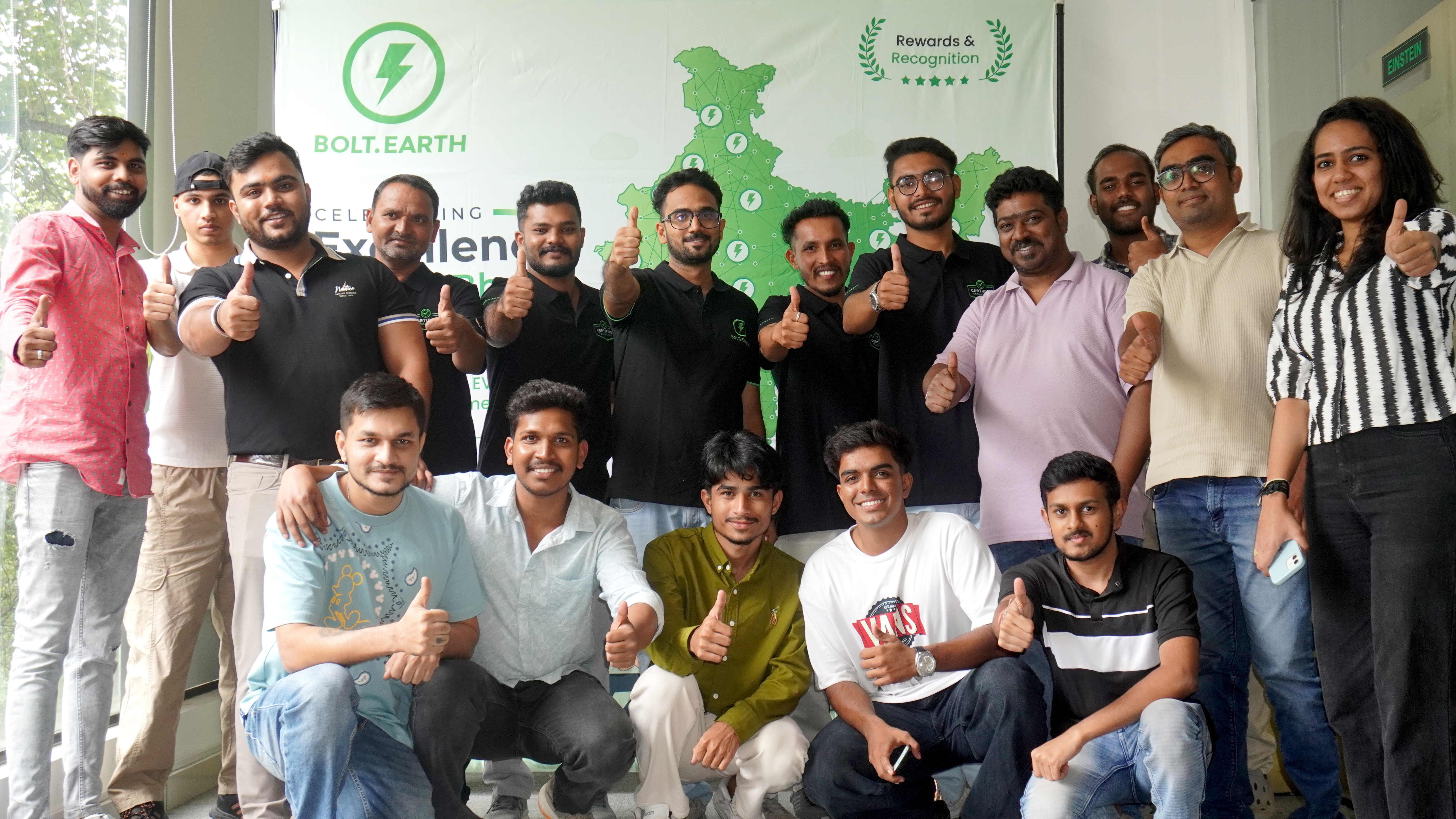
Last month, Bolt.Earth brought those unsung heroes into the spotlight through its first Rewards & Recognition program. The company honored technicians for everyday work that rarely gets noticed: showing up on time, fixing what’s broken, and making sure a charger works exactly when someone needs it to. It’s not glamorous work, but it’s what turns a charging network that exists on paper into one people actually trust.
This year’s program invited and felicitated 17 technicians from 17 states, including Andhra Pradesh, Assam, Bihar, Chhattisgarh, Gujarat, Jammu and Kashmir, Jharkhand, Karnataka, Kerala, Madhya Pradesh, Maharashtra, Orissa, Rajasthan, Tamil Nadu, Telangana, Uttar Pradesh, and West Bengal.
It reflected the scale of job creation within Bolt.Earth’s network, with its technician workforce growing from 800 in 2024 to more than 5,000 certified technicians in 2026. The network has grown more than six‑fold, representing one of the largest skilled employment footprints created by any player in India’s EV charging space. These jobs span metros and smaller towns where formal technical work is still hard to come by.
“Every charging point that stays online does so because a technician showed up to fix it. They are the reason a charger works when someone needs it, not just when it’s installed. Every new charger we deploy is also a skilled job we’re creating somewhere in India. Building a skilled workforce has been just as important to Bolt.Earth’s growth as building chargers,” said Mohit Yadav, Founder and CEO, Bolt.Earth.
Among those recognized was Abdul Moin from Maharashtra, who has been working with Bolt.Earth for over two years installing EV chargers for three-wheelers. He has built a team of 500+ on‑field technicians who work across Andhra Pradesh, Chhattisgarh, Jammu & Kashmir, Madhya Pradesh and Maharashtra.
“Bolt.Earth’s support has encouraged me and my team a lot. If we encounter any problem in the field, we get a quick solution. Together, my team and I install around 3000 chargers per month; this is the kind of opportunity and demand we see. A lot of people often ask me if buying an EV was the right choice. I tell them it’s a cleaner, greener alternative, and when they see the savings themselves, their perspective changes,” says Abdul.
Recognizing technicians isn’t a one‑off for Bolt.Earth — it’s built into how the company thinks about scale. As India’s charging network grows, reliability is non‑negotiable. Bolt.Earth understands that having someone there when a charger breaks is essential.
30, Jul 2026
From 5G Growth to 6G Leadership: India Sets Ambitious Vision for Future Connectivity
New Delhi, July 30: India is set to witness a major expansion in next-generation connectivity, with the country’s 5G user base expected to double and reach around 100 crore users by 2030, according to Union Communications Minister Jyotiraditya Scindia.
The announcement highlights India’s rapid progress in digital infrastructure and its growing ambition to become a global leader in advanced telecommunications technology. The expansion of 5G services is expected to drive innovation across sectors, including healthcare, education, manufacturing, agriculture, and digital services.
Scindia also said that India is preparing to play a leading role in the global 6G technology race, with efforts focused on research, innovation, and building a strong domestic telecom ecosystem. The country aims to develop cutting-edge communication technologies that can support future digital growth and strengthen its position in the global technology landscape.
The rapid rollout of 5G networks has already transformed connectivity across India, enabling faster internet speeds, improved digital services, and new opportunities for businesses and consumers. Continued investment in telecom infrastructure and research is expected to further accelerate the adoption of advanced technologies.
The government’s focus on 5G and 6G development reflects India’s broader vision of creating a digitally empowered economy and positioning the nation as a key player in the future of global communications.
30, Jul 2026
Microsoft Reports Strong Fourth-Quarter Performance as Cloud and AI Drive Continued Growth
July 30: Microsoft concluded its fiscal year with a strong financial performance, reporting fourth-quarter revenue of $90 billion, an 18 percent increase compared with the same period last year. The results reflect continued momentum across the company’s cloud computing, enterprise software, and artificial intelligence businesses, reinforcing Microsoft’s position as a leader in the rapidly evolving technology sector.
A defining highlight of the quarter was the performance of Microsoft Azure, which surpassed $100 billion in annual revenue for the first time. The milestone underscores the growing demand for cloud-based infrastructure and AI-powered services as organizations around the world continue to modernize their operations and invest in digital transformation initiatives.
Growth during the quarter was supported by strong customer demand for Microsoft’s expanding portfolio of cloud solutions, productivity applications, and intelligent business platforms. Enterprises across industries increasingly relied on Microsoft’s technologies to strengthen cybersecurity, improve operational efficiency, and accelerate innovation through data-driven and AI-enabled capabilities.
Artificial intelligence remained a key driver of the company’s performance, with AI features becoming more deeply integrated across Microsoft’s products and services. Continued adoption of AI-powered tools within Azure, Microsoft 365, GitHub, and other enterprise offerings contributed to higher customer engagement and reinforced the company’s long-term growth strategy.
The latest results also highlight Microsoft’s continued investment in expanding its global cloud infrastructure and advancing next-generation AI technologies. These investments have enabled the company to meet rising customer demand while supporting businesses seeking scalable, secure, and intelligent digital solutions.
Looking ahead, Microsoft remains focused on driving innovation across cloud computing and artificial intelligence while helping organizations adapt to an increasingly digital economy. With strong financial momentum, expanding customer adoption, and continued investment in strategic technologies, the company is well positioned to build on its growth in the coming fiscal year.


