


8, Jul 2026
EPFO Completes CITES Database to Enhance Member Services
New Delhi, July 8: The Employees’ Provident Fund Organisation (EPFO) has completed the CITES project database, marking a significant step towards improving digital services and making it easier for members to access EPFO facilities.
The upgraded database is expected to streamline service delivery by enabling faster processing of member requests and improving access to key provident fund services. The initiative is part of EPFO’s ongoing efforts to modernise its digital infrastructure and enhance the overall user experience.
Officials said the CITES database will help strengthen data management, improve operational efficiency and support quicker delivery of services to millions of EPFO members across the country.
The development reflects EPFO’s continued focus on digital transformation, making provident fund services more accessible, efficient and convenient for subscribers.
- 0
- By Neel Achary

8, Jul 2026
Digital Growth to Drive India’s Economic and Social Progress
New Delhi, July 8: Experts have said that the digital economy will be a major force behind India’s future economic growth and social development.
The rapid expansion of digital technology is changing the way businesses operate, improving access to services and creating new opportunities across different sectors. Digital platforms, innovation and technology-based solutions are helping strengthen economic activities and improve connectivity.
Experts highlighted that sectors such as digital payments, artificial intelligence, e-commerce and digital infrastructure will continue to support India’s development and contribute to a more inclusive economy.
The growth of the digital ecosystem is also expected to encourage entrepreneurship, generate employment opportunities and help more people access financial and public services.
With increasing focus on digital infrastructure and innovation, India is moving towards a technology-driven economy that can support long-term growth and development.
8, Jul 2026
Wi-SUN FAN Becomes First Wireless Mesh Network Standard Adopted by ISO/IEC
International recognition as ISO/IEC/IEEE 32857:2026 removes procurement barriers for utilities and smart cities, accelerating adoption of standards-based wireless mesh networking
BEAVERTON, Ore. July 08: — The Wi-SUN Alliance, the global ecosystem promoting open, secure, and interoperable wireless mesh networking for utilities and smart cities, announced that the Wi-SUN Field Area Network (FAN) specification has been formally ratified as ISO/IEC/IEEE 32857:2026. The designation makes Wi-SUN FAN the first wireless mesh networking specification adopted as an ISO/IEC standard and provides utilities, municipalities and infrastructure operators with an internationally recognized framework for wireless mesh networking. This carries direct implications for utility operators, municipal governments, and infrastructure procurement agencies evaluating wireless networking technologies for critical field-area deployments.
“When a specification carries ISO/IEC recognition, it signals to procurement officials, regulators and policymakers around the world that the technology has been vetted at the highest level,” said Phil Beecher, president and CEO of the Wi-SUN Alliance. “Wi-SUN technology already supports some of the world’s largest utility networks, including nationwide smart metering deployments in Japan and large-scale smart grid projects across North America, Europe and Asia-Pacific, demonstrating that the technology is already proven at scale. ISO/IEC/IEEE 32857:2026 gives utilities, municipalities and infrastructure providers an internationally recognized standard they can rely on and reference when planning the next generation of critical infrastructure.”
Only 3% of IEEE-originated specifications achieve ISO/IEC joint recognition, a distinction that reflects both the technical maturity of the Wi-SUN FAN specification and the strength of the open, consensus-based process behind it. For utilities and municipalities, it removes a significant procurement barrier: procurement officers and regulators can now reference an internationally ratified specification when evaluating or mandating smart grid and smart city connectivity solutions, rather than relying on industry-driven documentation alone.
“The Wi-SUN FAN specification was developed through exactly the kind of rigorous, consensus-driven technical process that ISO and IEC look for when evaluating IEEE work for joint adoption,” said Gary Stuebing, Past Chair Entity Collaborative Activities Governance Board, IEEE SA. “What ISO/IEC/IEEE 32857:2026 tells the market is that this specification was built to last — designed with the depth and precision that implementers need to build global interoperable, certifiable solutions at scale.”
The Wi-SUN Alliance provides the definitive testing and certification program for this specification, helping ensure products are compliant and fully interoperable in multi-vendor deployments.
8, Jul 2026
Tech Alert: Leostream Checklist Helps Organizations Evaluate a Move Beyond Citrix
Seven considerations for small and midsize enterprises planning the next generation of digital workspaces
BOSTON – July 8, 2026 –Leostream Corporation today released a practical checklist to help small and midsize enterprises (SMEs) considering a migration from Citrix to a more flexible digital workspace platform.
SMEs in particular are evaluating alternatives due to anticipated increases in Citrix renewal costs or because maintaining the environment has become more complex than their business requires. However, Leostream advises cost alone should not drive a potentially disruptive migration decision.
“Organizations have a unique opportunity to modernize their digital workspace rather than simply replace one platform with another,” said Karen Gondoly, CEO of Leostream. “The right solution should prepare your organization for where IT is headed over the next decade and not just solve today’s licensing challenge.”
Leostream recommends evaluating prospective platforms using the following checklist:
1. Will the platform give you freedom to change infrastructure?
The digital workspace should support the business, regardless of where workloads are physically located. A platform should allow you to move between on-premises infrastructure, private cloud, public cloud, or hybrid environments without replacing or impacting the connection management solution.
2. Can you choose the hyperscaler that’s best for each workload?
Along with the freedom to change is freedom to choose as cloud strategies evolve. With a platform that agnostically supports AWS, Microsoft Azure, Google Cloud, and other environments, future cloud decisions remain business decisions and not software limitations.
3. Does the platform adapt to different user populations?
Knowledge workers, engineers, developers, contact centers, healthcare providers, scientists, students, and creative professionals all have different workspace requirements. The ideal platform should allow IT administrators to tailor access policies, desktops, applications, display protocols, and authentication methods based on each user’s needs.
4. Can you deploy only the software and tools you actually need?
Maintaining numerous adjacent components to support capabilities they rarely use is inefficient, costly, and incurs added complexity. The digital workspace platform should deliver the core functionality organizations need without requiring unnecessary infrastructure or additional management overhead.
5. Is the platform simple to deploy and operate?
Operational simplicity reduces risk and lowers administrative costs. Determine how much infrastructure, ongoing maintenance, and specialized expertise are required to manage the environment over time. Automation of routine tasks such as on/offboarding users and provisioning resources helps reduce management.
6. Is your investment protected as technology changes?
Virtualization platforms, cloud providers, authentication systems, and remote display protocols continue to evolve. The digital workspace platform should allow organizations to adopt new technologies without requiring another major migration.
7. What kind of partner will you be working with?
Products are only part of the equation. Organizations should consider whether their vendor is responsive, collaborative, and easy to work with throughout deployment, support, and future scaling. Customers consistently tell Leostream they value direct access to experts, transparent licensing, and a customer-first approach that simplifies long-term success.
“Rather than evaluating alternatives because of significant increases in Citrix renewal pricing, we encourage IT leaders to use this moment to consider the broader strategic opportunity,” said Gondoly. “Our goal isn’t to convince customers that there’s only one way to build a digital workspace, it’s to give them the flexibility to choose the infrastructure, cloud providers, protocols, and technologies that best serve them today and in the future.”
The Leostream® Remote Desktop Access Platform for hosted desktops and workstations offers a comprehensive solution for remote access to maintain productivity, control costs, and ensure security with strict authentication and authorization built on zero-trust concepts. Its connection management system eliminates clunky corporate VPNs with an ultra-efficient gateway that gives users access to only the specific resources they have permission to use, automatically, regardless of their location or device. The Leostream Platform shines even in environments that rely on complex, specialty applications like energy and science; large files such as media and entertainment; real-time performance like financial services; and bulletproof network security like government and defense.
About Leostream
Leostream digital workspace management solutions embody over 20 years of Leostream research and development in supporting customers with hosted desktop environments, including VDI, hybrid cloud, and high-performance display protocols. The Leostream high performance Remote Desktop Access Platform provides the world’s most robust digital workspace connection management and remote access feature set, allowing today’s enterprises to choose the best-of-breed components to satisfy their complex security, cost, and flexibility needs while working with them as they evolve into tomorrow. The Leostream Privileged Remote Access service simplifies, secures, and monitors temporary access to corporate resources for vendors, service providers, and external contractors. Follow Leostream on LinkedIn and X.
Leostream is a registered trademark of Leostream Corporation in the United States. All other trademarks are the property of their respective owners.
8, Jul 2026
AdClarity Expands CTV Ad Intelligence Across 20 Countries, Delivering the Industry’s Widest Cross-Market Coverage
NEW YORK, NY, July 8, 2026.BIScience, the company behind AdClarity, the world’s leading AI-powered ad intelligence platform, today announced the expansion of its Connected TV (CTV) ad intelligence to 19 new countries, bringing total tracked CTV ad spend to $70 billion across 20 markets. The expansion gives brands competitor benchmarking across countries, agencies a single source of truth for global CTV, and publishers demand signals by market.
CTV is becoming a central part of the TV ecosystem as linear viewing declines, evolving rapidly with more platforms, formats, and countries entering the space. It is growing faster than any other major channel and now represents 10 percent of all tracked ad spend globally. In the United States alone, CTV now represents a 16 percent share of all US ad spend tracked by AdClarity.
To help organizations make more informed decisions with global media intelligence, BIScience has added CTV coverage in Canada, the United Kingdom, Germany, Australia, Brazil, France, Indonesia, Italy, Norway, the Philippines, Singapore, South Korea, Switzerland, Thailand, Saudi Arabia, Poland, Spain, New Zealand, and Denmark. Each market includes local platform depth. For example, the United Kingdom features Channel 4 and ITV, Germany includes Joyn and Sky, and Australia covers 10 Play, 7plus, 9Now, and Stan.
With this release, BIScience’s AdClarity now combines the industry’s widest cross-market CTV coverage with AI-powered ad intelligence. Built on one consistent methodology across markets and media, including CTV, AdClarity gives teams a unified way to compare activity, uncover competitive shifts, and move from data to decisions faster. Customers report generating insights in under 10 seconds, reducing manual analysis by 85% through AI-driven automation, and saving an average of 7,980 hours annually per customer.
AdClarity’s panel of 30 million opt-in users spans 132 streaming platforms, 5 million smart TVs, and 52 countries, with 8 years of historical depth. AdClarity serves 27 percent of the Fortune 500, including Adidas, Amazon, Booking.com, Disney, Shell, Sony, and Wix. The platform is also used by four of the five top global advertising agencies and seven of the top ten global market research companies.
“Global advertisers don’t work in silos, and their intelligence tools shouldn’t either. By expanding AdClarity’s CTV coverage to 20 markets and integrating built-in AI, we’ve unified the cross-media view and bridged the gap between seeing data and taking action. One methodology, one platform. Total visibility across every screen,” said Dorit Kaplan, VP Product and Strategy at BIScience.
AdClarity CTV coverage is available now across all 20 markets as a premium add-on. Existing clients can extend immediately. To learn more, visit https://adclarity.com.
7, Jul 2026
Supply Chain Reset Puts India in Global Manufacturing Spotlight: ASSOCHAM
New Delhi, July 7: India is emerging as a key global manufacturing destination as companies worldwide look to diversify their supply chains, according to a report by the Associated Chambers of Commerce and Industry of India (ASSOCHAM).
The report highlights that India’s expanding industrial ecosystem, skilled workforce, improving infrastructure, policy reforms, and growing domestic market are strengthening its position in the global manufacturing landscape.
With businesses increasingly adopting a “China plus one” strategy to reduce supply chain risks, India is witnessing greater interest from global manufacturers across sectors such as electronics, automobiles, pharmaceuticals, renewable energy, and advanced technologies.
ASSOCHAM noted that continued investments in infrastructure, ease of doing business reforms, innovation, and skill development will be crucial to further enhancing India’s manufacturing competitiveness.
The report emphasised that India’s integration into global value chains can create new opportunities for investment, employment generation, and sustainable industrial growth.
India’s growing manufacturing capabilities are expected to play a significant role in shaping the country’s economic expansion and strengthening its position in the global supply network.
7, Jul 2026
AVer Introduces NC30 NDI Converter for Seamless NDI and HDMI Signal Conversion
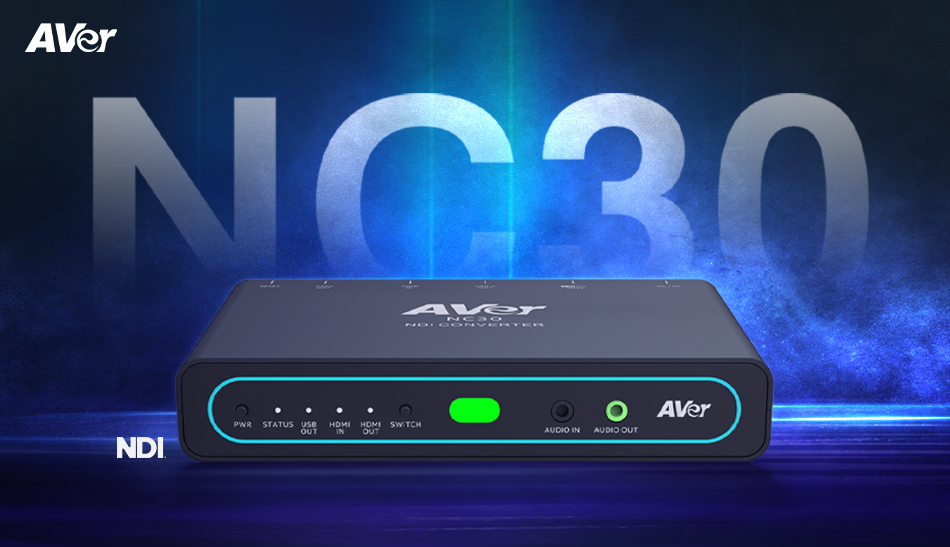
Taipei, Taiwan – July 7: AVer Information Inc., an award-winning provider of AI audio-video solutions, today announced the AVer NC30 NDI® Converter — a compact, bi-directional device that simplifies signal conversion between NDI and HDMI® for professional video environments. AV and IT teams can bring local HDMI sources into NDI-based production and distribution workflows, or output live NDI streams to local displays and USB-C connected laptops, all without additional equipment.
Designed for flexibility across a wide range of applications — from live monitoring and meeting-room sharing to multi-room video production — the NC30 enables organizations to deploy, manage, and scale high-quality networked video with a single, consistent setup.
Key User Benefits at a Glance
- Flexible, AV-over-IP Deployment: One device supports both encoding and decoding, so organizations can flexibly adapt rooms to different events and formats without changing hardware.
- Built for the AVer Ecosystem: Natively works with AVer cameras, Matrix Tracking Boxes, and BYOM Matrix Switchers, simplifying the distribution of AV across rooms and keeping system setups consistent organization-wide.
- Centralized Control on Enterprise Management: AV and IT staff can assign signals, switch sources, and monitor multi-stream previews from one intuitive interface.
- Real-Time Live Monitoring: HDMI loop‑out enables zero‑latency live feeds.
- Long‑term value and easier installs: PoE support reduces power adapters and cabling, and the 5‑year warranty offers long‑term peace of mind.
7, Jul 2026
Payfuture Launches Local Payments Integration for Merchants on Shopify in India
London, UK – July 7; Payfuture, a global payments company helping merchants scale in high-growth regions, now integrates with Shopify to provide merchants with seamless access to local payment methods in India’s fast-growing ecommerce market.
Merchants using Shopify can now enable popular Indian payment methods, including Unified Payments Interface (UPI) and NetBanking, through a single connection with Payfuture’s payment app.
India is one of the most strategically important ecommerce markets in the world, with its online retail sector projected to reach USD 150–170 billion by 2027. Widespread mobile-first behaviour and consumer trust in domestic payment systems continue to drive growth across the Indian subcontinent and broader South Asia. As the region matures, platform readiness, payment localisation, and regulatory infrastructure are becoming key competitive differentiators for merchants seeking long-term scale.
“This integration makes digital commerce more accessible, scalable, and locally optimised for global merchants in fast-growth markets,” said Manpreet Haer, CEO and Co-Founder of Payfuture. “India is a vital market for ecommerce growth, and our infrastructure makes it easier for merchants to reach local buyers while maintaining compliance and operational efficiency.”
This integration builds on Payfuture’s broader strategy to deliver local payment connectivity through major ecommerce platforms. The company continues to invest in infrastructure and regional capabilities to help merchants expand into India and other high-growth markets.
“Our role is to help global merchants operate like locals in markets that are often difficult to access,” added Manpreet Haer. “The Shopify integration allows us to bring that vision to life in one of the most important commerce ecosystems in the world.”
7, Jul 2026
Indian Companies Step Up AI Adoption as Workforce Preparedness Improves
New Delhi, July 7: Nearly one-fourth of Indian companies believe their workforce is prepared to adopt and leverage artificial intelligence (AI), as businesses across sectors accelerate the integration of AI-driven technologies into their operations.
The growing adoption of AI is encouraging organisations to invest in employee training, digital skills development, and workforce transformation initiatives. Companies are increasingly focusing on building AI capabilities to improve productivity, enhance decision-making, and drive innovation.
Industry experts said that while AI adoption is gaining momentum, organisations continue to face challenges related to skill gaps, employee readiness, and the need for continuous learning. Upskilling and reskilling programmes are emerging as key priorities for businesses seeking to maximise the benefits of AI.
Indian enterprises are exploring AI applications across areas such as automation, customer experience, data analytics, and operational efficiency. The shift reflects the broader trend of businesses adapting to a technology-driven workplace.
With AI becoming an integral part of business strategies, companies are expected to increase investments in workforce development and digital transformation efforts to remain competitive in the evolving global economy.
6, Jul 2026
UN Global Dialogue opens with urgent call for safe and inclusive AI that benefits all
AI safety, accountability and human oversight among topics to be discussed
Geneva, July 06 – The United Nations today kicked off a global dialogue bringing together governments, tech companies, academia, civil society and the technical community to facilitate discussions on artificial intelligence governance.
“AI is advancing at runaway speed. The question is whether we will govern it together – or let it govern us. For the first time, the AI Dialogue gives every country a seat at the table. We must now turn global participation into global action – to make AI safer, fairer, more accessible and more ethical,” said UN Secretary-General, António Guterres.
The inaugural session of the Global Dialogue on AI Governance (AI Dialogue) seeks to ensure that governance reflects the priorities of all nations, not just the most technologically advanced, and that the benefits of AI are shared by all.
Discussions will address various themes including the opportunities and implications of this technology; how to bridge the AI divide; international cooperation on AI governance; and robust human oversight of AI systems, consistent with international law, to ensure safety and security.
“This Global Dialogue is not merely about regulating a technology. It is about defining a shared vision in which technological progress goes hand in hand with human dignity, equity, and sustainable development,” said Annalena Baerbock, President of the UN General Assembly. “If governed responsibly and collectively, AI has the potential to accelerate progress across nearly every Sustainable Development Goal, offering powerful new tools in healthcare, education, scientific research, disaster preparedness, and agriculture.
“It is about demonstrating to the people of the world that the United Nations is not lost in the past or too slow to act; that it is, in fact, able and willing to move on the most pressing and emerging issues of our time.”
Why this platform, why now
AI is already being governed — through national regulations, technical standards, procurement frameworks, and bilateral agreements — but unevenly. Governance frameworks have been shaped predominantly by countries with advanced AI sectors, while the countries most exposed to AI’s consequences have had the least say in how those frameworks are designed.
The AI Dialogue corrects that imbalance. Mandated by the UN General Assembly, it gives every government an equal seat. Developing countries and the Global South participate with full standing to shape outcomes — not as observers.
“The credibility of this first Global Dialogue has been built through an open and participatory process that continues here in Geneva. Our collective success will be defined by every voice, perspective, experience, and contribution that is shaping the path forward for AI,” said Egriselda López, Permanent Representative of El Salvador to the UN and Co-Chair of the Dialogue.
Fellow Co-Chair and Permanent Representative of Estonia to the UN, Rein Tammsaar, said that “leveraging the convening power of the UN, we must start transforming artificial intelligence into a global public good that benefits all of humanity while ensuring safety by design and meaningful human oversight. For this to happen, the first Global Dialogue on AI Governance in Geneva should spark AI’s San Francisco moment.”
Six months of global consultations
Since January 2026, structured global consultations have taken place across thematic, regional, and virtual formats, drawing in governments, civil society, the private sector, academia, and the technical community. More than 1,500 written submissions were submitted from organisations and individuals across all regional groups.
The result of the written submissions revealed different priorities among the groups: For example, governments were the only stakeholder group to place capacity-building first. Most other groups ranked safety first. Other themes that ranked high in priority include transparency, accountability and human oversight, as well as social, economic, ethical, cultural and linguistic implications. One area of consensus from the consultations is that participants want to see continuity in this process: more than 500 submissions called for the process to continue beyond July.
The Dialogue takes place one week after the Independent International Scientific Panel on Artificial Intelligence launched its preliminary report handing the governments who convene there a shared evidence base to build policy from. The Panel, composed of independent scientists and experts from every region, outlines trends in AI and warns that current safeguards cannot keep pace with the growth of AI’s capabilities.
The Panel comprises 40 members serving in their personal capacity, independent of any government, company, or institution, including the United Nations. Members were selected from more than 2,600 candidates through an open call and independent review process. The Panel is co-chaired by Yoshua Bengio (Canada) and Maria Ressa (Philippines).
Doreen Bogdan-Martin, Secretary-General, ITU: “For AI to benefit all people, technology and international cooperation must move forward together. The Global Dialogue on AI Governance has sharpened the world’s focus on building an AI future that includes everyone, especially the 2.2 billion people who have yet to join the digital world.”
Khaled El-Enany, Director-General, UNESCO: “Humanity’s rich and diverse cultural and linguistic heritage is our greatest source of creativity, identity and resilience, but we must ensure Artificial Intelligence strengthens, rather than erodes this diversity. Global AI governance is essential to protect all voices, empower all cultures, and guarantee that innovation reflects the full breadth of human culture.”
Amandeep Singh Gill, Under-Secretary-General and Special Envoy for Digital and Emerging Technologies: “The Global Digital Compact gave the multilateral system two things it never had before: an independent scientific panel to assess AI’s impacts and opportunities, and a global dialogue where every government has a seat at the table. Today, for the first time, both come together. That is what makes 6 July a turning point — not just for AI governance, but for how the international community responds to transformative technology.”


