


1, Jul 2026
Govt Raises Concerns Over WhatsApp Username Rollout
New Delhi, July 1: The government is likely to issue a notice to WhatsApp over its upcoming username feature, which has raised concerns among regulators regarding user safety, privacy, and traceability.
Officials are examining the proposed feature to assess its potential impact on digital security frameworks and whether it could affect the identification of users on the platform. The review comes amid broader efforts to strengthen oversight of social media platforms operating in India.
The proposed username system is expected to allow users to interact without sharing mobile numbers, a change that has triggered debate over privacy protection versus accountability in digital communications.
Authorities are expected to seek clarification from WhatsApp on compliance with existing IT rules and safeguards to prevent misuse of the feature.
The government’s response will focus on ensuring that user convenience does not compromise cybersecurity, traceability, or regulatory compliance in India’s digital ecosystem.
- 0
- By Neel Achary

1, Jul 2026
Hostinger launches ecommerce platform that turns a product photo into a checkout link in minutes — no website required
1, Jul 2026
SHE-LEAPS Initiative Aims to Drive Data-Led Growth and Empower 6 Crore ‘Lakhpati Didis’
New Delhi, July 1: The SHE-LEAPS initiative is being positioned as a key framework to accelerate data-driven development and support the government’s goal of empowering 6 crore ‘Lakhpati Didis’ across the country.
The programme focuses on leveraging data, technology, and digital tools to strengthen women-led entrepreneurship, improve access to financial services, and enhance livelihood opportunities for women in rural and semi-urban areas.
Officials said the initiative aims to integrate women self-help groups and micro-enterprises into a more structured digital ecosystem, enabling better tracking of income growth, credit access, and market linkages.
By promoting data-backed decision-making, SHE-LEAPS is expected to help identify gaps in skill development, expand income-generating opportunities, and improve the scalability of women-led enterprises.
The initiative aligns with broader efforts to promote financial inclusion and strengthen grassroots entrepreneurship, with a focus on enabling sustainable income growth for women across sectors such as agriculture, handicrafts, services, and small-scale manufacturing.
Authorities said the programme will play a significant role in advancing the vision of creating a large base of financially empowered women entrepreneurs, contributing to inclusive and data-driven economic growth.
1, Jul 2026
India’s Data Centre Industry to Grow to Dollar 6.8 Billion by FY30
New Delhi, July 1: India’s data centre industry is projected to grow significantly, reaching an estimated $6.8 billion by FY30, driven by rising digital adoption, cloud computing demand, and expanding data consumption across sectors, according to a recent industry report.
The report highlights that rapid digitalisation, increasing internet penetration, and the growth of data-intensive technologies such as artificial intelligence, fintech, and e-governance are expected to be key growth drivers for the sector.
It also notes that India is emerging as a major data infrastructure hub in the Asia-Pacific region, supported by strong policy backing, improved connectivity, and growing investments from global and domestic players.
Industry experts said the expansion of data centres will play a crucial role in supporting the country’s digital economy, enhancing data security, and enabling scalable cloud infrastructure for enterprises and government services.
The sector’s growth is also expected to generate employment opportunities and attract further investments in allied infrastructure such as power, cooling systems, and network connectivity.
1, Jul 2026
India’s Passenger EV Registrations Surge 90 pc in Q1 FY27
New Delhi, July 1: India’s passenger electric vehicle (EV) registrations recorded a sharp 90% year-on-year increase in Q1 FY27, reflecting accelerating adoption of clean mobility across the country.
The strong growth was driven by rising consumer preference for electric mobility, expanding charging infrastructure, and the introduction of new EV models across segments. Improved affordability and supportive policy measures also contributed to the surge in registrations.
Industry observers said the rapid rise highlights a significant shift in India’s automotive market, with electric vehicles gaining wider acceptance among urban and semi-urban buyers. Fleet operators and ride-hailing services have also contributed to higher demand.
The trend underscores the country’s transition towards sustainable transportation and reduced dependence on fossil fuels, aligning with broader climate and energy goals.
Experts expect EV adoption to continue its upward trajectory in the coming quarters as manufacturers expand offerings and infrastructure strengthens further.
1, Jul 2026
AVer Expands Global Presence with New South Korea Subsidiary to Accelerate Local Market Growth
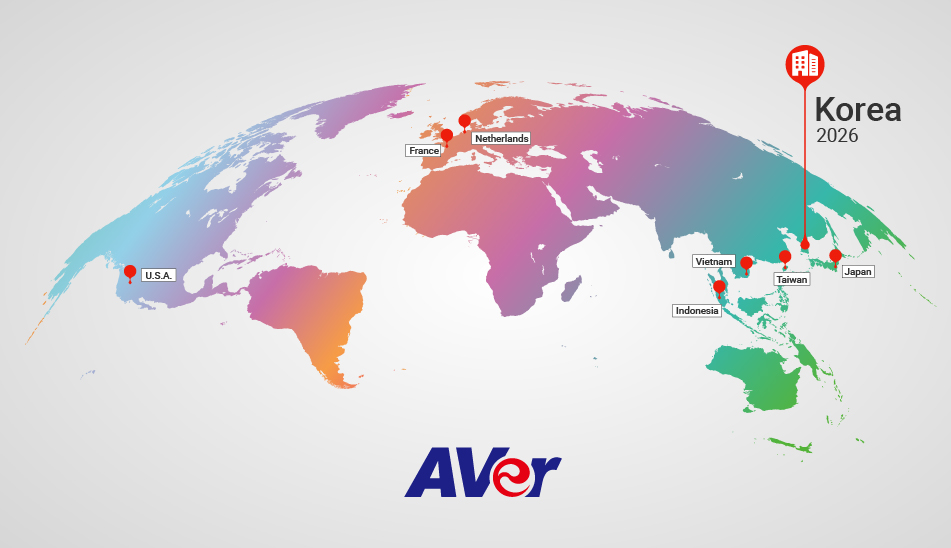
Taipei, Taiwan – July 1: AVer Information Inc., an award-winning provider of AI audio-video solutions, today announced the establishment of a new subsidiary in South Korea. This strategic move marks a key milestone in AVer’s continued expansion across Asia and reinforces its commitment to building a robust global organization that serves customers worldwide. The new subsidiary will act as a local hub to accelerate the adoption of AVer’s professional AV, video conferencing, and medical solutions in the Korean market.
David Kuo, President of AVer Information Inc., said, “Markets today evolve quickly, and organizations must possess both the strength of global resources and the flexibility of a local team. By establishing a dedicated subsidiary in South Korea, we are bringing decision-making closer to our customers, enabling faster response times and more tailored solutions for local demand.”
The establishment of AVer Korea is far more than a simple business expansion; it represents a critical strategic move to enhance the group’s financial performance and overall operational synergy.
lDeepening local partnerships and existing channels: AVer has built a strong foundation with local partners in South Korea over the years. With the establishment of the new subsidiary, AVer will integrate and revitalize its existing distributors and reseller channels, upgrading isolated sales into a comprehensive, locally-rooted service network. At the same time, AVer will be able to work closely with Korean technology supply chains and software ecosystems, enabling deep integration and the development of exclusive, highly localized solutions.
lStrengthening financial performance: By empowering AVer Korea to lead high-margin product lines — such as intelligent collaboration systems, AI Auto Tracking cameras, and medical grade PTZ cameras — AVer can more precisely target markets with strong, non-discretionary demand and optimize channel deployment. This approach is expected to significantly shorten sales cycles and drive more stable revenue growth for AVer. In addition, the South Korean subsidiary will leverage the deep R&D expertise and high-quality, integrated manufacturing capabilities of AVer’s Taiwan headquarters, avoiding duplicated setup costs and further enhancing the group’s overall profitability.
As South Korea continues to invest in enterprise digital transformation and telehealth, the South Korean subsidiary is positioned to deliver timely, precise AI-powered AV solutions that meet evolving industry needs. By combining local agility with global expertise, AVer aims to support organizations in improving communication, collaboration, and care delivery, while driving the company’s next phase of growth.
1, Jul 2026
As the World Races to Make More Chips, the Next Bottleneck May Be Femtosecond Lasers
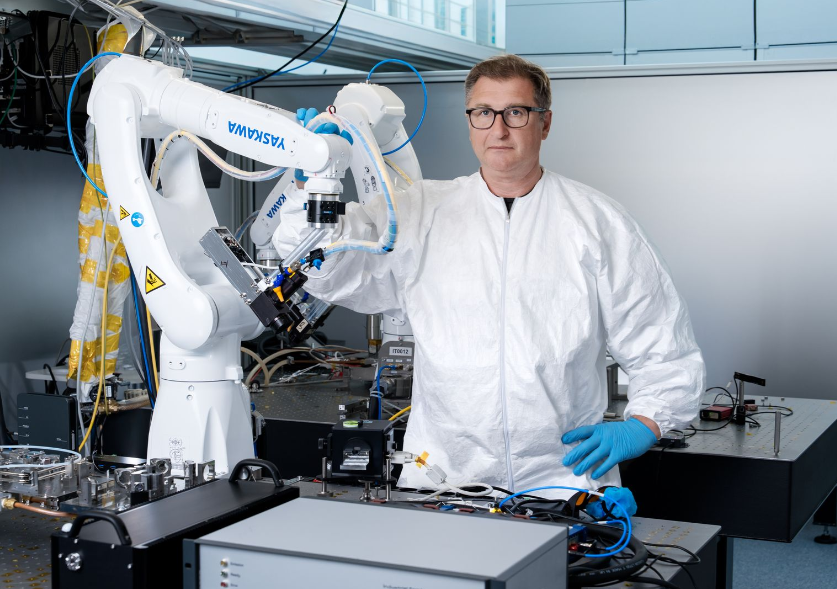
Nikolajus Gavrillinas, co-founder and CEO of LITILIT. (Source: LITILIT)
July 1, Vilnius, Lithuania. Last week, Apple announced that it would increase prices for its MacBooks and iPads by 20%, making it the latest company to raise electronics prices amid soaring chip costs and shortages. According to experts, the solution to increasing chip production lies not only in expanding manufacturing capacity but also in securing the right precision tools.
At the end of June, Apple said that it would raise prices for its devices due to chip shortages, noting that it had “never seen a component price increase this much, this quickly.” Other tech companies, including Microsoft, Sony, Dell and HP have also increased prices or are planning to do so. The pressure is being felt across the whole electronics market: over the past year, memory chip prices have spiked approximately six-fold, according to a Morgan Stanley report quoted by Reuters.
The main reason for the price hikes is the AI boom, which has driven memory chip costs to levels that manufacturers can no longer absorb.
According to experts at LITILIT, a startup manufacturing femtosecond lasers, as chip demand grows, the world may also face a shortage of precision tools to manufacture them. Nikolajus Gavrilinas, CEO of LITILIT, says that femtosecond lasers are increasingly used in manufacturing the latest generation of semiconductors due to highly accurate processing with minimal thermal impact.
“On a modern chip node, even sub-microscopic thermal damage makes a component unusable. As chips become more complex, manufacturers turn to femtosecond lasers that can remove material without causing any thermal damage to the surrounding structure. Since femtosecond lasers are also increasingly used in the production of the equipment for the data centers and many other advanced applications, the world might also face a bottleneck, as femtosecond laser production remains concentrated in a small number of facilities worldwide,” Gavrilinas says.
Gavrilinas notes that having strong domestic femtosecond laser production capacity is especially important for Europe, which has recently proposed Chips Act 2, aiming to double the EU’s global semiconductor market share from 10% to 20% by 2030. Similarly, the US and China are also pushing to increase local chip manufacturing.
To address the potential shortage of femtosecond lasers, LITILIT has just broken ground on a new femtosecond laser factory in Vilnius. The factory targets a production capacity of 3,000 lasers per year within a couple of years of launch, making it the highest-capacity femtosecond laser facility in the world.
The company is producing lasers based on a few patented inventions (link to patent 1, link 2), made by Kęstutis Regelskis, Nerijus Rusteika, and Gavrilinas, in close collaboration with the Center for Physical Sciences and Technology (FTMC) in Vilnius. The company’s long-term vision is to bring femtosecond lasers to massive-scale applications, with similar cost, integration simplicity, and reliability as nanosecond fiber lasers.
“Typical femtosecond lasers can deliver exceptional application performance, but are notoriously difficult to manufacture and require highly qualified specialists in production. We developed lasers with reduced component complexity, a purpose-built design, a high level of automation, and production processes adapted to serial manufacturing. This makes them ideal for serial production at the scale required for manufacturing semiconductors and other components that demand high-precision tools,” Gavrilinas explains.
According to Gavrilinas, the lesson from the current chip shortage is that advanced manufacturing depends on more than the capacity of the lithography process. It also requires access to other enabling tools behind next-generation production: from femtosecond lasers to advanced packaging and precision material-processing systems.
1, Jul 2026
Engineering the next generation of semiconductor materials, one layer at a time
News Release: Engineering the next generation of semiconductor materials, one layer at a time
July 1, 2026 — Silicon is an essential element for creating semiconductors, the building blocks of all modern-day computing technologies. However, as devices continue to shrink, engineers are approaching the limits of what silicon can achieve.
It’s time for some new materials.
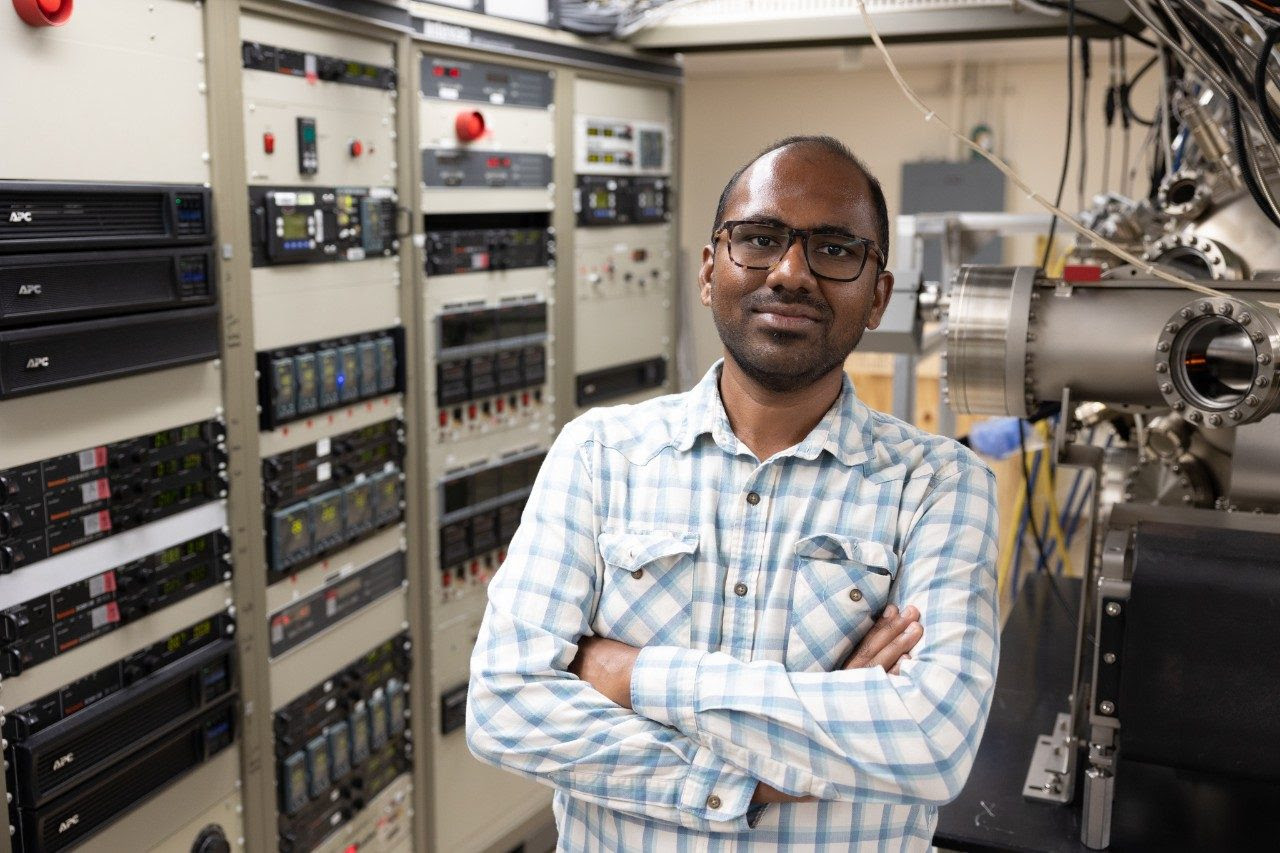
As a Ph.D. student in the Advanced Devices and Sustainable Energy Laboratory (ADSEL), Sengunthar Karthikeyan is helping to reinvent the foundation of semiconductors at the atomic level.
“The aim is to address the challenges in incorporating novel semiconductors in the future,” Karthikeyan said. “I’ve really enjoyed the hands-on research, growing material systems that have the potential to create different types of electronic and photonic devices, such as transistors, lasers, and photodetectors on the same platform.”
Creative solutions
Semiconductors are materials such as silicon with the ability to conduct or insulate against electricity. They serve as the microscopic on/off switches inside all modern electronics. As components have shrunk, engineers have encountered new challenges: electrons leaking through physical barriers in a process called tunneling and power density causing overheating. Silicon is also inefficient at emitting light, limiting its usefulness for photonic applications.
In the ADSEL group, Karthikeyan, his advisor Mantu Hudait, professor in the Bradley Department of Electrical and Computer Engineering, and fellow Ph.D. students experiment with elements such as indium, gallium, aluminum, tin, and germanium to create new materials that can replace silicon in future electronic systems. Components forged from new materials made from various combinations — such as indium-gallium-aluminum-
“ADSEL has given me an opportunity to analyze and understand the science behind the structure properties and co-relate them to device performance metrics,” said Karthikeyan. “I’ve been inspired to investigate numerous creative solutions before letting logistics interfere.”
For example, Karthikeyan spent nearly 14 hours carefully etching through a semiconductor layer to reach a target interface just nanometers thick. After missing the area on his first attempt, he repeated the experiment. He was able to successfully capture data used to characterize the material for future laser and photodetector applications. The efforts were detailed in his inaugural paper, Lattice‑matched GeSn with enhanced carrier confinement, published in the Journal of Materials Chemistry C.
What’s ahead
After completing his internship at Intel this summer, Karthikeyan will join the front end of line in the semiconductor industry, where he’s excited to bridge the gap between fundamental materials research and practical technology. His ultimate goal is to develop a way for transistors, lasers, and photodetectors to be manufactured together on the same semiconductor wafer.
“Karthikeyan’s contributions have strengthened our research in meaningful ways,” said Hudait. “His future impact will be significant. I’m excited to see him carry forward the curiosity, discipline, and integrity he has shown in our research group.”
Original study: DOI.10.1039/D3TC01018J
30, Jun 2026
Scality and OVHcloud accelerate European digital sovereignty with new cloud storage offering
Partners unveil a sovereign, cyber-resilient storage platform designed for the most demanding AI workloads, combining high-performance object storage, cloud-native infrastructure, and full data control, with no dependence on third-party hyperscalers
SAN FRANCISCO, June 30, 2026 – Scality, a global leader in data infrastructure software for the AI era, and OVHcloud, a global cloud provider and European cloud leader, today announced an expanded technology partnership and a new joint storage platform built for European digital sovereignty. The solution gives organizations full control over sensitive data, with no dependency on U.S. hyperscalers, while delivering the performance and resilience required for the most demanding AI workloads.
Deployment options include a 100% dedicated sovereign cloud and on-premises via the OVHcloud OPCP (On-Prem Cloud Platform), with backup replication across multiple availability zones (multi-AZ).
The expanded partnership addresses two urgent business needs: maintaining control over sensitive data in an increasingly demanding regulatory environment and providing private infrastructure capable of supporting the most intensive artificial intelligence workloads.
Sovereign infrastructure, uncompromised performance
Today, digital transformation faces a contradiction: organizations want the agility of the cloud but cannot afford to expose critical data to foreign jurisdictions. This challenge is particularly acute in healthcare, finance, defense, and public services, where strict regulations such as European GDPR, DORA, NIS2, and HIPAA for the U.S. require data localization and complete control over information assets.
The combination of Scality and OVHcloud OPCP solutions directly addresses this challenge. Scality RING and Scality ARTESCA provide massive, resilient, S3-compatible object storage deployed directly on the customer’s on-premises infrastructure. OPCP adds cloud-native orchestration, a managed services catalog, and deployment automation, all built on a foundation independent of foreign public cloud providers.
Beyond the on-premises layer, this alliance also extends to a dedicated storage offering on OVHcloud Bare Metal infrastructure through the HGR-STOR range. This setup enables organizations to easily deploy off-site backups with private S3 compatibility, integrated with leading cyber-resilience tools such as Veeam and Commvault, all hosted directly by OVHcloud. A key advantage is the guarantee of 100% dedicated servers, with no resource sharing with other customers, providing predictable performance and maximum isolation. It also supports a robust business continuity plan (BCP) by enabling controlled failover to OVHcloud infrastructure in the event of a disaster or primary site outage.
For end users, the result is a modern, seamless, sovereign cloud experience with predictable costs and without the legal risks associated with U.S. hyperscalers.
AI close to the data
Artificial intelligence requires vast amounts of data and computing power, but it is equally demanding in terms of latency and confidentiality. Training models or performing inference on mission-critical data, like medical records, financial transactions, and industrial telemetry, requires processing it where it resides.
The joint Scality-OVHcloud OPCP platform addresses this need end-to-end. Scality’s high-performance object storage, which is GPU-direct compatible and optimized for AI data pipelines, integrates natively with OPCP’s managed on-premises infrastructure. Organizations can train models, run MLOps pipelines, and deploy AI applications in near real time directly within their own environments, without compromising data security or regulatory compliance.
“OVHcloud and Scality share the same conviction: sovereignty is not a barrier to innovation — it is the prerequisite. By combining our high-performance object storage with the OPCP platform, we empower companies to scale their AI projects without ever sacrificing control over their data.”
– Emilio Roman, Chief Revenue Officer, Scality
“The OVHcloud OPCP platform was designed so that software vendors and their customers can benefit from the power of the cloud wherever they need it: on their own premises. Scality is the natural and recognized partner for high-performance storage solutions for the most critical data. Together, OVHcloud and Scality provide a sovereign infrastructure backed by more than 25 years of OVHcloud expertise and ready for AI.”
– Sylvie Houliere Mayca, Managing Director France Belux & MEA, OVHcloud
The joint solution was featured at VivaTech, June 17–20, in Paris Expo Porte de Versailles.
30, Jun 2026
Tezos’ Ushuaia Upgrade Goes Live, Unlocking Greater Bandwidth for Data-Intensive Applications
Paris, France—30 June, 2026—The Tezos protocol has been successfully upgraded, with no fork or disruption to the network, following an on-chain governance process which saw broad participation from bakers (validators) and other community members. The activation marks another step along the Tezos X roadmap, advancing Tezos’ scalability and laying the groundwork for a greatly improved staking experience as well as post-quantum security. Developed by Nomadic Labs, Trilitech, and Functori, Ushuaia is Tezos’ 21st protocol upgrade – proposed, adopted, and seamlessly activated through on-chain governance by network stakeholders.
Yann Régis-Gianas, Head of Engineering at Nomadic Labs, said, “With Ushuaia, Tezos Layer 1 does exactly what a modern settlement layer should do: increase data availability for the applications arriving with Tezos X, while preparing the cryptographic migration path long before quantum risk becomes urgent. It is a pragmatic upgrade: more capacity today, and safer foundations for tomorrow.”
Following the activation of the Ushuaia upgrade on mainnet, Data Availability Layer (DAL) bandwidth has increased to 10MB/s, opening the door for applications on Tezos to move 15x more data than before. Tezos can now support hundreds of thousands of transactions per second without data publication becoming a bottleneck, making it well suited for games, high-frequency DeFi, and other data-intensive applications. Rather than being a hardware-driven leap, the increase comes from a combination of software optimizations and updated protocol parameters. Security remains unchanged; the same attestation thresholds, rewards, and redundancy factors apply, meaning decentralization isn’t being traded for throughput. Ushuaia also makes DAL attestation dynamic, so operations like fast withdrawals on Etherlink (Tezos EVM), are now confirmed noticeably faster.
The Ushuaia protocol code also includes further features that have not been activated on mainnet, but are now available on testnet for community assessment and feedback ahead of potential activation in a later protocol upgrade. These include the introduction of quantum-resistant user keys via the NIST-standardized ML-DSA-44 post-quantum signature scheme. While this feature remains on testnet for now, its introduction marks an early first step towards quantum readiness, well before any real threat materializes. Also coming to testnet with Ushuaia is enshrined liquid staking, a mechanism enabling users to deposit XTZ into a protocol-recognized contract and receive sTEZ, an FA2.1 token that increases in value relative to XTZ, as staking rewards accrue. It lets users keep funds liquid while participating in staking, without relying on centralized third-parties. The accrual model also simplifies accounting and DeFi integration. The feature is still being developed in cooperation with the broader Tezos community, and mainnet activation is being targeted for a future protocol upgrade.
Arthur Breitman, co-founder of Tezos, said, “Among other improvements, Ushuaia marks the first step in a timely transition to post quantum cryptography, a change every blockchain will need to undergo.”
21 successful upgrades later, Tezos continues to demonstrate its unique ability to evolve continuously and implement new features that better serve the needs of the builders and individuals developing on the network, laying the groundwork for the needs of future users without compromising on decentralization. More information about the changes now live on mainnet, as well as those which are feature-flagged for future updates, can be found on the official Nomadic Labs blog.


