


15, Oct 2026
Wiliot and Thinaer Partner to Bring Secure Physical AI to the Department of Defense Customer Base
SAN DIEGO, CA – October 15, 2026 – Wiliot, a global leader in Physical AI for supply chains, and Thinaer, an industry leading provider of Physical AI infrastructure and software, today announced a partnership to bring secure, real-time asset visibility to the defense industrial base. The collaboration begins with a Thinaer deployment at a major U.S. aerospace and defense manufacturer serving the Department of Defense (DoD), tracking critical materials and parts throughout its internal supply chain.
Thinaer will begin deploying 1.7 million Wiliot IoT Pixels in Q1 2027 at the first customer’s operations, establishing a foundation for broader adoption across the defense industrial base.
The partnership also marks Wiliot’s entry into defense following scaled deployments across retail, post and parcel, logistics, and food and beverage. It extends Physical AI to complex defense manufacturing operations, where continuous asset visibility can help keep critical production programs on schedule.
Within these operations, materials and parts can undergo ten or more transformations as they move between locations, including temporary external facilities. Losing visibility between production stages can leave teams searching for critical components and put production schedules at risk. Tracking those movements continuously helps manufacturers understand where materials have stalled and intervene before delays spread across the operation.
“True Physical AI closes the gap between raw material and intelligent action. When every object on the factory floor is ambiently connected, the floor becomes a dynamic, self-navigating ecosystem where materials communicate their own state, location, and operational readiness to the systems and humans moving them,” said Bryan Merckling, CEO of Thinaer. “Wiliot IoT Pixels’ combination of size, cost, and battery-free operation lets us connect far more of those materials to the ‘Connect Everything’ layer of our Physical AI platform.”
Wiliot IoT Pixels are stamp-sized, battery-free Bluetooth sensors that attach to materials, parts, or containers to aggregate real-time location data. Wiliot’s Physical AI platform processes this data into asset-level insights that Thinaer integrates with information from its broader sensor infrastructure.
Together, these inputs give defense teams a shared view of operations across facilities to track asset movements, identify bottlenecks, and address delays. They also provide AI systems with the physical-world context needed to anticipate disruptions and keep production on schedule.
Protecting that operational data is central to the joint solution. Wiliot IoT Pixels transmit encrypted data that remains protected during collection and relay until it reaches the processing environment behind secure firewalls. Thinaer’s platform operates in government secure cloud environments, including Impact Level 5 environments, bringing established security infrastructure to the partnership’s defense applications.
“Defense manufacturers need continuous insight into their operations and control over the sensitive information those operations generate,” said Alex Sliwinski, Wiliot Vice President of Sales. “Encrypted data at the asset level is fundamental to serving this market. With Thinaer, we can put that data to work securely across the materials and parts on which defense production depends.”
With a roadmap to millions of tracked assets, the first deployment establishes a foundation for broader adoption of Physical AI across defense manufacturing. Thinaer has already identified additional customers for the joint solution, while its work in healthcare and other industrial markets provides opportunities to extend the partnership beyond defense.
- 0
- By Neel Achary

14, Oct 2026
PayQuicker Strengthens Its Leading Orchestration Platform with Advanced API Capabilities, AI-Driven Automation and Real-Time Visibility
Customers gain real-time webhooks, batch processing at scale, payment retractions, and expanded funds visibility with API v2
New York — October 14, 2026 — PayQuicker, a leading global payouts orchestration platform, today announced that API v2, its next-generation API platform, is now available to its customers. With the launch, clients gain access to advanced capabilities, including real-time webhooks, high-volume batch processing, payment retractions, and expanded visibility into funds activity.
In delivering new AI-driven automation capabilities, PayQuicker customers can now react to events as they happen instead of repeatedly checking for updates, process payments and invitations in high-volume batches, and gain greater visibility into funds activity through the API. Existing integrations are unaffected and remain fully supported, so customers can upgrade when it suits their teams and timelines.
“API v2 gives customers more ways to automate payout workflows, manage payments at scale and gain real-time visibility into funds activity,” said James Legan, CTO of PayQuicker. “From processing thousands of payments in a single job to responding to payout activity as it happens, these capabilities give program administrators greater efficiency, flexibility and control over their payout operations.”
Key capabilities of API v2 include:
-
Real-time webhooks: Signed notifications for payee registrations, payment status changes, account receipts, and batch job progress, replacing the need to poll for updates.
-
Batch processing: Submit up to 5,000 payments or invitations per job, with payments schedulable up to 30 days ahead. Failed rows are reported individually without stopping the rest.
-
Payment retractions: Recover the remaining balance of a payment sent in error directly through the API, without a support ticket or manual recovery process.
-
Enhanced funds visibility: Access funding balances and transaction activity through the API for greater oversight and easier reconciliation.
API v2 is available now. Developers can explore API v2 documentation at https://docs.payquicker.io, while existing customers can contact their PayQuicker representative for sandbox credentials and guidance on planning their upgrade.
14, Oct 2026
Logitech Unveils Its Biggest Enterprise Launch Ever: More Power, More Future-Proofed Rooms for the AI Revolution
Dubai, United Arab Emirates — October 14, 2026 — Logitech has unveiled the largest enterprise product launch in company history, engineered to equip companies for the AI revolution. Headlined by Logitech Rally Bar 2, Rally System 2 Pro, and Sound Shape technology, the new portfolio brings advanced compute, intelligence and sensing into more workspaces to support the next decade of intelligent collaboration.
“This second generation of smart video collaboration devices is Logitech’s answer to a new, dual mandate for IT: Deliver exceptional meeting experiences today while preparing for an AI-powered tomorrow,” said Henry Levak, general manager of Team Workspace Solutions at Logitech.
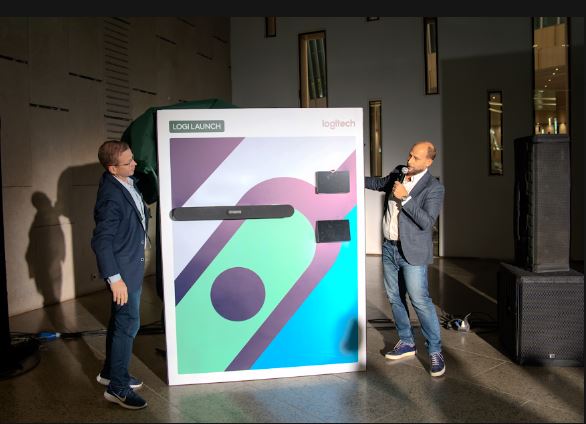
“AI-powered workspaces will be most valuable when they make collaboration feel effortless and fit the way organizations actually work,” said Murad Ali, Head of Middle East & Central Asia, Logitech for Business. “For Middle Eastern organizations, where teams often collaborate across cities, countries and cultures, the next generation of intelligent meeting rooms can help every voice be heard, every space work harder, and every meeting feel more connected. Logitech’s new portfolio is an important step toward that future.”
Rally Bar 2: A Market Leader, Reinvented for the AI era
Rally Bar 2 is the successor to the industry-leading Rally Bar, now supercharged by a Qualcomm chipset that offers four times more edge AI processing power than various other video bars on the market.
A custom-designed lens and 1-inch sensor bring stunning visual clarity, and AI-powered Right Sound 3 brings studio-quality audio to meeting rooms. Embedded sensors automate the workplace by booking meetings when people walk in and provide occupancy data to help leaders make informed decisions about real estate.
With its sleek design, Rally Bar 2 can easily be installed by one person in just minutes. It is housed in an aluminum unibody for easier recycling.
Certified for Microsoft Teams, Zoom Rooms, and Google Meet, and built on Microsoft Device Ecosystem Platform (MDEP), Rally Bar 2 merges Microsoft’s enterprise-grade security standards with Logitech’s room intelligence and signature meeting experiences.
Rally System 2 Pro: Mastering Massive Spaces
A chronic pain point for IT is delivering quality, AI-driven meeting experiences in large, multi-purpose spaces–rooms. These spaces may constitute only a fraction of the building but consume the majority of IT effort. Logitech Rally System 2 Pro is a modular new solution that dramatically simplifies multi-vendor setups in complex and divisible rooms, making Logitech a one-stop-shop for all spaces, from small to extra-large rooms.
Introducing Sound Shape: Audio That Defies Expectations
High-value spaces like executive boardrooms and training rooms are historically tricky to outfit with audio. Logitech’s Rally Speaker 2 Pro and Rally Speaker 2 Max house groundbreaking new Sound Shape audio technology. Sound Shape uses focused acoustic beams to precisely direct sound toward listeners throughout the room. The result is evenly distributed sound across a 20-meter (about 65 feet) space–a feat only partially achieved previously by costly and complex ceiling speaker array installations.
Next-generation product highlights:
● Rally Bar 2: Video bar for medium to large rooms, with next-generation processing power; 4-speaker system, 6 beamforming mics, occupancy detection and environmental sensing.
● Rally System 2 Pro: Modular video conferencing system for large, complex, and divisible rooms, includes:
○ RoomMate 2 Pro: A Qualcomm-powered compute box running up to three 4K displays, multiple cameras, speakers, and mic pods across Android, PC, or BYOD setups.
○ Rally AI Camera Pro: A dual-camera device combining a wide-angle 1-inch sensor with Logitech’s legendary optical PTZ camera design.
○ Rally Speaker 2: Linear, 7-driver beaming networked speaker delivers the same volume and intelligibility in the back of the room as it does in the front.
○ Logitech Link: Native AV-over-IP tech that links Logitech devices using simple Category cables—no external extender and no PoE injectors.
○ Right Sight 3: Smarter multi-camera tracking that uses multiple wall-mounted or center-of-table cameras and angles to automatically capture the best view of the room.
● Rally Speaker 2 Pro: Soundbar with 32 micro-drivers evenly distributes sound throughout large rooms via Logitech’s new Sound Shape audio technology.
● Rally Speaker 2 Max: Soundbar with 64 micro-drivers evenly distributes sound throughout extra large 20m (65-foot) rooms via new Logitech’s unique Sound Shape audio technology.
Also new:
● Tap IP 2: Brighter, smarter, network-connected meeting room touch controller.
● Tap Scheduler 2: Room scheduling panel with brighter display, higher-resolution, upgraded compute and built-in motion sensor.
Pricing and Availability
Rally Bar 2, Tap IP 2, and Tap Scheduler 2 are rolling out globally now. Rally System 2 Pro, RoomMate 2 Pro, and the Rally Speaker 2 lineup will be available in Summer 2027. Right Sight 3 camera switching capability will be available in the second half of 2027 as a free CollabOS software update. For more details, please visit www.logitech.comor check with your local or online retailer.
14, Oct 2026
Provenir Named a Major Player in the IDC MarketScape: Worldwide Decision Intelligence Platforms 2026 Vendor Assessment
PARSIPPANY, N.J., – October 14, 2026 – Provenir, the Decision Intelligence Platform for financial services providers, on Oct 12 announced it has been positioned in the Major Players Category in the IDC MarketScape: Worldwide Decision Intelligence Platforms 2026 Vendor Assessment (Doc #US54118426, September 2026). Provenir was also named a Major Player in the 2024 edition of this IDC MarketScape.
The recognition follows two years of continued investment in Provenir’s Decision Intelligence Platform, including production-accurate simulation, advances in AI models and assistants, and expanded capabilities designed to help customers design, test and deploy decision strategies faster.
The IDC MarketScape evaluated vendors supporting decision design, decision engineering and decision orchestration. The assessment covered vendors serving industries from financial services and insurance to government, manufacturing, and retail; we believe Provenir earned its position while maintaining a deliberate focus on financial services and adjacent sectors. The 2026 assessment also reflects the growing role of generative and agentic AI in how decision logic is authored, tested and explained, alongside continued human oversight.
The IDC MarketScape highlights Provenir’s unified low-code platform, stating “Provenir brings together decisioning, data orchestration, model orchestration, simulation, and case management in a single cloud-native environment, reducing reliance on separate point solutions for related decisioning functions.”
IDC highlights three areas of strength:
- Unified low-code platform: Provenir brings together decisioning, data orchestration, model orchestration, simulation, and case management in a single cloud-native environment, reducing reliance on separate point solutions for related decisioning functions.
- Breadth of the data marketplace: The vendor’s marketplace includes more than 150 prebuilt integrations with third-party data and analytics providers, and new integrations are typically turned around in about two weeks, shortening timelines that can otherwise stretch to several months.
- Platformwide AI assistant: A generative AI assistant operates across dashboards, model building, and documentation functions platformwide, providing conversational access to insights, recommendations, and translated documentation regardless of which page a user is working from.
The IDC MarketScape also notes Provenir’s “same engine” simulation approach: “where changes are tested using the identical processing rails and up to 12 months of live production data that power the operational platform, which may appeal to organizations that want confidence in projected outcomes before rules or scorecards go live.” This gives organizations greater confidence in projected outcomes before changes go live.
“I believe being named a Major Player for the second assessment in this market reflects the progress we’ve made in building a true decision intelligence platform,” said Lawrence Smith, CEO of Provenir. “Financial services providers need to change strategy quickly without losing control of how decisions are made. By bringing data, AI, simulation and governance together, we help customers test, understand and improve decisions before changes go live.”
Provenir’s generative AI assistant and MCP connectivity are in production today, supporting documentation retrieval, insight generation and guided model building. The IDC MarketScape also notes that Provenir’s near-term road map priorities include “natural language–driven flow generation, expanded automated recommendations, and human-in-the-loop monitoring for agents, reflecting a broader shift from assisted decision design toward continuous, machine learning–informed strategy optimization across the decisioning life cycle.”
To read the IDC MarketScape excerpt featuring Provenir, visit: https://www.provenir.
14, Oct 2026
Workday Launches Autopilot Agents That Get Real Work Done Across HR, Finance, and IT
“Probabilistic AI is great at guessing, but in payroll and finance, a good guess isn’t good enough,” said Gerrit Kazmaier, president, product and technology, Workday. “Our agents can work in the background because they follow the same policies, permissions, and approvals that already run the business. That’s what lets them go beyond making suggestions to anticipate, advise, and act autonomously.”“Until now, AI has worked like a copilot – helpful, but only when you ask it something. That’s not enough anymore,” said Joel Hellermark, chief AI officer, Workday. “Our agents work like autopilots – they get the work done on their own and bring people in exactly when their judgment makes the difference.”
“Agents are moving from singles pickleball – one human and one agent – to an orchestra phase, where the human is the director and agents run in the background, proactively doing the work,” Holger Mueller, vice president and principal analyst, Constellation Research. “Workday’s agents for talent acquisition, payroll, accounting, and more are built for that shift, working as autopilots while people stay in charge.”
14, Oct 2026
Moldova’s Tech Ecosystem Reaches New Milestone as MITP Surpasses 3,000 Active Resident Companies
CHIȘINĂU, Moldova, Oct 14: Moldova Innovation Technology Park (MITP), Europe’s first nationwide e-Park, has surpassed 3,000 active resident companies, marking a new milestone in the rapid expansion of the Republic of Moldova’s technology sector. The milestone comes as MITP companies continue to record double-digit growth, expand internationally and increase their role in the country’s economy.
MITP started operations in 2018 with 338 resident companies. Eight years later, it brings together more than 3,000 active businesses and over 27,000 employees, while company founders and investors represented in the ecosystem come from more than 50 countries. Approximately 90% of the products and services developed by MITP residents are intended for export, connecting Moldova-based technology companies with customers and markets around the world.
“Reaching 3,000 active residents is much more than a numerical milestone. It reflects a structural change in Moldova’s economy and the role technology now plays in its development. MITP has become one of the country’s main drivers of economic development, combining local entrepreneurship, exports, foreign investment and highly skilled jobs. At the same time, we are increasingly seeing Moldovan companies evolve from outsourcing-led business models towards developing their own products, intellectual property and scalable solutions for international markets,” said Marina Bzovîi, Administrator of Moldova Innovation Technology Park.
“Our role is to make this transition easier. MITP provides a predictable framework in which startups can launch, test and grow their businesses, while an expanding ecosystem of instruments helps companies attract investment, access international markets and bring global talent to Moldova. From the IT Visa and simplified business environment to startup financing and innovation support, we want Moldova to be a place where technology companies can build global businesses and global teams.”
MITP’s latest figures show that this growth is spread across a broad and increasingly diversified business base. In the first half of 2026, residents generated MDL 10.7 billion (Eur 0.5B) in combined sales, 19.1% more than during the same period of 2025. At the end of June, companies with active resident status employed more than 27,150 people (3.3% of country’s workforce).
Local entrepreneurship is at the core of the ecosystem. Eighty-six percent of MITP residents are locally owned companies, while foreign-owned businesses account for 14% of residents and approximately 26% of total sales. The figures illustrate a model in which Moldovan-founded companies provide the scale of the ecosystem while international investors contribute capital, expertise and connections to global technology markets.
The data also challenge the perception that technology-sector growth is concentrated among a handful of large employers. Companies with fewer than 50 employees generated 55% of all MITP resident sales in the first half of 2026, while companies with fewer than 250 employees generated approximately 82%. Around two-thirds of MITP sales were generated outside the Park’s 35 largest companies.
This structure reflects an economy increasingly driven by knowledge, intellectual property and the ability of relatively small teams to serve international markets. It also creates conditions for Moldovan technology companies to progress beyond service-based models and build products with the potential to scale internationally. The growing economic weight of the ecosystem is already visible at national level: MITP residents’ activity accounted for 5.3% of Moldova’s GDP in 2025.
MITP is simultaneously expanding the infrastructure around these companies. Its IT Visa programme provides resident businesses with a simplified framework for bringing foreign executives, investors and highly qualified technology specialists to Moldova, reducing immigration and hiring barriers for companies building international teams.
For early-stage innovation, the newly launched Moldova Innovation Fund, operated by MITP, adds a financing mechanism for technology projects moving from ideas through validation and prototyping towards market-ready products. The Fund has an initial budget of more than EUR 1 million, with four funding rounds planned over 24 months for pre-seed and early-stage projects.
The Park’s core operating model remains a simplified 7% single tax on sales revenue, together with digital-first administration and virtual residency. The stability of the tax regime is guaranteed by the state until the end of 2035, providing technology businesses with a long-term and predictable framework for investment and growth.
MITP resident companies are projected to generate approximately MDL 20 billion (Eur 1B) in combined revenue in 2026, further strengthening the technology sector’s contribution to Moldova’s exports, employment, investment attraction and transition towards a higher-value, knowledge-based economy.
14, Oct 2026
56 percent of Multilingual Consumers Have Walked Away From a Purchase Over Poor Website Localization, Liferay Survey Finds
New report finds consumers are confident they can spot machine-translated content, while better localized digital experiences can influence trust, loyalty and which brands they choose
LOS ANGELES – AI and automated translation have made it easier than ever for brands to deliver websites, product information and digital experiences in multiple languages. But as translation becomes easier to scale, brands face more pressure to maintain quality and local relevance across every market. Liferay, a leading provider of Digital Experience Platforms (DXPs), released new research examining where multilingual digital experiences are falling short and what consumers notice when localization misses the mark.
The Liferay 2026 Website Localization Report, conducted in September 2026 via the third-party platform Pollfish, surveyed 800 U.S. adults who had used a website, app or digital service in a language other than English in the past 12 months. The report examines how multilingual consumers experience translated and localized digital content, which mistakes they notice and how those mistakes affect trust, purchase decisions and brand loyalty.
Key findings include:
- Poor localization is costing sales. 56% of multilingual consumers have decided not to buy from a company because its website or app felt poorly adapted to their language.
- Good translations can still hide a bad experience. 54% of consumers who rate brands’ non-English translations as good or excellent have still walked away from a purchase over poor localization.
- Most translated websites still don’t feel truly local. Only 23% say non-English websites usually feel like they were written for them.
- Consumers think they can spot machine translation. 82% are confident they can tell when content was machine-translated rather than written or reviewed by a fluent speaker.
- Localization problems are nearly universal. 90% have noticed at least one localization problem on a website or app.
- Better localization can win business. 48% have chosen one company over a competitor because its website or app felt better adapted to their language and culture.
- Consumers associate better localization with human review. Only 20% credit AI alone for strong localization, while 43% credit human involvement.
“You can translate every page and technically have everything working, but that doesn’t mean the experience feels natural to the person using it,” said Bryan Cheung, co-founder and CMO at Liferay. “That’s where a lot of companies can underestimate the difference between translation and localization. Translation gets the content into another language. Localization is what makes it feel natural to the people using it.”
The findings show that consumers notice when a translated experience doesn’t feel natural. As brands expand multilingual content, getting the wording, tone and cultural context right can make the difference between a site that simply does the job and one that feels made for the people using it.
Visit the Liferay 2026 Website Localization Report on Liferay’s website for the complete survey results and additional insights.
14, Oct 2026
Kira AI Launches AI Workspace that Thinks and Acts Across Everything Users Do, Say, and Decide
“Life Operating Software” acts like a capable chief of staff for every person and team, handling the email, scheduling, calls, and follow-ups that stand between the users and the work only they can do
DOVER, Del.—October 14, 2026—Kira on Oct 13 announced the launch of a multi-part AI workspace that functions as an “operating intelligence” of the user’s life. Kira does more than just answer questions. Built to think, remember, and act, Kira learns about the user and his or her business, recalls every detail, and takes action across calls, emails, content, and workflows.
“Kira came to life based on an insight that most of the workday doesn’t involve actual work,” explained a spokesperson for Kira. “Instead, we spend huge amounts of time coordinating the work, chasing replies, moving meetings, writing the same email in five different ways, and so forth. This is the problem we are solving with Kira. Kira exists to close that gap. Kira acts as a capable chief of staff for every person and team. It handles the email, scheduling, calls, and follow-ups that stand between you and the work only you can do.”
Kira brings the user’s tools into one place and gives AI agents the ability to act on his or her behalf, but always with the user in control.
Key features include:
- Email Agent, which drafts, triages, and sends, with the user’s sign-off on anything that matters.
- AI Call Agents, which place and take calls, then hand the user the summary, not the transcript.
- Smart Calendar, which schedules, reschedules, and preps the user’s life before the day begins.
- Voice Command, which runs the dashboard hands-free.
- Connected integrations, which link the tools the user already works in.
Kira is a connected workspace that includes My Brain, My Files, and My Workspace. These are where the user’s notes, tasks, and documents live together.
Kira runs on a loop built to keep the user in charge while cutting out manual steps in various work tasks. “We connect the tools you already use, from email to calendar, and beyond,” the spokesperson added. “You delegate a goal, in plain language or by voice, but you get to review what Kira proposes before anything goes out.” As Kira executes, it learns the user’s preferences so the next round takes less time.
13, Oct 2026
Brompton LED processing brings Hollywood-grade virtual production to VG Media Studio in Germany
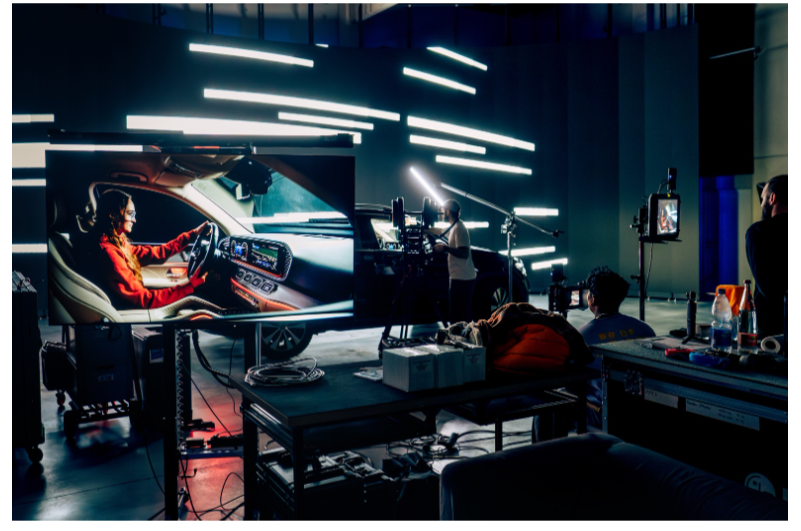
Oct 13: VG Media Studio, a full-service marketing and production agency based in Laichingen near Stuttgart, Germany, has installed Brompton Technology LED processing as part of a new virtual production facility designed to support everything from advertising and automotive work to short films and feature-length productions.
Virtual production was not originally part of the studio’s plans. During the development of the wider complex, however, the team began discussions with LG around its LED technology and its ambitions for an official reference studio in Europe. This led VG Media Studio to consider how LED, processing and tracking could work together to create a high-performance virtual production environment.
The decision was ultimately driven by a desire to give productions more options while maintaining the reliability and efficiency needed to keep projects moving. As a full-service marketing agency, VG Media Studio regularly looks for alternative approaches to production, whether that means a different camera angle, a social-first concept or a particular visual treatment.
That same approach informed the design of the LED studio, with technical performance and ease of operation key considerations. Brompton processing provides the superior colour precision, camera flexibility, and operational reliability required across the studio’s varied workload.
The studio is built around an LG LED volume, Mo-Sys tracking and Brompton Tessera processing, and is already being used for a diverse range of productions for external companies looking to harness virtual production facilities, equipment, and expertise.
The LED setup comprises more than 100 square metres of LG LED, with two 4K Tessera SX40 processors driving the wall and a Tessera S8 powering the ceiling. Each SX40 is paired with two Tessera XD 10G data distribution boxes. The system can operate at up to 60fps, with the potential to reach 120fps through further configuration.
VG Media Studio operates two spaces within the facility: the main LED studio offering approximately 250 square metres of space in front of the wall, alongside a 70-square-metre studio that can be used as a conventional film or photography space. Together, they allow the team to accommodate different production requirements under one roof.
“I really like the Brompton system we have here because it’s super fast and reliable,” says Simon Brüstl, Virtual Production Engineer at VG Media Studio. “The UI is really clean and has all the functions you need during operation. It just does the job that it has to do.”
The system is designed to make day-to-day operation straightforward. Brompton’s integration with Stream Deck allows the team to control the LED stage from a familiar interface, while its colour pipeline provides a precise and consistent result across different cameras.
Integration with Mo-Sys adds another layer of flexibility. VG Media Studio can use Mo-Sys markers that are visible to the tracking system but hidden from the production camera, allowing tracking information to be displayed without compromising the camera image. Frame Remapping can provide different LED feeds for individual cameras in multi-camera productions, while Custom Markers can display text, cues, or other instructions for the crew without appearing in the final shot.
“Brompton processing supports any production that needs the best camera performance, best visual colour performance, and of course, accuracy and reliability,” says Oliver Dier, Technical Solutions Manager (EMEA) at Brompton Technology. “VG asked us to deliver exactly that.”
“We try to individually explore the option of filming in front of the wall with each of our customers, and already have done that in some parts,” adds Philipp Offermann, Head of Management and Booking at VG Media Studio. “But the overall goal is mainly to rent our facilities, equipment and know-how to external production companies. We are really happy with the results, our partners, and the support we’re getting, and we are proud to be able to offer the best Hollywood-grade products on the market to our customers.”
The studio has already hosted a wide range of work, including external commercial productions, a short film with multiple settings, car commercials and a full movie production in July 2026. VG Media Studio’s wider client base includes Adobe, Alb Gold, Bosch eBike Systems, Porsche AG, SONY, Swarovski, Tamron and Wieland-Werke, among others.
With a growing range of productions already taking place in the space, VG Media Studio sees the new facility as an extension of its wider production offering, combining its existing creative and marketing expertise with a virtual production environment capable of serving both its own clients and external production teams.
“It has been fantastic to see this installation come together and to watch VG Media Studio put it straight to work on such a varied slate of productions,” concludes Dier. “The team knew exactly what they wanted from day one, and that clarity made for a smooth collaboration from planning through to delivery. Seeing the studio already booked up with external productions just months after going live shows what’s possible when the right technology is paired with the right team.”
13, Oct 2026
BHASHINI Enables Real-Time English-Spanish Translation at International Governance Programme in Mussoorie
Mussoorie, October 13, 2026: The Digital India BHASHINI Division (DIBD), under Digital India Corporation (DIC), Ministry of Electronics and Information Technology (MeitY), has facilitated real-time multilingual communication at an international capacity-building programme for civil servants at the National Centre for Good Governance (NCGG) in Mussoorie.
The Capacity Building Programme on Urban Service Delivery for Civil Servants of Multiple Countries is being conducted from October 12 to 23, 2026. Sponsored by the Ministry of External Affairs (MEA), the programme is organised by NCGG under the Department of Administrative Reforms and Public Grievances (DARPG) as part of India’s international cooperation and capacity-building initiatives through the Indian Technical and Economic Cooperation (ITEC) Programme.

The programme brings together civil servants and public-sector representatives from Peru, Cambodia, Nigeria, Kenya, Palestine, Lebanon, The Gambia, Ecuador and Spain. It provides a platform for participants to exchange experiences, share governance practices and explore approaches to improving urban service delivery.
As part of the initiative, BHASHINI deployed its Shrutlekh platform during the programme’s ice-breaking session to enable real-time translation between English and Spanish. The two-way translation facility allowed participants speaking either language to communicate more effectively, reducing language barriers and encouraging greater interaction among international delegates.
The deployment highlights BHASHINI’s Voice-First Multilingual AI approach, which aims to make digital communication and public services more accessible through speech-based language technologies. The initiative demonstrates how artificial intelligence can facilitate cross-cultural engagement and support inclusive participation in international governance and administrative training programmes.
The BHASHINI team also assisted participants in using Shrutlekh and introduced them to the broader BHASHINI ecosystem, including its multilingual AI capabilities and potential applications in healthcare, finance, agriculture and public service delivery. Delegates were encouraged to explore the BHASHINI mobile application and its features for overcoming language barriers in everyday communication and digital interactions.
Shrutlekh is expected to remain available throughout the programme until October 23, subject to operational requirements, enabling participants to continue using the translation facility during the training sessions.
The initiative underscores the growing role of AI-powered language technologies in international cooperation, knowledge-sharing and public-sector capacity building. By enabling communication across languages, BHASHINI is showcasing India’s capabilities in developing multilingual digital solutions that can make technology more accessible to diverse communities.
The engagement also reflects the potential of voice-first AI tools to support more inclusive governance, strengthen international partnerships and facilitate the exchange of administrative expertise across linguistic and cultural boundaries.


