


21, May 2026
India’s Rising Ransomware Threat: AI-Powered Attacks and Stronger Cybercrime Groups
May 21 : India’s cyber threat landscape is entering a more aggressive and operationally mature phase, with ransomware attacks becoming faster, AI-assisted, and increasingly access-driven. According to Check Point’s India Threat Intelligence findings, organizations in India faced an average of 3,300 cyber-attacks per week over the last six months, significantly higher than the global average of 2,064 attacks per organization.
The latest threat intelligence data also shows that 92% of malicious files delivered in India came through web-based channels in the last month, while Information Disclosure vulnerabilities impacted nearly 74% of organizations. This signals a shift in attacker behavior, where threat actors are increasingly exploiting exposed infrastructure, compromised credentials, cloud access paths, and user-driven attack vectors rather than relying only on traditional phishing campaigns.
Against this backdrop, the global ransomware ecosystem is also undergoing a structural transformation. According to the State of Ransomware Q1 2026 report from Check Point Research, overall attack volume stayed near historic highs. At the same time, the structure of the ransomware ecosystem changed materially. After two years of increasing fragmentation, activity is consolidating around a smaller number of dominant groups. For organizations, this shift reduces the number of active actors but increases the potential impact of individual incidents.
For Indian organizations, this evolution carries significant implications. The convergence of high attack volumes in India, AI-enabled cyber operations, rising exploitation activity, and concentrated ransomware ecosystems means that fewer groups are now capable of causing larger-scale operational disruption across sectors such as education, government, manufacturing, financial services, and critical infrastructure.
Key Findings from the State of Ransomware Q1 2026:
- 2,122 organizations were listed on ransomware data leak sites in Q1 2026, making it the second-highest Q1 on record.
- The top 10 ransomware groups accounted for 71% of all victims, reversing the fragmented landscape seen throughout much of 2025.
- Qilin remained the most active ransomware operation for the third consecutive quarter, posting 338 victims.
- The Gentlemen emerged as the breakout group, increasing activity from 40 victims in Q4 2025 to 166 in Q1 2026.
- LockBit confirmed its comeback, posting 163 victims and re-entering the global top tier.
Taken together, these figures show that ransomware volume has stabilized at a high baseline, while operational power is concentrating in fewer, more capable hands.
High Volume Is the New Normal
Check Point Research tracked more than 70 active ransomware data leak sites during Q1 2026. These sites recorded:
- More than 700 victims per month on average
- Minimal fluctuation between January, February, and March
At first glance, year-over-year (YoY) numbers suggest a modest decline compared to Q1 2025. However, that comparison is misleading. Last year’s figures were inflated by a single mass-exploitation campaign. When that anomaly is removed, ransomware activity actually increased YoY.
The takeaway for business leaders is straightforward. Ransomware is no longer driven by short-term spikes alone. Instead, activity has settled into a persistently high operating level with consistent growth, creating a risk environment organizations must plan for.
From Fragmentation to Consolidation
The most important change this quarter is not how many attacks occurred, but who carried them out.
- In Q3 2025, ransomware activity was spread across a record number of groups
- By Q1 2026, the number of active groups had declined
- At the same time, the share of victims claimed by top operators surged past 70%
This pattern is familiar. Law enforcement pressure, infrastructure disruption, and the competitive landscape tend to scatter smaller players. Stronger groups survive, absorb displaced affiliates, and grow. In Q1 2026, groups such as Qilin, Akira, The Gentlemen, and LockBit together accounted for 41% of all victims, with the top 10 ransomware groups accounting for 71% of all victims.
For defenders, consolidation raises the stakes. Larger ransomware operations tend to be:
- More organized
- More operationally consistent
- More resilient to disruption
The Breakout Story: The Gentlemen
One of the most notable increases in activity during Q1 2026 was attributed to The Gentlemen, a ransomware group that reached third place globally within a few months of initial activity.
Their growth was fueled by pre-positioned access at scale. Rather than relying on slow, opportunistic exploitation, the group operated with a large inventory of compromised network entry points, allowing it to launch attacks immediately and in volume.
Their targeting pattern also stands out:
- Only 13% of publicly extorted victims were based in the United States, compared to an ecosystem average of 49.6%
- Activity clustered in APAC and Latin America, mirroring the geographic distribution of compromised access points instead of a shift in the broader threat landscape
This disparity does not indicate deliberate avoidance of US targets, but rather reflects where the group already had established access. Increasingly in some cases, attackers go where access is available, not necessarily where victims are most lucrative.
LockBit’s Return, With a Strategic Shift
LockBit’s reappearance in Q1 2026 confirms that the group has recovered operationally after significant law enforcement disruption in 2024.
While overall activity more than doubled compared to the previous quarter, the most notable change was geographic. Historically focused on the United States, LockBit’s recent victims were spread more evenly across Europe, Latin America, and other regions.
The shift suggests a deliberate effort to reduce exposure to aggressive enforcement jurisdictions while maintaining scale. For global organizations, this reinforces a critical point. Geographic diversification by attackers expands risk, it does not reduce it.
Geographic and Industry distribution: How Access Shapes Impact
Ransomware activity in Q1 2026 shows that both industry and geographic impact are also shaped in some cases, by where attackers already have access.
Industries with high downtime sensitivity and complex environments continued to experience frequent attacks, including:
- Manufacturing
- Business services
- Healthcare
- Industrial sectors
In many cases, victims appeared in sectors where exploitable infrastructure, exposed VPNs, or pre‑positioned access already existed, rather than where attackers expressed a clear industry preference.
The same access‑driven pattern was visible geographically:
- The United States accounted for nearly half of all reported victims (49.6%), consistent with its large enterprise footprint, with Western developed economies making up the clear majority of targets.
- Thailand accounted for 10.8% of victims tied to a single dominant ransomware group (The Gentlemen), pushing it into the top‑targeted countries for the first time,
- Play concentrated 85.1% of its activity on US‑based organizations, demonstrating how individual groups can heavily focus on a certain country
Taken together, these trends show that ransomware risk is less about sector or location in isolation, and more about the underlying exposure created by deployed technology, connectivity, and available access paths.
What This Means for Organizations
Ransomware in 2026 is defined by concentration, not volume. Fewer groups now drive the majority of attacks, and these operators are more capable, better resourced, and harder to disrupt.
For organizations, this changes the risk equation:
- Fewer incidents may occur, but each carries greater potential impact
- Attacks are more repeatable and access‑driven
- Prevention and containment matter more than reaction alone
In practical terms, defense means:
Stopping Ransomware at the Network and Cloud Access Layer
Ransomware and extortion attacks often enter through exposed infrastructure, cloud services, or remote access paths. This is addressed through Hybrid Mesh Network Security, by applying consistent, AI‑driven threat prevention across networks, clouds, data centers, and remote users.
Capabilities such as network firewalls, SASE Internet Access, and CASB block malicious downloads, phishing, exploits, and ransomware before they reach devices. If an infection occurs, Zero Trust controls in SASE Private Access limits ransomware impact by restricting attackers to only the data a compromised user can access.
Reducing Ransomware Exposure Before Exploitation
As ransomware attacks become faster and more targeted, reducing exposure before exploitation is critical. This is the focus of the Exposure Management pillar, which helps organizations identify which assets, vulnerabilities, misconfigurations, and access paths attackers can realistically exploit.
By correlating live ransomware intelligence with internal exposure and validating safe remediation paths, security teams can close the most likely attack vectors early and reduce the likelihood of business disruption.
Protecting Users as a Primary Entry Point
Many ransomware attacks still begin with user interaction, such as phishing emails, malicious links, or compromised credentials. Workspace Security addresses this risk by protecting users across email, browsers, SaaS applications, and endpoints.
Using AI‑driven detection and global threat intelligence, Workspace Security blocks delivery vectors, prevents credential abuse, and disrupts command‑and‑control activity, helping organizations contain ransomware before it spreads or encrypts critical systems.
- 0
- By Neel Achary

21, May 2026
Silver Trak Digital and Media Room Connect win IAMT Best Products and Services Award
At BroadcastAsia, 20-22 May at Singapore Expo on IAMT Pavilion, on stand 5A3-3
SINGAPORE, 21 May 2026 – Media asset management specialists Silver Trak Digital have won the IAMT Best Products and Services Award for their Media Room Connect solution at BroadcastAsia 2026. Media Room Connect allows users to create and manage secure, branded screening rooms directly on their company domain.
It is a key part of the Media Room Media Asset Management solution which enables secure sharing, global content delivery and screener campaigns for broadcast and production assets.
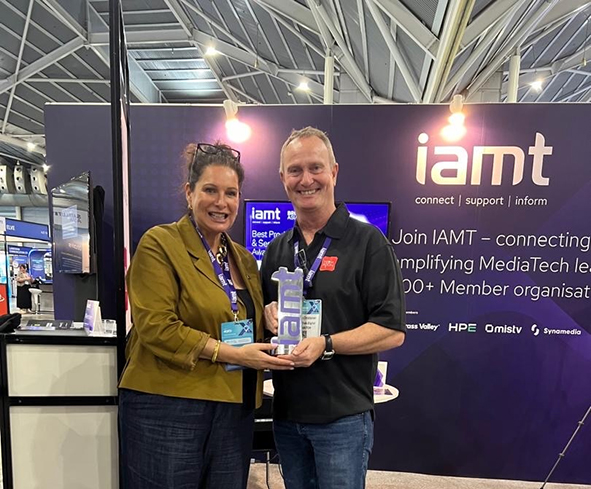
(l-r) IAMT CEO Saleha Williams and Silver Trak Digital COO Christian Christiansen
IAMT CEO Saleha Williams said, “A huge congratulations to Silver Trak Digital for winning the IAMT Best Products and Services Award with Media Room Connect. Celebrating those driving changes across the APAC region, the IAMT Awards are judged by an independent panel of industry experts and recognises standout achievement, innovation and industry impact.”
Silver Trak Digital is demonstrating its next gen Media Room Suite solutions at Broadcast Asia 2026 from 20-22 May at the Singapore Expo on the IAMT Pavilion, stand 5A3-3.
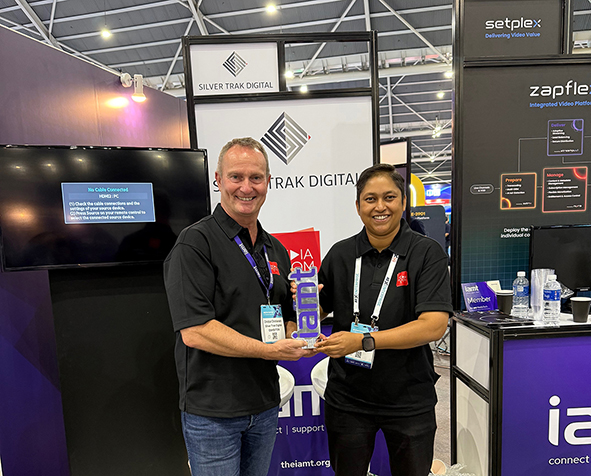
(l-r) Christian Christiansen and Karlz Varma, VP Business Development for Silver Trak Asia with their IAMT Award
Silver Trak COO Christian Christiansen said, “We are delighted and honoured to have won the IAMT Best Products and Services Award for Media Room Connect, which is a product that has been developed very much with industry requirements in mind. Our thanks go to the IAMT, the awards’ judges and our clients who have helped make Media Room and Media Room connect such a success across the Asia Pacific region.”
Silver Trak Digital are demonstrating two products from their latest, cutting-edge Media Room suite at BroadcastAsia this year – Media Room covering Media Asset Management, distribution and screeners (and more) and Media Room Connect which creates and manages a secure screening room on your company domain.
They are also discussing two new products under development including Media Room Screeners, a secure screener campaigns product with enhanced artwork capabilities and Media Room Transport, our SaaS large file, high speed transport solution.
Media Room is the affordable, secure, cloud-based media asset management and delivery platform that enables content owners to upload, manage, market and distribute content globally, faster, more efficiently and with complete control.
Due to its flexibility and affordability, media organisations can easily start small and scale with Media Room as their business grows.
To get a demo of Media Room Connect see Silver Trak Digital at BroadcastAsia 2026 on the IAMT Pavilion, stand 5A3-3.
21, May 2026
Struddys Apparel becomes first global site to install new Epson SureColor F20060
BRISBANE, May 21 – Struddys Apparel, a manufacturer specialising in custom teamwear, sportswear and branded garments, has become the first site and company globally to purchase and install the new Epson SureColor F20060 dye sublimation platform, strengthening its position as one of Australia’s leading vertically integrated apparel producers.
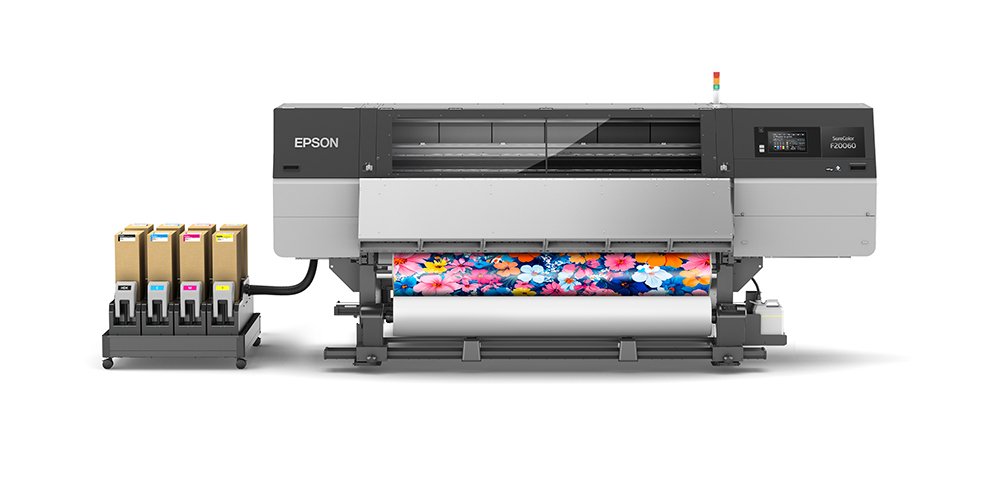
The investment represents the latest step in Struddys’ growth from a small custom operation into a large-scale, Australian-made production facility with a strong focus on quality, speed and full in-house control. It also highlights how strategic technology adoption is helping local manufacturers scale output while maintaining the flexibility needed for custom and short-run work.

Struddys has been a strong example of organic growth through dye sublimation. The business began with a single 64-inch printer (delivering approximately 20 sqm/hr) and expanded to three units as customer demand increased. As production volumes grew, however, the company reached the practical limits of adding smaller-format devices.
At that point, Struddys made a deliberate move to higher-volume production capability rather than continuing to scale incrementally. The company adopted a 76-inch Epson SureColor F10060, a production platform capable of up to 255 sqm/hr and specifically 100 sqm/hr in apparel production, enabling a major increase in throughput and operational efficiency.
That shift gave Struddys a more effective production model: high-volume work could be concentrated on the larger-format platform, while its 64-inch printers remained ideal for short runs, custom programs and bespoke jobs.
As demand has continued to grow, Struddys has now added a second 76-inch platform with the purchase of the new SureColor F20060.
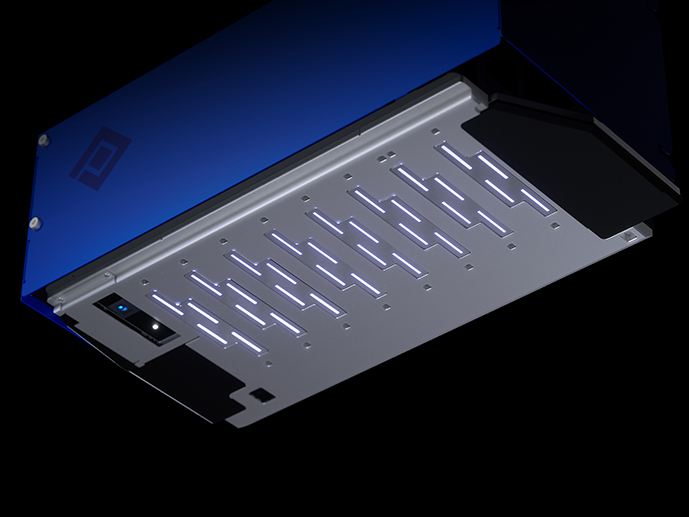
The new installation makes Struddys the first global site to adopt the Epson SureColor F20060 and positions the company at the forefront of dye-sublimation production capability.
The additional capacity will support faster turnaround times, greater production resilience and further growth as the business expands across teamwear, sportswear and branded apparel markets.
The Epson SureColor F20060 is a dye-sublimation printer designed for textile manufacturers and print service providers requiring fast turnaround times. Built for demanding production environments, it combines consistent output quality, reliable operation and printing speeds of up to 300 sqm/h. It is suited to industrial-scale production including fashion apparel, sportswear, home furnishings and soft signage.
For Struddys, the addition of the F20060 is about more than just speed alone. It supports a production strategy that combines scale with agility allowing the business to meet larger volume orders efficiently while preserving the responsiveness needed for custom, bespoke and short-run apparel work.
This balance is increasingly important for manufacturers serving customers who expect both rapid delivery and tailored product offerings.
By bringing the F20060 into its operation, Struddys is reinforcing a model built on local manufacturing, controlled workflows and production flexibility. With Epson technology underpinning both its high-volume and specialty output, the company is well placed to continue growing without compromising the quality and service standards that have driven its success.
Struddys’ journey from a single-printer operation to a scaled production business illustrates how investment in the right technology at the right time can transform manufacturing capability. Its latest move, becoming the first global site to install the Epson SureColor F20060, signals not only confidence in future demand, but a clear commitment to staying ahead of the curve in Australian apparel production.
21, May 2026
Averlon Launches Precog to Stop Exploitable Risk Before It Reaches Production
New predictive remediation capability helps security teams prevent exploitable risk before it reaches production
Redmond, WA, May 21, 2026 — Averlon today announced Precog, a predictive remediation capability that identifies exploitable risk in proposed code and infrastructure changes and delivers the fix to developers before the change reaches production. Precog addresses a widening gap: AI is accelerating both code delivery and vulnerability discovery, and security teams can no longer manage risk only after it lands in production.
The need for this shift is becoming urgent. Google Cloud’s Mandiant M-Trends 2026 report found that mean time to exploit collapsed from 63 days in 2018 to an estimated minus seven days in 2025, meaning exploitation now often begins before a patch is available. New frontier models such as Claude Mythos and GPT-5.5-Cyber are making it increasingly clear that AI will compress the time required to discover, validate, and exploit vulnerabilities. The result is a widening gap between the speed at which risk is discovered and exploited, and the speed at which security teams can triage and fix it.
The industry is converging on a new operating model: Remediation Operations, or RemOps. The premise is simple: finding risk and closing risk are different problems. Security teams do not need more alerts; they need a way to understand what is truly exploitable, prioritize by business impact, and drive safe fixes through developer workflows.
Averlon’s Remediation Operations platform addresses the full lifecycle of risk reduction: ingesting security findings, determining what is truly exploitable, prioritizing by business impact, and driving agentic remediation through developer workflows. The platform has helped customers reduce remediation time by up to 90 percent and alert noise by up to 95 percent, helping security teams move from backlogs of thousands of findings to the handful that need fixing.
With Precog, Averlon extends that model earlier in the lifecycle by preventing exploitable risk before it becomes production exposure. Unlike security scanners that flag findings based on generic severity scores, Precog evaluates whether a proposed change would actually be exploitable in the customer’s real environment, accounting for internet reachability, exposed services, and existing compensating controls. This contextual analysis means Precog surfaces the changes that genuinely create exposure, not the long tail of theoretically risky findings that wouldn’t be exploitable in production. Precog integrates into CI systems such as GitHub, evaluating proposed changes before they reach production.
When risky changes are detected, Precog identifies the issue, explains the exploitable path, and generates a remediation directly in the developer workflow. Developers receive the proposed fix at the same time they are notified of the risk, reducing friction between security review and software delivery.
“AI is changing both sides of the software lifecycle. It is accelerating development while also introducing code that is often not ready for production. With AI also accelerating the discovery and exploitation of weaknesses in that software, security teams can no longer rely only on post-production detection and backlog management. Capabilities like Averlon’s Precog point to where the market is headed: identifying risky changes earlier and helping developers fix them before they become production exposure.”
Chris Steffen, VP Research, Enterprise Management Associates
Complementing Precog is Vulnerability Intelligence, Averlon’s CVE research feed at research.averlon.ai, which gives teams the context they need to triage emerging vulnerabilities, including exploitability, attacker requirements, required privileges, user interaction, and evidence of exploitation in the wild.
“Security teams have relied on finding and fixing vulnerabilities after they reach production. AI has made that untenable from both directions: it is generating new vulnerabilities faster than teams can triage them, and it is collapsing the window between exposure and exploitation. You cannot remediate your way out of that. The only way to stay ahead is to prevent exploitable risk from reaching production in the first place. That is what Precog does.”
Sunil Gottumukkala, CEO, Averlon
Learn more and see Precog in action:
· Precog: Preventing Exposure Before the Backlog (blog): averlon.ai/blog/averlon-
· Vulnerability Remediation: Down and Up We Go (blog): averlon.ai/blog/vulnerability-
· Vulnerability Intelligence Brief #1 (research): averlon.ai/blog/vulnerability-
· Vulnerability Intelligence (live research feed): research.averlon.ai
· RemOps End-to-End Demo (recording): averlon.ai/webinars/
· Averlon Platform: averlon.ai/platform
Averlon is pioneering Remediation Operations, helping security teams move from vulnerability findings to safe, prioritized fixes. Its agentic AI identifies what is truly exploitable and automates remediation directly within developer workflows. Averlon is trusted by security teams at enterprises and fast-growing companies to efficiently scale their security programs. Founded in 2022, Averlon is backed by Salesforce Ventures, Voyager Capital, and Outpost Ventures.
21, May 2026
MathWorks Launches New Renesas Hardware Support Packages for Faster Embedded Systems Prototyping
Bengaluru, May 21 : MathWorks, the leading developer of mathematical computing software for designing engineered systems, today announced new Hardware Support Packages that directly connect Model-Based Design and simulation to execution on Renesas‘ RH850/U2A microcontroller for automotive applications and the RA6T2 microcontroller for industrial controls. The new MATLAB® and Simulink® integrations enable engineering teams to move from simulation to running embedded code on hardware with automated build, flashing, and on-target execution while also accelerating development cycles through the elimination of many manual integration steps.

“Our customers expect a straightforward path from simulation model to microcontroller, and the new integration with MATLAB and Simulink delivers exactly that,” said Brad Rex, Senior Director of System Solution Team, UX (User Experience) Group at Renesas. “By working with MathWorks, we’ve removed the need to assemble toolchains and device drivers by hand so teams can simulate and validate designs earlier, iterate faster, and reduce integration effort across ECU and industrial-control projects.“
The new support packages give engineering teams a consistent Model-Based Design workflow across both automotive and industrial programs, reducing integration effort and accelerating deployment. Renesas’ RA microcontroller platform is optimized for industrial and robotics applications that require flexible connectivity, real-time responsiveness, and scalable embedded control. The integration with the RA family enables rapid prototyping of servo and variable-speed drive applications, with one-click deployment that streamlines hardware bring-up and on-bench validation for motion profiles and closed-loop tuning.
The Renesas RH850/U2A microcontroller, widely used in automotive electronic control units, provides the deterministic performance and safety-critical features required for EV motor control, advanced driver-assistance systems and body electronics. Automotive engineers developing traction motor control for electric vehicles can deploy field-oriented control and regenerative braking algorithms directly from Simulink to RH850/U2A-based ECUs. This shortens the time from concept to vehicle-level testing, supports smoother torque delivery during rapid transients, and speeds calibration across drive cycles—without writing initialization code or custom build scripts.
“Our collaboration with Renesas strengthens the level of interoperability that engineers expect when using MATLAB and Simulink,” said Anuja Apte, India Product Marketing Manager, MathWorks.
“By providing a direct path from Simulink models to optimized microcontroller deployment, we help engineering teams move from design to hardware more efficiently while staying integrated with the broader toolchains they rely on. This approach reflects the MathWorks Connections program, which brings partners and customers together to accelerate innovation and reduce time to market within a widely adopted engineering and scientific platform.”
20, May 2026
hubergroup introduces advanced resin technology for offset inks
|

20, May 2026
Caspia Technologies Significantly Expands Agentic Silicon Security Verification with New Release of CODAx
GAINESVILLE, Fla., May 20: Caspia Technologies announced a significant expansion of its flagship security verification product CODAx. New features were described along with the impact on agentic workflows and associated customer momentum. Some details of Caspia’s security audit of the open-source Caliptra root-of- trust were also disclosed. And the company provided a preview of its communication plans over the next two months.
CODAx, Caspia’s RTL security analyser, was updated with two new AI- driven features, Asset Assist and Report Assist. These features significantly enhance the usability for wider deployment across all design teams, without requiring security expertise.
Security analysis begins with understanding what needs to be protected. Current practices in identifying security assets are manual and require expert assistance. This results in limited identification of security assets and limited scope and coverage for security analysis.
Asset Assist performs automated asset identification on the target design using design-specific details to find a much broader list of security-relevant attributes. The result is a more targeted and comprehensive security analysis. Examples of security assets include untrusted signals, protected states, and critical control signals.
Report Assist addresses the process of understanding the impact of violations to develop a prioritised solution strategy. Current practices can be extremely time-consuming and also require expert assistance. Report Assist delivers AI-driven analysis of CODAx security violations with context- driven insights, design-specific severity ratings, and tailored impact scores. This automated violation triage delivers much faster and more effective strategies to address key issues.
These new features can reduce weeks to months of security verification to minutes to hours, allowing existing design teams to perform advanced security verification at scale.
“Report Assist and Asset Assist are paving the way for automated, agentic security verification,” said Stuart Audley, VP and GM of product management at Caspia. “We are seeing significant traction across first-tier CPU, GPU, and memory providers. I am delighted to see our agentic vision begin to take shape.”
The Caliptra root-of-trust represents a production-grade, open-source security IP developed to serve as a foundational trust anchor in SoC designs. It contains over 700 design files, amounting to more than 300,000 lines of RTL code.
The analysis identified 10 critical items and over 50 high-priority findings. These vulnerabilities are exactly the kind of footholds an attacker needs to wedge into a device and take control.
Caspia shared the details of errors associated with one directive related to fault injection susceptibility for sensitive controller states. This directive analyzes the fault injection feasibility metric for finite state machine (FSM) state encodings. Caspia explained that violating this directive makes glitches or fault-induced jumps into protected behavior more feasible, impacting integrity and resulting in potential information leakage.
“The Caliptra design sees widespread use in the industry,” said Beau Bakken, VP of products at Caspia. “We are working with the appropriate contacts in the industry to share these results and assist in developing appropriate corrective action.”
 On May 22, 2026, a podcast with Stuart Audley will be released that discusses agentic workflows for security verification on the Semiconductor Insiders podcast series. On June 24, 2026, SemiWiki.com and Caspia will present a webinar entitled Scaling Security Verification Across Design Teams with CODAx Static Analyzer. Beau Bakken and Dr. Zahin Ibnat will present. And on July 27-29, 2026, Caspia will exhibit at the 63rd DAC Chips to Systems Conference in Long Beach, CA. Visit Caspia in booth 759.
20, May 2026
AAEON’s EPIC-BTS9 Delivers Intel Core Series 2 Processing on a 4″ Single-Board
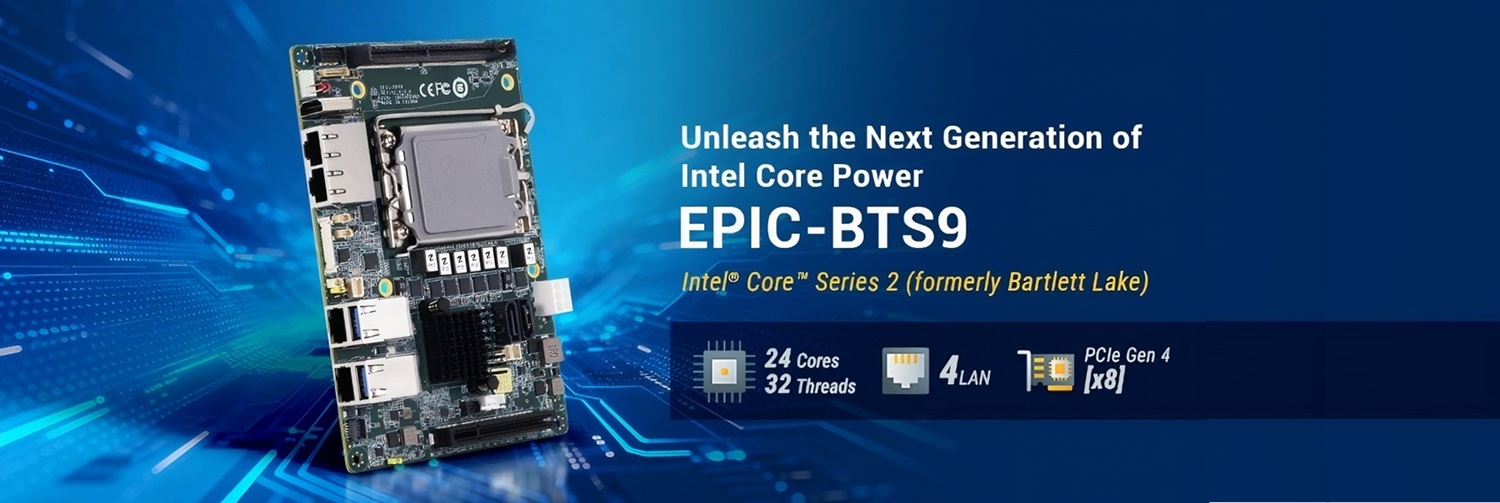
With up to 65W socket-type CPU support, quad-LAN, and eight-lane PCIe Gen 4 expansion, AAEON’s EPIC-BTS9 is positioned as a foundation for smart manufacturing and industrial robotics.
(Taipei, Taiwan – May 20, 2026) AAEON (Stock Code: 6579), a leader in industrial PC solutions, has released the EPIC-BTS9, the latest addition to its 4″ EPIC Board portfolio, making it the company’s first single-board to support up to 65W socket-type CPUs from the new Intel Core Series 2 socket-type processors (formerly Bartlett Lake).
While primarily developed for use with Intel Core Series 2 processor CPUs, which grant up to 24 cores and 32 threads of processing performance, the EPIC-BTS9 is also pin-to-pin compatible with 12th, 13th, and 14th Gen Intel Core processors, up to 65W.
In addition to its cross-generation CPU compatibility, the EPIC-BTS9 is available in SKUs equipped with a choice Intel R680E, Q670E, or H610E chipsets, with the board’s Intel R680E Chipset SKU offering ECC (Error-Correcting Code) support to the 64GB of dual-channel DDR5 system memory on offer via two SODIMM slots.
The EPIC-BTS9’s I/O comes with a total of four LAN ports, three running at 2.5GbE with hardware timestamping, and one at 1GbE speed. These are joined by two USB Type-A ports offering USB 3.2 Gen 1 and Gen 2 signals, respectively. Rounding off its physical I/O is a HDMI 2.0 port.
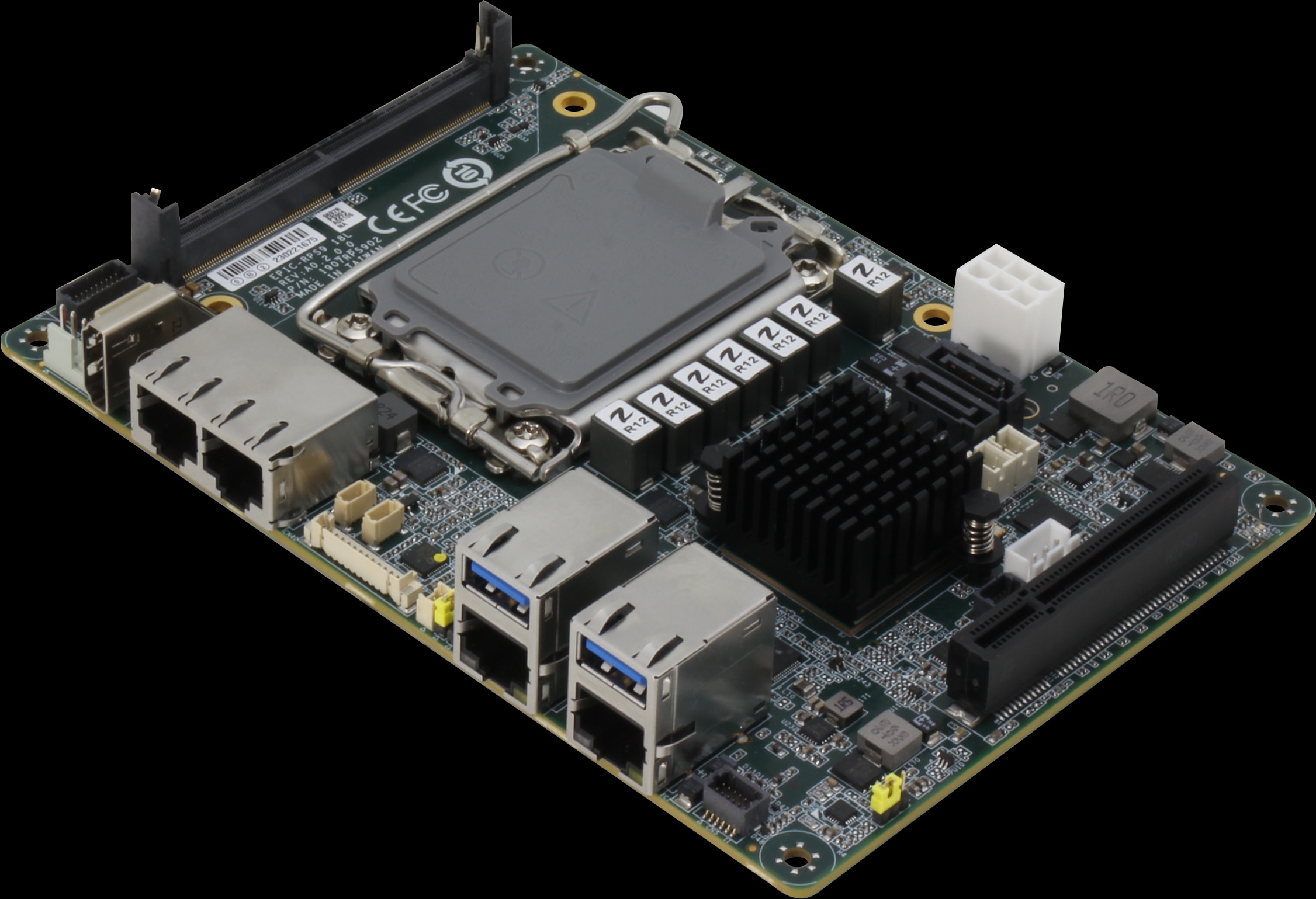
For internal connectors, AAEON’s positioning of the board for industrial AI and smart manufacturing makes sense, with dual COM connectors for RS-232/422/485, an 8-bit GPIO, and SMBus. I2C is also available when running Windows, rather than Ubuntu, and can be changed by BOM. The board also offers headers for both VGA and eDP 1.4, the reasoning for which being to allow simplified integration with existing industrial display panel setups.
The EPIC-BTS9 offers versatile expansion options, with the main standout being an eight-lane PCIe Gen 4 slot, which can be used for AI accelerators, graphic capture cards, or additional storage needs. Meanwhile, the board hosts M.2 2280 M-Key, M.2 3052 B-Key, and M.2 2230 E-Key slot for additional storage and wireless communication module installation.
The EPIC-BTS9 is now in mass production, with samples available for order on the AAEON eShop.
19, May 2026
Seagate Introduces Storage Built for Consumer Data Explosion
New Delhi, May 19 : Seagate Technology Holdings plc today announced new and refreshed consumer and prosumer storage solutions across its Seagate, and LaCie brands, including the Seagate One Touch desktop external hard drive and the LaCie 8big Pro5 multi-bay RAID storage solution.
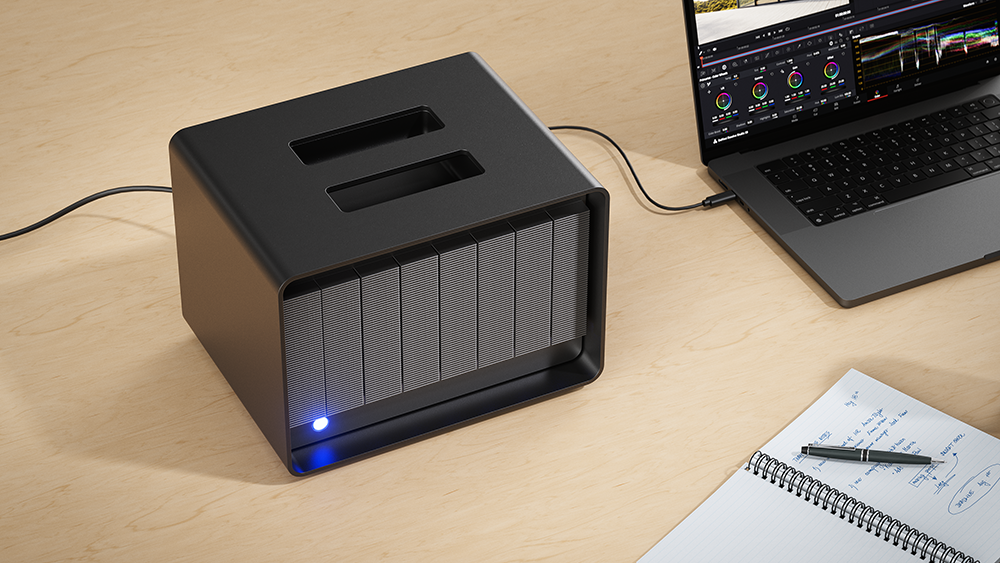
Designed to support sustained data growth created at the point of capture, the portfolio provides flexible storage options ideal for higher resolution photos and videos and demanding creative workflows as more and more creators adopt AI content development platforms. As files grow larger and live longer, the updated portfolio delivers simplified operational experience, higher capacities, and scalable performance, helping users stay productive and in control of their data without compromising performance or scalability.
Portfolio highlights:
- Higher capacity options across portable, desktop and RAID storage, scaling up to 256TB
- Industry’s only Bus-Powered USB-C for desktop hard drives, requiring no external power supply
- Thunderbolt™ 5 support for high-performance creative workflows
- Integrated backup, monitoring, and Rescue Data Recovery Service, designed for long-term peace of mind
- Toolkit, user-friendly auto backup to secure all those important files and data
“From AI‑assisted creativity to massive game libraries and family memories, personal data is growing faster and lasting longer,” said Lance Ohara, VP, Edge IoT at Seagate. “People need storage that’s designed for this new reality – simple to use, built to scale, and ready for what AI brings next.”
The Seagate One Touch: everyday convenient backup made easy
Best for: everyday backup and personal use.
The Seagate One Touch desktop external hard drive offers straightforward, high‑capacity storage designed for easy setup and long‑term file management—without added hardware complexity or reliance on cloud subscriptions. A single‑cable USB‑C connection provides both power and data, eliminating the need for external power adapters and reducing desktop clutter.
- Capacities: 8TB, 20TB, 24TB
- Bus-powered 3.5-inch USB-C desktop drive with single cable connectivity
- Drag-and-drop setup and file transfers
- Cross-platform compatibility with Windows and Mac
- Includes Seagate Toolkit, auto backup software and Rescue Data Recovery Services for added peace-of-mind
LaCie 8big Pro5: Professional RAID storage for advanced creative workflows
Best for: creative professionals and production teams
The LaCie 8big Pro5 is a Thunderbolt™ 5 multi‑bay RAID storage solution built for creative professionals working with multi‑stream 4K/8K video, large RAW image libraries, and AI‑assisted production environments. With high-capacity configurations, fast data transfer speeds, and enterprise‑class reliability, it enables teams to work at scale in studio or on‑location environments.
- Capacities: 32TB, 64TB, 128TB, 192TB, 256TB
- Multiple RAID configurations for speed or redundancy, Thunderbolt™ 5 performance (up to 120Gbps) Up to 2800MB/s (RAID 0) performance
- Up to 140W power delivery for laptops
- Includes RAID Manager and 5-year limited warranty with Rescue Data Recovery
19, May 2026
SPEXA 2026: Japan’s Largest Space Business Show Expands to Showcase Global Innovations and Strategic Partnerships

|
|
|
|


