


7, May 2026
Goa to Blend Tourism and Innovation with ‘Shackathon’ to Build Coastal Startup Ecosystem
Panaji, May 7 (BNP): Goa is set to host a unique two-day “Shackathon” from May 21, an initiative designed to merge tourism with technology and position the state as a hub for remote work, startups, and coastal innovation.

The programme, organised by the Department of Information Technology, Electronics and Communications, Goa, will transform beach shacks into temporary innovation spaces where entrepreneurs, students, designers, and remote professionals can collaborate on real-world problem solving.
Goa IT Minister Rohan Khaunte said the initiative reflects a broader vision of developing Goa into a “work-and-leisure destination,” where tourism and technology ecosystems grow together rather than independently.
According to officials, the Shackathon will bring together startups, innovators, digital creators, and remote workers for collaborative sessions focused on building technology-driven solutions. A parallel hackathon will also be conducted, where participants will identify challenges and develop prototype solutions in areas such as tourism tech, sustainability, mobility, and digital services.
Beyond innovation, the initiative is expected to directly support Goa’s tourism economy by extending visitor stays and promoting off-season travel through “workation” models. By integrating workspaces with beachside hospitality, the state aims to attract long-term remote professionals rather than short-term tourists alone.
Officials believe this approach could help local shack owners and small tourism businesses diversify their income streams, while also encouraging year-round economic activity along the coastline.
The event will also include knowledge-sharing sessions on startups, emerging technologies, and remote work culture, along with experiential tourism activities such as watersports and heritage exploration.
Industry observers say the initiative reflects a growing global trend where destinations are repositioning themselves as hybrid ecosystems combining tourism, lifestyle, and innovation infrastructure.
If successful, Goa’s Shackathon model could serve as a blueprint for other coastal regions aiming to connect digital economy growth with sustainable tourism development.

- 0
- By Neel Achary

7, May 2026
Pit Launches with $16 Million Led by Andreessen Horowitz to Bring AI-Native Software to Enterprise Operations
Founded by the team behind Voi and Klarna, Pit acts as an AI product team as a service — learning how companies work and building the systems that run their operations.
STOCKHOLM, SWEDEN – May 07; Pit, an AI-native platform that replaces the patchwork of spreadsheets, inboxes, and rigid SaaS tools that run enterprise operations today, announced its public launch alongside $16 million in funding led by Andreessen Horowitz (a16z). The round includes participation from Lakestar, the Pit founders and executives from OpenAI, Anthropic, Google, Deel, and Revolut, as well as the Stena and Lundin families.
Pit is publicly launching as an “AI product team as a service” — enabling companies to build and deploy custom, production-grade software for their internal business operations.
Across industries, core business operations are still powered by spreadsheets, inboxes, and rigid SaaS tools that were never designed for how companies actually work. While enterprises have spent over $1 trillion on digital transformation in recent years, most workflows remain fragmented, manual, and difficult to adapt.
Pit replaces this layer with AI-native software that is custom-built for each company’s workflows. This enables teams to move faster, operate more efficiently, and scale without the constraints of legacy systems.
“For 20 years, enterprises have rented software that forces them to operate around it. With AI, that ends. For the first time, every company can run on systems they actually designed themselves,” said Adam Jafer, CEO and co-founder of Pit.
Pit’s platform is designed to take a business need — from operations to finance to customer workflows — and translate it into fully deployed, governed software.
The product consists of two core components:
- Pit Studio – learns how you work, and builds the system that runs it for you
- Pit Cloud – governed infrastructure with tenant isolation, ISO 27001, SSO, RBAC, and full audit observability
Unlike traditional low-code tools or AI copilots, Pit outputs real software running real operations, not prototypes or experiments.
Pit is already live across enterprise pilots in logistics, telecom, e-commerce, and healthcare — including deployments with Voi, Tre, Stena Recycling, and Kry — with systems going live in days or weeks.
Early results include:
- 85% reduction in campaign execution time
- 10,000+ hours saved annually per deployment
- 99% invoice acceptance rates through automation
At one of Europe’s largest industrial companies, Pit replaced legacy contract and invoice validation with an AI-powered system that processes in real time — saving over 10,000 hours annually with zero validation errors.
“Every AI company is selling speed. Pit is selling speed that holds up for years, secure, governed, and built to last. It’s a new category,” said Alex Rampell, General Partner at Andreessen Horowitz.
Pit was built by the Founders and CTO/AI leads behind Voi, Klarna and iZettle, who spent years replacing manual workflows with custom, AI-powered systems at scale – driving significant operational gains across both Klarna and Voi. That same approach is now productized in a platform designed for enterprise-grade security, governance, and reliability.
7, May 2026
AAEON Launches NIKY-2215-NX, a 21.5” AI Panel PC Powered by NVIDIA Jetson Orin NX
Designed for AI-driven industrial monitoring applications, AAEON’s new NIKY-2215-NX pairs a strong AI engine with a 21.5” TFT-LCD touchscreen, all in one robust platform.
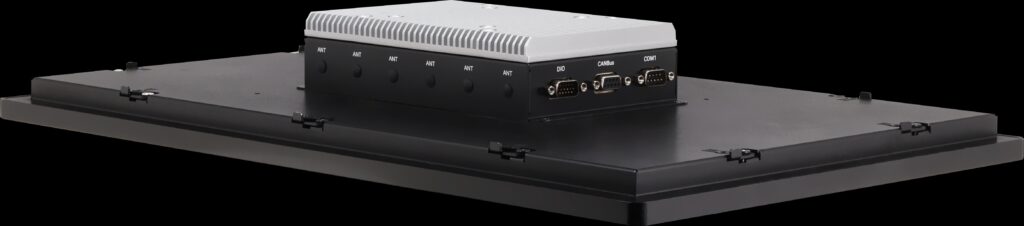
(Taipei, Taiwan – May 7, 2026) AAEON (Stock Code: 6579), a leader in industrial PC solutions, today announced the release of the second addition to its AI Panel PC series, the NIKY-2215-NX.
AAEON first introduced its AI Panel PC product line in November 2025, with the series’ value proposition being that it incorporated an NVIDIA Jetson module, a full-function industrial I/O, and high-definition display in a single device.
The NIKY-2215-NX is available in SKUs with either an 8GB or 16GB NVIDIA Jetson Orin NX module, offering up to 100 TOPS of AI performance. Meanwhile, the system includes a 21.5″ TFT-LCD projected capacitive multi-touch screen, highlighting its suitability for applications such as AI-driven production line inspection systems and industrial monitoring dashboards.
The device offers four USB 3.2 Gen 2 Type-A ports alongside two LAN ports for Gigabit Ethernet, located on its bottom-side panel. Meanwhile, its right-side panel I/O hosts a DB-15 port for DIO 8-bit and two DB-9 ports for CANBus and RS-232/422/485. For storage, the NIKY-2215-NX provides an M.2 2280 M-Key slot. Expansion for Wi-Fi and 5G modules is also present, with both M.2 2230 E-Key and M.2 3042/3052 B-Key slots provided.
Given the market segment the product is designed for, the NIKY-2215-NX demonstrates a number of rugged characteristics. These include a broad -5°C to 55°C operating temperature range, a 12V to 24V power input range, as well as both VESA and panel mounting options. Moreover, the system’s display offers wide 160-degree horizontal and vertical viewing angles, as well as impressive vibration and shock tolerance.
For detailed specifications and further information about the NIKY-2215-NX, please visit its dedicated product page. Meanwhile, pricing and ordering information can be obtained via the contact form on the AAEON website.
7, May 2026
Epson celebrates innovation and sustainable design at Australian Fashion Week 2026
SYDNEY, May 07– As the official digital print and projector partner of the Australian Fashion Council (AFC), Epson Australia has announced its participation in Australian Fashion Week 2026, taking place from 11–15 May 2026 at the Museum of Contemporary Art (MCA) and venues across Sydney.
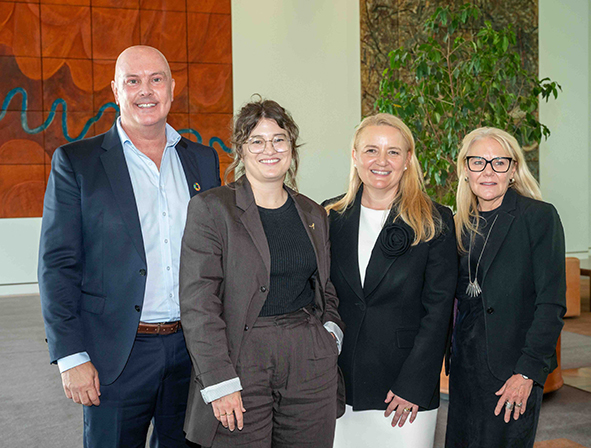
(l-r) Epson Australia Managing Director Craig Heckenberg, Samantha Delgos, General Manager, Australian Fashion Council, Marianne Perkovic, Executive Chair, Australian Fashion Council and Epson Australia Corporate Marketing Manager, Priscilla Dickason
This year’s event will bring together the nation’s most creative and forward‑thinking designers and innovators in a celebration of Australian culture, design and sustainable fashion manufacturing.
For Epson, participation in Australian Fashion Week builds on its continuing partnership with the Australian Fashion Council, strengthening a shared commitment to fostering a more sustainable, innovative and locally empowered fashion industry.
Epson A/NZ MD Craig Heckenberg said, “As a key strategic partner of the AFC, we are fully committed to our support of Australian Fashion Week 2026. Together with the AFC, Epson is championing the future of Australian fashion manufacturing by creating meaningful opportunities between designers, brands and local makers. We’re showcasing how digital textile printing technology supports more sustainable, on‑demand production, helping designers bring their creativity to life locally and responsibly.”
A highlight of Epson’s program at Australian Fashion Week 2026 will be ‘Meet the Makers’, a curated matchmaking experience co‑hosted with the AFC and part of the AFC Talks, presented by Afterpay during AFW. The event brings Australian fashion brands and local manufacturers together under one roof, allowing designers to discover the craftsmanship, skill and production capacity available within Australia’s own borders.
Epson will take a leading role in the manufacturer showcase, demonstrating how digital textile printing technologies, such as the Epson Monna Lisa direct‑to‑fabric printer, integrate seamlessly into modern local production.
Featuring water‑based pigment inks and precision print technology, the Monna Lisa enables sustainable on‑demand manufacturing, reducing waste and making local production far more cost‑effective.
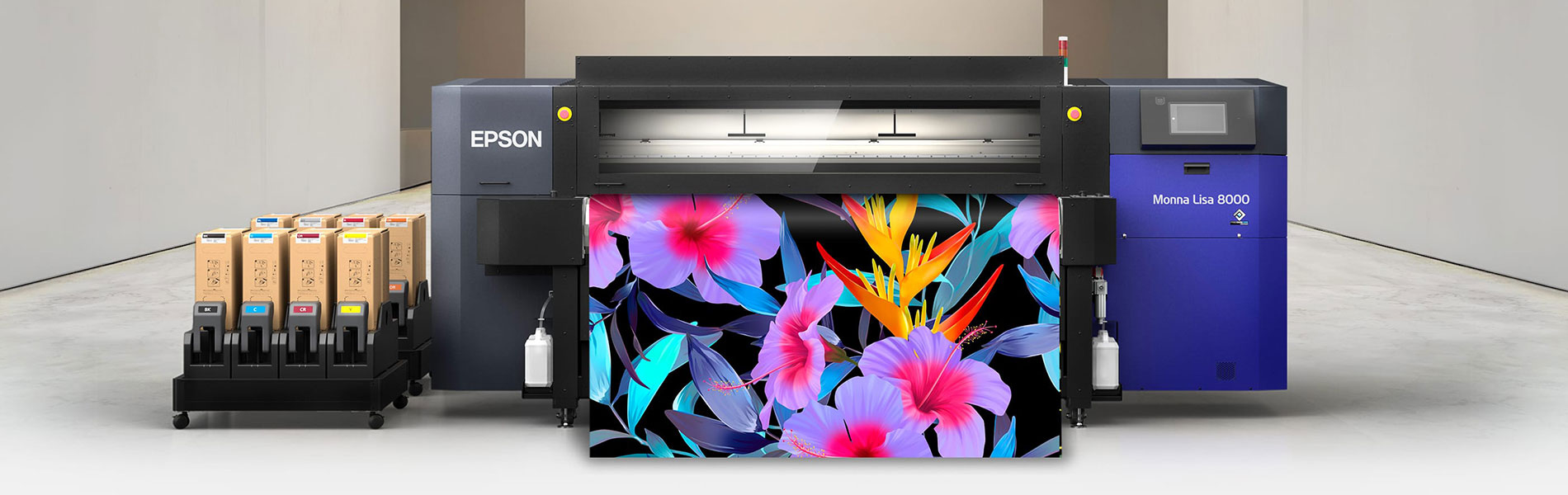
Epson Monna Lisa direct‑to‑fabric printer
By connecting brands with local manufacturing capability, Epson aims to help strengthen domestic supply chains, empower Australian fashion makers and reduce the environmental footprint of fashion creation.
Epson is also partnering with the AFC as the naming sponsor of the Epson Media Centre at AFW, providing a dedicated hub where local and international press can capture, file and share the stories shaping Australian fashion throughout the week. It’s also where the press and media can report on AFC Talks, presented by Afterpay.
“AFC Talks, presented by Afterpay, brings together the conversations that are most critical to our industry right now and shaping its future,” said Marianne Perkovic, Chair of the Australian Fashion Council. “These sessions go to the heart of the challenges we face and the opportunities ahead, from building global distribution to developing circular business models that deliver both commercial outcomes and cultural impact. They also recognise the broader economic importance of the fashion industry and the critical role it plays as a connected ecosystem. AFC Talks provides a platform to hear directly from industry leaders, share insights and bring the community together beyond the runway, creating space for everyone to engage, connect and help shape the future of Australian fashion.”
Epson’s involvement in Australian Fashion Week complements its ongoing collaboration with the AFC on long‑term initiatives that support onshore manufacturing, skills development and sustainability across the fashion and textile sector.
Since 2023, Epson and the AFC have worked together to:
• Deliver research on the current and future state of Australian fashion manufacturing
• Undertake a feasibility study for a smart manufacturing facility, integrating advanced machinery, software and digital production systems to support a local, on-demand model
• Explore circular economy pathways and sustainability programs to ensure the industry transitions responsibly by 2030
Epson also fully supported the AFC’s National Manufacturing Strategy launched in March 2026 at Parliament House to drive investment and innovation.
These collective efforts aim to build a future where Australian designers can produce collections sustainably and competitively on home soil supported by technologies that enhance efficiency and enable creative freedom.
Heckenberg added, “By showcasing what’s increasingly possible onshore, we will collectively strengthen local supply chains. The AFC’s National Manufacturing Strategy, which Epson proudly supports, represents an important step toward building a more resilient, sustainable and innovative future for Australian fashion.”
Epson’s global leadership in digital textile printing positions it as a technology partner of choice for designers and manufacturers seeking to produce responsibly and efficiently.
With solutions such as its Monna Lisa direct-to-fabric series printers Epson enables print‑on‑demand manufacturing that minimises waste, reduces energy use and shortens supply chains – all key goals for an industry striving to meet both environmental and creative challenges.
Epson’s participation in Australian Fashion Week 2026 underlines its role as a technology enabler for local innovation, connecting creativity with sustainability while supporting the AFC’s mission to future‑proof Australian fashion.
Australian Fashion Week 2026
Dates: 11–15 May 2026
Venues: Museum of Contemporary Art (MCA) and various locations around Sydney
Presented by: The Australian Fashion Council
7, May 2026
Servotech Renewable Secures 1415 kW Solar Rooftop Project Order from South Central Railway, Vijayawada Division
New Delhi, May 07, 2026: Servotech Renewable Power System Ltd. (NSE: SERVOTECH), an NSE-listed renewable energy and EV charging solutions company, has secured a 1415 kW solar rooftop project order from the Vijayawada Division (BZA) of the South Central Railway (SCR), strengthening its growing engagement with Indian Railways and public infrastructure renewable energy projects.
Under the scope of the project, Servotech Renewable will be responsible for the design, engineering, supply, installation, testing, and commissioning of grid-connected rooftop solar systems across multiple railway sites under the Vijayawada Division. The project aligns with Indian Railways’ ongoing focus on accelerating renewable energy adoption and reducing carbon emissions through sustainable infrastructure development. The order was secured through a competitive bidding process, further reflecting Servotech Renewable’s capabilities in executing institutional and government-led renewable energy projects.
Commenting on the order, Sarika Bhatia, Director, Servotech Renewable Power System Ltd., said, “We are pleased to strengthen our association with Indian Railways through this project with the Vijayawada Division. Such projects reflect the growing momentum towards clean energy integration across critical public infrastructure in India. We remain committed to delivering efficient, reliable, and high-performance solar solutions that support institutions in achieving their sustainability objectives while contributing to broader renewable energy adoption goals.”
The project further strengthens Servotech Renewable’s institutional order book and reflects the company’s continued participation in government-led renewable energy initiatives.
6, May 2026
Haiqu Launches Agentic Quantum Operating System for Enterprise Applications R&D
Full-stack platform combines agentic AI with proprietary middleware that helps build and solve complex problems faster with fewer computational resources on today’s quantum hardware
NEW YORK CITY – May 6, 2026 – Haiqu, a leading developer of quantum middleware, today announced the launch of its Agentic Quantum Operating System (OS), the first full-stack quantum intelligence platform for enterprise and scientific quantum R&D.
Currently, quantum development is impeded by the time and costs it takes to design the right application, execute the experiment, and iterate on the results.
Haiqu’s Agentic Quantum OS is designed to bring new performance standards to quantum R&D teams. It combines quantum research agents with Haiqu’s proprietary software stack to help teams identify the right problem, design executable quantum experiments, and run them efficiently on real quantum hardware.
Coupled with additional performance and execution layers, the platform is designed to help enterprise R&D teams get usable results faster, spend less money per experiment, train new researchers more easily, and turn early ideas into testable prototypes faster.
“The bottleneck for quantum R&D teams is often not access to a QPU. It is the time and expertise required to identify the right problem, structure the work and get credible application prototypes,” said Richard Givhan, CEO and Co-founder of Haiqu. “With our first Agentic Operating System, we are giving R&D teams effective tools to achieve commercial applications as systems become more powerful.”
Haiqu’s end-to-end platform equips quantum engineers to guide application development using natural language through business questions or exploratory research ideas to produce an execution-ready quantum application plan using three key pillars:
- Agentic Intelligence — built on Haiqu’s proprietary quantum algorithm research, domain-specific workflows, and a curated quantum theory knowledge base, that automates application design and guides users to optimal approaches.
- Haiqu SDK — developer tools built using agents with users in mind that can be easily deployed in agentic development workflows to maximize performance through data loading, algorithmic optimization and error mitigations, enabling users to extract more value from every quantum operation.
- Haiqu Runtime — an orchestration engine that streamlines how applications execute with an optimal infrastructure layer, reducing cost and time required to iterate on quantum applications.
In recent tests completed by the company on a quantum system, a molecular dynamics simulation that previously required $30,000 and more than nine hours to run was reproduced for about $25 in roughly 30 seconds by optimizing execution on the Haiqu platform. Similar results or better were found for optimization algorithms, quantum machine learning models, and probability distributions.
HaiquOS also demonstrated that agentic quantum workflows can translate advanced scientific problems into executable experiments. The system prepared simulations of the single-impurity Anderson model, a foundational model for strongly correlated electron systems, from scratch and built a Haiqu OS/SDK pipeline for simulating neutron-scattering experiments on one-dimensional quantum magnets. The pipeline reproduced experimentally observed signatures of magnetic materials, showing that today’s quantum computers, when paired with the right software stack, can already support meaningful scientific simulations. Learn more about these results here.
A number of enterprises already received early access to the OS, including Capgemini and Deloitte.
Dr. Kristin Milchanowski, Chief AI & Quantum Officer at BMO and Founding Director of the BMO Institute for Applied Artificial Intelligence & Quantum, said research into emerging quantum software platforms can help inform how the industry addresses foundational scalability challenges.
“As quantum hardware continues to evolve, foundational challenges such as data loading and efficient utilization of limited qubits remain critical hurdles,” said Milchanowski. “Observing research into tools like Haiqu’s middleware allows for a deeper understanding of how these bottlenecks might eventually be addressed. These early-stage, research-driven insights are vital for informing the long-term direction of the quantum landscape and understanding the future scalability of the technology.”
6, May 2026
Wibu-Systems and instellix Elevate Software Licensing into Revenue Infrastructure
Karlsruhe, Germany – Wibu-Systems, a global leader in software protection, licensing, and cybersecurity, announces its integration with instellix, a next-generation monetization platform designed for subscription, usage-based, hybrid, and marketplace-driven business models.
The joint solution transforms software licensing from a supporting function into an operational backbone, where entitlement management, usage tracking, and financial processes operate as one continuous system. By combining CodeMeter’s secure licensing and protection technologies with instellix’s advanced monetization capabilities, software vendors can automate the entire lifecycle from contract to revenue.
“Software monetization is undergoing a structural shift. Licensing is no longer a back-office function: it is becoming part of the operational infrastructure of digital business,” said Stefan Bamberg, Director Sales and Key Account Management at WIBU-SYSTEMS AG. “With instellix, we extend CodeMeter beyond protection and licensing into a fully integrated monetization environment.”
From Entitlement to Revenue: One Continuous Process
The integration is enabled through standardized APIs that connect instellix with CodeMeter, linking commercial transactions directly to technical enforcement.
When a customer purchases a license, instellix automatically triggers CodeMeter to generate the corresponding entitlement. The license is delivered instantly, enabling immediate use without manual intervention.
At the same time, CodeMeter captures detailed usage data directly at the application level. This data is transferred to instellix, where it is processed into billing events, enabling precise usage-based invoicing and transparent customer reporting.
The result is a closed-loop system where every transaction, entitlement, and usage event is consistently aligned across technical and financial domains.
“Growth stalls when licensing and billing operate in silos. At instellix, we’ve eliminated that gap and with Wibu-Systems as our partner, companies can now scale usage-based and hybrid models globally, with full confidence that every license event translates directly into revenue. Together, we give them something they’ve never had before: a single, automated path from license to revenue, across any business model, any market, any scale, stated Juergen Schmiezek, CGO & Managing Director, instellix.”
Built for Modern Monetization Models
The combined solution supports the increasing complexity of software-driven business models across industries such as automotive, e-mobility, software & technology, and manufacturing. It enables subscription, usage-based, hybrid, and marketplace-driven licensing strategies, combining automated license provisioning with real-time usage tracking and integrated billing.
Designed for global operations, the architecture scales across currencies, tax regimes, and compliance requirements. This allows software vendors to introduce new pricing models without reengineering their existing systems, while maintaining full control over security, licensing, and revenue flows.
Strategic Impact for Software Vendors
As software becomes the core of industrial value creation, monetization must evolve beyond static licensing models.
The integration of CodeMeter and instellix enables companies to align product usage, contractual logic, and revenue realization in real time. This reduces operational complexity, eliminates reconciliation gaps, and creates a foundation for scalable, data-driven business models.
Software vendors can respond faster to market demands, experiment with new offerings, and expand globally, while ensuring that every licensed feature, every usage event, and every invoice follows a consistent, secure, and automated process.
6, May 2026
Cabinet Approves INR 3,900 Crore Semiconductor Projects to Boost Chip Manufacturing
May 6 (BNP): The Union Cabinet, chaired by Prime Minister Narendra Modi, has approved two new semiconductor manufacturing projects under the India Semiconductor Mission (India Semiconductor Mission), further strengthening India’s push towards becoming a global chip manufacturing hub.
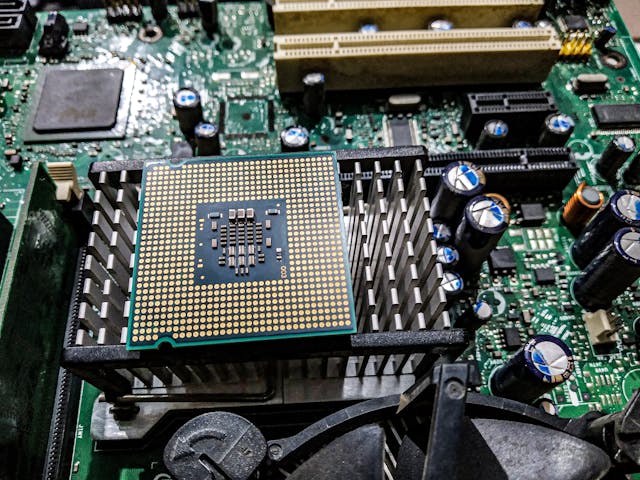
The approved projects involve a combined investment of around ₹3,936 crore and will be set up in Gujarat, generating employment for over 2,200 skilled professionals.
One of the key projects will see Crystal Matrix Limited establish an integrated compound semiconductor facility in Dholera. The unit will focus on Mini and Micro-LED display manufacturing using advanced GaN technology, with applications ranging from televisions and commercial displays to smartphones, tablets, and emerging devices like AR/VR glasses and smartwatches.
The second project, being developed by Suchi Semicon Private Limited in Surat, will be an Outsourced Semiconductor Assembly and Test (OSAT) facility. It will produce over one billion chips annually, catering to sectors such as automotive, industrial automation, power electronics, and consumer devices.
With these approvals, the total number of projects under the India Semiconductor Mission has reached 12, with cumulative investments of around ₹1.64 lakh crore. Several projects are already under execution, with some expected to begin commercial production soon.
Officials said the latest approvals mark another step forward in building a strong domestic semiconductor ecosystem, supported by expanding chip design capabilities across academic institutions and startups in the country.
6, May 2026
UIDAI–NFSU 5-Year Pact to Boost Cybersecurity and Digital Forensics
New Delhi, May 6 (BNP): The Unique Identification Authority of India (Unique Identification Authority of India) has signed a five-year Memorandum of Understanding with the National Forensic Sciences University (National Forensic Sciences University) to strengthen India’s cybersecurity framework and advance digital forensics capabilities.
The agreement was formalized between UIDAI CEO Vivek Chandra Verma and Prof. (Dr.) S.O. Junare, Director of the Gujarat Campus of NFSU, in the presence of senior officials from both organisations.
The partnership focuses on enhancing cyber resilience, improving the security of digital systems, and promoting research and training in emerging areas of cybersecurity and forensic science.
Key areas of collaboration include academic and professional skill development in cybersecurity, strengthening information security systems, improving forensic laboratory infrastructure, and providing technical support for cyber protection initiatives.
Officials said the collaboration will help build stronger expertise in digital security, improve system integrity, and support India’s growing digital ecosystem through advanced forensic and cybersecurity solutions.
6, May 2026
TotalEnergies Develops Pangea 5, a Next-Generation Supercomputer That Will Increase its Computing Power Sixfold
Paris, May 06 – TotalEnergies, in collaboration with Dell Technologies and NVIDIA, announces the signing of a contract for the design and installation of Pangea 5, its next high-performance supercomputer. Hosted at the Jean Féger Scientific and Technical Center (CSTJF) in Pau, in the South of France, Pangea 5 will multiply the Company’s computing power by six. It represents an investment of over 100 million euros.
A significant increase in computing power to support TotalEnergies’ projects
With this increase in processing speed, Pangea 5 will:
expand the deployment of advanced seismic engineering to enhance the accuracy of subsurface imaging and accelerate exploration to support the Company’s strategy for low-cost and low-emission hydrocarbon production;
support R&D uses of AI and meet growing digital needs to optimize computing times and deepen the understanding of complex phenomena like integrated power models.
Controlled Energy Consumption and CO₂ Emissions
Pangea 5 will rely on specialized processors, capable of massively parallel computations, offering greater energy efficiency than previous versions. At equal performance, Pangea 5’s energy consumption will be reduced by approximately 40%, and its associated cooling system’s consumption will be cut by a factor of five. The residual heat generated by the supercomputer will be recovered and used to help heat the buildings of the CSTJF, which host more than 2.500 people.
Pangea 5 will be first commissioned in 2027.
“Artificial intelligence and digital technology are strategic drivers of our energy transition. By increasing our computing power sixfold, we are strengthening our leadership in high-performance computing ensuring that our experts teams continue to have the means to push the envelope to support the development of our activities and meet the growing global demand for energy,” said Namita Shah, President, OneTech at TotalEnergies.
“TotalEnergies is pushing the boundaries of high-performance computing, and we’re delighted to be part of that journey. Pangea 5 will give TotalEnergies the computing power to accelerate discovery, increase efficiency and drive the energy transition forward – that’s exactly the kind of outcome our collaboration is built for,” said Adrian McDonald, President, Dell Technologies EMEA
“NVIDIA Compute, network and software platforms will provide Pangea 5 with exceptional parallel computing power, accelerating scientific workloads and opening new opportunities in artificial intelligence. With this choice of NVIDIA GPUs, CPUs and InfiniBand TotalEnergies is adopting an architecture capable of meeting the most demanding industrial and energy challenges, both today and in the years to come,” said John Josephakis, Vice President HPC & AI at NVIDIA.


