


14, Apr 2026
hubergroup launches LED ink for food packaging at METPACK

hubergroup Print Solutions will showcase its extensive portfolio for metal decoration at METPACK.
At this year’s METPACK, hubergroup Print Solutions presents its comprehensive portfolio for metal decoration at hall 1, booth 1B11, underlining its position as a one-stop partner for metal packaging printers worldwide. With a strong focus on innovation, compliance, and performance, the company showcases solutions tailored to the evolving demands of the industry. Highlights include two series for food packaging: the conventional offset series TINKREDIBLE MGA, which was recently launched globally, and the NewV tin LED MGA series, which will make its official debut at the exhibition.
At the core of hubergroup’s METPACK showcase is its broad offering for metal decoration – including its conventional series TINKREDIBLE and its UV series NewV with LED and mercury-vapour curing systems. The portfolio covers a wide range of applications such as food cans, aerosols, closures, crown caps, and chemical‑technical packaging, and is known for high colour brilliance, strong scratch resistance, and environmentally conscious formulation.
Driving the shift to LED-UV in food packaging
A key highlight at METPACK 2026 is the introduction of NewV tin LED MGA, a LED-curing ink series for food packaging designed for three-piece can applications. This innovation responds directly to the growing industry shift toward LED-UV curing technologies, particularly in sensitive food applications where safety, efficiency, and sustainability are critical. The series complies with the requirements of the German Ink Ordinance (GIO), the Swiss Ordinance, and the guidelines of renowned brand manufacturers.
“With NewV tin LED MGA, we are giving metal decorators a reliable, future‑proof LED solution that meets the stringent safety requirements of food packaging while delivering excellent printing performance,” says Jan Museler, Product Manager Metal Decoration at hubergroup. “It’s an important step in supporting the industry’s transition to LED‑UV technologies.”
A fully integrated system for metal decoration
Complementing the TINKREDIBLE and NewV ink systems, hubergroup provides a full suite of varnishes and fountain solution additives, all engineered to work seamlessly together. This integrated approach ensures consistent performance, high efficiency in the pressroom, and reliable end-product quality – delivering a complete system from a single source.
Equally important is the company’s strong focus on service. hubergroup provides local technical support and expert consultation, ensuring customers receive tailored guidance for their specific pressroom requirements. This hands-on approach helps metal decorators optimise processes, improve efficiency, and achieve consistent results.
“METPACK is the ideal platform to demonstrate how our fully integrated pressroom solutions support metal decorators in meeting evolving market demands”, says Patrick Hübel, Director Product Management and Technical Marketing Offset at hubergroup. “By combining high-performance products with strong technical service, we enable our customers to achieve consistent quality, greater efficiency, and a smoother transition to future-ready technologies.”
Visitors to METPACK are invited to explore hubergroup’s full metal decoration portfolio and discover how integrated solutions can unlock new potential in metal packaging production.

- 0
- By Neel Achary

14, Apr 2026
China’s Exports Edge Up 2.5 pc in March, Driven by Tech and Semiconductor Demand
Apr 14 (BNP): China’s exports rose 2.5% in March compared to a year earlier, reflecting a steady but uneven recovery in external demand amid a challenging global trade environment.
The uptick was supported largely by stronger shipments of technology-related goods, with particular momentum seen in the semiconductor and electronics segments. Rising global demand for advanced chips—used in artificial intelligence systems, data infrastructure, and industrial applications—helped offset weaker performance in some traditional export categories.

Pic Credit: Pexel
While overall growth remains moderate, the data points to China’s continued strength in high-value manufacturing and its deep integration into global tech supply chains. Exporters have also been increasingly redirecting shipments toward emerging markets, helping cushion the impact of softer demand in some developed economies.
At the same time, analysts note that global trade conditions remain mixed, with geopolitical uncertainties and uneven consumption trends influencing order flows. However, the latest figures suggest that technology exports continue to act as a stabilizing force for China’s external sector.
Imports also showed signs of improvement, indicating steady domestic industrial activity and ongoing demand for raw materials and components.
Overall, the March data reflects a cautiously improving trade picture, with high-tech exports emerging as the key driver of resilience in China’s economy.
13, Apr 2026
Iran Internet Access Remains Heavily Restricted for Weeks
Apr 13 (BNP): Internet services in Iran remain heavily disrupted, with a widespread blackout continuing for 45 days, according to network monitoring data.
Reports indicate that international connectivity has been largely cut off for more than 1,056 hours, leaving users with limited or inconsistent access to global online services. In many regions, only restricted domestic networks are functioning.
The prolonged disruption has significantly impacted communication, access to digital platforms, and everyday online services across the country.
Monitoring groups say the situation reflects one of the longest sustained connectivity restrictions in recent years, raising concerns over prolonged digital isolation.
13, Apr 2026
ZEISS Digital Partners Note on Building Resilient, Secure, and Future-Ready Digital Ecosystems
Bengaluru, Apr 13: As cloud adoption accelerates across industries, ZEISS India’s ZEISS Digital Partners (ZDP) observe a growing concentration of workloads within a limited number of cloud providers. While this trend continues to deliver advantages such as economies of scale, innovation, speed, and cost efficiency, it also introduces systemic risks that organizations must actively manage. These include potential single points of failure, regulatory and compliance exposure, vendor lock-in, and broader geopolitical dependencies.
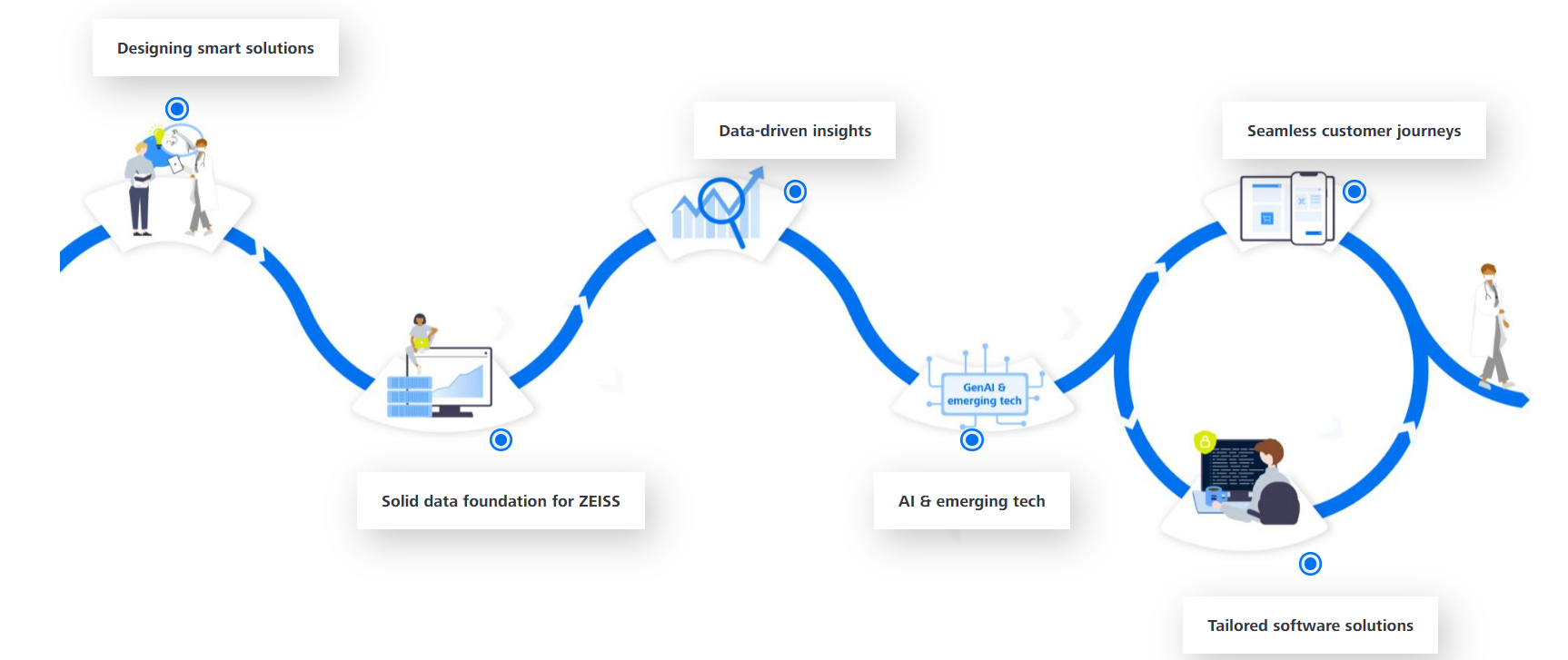
In this context, enterprises are encouraged to move beyond a “cloud-first” approach towards a more balanced “cloud-smart” strategy. This involves aligning cloud decisions with workload criticality, resilience requirements, and regulatory obligations. For mission-critical systems, organizations must evaluate continuity plans in the event of prolonged outages or disruptions. Hybrid and multi-cloud strategies, along with containerization and open standards, are increasingly seen as essential to ensuring flexibility and reducing dependency risks.
From a cybersecurity standpoint, reliance on a small number of cloud providers can create hidden vulnerabilities. A key concern is the false assumption that hyperscaler security extends across the entire enterprise stack. In practice, many breaches continue to stem from misconfigurations, weak access controls, or identity management gaps. Concentration risk can amplify the impact of outages or disruptions, while opaque supply chain dependencies within cloud ecosystems may remain unaddressed until incidents occur. Identity systems, if compromised, can create a significant blast radius across operations, further underscoring the need for strong governance and contingency planning.
Cloud has undoubtedly accelerated innovation and scale, but over-concentration introduces fragility that organizations often underestimate. The shift from cloud-first to cloud-smart is about building resilience through architectural diversity, stronger identity governance, and clear contingency pathways that ensure business continuity even in adverse scenarios.
ZEISS Digital Partners also highlight the role of decentralized decision-making in strengthening resilience. By enabling teams closest to systems and workloads to take immediate action, organizations can significantly reduce response times during incidents. This approach has been effectively implemented across ZEISS India’s Global Capability Centers (GCCs), where localized expertise supports rapid incident response and proactive risk mitigation, while remaining aligned with global governance frameworks.
The need for such agility is even more pronounced in industrial and operational technology (OT) environments. Unlike traditional IT systems, industrial systems prioritize safety and uptime over confidentiality. Many of these systems are legacy-based, operate on proprietary protocols, and cannot be easily patched or restarted without disrupting operations or creating safety risks. This creates a disconnect between conventional cybersecurity practices and real-world industrial requirements.
To address this, ZEISS Digital Partners adopt a layered approach to OT security, incorporating network segmentation, real-time monitoring, and intrusion detection mechanisms designed to minimize risk without impacting operational continuity. Proactive risk management, including simulated testing of updates and strict access controls, remains central to this approach.
Another important shift highlighted is the need to treat cybersecurity as a long-term responsibility. As connected devices remain in operation for extended periods often spanning decades security must be maintained throughout their lifecycle. This includes ensuring products are updateable over time, maintaining transparency through Software Bills of Materials (SBOMs), and clearly defining support timelines for security updates and vulnerability management.
This perspective necessitates a rethinking of both product design and governance. Secure-by-design architectures, modular systems, over-the-air update capabilities, and cryptographic agility are becoming essential considerations. At the same time, organizations must establish extended support policies, continuous vulnerability management practices, and align with global standards and regulatory frameworks.
ZEISS emphasizes the importance of designing systems with the assumption that failures are inevitable. Rather than focusing solely on prevention, organizations should prioritize resilience, containment, and rapid recovery. This includes adopting principles such as zero trust, segmentation, redundancy, and automated detection and response mechanisms. Regular scenario planning and crisis simulations further strengthen preparedness.
In an increasingly complex and interconnected environment, this approach enables organizations to build systems that can withstand disruption while maintaining operational continuity and trust.
13, Apr 2026
Global AR Smart Glasses Shipments Double in 2025: Report
New Delhi, Apr 13 (BNP): Global shipments of augmented reality (AR) smart glasses witnessed a significant surge in 2025, doubling compared to the previous year, according to a recent industry report.

The growth reflects rising demand for wearable technologies that integrate digital information with real-world environments. Improved device design, better processing capabilities, and expanding use cases across sectors such as enterprise, healthcare, and logistics have contributed to the momentum.
The report highlights that companies are increasingly investing in AR-enabled devices as they move toward more immersive and hands-free digital experiences. This trend is also being supported by advancements in display technology and artificial intelligence integration.
Industry analysts suggest that the sharp rise in shipments signals a broader shift toward wearable computing, with AR smart glasses expected to play a more prominent role in both professional and consumer applications in the coming years.
13, Apr 2026
Samsung Galaxy Z Fold 8 Set to Raise the Bar for Foldable Phones
Apr 13 (BNP): Samsung appears ready to take another big step in the foldable smartphone space with the expected launch of the Galaxy Z Fold 8 in July 2026. After setting high expectations with the previous generation, the company is now looking to refine and upgrade the experience further.
The upcoming device is likely to focus on addressing key user demands. Early reports suggest improvements such as a larger battery for better endurance, a more advanced ultrawide camera, and enhanced processing power to fully utilise the large foldable display.
If these upgrades materialise, the new model could deliver a more balanced and powerful performance, making foldable devices more practical for everyday use.
With growing competition in the premium smartphone segment, Samsung’s next foldable could play a crucial role in shaping buyer expectations and pushing the category forward.
13, Apr 2026
AvenuesAI Enters Turnkey AI Market with PrivateGPT On Premise Platform
New Delhi, Apr 13 (BNP): AvenuesAI has announced its entry into the turnkey artificial intelligence solutions segment, targeting corporate and institutional clients with secure, enterprise-ready AI tools.
The company is focusing on its new PrivateGPT platform, an on-premise small language model (SLM) solution designed to run within an organisation’s internal systems. The platform aims to help businesses use advanced AI capabilities while ensuring full control over their data.
According to the company, the solution is built for enterprises that prefer local deployment over cloud-based systems, offering enhanced data security, privacy, and compliance.
With this initiative, AvenuesAI is looking to tap into the growing demand for customised and private AI systems as organisations increasingly integrate AI into their operations, automation, and decision-making processes.
13, Apr 2026
Mobile Makers Push for Extension of PLI Scheme to Sustain Growth
New Delhi, Apr 13 (BNP): India’s mobile phone manufacturing sector is expanding at a fast pace, with the country now accounting for nearly 15% of global mobile phone production, according to industry estimates.
The growth has been significantly driven by the Production-Linked Incentive (PLI) scheme, which was introduced during the COVID-19 pandemic to boost domestic manufacturing and attract global electronics companies.
However, the scheme officially ended on March 31, prompting mobile phone manufacturers to seek an extension until 2031 to sustain the current growth momentum. Industry representatives have held discussions with the Ministry of Electronics and IT regarding the proposal.
Stakeholders believe that extending the PLI programme could help India increase its share in global mobile production to 30–35% in the coming years. They also project that total mobile phone manufacturing in the country could rise to $110–130 billion, with exports expected to reach $55–70 billion.
Currently, India’s mobile phone production is valued at around $64 billion annually, positioning the country as a key global manufacturing hub in the electronics sector.
Experts say continued policy support will be crucial for maintaining investment inflows and strengthening India’s position in global supply chains.
11, Apr 2026
AI-Powered Research at Iowa State Advances Next-Generation Livestock Vaccines
Researchers at Iowa State University are leveraging artificial intelligence to combat rapidly evolving livestock viruses, paving the way for next-generation vaccines designed to stay effective against mutating pathogens.
Led by Ratul Chowdhury, assistant professor of chemical and biological engineering, the research focuses on tackling the highly adaptive Porcine Reproductive and Respiratory Syndrome (PRRS) virus—one of the most economically damaging swine diseases globally, costing the pork industry over $1 billion annually.
The PRRS virus is known for its rapid mutation rate, allowing it to evade immune defenses and making traditional vaccines less effective. “The virus shape shifts,” said Chowdhury. “It constantly alters its structure to escape detection, making it extremely challenging to control.”
To address this, Chowdhury’s team uses AI-driven simulations to analyze viral-host interactions and predict how viruses may evolve. This approach enables researchers to identify critical viral components, known as epitopes, that can be targeted to create more resilient vaccines capable of protecting against multiple variants.
The research is supported by the Nanovaccine Institute at Iowa State and utilizes extensive animal health data from the university’s Veterinary Diagnostic Laboratory—one of the largest livestock diagnostic centers in the United States.
Using advanced computational modeling, the team has screened millions of potential protein structures, significantly accelerating vaccine design. In one study, researchers identified 75 epitopes and developed 56 potential immunogens for PRRS, while parallel research on infectious bronchitis virus (IBV) in poultry led to the creation of multi-epitope vaccine candidates.
“This technology allows us to read the virus like a blueprint,” Chowdhury explained. “We can identify which parts remain stable and which enable infection, helping us design vaccines that stay effective even as the virus evolves.”
The research has already attracted interest from multiple animal health companies, with plans underway for real-world testing, including a PRRS vaccine trial at an Iowa State swine facility later this year.
Industry collaboration plays a key role in advancing the work. Mike Roof, Chief Technology Officer for vaccines and immunotherapies at Iowa State, brings extensive industry experience to guide the research toward commercial viability.
“This is a novel and cost-effective approach to identifying vaccine targets,” said Roof. “It has the potential to significantly accelerate development timelines and improve outcomes across the animal health sector.”
Looking ahead, the team aims to expand its AI-driven platforms to support vaccine development for a wide range of livestock diseases, including avian influenza and other emerging threats. The goal is to create scalable, adaptable tools that can be used by industry partners to respond quickly to evolving pathogens.
With strong institutional support, rich data resources, and growing industry collaboration, Iowa State’s research is positioned to play a critical role in advancing animal health and strengthening global food security.
11, Apr 2026
UP Sets Sights on Deep Tech Leadership with Time Bound Innovation Push
LUCKNOW, Apr 11 (BNP): Uttar Pradesh Chief Minister Yogi Adityanath has outlined an ambitious roadmap to position the state as India’s leading deep-tech hub, calling for time-bound execution of key initiatives.
At a high-level meeting, he emphasized the need to accelerate development in advanced technology sectors such as artificial intelligence, quantum computing, drones, green hydrogen, cybersecurity, and medical technology. These areas, he noted, are crucial for driving long-term economic growth and creating skilled employment opportunities.

Pic Credit: Pexel
A major priority highlighted during the discussion was strengthening collaboration between industry and research institutions to ensure innovations move beyond labs and into large-scale applications. This approach is expected to help build a robust ecosystem capable of supporting cutting-edge startups and attracting global investment.
The strategy reflects the state’s broader vision of fostering innovation locally while scaling solutions for global markets. With a focused push and coordinated efforts, Uttar Pradesh aims to emerge as a key player in India’s next wave of technological advancement.


