


9, Apr 2026
OrbitronAI Launches NovaOS: Governed AI Agents for the Legacy Architecture That Runs Regulated Industry
OrbitronAI has announced the launch of NovaOS, a platform designed to support the deployment and management of AI agents in regulated industries such as aerospace, energy, government and industrial enterprises, enabling organizations to deploy AI within legacy enterprise infrastructure without replacing existing systems.
The system introduces a structured approach to AI operations, focusing on auditability, human oversight, and compliance. NovaOS acts as a control layer on top of existing enterprise systems, allowing organizations to manage how AI agents are deployed and operated without replacing current infrastructure.

“The bottleneck holding enterprises back from AI is not model quality – it is governance, isolation, and operational control,” said Saul Adomaitis, Founder and Global CEO of OrbitronAI. “NovaOS closes that gap. Regulated industries can now deploy AI agents that are fully auditable, human-supervised, and compliant by design – not as an afterthought.”
The platform is architected around a six-layer value stack in which every agent action passes through policy enforcement, approval gates, and a complete audit trail. Human-in-the-Loop supervision is embedded at the platform level: high-risk actions always require human approval before execution.
Core capabilities include a visual workflow builder (NovaOS Studio) with pre-built components and natural-language Copilot, enterprise integrations via Model Context Protocol (MCP) Gateway enabling connection to ERP and CRM systems without custom code, and knowledge and document intelligence (RAG) that turns internal data into actionable insights.
The platform also supports persistent cross-session memory across multiple dimensions, an agent marketplace for managing deployments across business units, and full observability with evidence export, ensuring that all actions are logged, traceable, and audit-ready.
NovaOS supports four deployment strategies – Managed Cloud, Bring Your Own Cloud (AWS, Azure, GCP), On-Premise, Air-Gapped, and Hybrid – with production regions active in Middle East, Europe, and North America. All deployment options include tenant isolation, data residency compliance, and encrypted communication between services.
The platform is AI model agnostic, allowing organizations to run agents on the large language model of their choice without vendor lock-in. The platform is designed for organizations where data sovereignty, SOC 2 and ISO 27001 compliance, and Arabic NLP readiness (roadmap Q3 2026) are strategic requirements.

- 0
- By Neel Achary

9, Apr 2026
AAEON’s BOXER-6845-BTL Blends Bartlett Lake Processing with Workstation-Class GPU Support
High-performance GPU support, Intel Core Series 2 processing, and a compact design see AAEON’s BOXER-6845-BTL positioned as a solution for AI inference server, workstation, and robotics applications.

(Taipei, Taiwan – Apr 09) Leading provider of industrial PC solutions AAEON announced the BOXER-6845-BTL, an Expansion Box PC powered by up to 65W CPUs from the new Intel Core Processor Series 2 range (formerly Bartlett Lake), including SKUs with dedicated performance-core architecture.
While the selection of supported processors represents a substantial improvement on previous offerings from AAEON’s Expansion Box PC series, the most noticeable advances can be seen in the BOXER-6845-BTL’s expansion options and compact size. At 150mm x 270mm x 225mm, the BOXER-6845-BTL is 43% smaller than its predecessor, which AAEON has indicated is in response to increasing demand for platforms that can offer high-performance computing while still being suitable for deployment in tight spaces, such as cabinets and mobile robotic units.
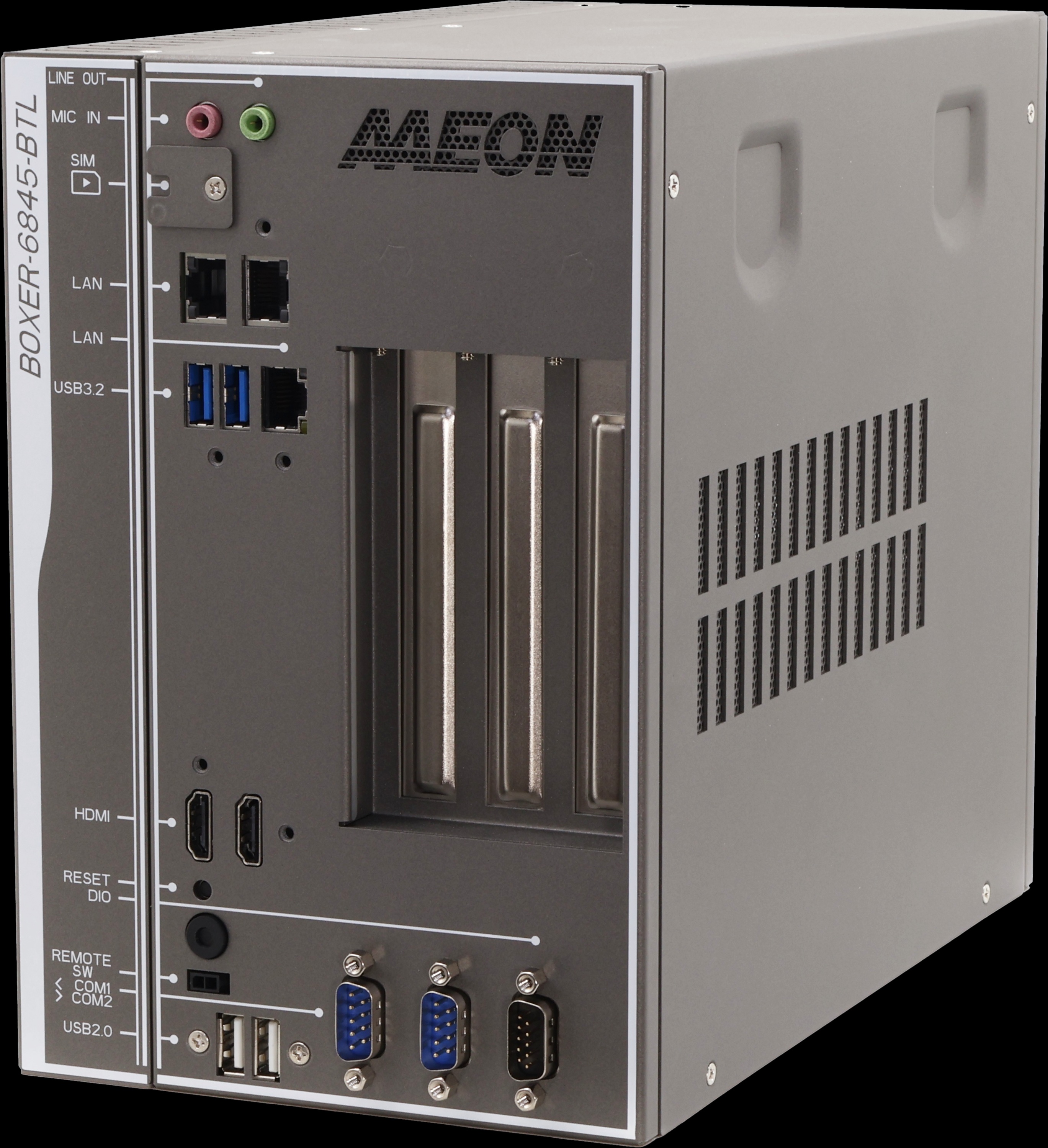
The BOXER-6845-BTL is available in two system SKUs, each equipped with a riser card offering either a PCIe x16 + PCIe x4 configuration (A1 SKU) or a PCIe x4 + PCI slot configuration (A2 SKU). As such, the BOXER-6845-BTL’s A1 model is built to host exceptionally powerful GPUs, such as the NVIDIA RTX PRO 4000 Blackwell SFF Edition, for heavy edge AI inference workloads. Meanwhile, its A2 SKU offers support for legacy PCI cards like motion controllers, frame grabbers, and industrial communication cards.
Additional expansion for Wi-Fi and 5G is available through an M.2 E-Key slot and two M.2 B-Key slots, one of which also offers a front-access Nano SIM slot. For storage, the system is equipped with two 2.5” SATA drive bays with RAID support alongside two M.2 2280 M-Key slots for NVMe. As such, the system is designed to handle both the heavy real-time processing and long-term data retention required by industrial robotics and machine vision applications.
The BOXER-6845-BTL’s I/O features three lockable RJ-45 LAN ports, two USB 3.2 (10 Gbps) ports, two DB-9 ports for RS-232/422/485, as well as a DB-15 port for 8-bit digital I/O. For operating system support, the system is compatible with Windows 10 IoT 2021 LTSC, Windows 11 IoT LTSC, and Ubuntu 24.04.
9, Apr 2026
Sightview Offers ASCRS 2026 Attendees Early Access to Enhanced EHR Solution
New user experience and workflows further advance leading technology for ophthalmologists
Durham, NC — April 9, 2026 — Sightview, the only electronic health record and practice management partner focused solely on eyecare, will offer early demo access to its new flagship EHR platform, named Sightview, at the 2026 ASCRS Annual Meeting. Attendees will get an interactive first look at the enhanced solution, which includes a modern, intuitive design that makes daily operations easier for ophthalmology professionals.
“Sightview is one of the most established technology partners for eyecare, and it’s critical we continue updating our offerings to keep up with the new needs and demands placed on eyecare professionals,” said Tycene Fritcher, CEO of Sightview. “Our new Sightview platform maintains the purpose-built functionality that ophthalmologists rely on, with modernized interfaces and workflows to further reduce frictions in their day-to-day tasks.”
The new solution introduces a cleaner look and feel for Sightview’s end-to-end, ophthalmology-specific EHR and PM offering. Simplified clinical and front-end processes enhance the solution’s existing single-screen exam view and make it easier to access and manage every aspect of the practice. Reimagined on a more agile platform, the new solution natively includes integrations such as automated payments and text-to-pay, clearinghouse support and claims management via TriZetto, and ONC-certified ePrescribe via DrFirst, among others.
“This more unified, streamlined platform has been in the works since my first day at Sightview,” said Fritcher. “We can’t wait for clients to experience our hard work firsthand and play around with a tool that I think will change the game for many eyecare practices across the country.”
Sightview will offer interactive demos of the new Sightview platform, which is expected to be available to existing and new Sightview practices in Q2 2026, in booth #527 at ASCRS Annual Meeting (April 10-13).
9, Apr 2026
Rackspace Technology Appoints Paul Soligon and Marco Tesini to Senior Leadership Roles
SAN ANTONIO, TX | Apr 09 — Rackspace Technology® (NASDAQ: RXT), a leading end-to-end hybrid cloud and AI solutions company, announced the appointments of Paul Soligon as Senior Vice President of Operations and Marco Tesini as Senior Vice President of International for the company’s Private Cloud business unit.
Soligon will be responsible for unifying key operational functions to drive growth and strengthen customer retention. In this role, he will lead Business and Sales Operations as well as Customer Success with a focus on advancing analytics and insights as well as elevating customer experience.
Soligon brings extensive leadership experience from over 25 years in high-growth technology environments. Most recently, he served as Senior Vice President at USAN, where he built and scaled significant new go-to-market partnerships and revenue expansion. Prior to that, he spent nearly a decade at Amazon Web Services (AWS) as Vice President and General Manager of Sales, leading a 700-person organization responsible for more than $2.2 billion in revenue and securing over $4 billion in strategic enterprise agreements.
Tesini will lead all markets outside of the US with a focus on expanding the company’s global presence, deepening customer relationships, and scaling innovative solutions. He brings more than 25 years of experience driving business transformation and profitable growth for leading IT organizations, such as Unisys and Hitachi Vantara. Most recently, Tesini served in senior leadership roles at Hitachi Vantara, where he led large-scale regional turnarounds and consistently delivered double-digit growth.
“Paul and Marco join Rackspace at a moment when demand for a governed, enterprise AI backbone is accelerating faster than most organizations can deliver against it,” said Gajen Kandiah, CEO of Rackspace Technology. He added, “Paul’s experience scaling a multi-billion-dollar business at AWS gives us the operational rigor to match that demand. Marco is a proven growth and turnaround leader who has built and rebuilt international businesses at scale, most recently at Hitachi Vantara. They strengthen our ability to do what the market increasingly needs: put AI into production on governed private cloud with the operational discipline that enterprise customers require.”
8, Apr 2026
Global AI Investment Touches $800 Billion; India Emerges as a Key Applications Hub
New Delhi, April 8: Investment in artificial intelligence (AI) has surged to an estimated $800 billion globally, marking a major turning point in how businesses and economies are embracing advanced technologies. What was once seen as a futuristic concept is now becoming a core driver of growth, innovation, and competitiveness across industries.
The sharp rise in funding reflects strong confidence among investors and companies, as AI continues to reshape sectors ranging from healthcare and finance to retail and manufacturing. Large-scale investments are increasingly focused on building robust AI ecosystems, with companies prioritising long-term impact over short-term experimentation.
Amid this global wave, India is steadily emerging as a major hub for AI applications, standing out for its ability to turn technology into practical, real-world solutions. Unlike many markets that focus heavily on developing foundational AI models, India’s strength lies in applying AI to solve everyday challenges.
A growing number of Indian startups and enterprises are leveraging AI to improve efficiency, reduce costs, and enhance customer experiences. From smarter financial services and precision agriculture to digital healthcare and education tools, AI-driven solutions are becoming deeply embedded in the country’s growth story.
Experts believe that India’s advantage comes from its unique combination of a large and skilled talent pool, expanding digital infrastructure, and a rapidly growing user base. These factors are enabling businesses to experiment, scale, and deploy AI solutions at speed.
Another notable trend is the shift in focus from building technology to delivering outcomes. Companies are now prioritising solutions that generate real value—whether by improving productivity, enabling better decision-making, or creating new revenue streams.
As global investment in AI continues to accelerate, India’s role as an applications-driven innovation hub is expected to strengthen further. The country is not just participating in the AI revolution—it is actively shaping how technology is used to solve real problems and improve everyday lives.
8, Apr 2026
PM Modi to Inaugurate Pachpadra Refinery in Rajasthan, Boosting Jobs and Regional Growth
Rajasthan, Apr 8: Prime Minister Narendra Modi will visit Balotra, Rajasthan, on April 21, 2026, to inaugurate the Pachpadra Refinery, one of the country’s most modern refining facilities.
The refinery is a joint project between HPCL and the Rajasthan government. It can process nine million tonnes of crude oil annually and includes a two-million-tonne petrochemical complex. The project is designed as a Zero Liquid Effluent Discharge plant, ensuring no liquid waste is released during refining.
Chief Minister Shanti Dhariwal said the refinery will boost the region’s economy, create jobs, and improve connectivity between Balotra and Pachpadra. About 7.5 million tonnes of crude will be imported from Arab nations, while 1.5 million tonnes will come from domestic sources.
The refinery was built at an estimated cost of ₹80,000 crore and is expected to support large-scale industrial growth and employment in western Rajasthan.
This visit will be Prime Minister Modi’s second trip to Rajasthan in the past two months, following his February 28 visit to Ajmer, where he launched multiple development projects.
8, Apr 2026
AI‑Enabled Surveillance Now Active at 1,874 Railway Stations to Boost Passenger Safety
New Delhi, Apr 8: In a major step toward enhancing passenger safety across the nation, 1,874 railway stations in India have been equipped with AI‑powered video surveillance systems, officials announced on Wednesday. The upgraded system uses advanced technology to monitor activity in real time and support faster responses to potential threats or emergencies.
The new video cover initiative integrates artificial intelligence (AI) with existing CCTV networks to automatically detect unusual behavior, unattended objects, crowd build‑ups, and other safety risks. By analyzing video feeds intelligently, the system can alert authorities promptly, helping railway staff and security personnel act swiftly to protect passengers and infrastructure.
Railway officials say the AI‑enabled cameras are already starting to make a difference in reducing blind spots and improving overall vigilance at stations. The technology is designed to complement existing security arrangements and support human teams rather than replace them, strengthening the railways’ ability to ensure safe and secure journeys for millions of travellers every day.
In addition to surveillance upgrades, the Railways are also training staff to make the most of the new system — from recognizing alerts to coordinating with local law enforcement when needed. This focus on both technology and training reflects a broader commitment to passenger care and risk management across India’s vast rail network.
Passengers can expect quieter, more comfortable travel experiences as technology plays a bigger role in safeguarding their journeys. The Railway Ministry said it will continue rolling out AI‑based systems to more stations over time, aiming for a smarter, safer, and more secure rail network.
8, Apr 2026
New GeoTech Centre to Strengthen Maharashtra’s Disaster Response
Apr 8: At a Cabinet meeting chaired by Chief Minister Devendra Fadnavis, the state gave approval for setting up the Maharashtra Geotechnology Application Centre (MahaGeoTech). This new centre will use modern geospatial technology to support better planning, monitor environmental changes, and improve response during emergencies.
In addition, a resilience programme has also been cleared to enhance the state’s readiness for natural disasters and climate-related challenges. The programme will focus on improving coordination between departments and ensuring quicker, more effective action during crises.
Officials believe that these initiatives will help the government make more informed decisions and respond faster in critical situations. For the people of Maharashtra, this means improved safety, better planning, and stronger support during emergencies.
Overall, the move reflects the government’s growing focus on using technology to build a safer, more prepared, and future-ready state.
8, Apr 2026
Smart Tech Boost for Vande Bharat Sleeper Trains in Northeast
Apr 8: In a step towards modernizing railway operations, Northeast Frontier Railway (NFR) has introduced advanced technology to maintain Vande Bharat Sleeper trains more efficiently.
The new system is designed to closely monitor the condition of trains, helping engineers detect issues early and carry out timely maintenance. This not only improves the overall performance of the trains but also ensures a smoother and safer journey for passengers.
With the introduction of these modern tools, routine checks are becoming faster and more accurate. Railway officials say this will reduce delays caused by technical problems and improve the reliability of services.
For passengers, this means greater comfort and peace of mind while travelling on Vande Bharat Sleeper trains. Clean, well-maintained coaches and fewer disruptions are expected to enhance the overall travel experience.
The move reflects Indian Railways’ growing focus on using smart technology to deliver better, more dependable services, while keeping passenger safety and convenience at the centre of its efforts.
8, Apr 2026
Call SKY: Skyscanner Launches Fan Hotline for Cricket Match Travel Tips
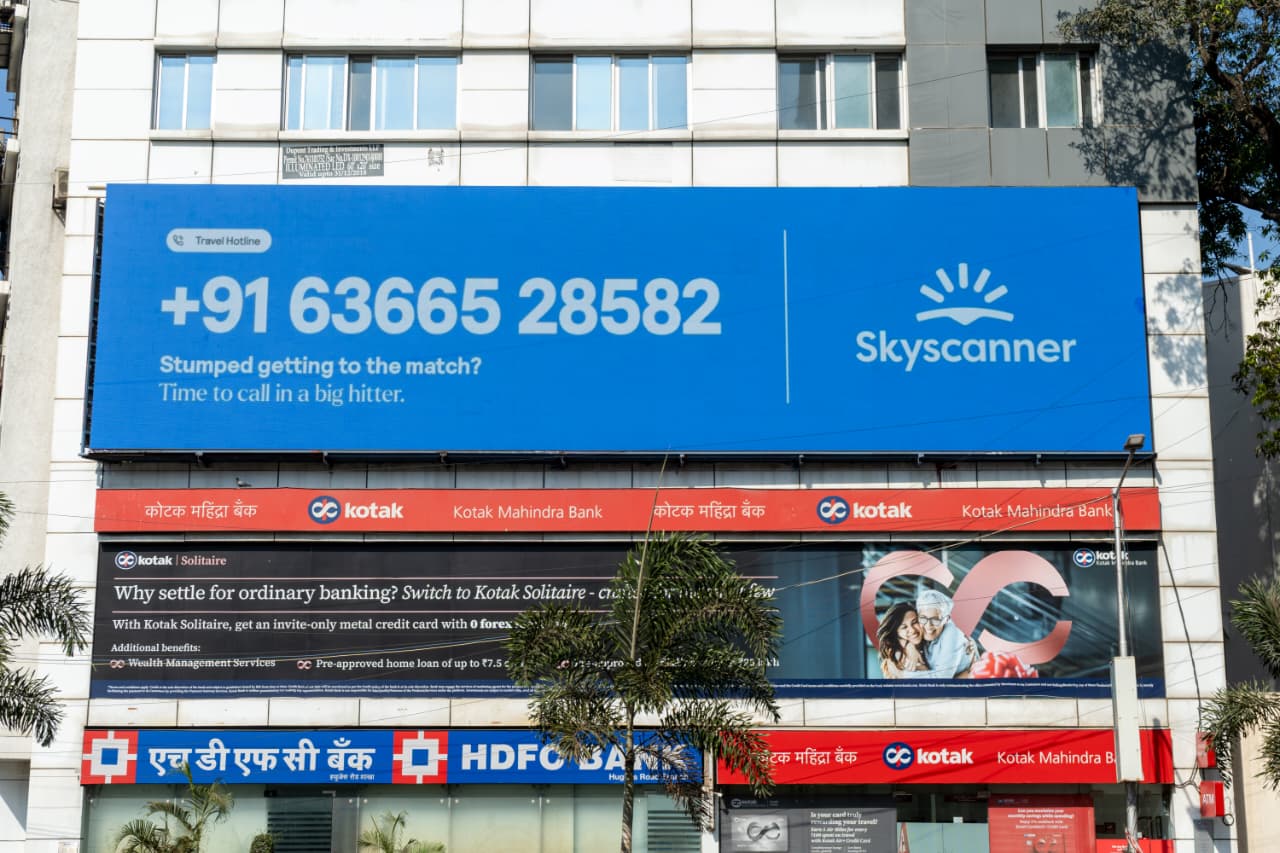
India, Apr 08: Leading global travel app Skyscanner today launched ‘Hotline to SKY’, a first-of-its-kind travel helpline offering cricket fans travel tips and hacks directly from brand ambassador, Suryakumar ‘SKY’ Yadav as they plan their match-day journeys. Blending cricket fandom with travel inspiration, the campaign invites fans to call a dedicated number for simple and smart ways to plan trips around upcoming cricket matches.
About ‘Hotline to SKY’
To spark curiosity, Skyscanner has rolled out a series of billboards across high-footfall locations in Delhi and Mumbai featuring a simple yet compelling prompt. Designed for instant engagement, the campaign turns a moment of curiosity into a real-time travel planning experience.
Once dialled in, callers are greeted by the voice of SKY, who responds to common cricket-related travel questions through a series of short, conversational voice notes. From navigating last-minute travel plans and finding cost-effective options, to building extended match-day itineraries, SKY shares practical advice alongside personal insights, including how he stays composed under pressure and his match-day mindset. The experience is powered by Skyscanner’s key features and expert travel hacks, including Price Alerts and its Calendar view search, helping fans plan more efficiently and make the most of their journeys. Through this, Skyscanner brings fans closer to the game while enabling smarter, more seamless travel planning around cricket.
Inside the Cricket Travel Boom: Key Trends
Travel demand took off following the announcement of the first phase of Indian Premier League (IPL) fixtures on 11 March, with Skyscanner recording a surge in domestic flight searches through to 12 April as fans geared up for the season. In the run-up to the opening clash between Royal Challengers Bengaluru (RCB) and Sunrisers Hyderabad (SRH), searches for the weekend of 27–30 March climbed 45% YoY (year-on-year), signalling early excitement. Mumbai quickly became the top trending destination for that weekend, driven by the face-off between Mumbai Indians (MI) and Kolkata Knight Riders (KKR). Momentum continued into April, with the ever-popular rivalry between RCB and Chennai Super Kings (CSK) in Bengaluru sparking a 56% YoY jump in searches for the weekend of 3–6 April, highlighting how fixture drops could potentially be triggering spikes in travel demand, among Indians.
Commenting on the campaign, Neel Ghose, Skyscanner Travel Trends and Destinations Expert, shared, “Cricket has always had an unmatched hold on Indian audiences, and following the game on the road is just as much a part of that passion. We’re seeing fans plan entire trips around match schedules, navigating last-minute bookings, cross-city journeys, and peak travel windows. With ‘Hotline to SKY,’ Skyscanner is simplifying this process through its features, such as Price Alerts, Whole Month, and flexible search filters, helping users make more informed decisions with greater control. And with SKY lending his voice, we’re bringing a perspective that cricket fans across India instinctively trust, combining real-time insights with guidance that’s as familiar as it is useful, so travellers can stay one step ahead.”
Sharing his experience, Suryakumar Yadav, Skyscanner Brand Ambassador, said, “Being part of ‘Hotline to SKY’ has been special for me. As cricketers, we always feel the energy of fans in the stands, but this was a chance to be part of their journey in a different way, as they travel to support the teams they love. Recording these messages made me think through real travel situations fans face, and I’m proud to be able to share helpful tips via Skyscanner’s features, tools, and hacks, that make their experience smoother. I encourage everyone to pick up the phone and dial in to the hotline to not only get some travel planning tips but also hear some of my personal takes.”
Cricket trips aren’t just about the match anymore; they’ve become mini getaways. Fans are using these moments to explore new cities, discover great local food, and soak in the buzz of match day alongside fellow supporters from all over the world. Skyscanner tapped into this shift through its ‘Pitch Perfect Journeys’ campaign last year, which revealed that while 80% of fans were excited to travel for their favourite IPL teams, more than half were turning it into a longer break, adding a few extra days to enjoy the destination.
Building on this, through the ‘Hotline to SKY’ campaign, Skyscanner continues to deepen its understanding of real traveller needs, offering meaningful support shaped by real-life experiences. By staying close to what fans encounter on their journeys, Skyscanner remains focused on making travel planning simpler, so fans can focus on what truly matters, blending the thrill of the game with the joy of discovering something new.


