


7, Apr 2026
Samsung Brings Al, Coding Skills to 1,000 Students in First Major Maharashtra Skilling Initiative
Delhi, Apr 07: Samsung Electronics, India’s leading consumer electronics brand, has successfully certified 1,000 students in Maharashtra under its flagship CSR initiative, Samsung Innovation Campus (SIC), marking a major milestone in strengthening the state’s digital skilling ecosystem.
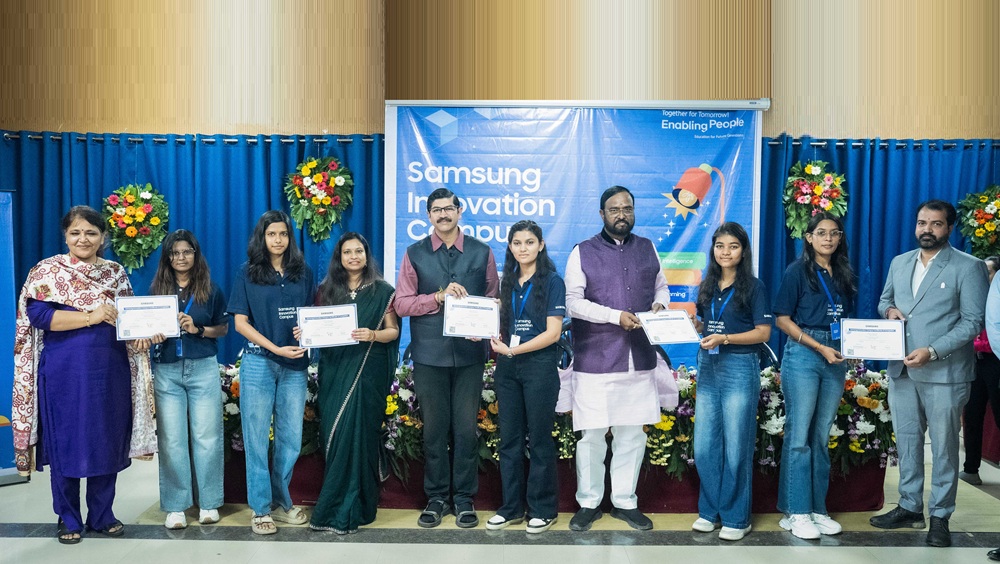
This achievement represents the first large-scale certification rollout of the programme in Maharashtra, with students trained in key future technologies such as Artificial Intelligence (AI) and Coding & Programming—critical pillars of the digital economy.
A total of:
- 127 students from Savitribai Phule Pune University
- 373 students from Pimpri Chinchwad University
- 250 students from D. Y. Patil University’s Ramrao Adik Institute of Technology
- 250 students from Anjuman-I-Islam’s Kalsekar Technical Campus
successfully completed the programme, gaining hands-on, industry-relevant skills to solve real-world challenges.
Building Future-Ready Talent
Beyond technical training, the programme integrates soft skills development and career readiness modules, ensuring participants are both job-ready and future-ready. This holistic approach aims to bridge the gap between academic learning and evolving industry expectations.
Marking 30 years of operations in India, Samsung continues to reinforce its commitment to digital inclusion and education.
Shubham Mukherjee, Head CSR & Corporate Communications, Samsung Southwest Asia, said,
“India’s digital growth will be driven by the strength of its talent pipeline. Programmes like Innovation Campus go beyond education—they build real-world capability by combining deep tech learning with employability and problem-solving skills.”
Expanding Nationwide Impact
Launched in India in 2022, Samsung Innovation Campus focuses on democratizing access to future-tech education through a blend of classroom learning, mentorship, and project-based application.
The programme has:
- Trained 20,000 youth across India in 2025
- Achieved 48% women participation nationwide
- Expanded its footprint across multiple regions
The initiative is implemented in collaboration with the Electronics Sector Skills Council of India and Telecom Sector Skill Council.
Alongside flagship programmes like Samsung Solve for Tomorrow and Samsung DOST, the initiative continues to nurture a new generation of innovators equipped with technical expertise and a future-ready mindset.

- 0
- By Neel Achary

7, Apr 2026
Odisha Cabinet Approves ₹929.96 Crore Redevelopment of VSSUT
The Odisha Cabinet, chaired by Chief Minister Mohan Charan Majhi, has approved a redevelopment project worth ₹929.96 crore for Veer Surendra Sai University of Technology in Burla.
The project aims to upgrade the university’s infrastructure and strengthen technical education in the state. As part of the plan, new academic blocks, advanced laboratories, and improved hostel facilities will be developed across the campus.
The redevelopment is expected to benefit more than 10,000 students by providing better learning, research, and residential facilities. Officials said the initiative will enhance the overall academic environment and support the growing demand for quality technical education.
The decision is seen as a key step toward improving higher education infrastructure in Odisha and supporting the state’s long-term development goals.
7, Apr 2026
AAEON Bring Live Demos, New Products, and More to Japan IT Week at Embedded, Edge & IoT Development Expo Tokyo
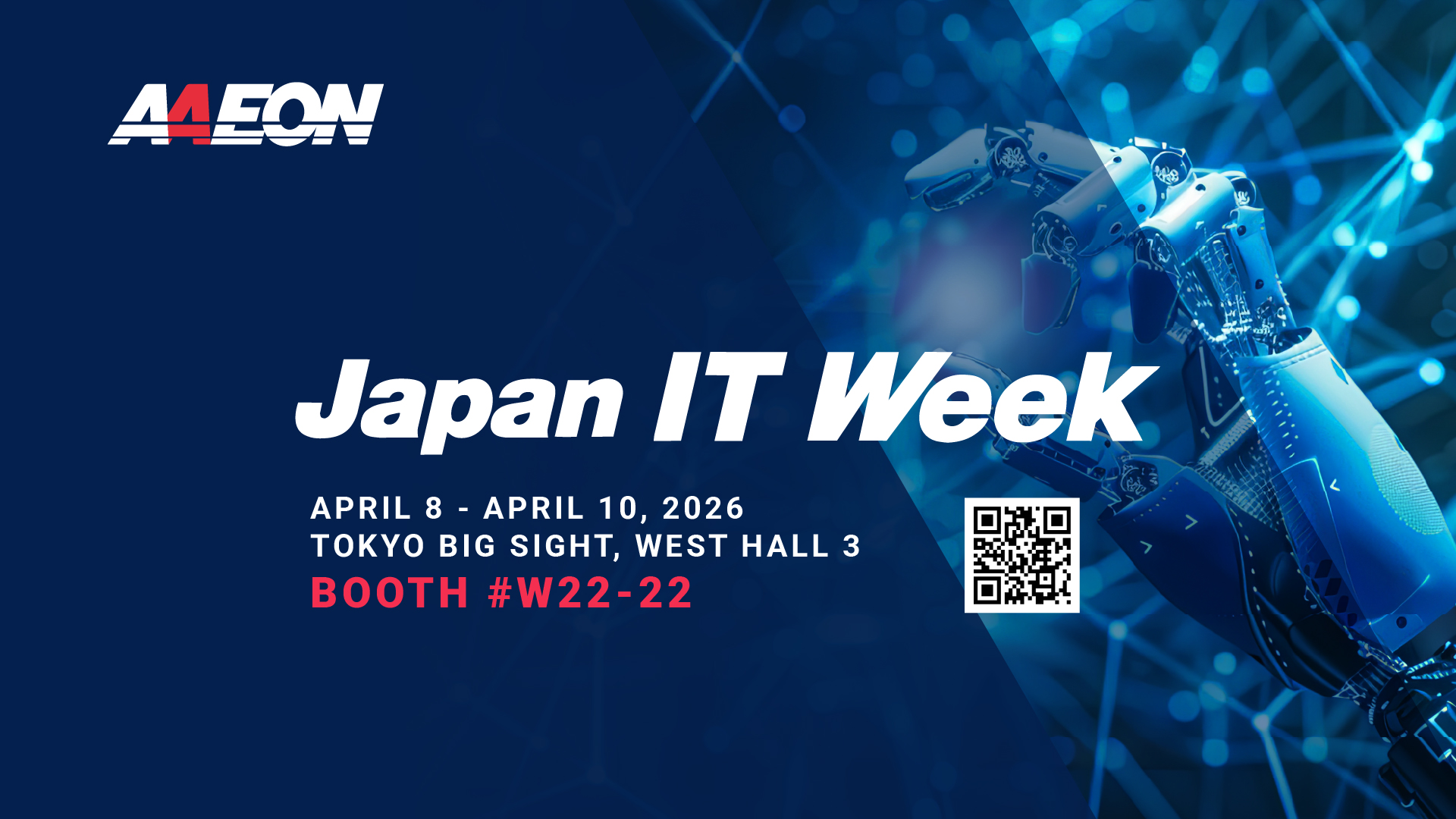
Join AAEON at Booth #W22-22 of Tokyo Big Sight, West Hall 3 from April 8 – 10, 2026.
Taipei, Taiwan – Apr 07: AAEON (Stock Code: 6579), a leading provider of advanced industrial robotics and edge AI platforms, will present a range of new product demonstrations at the Embedded, Edge & IoT Development Expo, held as part of Japan IT Week (Spring).
Date: April 8, 2026 – April 10, 2026
Booth: #W22-22
Venue: Tokyo Big Sight, West Hall 3 (3-11-1 Ariake, Koto-ku, Tokyo, Japan 135-0063)
Japan’s largest tradeshow dedicated to IT and digital transformation, the exhibition is an indispensable fixture in the calendar of industry pioneers in the Japanese market, who are provided a wealth of product demonstrations and opportunities to discover new ways to optimize their business operations through the integration of edge computing solutions.
At booth #W22-22, AAEON will present a variety of live demonstrations focused on the core themes of robotics and edge AI, showcasing how its scalable AI platforms are able to accelerate the development of intelligent systems across industries.
Among its most anticipated demonstrations will be an intelligent frozen food vending machine controlled by a MediaTek Genio 510-powered custom AAEON Pico-ITX motherboard. Meanwhile, AAEON’s UP Xtreme ARL, powered by Intel® Core™ Ultra Series 2 Processors (formerly Arrow Lake), will be deployed alongside MIPI cameras as part of a versatile AI vision monitoring application. Utilizing the Intel® Core™ Ultra processor platform’s integrated CPU, GPU, and NPU in conjunction with the board’s MIPI camera support, this demonstration illustrates how power-efficient, fully embedded platforms can be used for applications such as access control and contactless health monitoring.
Also on show will be the BOXER-8645AI, powered by NVIDIA Jetson AGX Orin module, which will be deployed as part of an object recognition application. AAEON notes that this solution is one that is already being used in the smart agriculture sphere.
In addition to its live demonstrations, the event will also feature a broad range of new and upcoming static product showcases featuring the most advanced technologies from leading providers, including NVIDIA and Intel. One such example will be the BOXER-8741AI, built on NVIDIA Jetson T5000 module demonstrating AAEON’s technological breakthroughs in providing advanced platforms for humanoid robotics. Meanwhile, AAEON will present a number of boards and systems equipped with the latest Intel Core Ultra Series 3 (formerly Panther Lake) platform. One such product, the MIX-PTLWV1 Mini-ITX motherboard, will also be used as part of a live demonstration.
AAEON invites all interested parties to join them at Booth #W22-22, where attendees can discuss their needs and discover how best to integrate embedded solutions to their projects.
7, Apr 2026
IInvenTiv 2026 Opens at IIT Dhanbad, Driving India’s Innovation Pipeline to Bharat Innovates 2026
Apr 07: In a major step towards positioning India’s innovations on the global stage, IInvenTiv 2026 commenced at IIT (ISM) Dhanbad as a key national feeder platform to Bharat Innovates 2026, setting in motion a powerful ecosystem to transform research into scalable, market-ready technologies. The flagship R&D fair brings together top academic leaders, industry experts, startups, and investors to create a seamless pathway from Indian laboratories to global deployment.
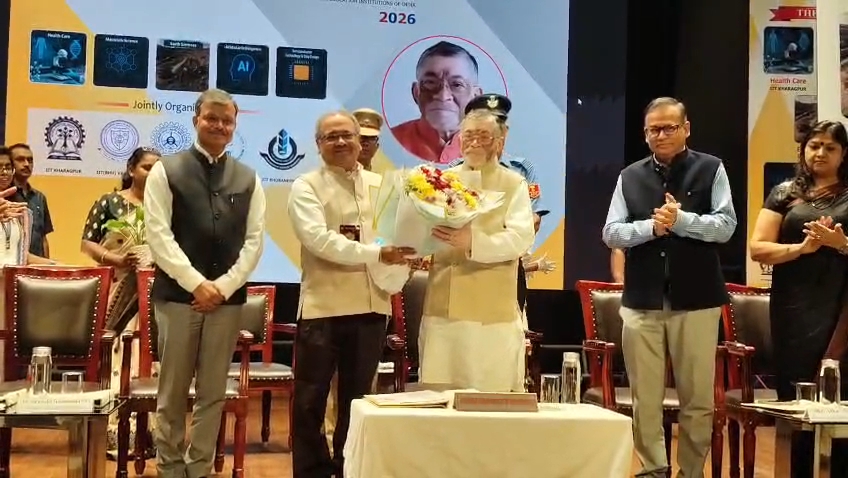
Aligned with national missions such as Atmanirbhar Bharat and Make in India, the event reflects India’s growing ambition to become a global hub of deep-tech innovation. By linking domestic innovation platforms with Bharat Innovates 2026, IInvenTiv is enabling structured pathways for global partnerships, capital access, and international market integration.
The formal inaugural session was graced by the Governor of Jharkhand, Shri Santosh Kumar Gangwar, who inaugurated the event as the Chief Guest, in the presence of distinguished Guests of Honour including Shri Athar Shahab, Managing Director, Zuari Industries Limited; Ms. Vaishali Nigam Sinha, Co-Founder, ReNew; Shri Sandeep Kumar, Vice President, Tata Steel; and Dr. Sunil K. Barnwal (IAS), CEO, National Health Authority. The dignitaries collectively emphasized the importance of innovation-led growth, sustainability, and strong industry- academia linkages in shaping India’s technological future.
The inaugural day also featured a high-level Roundtable on Research, Development and Innovation (RDI), bringing together leading academic figures including Prof. Sukumar Mishra (Director, IIT ISM Dhanbad) along with Directors of IITs, NITs, and premier institutions, alongside industry leaders and venture capitalists. The discussions focused on scaling innovation in strategic sectors, building robust commercialization pipelines, and accelerating the transition of research into deployable technologies.
Delivering the welcome address, Prof. Sukumar Mishra, Director, IIT (ISM) Dhanbad, said:
“IInvenTiv 2026 reflects our commitment to transforming research into real-world impact. By bringing together academia, industry, startups, and investors, we are building a seamless pipeline where innovations can be validated, scaled, and taken to the global stage through Bharat Innovates 2026.”
In his address, Shri Santosh Kumar Gangwar, Governor of Jharkhand, described IInvenTiv 2026 as a transformative platform shaping India’s innovation-driven future. Recalling India’s legacy as a global knowledge leader, he emphasized the need to convert research into societal solutions and enterprise, and highlighted advancements across AI, healthcare, semiconductors, and materials. He underscored national initiatives such as Atmanirbhar Bharat and NEP 2020, urging youth to innovate with discipline and vision towards a developed India by 2047.
Ms. Vaishali Nigam Sinha, Co-Founder, ReNew, termed IInvenTiv 2026 as a reflection of New India’s intellectual ambition, noting that innovation is now a necessity amid climate and technological transitions. She highlighted India’s rapid progress in clean energy and emphasized that the ReNew Centre of Excellence will play a key role in skilling, inclusion, and enabling a just energy transition, particularly in coal-bearing regions.
Shri Sandeep Kumar, Vice President, Tata Steel, described IIT (ISM) as a cradle of innovation, stressing that curiosity-driven thinking is the foundation of progress. He highlighted the importance of industry-academia collaboration in driving meaningful R&D, and encouraged students and researchers to pursue bold ideas that can translate into scalable industrial solutions.
Dr. Shirshendu Mukherjee, Managing Director, Wadhwani Innovation Network, emphasized that true progress lies in translating science into societal impact. He noted that the Wadhwani Centre of Excellence will act as a bridge between research, industry, and national capability, fostering a systems-driven approach to innovation, skilling, and entrepreneurship.
Shri Athar Shahab, Managing Director, Zuari Industries Limited, highlighted India’s dependence on imported industrial technologies and stressed the need for indigenous innovation and manufacturing capabilities. He called for deeper collaboration between academia and industry to create self-reliant, innovation-driven industrial ecosystems.
Dr. Sunil K. Barnwal, CEO, National Health Authority, spoke about India’s strong digital health foundation under Ayushman Bharat and the Ayushman Digital Mission, highlighting the potential of AI-driven predictive and preventive healthcare. He emphasized that innovation built on digital public infrastructure can enable a connected, intelligent healthcare system for the future.
Centres of Excellence Inaugurated
A major highlight of the inaugural day was the inauguration of two key Centres of Excellence. The ReNew Centre of Excellence is focused on enabling a coal-to-green transition, providing skilling opportunities and sustainable livelihoods for communities dependent on coal-based economies.
The Wadhwani Innovation Network Centre of Excellence on Critical Minerals, backed by significant investment, aims to drive research, innovation, and capacity building across the critical minerals value chain, strengthening India’s capabilities in clean energy technologies, advanced manufacturing, and strategic resources. Both centres reflect a strong emphasis on sustainability, inclusivity, and future-ready innovation ecosystems.
Technology Demonstration and Innovation Showcase
The event also witnessed the unveiling of Technology Demonstration Zones, showcasing over 150 innovations across sectors such as Artificial Intelligence, healthcare, semiconductor technology, materials science, and earth sciences—demonstrating India’s growing strength in deep-tech innovation and readiness for global scaling.
Plenary Session 1 (Day 1): Semiconductor Technology and Chip Design
The first plenary session focused on semiconductor technology and chip design, moderated by Prof. Devendra Jalihal (Director, IIT Guwahati). Speakers including Prof. V. Kamakoti, Prof. Rangan Banerjee, Shri Raghu Panicker, and Dr. Wasi Uddin deliberated on building a robust domestic semiconductor ecosystem, emphasizing indigenous capabilities, policy support, talent development, and integration into global supply chains.
Plenary Session 2 (Day 1): Artificial Intelligence
Moderated by Prof. T. N. Singh (Director, IIT Patna), this session brought together leading voices from academia, industry, and investment. The panel deliberated on scaling AI innovations, highlighting applications in infrastructure, energy, and digital systems, while stressing the importance of ethical AI, data governance, and investment frameworks.
Plenary Session 3 (Day 1): Material Sciences
The session on material sciences, moderated by Prof. Amit Patra, explored next-generation materials and their industrial applications. Experts emphasized the need for global collaboration, commercialization pathways, and sustainable material innovations to support sectors such as clean energy and advanced manufacturing.
Plenary Session 4 (Day 1): Healthcare Innovations
Moderated by Prof. Suman Chakraborty, this session focused on healthcare and life sciences innovations, with discussions on digital health ecosystems, biotech advancements, and scalable healthcare delivery models. The integration of public digital infrastructure with innovation ecosystems emerged as a key theme.
Plenary Session 5 (Day 1): Earth Sciences
The final plenary session, moderated by Prof. Sukumar Mishra, highlighted sustainable mining, advanced exploration technologies, and resource management strategies. Experts emphasized balancing economic growth with environmental sustainability, supported by technology and policy innovation.
The day concluded with a fireside chat with venture capitalists, offering insights into investment trends, startup scaling strategies, and global market integration.
On the concluding day (Day 2), the programme will feature academia-to-business (A2B) matchmaking and startup pitching sessions, which will deliberate on bridging innovation with industry adoption and investment opportunities. Expert sessions on innovation ecosystems and digital public infrastructure will further enrich the discourse, followed by a concluding session outlining the roadmap ahead.
As a strategic precursor to Bharat Innovates 2026, IInvenTiv 2026 is poised to identify and elevate India’s most promising innovations to the global stage, reinforcing the country’s emergence as a leader in deep-tech innovation, collaboration, and entrepreneurship.
6, Apr 2026
Onix Expands Google Cloud Partnership to Accelerate Enterprise AI & Data Transformation
New York, April 6, 2026 — Onix, a leading Data and AI services-as-software company, today announced a major expansion of its strategic collaboration with Google Cloud, aimed at accelerating enterprise-scale cloud, data, and AI transformation.
At the core of this collaboration is Onix’s proprietary Wingspan platform, an agentic AI and data modernization solution that enables enterprises to achieve business outcomes up to three times faster than traditional consulting models. The platform introduces an industry-first Semantic Twin model, designed to provide enterprise context and business ontology for AI agents, enabling faster and more accurate decision-making.
As organizations move beyond AI experimentation toward full-scale production, demand is rising for partners that can deliver speed, accountability, and measurable return on investment. Onix addresses this shift through its structured AI Innovation Hub and outcome-driven delivery model, which allows enterprises to transition from concept to production at greater speed and scale. The company reports that thousands of AI agents powered by its platform are already deployed across Fortune 500 environments.
“AI success is defined by what runs at scale, solving business workflows,” said Sanjay Singh, CEO at Onix. “Through our expanded collaboration with Google Cloud, we are redefining how enterprises execute cloud, data, and AI transformation. Our AI-assisted, IP-led approach is built for speed, scale, and accountability, enabling organizations to unlock the full ROI of the AI-powered enterprise.”
The expanded collaboration is anchored around three key pillars:
- Joint Go-to-Market and Vertical Investment: Focused expansion of Onix’s Google Cloud business units, supported by joint GTM strategies and investments to address enterprise demand across multiple industry verticals.
- Unified Platform Power: Deployment of the Wingspan platform to automate data modernization and accelerate AI enablement, turning AI-ready data into reality within weeks rather than years.
- Outcome-Based Enterprise Model: Transition from traditional large project teams to AI-assisted, IP-driven delivery pods that prioritize measurable business KPIs and deliver outcome-based results.
“Generative AI is fundamentally changing how businesses operate, fueling a new era of cloud innovation,” said Victor Morales, Vice President, GSI and Consulting Partnerships at Google Cloud. “By leveraging Google Cloud’s advanced generative AI capabilities, Onix can help customers unlock insights, improve operations, and drive productivity.”
Through this strengthened collaboration, Onix and Google Cloud aim to help enterprises move from AI ambition to operational reality, delivering scalable and validated solutions that create long-term competitive advantage.
4, Apr 2026
ANA Names “Authenticity” and “Agentic AI” as 2026 Words of the Year
Apr 04: The Association of National Advertisers (ANA) has announced its annual Word of the Year, selecting two terms for the first time: “authenticity” and “agentic AI.” The dual selection reflects a rapidly evolving marketing landscape shaped by advancements in artificial intelligence and a growing consumer demand for transparency.
The ANA’s announcement highlights the tension between innovation and trust, as brands increasingly adopt AI-driven tools while navigating heightened consumer skepticism around digital content.
“In recent years, consumers have seen this technology evolve in real time—with increasingly sophisticated AI-generated content infiltrating television, social media, and other platforms,” said Colleen Kirk, Professor of Marketing and Management at the New York Institute of Technology. “However, at the end of the day, people still crave real connection and transparency. Brands must strike a balance between leveraging AI and engaging consumers in ways that feel genuine.”
Kirk’s research, published in the Journal of Business Research, underscores the potential risks of using AI-generated emotional content in marketing. The findings indicate that such content may negatively impact brand perception and weaken consumer relationships if not handled transparently.
The study emphasizes the importance of clear disclosure when using AI in communications, urging companies to prioritize authenticity in their engagement strategies.
Brands are already beginning to adapt. For instance, Coca-Cola faced consumer backlash over its AI-generated holiday advertisements in 2024. However, recent campaigns have shown improvement, resonating more effectively with audiences by incorporating AI-generated animals instead of humans and emphasizing the role of human creativity in the process.
“Consumers are becoming increasingly skeptical about the human origin of advertisements and marketing messages,” Kirk added. “While AI tools offer an exciting frontier for marketers, a time-tested principle remains true—authenticity is always best.”
As AI continues to reshape the marketing ecosystem, the ANA’s recognition of these two defining terms signals a clear message to brands: innovation must go hand in hand with trust, transparency, and genuine human connection.
3, Apr 2026
ISM 2.0: India’s Ambitious Leap to Become a Global Semiconductor Powerhouse
India is accelerating its push to become a key player in the global semiconductor industry with the launch of India Semiconductor Mission (ISM) 2.0, an upgraded plan to expand the country’s chip ecosystem.
While the initial ISM 1.0 focused on attracting investments and building foundational infrastructure for chip fabrication, assembly, and testing, the new phase lays out a broader roadmap. It aims to strengthen domestic capabilities across the entire semiconductor value chain — from research and design to manufacturing and supply chain resilience.
Key Focus Areas of ISM 2.0
- Research and Development: Supporting innovation in chip technologies and materials.
- Design and Intellectual Property: Promoting indigenous chip design and reducing reliance on foreign IP.
- Supply Chain Resilience: Boosting production of essential inputs, equipment, and chemicals for semiconductor manufacturing.
- Domestic Manufacturing: Expanding high-value production beyond assembly and packaging.
- Skill Development: Training engineers and technicians to support a growing semiconductor ecosystem.
The government has approved a substantial budget allocation for this next phase, signaling strong commitment to building a robust and self-reliant semiconductor sector.
Strategic Importance
Semiconductors underpin modern technology, powering everything from smartphones and data centers to electric vehicles and AI systems. By broadening the focus from ISM 1.0, India aims not just to participate in global supply chains but to become a contributor to high-value segments, strengthening technological sovereignty and creating job opportunities.
Looking Ahead
ISM 2.0 represents a transformative step in India’s semiconductor journey. With its expanded scope and strategic focus, the country is positioning itself as a competitive, innovation-driven hub that can play a significant role in the global chip industry in the years to come.
3, Apr 2026
Infinix NOTE 60 Pro Set To Bring a New Design Benchmark with Active Matrix LED Display and Flagship Aluminium Craftsmanship

Built with a flagship-level Aluminium design approach, the NOTE 60 Pro features a premium metal frame that enhances durability, structural rigidity, and in-hand confidence. Designed to balance strength with sophistication, it delivers a refined finish that feels solid, balanced, and premium from every angle. The frame further elevates the device’s luxury appeal through its texture, weight, and craftsmanship, making the NOTE 60 Pro a smartphone where design, interaction, and expression come together for those who aspire for more.
3, Apr 2026
Carter Schott Is Rethinking Assistive Technology and Designing Independence
The College of Applied Health Sciences within the University of Illinois has long been known as spearhead of accessibility, thanks to the trailblazing work of Tim Nugent. Nugent, who died in 2015, was the founder of what is now Disability Resources and Educational Services, a pioneer for disability rights and known as the “father of accessibility.” For student entrepreneur Carter Schott, that environment didn’t just shape his education—it reshaped his understanding of what independence could look like.
Schott, a graduate student in the Master of Science in Management program in the Gies College of Business, is the founder of Innovative Independence, a venture dedicated to designing assistive products that center the real, everyday needs of wheelchair users. His work blends engineering, empathy and lived experience into products that aim not just to function, but to empower.
“DRES taught me that accessibility is not just about compliance; it’s about empowering people,” said Schott, who earned his Bachelor of Science in Mechanical Engineering in the Grainger College of Engineering. “Working in an environment where accessibility is valued helped me see the value of people’s performance when they don’t have barriers in their way. It’s not just about accommodations; it’s about designing for independence.”
That philosophy is the backbone of his work—and it began taking shape early in his time at Illinois. Schott is affected by a disease called spinal muscular atrophy, a form of muscular dystrophy. He has limited mobility and has used a power wheelchair since he was four.
Living in Beckwith Residential Support Services, Schott found himself surrounded by other students with disabilities, each navigating the world in different ways. The experience proved formative.
“Living in Beckwith and being immersed around other students with disabilities was a big deal for me,” he said. “Seeing how people adapted differently and where existing solutions were lacking encouraged me to think like a designer. This encouraged me to think about real-world usability rather than theory, which is something that impacted Sol.”
Sol, his flagship product, is a wheelchair-mounted visibility light designed to increase safety in crowded or low-light environments. At first glance, it’s a simple idea. But like many impactful innovations, it emerged from a gap hiding in plain sight.
“Sol started with a basic but essential problem statement: visibility,” Schott said. “I realized the difficulty that wheelchair-bound people faced in being seen in crowded or poorly lit spaces, such as our campus environment. There was no solution that was both effective and well-designed, so I set out to create one.”
The emphasis on both effectiveness and design is intentional. Schott noticed early on that many assistive technologies met functional needs but fell short in aesthetics, usability or user experience.
“I also saw a disconnect between existing assistive products and the needs that people actually had in their daily lives,” he said. “There was a lot of old or poorly designed technology out there. I wanted to make products that people would be excited to use, that would enhance their lives without making them feel like they were compromising.”
That mindset reflects a broader critique of the assistive technology industry, one Schott believes is long overdue.
“The biggest gap is in user-centered design,” he said. “There are too many products designed without a deep understanding of the people who will be using them. There is a gap in how to make assistive technology look and feel modern and appealing, not just functional.”
At Illinois, Schott found the rare ecosystem capable of addressing that gap. DRES, he explained, isn’t just a support system, it’s a catalyst.
“Illinois is unique in that DRES is not just integrated; it’s embedded,” he said. “It’s not just accessible; it’s empowering. With housing, academic support, and innovation spaces like the (dis)Ability Design Studio, students are supported and empowered to create solutions, not just provided solutions.”
Inside the (dis)Ability Design Studio—whose leadership team includes Susann Sears, the assistant director of Academic Services at DRES and Deana McDonagh, professor of Industrial Design in the School of Art + Design—ideas are tested against reality. Students don’t just theorize—they build, iterate and refine alongside the very people their designs aim to serve.
“DRES provides the foundation for innovation by bringing real users and real problems together,” Schott said. “Students have access to real-life experiences and real-life resources, which is not very common. This leads to meaningful innovation.”
That process, he added, is anything but linear.
“It’s taught me that no two users are the same. Creating assistive technology is a constant feedback loop. I’ve learned that simplicity and flexibility are key. In theory, something might work perfectly. But in practice … not so much.”
Collaboration has also played a crucial role in shaping his approach. At Illinois, disciplinary boundaries blur—especially when solving complex human-centered problems.
“Working with individuals from different fields, like engineering, design and healthcare, has been very important,” Schott said. “This ensures not only that the solution you are coming up with is technically viable, but also ‘usable’ and ‘meaningful.’ The (dis)Ability Design Studio really challenges you to think outside your own discipline.”
That cross-functional mindset is embedded in Innovative Independence itself. Schott doesn’t see Sol as a standalone product, but as the first step in a much larger vision.
“Yes, definitely. Sol is just the beginning,” he said. “I’d like to continue creating more products that help people be more independent in their daily lives, especially those with limited mobility. There are a lot of needs that are yet to be met, and I see this as a long-term business.”
His ambition reflects both optimism and urgency. While awareness of accessibility has grown in recent years, Schott believes institutions, especially universities, still have untapped potential to drive innovation.
“There are more things universities can do by providing students with opportunities to work directly with users with disabilities,” he said. “Universities can provide access to users, fund prototypes and provide collaboration spaces. When students can test ideas in a real environment, the quality of the ideas improves significantly.”
For Schott, the lesson is clear: meaningful design begins with listening, and meaningful innovation requires proximity—to people, to problems and to lived experience.
At Illinois, he found all three.
And through Innovative Independence, he’s working to ensure that future assistive technology doesn’t just meet standards but raises them.
2, Apr 2026
AVer Goes “Modus Match” Official: TR Series Auto Tracking and Professional PTZ Cameras Now Verified for Precision 3D Installation Planning
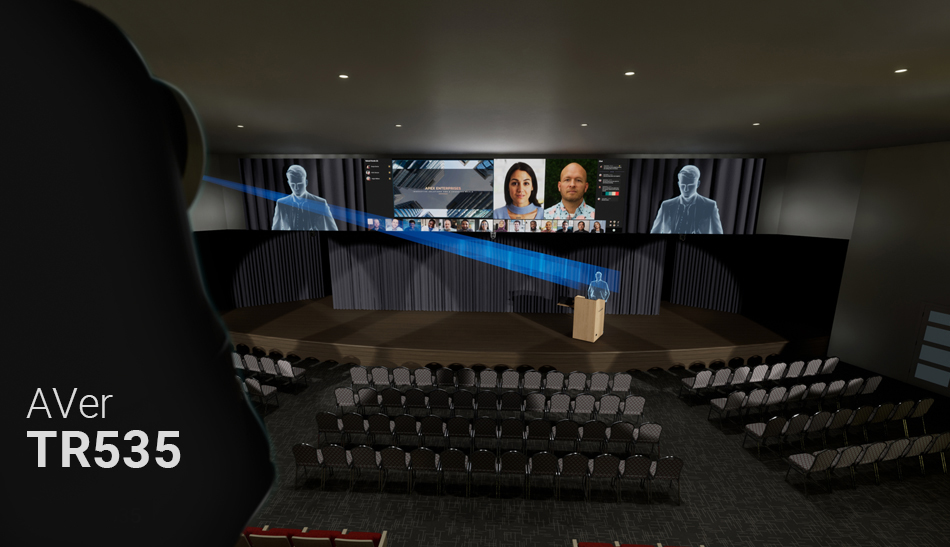
Taipei, Taiwan – Apr 02: AVer Information Inc., an award-winning provider of AI audio-video solutions, today announced its official entry into the Modus Match Partner Program. Following comprehensive technical integration, AVer’s high-performance TR Series AI Auto Tracking cameras and PTZ Series cameras are now fully verified and supported within the ModusVR ecosystem — bringing manufacturer-certified 3D planning to one of the industry’s most trusted camera lines.
Don’t Just Place a Camera. Simulate the Experience.
In the world of Pro AV, “guessing” camera placement is a recipe for a costly truck roll. With this official Modus Match integration, integrators can now move beyond 2D blueprints and experience AVer cameras in fully immersive 3D environments before a single bracket is mounted.
When deploying the latest TR Series models alongside PTZ cameras, ModusVR users can now:
- Visualize Camera Sightlines: Instantly see the exact Field of View (FoV) to ensure the camera can capture presenters over podiums, monitors, or pillars
- Test Pan-Tilt-Zoom Coverage: Adjust PTZ positions in real-time to verify the camera’s mechanical range covers the entire stage, classroom, or conference room
- Validate Mounting Locations: Virtually position cameras at different heights and angles to find optimal placement before installation begins
- Eliminate Installation Guesswork: Identify blind spots, mounting challenges, and coverage gaps in the virtual environment, not during the truck roll
- Optimize the Design Experience: Enable system integrators and end users to preview TR and PTZ cameras within their specific spaces, experiencing the layout to ensure optimal performance and accelerated AV project adoption
- Generate Accurate BoMs: Transition seamlessly from design to purchase with manufacturer-verified specifications
The “Modus Match” Guarantee: Digital Twins, Not Generic Models
The “Modus Match” seal means these aren’t just generic 3D shapes: these are digital twins. Every focal length, pan/tilt limit, zoom range, and physical dimension has been manufacturer-verified by AVer’s engineering team. When you drag an AVer TR or PTZ camera into your ModusVR project, the Bill of Materials (BoM) is 100% accurate, and the field-of-view simulation reflects real-world optical performance.
“Presentation cameras are an important part of many of the spaces our users design in Modus,” says Ken Brueck, Co-Founder of Modus VR. “With AVer’s TR Series now part of the Modus Match program, integrators can accurately visualize placement and confidently define camera coverage in classrooms, divisible training spaces, and auditoriums before installation begins.”
Total Design Certainty for Professional AV Installations
“Our TR Series cameras are built for intelligence and movement,” says David Kuo, President at AVer Information Inc. “By joining the Modus Match program, we’re giving our partners the power to validate camera placement and coverage in a virtual twin of their client’s space. It’s about total design certainty and ending the era of onsite adjustments. Whether it’s a university lecture hall, corporate boardroom, or K-12 classroom, integrators can now design with confidence knowing exactly what AVer cameras will capture.”
Key Benefits for AV Integrators:
- Pre-Installation Confidence: Test multiple camera placements and validate coverage before purchasing equipment
- Faster Client Approval: Present immersive 3D walkthroughs showing exactly what cameras will capture, accelerating stakeholder buy-in
- Reduced Site Visits: Eliminate unnecessary truck rolls by identifying coverage issues in the virtual environment
- Time Savings: Compress weeks of planning into hours with real-time, accurate 3D simulation
Availability
The AVer TR Series and PTZ Series camera libraries are available now for all ModusVR subscribers at no additional cost. Simply update your ModusVR library to start building more accurate room designs with precise camera coverage validation. For demonstrations or technical specifications, visit www.modusvr.com or contact your local AVer representative.
A


