


15, Sep 2026
ZAKH launches solar panel and BIPV manufacturing facility in Ras Al Khaimah

ZAKH’s new facility in Al Ghail, RAKEZ, is expected to have an annual production capacity of 600 MW of solar panels.
Ras Al Khaimah, Sept 15: ZAKH Renewable Energy and Engineering Manufacturing has launched its solar panel and Building Integrated Photovoltaics (BIPV) manufacturing facility in Ras Al Khaimah Economic Zone (RAKEZ) to serve markets across the UAE, the wider region and beyond.
Set on a 30,000 m² plot in Al Ghail Industrial Zone, the facility manufactures solar panels and customised BIPV façade solutions, with a current annual production capacity of 600 MW of solar panels, alongside up to 500,000 m² of BIPV façade solutions.
RAKEZ Group CEO Ramy Jallad said, “ZAKH’s facility brings specialised renewable energy manufacturing capabilities to Ras Al Khaimah’s growing industrial ecosystem. As demand for clean energy solutions continues to evolve across the region, building local production capacity creates opportunities to strengthen supply chains, advance industrial capabilities and serve growing regional and international markets. We are pleased to support ZAKH as it establishes its manufacturing base in Ras Al Khaimah and moves forward with its expansion plans.”
ZAKH Chief Operating Officer Marina Strateva said, “Establishing our manufacturing facility in Ras Al Khaimah represents an important milestone in ZAKH’s growth journey. From this strategic base, we aim to deliver high-quality solar panels and customised BIPV façade solutions that meet the evolving requirements of customers across the UAE, GCC and international markets. RAKEZ has provided the infrastructure and business environment needed to support our manufacturing ambitions, and we look forward to expanding our capabilities and contributing to the region’s transition towards cleaner and more sustainable energy solutions.”
Looking ahead, ZAKH has plans for future expansion to increase its solar module production capacity to more than 1.8 GW in the coming years. Its products will primarily serve the UAE and wider GCC and MENA region, with additional reach into Africa, Europe and the United States.
ZAKH’s flagship solar technology brand, FAERS, began as an R&D initiative in Azerbaijan in 2017 and has since evolved into industrial-scale photovoltaic technology manufacturing, with solutions designed to perform in high-temperature and desert environments.
RAKEZ continues to strengthen its ecosystem for manufacturers operating in renewable energy and sustainability-focused industries, providing the infrastructure, facilities and business support needed to develop local production capabilities and scale their operations. By enabling companies in these emerging sectors to manufacture from Ras Al Khaimah, RAKEZ is supporting the growth of sustainable industries and more resilient local and regional supply chains.
- 0
- By Neel Achary

12, Sep 2026
25kW Powers Critical Defence Systems. So, What Can 50kW Do? Powertec Has the Answer

From Left to Right – Mr Suresh Antil, Mr Sagar Brahmbhatt, Mr Ramesh Babu, Mr Samridh Aggarwa and Mr Sudhakar D.
For perspective, 25kW can support vehicle auxiliary electrical systems and multiple mission electronics and support subsystems. Powertec’s latest manufacturing project delivers twice that power capacity in a single 50kW AC/DC Rectifier Unit.
New Delhi, Sept 12: In a specialised defence platform, even 25kW can represent substantial power capacity—capable of supporting, depending on the platform’s electrical architecture, vehicle auxiliary electrical systems and multiple mission electronics and support subsystems operating simultaneously.
Now consider twice that capacity.
Powertec Supplies India Pvt. Ltd. has manufactured a 50kW AC/DC Rectifier Unit for a specialised customer application, demonstrating its capabilities in high-capacity power conversion and customised power system manufacturing.
The unit operates on a 415V AC, three-phase input and delivers 28V DC at up to 1,720A, with a total rated capacity of 50kW.
The comparison with 25kW offers perspective on the scale of the system. It does not represent a transition between two Powertec products. Rather, it highlights the level of power that the 50kW unit is designed to handle.

50 kW AC/DC Rectifier Unit for a specialised customer application, demonstrating its capabilities in high-capacity power conversion and customised power system manufacturing
Putting 50kW Into Perspective
Power requirements within modern defence and specialised platforms continue to become more complex.
Electrical architectures may be required to support vehicle auxiliary systems alongside multiple mission electronics and other critical support subsystems. The precise power requirement depends on the platform, its configuration and the systems operating simultaneously.
A 25kW power system can already support substantial electrical loads within such an architecture. The 50kW Rectifier Unit manufactured by Powertec provides twice that rated power capacity.
At 28V DC, the unit can deliver up to 1,720A, illustrating the high-current capability required for specialised applications with substantial electrical demands.
The significance of the system is therefore not simply its 50kW rating. It lies in the capability required to convert and manage this level of power according to the specific requirements of the intended application.
Manufactured for a Specialised Requirement
The 50kW Rectifier Unit has been manufactured by Powertec for a customer-specific application.
While the product is not being presented as a proprietary Powertec product, its manufacture reflects Powertec’s ability to undertake specialised and customised power system projects.
The company works across power conversion and customised power systems, with capabilities including AC-DC SMPS and DC-DC converters for demanding and mission-critical applications.
“The increasing complexity of mission-critical applications is creating a need for power systems that are not only reliable but also precisely engineered around specific operational requirements. At Powertec, we continue to strengthen our capabilities in power conversion and customised power system manufacturing to address these requirements,” said Sagar Brahmbhatt, Director, Powertec Supplies India Pvt. Ltd.
“The manufacture of this 50kW-class system demonstrates our ability to work on high-capacity and specialised power requirements while maintaining the flexibility needed for customised designs. From AC-DC conversion and DC-DC converters to complete application-specific power systems, our focus is on developing and manufacturing solutions that support critical equipment and demanding operations.”
Powertec’s Role Behind the System
The development of specialised power systems requires more than a standard product configuration.
Customer applications can involve specific requirements related to power capacity, voltage, current and operational conditions. Powertec’s role is to apply its power conversion and manufacturing expertise to translate such requirements into a customised system.
Powertec directs the manufacturing of custom-built, military-grade power solutions, specialising in AC-DC SMPS and DC-DC converters, while also working on systems designed for mission-critical equipment and stringent operational requirements.
The 50kW project demonstrates this capability at a substantial power level.

To Be Showcased at AEDEX + AIRPORT Expo 2026
Powertec will showcase the 50kW AC/DC Rectifier Unit at AEDEX + AIRPORT Expo 2026, providing industry stakeholders with an opportunity to view the system and engage with the company regarding its capabilities in specialised power conversion and customised power manufacturing.
The exhibition will be held from September 10–12, 2026, at Yashobhoomi, IICC, Dwarka, New Delhi.
12, Sep 2026
Rosatom Presents Technology Solutions to Expand Strategic India-Russia Cooperation at INNOPROM. India
The State Corporation showcased solutions in nuclear energy, additive technologies, composite materials, metallurgy, digitalisation and logistics
New Delhi, Sept 12: Rosatom participated in the INNOPROM. India International Industrial Exhibition, held in Delhi from September 9 to 11, 2026. During an official tour of the exhibition, Russian Minister of Industry and Trade Anton Alikhanov and India’s Minister of Commerce and Industry Piyush Goyal were briefed on key achievements of long-standing Russia-India cooperation in nuclear and related technologies by Kirill Komarov, First Deputy Director General for Corporate Development and International Business at Rosatom.
The ministers were introduced to the VVER-1200, using the Novovoronezh Nuclear Power Plant as an example, a model of which was displayed at Rosatom’s stand. In the technological sovereignty section, Kirill Komarov outlined prospects for expanding cooperation in additive technologies, composite materials, digital solutions and logistics.
“India is consistently developing its nuclear energy sector and has set an ambitious target of increasing its nuclear capacity to 100 GW by 2047. Rosatom is already making a practical contribution towards achieving this goal: we are the only foreign company constructing a nuclear power plant in India. Two units of the Kudankulam Nuclear Power Plant are operating reliably, while four more are at various stages of implementation.
“Considering the scale of India’s target, we are ready to offer our partners a wide range of modern nuclear solutions, from large-capacity power units to small modular reactors. At the same time, our partnership extends far beyond nuclear energy and covers nuclear medicine, additive technologies, composite materials and logistics. I am confident that Russian technologies will contribute to strengthening India’s technological sovereignty,” said Kirill Komarov.
Kirill Komarov also participated in the forum’s business programme, speaking at the main plenary session, “Strengthening the Russia-India Trade and Industrial Partnership: Towards Self-Sufficient Cooperation,” and at the joint session with the Confederation of Indian Industry, “India-Russia: Business Cooperation, Strategic Partnerships and New Opportunities.”
During the Russia-India Business Dialogue, India’s Minister of Commerce and Industry Piyush Goyal emphasised the need to move from agreements to practical industrial cooperation and encouraged Russian companies to develop manufacturing operations in India by leveraging the country’s industrial capabilities, skilled workforce and opportunities under the Make in India initiative.
Additional Information
Representatives of Rosatom’s industry integrator for additive technologies participated in the session “Additive Manufacturing: A New Vector for Russia-India Partnership,” where participants discussed opportunities to jointly develop an ecosystem for the additive manufacturing industry.
Rosatom representatives explained how additive technologies can reduce equipment costs for end users by 40% and presented real-world examples of equipment localisation as well as the initial results of similar projects at an Indian partner’s manufacturing facility. They also shared experience on how the entire value chain can be developed jointly, from the supply and establishment of turnkey additive technology centres to technology transfer and equipment localisation.
Rosatom MetalTech LLC, an enterprise of Rosatom’s Fuel Division, held the session “Critical Minerals and Materials: New Opportunities for Industrial Cooperation.” Participants discussed industrial cooperation in the production of rare-earth magnets, building consolidated demand for rare-earth products, government support measures and attracting investment for the development of new production capacities.
In addition, during the roundtable “Russia-India: Cooperation in the Steel Industry,” Rosatom’s metallurgy businesses presented four product areas for cooperation with Indian partners: titanium, zirconium, hafnium and calcium.
On the sidelines of the exhibition, JET Engineering and Technical Centre, part of Rosatom Service JSC within Rosatom’s Electric Power Division, signed a distribution agreement with Indian company Syngient Technologies for the Repeat Vision software platform, a next-generation platform for end-to-end engineering and modelling of complex industrial systems.
A memorandum of understanding was also signed with Indian company EM Services. The document provides for mutually beneficial cooperation in the energy sector, including the digitalisation of power plants as well as the maintenance, reconstruction and modernisation of energy facilities.
Giredmet Institute, part of the Chemical and Technology Cluster of Rosatom’s Science Division, and Indian company Alt Metals Private Limited signed a contract to develop a pilot titanium sponge production facility.
Rosatom’s stand also featured glass-fibre and carbon-fibre-based solutions for compressed natural gas storage and transportation systems, a portable laser metrology solution and an interactive energy simulator.
Particular attention was given to developments in industrial 3D printing and manufacturing localisation. The stand showcased the first localised Russian-developed 3D scanner manufactured at an Indian partner’s facility.
Local production of Russian 3D scanners in India began this year and has reduced equipment costs for customers in the Indian market by 40%, while also enabling the products to receive local product status under the Make in India initiative.
Background
INNOPROM. India is a platform for developing international cooperation in industrial technologies and creating new business opportunities in India, one of the world’s largest and fastest-growing economies. The construction of the Kudankulam Nuclear Power Plant is the flagship project of Russia-India cooperation in the nuclear sector. The Kudankulam NPP project is being implemented under the Intergovernmental Agreement on Cooperation in the Construction of a Nuclear Power Plant in India, signed on November 20, 1988, and the supplementary agreement dated June 21, 1998.
Units 1 and 2 of the Kudankulam NPP were connected to India’s national power grid in 2013 and 2016, respectively. They are India’s highest-capacity nuclear power units. As of April 2026, they had generated more than 132 billion kWh of electricity since entering operation.
Units 3, 4, 5 and 6 represent the second and third phases of the Kudankulam NPP and are based on VVER-1000 reactors. Once all six units are commissioned, Kudankulam NPP will meet a significant share of the electricity requirements of Tamil Nadu, which has a population of nearly 85 million, as well as other states to which the electricity generated by the plant will be distributed.
Six VVER-1200-based power units are currently in operation worldwide: four in Russia and two in Belarus. VVER-1200 units are under construction in Bangladesh, Hungary, Egypt, China and Türkiye. Kazakhstan has also selected the same type of reactor. Russia has proposed continuing nuclear cooperation with India through the construction of a new nuclear power plant in the country based on VVER-1200 reactors. In April 2026, Rosatom’s Fuel Division, which includes its Additive Technologies business, supplied a RusBeam 2800 industrial 3D printing system to India. The contract was awarded following Rosatom’s successful bid in an international tender and marked the first delivery of a Rosatom-manufactured 3D printer to a non-CIS international market. Large-format components printed using the system will accelerate prototyping and the production of structures for India’s future Gaganyaan human spaceflight programme, Bharatiya Antariksh Station and Chandrayaan lunar exploration programme. The Indian customer’s decision to select Rosatom technology demonstrates the strong competitiveness of Russian solutions in the global market and their compliance with stringent international standards.
11, Sep 2026
OGP Brings “Optics at the Core. Certainty to Measure More.” to IMTS 2026

Sept 11: Optical Gaging Products (OGP®), the pioneer and leader in optical dimensional metrology, will showcase its latest innovations in precision dimensional measurement at IMTS 2026, September 14–19 at McCormick Place in Chicago. Under the theme “Optics at the Core. Certainty to Measure More.”, OGP will highlight the optical expertise, technology and innovation that have defined the company for more than eight decades.
At the heart of every OGP system is advanced optical technology. From compact video measurement systems to sophisticated multisensor platforms, optics are the centerpiece of the OGP measurement experience – providing manufacturers with the speed, repeatability, resolution, and measurement capability needed to inspect more parts and more features with confidence.
“Optics at the Core” reflects OGP’s heritage as a pioneer in optical dimensional metrology and its continued leadership in developing advanced optical measurement technology. Since introducing SmartScope® in 1992, OGP has built its reputation on putting innovative optics at the center of precision measurement.
“Certainty to Measure More” captures what manufacturers expect from their measurement systems: confidence that parts meet requirements, inspections stay on schedule, and production keeps moving. Whether supporting a Quality Manager responsible for on-time inspection or an executive team pursuing the next major manufacturing opportunity, OGP provides the measurement certainty needed for confident quality and production decisions.
Introducing SmartScope E18
Making its worldwide debut at IMTS, SmartScope E18 is a high-capacity, fully automatic 3-axis video measurement system designed to maximize XY measuring range in locations where space is at a premium.
Its fixed-lens IntelliCentric-E optical system and VIRTUAL ZOOM™ technology provide high-resolution imaging for automated inspection, while delivering the measurement capacity manufacturers need in a compact benchtop platform. With its 300 x 300 mm stage in a benchtop format, SmartScope E18 brings the capabilities manufacturers demand for automated video measurement into a compact and cost-effective platform. As with all E-Series systems, SmartScope E18 comes standard with easy-to-use Measure-X software. For applications requiring full 3D capability and other advanced software functionality, OGP’s flagship ZONE3 software is now also available on all SmartScope E-Series systems.
E18 expands the SmartScope portfolio with a system designed around a simple objective: measure more – quickly and easily – without requiring more space.
More Optical Innovation. More Measurement Capability.
OGP will also showcase the recently announced StarLite™ S1, a semi-automatic 3-axis video measurement system, featuring the new IntelliCentric-S optical system, VIRTUAL ZOOM technology and advanced LED illumination.
SmartScope® M130, the newest addition to the evolutionary SmartScope M-Series family, demonstrates OGP’s multisensor approach to dimensional measurement, combining advanced optical technology with additional sensor capabilities to give manufacturers the flexibility to inspect more features in a single system.
Visitors can also experience the best performance and the highest accuracy offered in any SmartScope system: SmartScope Quest. OGP’s SmartScope Quest™ 300 will demonstrate the most advanced multisensor measurement, ideal for complex 3D inspection applications.
For manufacturers requiring robust shop-floor inspection, OGP will showcase its c-vision™ lineup, that combine advanced video measurement and the rugged form factor of an optical comparator. For those that demand extreme throughput for feature-rich parts, OGP will display its Fusion large field-of-view multisensor systems that deliver high-speed multisensor measurements. Across the portfolio, the message remains consistent: the best optics available are at the core of every OGP system.
Metrology and Productivity Software That Helps Manufacturers Measure More
OGP will also demonstrate its software portfolio, including ZONE3® Metrology Software and EVOLVE™ Productivity Software, showing how advanced measurement software can help manufacturers increase inspection throughput and turn measurement data into actionable information.
ZONE3 provides the programming and measurement environment behind OGP’s SmartScope systems, supporting automated multisensor inspection and efficient, repeatable measurement processes.
OGP’s EVOLVE productivity software portfolio extends the value of measurement beyond the inspection system. EVOLVE Design helps users work with CAD models and PMI while supporting GD&T proofing to ASME Y14.5 and ISO 1101 requirements. EVOLVE SPC provides statistical process control capabilities that help manufacturers monitor processes, identify trends and make informed decisions.
Together, OGP hardware and software help manufacturers measure more, improve throughput, and have greater certainty in their quality processes.
Inspiring the Next Generation
OGP will also participate in the Smartforce Student Summit at IMTS, connecting with students and educators and demonstrating the important role precision measurement and metrology play in advanced manufacturing.
By engaging with the next generation of manufacturing professionals, OGP is helping demonstrate how optics, automation, multisensor measurement, and software are shaping the future of quality.
Experience OGP at IMTS 2026
IMTS attendees are invited to visit OGP at Booth 134700 in the East Hall to experience the latest innovations, see measurement systems in action, and speak with OGP experts about how to increase inspection capability and throughput.
From the class-defining SmartScope systems and shop-floor ready c-vision lineup, to ZONE3 and EVOLVE productivity software, OGP will demonstrate why it remains a leader in optical dimensional metrology.
Optics at the Core. Certainty to Measure More. OGP at IMTS 2026.
11, Sep 2026
Why many ceramic machining trials fail before they even begin

For most machinists, there is one rule that has been reinforced throughout their entire career:
When in doubt, slow down.
A cutting edge wears too quickly? Reduce the speed.
The process becomes unstable? Reduce the speed.
The insert starts showing signs of failure? Reduce the speed.
For carbide machining, this instinct is often correct.
Then comes the first ceramic insert trial.
An application engineer visits a customer to introduce ceramic tooling for a roughing operation.
The recommendation is straightforward:
“Increase the cutting speed from 250 m/min to 900 m/min.”
The operator looks at the machine.
Then at the insert.
Then back at the application engineer.
“You want me to run almost four times faster?”
The recommendation feels wrong.
Everything learned from years of machining with carbide suggests that higher speed means more heat, more wear, and greater risk.
So the operator does what seems sensible.
Instead of 900 m/min, the machine starts at 400 m/min.
The result?
Poor tool life.
Unexpected wear.
Disappointing productivity.
And the conclusion is often:
“Ceramics don’t work for us.”
The reality is that the ceramic insert was never given the opportunity to perform as intended.
Because successful ceramic machining requires a different mindset.
Why Ceramics Play by Different Rules
The explanation lies in how heat affects both the workpiece and the cutting tool.
In conventional carbide machining, heat is usually considered the enemy. Higher temperatures accelerate wear, shorten tool life, and reduce process stability.
Ceramic machining works differently.
In high-speed machining of heat-resistant superalloys and cast irons, the relationship between heat and cutting performance can be very different from what most machinists are accustomed to.
In nickel-based alloys, the material maintains extremely high strength at room temperature. As temperature rises, however, the material begins to soften. Around 800°C, its resistance to deformation decreases significantly, making it easier to cut.
At the same time, ceramic cutting materials retain their hardness and wear resistance at temperatures that would rapidly degrade conventional carbide grades.
This creates an unusual advantage: as the cutting zone becomes hotter, the material becomes easier to machine while the ceramic cutting edge retains its strength.
The result is lower cutting forces, higher material removal rates, and greater productivity.
This is why recommended cutting speeds for ceramic tools often appear surprisingly high. The objective is not simply to remove material faster. The objective is to generate the thermal conditions that allow the process to work efficiently.
The Cost of Playing It Safe
Understanding the theory is one thing.
Applying it on the shop floor is another.
When ceramic tools are introduced into production, many users instinctively reduce the recommended cutting speed during the first trial.
It feels like a reasonable precaution.
Unfortunately, it often produces the opposite effect.
At lower cutting speeds, the temperature in the cutting zone may never reach the level required to take advantage of thermal softening. The material remains difficult to machine, cutting forces increase, and productivity suffers.
In one rough milling application on Inconel 718, increasing cutting speed from approximately 400 m/min to over 1,000 m/min reduced machining time significantly while also producing lower wear than the slower cutting conditions.
For users transitioning from carbide to ceramics, this is often the moment where expectations and reality finally align.
It’s Not Just About Speed
None of this means that ceramic machining is simply a matter of turning up the spindle and hoping for the best.
Like any advanced cutting tool technology, ceramics require the right application conditions.
Rigidity remains critical. Stable workholding, secure toolholding, minimal overhang, and a vibration-free setup all contribute to successful performance. In milling applications, smooth tool paths and reduced interruptions help minimize impact loads on the cutting edge. In turning operations, stable engagement and consistent cutting conditions allow ceramic grades to perform at their full potential.
Another common question concerns coolant. In milling applications, ceramic machining is typically performed dry. The high temperatures generated during cutting are part of the process, and intermittent coolant application can create thermal shock that may damage the cutting edge. In turning operations, however, coolant can often be applied successfully because the cutting edge remains continuously engaged, avoiding the repeated heating and cooling cycles commonly found in milling.
The key difference is that, unlike carbide, cutting speed is rarely the first parameter that should be reduced when challenges arise.
More often than not, the solution lies in improving process stability rather than slowing the process down.
Rethinking What We Know About Speed
The greatest challenge in ceramic machining is often not the machine, the insert, or even the material being machined.
It is changing habits built over years of successful carbide machining.
One of the most common misconceptions is to view ceramic inserts as simply another grade of carbide.
They are not.
Ceramics are a different cutting technology, designed to operate according to different principles and within a completely different performance window.
With decades of experience in ceramic development, NTK Cutting Tools offers a comprehensive portfolio of solutions for both heat-resistant superalloys and cast iron machining. From SiAlON grades for high-speed HRSA roughing to ceramic solutions optimized for gray and ductile cast irons, these technologies help manufacturers achieve productivity levels that conventional carbide tooling often cannot reach.
The next time a ceramic cutting speed seems surprisingly aggressive, resist the temptation to treat it like carbide.
The recommendation is not high simply because the insert can survive it.
It’s high because that’s where the technology begins to work.
10, Sep 2026
Kramer unveils new premium Dante-enabled speaker range ahead of InfoComm India 2026 – latest AVoIP portfolio on show in Mumbai
Expanded range of passive and Dante-enabled speakers delivers premium sound, flexible deployment and simplified installation across meeting spaces, education, hospitality and more. Kramer will also be showcasing its comprehensive AVoIP portfolio, with the new KDS-17 Lite making its debut, alongside KDS-17, KDS-100 and ZeeVee SDVoE solutions.
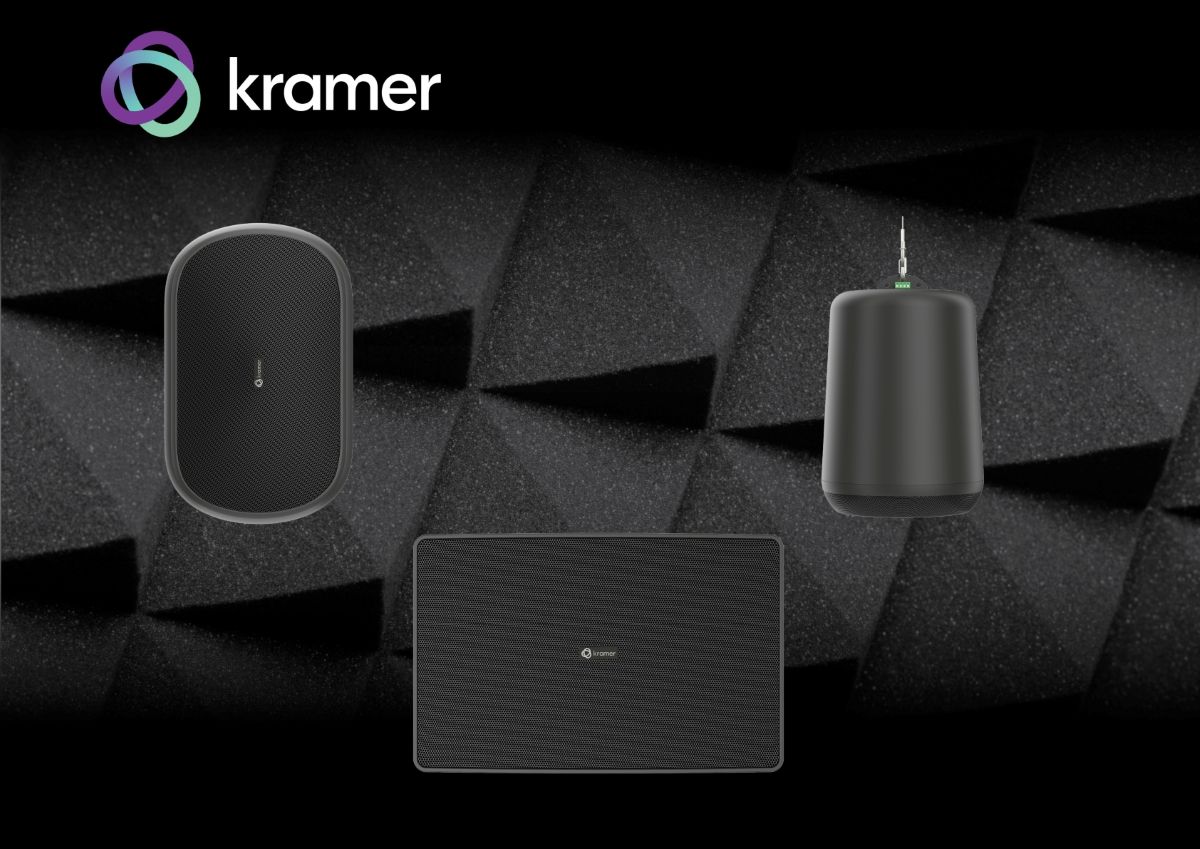
Mumbai, India – Sept 10 – Kramer, a leading company in audio-visual experiences, is excited to announce it will be showcasing an expanded portfolio of premium professional speakers at India’s premier professional AV event, InfoComm India 2026, in Mumbai, including a new range of Dante-enabled models that extend the company’s range of networked audio solutions.
Exhibiting on booth L01 at the Jio World Convention Centre (Sept 16-18) – alongside thousands of technology leaders shaping the future of professional audiovisual and integrated experience solutions across India and South Asia – visitors will also experience Kramer’s latest AVoIP portfolio, with the new KDS-17 Lite making its debut, addressing a broad range of applications, performance requirements and budgets.
“Our customers and partners in India are designing AV systems for an incredibly diverse range of environments, and they need audio solutions that can adapt to those different requirements,” said Kirti Shetti, India Sales Director, Kramer.
An Expanded Range of Networked Audio Options
Spanning ceiling, wall-mounted, all-weather and pendant speakers in multiple form factors, Kramer’s growing portfolio combines premium sound quality, flexible deployment and integrator-friendly installation. With both passive and Dante-enabled options, the range gives system integrators greater flexibility to design audio solutions for a wide variety of environments, from meeting and collaboration spaces and education to hospitality, retail and other commercial applications.
The latest additions expand Kramer’s range of PoE-powered Dante speakers, providing system integrators with more options when designing modern networked AV environments. By carrying audio and power over the network, the Dante-enabled models help reduce cabling requirements and installation complexity while providing the flexibility and scalability of IP-based audio distribution.
A key advantage of the portfolio is the ability to combine networked and traditional audio within the same project. Dante-enabled speakers are complemented by corresponding passive models with the same industrial design and sound profile, allowing integrators to mix and match passive and Dante speakers while maintaining consistent audio performance and a cohesive look throughout the installation.
This flexibility enables integrators to select the most appropriate audio architecture for each space and project rather than taking a one-size-fits-all approach.
Premium Sound Across Different Environments
Designed for professional AV applications, Kramer’s speakers deliver high-quality, consistent audio with a strong focus on speech intelligibility and background music reproduction.
Advanced sound dispersion helps provide even audio coverage throughout the room, minimizing dead spots and helping ensure that speech, presentations and music can be heard clearly.
With multiple speaker types, sizes and deployment options, the portfolio can address the different requirements of corporate meeting and collaboration rooms, classrooms and higher-education environments, hospitality venues, retail spaces and other commercial applications.
Kramer has developed the speaker portfolio not only around audio performance, but also around the practical needs of the professionals who design, install and support AV systems.
Designed with System Integrators in Mind
Integrator-friendly features help simplify deployment and ongoing support. These include front-access wiring for ceiling speakers, designed to make installation easier, alongside centralized speaker utility software that supports configuration and troubleshooting.
Multiple form factors and mounting options give integrators additional freedom to adapt their audio design to the architectural, aesthetic and technical requirements of each environment.
Kirti Shetti, India Sales Director, Kramer, added: “By expanding our speaker portfolio, particularly our range of Dante-enabled models, we’re giving system integrators more flexibility to choose the right approach for each project. Whether it’s a meeting room, a classroom, a hospitality environment or a larger commercial space, the goal is the same: great sound combined with solutions that are simple to design, install and manage.”
Complete 1G and 10G AVoIP portfolio
Kramer will also showcase its comprehensive AVoIP portfolio at InfoComm India 2026, bringing together multiple 1G and 10G technologies to address a broad range of applications, performance requirements and budgets.
Visitors will experience Kramer’s 1G solutions, including KDS-17 and KDS-100, alongside its high-performance 10G SDVoE portfolio. Together, these technologies give customers and integrators the flexibility to select the right AVoIP architecture for each application while benefiting from interoperability, centralized management and a more consistent approach to AV deployment.
Kramer’s 1G portfolio combines complementary technologies for different application requirements. The KDS-17 family delivers visually lossless 4K60 4:4:4 video over standard 1Gb networks using JPEG2000 compression, combining high image quality with ultra-low latency. KDS-100 provides H.264/H.265-based streaming for applications where efficient, scalable video distribution is a priority.
At InfoComm India, Kramer will also launch KDS-17 Lite, a new cost-effective 4K60 4:4:4 transceiver that can be configured as either an encoder or decoder. Fully interoperable with the wider KDS-17 ecosystem, KDS-17 Lite provides a more accessible entry point for cost-conscious projects and helps customers standardize AVoIP across a wider range of spaces.
The complete 1G portfolio is centrally managed through AVoIP Manager, available both in the cloud and on-premises. Supporting KDS-100, KDS-7, KDS-17 and ZUHD60, the platform simplifies configuration, routing, monitoring and management across installations of different sizes.
High-performance 10G SDVoE
For applications demanding uncompromised image quality and near-zero latency, Kramer will showcase its latest 10G SDVoE portfolio, including the latest ZyPer4K-XSE.
The next-generation, low-power ZyPer4K-XSE delivers uncompressed 4K video with near-zero latency and advanced capabilities for demanding AV environments. Managed through the ZyPer Management Platform (ZMP), it enables centralized configuration and monitoring across high-performance 10G deployments.
Beyond video distribution, Kramer’s AVoIP portfolio brings USB and audio into the same connected environment. USB-C connectivity across key 1G and 10G product families helps simplify system design and support modern BYOD and collaboration workflows.
Native Dante support across the AVoIP portfolio also enables video endpoints to become part of the wider audio-over-IP ecosystem, connecting with Kramer’s Dante-enabled amplifiers and speakers to support complete, scalable AV and audio deployments.
“With a unified portfolio that spans 1G, 10G, video, USB, and audio-over-IP, Kramer is enabling AV systems that are simpler to deploy, easier to manage, and ready to scale,” said Dorit Bitter, EVP Product and Technology. “At InfoComm India 2026, we’re demonstrating how true interoperability and standardization translate into real-world value for integrators and customers alike.”
10, Sep 2026
Progress needs proof: Rohde & Schwarz showcases its trailblazing test solutions at EuMW 2026 in London
Sept 10: When devices under test outperform the instrument measuring them, progress stops. But Rohde & Schwarz keeps innovation moving with advanced test solutions that push beyond the limits of traditional measurement methods. At European Microwave Week (EuMW) 2026 in London, visitors can discover the company’s latest test solutions for RF and microwave components, as well as wireless, radar and satellite systems. Among them are solutions designed to help engineers address the growing demands of today’s electronic warfare (EW) and electromagnetic spectrum operations (EMSO).

Rohde & Schwarz keep progress in RF and microwave technology moving with its T&M solutions at EuMW 2026 in London.
London is calling once again for European Microwave Week, bringing together leading experts in RF, microwave, wireless and radar technology who are pushing the boundaries of design. From October 6 to 8, 2026, Rohde & Schwarz will present at booth B10 in the European Microwave Exhibition at Excel London its latest test and measurement solutions designed to help engineers stay ahead at the cutting edge of design and prepare systems for increasingly contested and complex spectrum environments.
Markus Lörner, Application Segment Manager RF & Microwave Components at Rohde & Schwarz, says: “Our EuMW 2026 motto, ‘Progress needs proof,’ reflects what many engineers are facing today: when DUTs push beyond the limits of conventional methods, innovation slows down. At the show, we will demonstrate how our advanced test solutions support customers across RF and microwave components, satellite and radar systems, phased-array antennas and emerging 6G sensing applications. As R&D moves toward higher frequencies, more integrated designs and increasingly demanding spectrum environments, precise and reliable measurement becomes a key enabler of progress.”
From EW and EMSO scenarios to advanced high-frequency characterization
A highlight at the Rohde & Schwarz booth is the FSWX signal and spectrum analyzer, displayed in a radar and electronic warfare (EW) test scenario within the context of electromagnetic spectrum operations (EMSO), focused on DRFM-based jammers. In this setup, an R&S SMW200A vector signal generator simulates radar signals, while the FSWX uses its multi-channel architecture to analyze jammer input and output signals simultaneously for a comprehensive assessment of deceptive signal behavior. The new, fully integrated R&S FSWX-KM700 pulse analysis option measures both channels in parallel and provides detailed insight into pulsed radar parameters, differences between the channels and the parameter trends over time.
In a second demonstration, Rohde & Schwarz will show how the game-changing multi-channel capabilities of the FSWX can be extended into the E-band and even up to 110 GHz for advanced high-frequency component characterization. Combined with the R&S SFI100A wideband IF vector signal generator and the fully calibrated R&S FE110ST/SR external frontends, the setup supports wideband satellite component testing for next-generation payload and link applications and beyond, helping engineers capture the true characteristics of the device under test and overcoming the limits of traditional measurement equipment.
Advanced testing for low-noise sources and high-power RF frontends
Rohde & Schwarz will also showcase the enhanced R&S FSWP phase noise analyzer and VCO tester platform for advanced component characterization. With support for residual and absolute phase noise measurements up to 56 GHz and further improved internal reference, R&S FSWP-B62, the solution offers high flexibility for testing synthesizers, OCXOs, DROs, VCOs and two-port components such as amplifiers. New options for integrating external signal sources as local oscillators can dramatically accelerate measurements, in some cases by up to a factor of 1,000, making the R&S FSWP well suited for the development of low-noise signal sources for radar, satellite, base station and high-speed digital applications.
Rohde & Schwarz will also present the new R&S SAM200 system amplifier for high-power test applications in the Ka- and V-band up to 53 GHz. In radar, satellite link and backhaul applications, RF frontends must deliver higher power levels so signals can travel farther and cover larger distances. Designed to support validation of these components, the amplifier extends test setups with higher signal power while maintaining precise and reliable level control. At EuMW, Rohde & Schwarz will showcase the R&S SAM200 in two demonstrations: one characterizing a high-power Ka-band amplifier with the R&S ZNA vector network analyzer in a fully integrated and calibrated test setup, and another highlighting the amplifier’s linearity in a wideband modulated test scenario with the R&S SMW200A vector signal generator and the R&S FSW signal and spectrum analyzer.
Scalable test for SATCOM and phased-array systems
At EuMW, Rohde & Schwarz will also highlight the R&S ZNB3000 vector network analyzer for measurement applications in satellite communications, Earth observation and radio astronomy. Its wide dynamic range and low trace noise provide the sensitivity required for demanding antenna characterization and radar measurements. For higher-frequency applications, optional millimeter wave converters extend coverage up to 330 GHz, including bands used by microwave and millimeter wave radiometers. Together, these capabilities make the R&S ZNB3000 a versatile and cost-effective solution for a broad range of measurement needs in the satellite and space sectors.
Rohde & Schwarz will also demonstrate a phased array antenna test setup highlighting fast and accurate OTA testing and antenna diagram pattern validation for advanced wireless and aerospace and defense applications. Featuring a 5G NR FR2 device under test, the solution combines the R&S ATS1800C CATR-based over-the-air test system with the R&S ZNA vector network analyzer to help reduce test complexity, increase throughput and preserve beamforming accuracy from development through verification to production. A special see-through version of the R&S ATS1800C will be on display at EuMW, featuring a plexiglass wall, giving visitors a rare look at the chamber’s internal CATR technology.
Micro-Doppler emulation for emerging sensing use cases
With the AREG800A radar target generator, Rohde & Schwarz will showcase new test capabilities addressing use cases like 6G integrated sensing and communication (ISAC). As 6G networks evolve beyond data connectivity toward environmental awareness, ISAC is emerging as a key technology for detecting and classifying objects using mobile infrastructure. In addition to emulating distance, speed and radar cross section (RCS), the solution can also generate micro-Doppler signatures, enabling more realistic test scenarios for applications such as drone detection and supporting the development of advanced sensing capabilities.
Rohde & Schwarz at EuMW 2026
Visitors will find Rohde & Schwarz at booth B10 at Excel London from October 6 to 8, 2026, where they can learn how next-generation test solutions support engineers from component characterization to system-level validation across radar, satellite, wireless and aerospace and defense applications. In addition, experts from the company will contribute to the EuMW 2026 with presentations and workshops as part of the European Microwave Conference (EuMC) as well as the European Radar Conference (EuRAD).
10, Sep 2026
Akeyless Announces General Availability of Agentic Runtime Authority for Real-Time Intent-Based Access Control of AI Agent
NEW YORK and TEL AVIV, Israel, 10 September, 2026 — Akeyless, a Runtime Identity Security company protecting enterprise systems and data by securing AI agents, machines, and human identities, today announced the general availability of Akeyless Agentic Runtime Authority, the real-time identity control layer for AI agent actions. It works on top of Akeyless SecretlessAI®, a credential protection layer that keeps credentials out of AI agents and brokers access to enterprise systems. Runtime Authority adds the next layer of control, enforcing intent based access control restricting what agents actually do once they have access.
AI agents today do more than answer questions. They access databases and applications, execute workflows, and make decisions inside live production environments. Traditional access controls can determine whether an agent is allowed into a system, but not whether every action it takes once inside is legitimate. For autonomous agents that can act unexpectedly or be manipulated, the impact can escalate at machine speed, as the July 2026 Hugging Face incident demonstrated. Runtime Authority closes that gap by evaluating agent actions in real time and blocking those that violate policy before they execute.
With general availability, Akeyless is expanding its AI agent ecosystem with new integrations for Claude Enterprise, OpenAI Codex, and Amazon Bedrock AgentCore, alongside new runtime control and investigation capabilities for production deployments. Runtime Authority runs on the same Akeyless Identity Security Platform that already secures over 220 billion machine identity interactions for Fortune 500 organizations, now applied to a new identity class: the AI agent.
“Our customers are the ones defining what security for agentic workflows should actually look like, and we build alongside them as trusted partners in that work.,” said Oded Hareven, CEO and Co-Founder, Akeyless. “Take a coding agent pulling credentials to reach a cloud resource, or a sales executive trusting that an AI assistant will honor a ‘read-only’ permission on a sensitive SaaS application. Both come down to the same question: is there one place issuing, governing, and revoking that authority? Humans and machines will continue interacting with critical systems, so having a central point of access control and attribution only matters more over time.”
Runtime Authority: Enforce Dynamic Policy at the Moment of Action
Runtime Authority controls how legitimate access is used once an agent is connected, layering intent enforcement on top of the more traditional role- and attribute-based controls. It evaluates an agent’s objectives and actions in real time and blocks activity that violates policy or exceeds its assigned task before it executes. This is a powerful “kill switch” that revokes the authority of the agent to act in real-time when things go wrong. For example, an agent instructed to summarize sales data would be prevented from deleting a database or exfiltrating large quantities of data, even if its underlying permissions would otherwise allow it.
Securing AI Agents from Credential to Action
SecretlessAI addresses the credential problem by keeping credentials out of AI agents entirely. Instead of giving an agent a password, token, or key that it can store, expose, or reuse, Akeyless brokers access through the Akeyless Gateway, which provisions a short-lived identity directly on the target system, even legacy and on-prem systems that use traditional identity methods. A compromised or prompt-injected agent has nothing to steal and nothing to leak.
Runtime Authority uses that same brokered access path to add control over what the agent can do once connected and prevents risky actions before they cause damage. Together, SecretlessAI and Runtime Authority protect the full path from credential to action.
Governance & Visibility to Agent Action
Across both the credential and action layers, Akeyless gives security teams the visibility and control needed to monitor, investigate, and respond to agent activity. Every action is logged and traced back to the human, application, or agent that triggered it.
General availability adds new operational controls for production environments. The Agentic Access Dashboard provides a live view of active agent sessions, including the ability to terminate a session immediately, while new investigation capabilities show why a session was blocked. Enriched security events can also be forwarded to Splunk, Datadog, and Microsoft Sentinel for centralized monitoring and investigation.
Expanded AI Agent Ecosystem
The new integrations with Claude Enterprise, OpenAI Codex, and Amazon Bedrock AgentCore join existing support for a broad range of AI models, agent frameworks, and developer environments, including Google Gemini, xAI Grok, Claude Desktop, Cursor, GitHub Copilot, JetBrains IDEs, and n8n. This gives organizations a consistent way to apply SecretlessAI credential
Agentic Runtime Authority works within the Akeyless Identity Security Platform that organizations already use for secrets management, certificate lifecycle management, privileged account security, and password management.
Akeyless will showcase these capabilities in an upcoming live webinar together with Software Analyst Cyber Research (SACR), including product demonstrations and real-world use cases.
Akeyless Agentic Runtime Authority is generally available today for all Akeyless customers. To request a demo or learn more, visit www.akeyless.io/secure-
9, Sep 2026
Gartner Identifies 4 Shifts Shaping the Future of Work
By 2029, 30% of Employees Laid Off Due to Replacement by AI Will Need to Be Rehired
STAMFORD, Conn., Sept 09– As AI continues to accelerate the pace and scope of work, CIOs must prepare for four shifts that will influence the future of work, said Gartner, Inc., a business and technology insights company.
“When business and IT executives look back on the early AI-era, they will realize their greatest mistake was believing that work automation was the point, when workforce amplification was the opportunity,” said Tori Paulman, VP Analyst at Gartner. “The competitive advantage will go to the CIOs and business executives who build an AI-shaped organization where AI value compounds by reshaping roles and allowing workflows to cross traditional boundaries, increasing velocity and reducing friction.”
While workforce cuts may deliver short-term financial gains, they deplete talent pipelines and erode institutional knowledge. With labor force growth flat or declining worldwide, competition for the talent organizations need will be high, ultimately increasing recruitment, training and onboarding costs.
Gartner predicts that by 2029, 30% of employees laid off due to replacement by AI will need to be rehired, often at a significantly higher cost.
“Business and IT executives who use AI primarily as a tool for cost cutting risk making reductions that are too deep and too soon, affecting their ability to innovate their business model and compete in new markets as AI continues to mature. Instead, they should develop a “talent remix” strategy that uses AI to reshape roles and redirect workers from less productive work, to new opportunities.” said Paulman.
The most effective organizations will resist the temptation to automate every task and delegate every decision to AI. “The Gartner 2026 Hype Cycle for the Future of Work shows that as early AI investments hit the Trough of Disillusionment the challenge facing CIOs and business executives is no longer technological; it is using AI to amplify human intelligence, expertise and creativity (see Figure 1),” said Paulman.
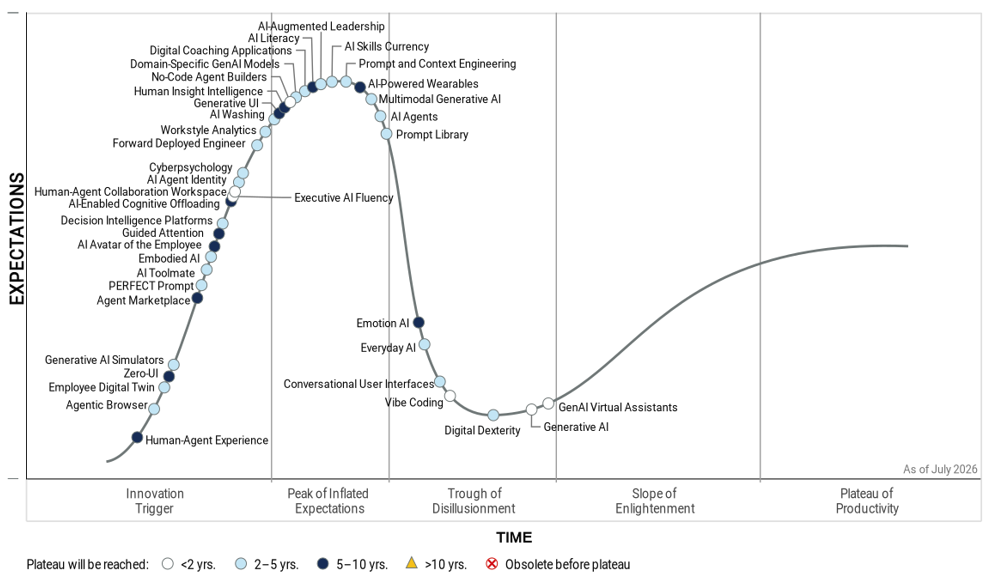
Figure 1: Hype Cycle for the Future of Work, 2026
Source: Gartner (September 2026)
To navigate the evolving landscape of human-AI workforce transformation, CIOs and business executives must consider those changes that influence how work gets done and where organizations create value.
Shift 1: Expand Human Capability Through the Human-AI Relationship
As AI evolves into a “toolmate,” organizations must create richer forms of collaboration that enhance human capability while preserving accountability. The most successful companies will use AI to strengthen employees’ judgment, creativity, leadership and decision making rather than replace them.
Technologies that can help enable this shift include AI avatar of the employee, AI toolmate, digital coaching applications, employee digital twin and emotion AI.
Shift 2: Empower an AI-Ready Workforce That Adapts (Not Just Adopts)
The pace of technological change is exposing critical gaps in skills, adaptability and workforce readiness. Organizations need employees who can continuously learn, collaborate across disciplines and thrive in increasingly fluid roles.
Future-ready organizations will invest in building AI literacy, AI-enabled skills management, digital dexterity and workstyle analytics among their workforce, and ensure their executives are “AI savvy”.
Shift 3: Deepen Context, Judgment and Meaning
As AI becomes embedded in more business processes, organizations face a growing risk that context, human judgement and institutional knowledge could be lost. Future-ready companies will design systems that strengthen decision quality, maintain human oversight and ensure workers understand not only how a process is performed, but also why it is performed that way.
Technologies that CIOs can consider include conversational user interfaces, decision intelligence platforms and generative UI.
Shift 4: Build a Foundation for Compound Value
Long-term success will depend on going beyond the adoption of everyday AI tools by creating the conditions where each use case is faster, less expensive and safer than the one before it.
Gartner predicts that by 2027, 75% of organizations that prioritize capturing AI productivity gains as cost savings will be eclipsed by competitors that aggressively reinvest those gains into innovation, modernization and upskilling.
Technologies that can help CIOs enable this shift include AI-powered wearables, domain-specific GenAI models, embodied AI and vibe coding.
Additional Insights Available
Gartner clients can read more in the report Hype Cycle for the Future of Work, 2026.The Gartner 2026 Hype Cycles Special Reportexamines five interconnected themes emerging across more than 150 Gartner Hype Cycles that highlight how organizations can strengthen resilience, build trust and create sustainable value in an increasingly dynamic environment.
Gartner is the World Authority on AI
Gartner is the indispensable partner to C-Level executives and technology providers as they implement AI strategies to achieve their mission-critical priorities. The independence and objectivity of Gartner insights provide clients with the confidence to make informed decisions and unlock the full potential of AI. Clients across the C-Level are using Gartner’s proprietary AskGartnerAI tool to determine how to leverage AI in their business. With more than 2,500 business and technology experts, 6,000 written insights, as well as more than 4,000 AI use cases and case studies, Gartner is the world authority on AI.
At Gartner IT Symposium/Xpo, CIOs and IT executives will learn how to become agents of change in their organizations and harness AI for successful digital transformation. Follow news and updates from the conferences on X and LinkedIn using#GartnerSYM, and on the Gartner Newsroom.
9, Sep 2026
Zithara.AI Partners with Tyaani Jewellery to Enable Smarter Customer Engagement
Hyderabad, Sep 09: Zithara.AI, an AI native customer engagement platform for offline retailers, has partnered with Tyaani Jewellery by Karan Johar to strengthen customer engagement through technology and data driven insights across the brand’s retail operations.
Through the partnership, Tyaani Jewellery will leverage Zithara.AI’s AI native CRM platform to bring greater structure to customer engagement and relationship management. The platform will enable the brand to organise customer information, understand engagement patterns, and create a more connected view of customer interactions. The platform will help Tyaani Jewellery strengthen its approach to customer engagement by enabling more structured and data driven interactions with its customers.
The collaboration is aimed at helping Tyaani Jewellery build stronger relationships with customers beyond individual transactions while creating greater opportunities to increase sales and repeat purchases. By using customer insights to identify relevant engagement opportunities, the platform will support the brand in following up with potential customers, re engaging existing customers and delivering more personalized communication based on customer preferences and purchase behaviour. This can help improve customer conversions, strengthen retention and enable retail teams to turn customer data into actionable insights that contribute to increased sales, stronger customer lifetime value and long term revenue growth.
Speaking about the partnership Mr. Manraj Singh, Chief Marketing Officer, Tyaani Jewellery said,
“Jewellery is a highly personal category, and the relationship between a brand and its customer extends well beyond a single purchase. As customer expectations evolve, it is important for us to understand their preferences and interactions better and use that understanding to create more meaningful experiences. Our association with Zithara.AI will help us bring greater intelligence and personalisation into our customer engagement, while enabling us to build stronger and more lasting relationships with our customers.”
Varun Kashyap, Co-Founder, Zithara.AI, said,
“Tyaani Jewellery has created a distinctive identity in the contemporary jewellery space, and its approach to engaging with modern consumers makes this partnership particularly meaningful for us. We see a strong opportunity to help the brand make better use of customer data and translate those insights into relevant, timely and personalised engagement. Our platform is designed to help retailers strengthen relationships throughout the customer journey rather than limit engagement to the point of purchase.”
Sridevi Reddy, Co-founder, Zithara.AI, added:
“Customer engagement in jewellery retail is increasingly about understanding the individual behind every transaction. With AI native capabilities, retailers can move from broad based communication towards experiences that are more relevant to customer preferences, behaviour and purchase journeys. Through our partnership with Tyaani Jewellery, we aim to support the brand in creating a more connected and intelligent customer engagement framework at scale.”
The partnership reflects the growing role of AI and customer data in shaping the next phase of jewellery retail, where personalised engagement and long term customer relationships are becoming increasingly important. Through the collaboration, Tyaani Jewellery and Zithara.AI aim to create a more connected and data driven approach to customer engagement that supports stronger relationships and the brand’s continued retail growth.


