


6, Feb 2025
EKA Mobility Partners with KPIT to Enhance Electric Powertrain Technology Components

Mumbai, India | 6th Feb 2025 | EKA Mobility, a leader in sustainable mobility solutions, and KPIT Technologies, a global leader in building mobility technology solutions for a cleaner, smarter, and safer world, have entered into an MOU to develop and integrate cutting-edge electric powertrain technology components. This collaboration aims to set new benchmarks for efficiency, performance, and sustainability in India’s electric commercial vehicle (e-CV) industry.
The MoU will focus on developing advanced electric powertrain systems, such as Traction motors, Controllers, Vehicle Control Units, and Battery Management Systems, tailored for EKA’s extensive range of electric buses and commercial vehicles. The MOU will leverage KPITs three decades of work in mobility and an extensive lineup of indigenously developed electric powertrain technologies. These innovations will enable EKA Mobility to deliver superior energy efficiency, reduced total cost of ownership (TCO), and an unmatched driving experience for its customers.
Speaking on the partnership, Dr. Sudhir Mehta, Founder & Chairman of EKA Mobility and Pinnacle Industries Limited, said, “We are delighted to partner with KPIT Technologies, a pioneer in mobility technology with over three decades of legacy. This collaboration underscores our commitment to redefining mobility by delivering cutting-edge, sustainable, and efficient electric vehicles to our customers. By leveraging KPIT’s expertise in electric powertrain technologies, we aim to accelerate India’s transition to zero-emission commercial vehicles.”
“World over, consumers are looking for clean and safe mobility solutions that meet their everyday needs. KPIT’s electric powertrain solutions offer high efficiency and are highly cost-competitive. We are pleased to collaborate with EKA, which is building a wide range of BHARAT-centric trucks, buses, and logistics fleets. Together, we will develop EV mobility solutions for country-specific use cases, promoting wide adoption”, said, Mr. Kishor Patil, CEO, of KPIT Technologies.
- 0
- By Sujata Achary

6, Feb 2025
Wabtec Announces Winners for Its Exceed 3.0 Campus Challenge in India

Bengaluru, February 6, 2025 — Wabtec Corporation announced today the winners of the company’s 2024-25 “Exceed 3.0 Campus Challenge” in India. In its third edition, the challenge provided these aspiring professionals an opportunity to showcase their creative capabilities and align them with the dynamic, complex realities of the railroad industry.
“The Exceed Campus Challenge provides an ideal biennial platform to cultivate tomorrow’s thinkers and doers,” said Dr. Sujatha Narayan, Senior Vice President and Regional Leader for Wabtec Corporation in India. “The winning teams demonstrated the innovative spirit, technical acumen, dedication, and passion necessary to succeed in the rail industry.”
The Exceed 3.0 winning team represented VIT (Vellore Institute of Technology), Bhopal, and showcased innovative concepts for ‘Decoding, Categorizing and Graphical Representation of Errors with their Frequency’. The first runner-up was from Gati Shakti Vishwavidyala, Vadodara who presented ‘Automated Train Scheduling and Routing’. The two-second runners-up were from Cummins College of Engineering for Women, Pune who proposed ‘Safe Siding of Trains’, and VIT (Vellore Institute of Technology), Chennai who proposed ‘Application of Computer Vision for Rail Infrastructure Inspection’.
These winners for the pan-India contest were among 150 teams and more than 500 students from 70 institutes. Of the 150 teams, eight qualified for a final round and presented projects to the leadership at Wabtec India Technology and Engineering Centre in Bangalore. The top 3 finalists won a total cash price of Rs.2.75 lakh.
“Our campus outreach program has been growing over the past years,” said Anup Kumar Pal, Senior Director of Human Resources for Wabtec Corporation India. “Every version of the Exceed Campus Challenge is an opportunity for prospective employees to learn about how Wabtec is solving Transportation problems in India and across the world. We like ideas that have a larger impact beyond the rail industry. “
Wabtec requested applications for the challenge in August 2024. The challenge was open to students in their first year of college through the final year of their Ph.D. The topics posed for this contest covered a diverse range of subjects, such as interdisciplinary innovations in mechanical and software engineering, explorations of cutting-edge technologies like robotics & advanced software development, and alternate fuels and associated safety aspects, artificial intelligence, cloud computing, condition monitoring, vision enhancement, hydrogen-powered locomotive, and braking performance.
1, Feb 2025
Technology’s Impact on Literature Across Languages Takes Center Stage at Jaipur BookMark
Jaipur, February 1st, 2025 – The second day of Jaipur BookMark 2025, India’s premier publishing conclave, running concurrently to the Jaipur Literature Festival, hosted a range of sessions, including translation, diversity in children’s publishing, AI & creativity, and more.
JBM has evolved into a dynamic hub for the global book trade, bringing together publishers, literary agents, editors, writers, translators, and booksellers from across the world. With its mission to foster collaboration, build business relationships, and spark inventive ideas, JBM remains a vital platform for those in the publishing industry.
Notable conversations held during this year’s edition of JBM included Scanning the Horizon, with Brian Murray in conversation with Ananth Padmanabhan, and AI and Creativity: The Emerging Picture, featuring Dhruvank Vaidya, Peter Coveney, and Roger Highfield in conversation with Meru Gokhale. The platform also hosted Hindi Ke Badalte Swaroop, a stimulating conversation with Aishwary Kumar, Manisha Kulshrestha, and Satyanand Nirupam, moderated by Akhil Katyal.
The AI panel focused on its impact on creativity, focusing on audiobooks and translation. Roger Highfield noted AI’s predictive power but highlighted its lack of deep insight. Peter Coveney pointed out AI’s potential for literary and medical discoveries but warned of its statistical limitations. Dhruvank Vaidya discussed AI’s rapid content generation, raising concerns about deepfakes and content overload. Meru Gokhale emphasized AI’s evolving role in publishing while stressing the need for authenticity. The panel agreed that while AI enhances creativity, ethical and critical considerations remain crucial in balancing efficiency with human imagination.
In Hindi ke Badalte Swaroop, panellists bemoaned the loss of writing in Hindi. Even in the world of advancing technology, younger generations have retained their love for the art of calligraphy and writing in Hindi. The strength of a language is in the hands of its speakers, so we need more people to engage with the language to keep it alive.
Charting the roles of the writers and creators, Brian Murray outlines the changes the publishing industry has been through in today’s time of major technological booms. Murray expressed concerns regarding the increasing popularity of Tik Tok, Instagram and Amazon presenting challenges for the publishers. Murray concluded with the acceptance and the importance of change and vibrancy the writers and publishers need to bring about in their approaches.
The International Publishing Roundtable featured a global line-up of publishing leaders, including Aditi Maheshwari-Goyal, Emmanuelle Collas, Isabelle Kenyon, Jon Krog Pederson, Kannan Sundaram, Mélody Enjoubault, Milee Aishwarya, Raphaël Thierry, Sabine Wespieser, Stéphane Husar, Swetha Yerram, Tiffany Gassouk, and Vasudhendra, in conversation with Arcopol Chaudhuri. The roundtable featured speakers discussing their publishing houses and the exciting books in the pipeline.
27, Jan 2025
From struggle to strength — technology could hold the key to securing our farmers’ futures

By Ashish Dobhal, CEO of UPL SAS
India’s farmers have long played a pivotal role as custodians of the country’s food security. But they find themselves beset by challenges just when the country needs their farmlands to be at their productive best.
India, home to 1.4 billion people, is already the world’s most populous country. Its population, still growing, is only expected to peak at a whopping 1.7 billion in 2062.
This population surge, combined with a growing economy, rising disposable incomes, increasing urbanization and rapidly evolving dietary habits, is creating unprecedented demand for food.
India needs its farmlands to step up if it is to keep its growing population fed and hold on to its mantle as one of the world’s largest food exporters. We have to do this at a time when global warming-induced climate change is wreaking havoc, causing everything from disrupted weather patterns and extreme events to more frequent pest attacks.
To put it simply — India’s farmlands are being called upon to produce more food than they ever have at a time when growing that food has never been harder.
This pressure to meet growing domestic and global food demand is exacerbating the challenges farmers in India have already been grappling with like high costs of production, reduced farm incomes and cumbersome debt burdens.
Clearly, the approach to farming needs a re-think. We need to equip the agriculture sector and our farmers to meet the challenges facing them not just today but the challenges they will face tomorrow.
We need to equip them to boost the productivity of their farmlands while building resilience to the ever-worsening effects of climate change.
Technology could hold the key.
New-age digital solutions powered by Artificial Intelligence (AI), Machine Learning (ML), sensor-based Internet-of-Things (IoT) has transformed nearly every aspect of human existence.
Similarly, it has the power to revolutionize India’s farmlands.
It can enable precision agriculture, a practice that uses technology and data on soil and crop health to determine the specific quantity and timing of water, nutrients and protection products a crop needs based on which stage of its growth cycle it is in.
Precision agriculture, therefore, turns farming into a far more regenerative, resource-responsible practice which brings down costs, boosts yields and therefore farm incomes, while also conserving soil health.
Other aspects of digital agriculture can help farmers plan crop cycles better.
Satellite technology, for instance, can help predict weather more accurately. This information can help farmers plan sowing and harvesting cycles to coincide with the most favorable weather.
This is crucial in today’s age of disrupted weather patterns, with delayed or unseasonal rainfall affecting yields of key seasonal crops like monsoon rice and winter wheat.
Digitization can also prove to be a formidable weapon against pest attacks. Drones, for instance, can fly over large tracts of land fast. Their imaging technology can scan for signs of a pest or disease outbreak, alerting farmers to it before it has had a chance to spread too far.
Digitization has already shown results. The World Economic Forum’s AI for Agriculture Innovation initiative carried out in collaboration with the Telangana government, for instance, helped chill farmers in the state achieve a 21 percent increase in yields.
At the same time, it helped them reduce pesticide use by 9 percent and, most crucially, delivered an $800 income boost per acre per cycle.
In fact, on a broader scale, research shows that digital agriculture has the potential to boost agricultural GDP of low-and-middle income countries by over $450 billion or 28 percent a year.
This is as strong a reason as any to change the way we do farming. The world is now in a digital age. Farming needs to go digital too. India’s farmers have sacrificed much to help the country achieve food security often at great cost. This food security has been the bedrock underpinning the economic growth that has made India prosperous. It’s time we recognized this. It’s time we empowered our farmers to prosper too.
23, Jan 2025
Air India launches AI-driven eZ Booking for faster reservations

Chandigarh, 23 January 2025: Air India, India’s leading global airline, has rolled out an Artificial Intelligence (AI)-driven feature eZ Booking whereby customers can complete their reservation on its website in fewer steps than currently available by just texting or talking to the AI Agent his detailed travel itinerary.
Currently available exclusively for members of Maharaja Club, Air India’s loyalty program, the innovation helps customers book their tickets on the Air India website, airindia.com, by eliminating several commands and without having to navigate multiple screens. eZ Booking is another step in Air India’s endeavor to give its customers an enhanced and seamless experience.
eZ Booking is powered by intelligent ‘Agentic AI’ tools and simulates the role of a travel agent by listening to the customer’s requirements and generating a customized itinerary. ‘Agentic AI’ helps users complete complex tasks with minimal human intervention by utilizing machine learning, natural language processing, and automation technologies to take decisive action.
The reservation journey on digital channels for airline customers involves navigation through multiple screens to enter travel details, make selections from available choices, feed in information about travelers, etc. before making the payment and getting the ticket. eZ Booking aims to streamline the process to fewer clicks and pages by eliminating multi-step navigation on the website.
How eZ Booking works:
- Simple and Minimal Steps: Customers can express their travel needs in simple natural language. For example, they can say ‘Give me the first flight from Delhi to Mumbai tomorrow’ or ‘I need to go to Chennai from Mumbai next Thursday and return on Friday,’ just like they would convey their travel needs to a human travel agent. The eZ Booking would promptly provide a complete itinerary which the user can accept or modify if required and simply make the payment to get the ticket.
- Voice Input: Guests can also talk to eZ Booking instead of entering text. This further simplifies the effort needed to convey the travel intention and creates an almost human-like interaction.
- Changes or Choices with Minimum Commands: In case guests are not satisfied with the itinerary provided, they can easily change it with additional input on what needs to be modified through text or voice commands. This combination of visual presentation and text or voice driven changes speeds up the entire reservation process sparing the customer the hassle to navigate back and forth several screens to change and re-enter the choices made earlier.
“In our pursuit of developing technologies to elevate customer experience and provide them a seamless and intelligent digital interface, we have introduced eZ Booking on our website, initially for our loyalty programme members. This is an industry-leading initiative and we are taking early steps in deploying the emerging ‘Agentic AI’ capabilities across all our digital footprint. We hope our guests will enjoy the ease-of-use, speed and convenience of eZ Booking, that further enriches our strong digital channel presence,” said Dr. Satya Ramaswamy, Chief Digital and Technology Officer, Air India.
Air India’s pioneering experience in using the latest artificial intelligence technologies helps the airline offer a smooth reservations journey making eZ Booking customer friendly. The patent-pending design concept for eZ Booking had won the ‘Red Dot Design Concepts’ award recently which is showcased in the Red Dot Design Museum in Singapore.
eZ Booking further enhances experience for Air India’s online customers by leveraging learnings from Air India’s innovative AI-driven chatbot ‘AI.g’, launched in May 2023. The global airline industry’s first generative AI chatbot, the AI.g has responded to over 7 million guest queries so far, answering 50,000 queries per day across multiple issues. It answers an impressive 97% of queries autonomously, with just 3% of the queries escalated to human agents.
Guests can find the eZ Booking feature on the top navigation bar once they log into the Maharaja Club website on www.airindia.com. Air India plans to launch the eZ Booking feature on its mobile website and mobile app in the coming weeks.
20, Jan 2025
IP Bazzaar and RIPA to host Tech Talk on Emerging DefenceTechnologies

New Delhi Jan 20, 2025: In a bid to address the growing technological demands of modern defence systems, IP Bazzaar, in collaboration with Reinforce Intellectual Property Association (RIPA), is organizing a Tech Talk on “Emerging Technologies Shaping Modern Defence.” The event will take place on January 24, 2025, at the National Productivity Council, Lodhi Road, New Delhi, from 2:30 PM to 6:00 PM.
The roundtable discussion will bring together experts from the defence sector, academia, and the industry to focus on enhancing collaboration for the development of cutting-edge defence technologies. The event will explore the current state of India’s defence technology landscape in comparison to global advancements and will seek to identify critical gaps that need to be addressed to foster self-reliance.
A key theme of the discussion will be the importance of aligning academic research with the strategic needs of the defence sector to create indigenous solutions that meet India’s specific requirements. The organizers have emphasized the need for targeted research and development initiatives to address the challenges of modern defence systems and improve country’s technological readiness.
“India’s defence sector is at a pivotal point where technological advancement is critical to meet evolving security challenges. Strategic collaboration between industry and academia is essential for cultivating innovation, facilitating international cooperation, and developing state-of-the-art Indigenous technologies,” said Mr Lalit Ambastha, Co-Founder of IP Bazzaar.
The Tech Talk will include perspectives from key stakeholders, highlighting the gaps in defence technology development and strategies to bridge them. Discussions will focus on research and development priorities, innovation frameworks, and long-term pathways for collaboration between academic institutions and the defence industry. The event will also touch upon ways to foster a culture of innovation within the defence sector, ensuring that India remains competitive in the global defence landscape.
The roundtable is expected to feature notable speakers and delegates from leading institutions, think tanks, and organizations, including the Centre for Joint Warfare Studies (CENJOWS). These discussions aim to identify actionable steps for enhancing India’s defence capabilities through focused innovation and partnerships.
Speakers:
- Major General (Dr) Ashok Kumar (Retd), VSM, DG, CENJOWS
- Air Vice Marshal Rajiva Ranjan VM (Retd), Ex Asst. Chief of Integrated Def. Staff
- Cmde (Dr) Arun Pratap Golaya (Retd), VSM
- Cmde Manish Tripathi (Retd), Ex-Deputy Asst. Chief of Integrated Def. Staff
- Mr. Sumit Chauhan, CEO, Datopic Technologies
- Prof. Prabhat Ranjan, Vice Chancellor, D Y Patil International University
- Brigadier Rajeev Ohri (Retd), VSM
- Mr. Vivek Venugopal, Executive Director, PwC
The event’s focus on fostering collaboration aligns with broader national objectives to strengthen India’s defence infrastructure and technological self-reliance. It reflects the urgent need to address the critical areas where India lags behind global standards while leveraging its strengths to achieve significant progress.
IP Bazzaar, a technology consulting firm specializing in the commercialization of Intellectual Property Rights (IPRs), is leading this initiative as part of its mission to bridge the gap between innovation and application. Known for creating platforms that connect stakeholders across industries, IP Bazzaar aims to drive meaningful dialogue and actionable outcomes through this Tech Talk.
The event will be open to representatives from the defence sector, academic institutions, and industrial organizations interested in contributing to the future of defence technology in India.
13, Jan 2025
Meet FunkSec: a New, Surprising Ransomware Group, Powered by AI
India – 13th January 2025: Check Point Research (CPR) has been analyzing this emerging group, which claims to heavily target the United States. Here’s what organizations need to know:
The FunkSec ransomware group first emerged publicly in late 2024, and rapidly gained prominence by publishing over 85 claimed victims—more than any other ransomware group in the month of December. Presenting itself as a new Ransomware-as-a-Service (RaaS) operation, FunkSec favors double extortion tactics, combining data theft with encryption to pressure victims into paying ransoms. FunkSec appears to have no known connections to previously identified ransomware gangs, and little information is currently available about its origins or operations.
CPR’s analysis indicates that the high number of published victims may mask a more modest reality, both in terms of actual victims as well as the group’s level of expertise. Most of FunkSec’s core operations are likely conducted by inexperienced actors, with the support of AI. In addition, it is difficult to verify the authenticity of the leaked information as the group’s primary goal appears to be to gain visibility and recognition. Evidence suggests that in some instances, the leaked information was recycled from previous hacktivist-related leaks, raising questions about its authenticity.
Additionally, FunkSec has ties to hacktivist activity, with members operating in Algeria. This highlights the increasingly blurred line between hacktivism and cybercrime, emphasizing the challenges in distinguishing one from the other. Whether such a distinction genuinely exists—or whether the operators are even aware of or concerned with defining it—remains uncertain. More importantly, it also calls into question the reliability of current methods for assessing the risk posed by ransomware groups, especially when those assessments rely on the public claims of the actors themselves.
Closer analysis of FunkSec’s activities and DarkWeb discussions offers some tantalizing hints about the group, namely that their motivations seem to straddle the line between hacktivism and cybercrime. Interestingly, some members linked to FunkSec previously engaged in hacktivist activities, adding a complex layer to their operations and raising questions about their true objectives. This blend of tactics and backgrounds made FunkSec a particularly intriguing case for deeper investigation.
18, Dec 2024
Revolutionizing Automotive Displays: The Future of Windshield Technology
Head-up displays, commonly known as HUDs display useful information such as speed and turn-by-turn directions on the lower part of the windshield, where it can be seen without taking the driver’s eyes off the road. Automakers and their suppliers are looking for advanced solutions for next-generation HUDs to increase user experience and safety. German polymer materials manufacturer Covestro, US specialty materials company Eastman and Scottish Ceres Holographics, a provider of holographic optical elements for displays, join forces to redefine such displays. The partners signed a Memorandum of Understanding (MOU) to explore the commercial production of the cutting-edge Holographic In-Plan Transparent Display (HIPTD). That is a laminated hologram solution that allows multiple head-up displays in a single windshield.
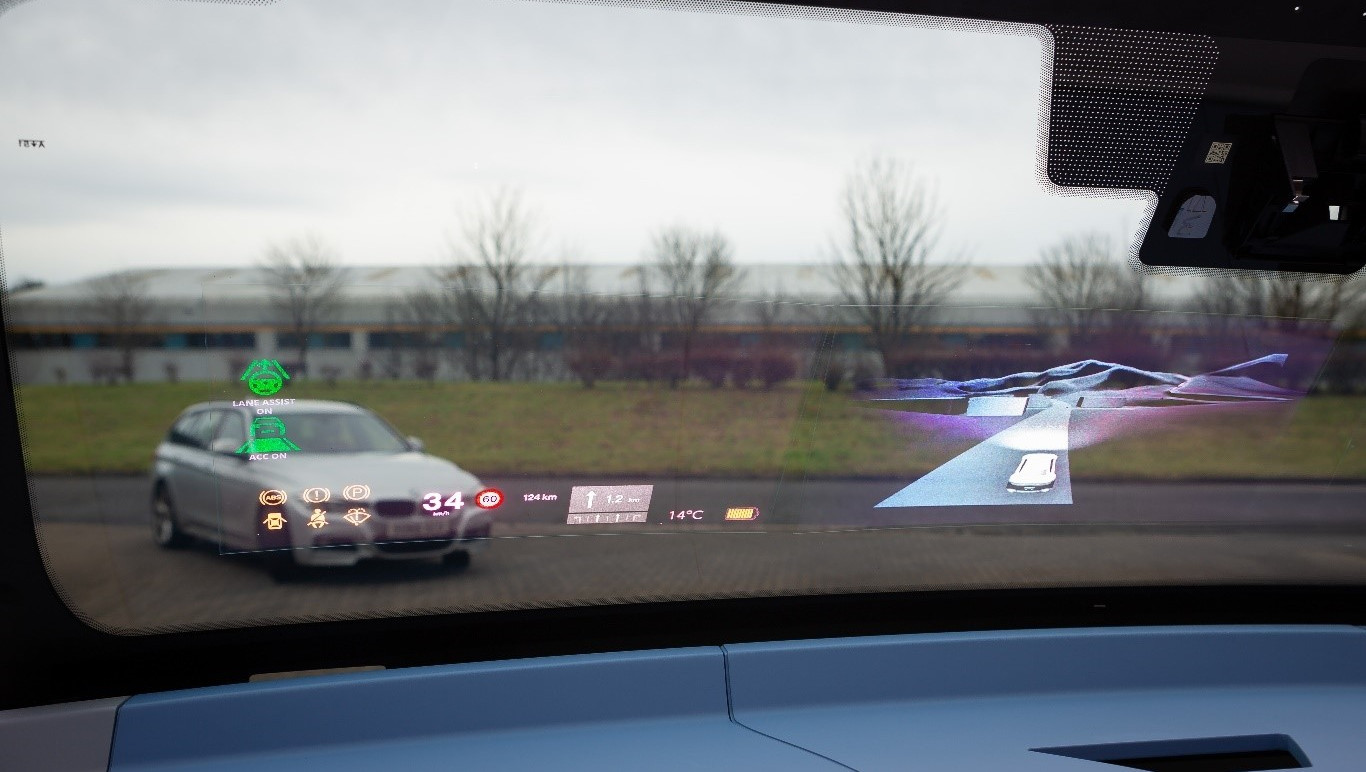
These new displays overcome the performance, size and geometric limitations of traditional HUD systems, enabling the practical and scalable implementation of multiple displays in one windshield and elsewhere in side-light glazing. Proof of concepts (PoCs) developed with OEMs will be showcased at CES 2025 in Las Vegas from January 7–10.
The MOU builds on years of collaboration, leveraging each company’s technologies to manufacture holographic-enabled transparent HUDs for the automotive market. It enables to look into the steps needed to setup and establish the required facilities and manufacturing capacity, ensuring an efficient, market-ready supply chain to meet the planned production timelines of OEMs wishing to adopt the technology for new driver and passenger experiences. The partnership aims to accelerate the commercialization of the HUD solution, with Eastman leveraging its relationships with automotive OEMs and Tier One suppliers.
A proven solution
In 2024, Ceres and Eastman demonstrated the latest holographic transparent display HUDs to OEMs in Europe, the USA, and China. These HUDs featured multiple transparent displays within a single, fully laminated windshield, each measuring up to 400mm by 300mm. Custom-designed holographic optical elements (HOEs) were incorporated into a single sheet of Bayfol HX® film, laminated with Eastman’s new developed interlayer stack, achieving the industry’s largest field of view.
This achievement was enabled by combining Covestro’s expertise in photopolymer films, Ceres’ digital mastering and HoloFlekt® roll-to-roll replication system, which produces finished films up to 1400mm wide, and Eastman’s solutions to encapsulate functional films into automotive approved laminates.
“This agreement solidifies our collaboration and moves us closer to delivering a full-stack solution for innovative display implementations,” said Hemant Dandekar, Eastman’s global commercial director of automotive for advanced materials, interlayers. “With the building blocks and relationships in place, we’re excited to define a path to viable holographic transparent displays globally.”
“Our Bayfol® HX enables next-generation truly transparent projection displays for windshields while meeting the high automotive safety requirements.,” said Günther Walze, Head of Holographic Lightguiding at Covestro. “With the necessary establishment of hologram mastering and scalable mass-production replication equipment by Ceres, combined with Eastman’s windshield lamination technology, this innovation is ready for deployment to end customers.”
“We have been working closely with global OEMs for years and are now at a tipping point for adoption and scaling of this display technology,” said Andy Travers, CEO of Ceres Holographics. “This is being driven by a combination of a desire for more safety-oriented and intuitive information display features, pressure from safety regulators to reduce driver distractions, and the accelerated pace of innovation and associated need for differentiation among a new generation of car makers.”
This agreement joins the material expertise of Covestro, Eastman’s interlayer solutions and encapsulation know-how, as well as Ceres capabilities in mastering and high-volume manufacturing technology for the successful commercialization and industrialization of holography in transparent displays for windshields.
7, Dec 2024
One UI 7 by Samsung Boosts User Privacy and Security, Offering More Control in the Age of AI
Bengaluru, India – Dec. 7, 2024 – Samsung Electronics Co., Ltd. today announced the One UI 7 beta program, opening an advance look at fortified, Samsung Galaxy-exclusive security measures. At every layer, the latest One UI protects personal data while providing all types of users with choice, transparency and integrated security settings — because in the era of AI, there is no privacy without holistic security.
Knox Matrix Unlocks Ultimate Transparency
Knox Matrix is Samsung’s vision for the future, enhancing protection through multi-layered, intelligent threat monitoring between connected Samsung devices. One UI 7 sets the foundation for the next frontier of security.
Knox Matrix monitors devices through Trust Chain, a secure private blockchain — and the new Knox Matrix dashboard introduces an easier way to maintain transparent security across a connected device ecosystem. With One UI 7, it’s more intuitive than ever to check the security status of multiple Samsung smart devices, including Galaxy mobile devices, TVs and home appliances, at a glance. When all connected devices are up to date and no risks are detected, they will show as ‘green,’ or secure. Users can also see if a device is at risk, and the dashboard will prompt an actionable recommendation to mitigate the threat.

A new recovery method for Enhanced Data Protection adds ease and convenience to the process of retrieving data stored on Samsung Cloud. Enhanced Data Protection keeps connected devices synchronized and secure, also ensuring that if access to a trusted device is lost, users have a backup plan to prevent the loss of their data. With One UI 7, users can now transfer recovered, private data to a new device by verifying the lock screen factor – whether pin, pattern or password – of their previous device.
As part of Knox Matrix’s Credential Sync, Samsung has developed new ways to manage and secure identities and credentials for today’s hyperconnected world in the form of passkeys. With One UI 7, users can now create and use passkeys to log into their Samsung Account. As digital authentication credentials, passkeys enable a faster, easier way to securely log in to apps, devices and websites — so users can safely sign into their TVs, AI Family Hub refrigerator and more, simply by using the fingerprint sensor on their smartphones.
Maximum Restrictions Boost User Control
Maximum Restrictions establishes a powerful line of defense against today’s cyber threats. One UI 7 further enhances user choice with new features designed to protect those who may need additional safeguards. Maximum Restrictions has been updated with added controls for network connections so users can enjoy the peace of mind that comes from boosted protection without losing access to key device functionalities. Thanks to the added controls, users have the choice to block 2G service and prevent data from being intercepted when connected to potentially unsafe networks. Users can also prevent unintended automatic reconnection to certain Wi-Fi networks that may be less secure, ensuring data remains private while still having the option to connect manually if desired.
This update enhances Maximum Restrictions’ existing suite of protections for Samsung Messages and Samsung Gallery, which allows users to remove location data in shared photos, prevent automatic attachment downloads, and block hyperlinks, previews and shared albums.
More Security Settings Bring Added Device Protection
One UI 7 introduces even more ways users can adjust security settings to best suit the ways in which they use their device. Users can choose to block USB connections to prevent any other access through the USB port while the device is locked, except for battery charging.
To protect against malicious apps that come from sideloading, One UI 7’s new Safe Install system works alongside Auto Blocker to send a warning when a user attempts to download from an unauthorized source, alerting them of security risks and preventing unintentional sideloading on Galaxy devices worldwide.
Theft Protection Enhances Data Privacy
One UI 7 introduces new features available only on Galaxy devices to the Android suite of theft protection solutions, enhancing the safeguards in place to ensure personal data remains secure even when devices are lost or stolen. In addition to Theft Detection Lock, Offline Device Lock and Remote Lock, Galaxy users can now leverage additional security measures in Identity Check, an opt-in feature designed for when a device’s PIN becomes compromised. If suspicious activity is detected, users can rest assured that these Galaxy-exclusive protections will kick in.
When in an unfamiliar location, biometric authentication will be required to make any changes to important security settings that could put personal information at risk.
As an added safeguard, a one-hour security delay will prevent unauthorized users from making any immediate changes to the device.
One UI 7 is the next step in Samsung’s commitment to privacy on AI, introducing advanced security features to ensure complete protection in the era of AI. The official One UI 7 release will commence with upcoming Galaxy S series devices, featuring additional AI capabilities including enhanced, hardware-dependent on-device AI functions, starting from the first quarter of 2025. In line with Samsung’s commitment to extend its OS upgrade policy, the update will gradually roll out to other Galaxy devices.
The One UI 7 beta program will be first available for Galaxy S24 series devices in Germany, India, Korea, Poland, the UK, and the US, from December 5. Galaxy S24 series users can apply to join the beta program via Samsung Members.
5, Dec 2024
Ultrahuman scales to 30% market share as it introduces the world’s first subscription-free Ovulation Tracking
London, UK – December 5, 2024; Ultrahuman, a pioneer in health optimisation, is transforming the way women track their fertility. It announced the launch of the Cycle & Ovulation PowerPlug, now available for free to all Ultrahuman Ring AIR users.
Using cutting-edge biomarker technology, Ultrahuman offers a more accurate and user-friendly approach to fertility tracking, eliminating the need for outdated methods or accompanying costly subscriptions.
For the first time ever, women can track their ovulation window seamlessly with just the Ultrahuman Ring AIR and its companion app. Unlike traditional methods that rely solely on basal body temperature (BBT), Ultrahuman’s advanced algorithms incorporate multiple biomarkers that include skin temperature, resting heart rate (RHR), and heart rate variability (HRV)—providing users with a holistic, data-driven approach to understanding their cycles.
“Most fertility tracking today is either inconvenient, expensive, or both. Women often have to use two apps, pay for two subscriptions, and even purchase separate devices just to track their fertility,” said Mohit Kumar, Founder and CEO of Ultrahuman. “We’re changing that. Ultrahuman’s fertility tracking is built natively into the same Ring AIR that already tracks your health, and we’re offering this service completely free. There’s no pink tax here—just evidence-backed insights to help women make informed decisions about their reproductive health.”
This launched comes hot on the heels of a phenomenal growth period for Ultrahuman with market share, surging from 10% just a few months ago to 30% by November 2024. This remarkable trajectory positions the company to surpass its ambitious goal of becoming the leading smart ring provider within 18 months, outpacing competitors faster than initially projected.
“Sleep health is at a transformative juncture, and Ultrahuman is proud to be at the forefront as one of the world’s fastest-growing health monitoring platforms. We’ve redefined the category by uncovering deeper insights into sleep and its broader implications for health. By leveraging sleep data, we pioneered the world’s first AFib detection technology on a smart ring and introduced a seamless ovulation tracking feature for women, eliminating the hassle of double subscriptions.” said Mohit Kumar, Founder and CEO of Ultrahuman.
With just the Ultrahuman Ring AIR and its companion app, women no longer need to juggle multiple apps or pay for additional subscriptions to track their fertility. Everything is integrated into one platform, making the process user-friendly and intuitive. Fertility tracking offers two initial goals: cycle tracking and conception.
Ultrahuman’s ovulation tracking provides real-time insights and predictive capabilities that go beyond traditional methods.
Existing methods for conception planning are tedious and not the most accurate. The Calendar Method is based on the premise of regular cycles, which is often not the case for most women. The Basal Body Temperature (BBT) method is quite cumbersome, and not the most accurate if one isn’t regular with their tracking, or their cycle. Ovulation Predictor Kit (OPK) methods provide a narrow 24-36 hour window to work with, which might not be the most ideal for conception planning.
What truly sets Ultrahuman apart is the precision of its predictions. Rather than relying solely on body temperature, the technology tracks multiple physiological biomarkers, such as skin temperature, heart rate variability, and resting heart rate. Additionally, Ultrahuman’s algorithm incorporates multiple stratifiers, including age, BMI, skin perfusion, and diurnal stress, after studying 41,475 anonymised cycles. This accounts for natural variability among regular cycle patterns.
“This is crucial because a single marker can vary, but the combined output of multiple markers reduces drift and boosts accuracy. This has been fundamental to advanced clinical biomarker testing and has inspired us to integrate a similar multi-marker system into our wearable technology. By capturing a range of fertility signals, we provide a far more accurate and comprehensive picture than methods relying on just one factor,” says Aditi Bhattacharya, Scientific Director at Ultrahuman.
Many modern fertility trackers come with hidden fees, requiring extra subscriptions or additional devices and apps. With Ultrahuman, fertility tracking is included with every Ring AIR as a free PowerPlug, making it accessible to all users without the burden of extra costs. PowerPlugs is a platform for individual apps and plugins built on top of Ultrahuman’s health and wellness data stack.
With the Ring AIR, women can now track their ovulation with ease and confidence, giving them more clarity and control over their health, without the complexity of traditional methods or paying a subscription fee for multiple applications.


