


5, Dec 2024
Osteoboost Launch Alert: Transform Bone Density Treatment with This Game-Changer
REDWOOD CITY, CALIF – December 5, 2024 – Bone Health Technologies (BHT), a leading medical technology startup developing innovative non-pharmacological solutions to improve bone health and reduce fractures, today announced that pre-orders are now open for Osteoboost, the first and only FDA-cleared non-drug prescription treatment for postmenopausal women with osteopenia.
Osteoboost is a wearable medical device, worn low around the waist, that delivers targeted vibration therapy directly to the hips and spine – the areas most at risk of debilitating osteoporotic fractures. Its unique and patented combination of dynamically calibrated frequency and amplitude has been proven in a pivotal clinical trial to reduce the loss of spine bone density by 85% and bone strength by 83%.
Available now for a self-pay pre-order price of $995 (list price of $1,500), Osteoboost is expected to ship in the next 60-90 days to those who secure their device in advance. A special Founder’s Program offer to existing waitlist members has already sold out, and the company is accelerating production to meet the high demand.
“Osteoboost was developed as part of an overarching vision to provide people with a safe, convenient, and non-invasive solution to protect bone density and prevent fractures,” said Laura Yecies, CEO of Bone Health Technologies. “This is an exciting milestone for our team and the thousands of people who have patiently waited as we completed our clinical trial, successfully navigated the FDA De Novo clearance process, and begun manufacturing. We are deeply grateful for those who have taken this journey with us, and those joining us as we begin to ship devices to patients soon.”
“Vibration therapy has shown promising results in clinical trials, offering a safe and effective way to encourage bone growth,” said Dr. Yevgeniya Kushchayeva, MD, an endocrinologist at USF Health Morsani Center for Advanced Healthcare and an expert in bone density therapies. “The concept of using low-intensity vibration to mimic the effects of exercise on bone remodeling has deep-rooted foundations in bone science. I like the approach Osteoboost has taken to deliver vibration therapy directly to the hips and spine, and the clinical trial results speak for themselves. I’m looking forward to seeing Osteoboost perform in the real world and tracking results with my patients.”
A Safe and Effective Alternative for Bone Health
Osteoboost’s wearable design empowers people to proactively take control of their bone health, slowing the loss of bone density and buying valuable time. The lightweight, wearable device delivers mechanical stimulation that reinvigorates the body’s natural bone regeneration cycles.
In the clinical trial, patients cited the ease of use and comfort, comparing it to a massage, and found the treatment convenient to incorporate into normal daily activities like walking the dog or household chores.
The Science Behind Osteoboost: Effective Vibration Therapy
Osteoboost’s vibration therapy technology is based on a pivotal clinical trial at the University of Nebraska Medical Center, which demonstrated an impressive ability to slow the loss of bone density and bone strength in the spine. By delivering auto-calibrated mechanical vibrations in the therapeutic frequency range, Osteoboost delivers the same type of bone stimulation that results from high-impact exercise.
The company’s Chief Scientific Officer, Michael Jaasma, PhD, studied how bone cells respond to mechanical loading in his doctoral research at UC Berkeley, and he applied his and others’ research findings in the development of Osteoboost.
“The effects of vibration have long been studied for bone health. What has been missing is a rigorous, scientific approach to the development of vibration technology for commercial products,” said Jaasma. “It matters where and how the vibration is applied. The biggest risks to older patients with low bone density are hip and spine fractures. This is why we were disciplined in our approach, investing the time to find the right level of vibration frequency and amplitude as well as the optimal device design to deliver therapeutic vibration to the hips and spine – where fractures often cost a patient their mobility or even life.”
Osteoboost devices will begin shipping on a first-available basis in the next 2-3 months.
- 0
- By Rabindra

5, Dec 2024
LifeSignals Achieves EU MDR Certification for UbiqVue 2A Multiparameter System
Milpitas, California, USA. December 5, 2024: LifeSignals, Inc. today announced that the UbiqVue 2A Multiparameter System has received EU MDR Certification, marking another significant milestone in deploying continuous wireless patient monitoring for population health management following FDA 510(k) Clearance last month. UbiqVue 2A is thus approved and CE-marked in accordance with EU regulation on medical devices, which ensures the safety and performance of medical equipment. This is especially significant because the UbiqVue 2A Multiparameter System is designed to be deployed in home, as well as hospital settings to continuously monitor patients’ physiological data, replacing laborious and potentially inaccurate spot-checks.
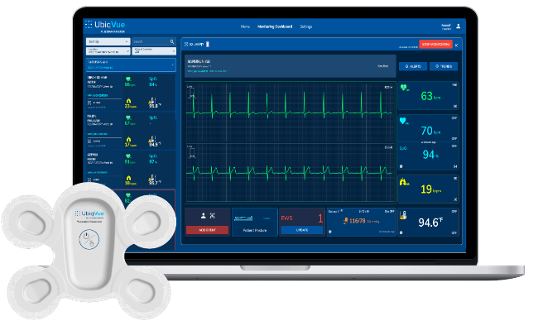
Central to the system is the UbiqVue 2A Biosensor, a single-use, all-in-one wearable device that enables SpO2** to be continuously collected from the chest, alongside other biodata, for generating a total of twelve monitored parameters, including 2-channel ECG, pulse rate, PPG, respiration rate, body temperature, and motion. The encrypted data is securely transmitted, in near real-time, from the Biosensor via a relay app or an access point to a secure cloud-based system, where it is further signal-processed. Healthcare professionals and care providers can access continuous vital signs, via the UbiqVue web portal, and receive alert notifications.
“This Class IIb EU MDR Certification, typically given to devices intended for the continuous surveillance of vital physiological parameters in anesthesia, intensive care or emergency care, confirms our commitment to deliver bedside patient monitor-equivalent functionality through an affordable, single-use Biosensor,” said Surendar Magar, Co-founder and CEO. “By securing the necessary regulatory approvals in various geographies and creating global partnerships with OEMs, service providers, and distributors, we aim to transform healthcare at scale.”
The UbiqVue System is expected to play a vital role in advancing both individual patient care and broader population health strategies, reinforcing LifeSignals’ mission to deliver innovative, wireless solutions for healthcare systems worldwide. Learn more by visiting: https://www.lifesignals.com/ubiqvue-multiparameter/
** White light spectral SpO2 patented technology licensed from BioIntelliSense, Inc. LifeSignals, Inc. in partnership with BioIntelliSense, carried out the product-level design and processing technology enhancements enabling reliable, continuous SpO2 monitoring and accurate performance across all skin tones in a chest-worn Biosensor.
3, Dec 2024
CloudThat Creates History as the First Indian Company to Win Consecutive AWS Training Partner Awards
Las Vegas, NV – December 3, 2024 – CloudThat is excited to announce it is a recipient of the 2024 AWS Training Partner of the Year (APJ) Award, recognizing the top AWS Training Partners around the globe that have provided significant contributions related to number of students trained, number of classes delivered, and YoY student growth.
Presented during the Partner Awards Gala at AWS re:Invent 2024, the Geo and Global AWS Partner Awards honor partners demonstrating specialization, innovation, and collaborative excellence. These awards recognize the AWS Partners that have continually evolved their business models to deliver outstanding customer support and success.
CloudThat’s relentless focus on transforming education and closing skill gaps in the cloud-driven era has earned this prestigious distinction. By offering advanced certifications in AI/ML, cloud security, and DevOps, and expanding access to AWS Skill Builder in untapped markets, CloudThat has consistently tailored its training programs to address the dynamic needs of modern cloud technologies. Through its comprehensive training solutions, CloudThat has empowered professionals and organizations to excel, establishing itself as a benchmark in the technology education industry.
“It is an extraordinary honour for CloudThat to become the first Indian company to win the AWS Training Partner of the Year Award (APJ) twice in a row,” expressed Bhavesh Goswami, Founder and CEO of CloudThat. He further added, “This recognition reaffirms our commitment to empowering individuals and organizations with the practical, dynamic, and industry-aligned skills needed to thrive in a digital-first world. Winning this award consecutively is a testament to the impact of our training programs and our team’s unwavering commitment to empowering learners with world-class cloud expertise. This milestone inspires us to aim higher, innovate further, and build a future-ready cloud workforce. I am deeply grateful to AWS for this acknowledgment and to our clients, learners, and partners who trust us as their upskilling partner,”.
Rujika Sajeev, Group HR Specialist, L&D at i engineering group, congratulated CloudThat, saying, “Congratulations on being named the AWS Training Partner of the Year 2024. We’ve had the privilege of working with you, and your consistent efforts to raise the bar in training excellence make this award well-deserved.”
Swaroop Nakka, Service Delivery Manager at Cloud4C, also expressed his congratulations, adding, “Winning this award two years in a row is truly a proud moment and a testament to the expertise of the entire CloudThat team. We look forward to continuing to work together and being part of CloudThat’s journey as you scale new heights in cloud training.”
The Geography and Global AWS Partner Awards included a self-nomination process across several award categories, awarded at both the geographic and global level. All AWS Partners were invited to participate and submit a nomination. Award submissions were reviewed by a third-party, Canalys, and selected with special emphasis placed on customer success use cases.

In addition, there were several data-driven award categories, which were evaluated by a unique set of metrics that helped measure AWS Partners’ performance over the past year. Canalys audited the datasets used to ensure that all measurements and calculations were objective and accurate. Finalists represented the top three ranked AWS Partners across each category.
The AWS Partner Network (APN) is a global program focused on helping partners innovate, accelerate their journey to the cloud, and take full advantage of the breadth and depth of AWS.
CloudThat is honored to receive the AWS Training Partner of the Year (APJ) Award for 2024, a recognition of its innovative approach to addressing skill gaps and equipping individuals and organizations to excel in the AWS ecosystem.
3, Dec 2024
MongoDB Announces Expansion of the MongoDB AI Applications Program
New Delhi—December 3, 2024—MongoDB, Inc. (NASDAQ: MDB) today at AWS re:Invent announced that a new cohort of organizations have joined the MongoDB AI Applications Program (MAAP) ecosystem of leading AI and tech companies. By lending their experience and expertise to MAAP, Capgemini, Confluent, IBM, QuantumBlack, AI by McKinsey, and Unstructured will offer customers additional integration and solution options, boosting the value customers receive from MAAP. Since it was launched earlier this year, MAAP has already made an impact, helping customers like CentralReach—which provides an AI-powered autism care and intellectual and developmental disabilities (IDD) platform—innovate with AI. The MAAP Center of Excellence Team, a cross-functional group of AI experts at MongoDB, has collaborated with partners and customers across industries to overcome an array of technical challenges, empowering organizations of all sizes to build and deploy AI applications. The expansion of the MongoDB AI Applications Program follows the introduction of vector quantization to MongoDB Atlas Vector Search (which reduces vector sizes while preserving performance—at lower cost), as well as new integrations with leading AI and technology companies.
MongoDB is also collaborating with Meta on Llama to support developers in their efforts to build more efficiently and to best serve customers. Currently, both enterprise and public sector customers are leveraging Llama and MongoDB to build innovative, AI-enriched applications, accelerating progress toward business goals. In the coming months, MongoDB plans to implement turnkey mapping from its database to the LlamaStack APIs, empowering developers to deliver solutions to market more quickly and efficiently.
“At the beginning of 2024, many organizations saw the immense potential of generative AI, but were struggling to take advantage of this new, rapidly evolving technology. And 2025 is sure to bring more change—and further innovation,” said Greg Maxson, Senior Director of AI GTM and Strategic Partnerships at MongoDB. “The aim of MAAP, and of MongoDB’s collaborations with industry leaders like Meta, is to empower customers to use their data to build custom AI applications in a scalable, cost-effective way. By joining the MAAP partner network, Capgemini, Confluent, IBM, QuantumBlack, AI by McKinsey, and Unstructured are helping the program evolve to meet the ever-changing AI landscape, and offering customers an array of leading solutions.”
Launched in the summer of 2024—with founding members Accenture, Anthropic, Anyscale, Arcee AI, AWS, Cohere, Credal, Fireworks AI, Google Cloud, gravity9, LangChain, LlamaIndex, Microsoft Azure, Nomic, PeerIslands, Pureinsights, and Together AI—the MongoDB AI Applications Program is designed to help organizations unleash the power of their data and to take advantage of rapidly advancing AI technologies. It offers customers an array of resources to put AI applications into production: reference architectures and an end-to-end technology stack that includes integrations with leading technology providers, professional services, and a unified support system to help customers quickly build and deploy AI applications.
Because the AI landscape and customer expectations of AI continue to evolve, MongoDB has carefully grown the MAAP program—and the MAAP ecosystem of companies—to best meet customer needs. By working with AI industry leaders, MongoDB has gained a unique understanding of both the technology and implementation partners that can best help customers build AI applications, and has built the MAAP partner network accordingly.
New MAAP partners look forward to helping customers build AI applications
A global consulting and technology services company, Capgemini offers integrated solutions for digital transformation, blending expertise with breakthrough technology. Confluent, meanwhile, is a cloud-native data streaming platform that allows users to stream, connect, process, and govern data in real time.
“Business leaders are increasingly recognizing generative AI’s value as an accelerator for driving innovation and revenue growth. But the real opportunity lies in moving from ambition to action at scale. We are pleased to continue working with MongoDB to help deliver tangible value to clients and drive competitive advantage by leveraging a trustworthy data foundation, thereby enabling gen AI at scale,” said Niraj Parihar, CEO of Insights & Data Global Business Line and Member of the Group Executive Committee at Capgemini. “MAAP helps clients build gen AI strategy, identify key use cases, and bring solutions to life, and we look forward to being a key part of this for many organizations.”
“Enterprise AI strategy is inextricably dependent upon fresh, trusted data about the business. Without real-time datasets, even the most advanced AI solutions will fail to deliver value,” said Shaun Clowes, Chief Product Officer at Confluent. “Seamlessly integrated with MongoDB and Atlas Vector Search, Confluent’s fully managed data streaming platform enables businesses to build the trusted, always-up-to-date data foundation essential for powering gen AI applications.”
Unstructured is the leading provider of ETL for LLMs, making it easy for enterprises to utilize their unstructured data with gen AI systems.
“Like MongoDB, we understand that data is essential to harnessing the power of gen AI,” said Brian Raymond, Founder and CEO of Unstructured. “We are excited to join the MongoDB AI Applications Program to bring our expertise in ingesting and preprocessing complex unstructured data for vector databases. The gen AI-ready data we continuously deliver and write to vector databases like MongoDB is essential to enabling our users to counter hallucinations, allowing the LLMs and AI projects that MAAP customers are working on to leverage sensitive, internal data while keeping models and projects up-to-date.”
Collaborating to make an impact with AI
Providing customers direct support from technical subject matter experts has been integral to MAAP’s success. Since the program’s inception, the MAAP Center of Excellence team—highly skilled AI experts from MAAP partners and groups across MongoDB—has worked with more than 150 organizations on a range of technical challenges, including model and technology stack evaluation, chunking strategies, advanced retrieval techniques, and the establishment of agentic workflows. Example projects include working on sound diagnostic-based maintenance recommendations for a large manufacturer, and customer service automations for companies across industries.
A recent example of how MAAP enables organizations to build with AI is IndiaDataHub, which is on a mission to build India’s largest market data and analytics platform.
Since the company’s founding, MongoDB Atlas has been the platform’s operational database for some of its key datasets, and earlier this year, IndiaDataHub joined MAAP to access AI expertise, in-depth support, and a full spectrum of technologies to enhance AI functionality within its analytics platform. This includes connecting relevant data in MongoDB with Meta’s AI models to perform sentiment analysis on text datasets.
”Data is the oil that will fuel the growth of the modern Indian economy,” said Pranoti Deshmukh, Chief Technology Officer at IndiaDataHub. “Working with MongoDB, the MAAP ecosystem, and Meta’s AI tools, we’ve been able to accelerate our AI strategy to make high-quality, timely data and analytics available to everyone in India who needs it. The professional support and deep AI expertise we’ve received through the MAAP program have been outstanding.”
“We are thrilled to see how many enterprises are leveraging our open source AI models to build better solutions for their customers and solve the problems their teams are facing everyday,” said Ragavan Srinivasan, VP of Product at Meta. “Leveraging our family of Meta models and the end-to-end technology stack offered by the MongoDB AI Applications Program demonstrates the incredible power of open source to drive innovation and collaboration across the industry.”
Another success story is CentralReach, which provides an AI-powered electronic medical record (EMR) platform that is designed to improve outcomes for children and adults diagnosed with autism and related intellectual and developmental disabilities (IDD).
Prior to working with MongoDB and MAAP, CentralReach was looking for an experienced partner to further connect and aggregate its more than 4 billion financial and clinical data points across its suite of solutions.
CentralReach leveraged MongoDB’s document model to aggregate the company’s diverse forms of information from assessments to clinical data collection, so the company could build rich AI-assisted solutions on top of its database. Meanwhile, MAAP partners helped CentralReach to design and optimize multiple layers of its comprehensive buildout. All of this will enable CentralReach to support initiatives such as value-based outcome measurement, clinical supervision, and care delivery efficacy. With these new data layers in place, providers will be able to make substantial improvements to their clinical delivery to optimize care for all those they serve.
“As a mission-driven organization, CentralReach is always looking to innovate on behalf of the clinical professionals—and the more than 350,000 autism and IDD learners—that we serve globally,” said Chris Sullens, CEO of CentralReach. “So being able to lean on MongoDBs database technology and draw on the collective expertise of the MAAP partner network—in addition to MongoDB’s tech expertise and services—to help us improve outcomes for our customers and their clients worldwide has been invaluable.”
The expansion of the MongoDB AI Applications Program builds on recent AI-related announcements from MongoDB.
In October, MongoDB announced vector quantization capabilities in MongoDB Atlas Vector Search. By reducing vector storage and memory requirements while preserving performance, these capabilities empower developers to build AI-enriched applications with more scale—and at a lower cost.
Outside of MAAP, since the start of the year MongoDB has built partnerships with more than 40 leading AI companies, enabling additional flexibility and choice for customers. Recent collaborations include those with Astronomer, Arize AI, Baseten, CloudZero, Modal, and ObjectBox. By working closely with its AI partners on product launches, integrations, and real-world challenges, MongoDB is able to bring a better understanding of AI to joint customers, deliver interoperability for end-to-end workflows, and to give them the resources and confidence they need to move forward with this groundbreaking technology.
3, Dec 2024
HCLTech completes acquisition of Communications Technology Group assets from Hewlett Packard Enterprise (HPE)
NEW YORK and NOIDA, India, Dec 3, 2024 — HCLTech, a leading global technology company, today announced it has completed the purchase of certain assets from Hewlett Packard Enterprise’s (HPE) Communications Technology Group (CTG). This follows the announcement the company made in May 2024.
The closure of this deal formally expands HCLTech’s long-standing partnership with HPE, extending its leadership in the telecom services markets and strengthening its engineering services capabilities with industry-leading intellectual property (IP), Engineering and R&D talent and client relationships with top global Communication Service Providers (CSPs).
“We are deeply committed to continuing CTG’s success and delivering exceptional value to all CTG clients,” said Anil Ganjoo, Chief Growth Officer, TMT industries, at HCLTech. “We are excited to welcome the talented professionals and leadership team from CTG, whose expertise will be instrumental in driving our shared success. By combining our engineering strengths with CTG’s advanced capabilities, we will enhance our partnerships with leading global CSPs, accelerate the growth of our digital services and expand our global footprint.”
“We are pleased to have found a partner in HCLTech with appreciation for CTG’s significant legacy and future potential,” said Marie Myers, Executive Vice President and Chief Financial Officer, at Hewlett Packard Enterprise. “Now that the HCLTech acquisition is complete, we look forward to CTG’s successes being nurtured and grown as part of HCLTech as well as in continuing our HPE commitment to the telecoms market.”
3, Dec 2024
OnePlus reveals OnePlus 13 is coming to global markets in January 2025
Bangalore India, 3 December: OnePlus, a leading technology brand, has today revealed that OnePlus 13, its eagerly anticipated flagship smartphone, will be launching across the world in three unique colourways in January 2025.
OnePlus 13 combines cutting edge innovation, fast and smooth performance and AI with an elegant, showstopping design. It will be available in three stunning colourways – Midnight Ocean, Black Eclipse and Arctic Dawn – and is the first OnePlus phone to secure an IP68 + IP69 rating, making it an ideal companion for users who demand exceptional resilience from their everyday devices. Furthermore, OnePlus 13‘s Midnight Ocean colourway will be the first phone to feature micro-fiber vegan leather, designed to strike a perfect balance between a luxurious handfeel and scratch and scuff resistance.

More information about OnePlus 13, including details about its worldwide launch, will be available over the coming weeks.
15, Oct 2024
Hikvision India introduces a new range of MinMoe Facial Recognition Terminals with Battery Support
Hikvision India has introduced a new range of MinMoe Facial Recognition Terminals (FRT) with battery support. These FRT products are available in two variants (DS-K1T320MFWX-B and DS-K1T320EFWX-B Value Series). There is another model, which is available (DS-K1T321MFWX-B) Value Series Face Access Terminal. This battery supported MinMoe FRT series is a value offering for the remote locations and harsh environments, where it is critical to be operational during power outages.

Technical Specifications: Authorized access has come a long way from using keys, pin codes, cards, and fingerprints. We now find ourselves stepping into the era of most advanced biometric recognition. The use of face recognition in access control and time attendance has been quite popular in the market, mostly for its advantageous “touch-free” experience. Later, as access control continues to develop in biometric recognition, face recognition became a new trend – especially for scenarios that require higher security and more convenience. These products are customized for remote locations and harsh environments, where power outages and disruptions are frequent.
With advanced deep learning algorithms and practical functions, Hikvision’s MinMoe Face Recognition Terminals improve security and efficiency in access control and time attendance, making them easier. These Face Access Terminal Face recognition terminals adopt deep learning algorithm, which helps to recognize the face faster with higher accuracy. It also supports multiple authentication modes: face/card/fingerprint/PIN authentication, etc.
Superior recognition in any environment: Empowered by deep learning algorithms, Hikvision MinMoe Face Recognition Terminals can reach an amazing recognition speed of 0.2 seconds, with the accuracy rate of over 99%. Equipped with dual lenses, the MinMoe terminals perform equally well under low or even zero-light environments.
Deep Learning Algorithms: It offers fast facial recognition and high-level security. It comes with face anti-spoofing and privacy protection options.
Cloud based Time Attendance: It offers flexible deployment and management of convenient Hik-Connect software.
Connect Via AP: Connect to the device via AP mode with easily with simple configuration and operation.
Back Up Battery in Bracket: Increased system reliability during power outages and disruptions.
High Level Security: The embedded face image anti-spoofing technology boosts security level at entry points. All user data is encrypted for effective information protection, and the optional privacy protection mode also secures users’ personal information.
Easy to manage and operate: Hikvision MinMoe Face Recognition Terminals support quick and easy registration via multiple access methods, and convenient device configuration via the web or GUI as well. More conveniently, users can remotely check live view, unlock the door, check event logs and more, via the Hik-Connect App on their smartphone.
· Access methods include card, PIN code, fingerprint, face
· Supports web or GUI configuration
· Remote control via Hik-Connect App
Application Scenarios
It can be applied in multiple scenarios, such as buildings, enterprises, financial industries, and other important areas.Moreover, it offers diverse application scenarios including remote locations, mines, holiday homes, villas, apartments, and offices. These Face Recognition Terminals support multiple authentication methods such as face, pin code, card, and QR code, satisfying different environments and helping to use access permissions.
26, Sep 2024
Ola Electric launches ‘Network Partner Program’, onboards over 600 partners to accelerate EV adoption and #EndICEAge PAN India
Bengaluru, September 26, 2024: Ola Electric, India’s largest pure-play EV company, today announced the launch of its ‘Network Partner Program’. This program is aimed at taking the EV revolution further into tier-2 and tier-3 cities, including urban pockets where EV penetration still remains low. Under this program, the company has on-boarded 625 partners to expand its sales footprint across India, and Ola Electric further plans to have 1,000 partners ahead of the festive season this year. Additionally, the company announced to aggressively expand its network by on-boarding 10,000 partners, across sales and service, by the end of 2025.
The ‘Network Partner Program’ will give Ola Electric an edge over its competitors as the Program requires limited investment from the partners and can be scaled up faster as compared to the traditional dealership model in the automotive industry.
Ola Electric presently has nearly 800 company-owned stores, and with the ‘Network Partner Program’, will have nearly 1,800 sales and service touch points ahead of the upcoming festive season.

Announcing the expansion, Bhavish Aggarwal, Chairman and MD, Ola Electric, said, “Our D2C model has been extremely successful in driving sustainable business growth. The Network Partner Program will further amplify the benefits of our D2C network as it requires limited capital investment from partners and can be scaled up really fast. While the company-owned stores will be the anchors of our sales and service network, this program will be instrumental in expanding the EV footprint deeper into the urban and rural markets. We will continue to expand and invest in our front-end network to accelerate EV adoption to #EndICEAge, and by the end of next year, will have 10,000 Network Partners across the country.”
Through the program, Ola Electric will continue to onboard partners to drive EV adoption and provide seamless sales & after-sales experience across the country. The company will further leverage this program for sales and service of its upcoming Roadster portfolio, deepening EV penetration in the motorcycle segment across India.
Ola Electric offers an expansive S1 portfolio with six offerings across attractive price points catering to customers with different range requirements. While the premium offerings S1 Pro and S1 Air are priced at ₹1,34,999 and ₹1,07,499, respectively, the mass market offerings include S1 X+ priced at ₹89,999 and S1 X portfolio (2 kWh, 3 kWh, and 4 kWh) priced at ₹74,999, ₹87,999, and ₹101,999, respectively.
The company recently announced the launch of its Roadster motorcycle series, comprising Roadster X (2.5 kWh, 3.5 kWh, 4.5 kWh), Roadster (3.5 kWh, 4.5 kWh, 6 kWh), and Roadster Pro (8 kWh, 16 kWh). The motorcycles offer many segment-first technology and performance features, with their prices starting from INR 74,999, INR 1,04,999, and INR 1,99,999, respectively.
26, Sep 2024
IITM Pravartak Technologies Foundation (IITM PTF) and Simplilearn join hands to launch the Advanced Executive Program in Applied Generative AI
Bangalore, 26 September 2024: IITM Pravartak, the Technology Innovation Hub hosted by IIT Madras, in collaboration with the world’s leading online bootcamp provider for digital skills, has announced the launch of the Advance AI The program is created to equip professionals with essential skills to harness the transformative potential of generative AI technologies across various industries.
Generative AI is rapidly evolving and is expected to expand to $667.9 billion by 2030, highlighting a remarkable annual growth rate of 24.4%. As sectors from entertainment to finance increasingly integrate these technologies, this program will deliver an in-depth understanding of generative AI tools and concepts, including Generative Adversarial Networks (GANs), Variational Autoencoders (VAEs), prompt engineering, and Large Language Model (LLM) application development.
The program offers over 70 hours of live online classes led by industry experts, and masterclasses by faculty and/or alumni from premier institutes such as IITM and other IITs. Learners will experience hands-on learning through 60+ exercises and 7 industry-relevant projects, including AI application development, logo design using DALL-E, and more. They will also work with top tools like Microsoft Copilot, Azure AI Studio, ChatGPT, OpenAI, DALL·E 2, and Hugging Face. Unique benefits include a two-day campus immersion at IIT Madras Research Park, startup incubation support, and Simplilearn’s Job Assist for connecting with employers. Upon completing the program, learners will be awarded a certificate from IITM Pravartak, along with certificates/badges for all Microsoft courses completed.
The ideal candidate for this program holds a bachelor’s degree with an average of 50 percent or higher marks, has a basic understanding of Programming concepts and Mathematics, and preferably has over two years of professional work experience.
Speaking about the program, Mr. Kashyap Dalal, Co-founder and Chief Operating Officer of Simplilearn, said, “Generative AI is projected to contribute a remarkable $4.4 trillion annually to the global economy. I am very excited about partnering with IITM Pravartak, and announcing the launch of the Advanced Executive Program in Applied Generative AI. This program will equip professionals with the skills to leverage this new-age technology. By combining IITM Pravartak’s leading research and Simplilearn’s expert-led training, we are preparing learners to drive innovation and build the future of business applications and processes with Gen AI at the core.”
Regarding the partnership with Simplilearn, Dr. Shankar Raman, CEO of IITM Pravartak Technologies Foundation said, “We are thrilled about our collaboration with Simplilearn to launch this Advanced Executive Program in Applied Generative AI. This initiative shows our commitment to addressing the escalating demand for skilled professionals in the evolving landscape of GenAI. As industries increasingly leverage generative AI advancements, this program equips learners from diverse backgrounds with the critical skills needed to excel in this transformative field. It reflects our mission to empower individuals to harness the power of generative AI and drive innovation in the digital economy.”
24, Sep 2024
Audio-Technica Introduces ATH-TWX7 True Wireless Earbuds in the Indian Market
Bengaluru, 24th September 2024– Audio-Technica, a global leader in professional and personal audio technology, proudly introduces the ATH-TWX7 true wireless earbuds to the Indian market. Known for delivering high-fidelity audio, Audio-Technica continues to push the boundaries of sound quality and innovation with the ATH-TWX7.
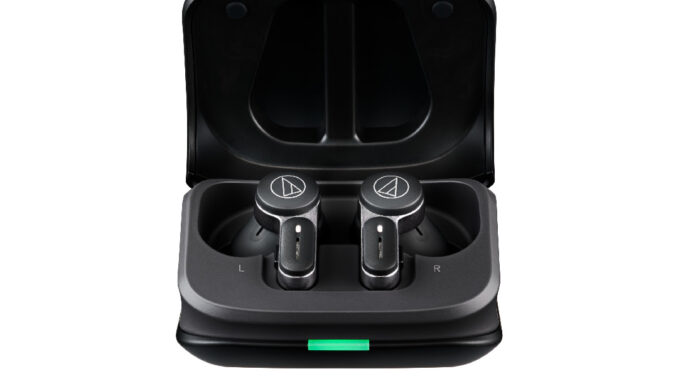
The ATH-TWX7 true wireless earbuds feature 5.8mm high-resolution drivers that provide detailed music playback, ensuring the high-quality sound that Audio-Technica is celebrated for. With advanced digital hybrid noise-cancelling technology, these earbuds eliminate unwanted noise and deliver crystal-clear sound performance at the touch of the earbud. Users can further customize their audio experience with easily accessible hear-through and talk-through functions and a unique soundscape function to produce sounds for concentrating, meditating, or relaxing.
The built-in MEMS microphones, combined with beamforming technology in both earbuds, guarantee that the speaker’s voice is heard loud and clear, even in noisy environments. Two call modes – Natural for quieter settings and Noise-Reduction for noisier environments – further enhance call clarity.
Designed for a secure and comfortable fit, the ATH-TWX7 earbuds provide approximately 6.5 hours of playback time and up to 20 hours with the non-slip portable charging case. The IPX4 water-resistant protection ensures that these earbuds are equipped to withstand rain, water, and sweat.
The ATH-TWX7 with the Audio-Technica CONNECT app gives users access to many additional functions, such as low latency mode, ambiance control, EQ settings, touch sensor settings, and more. Available in Ash Black (BK), the ATH-TWX7 also supports fast charging and multipoint pairing.
Key Features of ATH-TWX7:
- MEMS (micro-electromechanical system) microphones, a high-accuracy noise-cancelling processor, and a proprietary filter work together to deliver stellar noise-cancelling performance.
- The high-performance MEMS microphones, beamforming technology, and two selectable call modes (Natural and Noise-Reduction) ensure crystal-clear call quality.
- The call test function allows users to check the tone and clarity of their voice at any time.
- The microphone can be quickly muted during calls via built-in controls on the earbuds.
- The soundscape function plays relaxing sounds of nature, a masking noise to help concentration, or sounds for meditation.
- Ambiance control (noise-cancelling, hear-through, talk-through) is available for music playback and calls.
- 5.8 mm high-resolution drivers deliver an extended high-frequency range and improved sound detail.
- LDAC codec compatibility for playback of 24-bit/96 kHz audio files.
- The private Timer function provides advanced personal time management.
- The multipoint pairing function lets users stay connected to two Bluetooth devices simultaneously.
What’s in the Box:
The ATH-TWX7 package includes:
- ATH-TWX7 earbuds
- Two sets of ear tips (XS/S/M/L): soft ear tips for greater comfort during long listening sessions and standard ear tips for a more secure fit
- 30 cm (1.0′) USB-A/USB-C charging cable