


27, Apr 2026
“Catch-Drop Virus” in Indian Premier League 2026 Intensifies as Costly Fielding Errors Shake Team Performances
Mumbai, Apr 27(BNP) The Indian Premier League 2026 season is witnessing a worrying trend dubbed the “catch-drop virus,” as a series of high-profile fielding lapses continue to influence match outcomes and team standings.
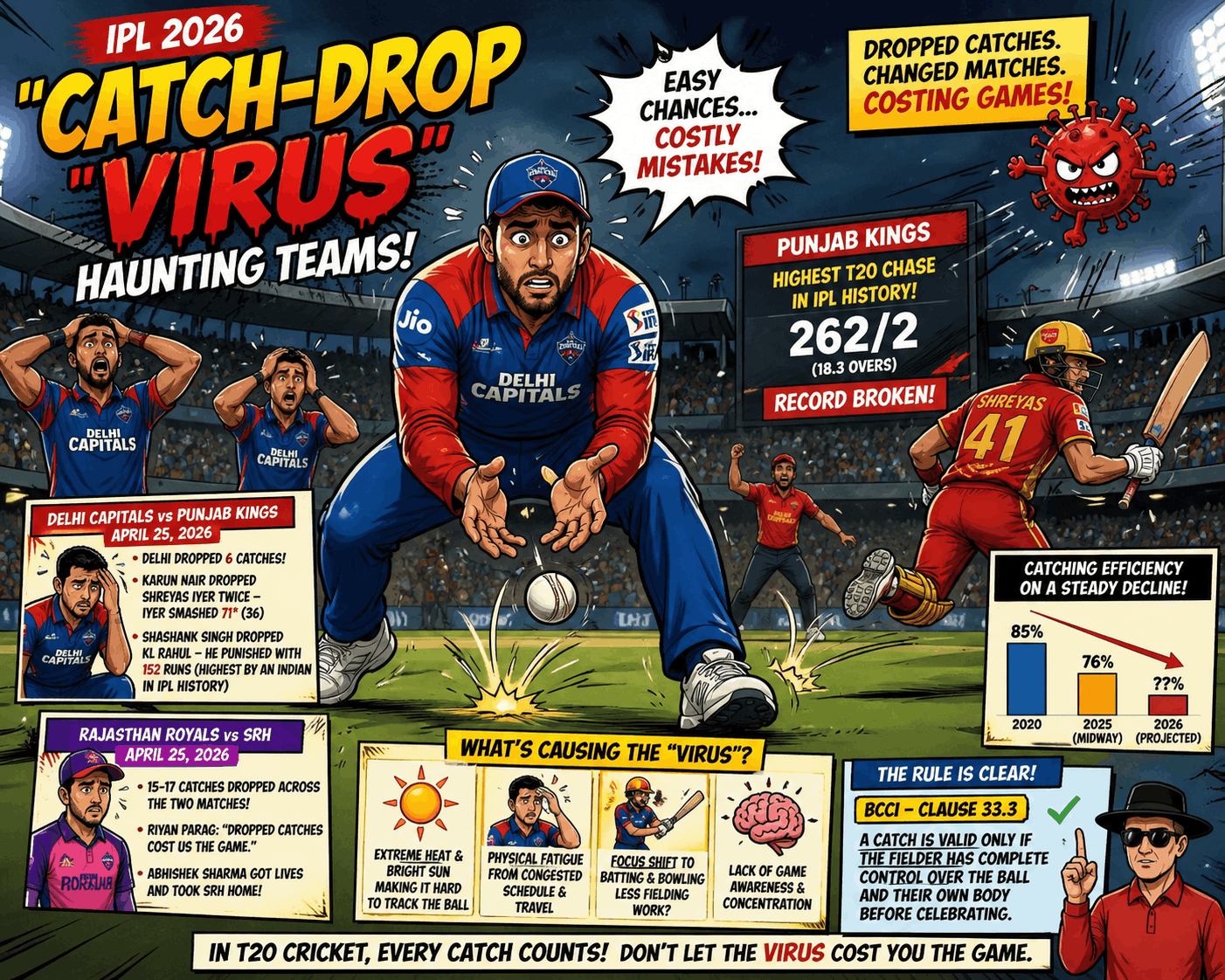
Recent matches have highlighted the severity of the issue. In the clash between Delhi Capitals and Punjab Kings on April 25, Delhi Capitals dropped as many as six catches, significantly altering the course of the game. Multiple reprieves allowed batters to capitalise, resulting in a record-breaking run chase.
In another high-scoring encounter, Rajasthan Royals faced Sunrisers Hyderabad, where an astonishing 15–17 catches were reportedly dropped across matches that day. Rajasthan Royals captain Riyan Parag acknowledged the impact, admitting that missed chances proved decisive as SRH chased down a massive total with ease.
Industry experts and former cricketers point to a broader decline in fielding standards. Catching efficiency, which stood at approximately 85% in 2020, has dropped to nearly 76% midway through 2025 and is projected to dip further in 2026, signalling a concerning trend in modern T20 cricket.
Several contributing factors have been identified. Extreme weather conditions, including intense heatwaves in cities like Delhi, have made tracking high balls challenging. Physical fatigue from a congested match schedule, coupled with extensive travel, has also impacted player concentration. Additionally, former India cricketer Mohammad Kaif highlighted a potential shift in training priorities, with increased focus on batting and bowling possibly reducing emphasis on fielding drills.
Questions around game awareness have also emerged, with players occasionally appearing less alert during critical moments. This has prompted franchises to reassess their preparation strategies, placing renewed emphasis on fielding discipline and mental conditioning.
From a regulatory standpoint, the Board of Control for Cricket in India has reiterated rules under Clause 33.3, clarifying that a catch is only deemed valid when a fielder has complete control over both the ball and their body before celebrating, reinforcing the importance of precision in fielding execution.
As the tournament heads into its decisive phase, teams that can address these lapses and improve their fielding standards are expected to gain a significant competitive edge. In a format defined by fine margins, the ability to convert chances into wickets could ultimately determine the road to the playoffs.

- 0
- By Neel Achary



