


8, Mar 2025
British Lingua Observes International Women’s Day: Advocates Education and Language as Pillars of Women’s Empowerment
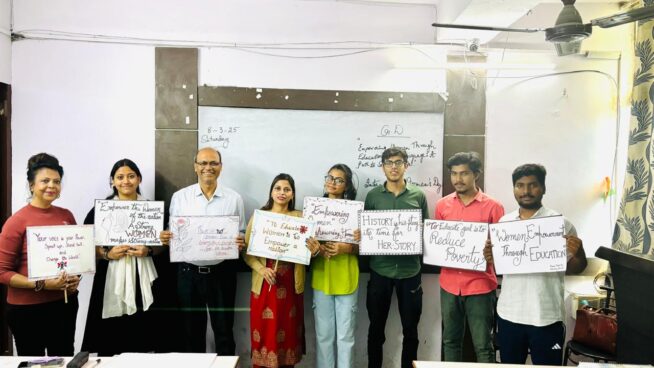
New Delhi, 8th March 2025:On International Women’s Day 2025, British Lingua, a globally recognized institute for English communication skills, organized a seminar titled “Empowering Women Through Education and Language: A Path to Social Justice.” The event, led by Dr. Birbal Jha, a distinguished educationist and social reformer, Founder of British Lingua, served as a platform to highlight the vital role of women in society and the pressing need for gender equality through education and linguistic empowerment.
In his address, Dr. Birbal Jha, emphasized women’s empowerment as a cornerstone of societal progress, stating:
“8th March is not just a day of celebration but a moment of reflection and commitment to gender equality. Women are the backbone of society, and their empowerment defines the progress of a nation. A woman is not only the foundation of a family but also the architect of society. Empowering her means empowering the world.”
Education: The Key to Empowerment
The seminar focused on education as the primary driver of women’s empowerment. Dr. Jha reiterated that education is the catalyst for breaking barriers and enabling women to reach their full potential.
“An educated girl does not just uplift herself but raises entire generations. When you educate a girl, you educate a society. When you empower a woman, you empower a civilization,” emphasized Dr Birbal Jha, an English litterateur of international repute for literary skills and English skills training in India.
Women: The Pillars of Progress
Throughout history, women have played a crucial role in shaping civilizations, economies, and social structures. Their contributions to family, society, and professional fields are unparalleled. Yet, despite their significance, women worldwide continue to face discrimination and inequality.
“Women’s empowerment is not a privilege—it is a fundamental right. A nation’s true progress is measured by the dignity and opportunities it provides to its women. A society that uplifts its women is a society that thrives.”, added Dr Birbal Jha, known as the Youngest Living Legend of Mithila.
Breaking Stereotypes and Creating Opportunities
Dr Birbal Jha held that for centuries, societal norms have restricted women’s ambitions. However, history has proven that when given equal opportunities, women excel in every field—be it politics, business, science, or the arts.
“A girl’s dreams should not be confined by outdated traditions. Give her wings, not shackles,” remarked Dr. Birbal Jha, a globally recognized litterateur and author.
Dr Jha further added, “To create a truly inclusive and progressive society, we must collectively remove barriers hindering women’s growth. This includes addressing workplace discrimination, wage gaps, and the lack of leadership opportunities. Women are not meant to be confined—they are meant to shine.”Respect for Women: A Foundation for Progress
Highlighting the importance of respect for women, Dr. Jha stated, “A society that does not respect its women is destined to struggle. Women must be treated with dignity, and their voices must be heard in every sphere of life. Respect for women is not just a virtue; it is the foundation of a just and progressive world.““Ensuring women’s respect and equal participation in society is not the responsibility of one individual alone. It is a collective duty—one that falls on governments, organizations, and individuals alike,” Dr Birbal averred.
Dr. Jha firmly believes that women have consistently demonstrated intelligence, resilience, and leadership skills in driving meaningful change. Their unique perspectives bring balance and harmony to leadership roles.
“Every woman is a leader—whether at home, in the workplace, or in society. It is time to recognize, respect, and celebrate their contributions. The world needs more women in leadership, decision-making, and positions of influence,” concluded Dr. Birbal Jha, a social advocate and crusader.
The seminar reaffirmed that education and language proficiency are critical tools in bridging the gender gap and fostering a more equitable society. British Lingua remains committed to empowering women through education and language skills, ensuring they can participate fully and equally in all aspects of life.
- 0
- By Sai Krishna

8, Mar 2025
Mission DDLJ: Girnar Foundation Spreads Love and Happiness with Heartwarming Campaign
Gurugram, 8th March 2025 – Girnar Foundation, the CSR arm of CarDekho Group, launched ‘Mission DDLJ’ (Donate & Deliver Love & Joy) to spread kindness and strengthen community bonds in Jaipur and Gurugram. Throughout February, the initiative impacted over 1,000 children and senior citizens through thoughtfully curated programs designed to create meaningful change.
Girnar Foundation organized a series of initiatives aimed at fostering inclusivity and spreading joy within the community. The ‘Gift a Smile’ initiative was launched to fulfill the aspirations of school children by addressing their essential needs. Wish boxes were placed at Bambala Government School (Jaipur) and Dream Girl NGO (Gurugram), allowing students to submit handwritten requests for learning aids and recreational items such as geometry sets and upskilling board games. These wishes were fulfilled with an aim to bring happiness and motivation to the young children.

We also shared a meal together through our ‘Love in a Meal’ program, serving warmth on a plate and fostering a sense of togetherness by providing freshly prepared, nutritious meals to hundreds of children and senior citizens at Prem Niketan Ashram (Jaipur) and Dream Girl NGO (Gurugram). This initiative contributed to nourishment and also created moments of warmth and connection, reinforcing the joy of sharing a meal as a community. The campaign concluded with ‘Shaam-e-Khaas’, a heartfelt musical evening and dinner at Prem Niketan Ashram, offering senior citizens a warm and memorable experience filled with music, laughter, and a shared sense of community.
Speaking about the initiative, Mrs. Pihu Jain, Head of Girnar Foundation, commented, “Mission DDLJ is our heartfelt effort to spread love, warmth, and a sense of belonging. Our goal was to bring moments of joy to those who need it most, and February, the month of love, was the perfect time to do so. At Girnar Foundation, we strive to build a more inclusive society by driving meaningful change at the grassroots level. Small acts—whether fulfilling a child’s wish or sharing a warm meal—can create impact, strengthening the bonds within our communities.”
The Foundation aims uplifting communities—especially children, women, and marginalized groups—by equipping them with the resources to build a brighter future. Through meaningful initiatives and innovative approaches, Girnar Foundation continues to strive to create lasting social impact.
8, Mar 2025
Centre for Spine and Sports Health Pioneers Preventive Spine Care with ‘Her Healthy Spine’ Program for Women
Hyderabad, March 08, 2025: On the occasion of International Women’s Day, the Center for Spine and Sports Health (CSSH), a unit of nSure Healthy Spine, launched ‘Her Healthy Spine’ an exclusive one-of-its-kind preventive health program focusing on women’s spinal health for the first time in India, which is enabled by state-of-the-art Musculoskeletal (MSK) health technology platform at Kotak Pullela Gopichand Badminton Academy. As part of the launch, the Spine and Sports Health Center hosted an exclusive panel discussion on women’s spinal health.
Among the 3,000+ clients assessed for spine health at the CSSH, we found that nearly 75% of women are suffering from spine-related problems. It underscored the urgent and tailored care for women’s spine health. To address this at the earliest, CSSH has launched ‘Her Healthy Spine’, a long-term initiative to raise awareness and empower women to take charge of their spinal health. As part of the event, CSSH hosted an exclusive panel discussion at the Kotak Pullela Gopichand Badminton Academy on 05th March and shed light on the critical issue of spinal health among women. The event, held in celebration of International Women’s Day, brought together experts from various fields to discuss the often-overlooked challenges women face regarding spinal well-being.

Moderated by Dr. Sushmitha Sundar, Head of Life Sciences Research and Innovation Circle of Hyderabad (RICH), the panel featured a distinguished lineup of speakers, including:
– Kiranmai Pendyala, Head of Human Resources and Site Administration at Intercontinental Exchange (ICE) India;
– Sangeetha Rani Gummi, Managing Director of iCatch Communications India Ltd;
– Dr. Vedha Sampath, Early Stage Investor in Healthcare Tech and Life Sciences;
– Mrudula Korada, Asian Track & Field Medalist and Income Tax Officer; and
– Swapna Arelli, Technology Lead at Infosys Ltd Hyderabad
Opening the discussion, Kiranmai Pendyala highlighted how women’s spinal health often takes a backseat due to multiple factors, ranging from lack of awareness to lifestyle choices. “Women, by nature, tend to prioritize family and work over their own well-being. Many are unaware of the gradual damage they inflict on their spines due to prolonged sitting, incorrect posture, and hormonal changes during pregnancy and post-maternity. If we do not take preventive action today, the problem will escalate tomorrow,” she explained. She stressed the importance of awareness campaigns and educational initiatives to help women recognize early warning signs and take proactive measures.
Adding to the discussion, Sangeetha Rani Gummi reflected on the grueling work schedules in the media industry, emphasizing how irregular hours and constant stress contribute to spine-related ailments. “Many of us dismiss back pain as a temporary discomfort, but over time, it turns into a chronic issue. A spine assessment should be as routine as an annual health check-up, yet it remains an afterthought for most working professionals,” she noted. She encouraged women to seek regular spinal evaluations and corrective interventions to prevent long-term complications.
Dr. Vedha Sampath pointed out that while women’s healthcare has seen significant advancements over the past decade, spinal health still doesn’t receive the specialized attention it requires. “Women tend to ignore their bone density and spinal strength until a serious issue arises. What we need is a cultural shift where spinal health is prioritized as early as adolescence. Simple practices like maintaining good posture, engaging in strength-building exercises, and undergoing routine check-ups can go a long way in preventing spinal disorders,” she advised.
Sharing her experience as an athlete, Mrudula Korada emphasized that spinal health is not just a concern for working professionals but also for sportspersons. “During my career, I suffered multiple injuries, and I’ve seen how easily spine-related issues can cut short an athlete’s journey if not addressed in time. Back then, awareness was limited, but today, we have better diagnostic tools and treatment options. The key is for athletes, especially women, to be proactive in managing their spinal health,” she explained.
Bringing in a perspective from the IT sector, Swapna Arelli highlighted how women in technology often struggle with spinal health post-pregnancy. “Many women return to work without paying attention to the strain pregnancy places on their spine. The combination of long working hours, poor ergonomics, and lack of physical activity only worsens the situation,” she remarked. She emphasized the importance of nutrition, exercise, and corporate wellness programs in supporting women’s spinal health, urging companies to take employee well-being more seriously.
The event concluded with an engaging Q&A session, where attendees discussed preventive strategies, ergonomic solutions, and the role of AI-driven healthcare in personalized spinal care. Speaking on behalf of CSSH, a proactive purpose-driven, AI-powered PhyGital platform focused on preventive spinal health, Naresh Kumar Pagidimarry, CEO and Co-founder of CSSH, expressed the organization’s commitment to empowering women with the knowledge and tools needed to take charge of their spinal well-being.
“Our goal at CSSH is to bridge the gap between awareness and action. Women’s spinal health is not just an individual concern—it affects families, workplaces, and communities. By integrating cutting-edge technology with personalized care, we are ensuring that spinal health solutions are accessible to all,” Naresh Kumar Pagidimarry stated.
8, Mar 2025
How 5% Weight Loss Can Transform 30s Fertility in Overweight Women

By-Dr. Zareena A Khalid, Senior Consultant – Obstetrics & Gynaecology- Aster Medcity-Kochi
Times are changing. Women marrying as early as their 20s is no longer the norm. They are steadfast, work, earn, and achieve. Bearing children can stay on the back burner, but it’s crucial to understand the basic reproductive issues they may face. For women planning a pregnancy later in life, knowledge is power.
Preparing for Pregnancy in mid-30’s : What Check-Ups Are Essential?
A 34-year-old woman planning her first pregnancy should begin with a comprehensive health check-up. This includes assessing blood pressure, diabetes risk, and thyroid function. Crucially, reproductive health needs evaluation. This involves checking for regular menstrual cycles. If irregularities exist, hormone tests and ultrasounds can detect conditions like Polycystic Ovary Syndrome (PCOS), ovarian cysts, and fibroids. Given her age, an Anti-Müllerian Hormone (AMH) test is advisable. It provides insight into her ovarian reserve, particularly if she plans to delay pregnancy further.
Common Reproductive Health Challenges Women Face Today
Infertility is a prominent reproductive health concern, defined as the inability to conceive after a year of trying. With couples marrying later, often between 30 and 35, the timeline for seeking fertility advice has shortened to six months. Even couples marrying in their mid-20s frequently delay childbearing, which can be problematic in conditions like endometriosis. Recurrent miscarriages are another growing concern.
Lifestyle’s Impact on Fertility: The PCOS Example
Lifestyle significantly affects reproductive health, notably in PCOS. This condition is often linked to excess weight and inactivity. The modern lifestyle, with its reliance on processed foods, sugary drinks, and sedentary work habits, exacerbates this. The good news? Losing just 5% of body weight can regulate periods and improve fertility in women with PCOS.
Recognizing Early Signs of Reproductive Issues
The most apparent sign of a reproductive problem is the inability to conceive after a year of trying (or six months for older couples). Other indicators include irregular periods, symptoms of PCOS, and endometriosis. Male factor infertility, indicated by low or poor-quality sperm, should also be considered.
Reproductive Health Check-Ups: When Are They Necessary?
Routine reproductive health check-ups aren’t typically needed. However, if conception doesn’t occur within a year (or six months for older couples), a thorough evaluation is essential.
The Role of Diet and Exercise in Reproductive Health
A healthy diet plays a key role in maintaining reproductive health. Focus on reducing carbohydrates and fats, avoiding junk food, and incorporating plenty of fruits, nuts, and vegetables. Exercise is equally important, and it’s safe to continue most forms of exercise even while trying to conceive.
Common Causes of Infertility in Women
Stress, partners living apart due to work, and obesity are major contributors to infertility. PCOS, endometriosis, fibroids, obesity, stress, and declining ovarian reserve due to age also play significant roles. Rarer causes include uterine and ovarian tumors, and fallopian tube blockages. Male factor infertility, along with unhealthy food habits and lifestyles, further complicates the issue.
Natural Ways to Enhance Fertility
Improving fertility naturally involves adopting a healthy lifestyle, including a balanced diet, stress reduction, and regular sexual intercourse. Pre-pregnancy intake of folic acid is also recommended.
Advances in Infertility Treatments: The Rise of IVF and Egg Freezing
Medical advancements, particularly in In Vitro Fertilization (IVF), have transformed infertility treatment. Intracytoplasmic Sperm Injection (ICSI) addresses male factor infertility, even in cases of very low sperm counts. Egg and sperm preservation are now common. Egg freezing allows women to postpone pregnancy due to age or lack of a partner, and it’s also crucial for cancer patients undergoing treatments that may affect fertility. Similarly, sperm preservation is available for men facing cancer treatments. These advancements offer hope and flexibility for individuals and couples navigating fertility challenges.
8, Mar 2025
Women’s Day Quote from Xebia’s India Head, Glory Nelson
By-Glory Nelson, India Head, Xebia
“True inclusion goes beyond hiring women. It is about ensuring they thrive at every career stage. At Xebia, we’re building workplaces where women don’t just join but lead, innovate, and shape the future of technology.
Our commitment is to break the barriers to growth, from opening leadership pathways to supporting returning professionals, especially mothers, with flexibility and opportunity. Through initiatives like ‘Empowered Xebians,’ we elevate women’s voices and equip them to succeed—whether they’re starting out, advancing, or restarting.
This isn’t about checking boxes. It’s about results: empowered women drive stronger teams, bolder ideas, and faster growth. As leaders, we’re here to clear the path, amplify talent, and ensure every woman has the tools to lead with confidence. Xebia isn’t just opening doors. We are empowering women to redefine what’s beyond them.”
8, Mar 2025
Himalaya Wellness Celebrates Women’s Empowerment with the Launch of the 1derwoman Project
Bengaluru, 08 March 2025: This International Women’s Day, Himalaya Wellness, India’s No.1 face wash brand, proudly announced the launch of the Himalaya 1derwoman Project, an initiative dedicated to empowering young girls to rise above challenges and aspire to be #1 in their chosen fields.
To bring this vision to life, Himalaya partnered with the 2024 WPL champions, Royal Challengers Bengaluru (RCB) Women’s Team, providing aspiring young cricketers with an exclusive training and mentorship session led by their sporting idols. The Himalaya 1derwoman Project aims to bridge the gap between ambition and opportunity by connecting young girls and real-life female role models, particularly in sports and other fields. Through mentorship, access to resources, and tangible long-term support, the initiative is set to inspire and nurture the next generation of women leaders and athletes.

As part of the launch event, 15 young female cricketers from a Bengaluru-based cricket academy were invited to a special training session with RCB’s top players, including Smriti Mandhana, Ellyse Perry, Shreyanka Patil, and other team members. More than just a coaching experience, the session served as a transformative mentorship platform, where these young athletes had the privileged opportunity to interact with successful female role models in sports—a field where women’s visibility has historically been limited. Beyond skill building, the session was about building confidence, instilling self-belief, and showing these aspiring athletes that they belong on the field just as much as anyone else. Recognizing that financial limitations often restrict access to sports, Himalaya Wellness has also sponsored cricket kits for these young players, ensuring they have the tools to pursue their passion.
Commenting on this initiative, Rajesh Krishnamurthy, Business Director, Himalaya Wellness, said, “We believe every girl has the potential to be a trailblazer, a leader, a wonder woman in her own right. For over 25 years, Himalaya has been the most trusted skincare brand for young women in India, standing by them through every challenge—big or small. This initiative is particularly close to my heart because I’ve seen firsthand how the right mentorship and encouragement can transform lives. Through the 1derwoman Project, we want to inspire young girls to dream big, break barriers, and pursue their ambitions with confidence.”
Expanding its reach beyond this event, Himalaya Wellness is set to take the Himalaya 1derwoman Project to over 500,000 girls across schools in India this year, equipping them with the resources and encouragement needed to chase their dreams.
Ragini Hariharan, Marketing Director for Beauty and Personal Care at Himalaya Wellness, added, “Confidence and the right support can transform a young girl’s aspirations into reality. Growing up, I’ve always believed in the power of role models and how they shape our dreams. The Himalaya 1derwoman Project is not just about mentorship—it’s about creating a movement that empowers young girls to see themselves as future leaders and achievers. Through this initiative, we aim to provide them with the guidance, opportunities, and inspiration they need to break barriers and achieve their full potential.”
Abhishek Ashat, General Manager, Face Care at Himalaya Wellness, said, “Skincare is more than just a routine—it’s about confidence, and confidence fuels ambition. With the Himalaya 1derwoman Project, we are going beyond products to actively support young girls in their pursuit of excellence. By combining our expertise in personal care with a commitment to mentorship, we are enabling them to put their best foot forward—whether on the field or in life.”
Pratheep Kumar, Media Manager at Himalaya Wellness, added about Himalaya’s association with RCB on the project “RCB has always been our trusted partner for years. With RCB’s vision of empowering young women in sports, which is in coherence with the Himalaya 1derwoman Project’s vision, we felt this would be the best way to launch the first step of our initiative.”
Rajesh V Menon, Chief Operating Officer, Royal Challengers Bengaluru, said, “We are proud to extend our partnership with Himalaya Wellness for the Himalaya 1derwoman Project. At RCB, we believe in nurturing talent and creating opportunities to pursue their dreams in sport. This initiative aligns perfectly with our commitment to empowering women in sports, and we are thrilled to continue supporting a program that provides mentorship, inspiration, and tangible support to the next generation of female athletes.”
8, Mar 2025
Women’s Day Scholarship by Simandhar Education Aims to Support the Next Generation of Female Leaders
March 8, 2025: In an effort to promote greater gender diversity in the finance and accounting sectors, Simandhar Education has announced the Women’s Day Scholarship Program. Open to women across India, this initiative provides financial assistance for globally recognized certifications such as CPA, CMA, CIA, and EA.
The scholarship program, running from March 6 to March 31, 2025, offers a ₹30,000 reduction on the CPA (2-year plan) and ₹15,000 off on CMA, EA, and CIA programs. Candidates must register and achieve a minimum score of 70% on an online scholarship test to qualify. The test assesses accounting knowledge, finance aptitude, problem-solving skills, and logical reasoning.
Poonam Jain, Co-Founder of Simandhar Education, added: “Having worked in the finance sector, I understand the challenges women face in advancing their careers. Education and certifications play a crucial role in overcoming these barriers. This scholarship program is a step toward providing women with the tools they need to succeed and thrive in leadership roles.”
“Women make up a significant portion of the workforce in finance and accounting, yet they remain underrepresented in leadership roles. Financial barriers often stand in the way of pursuing advanced certifications, limiting career growth,” said Shruti, Vice President of Simandhar Education, echoing the experiences of many women in the industry. “With this scholarship program, we aim to bridge that gap by making high-value professional credentials more accessible. By supporting women in obtaining these certifications, we hope to empower more of them to advance in their careers and step into leadership positions.”
This marks the first time Simandhar Education has introduced a dedicated scholarship initiative for women. The organization aims to support aspiring finance professionals and looks forward to the impact this program will have in fostering a more inclusive industry.
7, Mar 2025
Finance Education for Women Sees Major Shift as 40% of Female Enrollees Are Now Working Professionals, Says Zell Education
A study conducted by Zell Education highlights a significant rise in women pursuing professional finance courses, with Chartered Financial Analyst (CFA) and Certified Management Accountant (CMA) emerging as the most preferred programs. The study reveals a 5% year-on-year increase in women’s enrollment, signaling a growing shift toward gender inclusivity in finance education.
According to the findings, women now account for 35% of total finance course enrollments, compared to 65% male participation. While enrollment has remained consistent throughout the year, the report underscores a rising interest in structured finance education, particularly in Investment Banking. Additionally, 40% of female enrollees are working professionals, while 60% are fresh graduates, indicating that both new and experienced professionals see value in upskilling within finance.
The study also highlights a geographical shift in women’s participation, with most enrollments still coming from metro cities. However, there has been a noticeable rise in sign-ups from Tier 2 and Tier 3 cities, pointing toward increasing accessibility and awareness of finance careers in smaller towns.
Speaking on the report, Pratham Barot, CEO & Co- Founder, Zell Education said, “The steady rise in women’s enrollment in CFA and CMA programs is an encouraging trend. It not only reflects their growing interest in finance careers but also signals a shift toward a more diverse financial workforce. We anticipate even greater participation from Tier 2 and Tier 3 cities in the coming years, particularly in short-term certification programs that allow professionals to enhance their skills while working.”
With finance emerging as a high-potential career path, Zell Education’s study predicts continued growth in female enrollments, particularly in Investment Banking, Financial Planning, and Fintech. As organizations emphasize gender diversity in leadership roles, professional finance education is set to play a crucial role in shaping the future workforce.
7, Mar 2025
Hindustan Zinc Leads the Industry with 25% Women in Workforce, Plans for 30% Participation
Udaipur, 7th March 2025: In a landmark achievement ahead of International Women’s Day 2025, Hindustan Zinc Limited, India’s largest and the world’s second-largest integrated zinc producer, has reached 25% women representation in its workforce, a milestone aptly termed ‘25 on 25’. This milestone reinforces the company’s commitment to gender diversity in the traditionally male-dominated industries of metals, mining and heavy engineering. Furthermore, Hindustan Zinc remains on track to achieve 30% women representation by 2030, aligning with its Sustainable Development Goals (SDGs).
Hindustan Zinc’s gender diversity ratio surpasses industry benchmarks, positioning it ahead of several global and domestic peers in metals & mining. Notably, Hindustan Zinc is home to India’s first women underground mine managers and has established the country’s first and second all-women underground mine rescue teams.

Priya Agarwal Hebbar, Chairperson – Hindustan Zinc Limited, said, “For any business to thrive, equal representation is not just important – it’s essential. A truly successful organization values every voice and ensures that diverse perspectives shape its future. At Hindustan Zinc, we take pride in championing gender diversity in the traditional metals and mining sector. Today, over 700 talented women are driving our transition toward a low-carbon economy, breaking barriers and redefining industry norms. Our vision is ambitious yet clear – to significantly accelerate this momentum and achieve 30% diversity within the next five years. The growing number of women choosing careers in mining and metallurgy is a testament to this shift – one fueled by our industry-first, people-centric policies and a wealth of opportunities designed for holistic professional growth. Diversity, equity, and inclusion are embedded in Hindustan Zinc’s DNA. We are committed to building a workplace where every individual—regardless of gender – has a voice, access to opportunities, and the support to excel.”
As the metals, mining & manufacturing sector emerges as a key driver of India’s economic transformation, Hindustan Zinc is committed to fostering an inclusive workplace that empowers women at every stage of their careers. What is truly unique is the company’s ability to provide rich job content to its employees across high-growth businesses. Employees enjoy the best of both worlds – the stability of a global conglomerate with the agility of a start-up. Talent mobility across functions allows them to explore diverse roles and seamlessly transition across different domains. Progressive workplace policies, such as spouse hiring policy, physical & mental health leaves, year-long sabbaticals for childcare, flexible-working hours, monthly no-questions-asked leaves for women further enhance opportunities, ensuring that gender is never a barrier to career advancement. The company is also integrating women in backshifts (up to 10 PM) across mines and plants beyond the general shift timings, ensuring women have access to equal career growth opportunities available to their male counterparts.
Leveraging cutting-edge technologies such as Industry 4.0, digitalization, robotics, and automation, Hindustan Zinc is revolutionizing operations, eliminating manual intervention, and dismantling outdated perceptions of the sector being physically demanding. The company’s digital mines, featuring tele-remote underground mining (where underground mining equipment is operated remotely from the surface) and real-time analytics, provide exciting and inclusive career pathways for all. This has resulted in more than 34% women joining Hindustan Zinc through campus recruitment drives in FY24, making Hindustan Zinc the top choice for women in metals.
Dr. Kavita Bhardwaj, Head of Exploration – Hindustan Zinc Limited, shared her experience, stating, “At Hindustan Zinc, talent—not gender—defines success. The company’s inclusive culture, strong mentorship, and leadership opportunities have empowered me to take on diverse and challenging roles, giving me the confidence to push boundaries and excel in ways I never imagined.”
Sakshi Gupta, member of India’s First All-Women Underground Mine Rescue Team & Assurance Manager, added, “Women are no longer just participants in change we are leading it. Mining, once considered a male-dominated field, is now witnessing a revolution. At Hindustan Zinc we are not just given opportunities; we are encouraged to innovate, break barriers, and redefine the future of metals. The culture of support and empowerment has enabled us to challenge conventions and set new industry benchmarks.”
Hindustan Zinc’s commitment to inclusion extends beyond employment. The company’s world-class townships, located near its plants, provide modern amenities such as schools, hospitals, daycare centres, creches, places of worship, and sports and recreational facilities, fostering a vibrant social life for employees and their families.
Beyond direct employment, Hindustan Zinc’s social impact initiatives are driving economic independence for women in rural communities. Through Zinc Kaushal Kendra, over 500 women have been trained in science-based vocational courses like nursing and electrical work, enhancing their employability and financial independence. Additionally, the company’s Sakhi initiative nurtures women-led micro-enterprises, empowering women entrepreneurs in rural Rajasthan by facilitating e-commerce sales for their products.
Hindustan Zinc, a Vedanta Group company, is the world’s second-largest integrated zinc producer and the third-largest silver producer. The company holds a market share of about 75% of the primary zinc market in India. Hindustan Zinc has been recognized as the world’s most sustainable company in the metals and mining category for the second consecutive year by the S&P Global Corporate Sustainability Assessment 2024, reflecting its operational excellence, innovation, and leading ESG practices. Hindustan Zinc is also a certified 2.41 times Water-Positive company. As a world leader in the metals and mining industry, Hindustan Zinc is pivotal in providing critical metals essential for the global energy transition for a sustainable future.
7, Mar 2025
Celebrate World Kidney Day 2025: NephroPlus Rolls Out Free Health Screenings Across India
NephroPlus, Asia’s Largest Dialysis Care Network has commenced a large-scale kidney screening campaign across 20+ cities in India and select international locations on the occasion of World Kidney Day on March 13th, 2025. The campaign, under the theme, ‘Are Your Kidneys OK? Detect Early and Protect Kidney Health’, aims to raise awareness about preventing Chronic Kidney Disease (CKD). Free screening camps will take place from March 6th to March 8th, 2025, between 9 AM and 6 PM in various cities in India including Delhi, Hyderabad, Bengaluru, Mangalore, Haldwani, Ranchi, Jaipur, Visakhapatnam, Rajahmundry, Dehradun, Nagpur, Vadodara, Varanasi, Gorakhpur, Patna, Lucknow, Darbhanga, Motihari, Sasaram, Jaunpur, Azamgarh, Mahbubnagar, Hisar, Panchkula and in select clinics in Nepal, Philippines and Uzbekistan.
This initiative focuses on early identification and prevention of CKD, particularly for individuals at risk due to factors such as diabetes, hypertension, and unhealthy lifestyle choices like tobacco use. In addition to the screenings, NephroPlus will conduct a comprehensive research study utilizing data gathered during the three-day event. The study will analyze key aspects such as the prevalence of elevated creatinine levels, the effects of diabetes and hypertension, regional health patterns, gender-related kidney insights, and the impact of smoking on kidney health. These findings will contribute to a groundbreaking global white paper on CKD prevention, offering critical insights for healthcare professionals and policymakers worldwide.
“We believe early detection is the key to reducing the rapidly growing future burden of kidney disease,” stated Vikram Vuppala, CEO and Founder of NephroPlus. “Prevention is the only feasible path forward. Through this campaign, we aim to equip individuals with vital health information and foster a proactive approach to kidney care. Our research findings will provide essential data to drive national and international efforts in raising CKD awareness and focusing on its prevention.”
By highlighting the importance of early detection, NephroPlus aims to drive policy changes and encourage regular kidney health evaluations. The research findings from this initiative will contribute to the first global white paper on CKD prevention, equipping healthcare professionals and policymakers with critical data to shape future public health strategies.


