


4, Mar 2025
BENZ Packaging Sets Sights on Global Growth with Rs150 Crore Investment in Technology and Manufacturing
New Delhi, India – March 04, 2025 – BENZ Packaging, a leading manufacturer of industrial and export packaging solutions, is excited to announce a significant investment of 150 crores over the next five years. This investment will focus on expanding its manufacturing operations, enhancing technology, and strengthening its global presence, solidifying the company’s position as a key player in the packaging industry.
BENZ Packaging has started operations on a 90,000 sqft facility in Jhajjar, Haryana. The new facility will be equipped with the latest extrusion and printing machinery, a fully automated corrugation unit, and the manufacturing of wooden boxes and pallets.This investment in both facilities is expected to drive substantial growth and improve service delivery across key markets.
Additionally, the company has already expanded its operations with a state-of-the-art 29,000 sqft facility in Chennai, which is now fully operational and equipped with the latest extrusion and printing machinery, coming up with a fully automated corrugation unit, and the manufacturing of wooden boxes and pallets. This upgrade enhances the plant’s production capacity and efficiency, enabling BENZ Packaging to meet the growing demands of industries in the region and beyond.
The investment also includes broadening horizons in Vietnam and Japan, reinforcing BENZ Packaging’s global expansion strategy and enabling the company to serve international markets more effectively. Each of these new facilities—across India and Vietnam—will feature the same advanced technology, ensuring a uniform standard of high-quality production across all regions.
“We are committed to expanding our global footprint and embracing the latest technology to better serve our customers,” said Chaitanya Chopra Director of BENZ Packaging. “The addition of state-of-the-art facilities in Jhajjar, Chennai, and Vietnam will allow us to deliver superior packaging solutions more efficiently and sustainably, while meeting the growing demands of industries worldwide. This investment will further strengthen our leadership in the industrial and export packaging sectors.”
The company’s investment will also focus on enhancing its commitment to sustainability by integrating eco-friendly practices into its manufacturing processes. BENZ Packaging will continue to prioritize employee training and development to ensure the highest standards of quality and operational excellence across all its facilities. The company is also embracing Artificial Intelligence (AI) to optimize production efficiency, improve quality control, and enhance its customer service, ensuring it remains innovative and competitive in the rapidly evolving packaging market.
- 0
- By Team

4, Mar 2025
Popees Baby Care’s 84th Store Now Open in Ranni: A New Chapter for Baby Care Retail
Kerala, March 04, 2025: Popees Baby Care, leading baby care products retailer, has further strengthened its presence in Kerala with the opening of new store in Thannimoottil Buildings in Ranni, Pazhavangadi. The launch marks the 84th Popees store in the country, following a successful string of recent openings across the state.
Shaju Thomas, Chairman & MD, Popees Group said, “We are delighted to expand our footprint in Kerala, signalling growing baby and childcare demand in the region. We have seen how the discerning consumer has matured and demands a quality product. To cater to this, we are committed to delivering much needed growth by expanding our presence in the ever growing baby care market. In alignment with our brand’s plans, we are on track to solidify our position as one of the largest national brands in the baby and childcare sector.”

The company has ambitious plans to open 42 stores during FY26, which will bring the total store count to 118 locations. The expansion will target key markets in Tamil Nadu, Karnataka, Andhra Pradesh, Telangana, and major metro cities across the country.
In addition to its domestic growth, Popees is also preparing for its international debut in the Middle East, with plans to launch two showrooms in the UAE. The new stores will be located in Sahara Centre Sharjah and Dalma Mall in Abu Dhabi, marking a significant step in the company’s global expansion.
Popees collection of baby clothes caters to every stage of a child’s early years, from infants to the playful six-year-old. The company produces everything from baby oil and soap to baby wipes and fabric wash. The product range includes toys, baby soap, body wash, shampoo, lotions, and towels, among others, although a significant share of the sales still come from clothes.
4, Mar 2025
A Musical Extravaganza: R City Mall Welcomes Muktika Ganguly and Kailash Kher for a Live Concert
Mumbai, March 4th, 2025 – R City Mall set the stage for an unforgettable musical evening on 1st March 2025, headlined by Padma Shri Kailash Kher and his band, Kailasa. Returning to R City for the second time, Kailash Kher delivered a power-packed performance that was even more electrifying, doubling the vibe and fun. His soulful music mesmerized the audience, making it a night to remember at Mumbai’s premier entertainment and lifestyle destination.
With an overwhelming turnout of over 3,000 people immersed in the electrifying aura he created. The event was a resounding success, offering an unforgettable experience for Mumbai’s music lovers.
Kailash Kher & Kailasa Set the Stage on Fire: As the excitement built up, Kailash Kher and his band Kailasa took the stage, delivering an electrifying performance that had the audience singing along to every note. Performing his all-time hits like “Bam Lehri,” “Saiyyan,” and “Teri Deewani,”. Kher’s magnetic energy and powerful voice created a truly immersive experience.
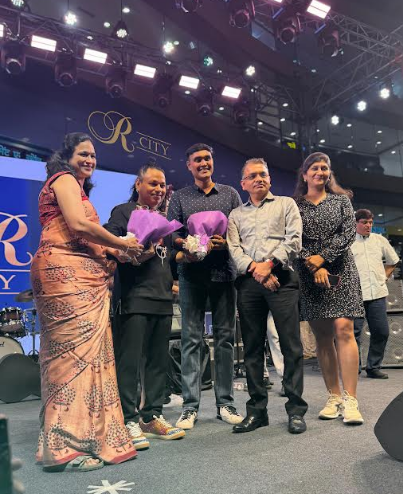
Muktika Ganguly Captivates the Audience: The evening began with a soul-stirring performance by Muktika Ganguly, who beautifully carried forward her legendary family’s musical heritage. Her set, a seamless blend of timeless melodies and contemporary rhythms, left the audience mesmerized. Accompanied by the talented Rishabh Giri (Singer & Guitarist) and Roshan Giri (Musician & Programmer), the performance set the perfect tone for the night.
The event saw an incredible response from both fans and music lovers. Social media was buzzing, reflecting the massive impact of this unforgettable evening.
R City Mall continues to be Mumbai’s premier hub for entertainment, shopping, and cultural experiences. With a diverse mix of over 350 retail brands, a world-class dining scene, and a year-round calendar of events, the mall is committed to bringing the best in music, arts, and lifestyle to its patrons.
Rima Kirtikar, Group CMO, Runwal Realty said that, “We are thrilled to have hosted such an incredible evening of music at R City Mall. Seeing the audience engage with such enthusiasm reaffirms our vision of making R City the ultimate destination for entertainment and cultural experiences in Mumbai.”
4, Mar 2025
Honoring Women’s Wellness: Dr. Smita Naram’s Ayurvedic Solutions for Women’s Day 2025
By-Dr. Smita Naram is the Co-Founder of Ayushakti
Ayushakti one of the leading and most trusted ayurvedic health centres around the world. A well-accomplished Ayurvedic physician, pharmaceutical herbalist, and nutritionist, Dr. Naram started this journey of bringing in Ancient Health Solution, with a vision to transform the health of billions of people on this planet in 1987.
She is an Ayurvedic Practitioner with qualifications of Ayurved Madhyama and Ayurved Uttama of Shravan Masa Dakshina Prakisha Samitee constituted by law in the State of Gujarat & recognized by Central Council of Indian Medicine, New Delhi, India.
She is the fifth generation of vaidya in her family tradition of Ayurvedic Practice and has been practicing the 2500 years old lineage of Siddha Veda Tradition of Ayurveda. Apart from being the world-renowned and Master pulse reader (the ancient traditional method of diagnosis) Dr. Smita Naram is also a detoxification specialist. She also shares health tips, kitchen remedies, herbal remedies, marma, and detox plans for contributing to people lives for long-lasting results in any health problems.
A true female entrepreneur with vast international clinical experience, today she is one of the most insightful practitioners, lecturers, and teachers of Ancient Health Solutions coming from the 2500 years old Siddha Veda lineage of Ayurveda. She along with her team have personally helped clients suffering from numerous chronic health disorders like Arthritis, Joint pain, Sciatica, Osteoporosis, Anxiety, Diabetes, High Blood Pressure, and many more chronic health concerns. Experiencing breakthrough results in chronic health challenges Ayushakti Clinic just grew through referrals organically. She realized that her life purpose is to transform lives of the people on this planet and that is why Ayushakti chain of clinics was born.
She has been honored worldwide with many prestigious awards for her contributions in the domain of health including THE KASHYAP AWARD from Germany. She has spent her life personally training more than 500+ doctors and practitioners across the world to create the Army of Healers. Having built a team of expert vaidyas, Dr. Smita Naram conducts practitioner training courses in ancient pulse reading across the world. Her amazing health tips for vibrant health has been telecasted through national and international television shows and has been helping hundreds of thousands of people worldwide to transform their lives.
She has also authored a book named, “Your health in your hand” and has published dozens of research papers in peer reviewed international journals from USA, Europe and UK just to prove the efficacy of ancient healing on modern parameters.
4, Mar 2025
Celebrate Women’s Strength with Heartfelt Gifts This Women’s Day
As International Women’s Day 2025 fast approaches, we are presented with a chance to honor the essence of womanhood. This day is more than just a celebration; it is a moment to express our deep – seated gratitude and love towards the women who have been a source of inspiration. Here are some tech gifting ideas from Dreame Technology, URBAN, JUST CORSECA, Lyne Originals and U&i, to surprise the special women in your life this Women’s Day.
Dreame Technology
Women, with their remarkable strength, unwavering resilience, and invaluable contributions, deserve to be celebrated in the most special way. And what better way to do so than through thoughtful gifts? Putting an end to your hunt, Dreame Tech has put together a product guide, including grooming products and home essentials, that strikes the perfect balance between practicality and luxury that can truly make women feel cherished and highly valued. Dreame’s smart products aim to save individuals’ time on household chores so they can focus more on pursuing their dream life. Additionally, the brand offers a two-year warranty on all its grooming products, offering peace of mind and making these gifts even more valuable and enduring for women.
● Dreame AirStyle – For the modern, confident women professionals who demand salon-quality styling at home
This versatile hair styling tool with five interchangeable attachments for drying, smoothing, curling, volumizing and reducing flyaways is a perfect Women’s Day gift, offering convenience, professional-quality results at home, and empowering every woman to look and feel her best. Its 100,000 RPM high-speed motor ensures quick drying at low temperatures, while the auto-wrap barrel streamlines curling. The smoothing brush detangles and tames frizz, and the round volumizing brush adds lift from root to tip. The unique Coanda effect gently styles hair while maintaining a safe gap. With three temperature and airflow settings, it protects hair health
● Dreame Pocket High-Speed Dryer – For the woman who is always on the Go
The Dreame Pocket High-Speed Dryer combines power and portability with a 110,000 RPM motor for fast drying and a compact, foldable design. It features negative ion technology to reduce frizz and enhance shine, along with a smart constant temperature control to prevent heat damage. Weighing only 345g, it is perfect for travel or everyday use. With three heat and speed settings, it offers versatile styling options. Its blend of convenience, advanced technology, and sleek design makes it a thoughtful and practical Women’s Day gift, helping the women in your life achieve salon-quality results wherever they go.
● Dreame IPL Hair Removal Device – For Empowered Women Seeking Effortless Confidence and Salon-Quality Care at Home
The Dreame IPL Hair Removal Device offers painless, long-lasting hair reduction with FDA-approved IPL technology. Its blend of convenience, advanced technology, and beauty benefits makes it a thoughtful and empowering Women’s Day gift, helping women feel confident and pampered every day. It features an ice-cooling system for a comfortable experience and is designed for safe and effective use at home, offering salon-quality results without appointments or hassle. With five adjustable energy levels and auto/manual modes, it caters to different skin sensitivities and treatment areas
● Dreame L10s Ultra Robot Vacuum Cleaner – For Busy Women Who Deserve a Spotless Home and More Time for What They Love
The Dreame L10s Ultra is the ultimate smart home gift for Women’s Day, offering convenience and efficiency in home cleaning. This advanced robot vacuum and mop features powerful suction, automatic mop washing, self-emptying, and multi-floor detection for a spotless home with minimal effort. With AI-powered obstacle avoidance and app control, it handles everyday cleaning while freeing up time for more enjoyable activities. Thoughtful and practical, the Dreame L10s Ultra helps simplify household chores, making it a perfect gift to show appreciation and give the gift of more time and relaxation to the special women in your life.
● Dreame H12 Core Water & Dust Vacuum Cleaner – For Hardworking Women Who Deserve Effortless Cleaning and More ‘Me Time’
The Dreame H12 Core is a perfect Women’s Day gift, offering a powerful and convenient cleaning experience. This lightweight wet and dry vacuum features intelligent edge-to-edge cleaning, ensuring spotless floors even in hard-to-reach areas. With strong suction, a self-cleaning roller brush, and an easy-to-use LED display, it simplifies home cleaning tasks. The H12 Core’s ability to handle both wet and dry messes makes it ideal for busy households. Gifting this smart and efficient tool shows gratitude and thoughtfulness, giving the special women in your life more time for themselves and a cleaner, more comfortable home.
URBAN
● URBAN Stella Smartwatch –
The URBAN Stella Smartwatch is a perfect Women’s Day gift, combining elegance and advanced technology. Its diamond-cut bezel, faux diamond-studded design, and premium golden metal strap give it a jewelry-like allure. The 1.2” Super AMOLED display with 1000 nits brightness offers stunning clarity, while features like Female Health Tracking, hydration alerts, sleep monitoring, and stress management support holistic wellness. The multi-functional rotating crown enhances user experience, and BT Calling with superior mic clarity adds convenience. With its blend of style and smart features, the URBAN Stella makes every woman feel valued and celebrated.
● URBAN Vibe Loop –
The URBAN Vibe Loop offers style and performance with Adjustable Sliding Ear-loops for a perfect fit. It features 3D Spatial Surround Sound, High-fidelity HD Sound, a Smart AI Sound Amplifier, and Low Latency Gaming Mode. With Massive 14.3mm Audio Drivers, Environmental Noise Cancellation, Snap-sync Auto Pairing, LED Battery Display, and water and sweat resistance, it delivers up to 50 hours of playtime. Its blend of comfort, tech, and style makes it a thoughtful and practical gifting option for Women’s Day, offering the women in your life an elevated and enjoyable audio experience every day.
JUST CORSECA
● JUST CORSECA Sonic Spark Speaker –
The JUST CORSECA Sonic Spark is a powerful 180W portable speaker that blends performance and style, making it a perfect Women’s Day gift. With Bluetooth V5.0, it offers seamless wireless connectivity and uninterrupted audio playback. The True Wireless Stereo (TWS) feature allows pairing with another speaker for an enhanced stereo experience. Its multicore sound system delivers crystal-clear highs and deep bass. Lightweight and stylish, the Sonic Spark is an ideal companion for music lovers on the go.
● JUST CORSECA Sprint Pro Smartwatch –
The JUST CORSECA Sprint Pro smartwatch is a thoughtful Women’s Day gift, combining style, health, and convenience. With its 1.43” AMOLED display, advanced health monitoring features, including heart rate, SpO2, and sleep tracking, it empowers women to prioritize their well-being. The smartwatch offers Bluetooth calling, smart notifications, and multiple sports modes, keeping them connected and active. Its sleek design, long battery life, and water resistance make it a perfect everyday companion for the modern woman.
Lyne Originals
● Lyne Originals’ JukeBox 21 Speaker –
The JukeBox 21 speaker is a perfect Women’s Day gift for music and entertainment enthusiasts. With a powerful 100W sound system, Bluetooth compatibility, and Digital FM, it offers seamless audio experiences at home or work. The LED display, remote control, and multimedia presentation capabilities add convenience and versatility. Whether for professional use or leisure, its superior sound quality and user-friendly features make it a thoughtful gift that brings joy and enhances everyday experiences.
● Lyne Originals’ Hydro 5 gaming headset
The Lyne Originals Hydro 5 gaming headset is a fantastic Women’s Day gift for gamers and entertainment lovers. With immersive sound quality, a noise-cancelling microphone, and cushioned ear pads, it offers comfort during long sessions. Its adjustable headband and lightweight design ensure a perfect fit. The Hydro 5 enhances gaming, movie, and music experiences with clear audio and deep bass. Gifting this headset shows thoughtfulness, offering both entertainment and comfort to the special women in your life
U&i
● U&i Entry 18 TWS
The U&i Entry 18 TWS is a perfect Women’s Day gift, offering a blend of style, functionality, and convenience. With an impressive 36 hours of talk and music time, it’s ideal for busy women who juggle work and leisure. The smart touch controls provide seamless call and playback management, while Bluetooth 5.4 ensures stable connectivity. The compact charging case with Type-C support adds to its practicality, making it a thoughtful and versatile gift choice.
● U&i Entry 3 Neckband
The U&i Entry 3 TWS is a thoughtful Women’s Day gift, combining practicality and elegance. With 20 hours of music backup, ergonomic design, and crisp sound quality, it offers a delightful audio experience. Bluetooth 5.3 ensures seamless connectivity, and the Type-C charging port provides quick recharging. Available in three vibrant colors, it’s a perfect choice for women who value style and performance in their everyday tech.
3, Mar 2025
Rockwell Automation Discusses the Game-Changing Impact of AI on Indian Manufacturing
National, March 3, 2025: Rockwell Automation, Inc., the world’s largest company dedicated to industrial automation and digital transformation, concluded the 6th edition of India Inc On The Move (IIOTM) event in New Delhi. Industry leaders, technology visionaries, policymakers, and innovators gathered at the event to explore the transformative potential of artificial intelligence (AI) and other advanced technologies. These leaders discussed how new-age technologies can revolutionize smart and sustainable manufacturing, enabling the Indian manufacturing sector to add a trillion dollars to the country’s GDP.
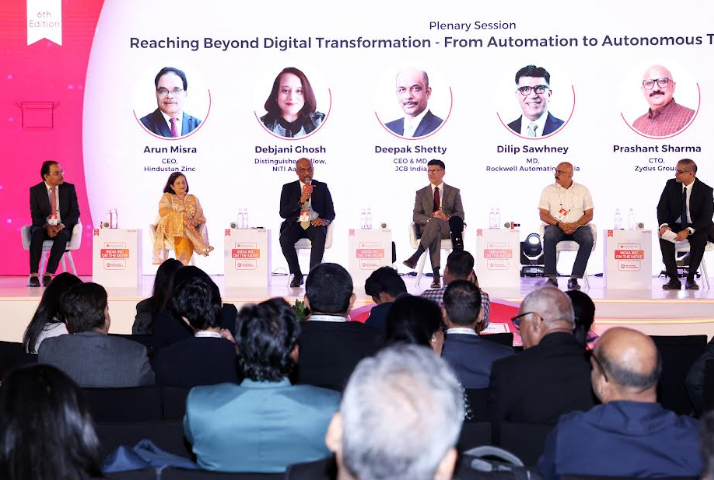
This year, over 1200 people attended IIOTM, which featured 30 sessions with more than 60 eminent speakers, and 30 demo booths on the expo floor. The key discussions focused on smart and sustainable manufacturing spotlighting software-defined manufacturing and the transformation of industrial automation towards autonomy. It highlighted India’s potential to lead emerging sectors such as semiconductors and the circular economy, as well as the role of digitalization in improving the productivity and efficiency of industrial organizations.
In his keynote address to the audience, Dilip Sawhney, Managing Director, Rockwell Automation India, said: “India Inc On The Move 2025 served as a dynamic platform for the exchange of ideas and strategies with a focus on unleashing AI for modern manufacturing.”
“I am confident that India is poised to achieve greater success in the coming years as we embark on the journey towards a smart, secure, and sustainable manufacturing future,” added Dilip.
The event featured inspiring keynote presentations and interactive demonstrations, giving attendees the chance to gain insights from policymakers, industry experts, leaders, and Rockwell Automation’s partner ecosystem and customers. The expo area was lively, showcasing the latest technologies, new products, and engaging interactive demonstrations. Attendees had the opportunity to explore innovations firsthand.
3, Mar 2025
Philippine Airlines Goes Live with Ramco Aviation, Advancing Operational Excellence
Pasay City, PHILIPPINES / Chennai, INDIA – 3 March 2025 – Global aviation software provider Ramco Systems announced the successful implementation of its Aviation Software at Philippine Airlines for the domestic PAL Express (PALEx) fleet operations. Ramco’s on-cloud, next-gen platform has optimized and digitized the operations of the PALEx fleet of A321, A320, and Q400. In alignment with the long-term strategy to optimize operational requirements of both Philippine Airlines (PAL) and PALEx, preparations are underway to roll out the solution for the PAL fleet of A350, A330, B777, and A321.
With modules for Engineering and CAMO, Supply Chain Management, Maintenance Planning, Quality, Component Maintenance, and Hangar Maintenance bundled with Finance, Ramco Aviation Software has enabled PAL to have a scalable and configurable system for growing its business. The solution is a centralized information hub to manage multiple AOCs (Air Operator Certificates) and AMOs (Approved Maintenance Organizations), obtain complete visibility into materials, resources, and tools, and achieve enhanced traceability of aircraft technical records.
In addition, Ramco’s digital enablers, like its Ramco Anywhere mobile apps, have enhanced process efficiencies and provided PAL with powerful data-driven insights.
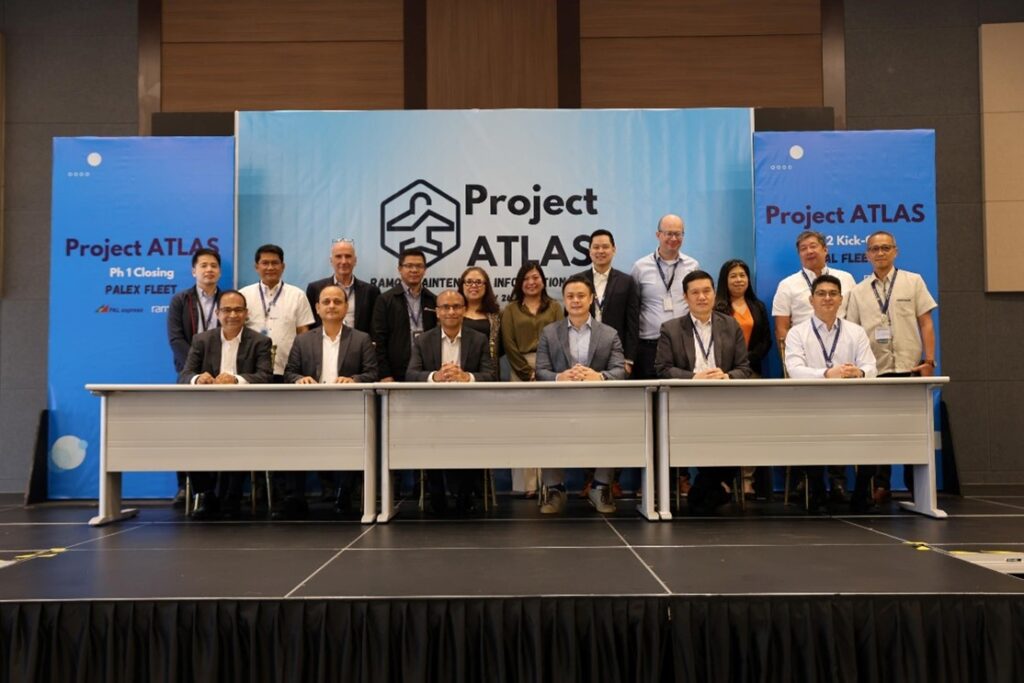
Rabbi Vincent L, Ang, President, PAL Express, said, “The go-live of Ramco Aviation Suite marks a critical step in enhancing our digital infrastructure and operational capabilities. As the airline industry faces increasing demand, Ramco Aviation Suite enables us to improve aircraft availability, automate business processes, reduce costs, and obtain actionable insights. Ramco’s solution addresses our immediate needs and supports our plans to accelerate growth and offer greater value to our customers.”
Sam Jacob, Senior Vice President & SBU Head – Aviation, Aerospace and Defense, Ramco Systems, said, “It has been an honor to partner with PAL in their digital transformation journey. We are proud to provide PAL with a cutting-edge solution that aligns with their growth objectives and delivers enhanced performance across their operations. Our focus on innovation has helped us build a solution that addresses the challenges faced by aviation organizations like PAL and anticipates their future needs. Ramco Aviation Software will continue to support PAL’s success by streamlining their business processes and optimizing resource utilization.”
3, Mar 2025
Schbang Unveils an Evolving Vision, Strengthening Leadership and Exploring New Horizons
Mumbai, 03/03/2025 – Schbang, India’s largest independent Creative, Media, and Technology Transformation agency, announces a pivotal leadership transition that sets the stage for its next phase of growth. Harshil Karia and Sohil Karia have acquired the shares of Akshay Gurnani, marking a significant milestone in the company’s journey. This consolidation of leadership reinforces Schbang’s commitment to delivering excellence and innovation while accelerating its global ambitions.
Since its inception in 2015, Schbang has consistently raised the bar in the marketing and advertising industry, combining creativity, data-driven strategies, and technology-driven solutions to deliver transformative results. Over the years, Schbang has established itself as a trusted partner to industry-leading brands such as Pidilite, Jio, Castrol, L’Oréal Group, Tata Communications and many more. The company’s integrated approach and unwavering focus on client success have made it a standout leader in the creative space.

A Unified Vision for the Future
Harshil Karia, who has helmed Schbang since its inception, will continue to lead the company as its Founder, driving its mission of combining Indian creativity and MarTech excellence for global audiences. Sohil Karia will continue to strengthen Schbang’s offerings as Co-Founder and Chief of Digital Transformation.
“We’re immensely proud of how far Schbang has come and are excited about the opportunities that lie ahead,” said Harshil Karia. “Our focus now is on building a lasting legacy, driving transformative solutions for our clients, and establishing Schbang as a global challenger from India for the World.”
“Our leadership consolidation is not just about continuity—it’s about growth, ambition, and building a company that sets new benchmarks in the industry,” added Sohil Karia. “We remain steadfast in our commitment to delivering excellence in creativity, media, and technology while driving meaningful results for our clients.”
Reflecting on his journey, Akshay Gurnani shared, “It has been an incredible journey to witness Schbang grow from a startup to a global force in marketing and to reflect on what I have been able to achieve professionally over the last 10 years. I am immensely grateful for the meaningful relationships I have built with the team and clients over the years, as well as the business impact we have created. I am excited to embark on a new entrepreneurial journey. I am certain that Schbang will continue to grow and reach new milestones under the leadership of Harshil Karia and Sohil Karia.”
Expanding Leadership and Global Footprints
Schbang’s growth is supported by an expanding and experienced leadership team. New leaders include Umma Saini (Chief Creative Officer), Jitto George (Head of Brand Solutions and Schbang Motion Pictures), Dipshika Ravi (National Creative Director), Aditya Menon (Vice President, Strategic Management), Mukund Raina (EVP & Business Head, Schbang Delhi), Suketu Gohel (Senior Creative Director, Art), Amit Panhale (Vice President, Brand Solutions), and Eric Abraham (Associate Vice President, Brand Solutions). They join Schbang’s established leadership structure, which comprises over 35 experienced professionals across creative, media, and technology functions, ensuring that Schbang remains at the forefront of industry innovation.
On the international front, Schbang’s UK operations are spearheaded by Viren Chhabria (Head of Business Development) and Sarah Coles (Creative Director). The company’s acquisition of Addikt, now addiktSchbang, has further solidified its European presence under the leadership of Barry Schwarz and Koen Van Ovoorde. These developments exemplify Schbang’s vision of taking Indian ingenuity to the global stage while adopting the best international practices.
The Road Ahead
As Schbang embarks on this exciting new chapter, it remains true to its mission: delivering integrated solutions that drive business outcomes and set new standards in the industry. With a solid leadership foundation, a talented team of over 1,200 professionals, and an ambitious roadmap, Schbang is ready to shape the future of advertising and marketing on a global scale.
3, Mar 2025
Telangana on Path to One Trillion US Dollar Economy, States IT Minister D. Sridhar Babu
Hyderabad, March 03, 2025……ICT Committee of The Federation of Telangana Chambers of Commerce and Industry(FTCCI) has organised the GROWTH X 2025 Summit with a theme “Go Digital Grow Business” at HICC in Madhapur, with a special focus on how to leverage Technology for GROWTH in the disruptive era of AI
GROWTH X 2025, the platform in its first edition was organised for knowledge sharing, business, partnerships, lead generation and revenue opportunities
Shri D Sridhar Babu, the Government of Telangana, and Shri Jayesh Ranjan, the Special Chief Secretary of Telangana, Ms. Bhavani Sri, IAS. Deputy Development Commissioner, VSEZ, Ministry of Commerce & Industry, Govt of India was among the dignitaries who attended the inaugural function of GROWTHX 2025.
Addressing 500 plus attendees immediately after the inauguration, Mr. D. Sridhar Babu said the digital innovation is moving at a rapid pace. The industry needs to march along with the changing times. We need to transform our industries. The traditional approaches will not work. At the same time, there are challenges in this journey, especially for MSMEs and SMEs. They have many limitations, short of capital, fear of change, lack of awareness and are busy with their manufacturing challenges, etc.

Until and unless MSMES and SMEs harness new technologies, they will lose out on their competitiveness. They can’t sustain in the long run. The ambition of the state government is to make Telangana a one trillion US $ economy. We will work with the FTCCI and ICT committee for the common good of the industry and the state, the Minister said.
Speaking further, Mr. D. Sridharbabu said, Telangana is progressing well at the same speed of the national growth or even more. Our software exports also prove this point. While national average growth was 8%, Telangana registered 17.98%.
AI(Artificial Intelligence) is taking control across industries and individuals of all walks of life. If we don’t harness and integrate AI into our industries, businesses, we will lose efficiency, growth trajectory and profitability. Our Chief Minister Mr. Revanth Reddy has a very clear vision to keep pace with the changing technology. He feels very strongly that all stakeholders of the state must also keep pace with emerging technologies. This can be achieved by way of creating awareness, capacity building. The Government of Telangana sees AI as first and foremost technology to be embedded in its growth trajectory. It is top of mind of the state leadership. The recently held Global AI summit was a step towards that direction, the Minister said.
The Minister unveiled the Thought Capital Report brought out by EY, the knowledge partner of GrowthX2025. Later Mr. Anirban Mukherjee, Principal Partner, EY gave a sneak peek of the report. He spoke on India at a digital inflection point. He gave a snapshot of key trends driving the digital economy in India. India’s digital revolution is not a trend—it’s a tipping point, he said.
He also felicitated a few organisations and individuals like Mr Jayesh Ranjan, Special Chief Secretary, Dept ITE&C, Govt of Telangana, Dr. Raj P. Narayanam, Founder & Executive Chairman, Zaggle Prepaid Ocean Services Ltd and others for their outstanding contribution to growth and exceptional service to the society.
Dr Suresh Kumar Singhal, President of FTCCI said MSMEs make a significant contribution to the Indian economy, yet they are hesitant to adapt technology. They must embrace technology to stay competitive.
Giving his opening remarks, Mr. Mohan Raidu said GrowthX 25 is a dedicated platform for digital transformation. Technology is no longer an enabler, but it is the foundation for business growth, he said.
Mr. Pankaj Diwan, Chair of GrowthX 2025 Telangana and Hyderabad, are rockstars of Information Technology and Innovation on the global map. He lauded the futuristic initiatives of the government of Telangana. The summit, he said, is the Confluence of Government & Policy Makers, Industry, Investors, Startups and Academia. Topics including Digital Manufacturing, AI, Data and Privacy, Customer and Growth, Skilling and Talent will be discussed during the summit
Some of the speakers include in the summit are Mr Panneerselvam Madanagopal, CEO, MeitY Startup Hub, Ministry of Electronics and IT (MeitY), Govt. of India; Mr Rajesh Dhuddu, Partner, Emerging Tech, PwC; Dr Raj P Narayanam, Founder & Executive Chairman, Zaggle Prepaid Ocean Services Limited; Mr Anirban Mukherjee, Lead Partner. EY India Hyderabad; Mr. Srikanth Srinivasan, Vice President & Head – Membership & Outreach, NASSCOM;
More than 450 participants comprising decision makers/CXOs, FTCCI Members, IT, Policy Makers, Investors and Startups participated in the summit.
An Expo Zone was organised along with the summit. And many Startups and IT companies had stalls. A Business lounge was set up for closed group interactions.
FTCCI partnered with We-Hub, T-Hub, T-Works, DSCI, TASK, SucSEED Venture, AWS, Google and Microsoft to organise this summit.
Mr. Ravi Kumar, Mr. KK Maheshwari, Sr VP and VP, several past president of FTCCI, MC members, ICT Committee co chairs and members such as Bala Peddigari, CV Anirudh Rao, Manish Gupta, Mr. Lalith Sharma, Ms. Sheetal Srikanth graced the inaugural function.
3, Mar 2025
At NXT Conclave 2025, PM Modi Praises India’s Transformation and Its Global Influence
In a momentous event that marks a new chapter in Indian media, Prime Minister Narendra Modi endorsed the launch of iTV Network’s global news channel, NewsX World launch at NXT Conclave 2025. The event, attended by top government officials, media stalwarts, and international dignitaries, highlighted Modi’s vision of a resurgent India that is boldly stepping onto the world stage.
In his stirring address, PM Modi hailed NewsX World as a transformative platform that embodies the remarkable progress India has made under his leadership. “Today, we are not just launching another channel, we instead are showcasing the real India—its innovations, its heritage, and its future,” PM further declared. Narendra Modi also credited decisive governance and forward-thinking reforms for propelling India from a regional player to a global force, emphasizing that the country’s achievements in manufacturing, technology, and infrastructure are now resonating worldwide.
Modi also revisited his government’s ‘Vocal for Local’ initiative, now evolved into a full-fledged ‘Local for Global’ strategy. He pointed out that Indian products—from traditional wellness practices like yoga and Ayurveda to superfoods such as turmeric and coffee—have captured international acclaim. “Our local strengths have become global benchmarks, proving that India’s talent and resilience know no bounds,” he remarked.
Highlighting significant milestones, the Prime Minister recalled the nation’s successful conduct of the world’s largest elections and recent infrastructural triumphs, including high-speed expressways and advancements in electric vehicle production. He lauded the sweeping policy reforms and the repeal of archaic colonial laws that have laid the groundwork for this unprecedented growth. “Our journey from being the world’s back office to becoming a major global manufacturing hub is a testament to our spirit and leadership,” Modi asserted.
NewsX World, with its policy-driven and forward-looking agenda, is poised to present India’s authentic narrative to a global audience. By shifting focus from individual-centric debates to robust discussions on policy and progress, the channel is set to inspire informed dialogue and innovation across the nation and beyond.
As India’s story of transformation continues to unfold, PM Modi’s visionary leadership remains the cornerstone of its ascent on the global stage. The launch of NewsX World is a clarion call to the world, inviting everyone to witness India’s dynamic journey toward becoming a global leader.Narendra Modi extended his best wishes to Kartikeya Sharma and the ITV Network team, urging them to carry forward India’s bold and confident narrative to the world. “India is rising, and its media must rise with it,” he concluded.


