


19, Sep 2024
Anant Fellows Participate in Singapore International Water Week 2024
Ahmedabad, September 2024: Fellows from the Anant Fellowship in Sustainability and Built Environment recently presented innovative proposals aimed at enhancing the resilience of India’s coastal communities at the prestigious Singapore International Water Week 2024. These proposals were developed as part of the “Unbuilding Architecture” module under “The Archipelago Agenda,” which was first introduced at the UN Water Conference in New York City in March 2023. This year, the Singapore University of Technology and Design (SUTD) hosted the “Condensations” programme, where Anant Fellows Mishal Desai and Gopika Rao actively participated, contributing their insights to a student workshop.

Mishal Desai, a hypnotherapist and farmer from Gujarat with expertise in psychology and clinical hypnosis, and Gopika Rao, an economics graduate from Thiruvananthapuram with aspirations in Environment, Social, and Governance (ESG), represented the Fellowship at the workshop.
Initially established by Pratt Institute (NY USA – has an on-going partnership with Anant), Pace University, and Singapore University of Technology and Design, the Archipelago Agenda brings together stakeholders to develop scalable, nature-based solutions for water scarcity and safety in urban archipelagos. India’s Daman/Diu Islands were added to the agenda through Anant National University, the only Indian University partner in the initiative.
Diu, an island region, faces critical challenges such as water scarcity, reliance on mainland resources, and vulnerable water access. As a microcosm of global climate change struggles, Diu offers a unique context for developing resilient living solutions. The Fellows researched Diu’s built and unbuilt environments, analysing its architecture, design, and layout within India’s development framework. These explorations challenge conventional architectural paradigms and seek sustainable design solutions aligned with the island’s cultural values.
Divided into teams focusing on both micro and macro scales, the Fellows created localized interventions and masterplans. Micro-level solutions incorporated traditional knowledge in an integrated design project, while macro-level analyses examined existing and proposed developments to create a comprehensive plan for sustainable development. These proposals, spanning urban and residential spaces, advocated for multi-use areas that promote collaboration, community engagement, and sustainability. The synergy between built and unbuilt environments was central, aiming to address inefficiencies and promote a resilient future.
The Anant Fellowship in Sustainability and Built Environment is Anant National University‘s flagship one-year residential programme, empowering future solutionaries to design and preserve an equitable built environment. The programme has trained over 160 Fellows from 18 countries across 6 continents, offering hands-on learning guided by experts in academia and industry.
- 0
- By Rabindra

19, Sep 2024
HP introduces the new Color LaserJet Pro printers for businesses in India
New Delhi, September 19, 2024 — HP introduced a new range of HP Color LaserJet Pro 3000 series, the latest addition to its office print portfolio. Catering to businesses in India, this new range leverages energy-efficient TerraJet toner technology to deliver sharper colors and faster print speeds. The HP Color LaserJet Pro 3000 series includes two models in India: the single-function HP Color LaserJet Pro Printer 3203dw and the multi-function HP Color LaserJet Pro Printer 3303sdw, which offers printing, scanning, and copying capabilities in Color and Black and White.

The HP Color LaserJet Pro 3000 series delivers exceptional speed and efficiency. With a print speed of up to 25 pages per minute and a rapid first printout time of just 10.9 seconds, these printers ensure fast and reliable results. The default duplex printing feature helps reduce paper usage and costs by automatically printing on both sides of each page. Additionally, the device has a robust duty cycle of 40,000 pages and has a toner yield of up to 1300 black and 1200 color pages.
“As small and medium-sized businesses in India continue to expand, efficient and secure printing has become a critical component of their operations. We recognize the challenges faced by SMB leaders in balancing their growing needs with the right technological solutions. Therefore, we are pleased to introduce the new HP Color LaserJet Pro 3000 series. Featuring innovative TerraJet technology, this series offers exceptional color quality, professional speed, and energy efficiency within a compact design. This solution is designed to help businesses minimize downtime, maintain operational efficiency, and stay competitive in an ever-evolving market”, said Sunish Raghavan, Senior Director, Printing Systems, HP India Market.
The HP Color LaserJet Pro MFP 3303sdw unleashes productivity with high-speed two-sided color printing at 26 ppm (Letter) and 25 ppm (A4), featuring a 50-sheet Automatic Document Feeder and reliable Wi-Fi® for seamless connectivity. The HP Smart app streamlines printing and scanning with time-saving shortcuts. Security is prioritized with HP Wolf Pro Security and the optional HP Security Manager, ensuring your data is protected. Designed for sustainability, this printer uses low-energy HP TerraJet Toner, incorporates auto-on/auto-off technology.
19, Sep 2024
Finnish Parliament Members Visit Lindström’s Mumbai Facility as Part of 75-Year Diplomatic Celebration
Mumbai, September 2024: As Finland and India mark 75 years of diplomatic relations, Lindström India, a 100%subsidiary of the 175-year-old Finnish Lindström Oy, a global textile rental company offering workwear and cleanroom services in India, hosted members of the Finnish Parliament’s Commerce Committee at its Mumbai facility. The visit highlights Finland’s key collaboration themes with India: sustainability, innovation, and digitalisation, with a special focus on Lindström’s circular business model and innovative workwear solutions.
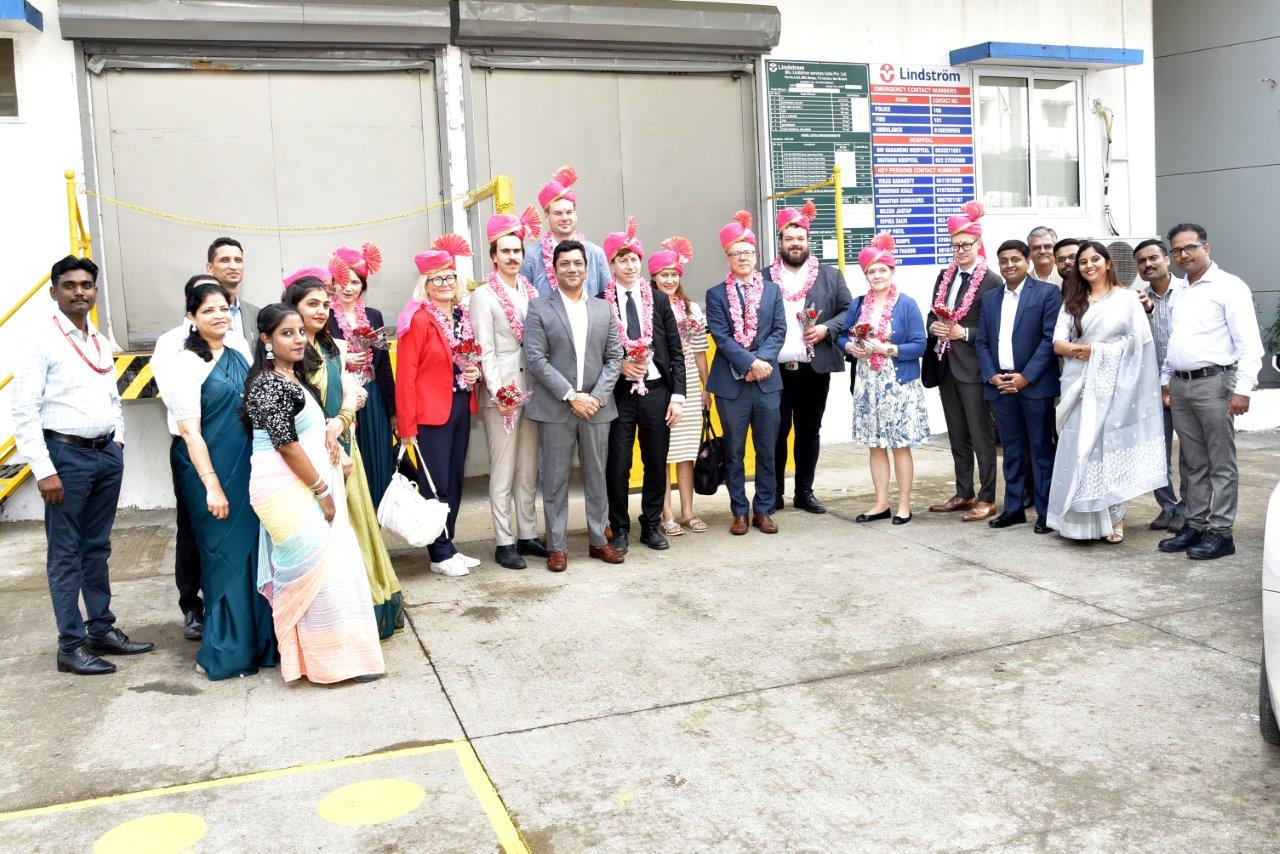
During the visit, Parliament members toured Lindström’s cutting-edge laundry operations and the exclusive Prodem (Production on Demand) facility in Mumbai. This is the only Prodem facility in Asia, serving the Indian market with on-demand textile production aimed at reducing overproduction and eliminating stock obsolescence risks. In 2023 alone, Prodem’s 65 employees manufactured over 237,000 pieces of textiles, with the capability to fulfill orders in just 3-8 days.
Lindström’s operations in India began 17 years ago with the introduction of its circular business model for business textiles, perfectly aligning with India’s green transition goals. The circular model, which focuses on reducing textile overproduction and waste, significantly contributes to sustainability efforts across the country.
Jayant Roy, Managing Director of Lindström India, emphasised, “Our circular model and emission reduction initiatives play a crucial role in supporting India’s green transition. We’re proud to align our operations with the country’s sustainability objectives.”
Lindström is equally committed to digital transformation. Every garment in Lindström’s service is tagged with RFID technology, enabling real-time tracking and management. The RFID technology also provides valuable insights for the design team, allowing them to assess wear-and-tear patterns and determine when specific collections are worn out or need repairs. This data helps continuously improve the design, making workwear more sustainable and long-lasting.
“Digitalised workwear solutions not only enhance operational efficiency but also provide unprecedented value to customers in terms of hygiene management and cost optimisation,” says Manas Kumar, Global Director of Pharma, Strategic Marketing and Business Development APAC, Lindström.
The Prodem facility in Mumbai stands as a key example of Lindström’s dedication to sustainable, customer-driven production. It supports the Indian market with a unique on-demand production model, which reduces the risk of overproduction and textile waste.
“Our Prodem facility demonstrates how innovation can drive sustainability in manufacturing while catering to the diverse needs of the Indian market,” explains Bhushan Atale, Head of Prodem India. Responsible for the entire Prodem India operation, Lindström India.
As Lindström continues to expand its operations in India, it remains dedicated to advancing sustainability, innovation, and digitalisation. These pillars align perfectly with the shared vision of Finland and India as they continue to move forward in their green transition and technological advancements.
“The 75th anniversary of diplomatic relations between Finland and India highlights the success of companies like Lindström, which embody the shared values of both nations. As India progresses on its path of green transition, innovation, and digital transformation, Lindström stands ready to support this journey with sustainable practices and innovative solutions,” concludes Manas Kumar.
19, Sep 2024
Oleev Kitchen by Modi Naturals Redefines Pasta with Multi-grains and No Maida
India, 19th September 2024: Modi Naturals Ltd, India’s trusted name in multisource cooking oils and olive oils is expanding its portfolio with the launch of its new pasta range under the Oleev Kitchen brand. By tapping into the multi-grain pasta category, Oleev Kitchen aims to capture the market with healthier alternatives, with a mission to deliver high-protein and fiber rich pasta, without compromising on the taste. Brand has roped in Bollywood Actress Chitrangda Singh for the launch campaign.

Pasta being a staple now in most households across the country, the new multigrain pasta strengthens the brand’s foothold in the health-conscious and nutritious food products category. Combining the goodness of 4 grains – Chickpea, Jowar, Brown rice and Durum Wheat, Oleev kitchen multigrain pasta becomes the perfect choice for health-conscious customers looking for healthier alternatives to traditional pasta.
Commenting on the launch, Akshay Modi, MD at Modi Naturals Ltd. said, “Oleev Kitchen has always been committed to providing healthy and flavorful food choices.” He further added, “There is a general perception among consumers, that something which is healthier or made using multi-grains would not be tasty, however through our dedicated R&D, we have successfully developed a pasta that combines the benefits of multiple grains whilst delivering the same taste and texture. We are confident that this pasta will resonate with health-conscious consumers who refuse to compromise on taste.”
Oleev has roped in Bollywood actress, Chitrangda Singh for the digital campaign that focuses on healthy eating. The admired actress, known for her commitment to a well-balanced lifestyle, perfectly embodies the spirit of Oleev Kitchen. With her inspiring journey and influence, Chitrangda’s partnership with Oleev Kitchen is poised to elevate the brand’s mission of providing clean & healthy eating. Further endearing their innovative products, like the new Multigrain Pasta, to those seeking a healthier lifestyle.
It is currently available on Amazon and the brand’s D2C website (www.modiretail.com) under 2 SKUs – Multigrain Macaroni 400gms and Multigrain Penne 400gms. The brand also has other variants as part of their “Zero Maida” pasta portfolio such as penne, fusilli, spaghetti and macaroni.
Oleev Kitchen has always been committed to providing healthy and tasty food options, but with its foray into multigrain pasta, it aims to take its pasta portfolio to the next level.
This partnership between Oleev Kitchen Multigrain Pasta and Chitrangda is a step towards reassuring individuals to make healthier cooking choices without compromising on taste.
19, Sep 2024
Journey Into the Heart of Nature: Discover the Magic of Kabini with New Book
In a time where most of us are disconnected from nature, “Kabini on My Mind” provides a refreshing outlook with its rich description of one of India’s most captivating wildlife sanctuaries. Written by Vikram Nanjappa, this new book immerses readers in the heart of the Kabini Forest Reserve, situated in Karnataka, showcasing a deep connection between nature and humans.
“Kabini on My Mind” takes readers on an emotional journey through the untouched landscapes of Kabini, celebrated for its stunning biodiversity and serene beauty. With poetic language and sincere storytelling, Vikram Nanjappa offers a great vision to the wonderful world of this natural paradise, intertwining personal thoughts with detailed observations of the environment.
Every page unfurls the sacred bond between the author and Kabini’s thick lush forest, serving as a meditative reflection of the interwoven complexity of life and being. From the roar of a tiger to the soft rustle of leaves in the wind, and even the swishing sound of the river, “Kabini on My Mind” beautifully illustrates how the rhythms of nature resonate within us.
“It has been quite a privilege to write this book,” says Vikram Nanjappa. “Kabini is not just any place but a sanctuary where one can find serenity and wonder; I want the readers to not only appreciate the stories but also feel motivated to reconnect with the natural world.”
The launch of “Kabini on My Mind” comes at a timely juncture where environmental conservation and awareness has never been more important. This book shares the personal and poetic snippets into the world of Kabini in a way that people learn to value the balance in nature far more, hopefully to be inspired in its protection.
19, Sep 2024
Kotak Mahindra Bank to offer an exciting Cash-back on the all-new iPhone 16 lineup in India
Bengaluru, 19 September 2024: Kotak Mahindra Bank Limited (“KMBL/Kotak”) is offering exciting deals on the new iPhone 16 line up, featuring larger display sizes, Camera Control, innovative pro camera features, and a huge leap in battery life — powered by the fast, efficient A18 Pro chip and built for Apple Intelligence.
Through this special offer Kotak’s credit card customers will enjoy an instant cash-back of Rs 5000 on the purchase of the new iPhone 16 series using Kotak Credit Card and Credit Card EMI. The offer is also valid on Apple Watch Series 10, Apple Watch Ultra 2, AirPods 4 and AirPods 4 with ANC.
The purchases becomes even more affordable with the Credit Card EMI, where the bill amount is split into affordable monthly payments with 6 month No Cost EMI.
19, Sep 2024
LA Empire expands its global property portfolio, adds listing in Cambridge
India, 19 September, 2024: LA Empire, the Boston-based rental and leasing company, founded by entrepreneur, Ankit Lodha has expanded its property portfolio to Cambridge, Massachusetts.
Having presence in Boston, New York, Princeton and Philadelphia, the company now looks to host people in other areas of the United States. This new listing is a fully furnished, 3B1B apartment with all utilities included.

It is an MTR (mid-term rental) in the Kendall Square neighbourhood in Cambridge, a business district with home of a premier research hub and Cambridge Innovation Centre which supports many corporations including Amazon, Google, Microsoft and Facebook. A highly connected area to Boston downtown and airport.
Speaking on the expansion, Ankit Lodha, Founder of LA Empire said, “We are very excited with this new listing in Cambridge. Our initial listings have received great responses and customer feedback, prompting us to push ourselves and grow. We have hosted many notable celebrities and athletes in our vacation rentals who prefer our properties as they are designed with luxury and privacy in mind. All our homes are designed in a way where there is a separate section for them to host and do their operations without disturbing the VIP guests.”
“We want to focus our strengths on introducing more mid-term rental property as they provided flexible leases ranging from 1 to 11 months and create a unique vacation experience for the guests”, he further added.
19, Sep 2024
Ewing’s Sarcoma: What You Need to Know About this Rare Peadiatric Bone Cancer
By-Dr. Kapil Raut, Consultant- Medical Oncology, HCG Cancer Centre, Nagpur
Certain medical conditions begin with abnormal cell growth in bones or soft tissues, affecting both children and adults. These conditions often arise without a clear cause, driven by random genetic mutations. They can manifest in various parts of the body and may lead to symptoms like pain, swelling, or the development of lumps. Early diagnosis and treatment are crucial for managing these conditions and improving outcomes.
Ewing sarcoma is a rare type of cancer that originates in the bones or surrounding soft tissues. Although it predominantly affects children and young adults, it can develop at any age. Ewing sarcoma most commonly develops in the bones of the legs and pelvis, but it can also appear in other bones or soft tissues such as the chest, abdomen, or arms.
The exact cause of Ewing sarcoma remains unclear, but it is linked to random genetic changes in cells, not inherited from parents. These mutations occur spontaneously and lead to the development of cancerous growths.
Symptoms
Ewing sarcoma symptoms typically manifest around the affected bone and may include:
• A lump or swelling in the arm, leg, chest, or pelvis
• Persistent bone pain
• Fractures occurring without significant trauma
• Pain, swelling, or tenderness near the tumor site
• Fever
• Unexplained weight loss/Fatigue
Diagnosis
To diagnose Ewing sarcoma, healthcare providers will assess your child’s medical history and symptoms, conduct a physical examination, and may refer your child to a specialist, such as an orthopedic oncologist. Diagnostic tests may include:
• X-ray: Using radiation to capture detailed images of bones and tissues for accurate diagnosis
• Blood tests: Help assess overall health and detect signs of sarcoma
• CT scan: Produces detailed images of the body through a series of X-rays
• MRI: Uses magnets and radio waves to create detailed body images
• Bone scan: A radioactive tracer highlights areas of bone that may have cancer
• PET scan: Detects cancer cells by highlighting areas where radioactive sugar accumulates
• Bone marrow aspiration/biopsy: Tests whether cancer has spread to the bone marrow
• Tumor biopsy: A sample of the tumor is tested for cancer cells and genetic markers
Treatment Options
Treatment for Ewing sarcoma depends on its stage and other factors and may include:
• Surgery: Removes the tumor and surrounding tissue, often preserving the affected limb. This is also referred to as limb-salvage or a limb-sparing surgery.
• Chemotherapy: Uses powerful drugs to kill cancer cells, often before or after surgery. Chemotherapy is administered in cycles with intervals of rest. It’s common for multiple chemotherapy drugs to be used in combination.
• Radiation therapy: Employs high-energy X-rays to destroy cancer cells, particularly when surgery isn’t sufficient.
• High-dose chemotherapy with stem cell transplant: Used in cases with a high risk of recurrence, this treatment involves replacing damaged bone marrow with healthy stem cells.
Key Points to Remember
• Although a rare scenario, Ewing sarcoma usually presents in the bones or soft tissues
• A biopsy is necessary to confirm a diagnosis
• Treatment typically involves chemotherapy, surgery, or radiation, and may include high-dose chemotherapy with stem cell transplants
• Long-term follow-up care is crucial to monitor for complications from the disease and its treatment
19, Sep 2024
ASORT Unveils “Solasta”: Premium Accessories Tailored for Entrepreneurs in Tier 2 and Tier 3 Cities
New Delhi, India – September 12, 2024: ASORT is proud to introduce “Solasta,” a new product line meticulously designed to address the unique needs of entrepreneurs and professionals in Tier 2 and Tier 3 cities. Solasta blends sophisticated design, durability, and versatility to offer a premium range of accessories that meet both formal and casual requirements.
Solasta’s offerings are characterised by their minimalist and sleek design, exuding a premium look and feel. Crafted from high-quality PU material, these products are built for longevity while maintaining an elegant aesthetic. The range includes versatile accessories such as belts and socks, which are tailored to meet the demands of both professional environments and everyday comfort. These products ensure that users experience the perfect balance of style and functionality.
“Our mission with Solasta is to create accessories that not only look good but also serve the practical needs of our customers,” said Roshan Singh Bisht, Co-Founder & CEO of ASORT.com. “We understand the specific requirements of young adults and professionals in smaller cities, and Solasta is our answer to those needs, offering premium quality at an accessible price point.”
Solasta is primarily targeted at men aged 15 to 55, focusing on those who seek elegance and functionality in their everyday accessories. However, ASORT plans to expand the range to include products for women, ensuring that everyone can benefit from Solasta’s quality-first approach. The product line will start with essential accessories like belts and cardholders for formal settings, as well as socks designed for comfort during long workdays or casual outings.
Key features of Solasta include the use of premium PU material, sleek and minimalist design, and a commitment to comfort and durability. The range is versatile, catering to a variety of needs, and is positioned as a premium yet affordable option in the market.
Solasta is available now through ASORT’s website and app, with products expected to sell out quickly due to high demand. ASORT’s direct sales approach ensures customers have early access to these sought-after products.
19, Sep 2024
ICICI Bank in collaboration with PFRDA launches NPS Vatsalya, a pension account for minors
Mumbai: ICICI Bank today announced the launch of NPS Vatsalya, a pension scheme aimed at securing the financial future of children, at its service centre at BKC in Mumbai, Maharashtra.
The new pension scheme, which will run under the aegis of Pension Fund Regulatory and Development Authority (PFRDA), was proposed in the Union Budget 2024 -2025. It allows contribution by parents/guardians for the minor until they turn adults. On attaining the age of 18, the individual can convert it into a normal NPS account.
ICICI Bank’s announcement of this scheme is a part of the government’s formal launch across the country by Honourable Finance Minister Smt. Nirmala Sitharaman in New Delhi today.
Mr. Sriram H., Head – Deposit Products, ICICI Bank said, “We are delighted to be part of the NPS Vatsalya launch scheme with the Government of India and PFRDA. We have begun this journey by opening our first set of NPS Vatsalya accounts today. We have equipped all ICICI Bank business centres across the country to open the NPS Vatsalya account for customers. This account helps in long-term wealth creation, ensuring that by the time the minor becomes an adult, there is a financial corpus in place for them.”
ICICI Bank inaugurated the commencement of the scheme by registering accounts of a few children under NPS Vatsalya. They also received a symbolic Permanent Retirement Account Number (PRAN) card for their NPS Vatsalya account.
Key attributes of the Vatsalya NPS account:
· Eligibility criteria: Any minor, having PAN card and Aadhar card, who is under the age of 18 is eligible
· Minimum contribution: A minimum of ₹1,000 per year can be contributed with no limit on maximum contribution
· Contributors to the scheme: Parents/guardians can contribute on behalf of their children
· Transition after the age of 18: The minor’s NPS account will transition to a standard NPS account, post the submission of required KYC documents


