


29, Aug 2024
IIT Roorkee and Jaro Education Partner to Offer a Cutting-Edge Programme in Data Science and AI
Roorkee, August 29, 2024: IIT Roorkee, in collaboration with Jaro Education, a pioneering institution in upskilling and a leader in the online higher education space, is delighted to announce the launch of the Post Graduate Certificate Programme in Applied Data Science & AI. This executive programme, offered by the Continuing Education Centre at IIT Roorkee, aims to equip professionals with the essential skills and knowledge required to excel in the fields of data science and artificial intelligence.
The Post Graduate Certificate Programme in Applied Data Science & AI at IIT Roorkee is meticulously designed to provide a comprehensive learning experience, encompassing both theoretical foundations and practical applications in these two programmes. The curriculum is continuously updated to include recent industry developments, such as Generative AI, ensuring participants are well-versed with the latest advancements.
The programme covers fundamental concepts, techniques, and real-world applications of data science and AI. Participants will gain hands-on experience with essential software tools and technologies, including Python, R, SQL, NoSQL, and cloud analytics.
Live interactive sessions are conducted online by esteemed IIT Roorkee faculty. The programme also includes two optional campus immersions, providing participants with an engaging and immersive learning experience.
The curriculum addresses the needs of various industries, including technology, healthcare, finance, retail, manufacturing, and telecommunications. Participants will learn to apply data science and AI in real-world business contexts, enhancing their ability to make data-driven decisions.
Through this comprehensive programme, participants will gain clarity and hands-on experience in data science and AI concepts, master the analytics workflow, including data management, model building, and result reporting, handle and process big data efficiently, understand the applications of data science and AI in various real-world contexts, develop proficiency in in-demand software technologies and tools.
The programme is designed for managers looking to integrate data science and AI into their business strategies and professionals aiming to enhance their career prospects in the rapidly growing fields of data science and AI.
The integration of data science and AI has opened numerous career opportunities across various industries. Professionals can pursue roles such as Data Analyst, Data Scientist, Machine Learning Engineer, AI Specialist, Data Engineer, Business Intelligence Analyst, and AI Research Scientist. The programme prepares participants to excel in these roles and contribute to the technological advancements in their respective fields.
The curriculum is divided into several modules, each focusing on different aspects of data science and AI including Conceptual and Technical Foundations, Data Mining and Machine Learning, Analytics using NLP, Time Series, and Networks, Data-Driven Web Products and Data-Driven Business Decisions.
The programme emphasizes hands-on learning, with participants engaging in real-world applications through datasets, software tools, and case studies. A capstone project allows participants to apply their knowledge to a comprehensive data science project, enhancing their practical skills and problem-solving abilities.
Participants have the opportunity to attend two optional campus immersions at IIT Roorkee. These immersions provide in-depth learning experiences, including interactive sessions, case studies, hackathons, and networking opportunities with faculty and peers.
Applicants must hold a bachelor’s degree with a minimum of 50% aggregate marks and preferably have one year of work experience. The selection process involves submission of personal details, educational qualifications, a resume, and a statement of purpose. The program duration is of 6-8 months.
- 0
- By Rabindra

29, Aug 2024
Public Private Partnerships: A Blueprint for Sustainable Healthcare System in India
Healthcare accessibility and affordability are major concerns in India. To address these issues, the Central and State Governments have implemented various insurance schemes, including the Pradhan Mantri Jan Arogya Yojana, which provides free healthcare access to economically vulnerable Indians. Digitization efforts have also enhanced healthcare delivery and efficiency, with an 85% increase in teleconsultations and increased accessibility through digital platforms supported by the National Digital Health mission. Despite these commendable efforts, more needs to be done, given India’s massive population.
Accessibility is another major issue, with urban residents having access to 66% of hospital beds though they account for only 28% of the population, while the remaining 72% of rural residents have access to just one-third of the beds. Additionally, 67% of doctors practice in urban areas.
To achieve long-term and impactful change, the government and private sector must work together. Public-private partnerships have been successful in other sectors such as tourism, education, infrastructure energy etc. By leveraging the advantages of both sectors and forming a strategic partnership, the urban-rural healthcare divide can be bridged.
Public Private Partnerships have the Potential to Transform Healthcare in India
Over the past decade, the public-private partnership (PPP) model has been successful in India, thanks to various policy initiatives. The establishment of a public-private partnership appraisal committee has simplified the appraisal and approval of projects, enhanced transparency, and introduced competitive bidding processes.
In 2021, India received a committed investment of US$7.7 billion across 25 projects, the highest in the South Asia region. While most countries in the region experienced a sharp decline in private investment, India witnessed a 49% increase in private investment commitments.
However, it is crucial that PPP projects are tailored to the ground situation and aim for practical outcomes as resources are being pledged for such initiatives. Here are the ways PPP projects can help address healthcare accessibility and affordability in India:
Monetary Assistance
One of the ways PPP projects can address healthcare accessibility and affordability in India is by providing financial assistance. Many private sector companies have a Corporate Social Responsibility (CSR) budget, which can be effectively utilized to create an investment engine that can aid in the acquisition of new equipment and the refurbishment of existing infrastructure.
It is crucial to view CSR as an opportunity to build sustainable initiatives through long-term strategic planning and impact-driven goals, instead of focusing on short-term solutions. By utilizing CSR budgets effectively, private sector companies can contribute to the improvement of healthcare accessibility and affordability in India.
Utilizing Autonomous Domain Expertise
Companies and private sector organizations, such as those in the healthcare industry, now have greater access to in-house and independent domain experts with a track record of successfully building and operating organizations. These experts can effectively leverage their skills, technology, and insights to aid in the rehabilitation of healthcare infrastructure, which is crucial in improving access and affordability. Businesses with international experience can bring their knowledge to emerging economies like India to assist in the construction and expansion of existing infrastructure.
Technological Accessibility
Due to the competitive nature of the business ecosystem, private sector players have had to rapidly adopt digital and technological advancements across operational domains, giving them an advantage over public sector enterprises that continue to operate with traditional methods. A public-private partnership (PPP) can assist in disseminating these advancements to the wider public at an affordable rate, which can enhance the efficiency of the healthcare system. One example of this is the increased use of telemedicine.
Enhancing Affordability
If managed efficiently, PPPs can operate on the high-volume, low-margin models, optimizing efforts to create higher impact. In other words, public-private partnerships that work on a mass scale can help make services affordable while maintaining quality standards. This would offer quality healthcare at a lower cost, improving access to a wider range of the population.
Expandability
While private entities offer valuable resources and expertise, they may struggle with scaling reform projects at the national level. Public-private partnerships can help to overcome this limitation by providing the necessary support to expand programs and ensure their benefits are accessible across different regions.
Final Say
India’s digital interventions have put it on the path towards universal health coverage, but there is still room for improvement in extending healthcare services to all citizens. Innovative public-private partnerships can bridge the gap for underserved communities and improve the overall healthcare system in India. The government’s ability to provide scale and subsidies, combined with the private sector’s funding and expertise, can ensure the successful implementation of healthcare initiatives on a large scale and in a timely manner. Therefore, well-planned PPPs are the way forward to address current and future health challenges in India.
29, Aug 2024
F5 Collaborates with Intel to Simplify the Security and Delivery of AI Services
INDIA, AUGUST 29, 2024 – F5 today announced it is bringing robust application security and delivery capabilities to AI deployments powered by Intel. This new joint solution combines industry-leading security and traffic management from F5’s NGINX Plus offering with the cutting-edge optimization and performance of the Intel Distribution of OpenVINO toolkit and Infrastructure Processing Units (IPUs) to deliver superior protection, scalability, and performance for advanced AI inference.
As organizations increasingly adopt AI to power intelligent applications and workflows, efficient and secure AI inference becomes critical. This need is addressed by combining the OpenVINO toolkit—which optimizes and accelerates AI model inference—with F5 NGINX Plus, providing robust traffic management and security.
The OpenVINO toolkit simplifies the optimization of models from almost any framework to enable a write-once, deploy-anywhere approach. This toolkit is essential for developers aiming to create scalable and efficient AI solutions with minimal code changes.
F5 NGINX Plus enhances the security and reliability of these AI models. Acting as a reverse proxy, NGINX Plus manages traffic, ensures high availability, and provides active health checks. It also facilitates SSL termination and mTLS encryption, safeguarding communications between applications and AI models without compromising performance.
To further boost performance, Intel IPUs offload infrastructure services from the host CPU, freeing up resources for AI model servers. The IPUs efficiently manage infrastructure tasks, opening up resources to enhance the scalability and performance of both NGINX Plus and OpenVINO ™ Model Servers (OVMS).
This integrated solution is particularly beneficial for edge applications, such as video analytics and IoT, where low latency and high performance are crucial. By running NGINX Plus on the Intel IPU, the solution helps ensure rapid and reliable responses, making it ideal for content delivery networks and distributed microservices deployments.
“Teaming up with Intel empowers us to push the boundaries of AI deployment. This collaboration highlights our commitment to driving innovation and delivers a secure, reliable, and scalable AI inference solution that will enable enterprises to securely deliver AI services at speed. Our combined solution ensures that organizations can harness the power of AI with superior performance and security,” said Kunal Anand, Chief Technology Officer at F5.
“Leveraging the cutting-edge infrastructure acceleration of Intel IPUs and the OpenVINO toolkit alongside F5 NGINX Plus can help enable enterprises to realize innovative AI inference solutions with improved simplicity, security, and performance at scale for multiple vertical markets and workloads,” said Pere Monclus, Chief Technology Officer, Network and Edge Group of Intel.
“When it comes to AI, we are witnessing an exciting time in India, as more and more businesses are adopting AI to automate their processes, gain faster insights, enhance product development, and achieve competitive advantage,” said Pratik Shah, Managing Director for India & SAARC, F5. “This partnership underscores our dedication to providing enterprises with advanced solutions that not only enhance performance, but also ensures robust security. By integrating Intel’s toolkit and processing units with F5’s NGINX Plus, we are offering a comprehensive, scalable, and secure AI inference solution.”
29, Aug 2024
Parle G’s releases its latest campaign to celebrate Ganesh Chaturthi
Mumbai, 29th August, 2024: There are some things that we take for granted just because that is how it always is. Tradition carries on. Sometimes, the younger generation thinks twice about an accepted norm and infuses that tradition with a perspective that did not exist before. Parle-G’s Ganesh Chaturthi film is a celebration of the mood and joie de vivre that Lord Ganesha brings to every home on the eve of the festival.
The film is created as a timeless discourse about tradition and gender. It refrains from preaching or instructing the audience. Instead, the audience is drawn in as part of the story. Parle-G’s brand becomes part of the storyline, with a nod to the broader message.
The long-format film conceptualized and created by Thought Blurb Communications captures the mood and spirit of the festival. The film has been conceptualized in Marathi, since the festival holds more relevance in the Maharashtrian community and to reach a wider audience, it has been released in 4 more languages, as Ganeshotsav is now a pan-Indian festival.
Released in a total of 5 regional languages, Hindi, Marathi, Kannada, Telugu and Gujarati the film aims to connect with the HSM market and build a stronger connection and recall value.
The story revolves around the protagonist who is charmed by the hubbub of activity in the house in the days preceding the coming home of Lord Ganesha. While the rest of the household is caught up in the buoyant mood of bringing Ganpati home, we see a little girl ask an innocent question. She is not quite satisfied with the response. This is noticed by our protagonist. In the course of the film, the question is resolutely answered, and the family, including the young girl, walks away happy.
The theme is explained succinctly by Mayank Shah, Vice President at Parle Products: “Parle-G is usually a participant in every festival and celebration in virtually every household in the country. The idea is powerful enough to merit its own expression. The storyline steers it to the brand’s purpose and delivers its message. The underlying Brand message “Genius is the one, who believes that in the Joy of Others lies our own” is delivered beautifully with emotions that leave most viewers moist eyed.”
Vinod Kunj, Chief Creative Officer at Thought Blurb Communications adds, “This is the third in a series of long format films we have created for Parle-G that touch upon cultural and social occasions that bring us together. The brief for the strategy and creative team was to shine the light upon an aspect of the event that hasn’t been dwelt on before and deliver the ‘genius’ thinking that is the soul of the brand’s communication.”
Renu Somani, National Creative Director of the agency says, “While every nuance of Ganesh Chaturthi has been covered extensively across every aspect of the communication spectrum, there are some facets that are still not explored. Traditions have always existed, and we all follow them to tell our stories. The way the story unfolds, it carries the brand message of true genius being about using one’s imagination to bring happiness to others.”
The tagline, ‘Genius wohi, jo auron ke khushi mein paye apni khushi’, completes the brand’s message and rounds up the communication. Quite importantly, without expressing any social or moral overtones.
Parle-G’s Ganesh Chaturthi film can be watched across social media and Video distribution platforms like YouTube. This sums up yet another facet of this timeless brand, Parle-G. An entity in the firmament of every community, and connected to the past and the present. But perhaps most importantly, with an eye to the future.
29, Aug 2024
Vegetable Wash 101: How to Clean Different Types of Vegetables and fruits
In our quest for healthier eating habits, incorporating more fruits and vegetables into our diets is a common goal. However, the produce, despite its fresh appearance can pick unwanted dirt, bacteria and pesticides on its journey from the farm to the table. Properly cleaning fruits and vegetables is a crucial step in food preparation that is often overlooked or done incorrectly.
Using a dedicated fruit and vegetable wash provides an extra layer of protection for you and your family. As a mother, influencer, and advocate for healthy living, Komal Verma, shares, “As a mom, I’m always looking for ways to make healthy choices by serving fresh and healthiest produce to my family. Washing our vegetables and fruits with a dedicated wash like ITC Nimwash, which is Infused with the goodness of neem and citrus extracts gives me peace of mind, knowing it delivers a 100% natural action* against pesticides and eliminates 99.9% germs^. It is amazing how something so simple can bring so much peace of mind when it comes to our family’s well-being.”
Here is a comprehensive guide to properly washing diverse types of fruits and vegetables:
Before you begin, always remember to wash your hands thoroughly with soap and warm water and discard any bruised or damaged produce.
1. Leafy Greens: Soak lettuce, spinach, and kale in cold water for a few minutes, then rinse under running water. Dry thoroughly using a salad spinner or clean towels to prevent spoilage.
2. Firm Fruits and Vegetables: To properly wash fruits and vegetables such as apples, cucumbers, bell peppers, etc. apply a small amount of fruits and vegetables wash directly onto the surface. Using clean hands, gently rub the wash over the entire surface, ensuring all areas are thoroughly cleansed. Finally, rinse the fruits and vegetables thoroughly under cool running water to remove any lingering traces of the invisible residues.
3. Delicate Fruits: When washing delicate fruits like grapes, berries, or tomatoes, it is important to be gentle. Start by preparing a diluted solution of the fruit and vegetable wash in a clean container filled with cool water. Gently submerge the fruits in the diluted solution for a few seconds, avoiding any harsh scrubbing. Finally, rinse the fruits thoroughly under cool running water to ensure they are completely clean and ready to enjoy.
4. Broccoli and Cauliflower: Soak these vegetables in salt water for 5-10 minutes to remove any insects. The vegetable cleaner helps dislodge and kill any small pests hiding in the florets. Rinse thoroughly under cool water to remove any remaining debris. Pay special attention to the tight spaces between florets where dirt can accumulate.
General Tips:
•Always wash produce before eating, even if you plan to peel it
•Use cold water; hot water can allow bacteria to enter the flesh
While picking up your produce opt for locally sourced produce whenever possible, as that ensures shorter transport time reducing the risk of contamination and preserves the quality. To further ensure cleanliness of your produce, remember to wash them before peeling to avoid transferring contaminants to edible parts. Use a separate brush to scrub the surface and pat them dry with a clean paper towel to minimize bacterial growth.
By incorporating a dedicated fruit and vegetable wash, like ITC Nimwash, into your food preparation routine, you can enhance the safety and quality of your fresh produce, allowing you to enjoy the full flavour and nutritional benefits with added confidence of being free from illness.
29, Aug 2024
Qlik’s AI Reality Tour Kicks Off, Providing Tools for Businesses to Realize the Full Potential of AI
Philadelphia/Bengaluru, India, August 29, 2024 – Qlik®, a global leader in data integration, analytics, and artificial intelligence (AI), today announced the global launch of its AI Reality Tour, which will span over 27 cities across the Americas, EMEA, and APAC regions. Sponsored globally by AWS, this tour highlights Qlik’s commitment to helping enterprises worldwide integrate AI into their operations with real, scalable solutions. Central to this initiative are the newly available Qlik Talend Cloud and Qlik Answers, designed to empower businesses to seamlessly leverage AI for meaningful data-driven decisions and operational value.
“At Qlik, we’ve invested heavily to help our customers take full advantage of AI’s potential,” said James Fisher, Chief Strategy Officer at Qlik. “We’ve focused on creating solutions that deliver immediate value by addressing the complexities of data integration, analytics and AI adoption. These offerings provide businesses with the tools they need to work with data more effectively and generate tangible AI-powered business outcomes. We’re excited to bring this to life during our AI Reality Tour.”
Qlik Talend Cloud and Qlik Answers are built for organizations seeking to translate the potential of AI into immediate business value. Qlik Talend Cloud provides businesses with AI-augmented data integration capabilities, ensuring data integrity and enabling rapid deployment of data pipelines. This platform supports flexible, cloud-independent deployment, allowing organizations to handle diverse data sources efficiently. Qlik Answers harnesses the power of generative AI to transform unstructured data into precise, explainable insights, helping businesses make better decisions quickly and with confidence. Both solutions are designed to fully leverage existing data and analytics investments.
As the market for AI solutions evolves, enterprises are increasingly looking for ways to integrate AI into their established workflows while staying flexible and avoiding vendor lock-in. “The trend we’re seeing in the industry is towards comprehensive AI solutions that fit seamlessly into existing operations, enabling businesses to maximize the value of their data without being tied to a single technology,” said Giovanni Cervellati, Research Manager, European Intelligent Analytics and Data Strategies, IDC Europe. “Qlik’s approach reflects this shift, offering tools that support both current and future AI needs.”
“As an enterprise focused on gaining real value from AI, Qlik’s solutions address our primary concerns: delivering real time data and ensuring flexibility,” said Michael Benassi, Vice President of Enterprise Analytics at United Federal Credit Union. “Qlik’s new solutions provide the comprehensive, adaptable platforms we need to confidently integrate AI into our operations without the fear of vendor lock-in.”
The AI Reality Tour offers business leaders and data professionals the chance to engage directly with Qlik’s latest innovations. Sponsored globally by AWS, the tour, covering 27 cities globally, includes hands-on demonstrations and expert-led sessions. Attendees will have the opportunity to see how Qlik Talend Cloud and Qlik Answers can accelerate their AI strategies, with a focus on practical applications and real-world business impact. Mike Capone, the CEO of Qlik will be visiting Mumbai, India as a part of the tour in November.
29, Aug 2024
ORRA Fine Jewellery relaunches a bigger store in Mangalore, Karnataka
Mangalore, August 29th, 2024 – ORRA, India’s leading diamond jewellery brand, is thrilled to announce the relaunch of its latest store in Mangalore, Karnataka. Spanning 3200 square feet, designed to deliver an exceptional shopping experience in the store showcasing ORRA’s signature collections, with a special emphasis on the exclusive 73-faceted ORRA Crown Star, India’s brightest patented diamond. The store also has a bridal lounge dedicated to providing a personalized experience for bride-to-be’s.
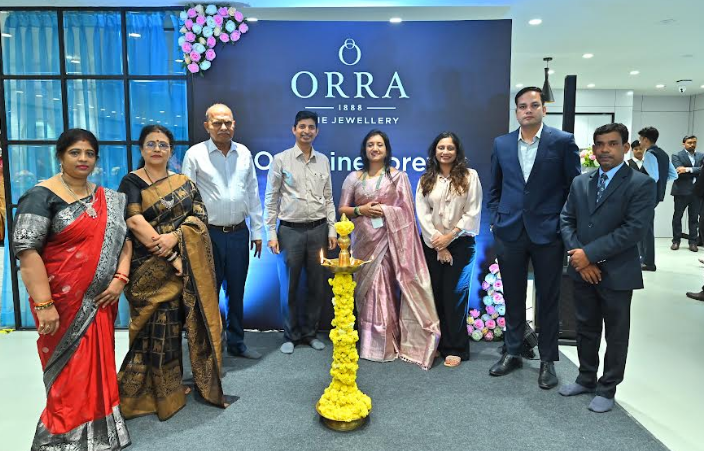
ORRA’s new store offers a diverse selection of exquisite jewellery collections to cater to various customer preferences and meet increasing demand. Among these opulent collections, we have the prestigious ‘ORRA Crown Star’ collection, featuring the 73-faceted diamond, which holds an exclusive patent in India and represents the pinnacle of brilliance and exclusivity. The store also showcases the contemporary ‘Aekta’ Wedding Collection, including the Astra, Desired, and Platinum lines. Each of these collections has unique features and captivating designs that embody ORRA’s commitment to excellence and quality. Additionally, introducing Solis – Always on Shine, the latest addition by ORRA that is designed to keep you effortlessly chic and classy in your everyday routine.
To elevate these cherished moments in a woman’s life, ORRA embarked on a journey to craft a diamond that exceeds all expectations.
“We are excited to relaunch our larger store in Mangalore, Karnataka. This expansion reflects ORRA’s dedication to providing an unparalleled shopping experience for our customers, whether they are looking for the perfect gift or selecting exquisite pieces for their special day,” said Dipu Mehta, Managing Director of ORRA Fine Jewellery. He further added, “We are proud to have completed 20 remarkable years in Mangalore. Thanks to the overwhelming support from our customers, we have now moved to a larger store to serve you even better. We eagerly await the opportunity to welcome you to our new location and continue to be a part of us”.
ORRA‘s commitment to craftsmanship and elegance is beautifully showcased through their collections, ensuring that every piece tells a unique story of love and celebration. ORRA is known for providing 100% certified jewellery with complimentary insurance* and free lifetime maintenance. The brand offers a lifetime exchange, buy-back, a seven-day return policy and our diamonds are conflict-free. Additionally, ORRA provides a 6-month upgrade facility, and all its jewellery is BIS Hallmark Certified.
29, Aug 2024
Asia’s Top Workplaces 2024: Great Place To Work’s Key Insights from 2.7 Million Employees
Mumbai, August 29, 2024: Great Place To Work®, the leading authority in workplace culture is delighted to announce the Best Workplaces™ in Asia for 2024. This year’s list celebrates organizations that have gone above and beyond to cultivate work environments, where all the employees are empowered, engaged, and valued.
Drawing from the insights of over 2.7 million employees across Asia and the Middle East and analyzing workplace practices affecting more than 6.9 million individuals, this year’s list highlights the companies setting the gold standard in employee experience and Workplace Culture. These organizations represent a wide range of industries, but they all share a common goal: creating workplaces where people thrive and, in turn, drive their companies toward greater success. Despite earning recognition on one or more of our Best Workplaces lists in their respective countries, these leading companies have also showcased their dedication to employee well-being, development, and inclusion on a regional scale.
Speaking about the announcement, Balbir Singh, CEO, Great Place To Work® India, said, “At the heart of a thriving workplace lies the ability to connect deeply with individuals beyond roles and titles. These Indian organizations being named among the Best Workplaces in Asia in 2024 aren’t merely an accolade but a powerful testament to their commitment to embracing the collective human spirit. Their success stems from the understanding that true progress is driven by diversity, collaboration, and the courage to challenge conventional norms. These organizations have not only built cultures where inclusion transcends being a lofty ideal but where it has become a lived, daily practice. Support is ingrained in every aspect of their operations, offered unconditionally and embraced wholeheartedly, while inspiration radiates throughout. This recognition reflects their relentless pursuit of excellence—not just in terms of performance metrics but in prioritizing uplifting one another as people first, and thereby fostering a deep sense of belonging and purpose. At Great Place To Work India, we aim to continue recognizing these workplace ecosystems that inspire every voice and empower organizations to innovate boldly. Together, we share a vision for a more inclusive, compassionate, and forward-thinking future that enhances work and life.”
Here are some of the best workplaces recognized for their exceptional culture and employee satisfaction, listed in no particular order:
Best Small and Medium Enterprises from India:
- Crest Digitel Private Limited
- Pearl Academy
- STT Global Data Centres India Private Limited
Best Large Enterprises from India:
- REA India Pte. Ltd. (Housing, PropTiger and Makaan)
- Varthana Finance Private Limited
- Aye Finance Private Limited
Best MNCs from India:
- Hilti
- IHG
- Cisco
The organizations featured on this year’s list have demonstrated an unwavering commitment to creating workplaces where employees feel valued, respected, and motivated to contribute their best. Their innovative practices and dedication to excellence have not only earned them this prestigious recognition but also position them as leaders in driving positive change across the region.
Great Place To Work is proud to celebrate these remarkable organizations and their contributions to creating a better world through outstanding workplace cultures.
29, Aug 2024
Arkade Group- One of Mumbai’s most premium developers with a strong track record
Mumbai, 29th August 2024: Arkade Group, a leading real estate developer with over 38 years of legacy in the MMR region, announces the receipt of the Occupational Certificate (OC) for two of their prestigious residential projects, Arkade Aspire received the OC in 27 months in July 2024 and Arkade Crown received the OC in 25 months in June 2024 respectively. Arkade Aspire is 3.8 lakh sq. ft construction area and Arkade Crown is 4.05 lakh sq. ft construction area.

Arkade Aspire and Arkade Crown stands out as two of the most luxurious projects by Arkade Group in Western suburban Mumbai. Designed with low density in mind, these developments offer expansive living spaces for residents.
Arkade Aspire, located in Goregaon, spans 1.4 acre with two towers featuring 229 units (206 Residential and 23 Commercial) of 2 and 3 BHK residences with vehicular free eco deck. Meanwhile, Arkade Crown in Borivali covers 1.4 acres with three towers featuring 236 units of various configurations including 2 and 3BHK residences with 27000 sqft vehicular free eco-deck and 100% surface parking. Project amenities include Swimming pool, Kids play areas, Jogging tracks, Gym, STP, Organic Waste Converter, Bird Housing Colonies, Miyawaki landscaping, Solar Panels for common area lighting among others.
Mr Amit Jain, Chairman and Managing Director (CMD), Arkade Developers, commented on the achievement, “Adhering to our ‘Family First’ philosophy, Arkade Group remains dedicated to our core values of Trust, Transparency, Commitment, and Happiness. We are thrilled to announce that Arkade Crown and Arkade Aspire have received their Occupational Certificates ahead of schedule, thanks to our customers for their unwavering support and trust as always. We eagerly anticipate welcoming our clients to their new homes and remain committed to delivering on our promise of creating luxurious spaces that Arkade Crown – IndexTapenhance our residents’ lifestyles.”
Arkade Aspire and Arkade Crown offer modern living spaces with top-notch amenities, promising strong resale and rental potential. Both projects offer the REST advantage which includes Rejuvenation through thoughtfully-planned recreation and amenity spaces, Eco-friendliness through embracing nature by creating eco-friendly communities, Sustainability through solar panels, rainwater harvesting, energy-efficient lighting, and Technology through advanced construction techniques, superior quality of materials. The projects also have an IGBC Platinum precertification. The Group is poised for expansion and plans to launch additional residential developments in Mumbai within this financial year.
29, Aug 2024
AI disrupting retail with intuitive search, engagement tools Two-day India D2C Summit decodes disruption in retail on Day 1
Mumbai, August 29, 2024: Artificial Intelligence (AI) is redefining the consumption space by reducing time and cost for retailers and customers through their search engine tools of conversation and engagement aided by rising active internet users, according to a cross-section of industry experts at the India D2C Summit 2024.
Indian jewellery chain Tanishq reduced CAC (customer acquisition cost) by 38% with Google’s AI powered omni-channel solutions, said Bhaskar Ramesh, Director – Omnichannel Businesses, Google India delivering his keynote address on Day 1 of the two-day summit here in Mumbai.
Similarly, Tira Beauty, an omnichannel beauty retail platform, owned by Reliance Retail, revolutionized product discoverability by leveraging Google’s GenAI capabilities that led to 50% increase in organic click, conversational value improvement by 27% and increase in online ROAS (return on ad spend) by 47%, said Bhaskar Ramesh.
Generative AI capabilities will transform the retail industry by driving hyper personalization, improve visual experience as part of customer experience; boost market ROI (return on investment) with profitable growth and reduce creative cost with improved operational efficiency, Ramesh said.
The redefining retail space by the new age shoppers is significantly seen driven more by visuals these days than keywords or filters as visuals and voice search can increase digital commerce revenue by 30%, according to Gartner and 72% prefer product info in native language according to Harvard Business Review.
However, retailers are also exploring artificial intelligence tools beyond the well-known legacy search engines at one-tenth the cost, said Shridhar Marri, CEO & Founder, Flyfish, that offers multimodal AI search for e-commerce entities.
“If there is one investment that a new age e-commerce retailer can make, it is multimodal search that includes image, voice and is multilingual,” Marri said, adding that AI catalogue curator could aid image search, forecast demand and recommend products for the user.
Experts also attributed the entire euphoria about AI tools to the increased internet penetration and tech start-ups.
Speaking at the summit, Sanket Deodhar, Vice President, SAP India said, “India will have over 900 million active internet users by 2025, of which 56% of all new internet users will be rural areas and 65% will be female.”
“The perfect search engine should understand exactly what you mean and give you back exactly what you need,” Ramesh said, quoting Larry Page – an American businessman and computer scientist best known for co-founding Google with Sergey Brin.
The Indian tech space will continue to be disrupted with the country having 1.8 lakh tech start-ups by 2030 compared to 68,000 in 2023, Deodhar said.