11, Jun 2026
AAEON Secures IEC 62443-4-1 Certification, Strengthening Commitment to Industrial Cybersecurity
Certification reinforces confidence in AAEON’s Product Security Development Lifecycle Process in the evolving global cybersecurity landscape.
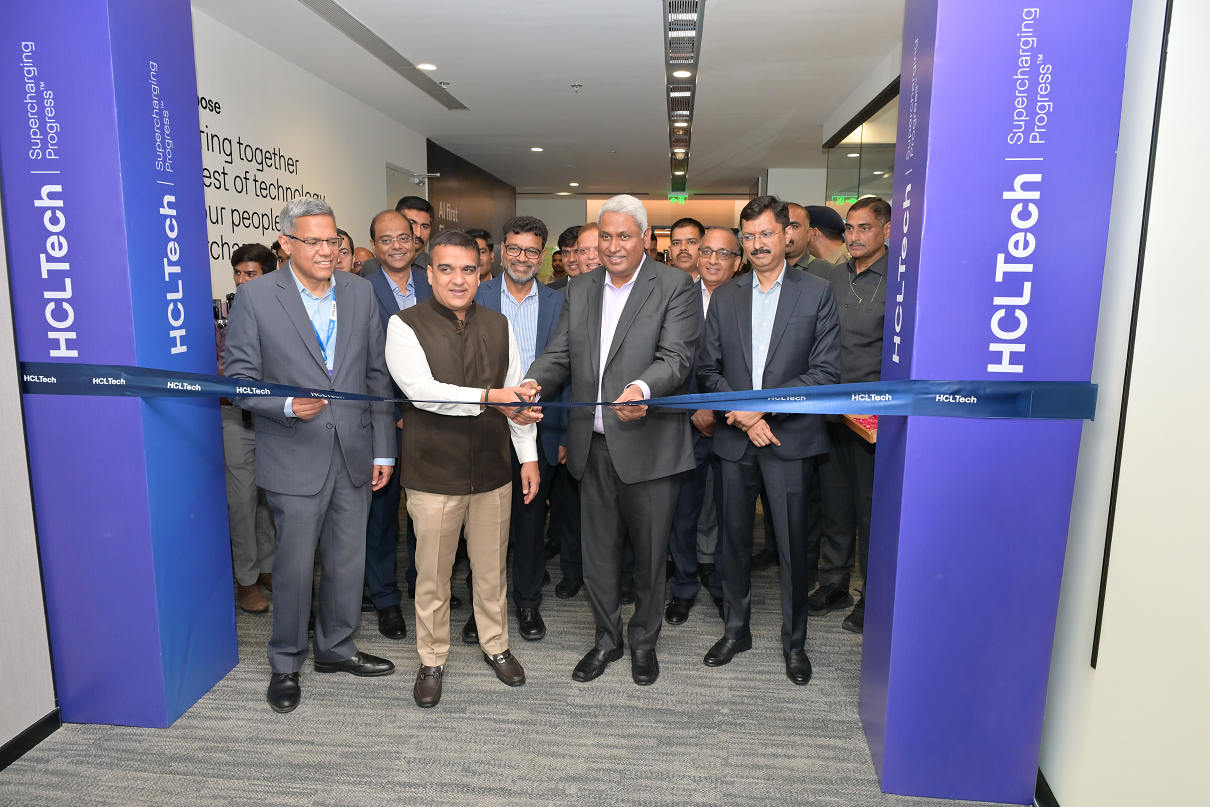
Taipei, Taiwan – June 11, Leading provider of advanced industrial and embedded AI computing platforms AAEON announced that it has successfully obtained IEC 62443-4-1 certification. This certification validates that AAEON’s Product Security Development Lifecycle Process meets globally recognized standards in cybersecurity practices across every stage of product development.
AAEON initiated its certification effort in June 2025, working alongside independent consulting firms to proactively review its existing practices, ahead of the full implementation of the EU Cyber Resilience Act (CRA) requirements in December 2027. In addition to performing both independent and internal reviews, AAEON implemented detailed standardized procedures, such as security management documentation and supporting forms, while also undertaking comprehensive internal security awareness training programs.

The certification, issued by LCIE (Laboratoire Central des Industries Électriques), France, covers eight key domain requirements, all successfully passed with an assessed Maturity Level 2. Of particular note are the key controls evaluated, such as the presence of a formalized secure development lifecycle, threat modeling and mitigation testing, and a commitment to the periodic review of security defect management practices.
With cybersecurity threats evolving and standardized regulatory frameworks being introduced to meet them, IEC 62443-4-1 certification positions AAEON as a trusted partner for organizations seeking edge AI and industrial platforms that are both compliant and able to reduce operational risk across different industries.
“We strive to be always ahead, and to do this we must continuously improve in all areas, including how we handle emerging cybersecurity threats.” said Howard Lin, CEO of AAEON. “To have formal recognition of how seriously we take such matters sends a clear signal to our customers that we not only adhere to stringent security practices, but that they are a cornerstone of our product development lifecycle.”
- 0
- By Neel Achary
11, Jun 2026
KEZAD Group Announces the Development of AED 112 Million SME Hub in Abu Dhabi
The 25,260 square metre hub will serve as a launchpad for SMEs to establish and expand operations in the Emirate

Abu Dhabi, UAE – 11 June 2026: Khalifa Economic Zones Abu Dhabi – KEZAD Group, one of the largest operators of integrated and purpose-built economic zones in the region, has announced the development of the KEZAD SME Hub, a purpose-built business platform for small and medium enterprises (SMEs). The SME Hub marks the Group’s first-of-its-kind development designed to support SMEs in establishing and scaling their operations in the emirate.
Scheduled for handover before the end of this year, and located in KEZAD A (KEZAD Al Ma’mourah), the 25,260 square metre KEZAD SME Hub is designed as a practical bridge between early-stage SME incubators and full-fledged industrial market facilities. The aim of the SME Hub is to ease the transition from startup to scaled production and distribution within an integrated economic zone.
The hub benefits from direct connectivity to Khalifa Port and Etihad Rail networks, and offers businesses access to more than 75 percent of the UAE’s urban areas within a 90-minute drive.
As a pioneering development, the AED 112 million hub combines Micro Industrial Units and office suites in a single model, enabling SMEs to streamline day-to-day activity, logistics and costs. Co-located within a like-minded SME community and complementary industrial activities, businesses can unlock partnership opportunities through shared services and supplier networks.
The hub comprises 175 flexible business-ready Micro Industrial Units starting from 100 square metres, supported by a dedicated business centre and access to KEZAD’s on-site infrastructure and business support services.
SMEs represent 94 percent of all businesses in the UAE, and contribute to 64 percent of the nation’s non-oil GDP. In Abu Dhabi, SMEs constitute around 98 percent of the emirate’s businesses, employ 46 percent of the workforce, and contribute to around 43 percent to its non-oil GDP. With the SME sector expected to grow to one million enterprises by 2030, SME development remains central to the diversification of Abu Dhabi’s economy.
Abdullah Al Hameli, CEO, Economic Cities & Free Zones, AD Ports Group said: “SME sector growth is a top priority for Abu Dhabi. In alignment with the leadership’s vision, we aim to establish KEZAD as a thriving ecosystem for small and medium enterprise development in the region. The KEZAD SME Hub will serve as a launchpad for SMEs, nurturing and developing the industry with vital resources and support required to grow in a competitive market.
Joining the hub will also enable SME investors to leverage the advantages and business support provided by KEZAD’s integrated business ecosystems.”
Mohamed Al Khadar Al Ahmed, CEO, Khalifa Economic Zones Abu Dhabi – KEZAD Group said: “With the SME Hub initiative, we are strengthening KEZAD’s vibrant entrepreneurial ecosystem dedicated to small and medium industries. The Hub will play a crucial role by providing early-stage support for SME startups while also enabling established SMEs to scale their operations at competitive costs within an integrated industrial environment, bridging the gap between SME incubators and the industrial market facilities needed to compete and grow.”
Small and medium enterprises play a vital role in Abu Dhabi’s economy, fuelling industrial advancement and job creation. Backed by the leadership’s vision, KEZAD continues to empower SMEs to set up, thrive, and grow into globally competitive businesses, reinforcing the emirate’s position as a leading destination for industry and commerce
In this connection, KEZAD Group has signed an MoU with Emirates Growth Fund to support the development of UAE-based SMEs, combining KEZAD’s integrated industrial and logistics ecosystem with EGF’s growth capital and strategic support. The collaboration aims to help high-potential SMEs access the resources, infrastructure and guidance needed to scale their operations and compete in wider regional and global markets.
11, Jun 2026
Shri Jayant Chaudhary Flags Off 14 Indian Workers to Mauritius Under India–Mauritius Mobility Partnership
Chandigarh, June 11 : Shri Jayant Chaudhary, Minister of State for Skill Development and Entrepreneurship and Minister of State for Education, Government of India, flagged off a contingent of 14 Indian skilled workers departing for Mauritius under the Government-to-Government Labour Mobility Framework established between the Republic of India and the Republic of Mauritius.

The departure follows the successful placement of first batch of Indian workers who have already travelled to Mauritius and commenced employment under the programme. With another 14 workers departing and 33 additional candidates currently undergoing work permit and documentation processes, the initiative is steadily creating structured overseas employment opportunities for Indian youth under a transparent government-supported framework.
Addressing the departing candidates, Shri Jayant Chaudhary, Minister of State for Skill Development and Entrepreneurship and Minister of State for Education, Government of India, said:
“India’s skilled workforce is increasingly being recognised across the world for its talent, professionalism and adaptability. The growing momentum of the India-Mauritius mobility partnership reflects the confidence that global employers place in Indian talent. These workers carry with them not only professional skills but also the aspirations of a young India that is ready to contribute to the global economy. Through trusted Government-to-Government partnerships, we are creating safe, transparent and aspirational pathways for international employment while ensuring that Indian workers are equipped to succeed and thrive in a rapidly evolving world.”
The India-Mauritius labour mobility partnership is being implemented under the Memorandum of Understanding on Employment of Workers signed between the Republic of India and the Republic of Mauritius in May 2023. The framework aims to facilitate ethical recruitment, worker welfare, transparency and structured mobility pathways aligned with the laws and labour standards of both countries.
The departed candidates represent the pan-India reach of the programme, hailing from seven states across the country. The group includes six candidates from Uttar Pradesh, two each from Bihar and Himachal Pradesh, and one candidate each from Manipur, Rajasthan, Haryana and Punjab. The candidates bring experience across retail operations, logistics, customer service, hospitality and technical trades, reflecting the diversity and quality of India’s skilled workforce.
The programme has been facilitated by NSDC, which was designated in July 2025 to support the Economic Development Board of Mauritius in operationalising this bilateral labour mobility initiative. Since its launch, the programme has witnessed initial demand from Super U Mauritius, one of the country’s leading retail chains, for skilled Indian workers across a range of roles, including Shelf Workers, Cashiers, Cooks, and Electricians.
The selected candidates will be working across a range of functions at Super U Mauritius, including retail operations, inventory management, customer service, food preparation, and electrical maintenance. They will be engaged under three-year employment contracts offering an annual compensation package of approximately ₹4 lakh – ₹4.5 lakh, along with company-supported accommodation, local transportation, overtime, work permits, medical coverage, and other statutory benefits.
These opportunities underscore the programme’s commitment to creating safe, transparent, and rewarding overseas employment pathways for Indian workers, while ensuring their welfare, professional development, and long-term career progression in international labour markets.
The initiative highlights the growing global demand for skilled Indian talent and underscores the importance of industry-aligned skilling in preparing youth for opportunities in international labour markets. Such efforts contribute to strengthening India’s position as a trusted global talent partner while advancing the vision of Viksit Bharat through skills, employability and workforce readiness.
The event was also witnessed by Shri Niranjan Kumar Sudhansu, Additional Secretary, Ministry of Skill Development and Entrepreneurship , along with officials associated with the programme.
11, Jun 2026
SS Floral Couture: Where Floral Design Meets Luxury Storytelling

Based between Mumbai and London, Seema Shah approaches floristry as an art form — blending emotion, design, and meticulous craftsmanship. Inspired by the precision of couture fashion, each arrangement is thoughtfully composed, layered, and styled to reflect both the occasion and the story behind it. The name SS Floral Couture reflects this philosophy: Seema Shah’s personal signature combined with a commitment to refined floral artistry.
Specializing in luxury event styling, bespoke wedding installations, and custom floral arrangements, Seema works with an exquisite selection of premium blooms including roses, orchids, peonies, hydrangeas, exotic flowers, and preserved florals. Known for her signature palette of soft neutrals, blush tones, whites, and subtle gold accents, her work embodies modern luxury, understated elegance, and timeless sophistication.
From intimate celebrations to large-scale weddings and brand collaborations, Seema Shah creates striking floral concepts that transform environments and leave a lasting impression. Every project begins with a thoughtful consultation, ensuring each design is deeply personal and aligned with the client’s vision.
With a growing presence across Mumbai and London, Seema Shah continues to shape SS Floral Couture into a globally recognized name in luxury floral design, redefining florals not simply as décor, but as meaningful design experiences that linger long after the celebration ends.
11, Jun 2026
Learning Spiral Launches AI-Powered Exam Security & Smart Evaluation Solution

India, June 11: Amid mounting anxiety over the leaking of exam papers, inappropriate behaviour on behalf of students during exams, and errors that occur when exams are assessed, Learning Spiral has launched the most sophisticated AI-based solution that provides security to exams and makes them smarter.
Through enhanced monitoring features and smart evaluation systems, evidence-based insights into assessment data, and streamlined processes, this solution is intended to enhance the integrity of examinations in schools, colleges, and other educational institutions. Designed specifically for today’s digital educational environment, it provides schools, colleges, and other educational institutions with tools to reduce error by human intervention; increase fairness and accuracy when determining the results of assessments; and ultimately, enable conducting accurate assessments more frequently.
Manish Mohta, the founder of Learning Spiral, said, “As education develops, we must provide secure, reliable assessments. Technology can support this by decreasing vulnerabilities, increasing transparency, and creating confidence in assessment.”
Learning Spiral will support institutions through this initiative to create a more trusted, future-oriented assessment environment utilizing intelligent technology solutions.
11, Jun 2026
Ethereal Machines Raises $28.5 Million Series B to Advance India’s Deep-Tech Manufacturing Revolution and Sovereign Industrial Capabilities

June 11: Ethereal Machines, India’s leading deep-tech precision manufacturing company, today announced it has raised $28.5 million in a Series B round led by Avataar Ventures, with participation from Peak XV Partners and other investors. The capital will be deployed to advance India’s self-reliance in advanced precision manufacturing, equipping domestic and international aerospace, defence, and healthcare industries with the high-tolerance components they have historically been forced to import.
The round follows a period of rapid growth. Since its $13 million Series A in June 2024, Ethereal Machines has grown its Machining-as-a-Service (MaaS) revenue 3X year-over-year and scaled production capacity 10X across its Smart Factory operations. The company now runs India’s first fully automated smart manufacturing unit in Peenya, Bengaluru, operating 24/7 across three shifts, and has signed an MoU with the Government of Karnataka to establish a 300,000 sq. ft. mega-factory on the outskirts of the city. During this period, it also launched Aura (3-axis) and Nimbus (5-axis),proprietary CNC machines achieving sub-10-micron accuracy — a first for Indian manufacturing — and expanded its client base across aerospace, defence, healthcare, semiconductors, and consumer electronics.
The capital will be deployed across five key priorities:
-
Mega-Factory Build-Out: Build a 300,000+ sq. ft. facility to help create 2000+ new local jobs – set to become one of the largest automated advanced manufacturing facilities outside of China. The factory will be equipped with state-of-the-art multi-axis CNC systems, a software first approach, cleanroom capabilities, etc. designed to serve global aerospace, defence, medical, semi-con and consumer electronics OEMs at scale.
-
Vesper: Ethereal continues to invest in its proprietary factory operating software stack that uses AI to predict manufacturing lead times, track factory uptime and output in real time and optimise production workflows. This shift from experience-driven to data-driven manufacturing allows Ethereal to operate at the speed and reliability that customers demand – without compromising on micron-level accuracy.
-
India’s First Domestic CNC Controller: The funds will also be used to develop India’s first proprietary multi-axis CNC controller: the command centre that governs every axis of machine movement and delivers the micron-level precision.
-
Semi-conductors: Ethereal is actively engaged in India’s emerging semiconductor ecosystem, supporting the domestic sourcing of high-precision components critical to chip manufacturing infrastructure which is a space where the company sees a long-term, strategically significant opportunity.
-
Global Expansion: Building dedicated teams in the United States and Europe to serve global aerospace, defence, and medical device OEMs directly.
Commenting on the fundraise, Kaushik Mudda, Co-Founder & CEO, Ethereal Machines shared, “India has long had the engineering talent to lead in advanced manufacturing; what has been missing is deeply integrated industrial capability at global standards. The world is actively looking for resilient alternatives in global manufacturing, and India has a once-in-a-generation opportunity to emerge as a serious deep-tech manufacturing powerhouse. Ethereal Machines is building that foundation from precision CNC systems to intelligent factory software and large-scale automated manufacturing. This capital allows us to accelerate that journey and position India as a trusted global hub for high-precision manufacturing.”
Anirudh Singh, Partner, Avataar Ventures shared, “Ethereal is solving one of the hardest problems in the entire manufacturing stack: building high-precision components at global standards and at scale, out of India. And it sits in front of one of the largest end markets in the world. It takes superhuman strength to do this with minimal outside support in an unforgiving industry, and there is no better team than Kaushik and Navin to pull it off. Their full-stack approach of building their own CNC machines and pairing them with intelligent factory software, lets them operate at 1/6th the cost of global peers. The roster of top-tier global clients they have already won is validation of that technological edge. As global supply chains look for trusted, resilient alternatives, we believe Ethereal can become a category-defining manufacturing platform from India, built for the world.”
Rajan Anandan, Managing Director, Peak XV and Surge shared, “India is at an inflection point in precision manufacturing. As global companies look for more resilient supply chains and demand grows across aerospace, defence, semiconductors and medical devices, India has the opportunity to become a trusted global hub for precision manufacturing. Kaushik, Navin and the Ethereal Machines team are building exactly the kind of full-stack capability this moment requires, from proprietary CNC machines and factory software – Vesper, to scaled production capability. We have partnered with this team since the seed round and are excited to continue deepening that partnership.”
The raise comes at an inflection point for Indian manufacturing. The sector contributes roughly 17% of the country’s GDP, yet India remains heavily dependent on precision machine tools imported from Germany and Japan. The global “China+1” supply chain diversification trend, combined with surging demand across aerospace and defence, has created an unprecedented window for Indian manufacturers to capture a meaningful share of the $220 billion global precision manufacturing market, which is expected to grow to $400 billion by 2030. With its proprietary machines, Machining-as-a-Service model, and growing roster of global clients, Ethereal Machines is positioned to help establish India as a tier-one destination for precision engineering.
11, Jun 2026
300 years of the office: Artificial Intelligence named most significant indicator of modern technological revolution
New Delhi, June 11: Artificial intelligence has been named as the most influential office innovation by global CEOs in a landmark report, “IWG: 300 Years of Office Innovation”, commissioned by International Workplace Group to mark the 300th anniversary of the modern office. AI was followed by laptops, video calling, Wi-Fi and hybrid working, as technology continues to transform the office.
The findings come at a time when Indian organisations are also moving rapidly towards AI-enabled ways of working. Microsoft’s 2025 Work Trend Indexreleased last year reported that 93% of Indian business leaders intended to use AI agents to extend workforce capabilities within the next 12-18 months, indicating that AI is increasingly being viewed as a fundamental enabler of how work will be organised and delivered.
The report, commissioned by International Workplace Group (IWG) to celebrate 300 years since the world’s first purpose-built office – London’sOld Admiralty Building, which opened in 1726– surveyed business leaders about how the modern workplace has evolved.In India, Kolkata’s Writers’ Building, finished in 1780, is believed to be the first-ever purpose-built office. Meanwhile, Chennai’s Fort St. George, built in the 1640s, began functioning as a secretariat in 1782.
The results show that CEOs view the technological shift workers are going through right now as being as significant as anything the office has gone through in the last 300 years, such as the rise of the typewriter, smartphones or even the internet.
The top five is dominated by modern developments in technology that have transformed working life over the past decade. All are now firmly entrenched across IWG’s global network, the largest in the world.
Top five workplace innovations of the past 300 years for CEOs
-
AI (36%)
-
Laptops and tablets (35%)
-
Video call/conferencing (Teams/Zoom) (31%)
-
Wi-Fi/Bluetooth (29%)
-
Hybrid working (26%)
Hybrid working – selected by a quarter (26%) of CEOs stands out as the defining shift in how, where and why people work amidst developments in hard and software.
This transformation is already embedded in day-to-day working life. Compared to a decade ago, 35% of CEOs say technology has made it easier for employees to work from anywhere, while 30% say meetings are now more likely to be virtual than in person.
The evolution of the office is already visible in India’s commercial workplace market. According to JLL,flexible workspaces and Global Capability Centres (GCCs) accounted for 21.5% and 37.7%, respectively, of full-year leasing, even as India recorded an all-time high of 83.3 million sq. ft. of gross office leasing in 2025. Flexible workspace operators leased an additional 5.56 million sq. ft. in the first quarter of 2026 across India’s top seven cities. These developments suggest that Indian businesses are increasingly seeking workplaces that are flexible, digitally enabled, and suited to evolving work patterns.
Transformational decades: the 2020s and 1990s
The 2020s are viewed as the most transformational decade to date, driven by the rapid adoption of hybrid models, AI, automation and flexible working practices.
This marks a significant leap from the 1990s, the second most impactful era, when the internet, email and early computing technologies first connected workplaces on a global scale.
From fax machines to failed fads
But many of these ‘90s innovations are lost on younger workers. When asked if they could describe some of these innovations, only one in five (20%) could do so for fax machines and 16% for floppy disks – despite it being the instantly recognisable “save document” icon.
Despite this generational knowledge gap, there remains a sense of nostalgia. Over two-thirds (68%) of CEOs say they feel nostalgic for workplace tools and technologies of the past.
Much like typewriters and dial-up internet, not all modern technology is expected to survive. Innovations that CEOs expected to transform how we work but turned out to be short-lived include smart glasses (41%), desk treadmills (39%) and interactive whiteboards (35%).
Today’s workplace boosts productivity
More than a third (35%) of business leaders say it’s AI that has had the greatest impact on productivity in their organisation, ahead of laptops and video calling. Overall, 83% of CEOs say recent changes in how we work have been positive, while 81% believe today’s workplace is better designed for collaboration and productivity.
Mark Dixon, CEO and Founder of IWG, commented: “For the past 300 years, the office has continually evolved alongside each major wave of innovation, but AI represents the most significant shift in workplace life since the modern office first emerged.
It is fundamentally changing how, where and why people work, and is now intrinsically linked with other transformative innovations such as hybrid working and digital connectivity.”
11, Jun 2026
Seattle’s Back to Business Program deepens support to small businesses affected by crime and vandalism
Reimbursement caps to small businesses for repairs and preventative measures increase.
Seattle | June 11- The Seattle Office of Economic Development increased reimbursement caps to small businesses affected by crime and vandalism or are making improvements to preventative measures for their business. Unexpected expenses from vandalism and property damage can create real and burdensome financial challenges from repairs and restoration. The Back to Business Program is designed to help businesses overcome these challenges so they can focus on what they do best – growing their small business.
Today, the Storefront Repair Fund increased the reimbursement limit from $3,000 per incident to $5,000 per incident for up to three incidents in a calendar year for repairs costs. The Storefront Security Fund increased the one-time reimbursement for approved security improvements from $6,000 to $10,000. Building on the success of 2022 – 2024 COVID-19-era program designed to help businesses recover from damages from vandalism, the City of Seattle launched the Back to Business Program in August of 2025, with renewed $3.3M in funding for 2026.
“Since taking office I have met with hundreds of small business owners, and the message to me has been clear. It is difficult to be a small business owner right now, and the City can and should do more to help,” said Mayor Katie B. Wilson. “That’s why I am glad programs and services like Back to Business exist, and am proud to support them. If we can provide even a little relief to small businesses when they are impacted by crime or vandalism or when they want to do more to protect their business, that can go a long way for the business being able to invest back in itself and its community.”
Between August 2025 and the end of May 2026, the Back to Business Program awarded 437 grants to 325 businesses totaling more than $1,030,000 in reimbursements. Because the program application is simple to use, a business may apply to the Storefront Security Fund and the Storefront Repair Fund at the same time, provided they meet eligibility and have the correct documents.
“After administering the program for several months and evaluating applications, our program team found ways to deepen the support we provide to small businesses who are impacted by crime,” said Beto Yarce, director for the Seattle Office of Economic Development. “Increasing the limits provides more meaningful support to more small businesses and will have a greater impact on a business owner’s bottom line. The Back to Business Program is just one tool in our suite of services to make Seattle an easier and more affordable place to do business.”
This increase will result in the Back to Business Program covering one hundred percent of a business’s recovery and preventative cost for about ninety percent of eligible businesses who apply. Business owners who had eligible expenses that exceeded the previous limits will retroactively receive a payment for the difference between their original request and the updated limits, if they originally submitted invoices for an amount higher than the original limits. No action is needed by a business to receive the retroactive payment.
Laura Schneider, owner of West Seattle’s Meeples Games received support from the Back to Business Program in January of 2026. “As a small business owner, every break-in is a massive setback, but the Back to Business program provided us with a real path forward. Thanks to the program, we received immediate help replacing our doors through the Storefront Repair Fund,” said Schneider. “The Storefront Security Fund helped us proactively upgrade our security with astragals and security film. It has restored my peace of mind. Seattle’s investment in independent storefronts works, and Meeples Games is incredibly grateful for this vital support.”
Applications for the Back to Business Program are open until December 31, 2026 or until funds are exhausted. To find out more about the program, eligibility and to apply, visit seattle.gov/back-to-business.
What people are saying
Council President Joy Hollingsworth (District 3)
“OED’s Back to Business Program has been instrumental in helping small businesses recover and get back on their feet. Without this support, many local businesses may not have been able to afford the costly repairs needed to reopen their doors. I love seeing this program expanding so that even more small businesses that call Seattle home can access the resources they need to recover, grow, and continue serving our communities.”
Councilmember Rob Saka (District 1)
“Operating a small business in Seattle is tough already – even without being the victim of crime or vandalism. The Back to Business Program has been a great resource for many of the small business in our district to help cover the cost of repairs. From family-friendly establishments like Meeples Games or West Seattle Arcade in West Seattle, to Georgetown Pizza and Arcade, to our coffee shops and art galleries in Pioneer Square, the program has helped make it just a little more affordable to stay in business. I am excited that OED is announcing these reimbursement increases, which will remove even more of the financial burden on small business when they are recovering from a crime, or making plans to prevent it.”
Councilmember Eddie Lin (District 2)
“District 2 is home to some of the best food in the city, from Hood Famous and Pho Bac in the CID/Little Saigon to Island Soul and King Donuts in the south end. Small businesses serve community across needs, including food, day care, healthcare, finance and accounting, tech, security, and support services, yet many of these organizations are struggling with skyrocketing costs. Further, broken systems around public safety, mental and behavioral health are pushing additional risks and costs onto community. I am excited that the City can provide a bit of relief to these businesses and the community leaders that run them. Thank you Mayor Wilson and the Office of Economic Development for your care and leadership.”
Councilmember Alexix Mercedes Rinck (Position 8 – Citywide)
“Small businesses are the heartbeat of our neighborhoods. This financial investment in preventative measures and increasing the threshold for reimbursements signal our city’s dedication to our small business ecosystem. As Chair of the Human Services, Labor, and Economic Development Committee, I am committed to action to support our small businesses throughout this turbulent time for our economy.”
Daniel Abraha, Owner, Madrona Market
“As a small business owner who came from a different state to start a business in Seattle, we have faced a lot of challenges – especially in this economy. As a business owner getting help such as training or grants goes a long way. When we get Back to Business Funding, it helps big time and it goes a long way.”
Kelsey Lewin, Co-Owner, Pink Gorilla Games
“The Back to Business Program has been invaluable to us, providing huge relief during frustrating situations. Recovering from property damage via the storefront repair fund took a huge weight off of our shoulders.”
11, Jun 2026
ICMAI Welcomes CMA Rathindra Bose, Reinforcing Commitment to the Cost and Management Accountancy Profession

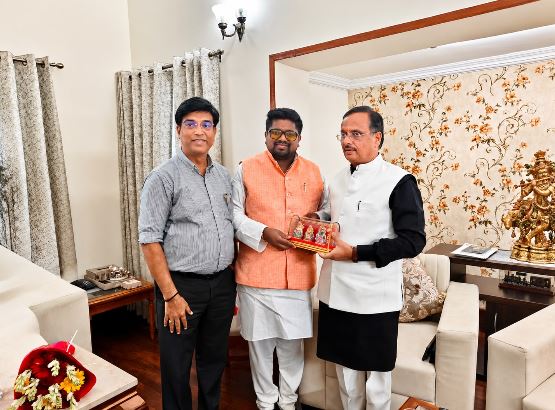
Kolkata / New Delhi, June 11: The Institute of Cost Accountants of India (ICMAI) welcomed CMA Rathindra Bose, Hon’ble Speaker of the 18th West Bengal Legislative Assembly, in a special ceremony held on June 10, 2026, marking an important milestone in his association with the Institute.
During the programme, CMA Manoj Kumar Anand, Council Member, and CMA (Dr.) D.P. Nandy, Secretary (Officiating), formally presented the Certificate of Membership of ICMAI to CMA Rathindra Bose. The occasion reflected the Institute’s continued commitment to recognizing distinguished professionals who have made significant contributions to public service and leadership.
Speaking on the occasion, CMA Manoj Kumar Anand said, “ICMAI believes that strong institutions are built by professionals who combine technical expertise with a commitment to public service. We are delighted to welcome CMA Rathindra Bose into the Institute and are confident that his leadership and experience will further strengthen the values of integrity, accountability, and excellence that define the Cost and Management Accountancy profession.”
The ceremony underscored ICMAI’s vision of fostering closer engagement with eminent members serving in positions of public responsibility while promoting professional excellence, ethical governance, and nation-building through the Cost and Management Accountancy fraternity.
11, Jun 2026
USD 2 Trillion a Year Never Makes It from Obligation to Settlement. Rivvun AI Is Built to Recover It
Icertis veterans raise $7.55 million seed for Rivvun AI to recover enterprise spend and revenue leakage — Co led by Sitara Capital and 3one4 Capital
Seattle, WA – June 11, Rivvun AI Inc. announced a $7.55 million oversubscribed seed round led by Sitara Capital and 3one4 Capital, to deploy an autonomous AI execution layer purpose-built for enterprise spend and revenue recovery.
The scale of the problem is staggering. McKinsey research finds that enterprise procurement functions lose up to one-third of planned savings during execution — with an additional 3– 4% of total external spend lost to transaction inefficiency and noncompliance. Across fortune 2000 revenues that compounds to more than $2T in value that never reaches the bottom line. The money isn’t lost to fraud or bad contracts. It disappears in the gap between what was contractually committed and what enterprise systems were ever built to collect.
Built by the Executives Who Saw This Problem at Scale
Anand Veerkar and Niranjan Umarane spent the last decade as senior executives at Icertis, where they helped scale the company to more than $350 million ARR and built a platform governing some of the world’s largest commercial portfolios. Across every industry, the pattern was consistent: terms of trade were precisely structured; financial execution against them was not. Money owed under negotiated agreements quietly went uncollected — not because anyone decided to leave it, but because no system in the enterprise stack was designed to recover it. They left to build that system. They are joined by serial entrepreneur Patrick Linton, who brings deep experience scaling global operations for enterprise software companies.
The Problem Is Structural. So Is the Solution.
ERP systems record transactions. CRM tools track relationships. Procurement platforms manage approvals. None of them enforce outcomes. Rivvun’s autonomous AI execution layer connects to existing ERP, CRM, and procurement systems, interprets commercial obligations, identifies what hasn’t settled as agreed, and initiates recovery at the transaction level. No rip-and-replace. No new system of record.
Two agentic families power the platform: Spend Assurance on the buy side — recovering supplier rebates, pricing commitments, and procurement obligations that have gone unenforced; and Margin Defense on the sell side — recovering customer settlement variances, trade term discrepancies, and revenue that left the P&L without authorization.
Built Vertical-First, Because Leakage Isn’t Generic
Chargeback mechanics in pharma — GPO compliance, government pricing obligations — look nothing like settlement gaps in banking or trade term failures in CPG. Generic AI produces generic results. Rivvun deploys with vertical-specific agent logic tuned to the precise failure patterns of each industry, across Pharma, Healthcare, Banking, CPG/Retail and Industrial
Anand Veerkar, CEO and Co-Founder, Rivvun AI commented: “The enterprise has spent years being told AI will transform how it operates. What it needed was AI that creates direct, measurable impact on the P&L – not productivity narratives, not dashboards. Rivvun closes the gap between what was agreed and what was collected, recovering money that goes straight to the bottom line.
Sachin Bhanot, Managing Partner, Sitara Capital added: “We’ve invested in enterprise technology for years. The winners tie their value directly to a number the CFO can see on the P&L. Rivvun does exactly that with precision rare for a company at this stage – and with a founding team that has already built a category-leader in this space.”
Anurag Ramdasan, Partner, 3one4 Capital said: “The team at Rivvun is one of the strongest founder-market fit we’ve seen in the vertical AI category so far. They are not pitching a horizontal AI solution and hoping for enterprises to extract value out of it. They are delivering ROI on AI for large enterprises from the first day of implementation, which is very critical for enterprise AI adoption. This rigor comes from the deep expertise of the founders, and we are incredibly excited to back such a transformational team at seed stage.”