


30, Jun 2026
Eplan Next26: Inspiring insights into the future of engineering
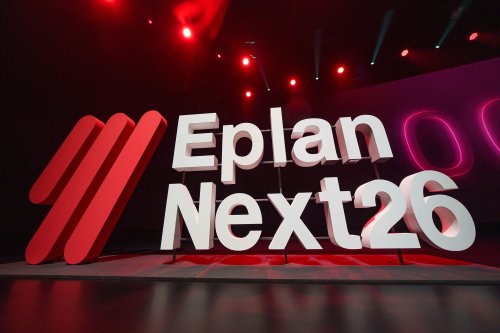
Around 1,500 attendees from 36 countries, renowned keynote speakers, fascinating panel discussions and interesting insights into the future of engineering, automation technology and the industry overall is the best way to describe the first Eplan Next conference, which took place in Munich’s Cavalluna Park on 20 and 21 May. Not only did Eplan Copilot and Eplan Smart Sourcing celebrate their premieres – attendees also got a sneak peek of the upcoming Eplan Platform 2027. High-profile speakers, experts from Eplan, users, decision-makers and Eplan business partners engaged in intensive discussions about the hottest topics for the engineering of the future during the two-day festival.
What changes are in store for electrical engineering in the coming years? Which next steps in automation will the industry be facing? How will artificial intelligence influence engineering? These and other questions were answered by internationally recognised experts in a variety of presentation formats at the Eplan Next26.
Eplan CEO Sebastian Seitz set the tone in his opening address: “We are giving you a taste of what’s to come. Here at Eplan Next, we need to discuss one of the greatest challenges facing our shared industry, namely the digitisation of our entire value creation process.” When presenting the new AI, which takes a different approach than many other industrial AI applications – in part due to its protecting of intellectual property – Seitz said: “Today we are launching out Eplan Copilot in the cloud environment.” He emphasised the importance of data security, the AI’s robust architecture, and the long-term goal of making workflows truly autonomous. “We need to contribute a great deal of knowledge and build the right skill sets into the AI, not just to automate processes, but also to autonomously control them. Our goal is to develop this technology so that it evolves from a copilot to a pilot.”
Insights into the industrial production of tomorrow
Attendees from around the globe were able to gain first-hand experience as to how leading industry innovators such as DMG MORI, Eaton and Siemens are preparing for the challenges of the future and which tools the special machine builders and control cabinet manufacturers already use today to succeed in the competitive landscape of tomorrow.
In his keynote, Siemens Digital Industries COO for Automation Business and CTO Rainer Brehm identified the shift from rule-based to goal-based automation as the next step. For instance, this can be achieved with an end-to-end, AI-based Advanced Machine Engineering, which Siemens is developing in close cooperation with Eplan.
In his keynote, DMG MORI Group President and CEO Dr.-Ing. Masahiko Mori introduced DMG MORI’s “Machining Transformation” initiative, and also referred to its collaboration with Eplan toward realizing a digital twin in the field of control cabinet design.
Eaton Operations Director Power Distribution Systems China Andy Lee offered attendees fascinating insights into a showcase factory for extensively automated control cabinet manufacturing in Changzhou, China. There, too, the Eplan Platform is being used as the backbone for electrical engineering and humanoid robots are auditing the connected wires.
Future Lab: Experiencing the future live, in person
The Future Lab featured groundbreaking new developments as well as a range of future technologies – for instance an auto panel design tool that generates a basic mounting panel design direct from an initial bill of materials. Using this as the foundation, a suitable housing can be selected and a reliable cost estimate produced with minimal effort, even during the bidding phase. Another highlight was a software supported production workstation that enables even less-experienced employees to build control cabinets to a very high quality standard – reliably, transparently and in compliance with all individual customer requirements. Topics including the Siemens Teamcenter integration and advanced machine engineering were also presented at the Future Lab – creating a direct link between mechanical engineering, product data management (PDM) and electrical control technology (CAE/TIA).
Looking back and gazing ahead: The Eplan Platform 2027 & Smart Sourcing
Eplan used the event for an exclusive preview of the new Eplan Platform 2027, the development of which has incorporated around 500 customer requirements. It’s been designed to further accelerate electrical engineering projects across three process stages: preplanning, electrical engineering and control cabinet engineering. In terms of component procurement, Eplan Smart Sourcing also offers a new and highly automated solution that celebrated its German premiere at the Eplan Next26. One practical benefit is that the tool makes it clear during the design phase where and how quickly the required parts can be sourced. In various Master Classes, users were able to explore the software’s new features and topics including control cabinet design, efficient machine cabling, and digital product structuring.
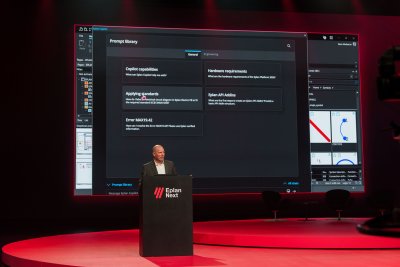
Eplan Copilot made its debut in the cloud, bringing AI to engineering, and was presented live on the main stage.
Conclusion: A successful start that is to be continued

Eplan CEO Sebastian Seitz said in conclusion: “The future lies in cooperation and collaboration – this is the only way we can master the challenges of the future. The technologies are available. The crucial question is how we can consistently integrate these opportunities into our processes
Eplan Software & Service
EPLAN provides software and service solutions in the fields of electrical, automation and mechatronic engineering. The company develops one of the world’s leading design software solutions for machine and panel builders. EPLAN is also the ideal partner to streamline challenging engineering processes.
Both standardised as well as customised interfaces to ERP and PLM/PDM systems ensure data consistency along the whole value chain. Working with EPLAN means boundless communication across all engineering disciplines. No matter whether small or large enterprises: Customers can apply their expertise more efficiently. Worldwide, EPLAN supports 61,000 customers. EPLAN wants to grow further with customers and partners and pushes integration and automation in engineering forward. Within the EPLAN Partner Network, open interfaces and seamless integrations are realised together with partners. „Efficient engineering“ is the focus.
EPLAN was founded in 1984 and is part of the owner-operated Friedhelm Loh Group. The Friedhelm Loh Group operates worldwide with 12 production sites and 94 international subsidiaries. The entire group employs 11.600 people and generated revenues of around €2,6 billion in 2019. For the 13th time in succession, the family business has won the accolade “Top German Employer” in 2021. In addition, Friedhelm Loh Group was recognized as “Top vocational trainer” according to a study of Deutschland Test and Focus Money.
- 0
- By Neel Achary

30, Jun 2026
LTM to Deliver Sovereign Cloud and AI in Europe through Strategic Partnership with OVHcloud
Chandigarh June 29: OVHcloud, a global cloud player and the European Cloud leader, and LTM, the Business Creativity partner to the world’s largest enterprises, today announced a strategic partnership allowing LTM to deploy sovereign AI solutions in Europe. Aimed at enabling organisations to achieve technological sovereignty for critical workloads, the deployment will also accelerate sustainable AI adoption. Through OVHcloud’s open, trusted cloud, extensive presence and AI infrastructure in Europe, LTM will target new markets, further pushing their sovereign AI ambitions in the region.
As enterprises across industries require cloud environments that are secure, scalable, open, compliant with regulations and support high-performance computing and data-intensive AI workloads, the OVHcloud–LTM partnership will address these challenges through standardised industry blueprints without compromising sovereignty, innovation or speed. This partnership integrates OVHcloud’s trusted sovereign cloud infrastructure designed for data control, regulatory compliance and sustainability with LTM’s deep industry expertise and AI‑powered transformation capabilities.
OVHcloud and LTM will collaboratively focus on highly regulated and data‑sensitive sectors such as banking, financial services, insurance, healthcare, public sector, manufacturing and telecoms, enabling industrialised, sovereign‑ready cloud architectures tailored to industry‑specific requirements. Together, OVHcloud and LTM will enable enterprises to modernise their cloud environments with faster AI adoption while maintaining full control over data, costs and technology choices.
Leveraging LTM BlueVerse, the AI‑native ecosystem, LTM will also enable enterprises to build and scale intelligent, agent‑driven solutions that are industry‑ready and secure by design. Additionally, LTM will deliver end‑to‑end consulting, migration, modernisation and AI engineering services to support adoption of OVHcloud’s portfolio including sovereign AI Cloud, hosted private cloud, Public Cloud and high‑performance bare‑metal infrastructure.
“Enterprises today are looking beyond cloud adoption; they are demanding sovereignty, transparency and performance at scale,” said Terry Maiolo, Vice President-General Manager Asia Pacific, OVHcloud. “By partnering with LTM, we are combining our sovereign cloud infrastructure with deep transformation and AI expertise to help organisations build trusted, future‑ready digital foundations.”
“This partnership reinforces LTM’s commitment to helping enterprises become AI‑native while remaining compliant, resilient and in control,” said Krishnan Iyer, Chief Growth Officer, LTM. “Together with OVHcloud, we are delivering an open‑core model that helps organisations on their journey toward technology sovereignty, enabling them to scale AI responsibly and cost‑effectively while meeting all regional regulatory requirements.”
As an Elite Partner of the OVHcloud Partner Network, LTM will help businesses adopt sovereign AI by building their services through OVHcloud’s Infrastructure-as-a-Service solutions, with a particular focus in European markets. By combining OVHcloud’s open and sustainable cloud platforms with LTM’s industry-aligned AI and cloud transformation capabilities, the alliance provides enterprises with a clear path to adopt next‑generation cloud and AI solutions built on trust, openness and long‑term value.
30, Jun 2026
Simplify Genomics and SimonMed Announce Collaboration to Advance Preventive Healthcare Through Integrated Genomics and Imaging
Combining whole genome interpretation with large-scale whole-body MRI to enable a more comprehensive view of human health
San Diego, CA — June 30, 2026 — Simplify Genomics today announced a collaboration with SimonMed aimed at advancing a more integrated approach to preventive healthcare. By combining SimonMed’s national scale in whole-body MRI with Simplify’s Whole Genome Interpretation and Reporting Platform, the collaboration seeks to provide a more complete picture of human health— helping identify risk earlier, personalize care pathways, and support more proactive health decisions. Across both imaging and genomics, there is growing evidence that early indicators associated with disease may be identified well before they surface in traditional care pathways. Together, these modalities offer complementary perspectives: genomics can provide insight into underlying disease risk, while imaging can help identify existing structural or physiological changes.
Simplify Genomics has spent years developing and refining its clinical reporting platform as a CAP/CLIA-certified laboratory and has processed in excess of 50,000 whole genomes to date. The platform includes thousands of disease associations and a broad set of pharmacogenomic insights, designed to support clinical interpretation and integration within real-world care settings.
Paired with SimonMed’s leadership in accessible, AI-enhanced imaging at national scale—including a network of more than 175 imaging centers across the United States —the collaboration creates an opportunity to explore patterns and connections that may not be visible through any single modality alone, supporting earlier insight and helping to inform clinical decision-making.
“This collaboration reflects a shared vision for the future of healthcare—one that is more proactive, data-driven, and personalized,” said Travis Lacey, CEO of Simplify Genomics.
“We believe the future of healthcare lies in making advanced preventive insights more accessible and actionable,” said John Simon, CEO of SimonMed. “By combining imaging and genomics, we have an opportunity to help patients and providers better understand health risk earlier and with greater clarity.” The collaboration is progressing rapidly, with additional updates expected in the near future.
30, Jun 2026
Nagaland University Scholar Represents India at UN Indigenous Youth Conference in Nepal
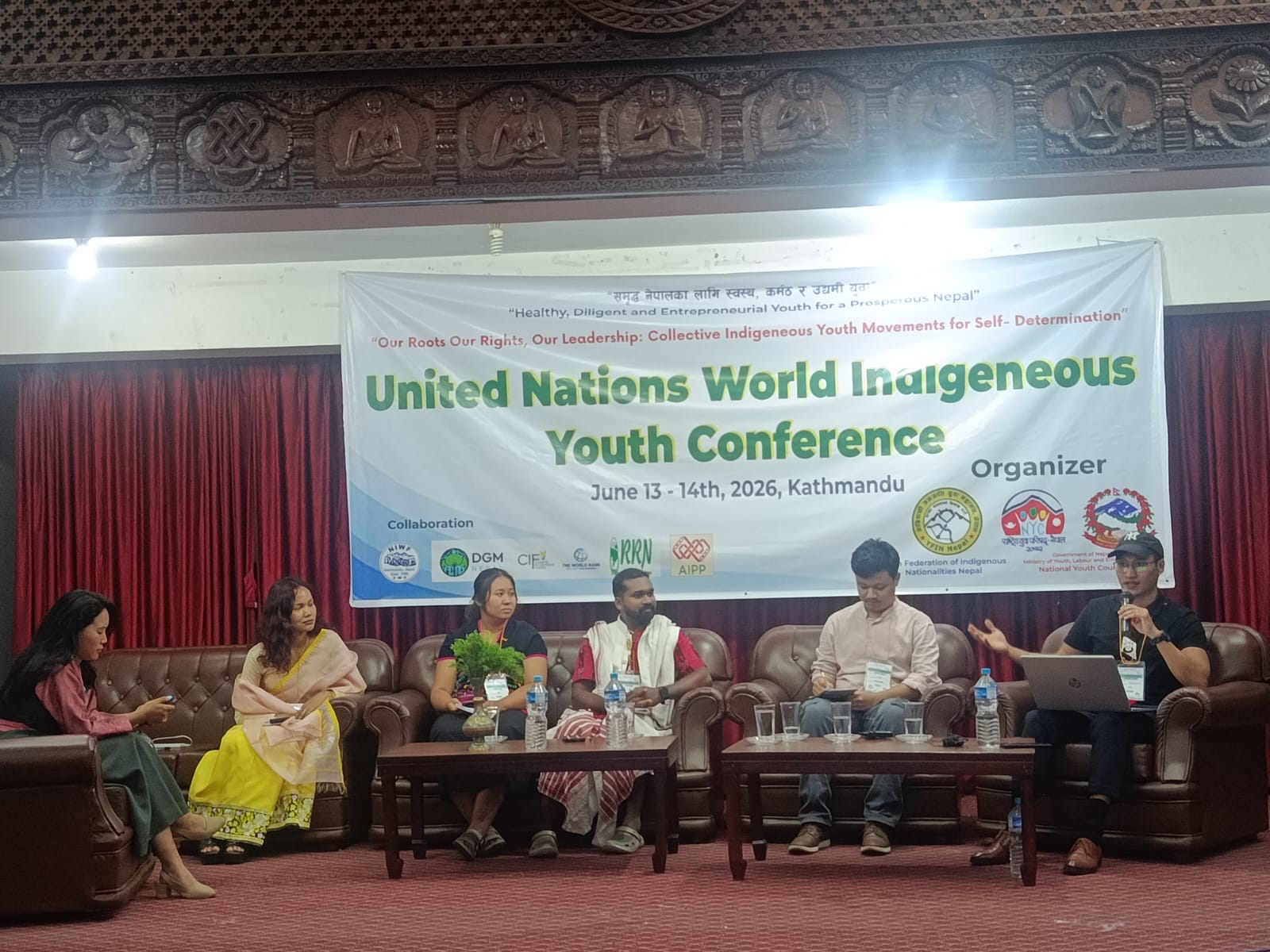
Scholar speaks on youth realities in international meet, strengthening indigenous network
LUMAMI, NAGALAND, June 30: Nagaland University research scholar Repakaba Tzudir from the Department of Sociology, Lumami has represented the university at the United Nations World Indigenous Youth Conference 2026 held in Kathmandu, Nepal.
The conference was co-organized by the Youth Federation of Indigenous Nationalities (YFIN), Nepal and the National Youth Council (NYC), Nepal under the theme, “Our Roots, Our Rights, Our Leadership: Collective Indigenous Movement for Self-Determination” bringing together nearly 150 Indigenous youth leaders, activists, academics and community representatives from across Asia.
Tzudir attended the conference as an International Delegate and Indigenous Scholar along with fellow participants from Bangladesh, Myanmar, Nepal and various parts of India. He was also a Panel speaker at the session “Indigenous Youth Movement in Asia”, where he shared his views on the realities faced by Naga youth, especially the challenges of unemployment and how immediate socio-economic concerns often overshadow broader Indigenous issues and aspirations.
Reflecting on the experience, Tzudir said, “The most memorable part of the conference was realising how deeply connected our experiences are, despite coming from different countries and cultures. Although each community has its own history and context, many of us spoke about similar concerns, protecting our identity, safeguarding our lands and cultures, and creating opportunities for young people.”He highlighted one conversation that left a lasting impression on him centred on how Indigenous youth are balancing the preservation of their traditions while adapting to a rapidly changing world. “It reminded me that our struggles are not isolated and that there is great strength in building solidarity and learning from one another across borders,” he said.According to Tzudir, a common challenge addressed during the conference was the tension between preserving Indigenous identity and responding to pressing economic realities.”Issues such as unemployment, migration, limited educational and livelihood opportunities, and the gradual loss of Indigenous languages and traditional knowledge were repeatedly discussed. In Nagaland, unemployment often becomes the immediate concern for many young people, making it difficult to actively engage with broader Indigenous issues and rights,” he added.At the same time, he said he was encouraged by the efforts of Indigenous youth organisations across Asia in creating spaces for leadership, advocacy, cultural revitalisation, and community participation. “One important lesson Nagaland can take from these experiences is that economic development and Indigenous identity should not be viewed as competing priorities. Young people need opportunities to build sustainable livelihoods while remaining connected to their communities, cultures, and values,” he said.He further added that by investing in youth leadership, strengthening community-based initiatives, and fostering regional collaborations will continue to shape the collective future of Indigenous voices.
The experience helped strengthen networks among Indigenous youth and deepened understanding of shared challenges across countries, reinforcing the scholar’s commitment to research, advocacy, and community engagement for Indigenous peoples.
The 2-day conference held on13th-14thJune, 2026 has offered a space for dialogue and exchange between Indigenous youth leaders, scholars, activists and community representatives from across Asia, building networks of solidarity and deepening understanding of Indigenous movements in the region. Participation in the conference was supported by the Indigenous Peoples of Asia Solidarity Fund (IPAS Fund) and the Youth Federation of Indigenous Nationalities (YFIN), Nepal, which provided travel and hospitality support.
30, Jun 2026
Brands are spending three trillion dollars to be forgotten, neuroscience research finds
Singapore-based brand experience agency Rebel & Soul publishes The Three Trillion Dollar Question, a whitepaper presenting the findings of a six-month memorability study across 81 participants and 24 branded adverts.
SINGAPORE, 30 June – Rebel & Soul today publishes The Three Trillion Dollar Question, a whitepaper drawing on a six-month neuroscience study to examine why most brand experiences fail to convert into long-term consumer memory.
The marketing industry evaluates brand experience through engagement metrics: impressions, reach, dwell time, and social mentions. None of those measures determines whether a brand will surface in a consumer’s mind at a future moment of purchase.
Screen-based attention has fallen by 68% since 2004, from an average of two and a half minutes to 47 seconds in 2025, yet the dominant industry response has been to optimise for capturing more of that shrinking attention window, rather than examining whether attention is converting into memory at all.
The cost of that gap is the subject of the report. Globally, brands invest approximately one trillion dollars a year in advertising. Over a typical three-year strategic horizon, that represents three trillion dollars in collective brand-building investment. A significant proportion of that figure, the whitepaper argues, is lost to memory decay before it can influence purchasing behaviour, not because the creative failed in the room, but because most brand experiences are not designed with memory encoding in mind.
“The industry has spent years debating whether brand experience works at all. The more useful question is why some campaigns stick in memory for six months while others vanish in four weeks, and whether that’s something designers can actually shape,” says Kristy Castleton, founder, Rebel & Soul.
The study tracked 24 branded adverts across 81 participants at five intervals – immediately after viewing, then at one week, one month, three months and six months – measuring how recall curves diverge over time and what design factors predict durability. Content was scored against the INVOLVE framework, seven neuroscience-based principles for memory-encoded experience design, before testing began. High-scoring content was up to 52% more memorable at six months than content that scored below the memorability threshold. The curves produced by each tier never crossed: at every measurement interval, content that scored higher was remembered by more people, and the gap widened over time rather than closing.
One of the study’s most striking findings challenges how the industry measures experience.
Participants were monitored for brain activity via EEG, galvanic skin response, eye tracking and facial expressions during the initial lab session, signals commonly used to assess whether creative is working in the moment. But those signals did not predict which brands would still be recalled six months later.
The INVOLVE score, based on the creative’s design properties collected before participant data were collected, showed a consistent positive association with recall across all measurement intervals.
“Attention in the moment and memory over time are different outcomes, and the study shows they can diverge significantly. What the brain responds to during an experience is not the same as what it keeps. The design of the experience, rather than the intensity of the response it generates, is a better guide to long-term recall,” adds Castleton.
The whitepaper details seven neuroscience-based principles, each addressing a different aspect of how the brain decides what to encode and what to discard. They span the role of curiosity in priming neurochemical readiness for memory formation; the attention effects of novelty and broken patterns; the retrieval advantages of vivid, sensory-rich design; the encoding risks of cognitive overload and how structured information delivery avoids them; the memory effects of physical movement and embodied attention; the value of multi-sensory variety in creating multiple retrieval pathways for the same experience; and the weight that emotional peaks carry in what survives in memory weeks and months later.
Each principle corresponds to a documented mechanism in neuroscience and can be scored against the INVOLVE framework before an experience goes live. The full report sets out the scientific basis for each, alongside evidence from the six-month study and case studies from client work across Asia-Pacific.
30, Jun 2026
AAEON’s New BOXER-6839-RPL is an Industrial Powerhouse with Multi-Gen Intel Core Processing
Built for automation projects ranging from system control to machine vision, the BOXER-6839-RPL offers versatility across models.
(Taipei, Taiwan – June 30) Industry-leading provider of embedded solutions AAEON (Stock Code: 6579) today announced the release of the BOXER-6839-RPL, a Fanless Embedded Controller built to accommodate a range of 12th, 13th, and 14th Generation Intel Core LGA 1700 socket-type CPUs.
According to AAEON, the system is designed to be modular in an attempt to meet the diverse needs of modern industrial system integrators. As such, its multi-generation CPU support and broad I/O makes it a versatile platform with which to build material feeder or production line nodes as well as high-performance machine vision applications.

The system’s I/O caters to a wide variety of industrial automation needs, with six DB-9 ports for RS-232/422/485, eight USB 3.2 Gen 2 Type-A ports, and four LAN ports. Adding to this, the BOXER-6839-RPL comes with an 8-bit DIO via a 10-pin terminal block.
For storage, the BOXER-6839-RPL supports both SATA and NVMe, with two 2.5” drive bays alongside an M.2 2280 M-Key slot, allowing for both high read-write speeds and stable, long-term data logging for use in SCADA environments or PLC networks.
The PC has two possible configurations where expansion is concerned, with its A1 SKU coming with two PCIe slots (one x4, one x1) and its A2 SKU having one PCIe x4 with one PCI slot. The system can therefore accommodate a variety of expansion cards for automation, control, machine vision, and additional storage. Meanwhile, the BOXER-6839-RPL hosts an M.2 E-Key and an M.2 B-Key slot with a Nano SIM for Wi-Fi and LTE/5G, respectively.
As is to be expected given its proposed deployment areas, the BOXER-6839-RPL comes with a wide 12V to 24V DC power input range with protection circuit, an extended temperature tolerance of -20°C to 50°C, and high vibration and shock resistance.
With respect to its OS, the BOXER-6839-RPL supports Windows 10 IoT LTSC 2021, and Windows 11 IoT LTSC 2024, and Linux Ubuntu 24.04 and later.
30, Jun 2026
Aadhaar-Bank Linkage Mandatory for Pension Benefits; 3.35 Lakh Yet to Complete Process
Bhubaneswar, June 30 (UDN): Pension beneficiaries across Odisha have been asked to link their Aadhaar numbers with their bank accounts to continue receiving pension benefits, with the government making the linkage mandatory for seamless disbursement of financial assistance.

Representational Image
Official sources said nearly 3.35 lakh beneficiaries are yet to complete the Aadhaar-bank account linkage. Authorities have urged them to do so at the earliest, warning that failure to complete the process may result in delays or interruption in pension payments.
The government has directed district administrations and field-level officials to intensify awareness campaigns and assist beneficiaries in completing the mandatory linkage. Pensioners have been advised to visit their respective banks or authorised service centres to verify their Aadhaar-bank account status and complete any pending formalities.
Officials said the initiative is aimed at ensuring transparent and efficient direct transfer of pension benefits to eligible beneficiaries while preventing duplication and ensuring that welfare assistance reaches the intended recipients.
30, Jun 2026
Cyber Fraudsters Target College Aspirants, Demand Money in the Name of Admissions
Bhubaneswar, June 30 (UDN): Cyber fraudsters have reportedly targeted college aspirants in Odisha by posing as admission officials and demanding money under the guise of facilitating admissions.

Representational Image
According to sources, the fraudsters are allegedly accessing personal details of students from the Student Academic Management System (SAMS) portal and using the information to contact applicants and their parents. By referring to candidates’ application details, they attempt to appear credible before asking for payments through digital transactions.
The incident has raised concerns over the security of students’ personal data and the growing misuse of online platforms by cyber criminals. Authorities have urged students and parents not to respond to unsolicited calls, messages or emails seeking admission-related payments.
Officials have advised applicants to complete all admission-related formalities only through the official SAMS portal and authorised institutions. They have also appealed to the public to verify any suspicious communication before making payments and to report cyber fraud attempts to the Cyber Crime Helpline or the nearest police station.
With the admission season underway, authorities have called for heightened vigilance, warning that no legitimate admission process requires payments through unofficial channels or personal bank accounts.
29, Jun 2026
One Glimpse, Lifetime of Blessings: Lakhs Witness Divine Hati Besha as Snana Purnima Concludes Peacefully
Puri, June 29 (UDN): The sacred observance of Snana Purnima concluded peacefully in Puri with lakhs of devotees thronging the Grand Road to witness the majestic Hati Besha (Elephant Attire) of Lord Jagannath, Lord Balabhadra and Devi Subhadra at the Shree Jagannath Temple.

Amid an atmosphere of deep devotion and spiritual fervour, devotees from across Odisha and different parts of the country gathered to catch a glimpse of the Holy Trinity adorned in the divine Hati Besha, a ritual that holds immense religious significance. The colourful and grand attire symbolises Lord Ganesha and is considered highly auspicious among devotees.
The ceremonial bathing ritual, Snana Yatra, commenced in the morning with the deities being bathed with 108 pots of sacred water on the Snana Mandap. Following the elaborate rituals, the sibling deities appeared in the revered Hati Besha, drawing overwhelming crowds and filling the temple town with chants of devotion.
Extensive arrangements made by the district administration, police, temple authorities and various service agencies ensured the smooth and peaceful conduct of the festival. Crowd management, traffic regulation, drinking water facilities, health services and security measures were effectively implemented, enabling devotees to participate in the festivities without inconvenience.
Officials expressed satisfaction over the successful and incident-free completion of the festival, while devotees described the divine darshan as a once-in-a-lifetime spiritual experience.
With the conclusion of Snana Purnima, the deities will now remain in seclusion during the traditional Anasara period before reappearing for the grand Rath Yatra.
29, Jun 2026
ASME Launches GDTP 2018 Certification
New credential validates design interpretation and manufacturability skills, helping engineers demonstrate competency and employers reduce errors, rework, and delays
NEW YORK (June 29, 2026) – The American Society of Mechanical Engineers (ASME) has announced the launch of its updated GDTP 2018 (Geometric Dimensioning and Tolerancing Professional) Certification, a credential designed to help engineers validate critical skills while enabling employers to improve product quality, reduce costly errors, and strengthen workforce and supply chain consistency.
As workflows in manufacturing organizations become more complex and increasingly digital, engineering teams face a growing need for professionals who can clearly communicate design intent and apply precise tolerancing requirements. The GDTP 2018 certification directly addresses that need by aligning with the latest ASME Y14.5-2018 standard, the authoritative framework for geometric dimensioning and tolerancing used across high‑precision industries. It establishes symbols, rules, definitions, requirements, defaults, and recommended practices for stating and interpreting GD&T and related requirements for use on engineering drawings, models defined in digital data files, and in related documents.
The certification provides engineers with standardized proof of knowledge while giving employers confidence that teams can execute design, manufacturing, and inspection work with consistency and accuracy. Demand for GD&T expertise is rapidly increasing with advances in manufacturing technologies, global supply chains, and the adoption of digital product definition practice. GDTP 2018 helps close persistent skills gaps by improving workforce readiness and reducing ambiguity that can lead to scrap, rework, and production delays.
“The ability to apply GD&T correctly is fundamental to modern engineering,” said ASME Director of Learning Experience and Excellence Mair DeMarco. “With GDTP 2018, we are equipping professionals with a credential aligned to the current standard while giving employers a reliable way to ensure their workforce can deliver high‑quality, consistent results that improve their bottom line.”
Career Value for Engineers
For engineers, the certification offers a clear pathway to demonstrate technical competence and advance professionally. It supports increased employability, stronger peer recognition, and greater confidence in applying GD&T principles within modern digital workflows.
The program includes two levels: Technologist and Senior, allowing both early-career and experienced professionals to validate their skills, from interpreting engineering drawings to designing and implementing tolerancing strategies. Certification is valid for three years, with recertification options available.
Built for Digital Engineering and Workforce Development
Designed for today’s engineering environment, GDTP 2018 reflects the growing importance of Model-Based Definition (MBD) and Product Manufacturing Information (PMI), where standardized, machine‑readable tolerancing is essential. The certification is part of a broader ecosystem that includes updated exams, study materials, and preparation resources, providing a more guided and accessible candidate experience.
For employers, the program supports scalable workforce development by offering a consistent, standards‑aligned framework for building and measuring GD&T competency across teams.


