


29, Jun 2026
Watlow launches Edge Process Management™ platform for trusted process records in regulated industries
ST. LOUIS, Mo. (June 29, 2026) — Watlow, a global industrial technology company and provider of thermal systems, has announced the launch of its Edge Process Management™ (EPM™) platform, a new class of scalable architecture that brings together data management, process control and automation for temperature-driven operations in regulated industries.
The first release within the platform, EPM Data, introduces a new approach to managing process records, capturing and structuring data at the point of measurement to create secure, time-aligned digital records that support compliance, audit readiness and evidence-based decision-making.
The platform is designed as a modular, distributed platform that unifies data, control and automation in a single architecture, enabling manufacturers to move beyond fragmented systems and legacy chart recorders towards a consistent approach to process management across assets, sites and regulatory environments.
“The process record has effectively become part of the product,” said Chris Mooney, Industrial Controls Segment Director at Watlow. “With EPM Data, and the broader platform behind it, we are giving customers a trusted, time-stamped record created at the point of measurement, designed for daily operations and audit readiness, without adding system complexity.”
EPM Data is engineered to deliver records that stand up to scrutiny, whether for internal review, regulatory inspection or customer audit. By creating a consistent, tamper-resistant source of truth, it enables teams to defend process performance, resolve issues and maintain confidence in data over time. This is designed for environments where process records must withstand audit scrutiny, support investigations and provide defensible evidence across sites and over time.
The solution is suited to industries including metals, heat treatment, life sciences, power generation, water and wastewater, environmental monitoring, and food and beverage.
Key capabilities include:
- High-precision inputs with field calibration accuracy suitable for demanding standards such as AMS2750 and CQI-9
- Secure, tamper-resistant records designed to support regulatory requirements including FDA 21 CFR Part 11 and Annex 11
- A consistent process record that can be used by operations, quality and audit teams for review, approval and long-term retention
The initial EPM Data release includes panel-mounted devices and review software designed to fit into existing industrial environments and scale from individual assets to enterprise deployments:
- EPM-07, a compact system suited to smaller furnaces, ovens, and skids
- EPM-15, designed for larger or multizone systems with higher channel requirements
- Data Reviewer™ software environment allows users to visualize and interpret historical process data, supporting review, approval, and audit workflows, with optional audit trail and electronic signature functionality.
“It gives operations teams real-time visibility and provides quality teams with records they can rely on months or years later,” Mooney added.
“EPM Data is built for customers whose process records must stand up to serious questions, whether in front of an auditor, during an investigation or when resolving a customer claim,” said Stan Breitlow, Director of Control Product Solutions and Chief Systems Designer at Watlow.
EPM Data represents the first step in a broader platform roadmap, with additional modular capabilities planned to extend the architecture across larger and more complex, distributed systems.
- 0
- By Neel Achary

29, Jun 2026
Embassy International Riding School Kicks Off the 16th Equestrian Premier League 2026

Bengaluru, June 29: Embassy International Riding School (EIRS), under the aegis of the Karnataka Riders Association (KRA), successfully commenced the 16th edition of the Equestrian Premier League (EPL) 2026 at its world-class riding facilities in Bengaluru.
The opening leg witnessed exciting competition in Show Jumping and Dressage, attracting riders from five states, over 10 equestrian clubs, and recording more than 300 entries across all event categories. Kiran Akhade of URB, riding SRS Newgrange, claimed top honours in the premier 130 cm Show Jumping class, while Embassy International Riding School riders dominated the Dressage events by securing all first-place finishes across the categories, making for a highly competitive start to the season.
Running from June to November 2026, EPL will feature six league shows, culminating in the Grand Finale on 28 November 2026. Over the past sixteen years, the league has established itself as one of India’s premier equestrian competitions, providing riders with a structured platform to develop their skills and compete at the highest standards.
This year’s edition offers cash prizes, awards, and championship trophies worth over ₹25 lakh, supported by EIRS and KRA, reaffirming their commitment to recognising excellence and promoting equestrian sport in India.
Speaking on the occasion, Ms. Silva Storai, Director, Embassy International Riding School, said: “We are delighted to begin the 16th edition of EPL. The league continues to provide riders with a competitive platform to develop their skills while fostering sportsmanship and excellence. We thank KRA for their continued support in encouraging equestrian talent across Karnataka and beyond.”
With the first leg concluded, riders have begun accumulating championship points, with the next leg of EPL 2026 scheduled to take place in July.
Results
Premier Show Jumping
- SJ7 – 130 cm Show Jumping: 1st – Kiran Akhade (SRS Newgrange, URB, Mumbai); 2nd – Prithiv Krishna (Pharrell, CS); 3rd – Aradhana Anand (Centuri, CS)
Show Jumping Winners
- SJ1 (60–70 cm): Nihaan G (Klaver, Covai Stable)
- SJ2 (80–90 cm):
- Sub-Junior: Bhargav Babu Velkur (Gucci Do Axe, EIRS)
- Junior & Open: Neil Kendall (Joey, Surge)
- SJ3 (90–100 cm): Ishta Iusta (Klaver, EIRS)
- SJ4 (105–110 cm):
- Sub-Junior & Junior: Rishab (Hero, EIRS)
- Open: Moksh Patel (Dakar, EIRS)
- SJ5 (110–115 cm): Barath Manoharan (Jashmir, ECE)
- SJ6 (120 cm): Kiran Akhade (Geronimo, URB)
- SJ7 (130 cm): Kiran Akhade (SRS Newgrange, URB)
Dressage Winners
- D1 – Preliminary Dressage:
- Sub-Junior: Siddharth Dutta (Bucephalus, EIRS)
- Junior & Open: Anagha (Power, Zippy)
- D2 – Sub-Junior Dressage & Open:
- Sub-Junior: Hem Kilaru (Abra, EIRS)
- Junior & Open: Eshaan Sundaram (Eotina, EIRS)
- D3 – Junior Dressage:
- Junior & Below: Eshaan Sundaram (Eotina, EIRS)
- Open: Arya Channagiri (Cloud 9, FSS)
Event Highlights
- Kiran Akhade, riding SRS Newgrange (URB, Mumbai), emerged as the winner of the prestigious 130 cm Show Jumping class.
- Embassy International Riding School riders secured multiple podium finishes across both Show Jumping and Dressage disciplines.
- EIRS riders swept all first-place finishes in the Dressage events, underlining the academy’s continued excellence in developing dressage talent.
29, Jun 2026
PPDS brings modern luxury and limitless entertainment to historic five star Bellevue Syrene hotel with Philips MediaSuite TV installations
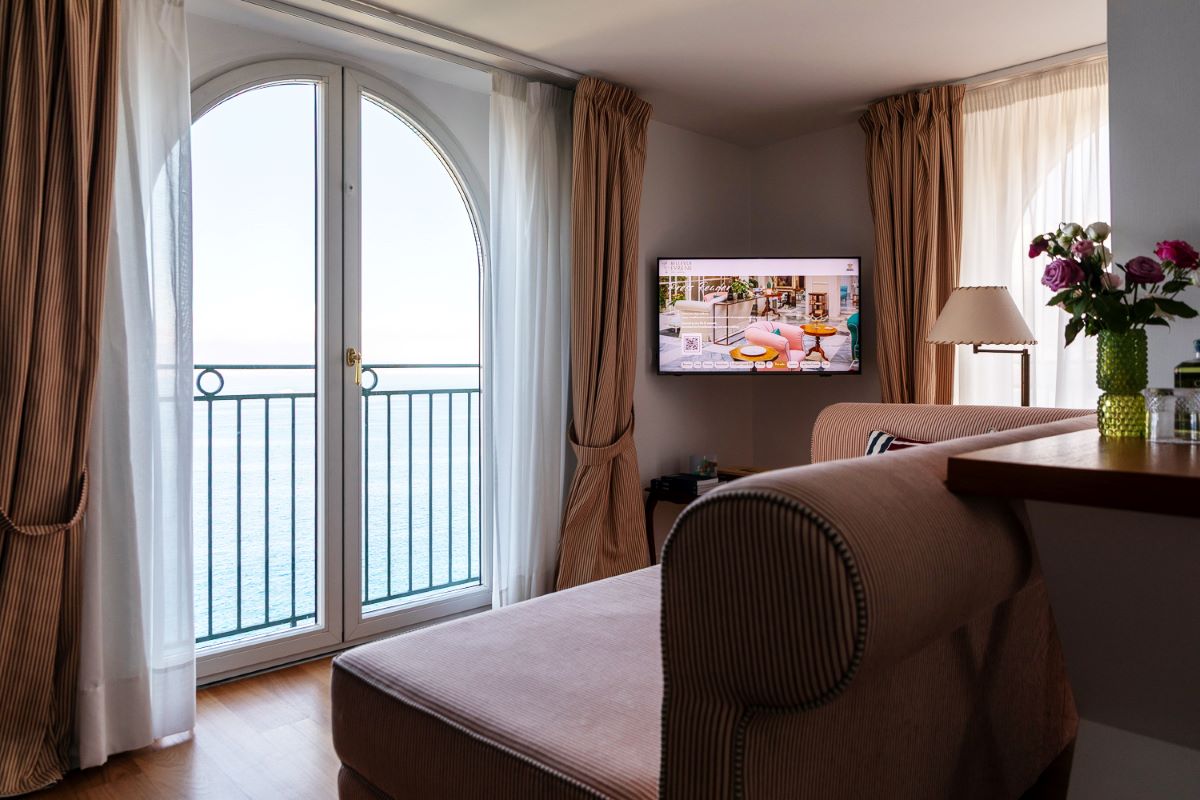
Delivering modern luxuries to the 18th century hotel in Sorrento, Philips MediaSuite TVs with cast built in are now bringing seamless access to millions of movies, TV shows, games, and streaming apps to guests at one of Italy’s most prestigious and exquisite hospitality destinations.
Amsterdam, June 29, 2026: PPDS, the exclusive global provider of Philips Professional Displays, is proud to announce that its market leading range of Philips MediaSuite TVs has been chosen to deliver seamless access to a virtually limitless world of personalised digital entertainment at one of Italy’s most tranquil and picturesque five star hotels, the Bellevue Syrene.
Housed in the popular tourist destination of Sorrento in Southern Italy, and offering breathtaking views of the Bay of Naples, the cliff edge Bellevue Syrene is a truly remarkable boutique destination, offering the perfect blend of historical heritage and modern luxury to guests.
With 51 guest rooms and suites, each meticulously designed with a sophisticated blend of modern and antique furnishings, the hotel owners sought to modernise its ageing and restrictive television system by investing in a new ‘state of the art’, fully connected and centrally managed hospitality display network.
In partnership with trusted local integration specialist, Meginet, key requirements for the project included exceptional 4K UHD display quality and the ability to provide guests with a personalised entertainment experience, offering seamless access to their preferred streaming services, apps and on demand content from the comfort of their room.
The Suite spot for guests
Concluding extensive market research, a fleet of 70 4K UHD Philips MediaSuite TVs – ranging from 43” to 65” – was unanimously selected and installed inside all hotel rooms, with additional units added for larger suites.
Delivering a new benchmark for in room entertainment while placing guests firmly in control of their viewing experience, one of the standout features influencing the hotel’s decision was the inclusion of the cast feature built directly into Philips MediaSuite TVs. First introduced on Philips MediaSuite in 2019, this allows guests to wirelessly share their favourite movies, TV shows, music, photos and even business presentations directly from their personal devices to the TV.
The Philips MediaSuite TVs solution offers a simple and intuitive user experience, with guests able to securely connect their smartphone or tablet to the TV using a unique QR code and instantly cast content from their preferred streaming services, such as Netflix and Amazon Prime Video, at the touch of a button.
Philips MediaSuite TVs also provide guests with access to thousands of apps, games and entertainment options, creating a familiar and personalised home from home experience.
Beyond traditional TVs
Philips MediaSuite TVs also provide the Bellevue Syrene’s AV and IT teams with complete control over the hotel’s display network using PPDS’ CMND platform. Centrally managed and fully customisable to reflect the hotel’s unique brand identity, the platform enables regular software updates, security enhancements and new features to be scheduled and deployed remotely as they become available, reducing maintenance demands.
All TV login information is also automatically deleted upon checkout – rather than manually – adding further time and cost efficiencies.
Furthermore, Bellevue Syrene staff can now enhance their direct communications with guests either on a collective or personalised basis, by effortlessly creating and displaying content on the TV screen, such as welcoming messages, in house information, check out details, marketing, and more.
The installation of Philips MediaSuite has achieved all expectations from the hotel owners, staff, and guests, delivering advanced and future proofed experiences while upholding the high standards of traditional luxury hospitality.
Claudio Napolitano, General Manager, Hotel Bellevue Syrene, commented: “When it comes to digital entertainment and information technology and communications services, we always choose partners capable of providing valuable, reliable and cutting edge technologies. Enabling us to offer our guests a truly complete and memorable stay.”
Vittorio Acampora, CEO, Meginet, added: “Our partnership with PPDS for Philips Professional Displays is a key factor that enables us to invest in joint strategies. Providing us with a solution that combines technological innovation with ease of use.”
29, Jun 2026
Swaranjali Delhi Unveils ‘Colours of India 2026’ – A Grand Cultural Showcase in Sri Vijaya Puram

June 29: Swaranjali Delhi, one of India’s renowned cultural organizations dedicated to promoting Indian classical arts, proudly celebrates its 25th year of cultural excellence with the presentation of “Colours of India 2026”, a spectacular evening showcasing India’s rich heritage through classical music and dance.
The event will take place on Thursday, August 13, 2026, at 5:00 PM at the Dr. B. R. Ambedkar Auditorium, Sri Vijaya Puram, Andaman & Nicobar Islands (744101).
“Colours of India 2026” promises to be a vibrant celebration of India’s diverse artistic traditions, bringing together distinguished musicians, accomplished dancers, and emerging talents from across the country. The cultural showcase aims to preserve, promote, and celebrate India’s timeless classical art forms while fostering cultural unity and artistic excellence.
The event is organized in collaboration with SIVAR and features an impressive lineup of celebrated artists and dance ensembles, offering audiences an immersive experience of India’s colorful cultural landscape.
Distinguished Artists & Performing Groups
- Bhutnath De
- Guru Vidushi Sangita Chaki
- Susamoy Mishra
- Subrata De
- Rajasi Wagh
- Priyanka Vineet
- Rimpi Saha
- Hrishita Das
- Doli Mahanta
- Kasturi Das Barman
- Prakriti Thapa
- Shrestha Sarkar
- Avipsha Adhikari
- Priti Karmakar
- Sharmistha Das
- Moupia Adhikari
- Hakimpada Nrityamalancha
- Vikash Dance Akademi
- Daksh Dance Akademi
- Mukta Dhara
The event also acknowledges the valuable contributions of its supporting partners and collaborators, including:
- ABSS Pune: Hemant Wagh & Ratna Wagh
- RMS Audio: Mridul Nath
- Dhwani Foundation: Ruma Mishra
- Art Design: Debraj Das
- Makeup & Costume: Kabita De & Seema De
- RepairInFix: Amit Mishra
- Digital Media: Neel Acharya
- Hospitality & Management: Ajay & Sunita Aggarwal, Princy L. Rajendra, Ayush Raj, Maa Tara Travels (Port Blair)
The evening will be gracefully hosted by Smt. Sikha Nath, who will serve as the event announcer.
The organizers warmly invite art lovers, cultural enthusiasts, students, families, and members of the public to witness this grand celebration of India’s performing arts and be a part of an unforgettable cultural evening.
Event Details
Event: Colours of India 2026
Presented by: Swaranjali Delhi (Celebrating 25 Years)
In Association with: SIVAR
Date: Thursday, August 13, 2026
Time: 5:00 PM onwards
Venue: Dr. B. R. Ambedkar Auditorium, Sri Vijaya Puram, Andaman & Nicobar Islands – 744101
Media Partner: Shreyas Webmedia Solutions
Contact
Swaranjali Delhi
Phone: 99103 00319
Nrityamalancha Siliguri
Phone: 94340 06943
Websites:
29, Jun 2026
MP’s Seoni custard apple gets GI tag
June 29: The custard apple grown in Seoni district of Madhya Pradesh has been awarded the prestigious Geographical Indication (GI) tag, marking a significant milestone for local farmers and strengthening the region’s agricultural identity.
The GI recognition is expected to enhance the market value of Seoni custard apples, improve branding, and open new opportunities for farmers in both domestic and export markets. Officials said the certification will help ensure better price realization and wider market access for producers in the region.
Known for its distinct taste, texture, and natural quality, Seoni custard apple has long been a key horticultural product of the region. The GI tag formally recognises its unique geographical characteristics and traditional cultivation practices.
Agriculture experts noted that the certification will encourage value addition, processing, and organised marketing of the fruit, thereby improving income stability for farming communities.
The development is also expected to promote rural entrepreneurship and strengthen horticulture-based livelihoods in Madhya Pradesh, while boosting the state’s presence in premium fruit markets.
29, Jun 2026
ten23 health obtains ATMP Manufacturing GMP Licenses from Swissmedic for its Basel and Visp facilities
Basel & Visp, Switzerland, June 29th, 2026 ten23 health, a global contract development and manufacturing organization (CDMO) focused on sterile and biologic drug products, today announced it has successfully obtained GMP certifications for the manufacturing and testing of Advanced Therapy Medicinal Product (ATMP) in its facilities in Basel and Visp, Switzerland.
These licenses mark a significant milestone in ten23 health’s strategic expansion into the rapidly growing field of advanced therapies. With this authorization, both sites are now GMP certified to support the clinical and commercial sterile manufacturing of ATMPs in compliance with related quality standards. A first oligonucleotide customer program is in progress, advancing further into clinical development. In addition to ten23’s expertise in formulation development, the new GMP license means that ten23 can now also support its Customers for GMP sterile manufacturing and QC testing for clinical and commercial human use for oligonucleotide products such as mRNA, siRNA, DNA and antisense oligonucleotides.
The Basel facility, known for its innovation-driven development environment, provides support for early- and late-phase product development, small-scale non-GMP manufacturing with ten23’s previously announced Line 0 and GMP Quality Control release and stability testing. The Visp facilities, leveraging its state-of-the-art infrastructure and scalability, provide late-stage clinical and commercial sterile production and QC Microbiology.
“Obtaining ATMP licenses for both Basel and Visp reinforces our commitment to enabling sterile medicines for next-generation therapeutics,” said Hanns-Christian Mahler, CEO at ten23 health. “We are proud to provide our partners with integrated, high-quality sterile product solutions that accelerate their molecule’s journey from drug substance to drug products, from concept to patient.”
As demand for advanced therapies continues to grow globally, ten23 health is positioned to be a trusted partner for biotech and pharmaceutical companies seeking flexible, reliable, and innovative manufacturing solutions.
29, Jun 2026
Tata Motors targets 1 million commercial vehicle sales post Iveco deal: N Chandrasekaran
June 29: Tata Motors is targeting annual commercial vehicle sales of 1 million units following its acquisition of Iveco, Tata Sons Chairman N Chandrasekaran said, highlighting the company’s ambition to strengthen its global presence in the CV segment.
The acquisition is expected to significantly expand Tata Motors’ international footprint and enhance its capabilities in product development, technology integration, and market reach across key global regions.
According to the company, the combined strengths of Tata Motors and Iveco will help create a more competitive and diversified commercial vehicle portfolio, enabling better access to advanced technologies and global supply chains.
The strategy aims to position Tata Motors as a leading global player in the commercial vehicle industry by leveraging synergies in manufacturing, innovation, and operational efficiency.
Industry observers noted that the move could accelerate Tata Motors’ transformation into a global mobility solutions provider while strengthening its long-term growth prospects in the commercial vehicle segment.
29, Jun 2026
Gujarat plans Chhota Udepur sports hub, Vadodara Blue Economy centre
June 29: The Gujarat government has announced plans to develop Chhota Udepur as a sports equipment manufacturing hub and Vadodara as a centre for the Blue Economy, Deputy Chief Minister Harsh Sanghavi said.
The initiative aims to promote balanced regional development while strengthening the state’s industrial ecosystem through sector-specific growth clusters and targeted infrastructure development.
Chhota Udepur will be developed to support sports goods manufacturing, with a focus on boosting MSMEs, skill development, and employment generation. Officials said the move is expected to strengthen local entrepreneurship and integrate the district into broader manufacturing value chains.
Vadodara will be positioned as a hub for the Blue Economy, focusing on water-based resources, sustainable industries, and allied sectors. The plan aims to attract investment and encourage environmentally sustainable economic activity.
The government said these initiatives are part of its broader strategy to promote specialised industrial zones, attract investments, and generate employment opportunities across regions.
Experts noted that such focused development models can enhance regional competitiveness while supporting industrial diversification and long-term sustainable growth in Gujarat.
29, Jun 2026
Global economic fragmentation could wipe out Dollar 6.9 trillion from world GDP: WEF
June 29: Global economic fragmentation could lead to a substantial loss in economic output, potentially cutting up to $6.9 trillion from world GDP, according to the World Economic Forum (WEF).
The report highlights that rising geopolitical tensions, increasing trade barriers, and shifting global alliances are contributing to a more divided global economic system. This fragmentation is expected to disrupt supply chains, reduce trade efficiency, and slow down global productivity growth.
According to the WEF, a fragmented global economy may also raise costs for businesses, limit access to critical technologies, and weaken cross-border investment flows. These challenges could have a widespread impact on both developed and emerging economies.
Emerging markets, which are more integrated into global supply chains, may face heightened vulnerability, while advanced economies could also experience slower growth due to reduced international cooperation and trade integration.
Experts stressed the need for stronger global coordination, resilient supply chains, and open trade frameworks to reduce the risks of fragmentation and support long-term economic stability and growth.
29, Jun 2026
Auto sector poised for steady growth; 2W and PV demand to remain strong in June 2026: Report
June 29: The automobile sector is expected to maintain steady growth momentum, with two-wheelers (2W) and passenger vehicles (PV) projected to post healthy performance in June 2026, according to a recent report.
The report highlighted that stable macroeconomic conditions, improving consumer confidence, and consistent demand across both rural and urban markets are supporting the sector’s growth outlook. Seasonal trends and continued recovery in mobility demand are also contributing to sustained sales performance.
Two-wheeler demand is likely to benefit from improving rural income levels and affordability, while the passenger vehicle segment continues to gain from strong product offerings, new model launches, and sustained interest in personal mobility.
Automakers are expected to focus on disciplined production, inventory optimisation, and timely product introductions to maintain growth stability and meet evolving consumer preferences.
Industry analysts said the auto sector remains well-positioned for steady expansion, supported by structural demand drivers, rising penetration in semi-urban markets, and ongoing shifts in consumer mobility needs.