


20, Jun 2026
Need to strengthen industry-scale knowledge of mining new age minerals to enable India to take a lead on extraction and processing of these minerals
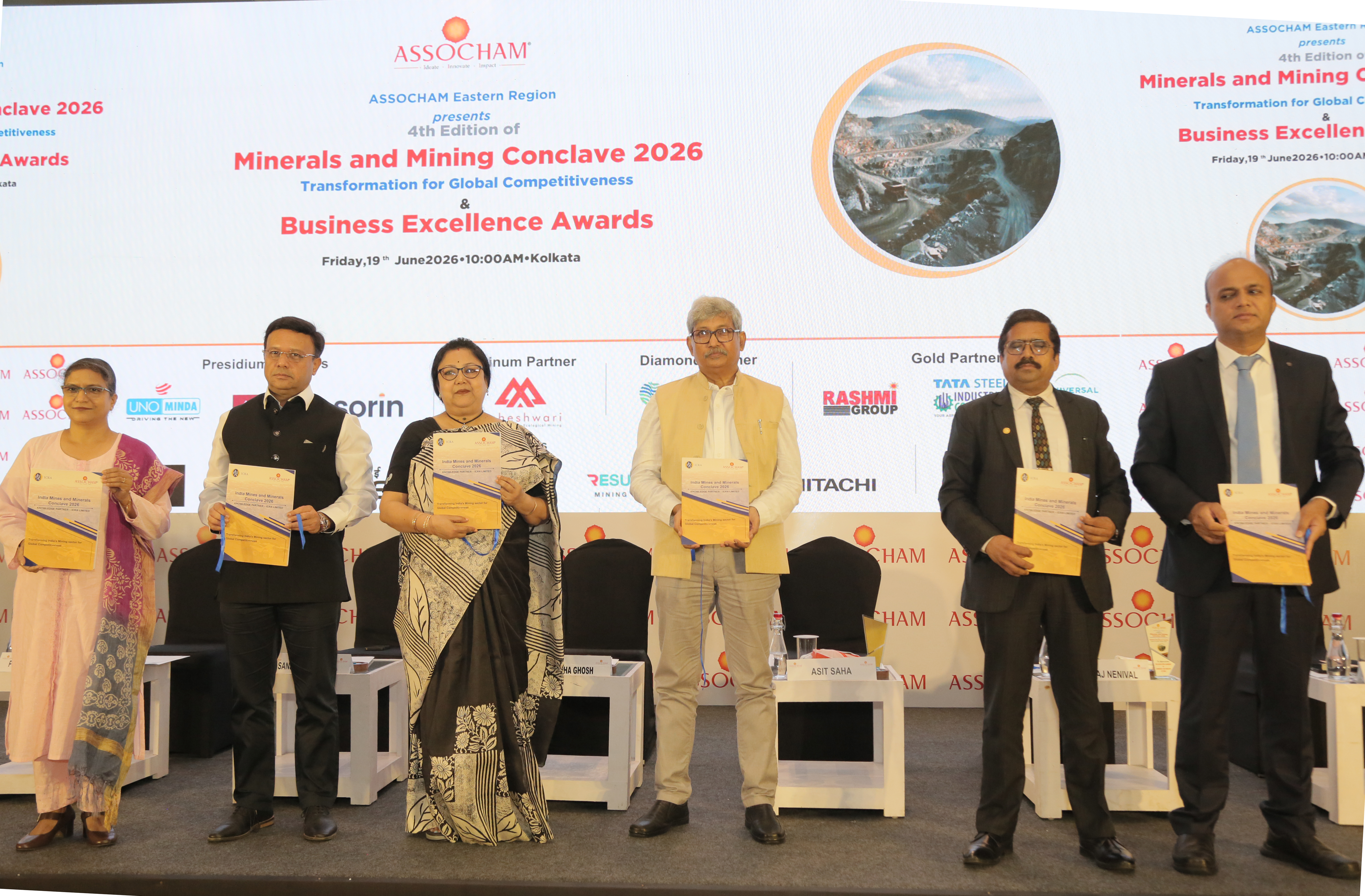
Kolkata, June 19: The lack of industry–scale knowledge of mining of critical minerals is one of the biggest stumbling blocks for India when it comes to extraction and processing of these minerals.
According to Mr Asit Saha, Director General, Geological Survey of India, Ministry of Mines, Government of India, India has been a “powerhouse” when it comes to mining of bulk minerals. However, when it comes to new age minerals, we still do not have the industry–scale knowledge on extraction and processing of these minerals and that is preventing the country from taking a lead.
“We are very comfortably placed as far as iron ore, limestone, chromite, bauxite etc are concerned. But when we talk about these new age minerals, we are absolutely low-end. It is not only because of land acquisition issues and environmental issues. There are other factors which we need to take into cognisance. We still do not have the industry–scale knowledge as to how to extract and process these minerals. That is the biggest stumbling block, which is preventing us from taking the lead,” Mr Saha said at the 4th Edition of Minerals and Mining Conclave, organised by Assocham here on Friday.
Mining of critical minerals and REE (rare earth elements), which are relatively small scale, calls for a separate strategy and thinking, as against bulk mining.
“Critical minerals have emerged as a strategic currency of geopolitical influence. Lithium, cobalt, nickel, rare earth elements, graphite, copper are no longer ordinary commodities. They have become strategic national assets. The global race is no longer for oil fields, it is now for minerals value chain,” Dr Pukhraj Nenival, Controller of Mines (East Zone), Indian Bureau of Mines, Ministry of Mines, said.
The government of India has initiated one of the most comprehensive reform trajectories in the history of Indian mining. From policy driven regulation, India is progressively moving towards technology enabled governance, investment facilitation, resource efficiency and global competitiveness. The reforms encompassing commercial mining, digitization, exploration acceleration, mineral auctions, critical mineral development and institutional strengthening have fundamentally redefined India‘s mining landscape, he added.
West Bengal has good critical deposits in the mineral bearing districts and the Directorate of Mines and Minerals has requested GSI to work on it. In some cases, it is also looking to work jointly with GSI, Ms Sarmistha Ghosh, Assistant Director, Directorate of Mines and Minerals, West Bengal said.
“India has huge reserve of rare earths, critical minerals like vanadium, titanium, graphite. But the main challenge lies in the beneficiation and process of getting, acquiring processing technology or beneficiation technology to extract these minerals from the rock and the primary mineral. Recent reforms and initiatives taken by Ministry of Mines and Ministry of Coal by Government of India have created a more transparent and investor-friendly ecosystem, opening new opportunities for exploration, beneficiation, value addition and international collaborations,” Mr Sanjiv Ganeriwala, Chairman, ASSOCHAM Mining Council – East, said.
- 0
- By Neel Achary

20, Jun 2026
Colloquial and HDFC Mutual Fund turn the camera around on Fathers with ‘Fathers In Focus’

Mumbai, June 20: Creative agency Colloquial, in partnership with HDFC Mutual Fund, has launched Fathers In Focus, a Father’s Day campaign that helps people use artificial intelligence to add their fathers back into old family photographs.
Fathers are the most consistently present people in our lives. And the most consistently invisible. They don’t announce what they do. They don’t ask to be noticed. They just show up. Every day. For decades. Quietly building a life for their families without ever stepping into the foreground.
Nowhere is this more evident than in the family photo album. Flip through any of them and you will find decades of birthdays, holidays, and ordinary afternoons. But barely a single photograph with the father in it.
This is the insight at the heart of Fathers In Focus. A father’s love, the campaign observes, works exactly like a SIP. Small, steady, unannounced contributions, compounding silently over decades, working in the background, never in the foreground. The family photo album is perhaps the most honest proof of that — built entirely by him, without him ever being in it.
The campaign launches with a film and is anchored by a digital platform at www.hdfcfund.com/fathers-in-focus, which offers people carefully crafted prompts that they can take to any AI platform of their choice to recreate old family photographs with their fathers finally in the frame. At a time when AI is predominantly being used to churn out meaningless brainrot content, Fathers In Focus asks people to use it for something more personal, something more meaningful.
“Every cultural movement and social trend finds its reflection in the smallest things. We chanced upon one such small thing — the family album. Looking at these albums, we realised that our fathers have spent decades behind the camera taking all the pictures while rarely featuring in them. And this became the core of our campaign. With Fathers In Focus, we are celebrating them by not only bringing this truth to life but also giving people a chance to alter it. In today’s age, where AI is used to manufacture moments that never happened, we wanted to use it to restore the ones that did.” — Srijan and Pradyot, Co-Founders and Creatives, Colloquial
Fathers In Focus is a reminder that the most powerful ideas are often hiding in plain sight. In the everyday moments, the unnoticed habits, the quiet presences that shape our lives without ever asking to be seen. For Colloquial, it’s important to find these truths and give themthe platform they deserve. Ideas that don’t just communicate a brand’s message, but reflect something real about the people they are speaking to.
19, Jun 2026
From Antenna to Algorithms: Can Traditional Media Reclaim Its Lost Audience?
The Great Journey of Mass Communication: From Radio and Doordarshan to Digital Streaming
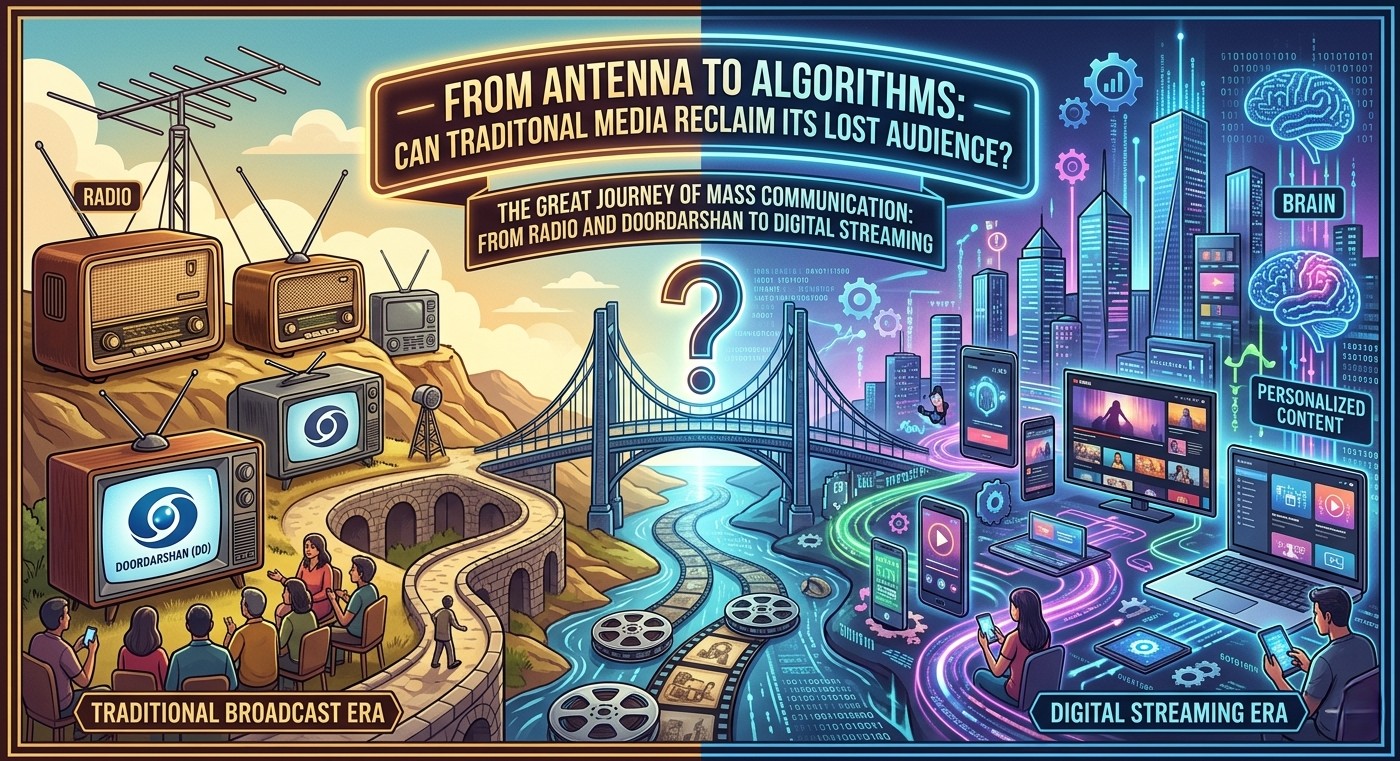
There was a time when information traveled slowly but carried immense value. Families gathered around radio sets to hear news bulletins, cricket commentary, and cultural programs. Later, television became the centerpiece of every household, bringing the nation together through shared experiences. Newspapers arrived every morning as trusted sources of information, while magazines offered in-depth analysis and storytelling.
Today, the media landscape has been completely transformed. Smartphones, fiber broadband, social media, YouTube, OTT platforms, podcasts, AI-powered tools, e-papers, and digital magazines have changed how people consume information.
Ironically, despite having more media platforms and content choices than ever before, traditional media is struggling to retain audiences.
The Evolution of Electronic Media
1. The Radio Era (1930s–1980s)
Before television became widespread, radio was the dominant electronic medium.
In India, radio connected millions through news bulletins, educational programming, music, dramas, and live sports commentary. Families relied on radio for information during elections, wars, natural disasters, and major national events.
For decades, radio was the fastest and most accessible source of news.
2. The Antenna and Doordarshan Era (1970s–1980s)
Television arrived as a revolutionary medium.
Viewers depended on rooftop antennas to receive signals from Doordarshan. Programming was limited but highly influential. Shows such as Ramayan, Mahabharat, Hum Log, Buniyaad, and Chitrahaar became national phenomena.
Television was not merely entertainment—it was a social experience that united families and communities.
3. The Cable Television Revolution (1990s)
Economic liberalization changed the Indian media industry forever.
Cable operators introduced private television channels into homes. Suddenly viewers had access to entertainment, sports, movies, music, and 24-hour news channels.
Networks such as Zee TV, Star TV, Sony, and numerous regional broadcasters transformed viewing habits.
For the first time, audiences had meaningful choice.
4. The DTH Era (2000s)
Direct-to-Home (DTH) technology improved signal quality and expanded access to hundreds of channels.
Consumers enjoyed better picture quality, wider channel selection, and greater viewing flexibility.
Television entered an era of intense competition.
5. The Fiber and Digital Streaming Era (2010s–Present)
The arrival of fiber broadband, smartphones, smart TVs, OTT platforms, social media, podcasts, and video-sharing platforms fundamentally altered media consumption.
Viewers no longer wait for scheduled programming.
News, entertainment, sports, documentaries, and live events are available instantly and on demand.
The audience now controls what to watch, when to watch, and where to watch.
From One Channel to Thousands
The media industry has evolved from scarcity to abundance.
We moved from:
- One television channel to thousands.
- One radio station to thousands of digital audio streams.
- A handful of newspapers to countless digital publications.
- Scheduled programming to personalized content feeds.
Yet paradoxically, more choice has not guaranteed more engagement.
Instead, audiences have become fragmented across multiple platforms.
Why Are Viewers Leaving Television News?
Television news once dominated public attention. Today, many viewers are turning away.
Several factors contribute to this trend:
Declining Content Quality
Investigative journalism and original reporting have often been replaced by repetitive debates and sensational discussions.
Loss of Credibility
Audiences increasingly question the neutrality and independence of many news organizations.
Ethical Concerns
Many viewers feel news coverage is becoming overly influenced by political, commercial, or ideological interests.
Technical Negligence
Frequent spelling mistakes, inaccurate graphics, poorly edited tickers, and rushed presentation standards create a perception of declining professionalism.
Endless Live Coverage
Many channels devote hours to repetitive live broadcasts with little new information, reducing the value of the viewing experience.
Rise of Independent Digital Journalism
YouTube channels, digital-first news organizations, podcasts, and independent creators often provide faster, more diverse, and more interactive coverage.
As a result, audiences increasingly seek information outside traditional television.
What Happened to Radio?
Radio remains relevant in automobiles, rural areas, and emergency communication.
However, younger audiences increasingly prefer:
- Podcasts
- Music streaming platforms
- Audio books
- On-demand content
The challenge facing radio is not merely retention but adoption. Many younger consumers never developed the habit of listening to traditional radio in the first place.
Newspapers: Declining but Still Trusted
Unlike television and radio, newspapers continue to enjoy a relatively high level of trust.
Their strengths include:
- Editorial discipline
- Fact-checking processes
- Structured reporting
- In-depth analysis
- Professional accountability
However, print circulation faces significant challenges as younger readers increasingly consume news digitally.
Many readers still trust newspaper brands but choose to access them through websites, mobile applications, and e-paper editions rather than physical copies.
The Slow Disappearance of Magazines
Perhaps no traditional medium has been affected more dramatically than magazines.
Weekly and monthly magazines once occupied a unique space between newspapers and books. They provided long-form reporting, interviews, analysis, and specialized content.
Today, demand for printed magazines has declined significantly due to:
- Instant digital access
- Free online content
- Social media platforms
- Specialized websites and blogs
Many readers now prefer e-magazines and digital subscriptions that offer convenience, portability, and real-time updates.
The future of magazines is increasingly digital rather than print-based.
The Rise of E-Papers and E-Magazines
Digital editions are becoming the new normal.
Readers appreciate:
- Instant availability
- Mobile accessibility
- Lower costs
- Search functionality
- Environmental sustainability
For younger generations, reading news on a smartphone or tablet often feels more natural than reading a printed publication.
The future of print media may depend less on paper and more on the strength of trusted journalism delivered through digital formats.
Can Traditional Media Make a Comeback?
Yes—but only through meaningful reinvention.
Restore Trust
Credibility must become the industry’s highest priority.
Invest in Journalism
Original reporting, investigative work, and field journalism should once again define news organizations.
Improve Editorial Standards
Accuracy in language, graphics, headlines, and presentation remains essential.
Embrace Digital Platforms
Traditional media must meet audiences where they already are—on mobile devices, social media, streaming platforms, and digital ecosystems.
Focus on Public Interest
Issues affecting ordinary citizens should receive greater attention than manufactured controversies.
Engage Younger Audiences
Explainers, data journalism, podcasts, short-form video, and interactive storytelling can help bridge the generational gap.
The Future of Media
Traditional media is not dying—it is evolving.
Television, radio, newspapers, and magazines may no longer dominate public attention as they once did, but their core strengths remain valuable.
The future belongs to organizations that combine the credibility of traditional journalism with the speed, accessibility, and innovation of digital technology.
Audiences have not abandoned information.
They have abandoned formats that no longer meet their expectations.
The real crisis facing media today is not a shortage of content.
It is a shortage of trust.
And trust can only be rebuilt through accuracy, ethics, accountability, professionalism, and a renewed commitment to serving the public interest.
The journey from radio to television, from antenna to cable, from DTH to digital streaming, and from newspapers to e-papers tells the story of media’s past.
The next chapter will belong to those who understand that technology may change, but the public’s need for trustworthy journalism never will.

19, Jun 2026
Himachal Forest Resources Valued at INR 22,600 Crore Annually: Report
Shimla, June 19: Himachal Pradesh’s forest bio-resources are estimated to hold a cumulative annual economic value of approximately ₹22,600 crore, according to a recent report highlighting the state’s rich ecological wealth and natural capital.
The assessment underscores the significant contribution of forest ecosystems to the state’s economy, particularly through biodiversity resources, medicinal plants, non-timber forest produce, and ecosystem services that support livelihoods in rural and tribal regions.
The report notes that Himachal Pradesh’s forest wealth plays a crucial role in sustaining environmental balance while also providing direct and indirect income opportunities for local communities engaged in forest-based activities.
Experts highlighted that sustainable management of forest bio-resources can further enhance economic returns while ensuring long-term ecological stability. They also emphasized the importance of conservation-driven development models that balance growth with environmental protection.
The findings are expected to support policy planning in areas such as forest conservation, green economy development, eco-tourism, and community-based livelihood programmes.
Officials indicated that strengthening value addition, market linkages, and scientific management of forest resources could further enhance income generation potential from the sector.
The report reinforces the growing recognition of natural capital as a key component of sustainable economic development in Himachal Pradesh.
19, Jun 2026
Sterling Kanha Wins Tripadvisor Best of the Best for Fourth Consecutive Year; 28 Sterling Resorts Earn Travellers’ Choice Honours
Chennai, June 19: Sterling Holiday Resorts has been recognised at the Tripadvisor Travellers’ Choice Awards 2026, with 28 resorts across its portfolio earning Travellers’ Choice honours. Sterling Kanha has also received the prestigious Travellers’ Choice Best of the Best Award fo the fourth consecutive year.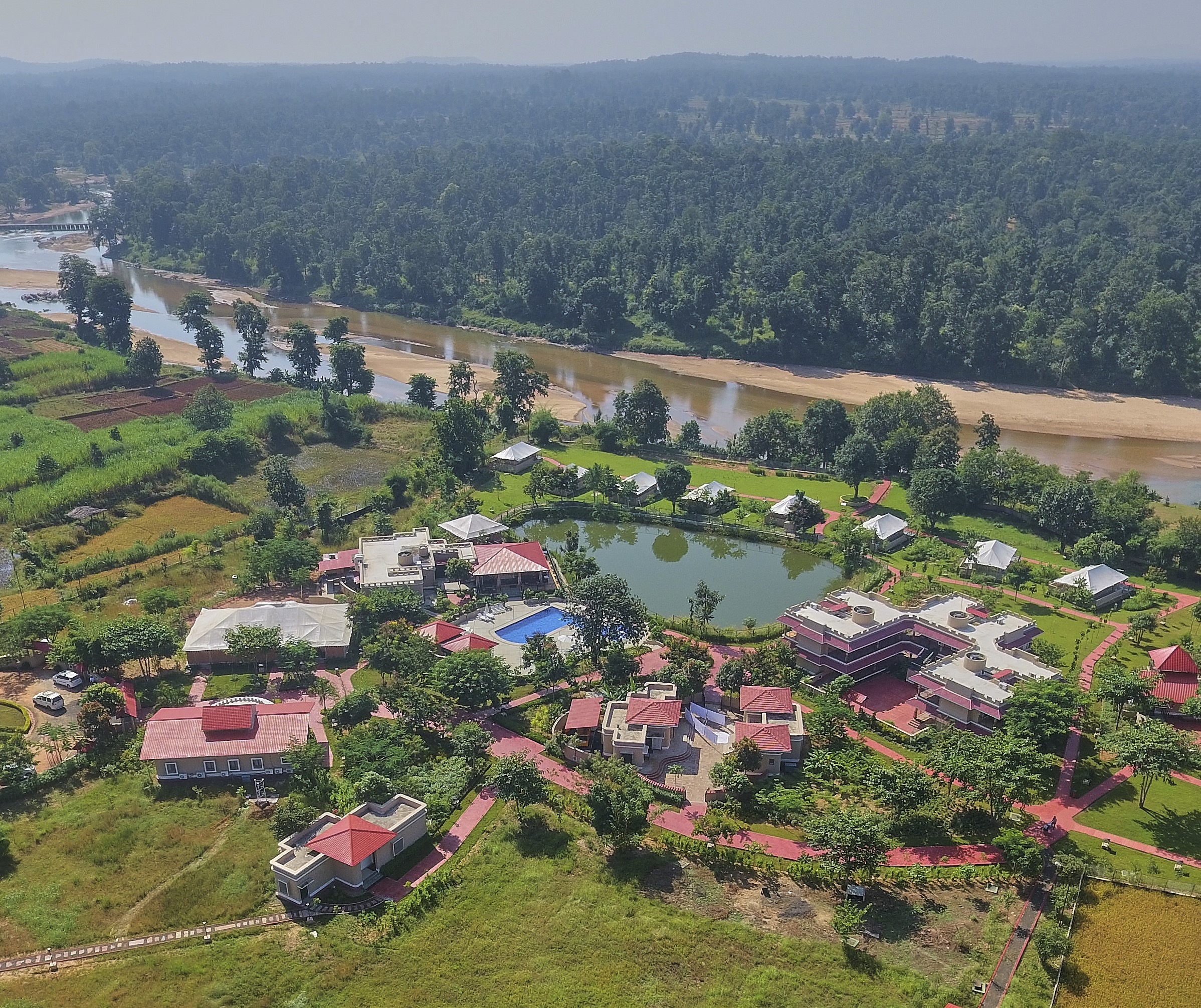
The 28 award-winning resorts represent approximately 49% of Sterling’s eligible resort portfolio, defined as properties that have completed at least one full year of operations. The breadth of recognition makes this a significant portfolio-level endorsement of Sterling’s guest experience across leisure, wildlife, wellness, pilgrimage, hill and emerging destinations.
Of the total 28 winning resorts, 21 have been recognised for two consecutive years, while 12 have achieved a three-year winning streak. This sustained performance reinforces the strength of Sterling’s service standards and operating discipline across destinations and resort formats.
While seven resorts joined the winners’ list this year, five resorts were recognized for the first time: Sterling Athirappilly, Sterling Brookstone Coorg, Sterling Manali, Sterling Mount Abu, Sterling Bagh Ranthambore, Sterling Rewild Sariska and Sterling Aravalli Udaipur.
Vikram Lalvani, Managing Director & CEO, Sterling Holiday Resorts, said:
“For Sterling, these awards are a measure of consistency, not isolated excellence. Recognition for 28 resorts – and a fourth consecutive Best of the Best honour for Sterling Kanha – shows that our guest promise is translating into dependable experiences across destinations and resort formats. As we grow, every resort must earn the same trust through thoughtful service, authentic local discovery and disciplined operations.”
These results reinforce Sterling’s strategy of combining dependable service standards with locally rooted experiences as it expands across India.
19, Jun 2026
Digital Pension Reforms Transform Service Delivery for Millions Over 12 Years: Government Report
New Delhi, June 19: Over the last twelve years, the Government of India has implemented a wide range of pension reforms aimed at improving ease of living, enhancing transparency, and ensuring faster, more accessible services for pensioners across the country.
Guided by the vision of Digital India and citizen-centric governance, the Department of Pension & Pensioners’ Welfare (DoPPW) has introduced technology-driven systems and nationwide outreach initiatives that have significantly simplified pension-related processes and reduced dependency on physical documentation.
Digital Life Certificate System Brings Major Convenience
A key milestone in pension reforms has been the digitalisation of life certificate submission.
The introduction of Aadhaar-based Digital Life Certificates (Jeevan Pramaan) in 2014, followed by face authentication technology in 2021, has enabled pensioners to submit life certificates remotely using mobile devices, removing the need for physical visits to banks or government offices.
To expand outreach, multiple nationwide campaigns have been conducted in recent years. The latest campaign in 2025 generated over 1.91 crore Digital Life Certificates, including more than 57 lakh from Central Government pensioners, highlighting strong adoption of digital services.
Stronger Engagement Through Pensioners’ Welfare Associations
The government has strengthened participatory governance through 57 Pensioners’ Welfare Associations (PWAs) across the country.
These associations play an important role in:
- Supporting grievance redressal
- Assisting pensioners in accessing services
- Spreading awareness about digital initiatives
- Helping implementation of nationwide campaigns
Regular engagement meetings have helped ensure that local concerns are addressed in policy decisions, improving responsiveness and inclusivity.
Capacity Building Through Banking and Awareness Programmes
To improve service delivery at the ground level, the Department has institutionalised Bankers’ Awareness Programmes (BAPs) in collaboration with pension-disbursing banks.
These programmes focus on:
- Updating banking staff on pension rules and procedures
- Improving understanding of digital pension systems
- Enhancing efficiency in service delivery
- Reducing delays and procedural bottlenecks
In parallel, Pensioners’ Awareness Programmes (PAPs) have been conducted across the country to educate pensioners on rules, entitlements, grievance mechanisms, and digital tools.
Conclusion: A More Accessible and Dignified Pension Ecosystem
The pension reforms undertaken over the last twelve years reflect a sustained commitment to improving service delivery through digital innovation, institutional engagement, and citizen empowerment.
With simplified processes, wider awareness, and stronger digital integration, pension services in India are becoming more accessible, efficient, and pensioner-friendly, ensuring greater dignity and convenience for millions of senior citizens.
19, Jun 2026
India–Armenia Partnership to Strengthen High-Altitude Balloon and Near-Space Research Capabilities: Report
New Delhi, June 19: India and Armenia are set to deepen cooperation in advanced aerospace research, focusing on high-altitude balloon systems and near-space testing technologies, according to a recent report.
The collaboration is expected to support scientific experimentation in the upper atmosphere, enabling improved research in areas such as climate observation, communication systems, space environment studies, and advanced material testing.
Officials familiar with the development noted that high-altitude balloon platforms provide a cost-effective alternative for near-space research, allowing payload testing in conditions that simulate aspects of space without requiring full orbital missions.
The partnership is also expected to facilitate knowledge exchange between research institutions and technical experts from both countries, strengthening capabilities in aerospace innovation and experimental technologies.
Experts believe that such cooperation will contribute to expanding India’s growing space ecosystem while also enhancing Armenia’s participation in advanced scientific research programs.
The initiative reflects a broader trend of international collaboration in space and near-space exploration, where shared expertise and resources are increasingly being used to accelerate innovation and reduce research costs.
Both sides are expected to explore further areas of cooperation in emerging aerospace technologies in the coming period.
19, Jun 2026
Over 12.7 Lakh Devotees Visit Kedarnath Dham; Pilgrims Appreciate Improved Facilities
Rudraprayag, June 19: Kedarnath Dham continues to witness a strong spiritual influx this pilgrimage season, with over 12.7 lakh devotees offering prayers at the sacred shrine so far. The steady flow of pilgrims reflects the deep religious significance of the shrine and the growing devotion among visitors from across the country.
Officials managing the pilgrimage arrangements reported that devotees have expressed satisfaction with the improved facilities, crowd management systems, and enhanced infrastructure support provided along the pilgrimage route.
Arrangements including streamlined darshan queues, improved accommodation facilities, medical support units, and better connectivity services have contributed to a smoother and more organized pilgrimage experience this year.
Authorities highlighted that continuous efforts are being made to ensure safety, cleanliness, and efficient movement of pilgrims, particularly during peak visiting hours.
Many devotees appreciated the improved arrangements, noting better coordination, reduced waiting time, and enhanced support services compared to previous years.
The administration reiterated its commitment to ensuring a safe, accessible, and spiritually fulfilling experience for all pilgrims visiting Kedarnath Dham.
19, Jun 2026
Union Minister Reviews Power and Urban Development Schemes with Jharkhand Government
Ranchi, June 19: A Union Minister on Thursday held a comprehensive review meeting with the Jharkhand Government to assess the progress of key initiatives in the power sector and urban development schemes across the state.
The review focused on strengthening electricity infrastructure, improving urban service delivery, and accelerating the implementation of centrally supported development programmes aimed at enhancing public utilities and civic amenities.
During the meeting, discussions were held on improving power distribution efficiency, reducing transmission losses, and ensuring reliable electricity supply across both urban and rural regions of Jharkhand.
Urban development initiatives, including housing, sanitation, water supply, and smart city-related projects, were also reviewed with an emphasis on timely execution and improved coordination between central and state agencies.
The Union Minister highlighted the importance of strengthening last-mile service delivery to ensure that the benefits of government schemes reach all sections of society, particularly in underserved and remote areas.
State officials briefed the Minister on ongoing projects, implementation challenges, and measures being taken to improve efficiency and project monitoring mechanisms.
Both the Centre and the State reiterated their commitment to enhancing infrastructure development, improving urban living standards, and ensuring sustainable growth through collaborative governance.
19, Jun 2026
Fortis Bannerghatta Road Successfully Removes 200 Plus Gallstones from 71-Year-Old Breast Cancer Patient Through Robot-Assisted Surgery
Bengaluru, June 19: Doctors at Fortis Hospital Bannerghatta Road, successfully removed more than 200 gallstones from a 71–year–old woman undergoing treatment for breast cancer, who was also battling a severe gallbladder infection and multiple co-morbidities. The highly challenging robot–assisted surgery in India was led by Dr. Manish Joshi and supported by a multi-disciplinary team of specialists. The presence of over 200 gallstones in a single patient is exceptionally rare and is estimated to occur in fewer than 1% of reported gallstone cases worldwide. As per available medical literature, this is believed to be the first reported case in India involving the removal of more than 200 gallstones in a patient undergoing active treatment for breast cancer.
The patient had been admitted at Fortis Bannerghatta with multiple health conditions, including abdominal pain, nausea, and vomiting. Detailed Clinical investigations revealed acute gallbladder inflammation caused by multiple gallstones and further scans revealed that gallstones had blocked the common bile duct, resulting in swelling of the bile ducts and increasing the risk of serious complications. The patient also had pre-existing medical conditions, including hypothyroidism, chronic lymphocytic leukemia, and cancer in the right breast for which she was ongoing chemotherapy. Owing to the patient’s age, the ongoing medical treatment, multiple co-morbidities and the severity of infection, the case posed significant surgical challenges and required careful multi-disciplinary evaluation before proceeding for the surgery.
Prior to the surgery, the gastroenterology team led by Dr. Ravindra B S performed an Endoscopic Retrograde Cholangiopancreatography procedure to remove the bile duct stone and place a temporary stent to help maintain bile flow. During the surgery, doctors found that the gallbladder was severely infected with pus and contained more than 200+ gallstones. Considering the severity and complexity of the condition, the surgical team performed a robotic cholecystectomy to safely remove the infected gallbladder using ICG Technique The patient was discharged in a stable condition on the second day after the surgery and was advised regular follow-up for continued monitoring and long-term care.
Giving details of the case, Dr. Manish Joshi, Director, Surgical Gastroenterology, Bariatric & Robotic Surgeon, Fortis Hospital, BG Road, Bengaluru, said,” Gallstone disease affects approximately 10–15% of adults worldwide, and at Fortis Hospital, Bannerghatta Road we perform nearly 400–500 gallbladder surgeries each year. However, most patients typically have only one to five gallstones. Discovering more than 200 gallstones in a single patient is extraordinarily rare and is estimated to occur in fewer than 1% of reported cases globally. With the support of robotic-assisted surgery, we were able to operate with enhanced precision, improved visualization, and greater control in this challenging situation, enabling a safer procedure and contributing to a faster recovery for the patient.”
Sharing her experience, the patient said, “I was in severe pain and quite worried because of my existing health condition. I am grateful to the doctors and medical team at Fortis Hospital, BG Road for treating me with such care and confidence. Thanks to the timely treatment and advanced robotic surgery, I recovered smoothly and was able to return home in stable condition.”
Mr. Gautham CB, Facility Director, Fortis Hospital Bannerghatta Road, said, “The successful management of this complex high-risk case reflects the strength of our multidisciplinary expertise and advanced robotic surgical capabilities at Fortis Hospital, BG Road. This achievement, which is considered a first in India, highlights our commitment to leveraging advanced technology and clinical excellence to deliver precise, patient-centric care even in the most challenging medical conditions.”


