


7, May 2026
ASUS Prioritizes Customer Experience with Free Service Camp in Bangalore
~The service camp will be held at ASUS Exclusive Store – Systech IT Solutions, Hybrid Store [Pegasus+ROG], Pheonix Market city and will be open to customers from 11 AM to 5 PM.
Bangalore, 7th May 2026 – ASUS, a Taiwanese tech giant, will hold a one-day free service camp in Bangalore on May 9th as part of ASUS Assurance, which is ASUS India’s promise of worry-free ownership, combining quality engineering with dependable support, protection, and service (the 4As) across the entire device lifecycle. The camp will deliver hands-on technical support, comprehensive device health checkups, and expert guidance to help customers optimize performance and extend the life of their ASUS devices.
The service camp will be held at ASUS Exclusive Store – Systech IT Solutions, Hybrid Store (Pegasus + ROG), Phoenix Market city, Bengaluru, and will be open to customers from 11:00 AM to 5:00 PM.

As part of the initiative, ASUS customers can avail a wide range of complimentary services designed to enhance device performance and longevity. These include professional dust cleaning, heating issue checks, and overall system health evaluations. ASUS experts will also assist customers with MyASUS app setup, troubleshooting, and performance optimization, ensuring a smoother and more efficient user experience.
The service camp is designed as a VIP care experience for ASUS laptops, offering hands-on technical support and proactive maintenance completely free of cost. Customers will also receive expert guidance on best practices for device care, helping them maintain optimal performance over time.
To enhance the overall experience, souvenirs will be provided to participants attending the service camp.
This initiative reflects ASUS continued focus on strengthening its after-sales ecosystem and delivering accessible, high-quality service experiences across key markets. Backed by its robust 4A framework, Assured Quality, Always-on Support, All-around Coverage, and Added-value Experience, ASUS continues to expand its service footprint with over 200+ service centres, on-site support capabilities, and comprehensive customer care programs.
ASUS has successfully held free service camps across Pune, Bhilwara, Hazaribagh, Shillong, Delhi, Calicut, Kolkata and Surat demonstrating commitment to nationwide continue future camps scheduled in other cities.

- 0
- By Neel Achary

7, May 2026
MATLAB EXPO 2026 India Highlights Agentic AI and Digital Engineering Across Development Workflows
Bengaluru, May 7: MathWorks, the leading developer of mathematical computing software for designing engineered systems, concluded MATLAB EXPO 2026 today in Bengaluru. The one-day event brought together more than 1,300 engineers, scientists, academic researchers, and industry leaders to explore how generative AI, engineering copilots, agentic AI, and Model-Based Design workflows are reshaping modern engineering and product development.
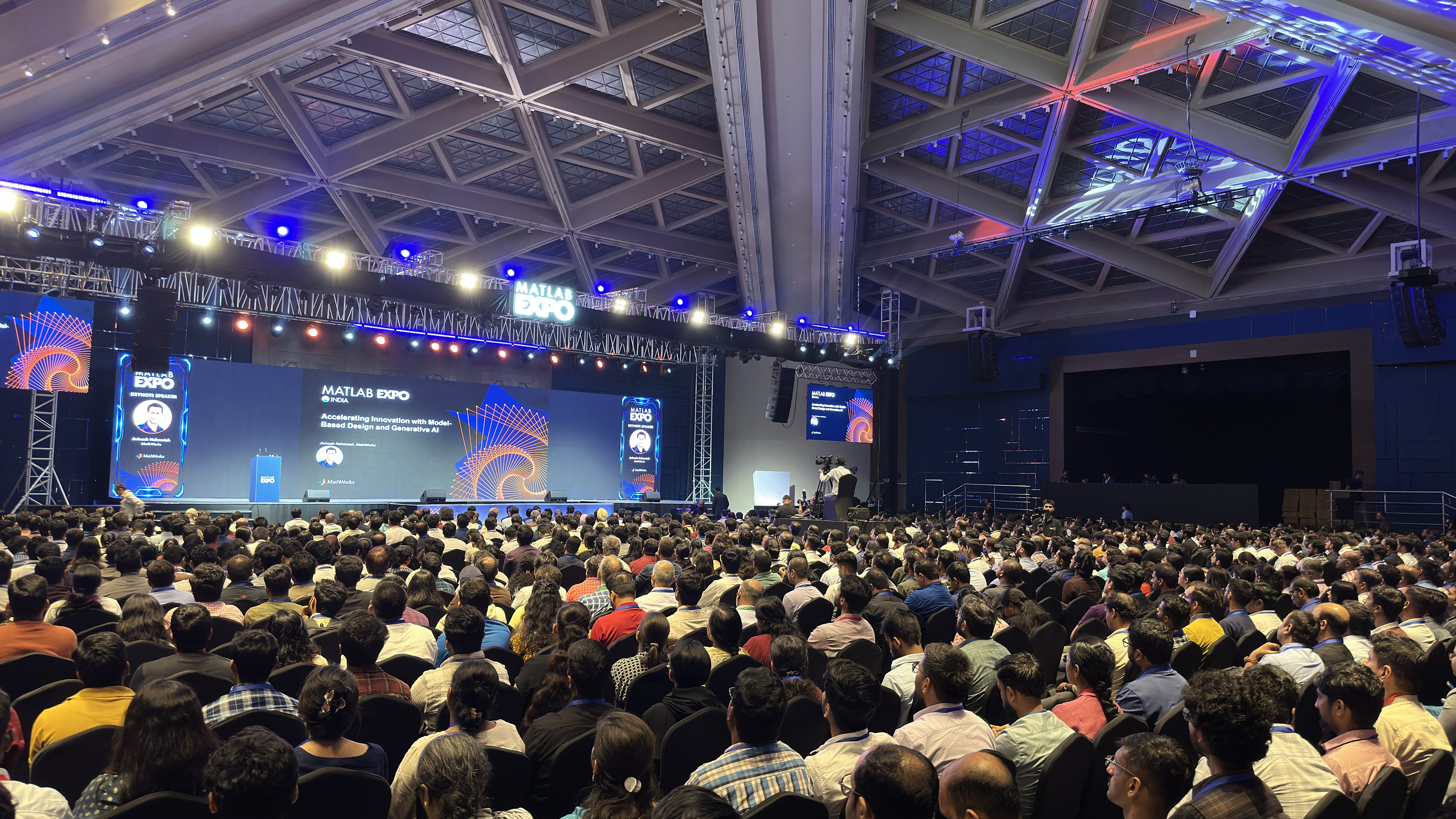
The conference focused on practical adoption of AI-assisted design and simulation across multiple engineering domains. Sessions covered topics including AI copilots integrated into engineering workflows, agentic automation, virtual vehicle development, automated driving, drones and maritime systems, electrification, and wireless and radar technologies. Presentations emphasized maintaining validation, traceability, and engineering rigor while accelerating development cycles.
MATLAB EXPO 2026 Highlights
Engineering leaders, experts, and researchers from organizations such as Boeing, Mercedes Benz Research and Development India, Tata Consultancy Services, Indian Institute of Science and NXP Semiconductors shared real-world case studies addressing engineering challenges across industries including automotive, aerospace and defence, industrial automation, communications, consumer electronics, semiconductors, and medical devices. Attendees also explored live technology demonstrations illustrating how MATLAB® and Simulink® are used to support AI-assisted development, digital twins, embedded AI, and certification-ready workflows focused on production-scale deployment rather than experimentation.
“This year’s MATLAB EXPO reflected growing industry interest in applying GenAI, copilots and agentic AI to engineering workflows in ways that improve productivity while preserving validation, traceability, and safety,” said Sunil Motwani, Country Manager – Sales and Service – MathWorks India. “The discussions showed that organisations are moving beyond experimentation and are beginning to evaluate where these approaches can deliver value in real engineering environments.”
Three keynote sessions were featured at MATLAB EXPO 2026.
Generative AI leaders at MathWorks Seth Deland and Avinash Nehemiah discussed how generative and agentic AI capabilities in MATLAB and Simulink are supporting engineering teams accelerate design processes, improve simulation-led decision-making, and move efficiently from concept to deployable systems.
Savyasachi Srinivas, Vice President of Global Engineering and Technology Centers at Collins Aerospace, described how digital engineering and AI-enabled knowledge systems are being used to move products from concept to certification, including the adoption of digital twins to create shared operational views across teams, and emerging AI-enabled applications in cockpit and cabin environments.
A panel of industry and academic leaders from Tata Consultancy Services, HSBC, Boeing, Mercedes Benz Research and Development (India) and the Indian Institute of Science examined how AI copilots and agents reshape engineering workflows and how teams are validating AI-assisted outputs in real-world systems. The discussion addressed verification, governance, human oversight, and the evolving role of engineers in supervising increasingly automated workflows.
The conference featured additional showcases, including Raftar Formula Racing team from IIT Madras presenting their competition-winning race car, and a dedicated Unmanned Aerial Vehicle (UAV) technology pavilion highlighting drone and eVTOL (electric Vertical Take-Off and Landing) platforms developed by MathWorks partner Speedgoat and startups Zmotion Autonomous Systems and Reude Technologies using MATLAB and Simulink.
The technology demonstrations reinforced a consistent theme across MATLAB EXPO 2026: AI copilots and agentic automation are are helping engineering teams move from experimentation to execution. From digital twins to embedded AI and certification-ready systems the sessions and demonstrations emphasized the use of trusted, production-scale AI that accelerates design, verification, and deployment while keeping engineers actively involved in decision-making and oversight.

7, May 2026
Bay of Bengal Low Pressure Likely Around May 10; Odisha on Thunderstorm Alert
Bhubaneswar, May 7 (BNP): A new weather system is likely to develop over the southeast Bay of Bengal around May 10, according to multiple global forecast models, including European weather predictions. However, meteorologists say there remains uncertainty regarding its intensity and exact movement.

Initial model indications suggest the system may originate near Sri Lanka and the Tamil Nadu coast. Experts caution that the trajectory and strength of the system will become clearer only after May 11, once the existing trough over central India weakens.
In the meantime, Odisha continues to experience intermittent rainfall and thunderstorm activity under the influence of prevailing atmospheric conditions.
The India Meteorological Department (IMD) has forecast thunderstorms accompanied by lightning and gusty winds across most districts of Odisha between May 7 and May 13.
For today, the IMD has issued a yellow warning for several districts including Mayurbhanj, Keonjhar, Sundargarh, Balasore, Bhadrak, Jajpur, Kendrapara, Cuttack, Jagatsinghpur, Puri, Khurda, Nayagarh, Ganjam, Gajapati, Rayagada, Koraput, Malkangiri, Angul, Dhenkanal, Kalahandi, Kandhamal, and Nabarangapur. These areas are likely to experience thunderstorms with lightning and gusty winds reaching 40–50 kmph.
Additionally, isolated thunderstorms with winds of 30–40 kmph are likely during the afternoon and evening hours in districts including Jharsuguda, Bargarh, Sambalpur, Deogarh, Sonepur, Boudh, Nuapada, and Balangir.
Officials have advised residents to remain alert and take necessary precautions, especially in areas prone to lightning and strong surface winds, as weather conditions remain active over the coming days.
7, May 2026
RAKEZ signs two strategic agreements to reinforce Ras Al Khaimah’s position as a competitive industrial hub and attract investments
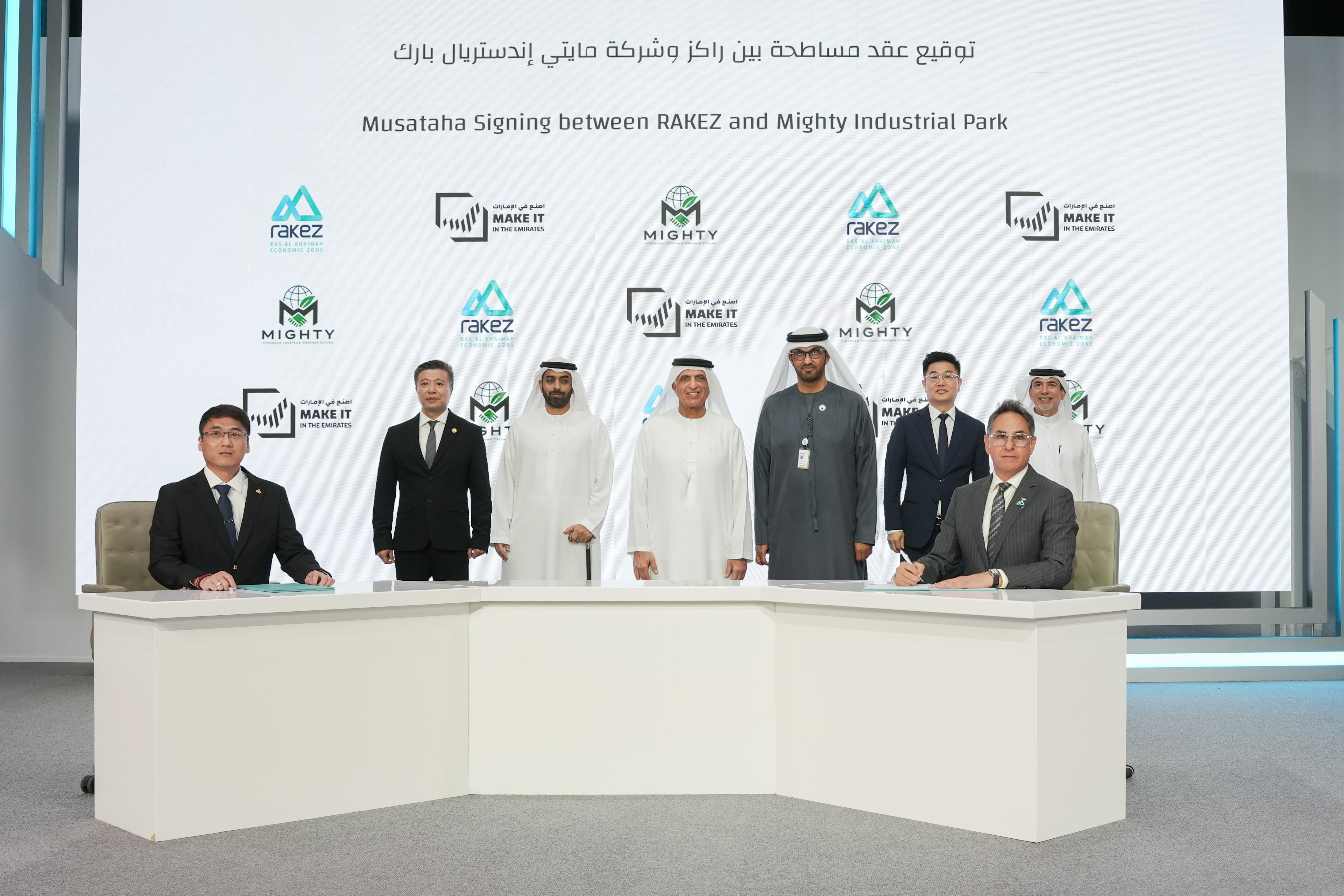
Ras Al Khaimah, May 07: In the presence of HH Sheikh Saud bin Saqr Al Qasimi, UAE Supreme Council Member and Ruler of Ras Al Khaimah, Ras Al Khaimah Economic Zone (RAKEZ) signed two strategic agreements – with MAGRABi Retail Group and Mighty Industrial Park – during the 5th edition of Make it in the Emirates (MIITE), held at ADNEC Centre in Abu Dhabi, reinforcing the emirate’s growing position as a competitive hub for industrial investment and advanced manufacturing.
The agreements reflect increasing investor confidence in Ras Al Khaimah’s industrial ecosystem and its ability to support long-term, scalable manufacturing operations.
The first agreement, represented by MAGRABi Retail Group CEO Yasser Taher, aims to establish a Store Manufacturing Centre – a purpose-built facility dedicated to the production of furniture, store fit-outs, refurbishments, and pop-up concepts across its retail network. Designed to service up to 140 stores annually, the facility will support MAGRABi Retail’s operations across all its markets in the GCC, while creating up to 100 jobs and strengthening the company’s regional expansion and operational capabilities.
Taher said, “At MAGRABi Retail, everything we do is driven by a customer-first philosophy. This investment reinforces our long-term commitment to the Emirate of Ras Al Khaimah while enabling us to further elevate the retail experience across our growing network. By centralising the production of our store environments, we ensure that every detail reflects our dedication to quality, innovation, and client care.”
The second agreement was concluded with Mighty Industrial Park, represented by shareholder Guichun Guo, setting plans for the development of a comprehensive China-UAE industrial park. The project will focus on metal recycling, dismantling, smelting, precious metal refining, and advanced manufacturing, creating a fully-integrated ecosystem that supports sustainable industrial development and sector growth, while contributing to the advancement of circular economy practices within Ras Al Khaimah.
Guo said, “Ras Al Khaimah was chosen by Mighty Industry Park because it offers the practical conditions required for a resource-circulation industrial project to scale: industrial land, utility access, logistics connectivity and a manufacturing environment that can support recycling, refining, production, and export activities. RAKEZ provides a platform where our secondary copper recycling, refining, and copper products manufacturing operations can be developed as an integrated industrial chain rather than as a single standalone facility. With support from the relevant authorities during the establishment process, we see Ras Al Khaimah as a long-term base for building a circular-economy value chain, attracting upstream and downstream partners, and contributing to the UAE’s green manufacturing and industrial diversification goals.”
Commenting on the agreements, RAKEZ Group CEO Ramy Jallad said, “These two agreements reflect our ongoing commitment to strengthening Ras Al Khaimah’s position as a leading hub for advanced manufacturing and industrial investment in the region. By partnering with prominent companies such as MAGRABi Retail and Mighty Industrial Park, we are committed to developing an integrated industrial ecosystem that supports innovation and keeps pace with global shifts in value chains and sustainable manufacturing. At RAKEZ, we continue to provide a flexible and enabling business environment that allows investors to expand with confidence, benefit from advanced infrastructure, and access integrated services that support their long-term growth.”
In addition to these milestones, Jallad took part in a high-level panel discussion alongside leaders from the UAE’s free and economic zones. During the session, he highlighted the UAE’s strong industrial resilience, driven by alignment of efforts across federal entities and economic zones, and reinforced by practical, on-the-ground support for businesses. He noted that flexibility, close client engagement, and integrated ecosystem support have been key to maintaining continuity, while long-term investor confidence continues to be built on stability, scalability, and the ability to grow seamlessly within the same environment.
When asked about long-term commitments from global manufacturers, he said, “Certainty remains the key — enabled by a stable environment, seamless scalability within one ecosystem, and integrated access to logistics, financing, and global markets, allowing businesses to grow with confidence over the long term.”
This direction aligns closely with the UAE’s Operation 300bn strategy, with RAKEZ contributing by enabling industrial growth, attracting high-value manufacturing investments, and providing the infrastructure and ecosystem required for businesses to scale within the country.
Through its continued participation in major platforms such as MIITE, RAKEZ reinforces this role by creating an environment where businesses can grow with confidence, expand seamlessly, and navigate evolving global conditions while contributing to the UAE’s long-term industrial and economic ambitions.
7, May 2026
PMEGP Creates 36.33 Lakh Opportunities, Drives Women and Rural Entrepreneurship Growth: Govt Report
New Delhi, May 7 (BNP): The Prime Minister’s Employment Generation Programme (PMEGP) has generated around 36.33 lakh employment opportunities across the country, reinforcing its role as a key driver of grassroots entrepreneurship and livelihood creation, according to an official statement.
Implemented through the Khadi and Village Industries Commission under the Ministry of Micro, Small and Medium Enterprises, the scheme supports the setting up of micro-enterprises in the non-farm sector by providing credit-linked subsidies to aspiring entrepreneurs.
During the 15th Finance Commission cycle (2021–22 to 2025–26), the scheme utilised its entire approved allocation of ₹13,554.42 crore and facilitated the establishment of over 4.03 lakh micro-enterprises, slightly surpassing its target.
Officials said this performance reflects both strong demand for entrepreneurship support and effective implementation on the ground.
A major highlight of the programme is its focus on inclusion and social equity. Women account for nearly 40% of total beneficiaries, while around 45% of subsidy support has gone to women-led enterprises, encouraging greater participation in business creation.
In addition, about 54% of beneficiaries belong to SC, ST, and OBC communities, underscoring the scheme’s wide social outreach. Nearly 80% of the supported enterprises are located in rural areas, helping boost local employment and promote balanced regional development.
Overall, officials said PMEGP continues to play a crucial role in expanding self-employment opportunities, strengthening small businesses, and supporting India’s broader goal of entrepreneurship-led and inclusive economic growth.
7, May 2026
Government School Enrollment Falls to 49.24 pc in 2024–25, Private Sector Expands
New Delhi, May 7 (BNP): School enrollment in government institutions has declined to 49.24% in the 2024–25 academic year, while the private education sector continues to expand rapidly, according to concerns highlighted by NITI Aayog.

The findings point to a steady shift in student preference toward private schools, reflecting changing perceptions around quality of education, infrastructure, and learning outcomes. The trend indicates that private institutions are gaining a larger share of new enrollments compared to government schools.
According to the assessment, the decline in government school enrollment raises important concerns for the public education system, particularly in terms of equity and access. Since government schools play a crucial role in providing affordable education, especially in rural and lower-income segments, a continued drop in enrollment could widen educational disparities.
The report notes that the rapid growth of private schooling is reshaping India’s education landscape, with increased household spending on education and rising demand for alternative learning environments.
It further suggests that improving infrastructure, teacher availability, and learning outcomes in government schools will be critical to reversing the trend and restoring confidence in public education.
Overall, the data highlights a structural shift in India’s schooling system, where the balance between public and private education is gradually evolving, raising policy-level concerns about long-term accessibility and inclusiveness in the education sector.
7, May 2026
AI and Data Modernisation Fuel India’s Tech Spending Boom, Transform Enterprise Digital Growth
New Delhi, May 7 (BNP): India’s technology spending is witnessing a strong upswing, driven primarily by rapid adoption of artificial intelligence (AI) and large-scale data modernisation across industries, according to a recent industry report.
The report notes that enterprises are increasingly prioritising investments in AI-powered tools, cloud infrastructure, and advanced data systems as they shift away from legacy IT setups toward more agile, scalable digital architectures.

A key driver of this trend is the growing need for real-time insights and automation. AI is helping businesses streamline operations, improve decision-making speed, and enhance customer experience through predictive analytics and intelligent process automation.
At the same time, data modernisation is emerging as a foundational requirement for digital transformation. Companies are upgrading fragmented legacy systems into unified, cloud-based data platforms that allow faster processing, better data governance, and improved integration across business functions.
According to the report, this dual shift is enabling organisations to build more resilient and efficient digital ecosystems. It is also helping enterprises across banking, healthcare, retail, manufacturing, and public services adopt more data-driven and technology-led operating models.
The transformation is expected to generate significant demand for cloud services, AI solutions, and cybersecurity frameworks, while also expanding opportunities for technology providers and startups in the digital infrastructure space.
Industry experts say this trend is not just increasing IT budgets but fundamentally reshaping how businesses operate, compete, and innovate in India’s fast-evolving digital economy.
Overall, the report suggests that AI and data modernisation are becoming central pillars of India’s technology growth story, laying the foundation for the next phase of enterprise digital transformation.
7, May 2026
India Set to Host Inaugural Edition of the World Yogasana Championship 2026 in Ahmedabad
Ahmedabad, May 07: In a significant milestone for the global Yogasana movement, India is set to host the inaugural edition of the World Yogasana Championship from June 4th–8th, 2026, at TransStadia in Ahmedabad, Gujarat, with participation from over 40 countries.
Organized under the aegis of World Yogasana, the championship will be hosted by Yogasana Bharat to bring together leading athletes from across the globe, further strengthening India’s position at the forefront of promoting Yogasana as a recognized competitive sport. This movement seeks to create a resonance that paves the way for the sport’s inclusion in multi-sport events globally, with a high possibility of becoming an Olympic sport.
As part of the preparations, the official selection trials for the Indian National Yogasana Team were conducted on May 1st and 2nd, 2026, at the Sports Authority of India (SAI) Centre in Sonepat, Haryana. Athletes competed in categories including Traditional, Artistic, Rhythmic, and Athletic Yogasana. The selected athletes will now participate in a National Coaching Camp at the Naranpura Sports Complex (SAI NCOE), Ahmedabad, from May 10th to June 2nd.
Speaking on the occasion President of Yogasana Bharat, Udit Sheth, said:
“Hosting the first-ever World Yogasana Sports Championship is a defining moment for the sport. It is our vision as India, led by our Hon’ble PM, to take Yoga to the youth globally through the sport of Yogasana such that it resonates in many multi-sport events globally with a high possibility to make it an Olympic Sport. We’ve built a strong competitive ecosystem, and now Yogasana is ready for the global stage. India is proud to lead this movement. Yogasana is a gateway to the Yoga way of life.”
Elated on hosting the inaugural edition of the World Yoga Championship, Secretary General of World Yogasana and Yogasana Bharat, Dr. Jaideep Arya, added: “The level of participation and talent witnessed during the national trials in Sonepat highlights the tremendous growth of Yogasana across India. The championship will provide athletes with an international platform while further accelerating the sport’s global recognition and development.”
Recognized and governed globally by World Yogasana, the sport merges the discipline of yoga with the spirit of athletic competition. Performance is judged on precision, balance, flexibility, control, stability, and degree of difficulty under standardized rules. With athletes, officials, and federations from across the globe set to converge in Ahmedabad this June, the championship promises to be a landmark celebration of sporting excellence and India’s yogic heritage.
7, May 2026
Data Centres and Green Hydrogen to Drive Next Phase of Solar Demand Growth from FY29, ValueQuest
New Delhi, May 7 (BNP): India’s solar energy sector is poised for a strong structural expansion from FY29, supported by rising electricity demand from data centres and the emerging green hydrogen industry, according to an analysis by ValueQuest.

The report estimates that these two high-growth sectors could together add around 15–20 gigawatts (GW) of incremental solar power demand over the medium term, signalling a meaningful shift in the country’s renewable energy consumption profile.
It notes that the rapid expansion of digital infrastructure, particularly large-scale data centres, will significantly increase power requirements in the coming years. With global technology companies increasingly focusing on decarbonisation, solar energy is expected to become a preferred source for meeting long-term clean energy commitments.
Alongside this, green hydrogen is expected to emerge as a key long-term driver of renewable electricity demand. Since hydrogen production is highly energy-intensive and closely linked to renewable power sources, it is likely to support sustained additions to solar capacity.
The report further highlights that the combined demand from digitalisation and clean energy transition initiatives will provide stronger long-term visibility for India’s solar industry. This is expected to encourage investments across solar generation, storage solutions, and grid infrastructure.
Analysts observe that this trend reflects a broader structural transformation in India’s energy landscape, where emerging industries and sustainability goals are increasingly shaping future power demand.
Overall, the outlook points to a durable growth opportunity for India’s solar sector, driven by new-age industrial demand and the country’s accelerating shift toward a low-carbon energy system.
7, May 2026
Nitish Kumar’s Son Nishant Among BJP-JD(U) Leaders Sworn In During Bihar Cabinet Expansion!
Patna, May 7 (BNP): In a major political development in Bihar, several leaders from the Bharatiya Janata Party (BJP), Janata Dal (United) [JD(U)] and other National Democratic Alliance (NDA) allies took oath as ministers during the expansion of the Samrat Choudhary-led cabinet in Patna on Thursday.
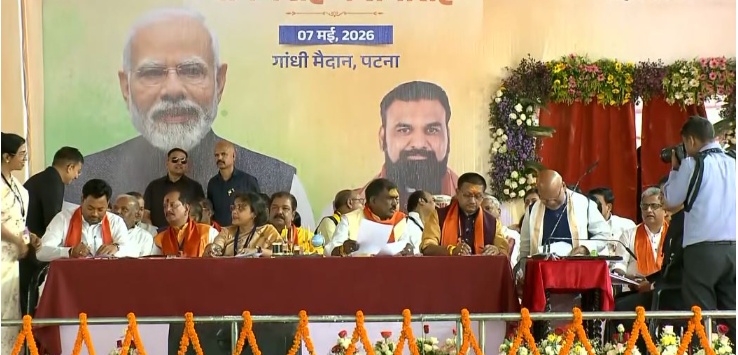
The swearing-in ceremony, held at the historic Gandhi Maidan, witnessed the induction of several prominent leaders, including Nitish Kumar’s son Nishant Kumar, marking his formal entry into ministerial politics. The development has drawn significant attention in Bihar’s political circles, with many viewing it as the beginning of a new political chapter for the Kumar family.
Among those who took oath were Vijay Kumar Sinha, Shrawon Kumar, Dilip Kumar Jaiswal, Leshi Singh, Ram Kripal Yadav, Nitish Mishra, Ashok Choudhary and several other NDA leaders. Governor Lt Gen Syed Ata Hasnain (Retd) administered the oath of office to the newly inducted ministers.
The cabinet expansion comes amid significant political changes in Bihar following Nitish Kumar’s move to the Rajya Sabha and the formation of the new NDA government under Chief Minister Samrat Choudhary. According to reports, the BJP secured the highest number of ministerial berths, while JD(U) also received substantial representation in the expanded cabinet.
Prime Minister Narendra Modi, Union Home Minister Amit Shah, Defence Minister Rajnath Singh and several senior NDA leaders attended the ceremony, underlining the political importance of the cabinet reshuffle.
Political observers believe the inclusion of Nishant Kumar reflects the NDA’s strategy to blend experienced leadership with a younger generation ahead of future electoral battles in the state. The newly expanded cabinet is expected to focus on governance, development initiatives and strengthening coordination among alliance partners.
The portfolios of the newly inducted ministers are likely to be announced soon.


