


7, May 2026
Rupee Falls to 94.77 as US-Iran Peace Talks Trigger Volatility
Mumbai, May 7 (BNP): The Indian rupee weakened in early trade on Thursday, falling by 28 paise to 94.77 against the US dollar as investor sentiment turned cautious following reports of a potential diplomatic breakthrough between the United States and Iran.
The currency came under pressure after markets reacted to news that Washington and Tehran are discussing a 14-point Memorandum of Understanding (MoU) aimed at reducing tensions and restarting negotiations to de-escalate the ongoing geopolitical conflict.

According to market participants, the sudden shift in sentiment led to volatility in currency markets, with traders reassessing risk exposure amid uncertainty over the outcome of the proposed agreement.
The latest developments come at a time when global markets remain highly sensitive to West Asia tensions, particularly their impact on crude oil prices, trade routes, and foreign capital flows.
A softening in risk appetite also contributed to pressure on the rupee, as investors weighed the implications of potential changes in oil supply dynamics and broader geopolitical stability.
Recent market reports indicate that fluctuations in the India–US dollar pair have been closely tied to news flow from the region, with currency movements reacting sharply to both optimism and uncertainty surrounding the peace talks.
Analysts say currency markets are likely to remain volatile in the near term, as participants await clearer signals on whether diplomatic negotiations between the US and Iran progress into a formal agreement.
For now, the rupee continues to trade under pressure, reflecting a cautious global environment where geopolitical developments are playing a dominant role in shaping investor sentiment.

- 0
- By Neel Achary

7, May 2026
Pit Launches with $16 Million Led by Andreessen Horowitz to Bring AI-Native Software to Enterprise Operations
Founded by the team behind Voi and Klarna, Pit acts as an AI product team as a service — learning how companies work and building the systems that run their operations.
STOCKHOLM, SWEDEN – May 07; Pit, an AI-native platform that replaces the patchwork of spreadsheets, inboxes, and rigid SaaS tools that run enterprise operations today, announced its public launch alongside $16 million in funding led by Andreessen Horowitz (a16z). The round includes participation from Lakestar, the Pit founders and executives from OpenAI, Anthropic, Google, Deel, and Revolut, as well as the Stena and Lundin families.
Pit is publicly launching as an “AI product team as a service” — enabling companies to build and deploy custom, production-grade software for their internal business operations.
Across industries, core business operations are still powered by spreadsheets, inboxes, and rigid SaaS tools that were never designed for how companies actually work. While enterprises have spent over $1 trillion on digital transformation in recent years, most workflows remain fragmented, manual, and difficult to adapt.
Pit replaces this layer with AI-native software that is custom-built for each company’s workflows. This enables teams to move faster, operate more efficiently, and scale without the constraints of legacy systems.
“For 20 years, enterprises have rented software that forces them to operate around it. With AI, that ends. For the first time, every company can run on systems they actually designed themselves,” said Adam Jafer, CEO and co-founder of Pit.
Pit’s platform is designed to take a business need — from operations to finance to customer workflows — and translate it into fully deployed, governed software.
The product consists of two core components:
- Pit Studio – learns how you work, and builds the system that runs it for you
- Pit Cloud – governed infrastructure with tenant isolation, ISO 27001, SSO, RBAC, and full audit observability
Unlike traditional low-code tools or AI copilots, Pit outputs real software running real operations, not prototypes or experiments.
Pit is already live across enterprise pilots in logistics, telecom, e-commerce, and healthcare — including deployments with Voi, Tre, Stena Recycling, and Kry — with systems going live in days or weeks.
Early results include:
- 85% reduction in campaign execution time
- 10,000+ hours saved annually per deployment
- 99% invoice acceptance rates through automation
At one of Europe’s largest industrial companies, Pit replaced legacy contract and invoice validation with an AI-powered system that processes in real time — saving over 10,000 hours annually with zero validation errors.
“Every AI company is selling speed. Pit is selling speed that holds up for years, secure, governed, and built to last. It’s a new category,” said Alex Rampell, General Partner at Andreessen Horowitz.
Pit was built by the Founders and CTO/AI leads behind Voi, Klarna and iZettle, who spent years replacing manual workflows with custom, AI-powered systems at scale – driving significant operational gains across both Klarna and Voi. That same approach is now productized in a platform designed for enterprise-grade security, governance, and reliability.
7, May 2026
AAEON Launches NIKY-2215-NX, a 21.5” AI Panel PC Powered by NVIDIA Jetson Orin NX
Designed for AI-driven industrial monitoring applications, AAEON’s new NIKY-2215-NX pairs a strong AI engine with a 21.5” TFT-LCD touchscreen, all in one robust platform.
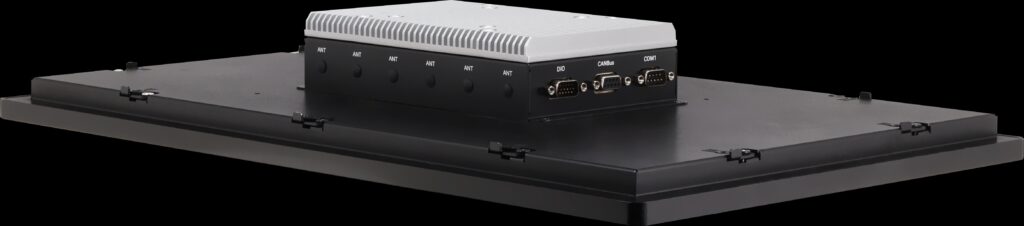
(Taipei, Taiwan – May 7, 2026) AAEON (Stock Code: 6579), a leader in industrial PC solutions, today announced the release of the second addition to its AI Panel PC series, the NIKY-2215-NX.
AAEON first introduced its AI Panel PC product line in November 2025, with the series’ value proposition being that it incorporated an NVIDIA Jetson module, a full-function industrial I/O, and high-definition display in a single device.
The NIKY-2215-NX is available in SKUs with either an 8GB or 16GB NVIDIA Jetson Orin NX module, offering up to 100 TOPS of AI performance. Meanwhile, the system includes a 21.5″ TFT-LCD projected capacitive multi-touch screen, highlighting its suitability for applications such as AI-driven production line inspection systems and industrial monitoring dashboards.
The device offers four USB 3.2 Gen 2 Type-A ports alongside two LAN ports for Gigabit Ethernet, located on its bottom-side panel. Meanwhile, its right-side panel I/O hosts a DB-15 port for DIO 8-bit and two DB-9 ports for CANBus and RS-232/422/485. For storage, the NIKY-2215-NX provides an M.2 2280 M-Key slot. Expansion for Wi-Fi and 5G modules is also present, with both M.2 2230 E-Key and M.2 3042/3052 B-Key slots provided.
Given the market segment the product is designed for, the NIKY-2215-NX demonstrates a number of rugged characteristics. These include a broad -5°C to 55°C operating temperature range, a 12V to 24V power input range, as well as both VESA and panel mounting options. Moreover, the system’s display offers wide 160-degree horizontal and vertical viewing angles, as well as impressive vibration and shock tolerance.
For detailed specifications and further information about the NIKY-2215-NX, please visit its dedicated product page. Meanwhile, pricing and ordering information can be obtained via the contact form on the AAEON website.
7, May 2026
Shangri-La Eros New Delhi Celebrates Mother’s Day with Curated Dining and Wellness Experiences Honouring Every Mother
New Delhi, May 07: This Mother’s Day, Shangri-La Eros New Delhi invites guests to celebrate the women who make life’s simplest moments feel extraordinary with a thoughtfully curated series of dining and wellness experiences across the hotel. Designed as a tribute to mothers and all that they do, each experience has been crafted to feel personal, memorable, and indulgent in equal measure.
From a special Punjabi culinary pop-up at Tamra in collaboration with Chef Pin, to a five-course Italian lunch complemented by an interactive pizza-making experience at Sorrento, and celebratory lunch and dinner offerings at Shang Palace, the hotel brings together distinct experiences designed for meaningful moments with family.
Extending beyond the day itself, The Mother’s Day Save introduces exclusive salon privileges and specially priced gift vouchers, allowing the celebrations to continue well beyond Mother’s Day.
At the heart of this year’s Mother’s Day celebrations is Virsa; A Punjabi Culinary Affair, a special pop-up hosted at Tamra in collaboration with Chef Pin. Running from 8th to 10th May, the limited-period showcase features a curated menu by Chef Rummy Nagpal, bringing the bold, rooted flavours of Amritsari and Sanjha Punjab cuisine to the capital. Virsa draws from her upbringing in Amritsar and her mother’s intuitive, unwritten recipes, refined through years of travel and culinary practice, with each dish carrying forward a generational memory. The menu unfolds as a cohesive journey, beginning with starters like Lehsoon Kali Mirch Mutton Chops, Tawa Kalegi, and Mutton Tawa Chaap, moving into a hearty main course of Shahi Butter Chicken, Mutton Bhuna, Kulche Chole, and Satpura Laungi, and concluding with traditional desserts such as Roh Di Kheer and Caramelized Halwa. The Punjabi pop-up is available for both lunch and dinner, with the lunch buffet .
Complementing the celebrations, on 10th May the hotel presents two distinct dining experiences. At Sorrento, Mother’s Day unfolds as a Chef’s Choice five-course set lunch rooted in the culinary traditions of Naples and built around the restaurant’s signature dishes, featuring selections such as Rigatoni Alla Norma with San Marzano Sauce and Confit Aubergine, and Pan-Seared Seabass. A highlight of the afternoon is an interactive pizza-making session, where guests are guided through stretching the dough, selecting toppings, and crafting their own pizzas, adding a hands-on, personal dimension to the experience. Sorrento’s Chef’s Choice five-course lunch .
Shang Palace welcomes guests for both lunch and dinner with specially curated Mother’s Day experiences. Lunch will feature the Chef’s signature Golden Chopstick menu alongside a refined selection of Cantonese classics, while dinner will present three thoughtfully designed set menu experiences complemented by a bespoke à la carte cocktail selection. Adding a celebratory touch to the occasion, mothers dining at the restaurant will be welcomed with a complimentary cocktail or mocktail.At Shang Palace, the specially curated lunch experience is priced at INR 3,000 plus taxes per person, while dinner experiences begin at INR 4,000 plus taxes per person.
7, May 2026
Nature’s Annual Miracle Returns as Olive Ridley Hatchlings Emerge Along Odisha Coast
May 7 (BNP): Rushikulya River has once again turned into a remarkable natural spectacle as thousands of Olive Ridley turtle hatchlings emerged from their nests this week and made their first journey towards the sea.
Along the sandy coastline of Ganjam district, the tiny hatchlings could be seen slowly crawling across the beach under the night sky, guided by their natural instincts and the reflection of moonlight on the water. The annual event has drawn attention from wildlife officials, conservationists and nature enthusiasts alike.

Olive Ridley turtles are globally known for their rare mass nesting behaviour, called arribada, a Spanish term meaning “arrival.” During this phenomenon, thousands of female turtles gather on the same stretch of beach within a short period to lay eggs, creating one of nature’s most extraordinary wildlife events.
Although Olive Ridleys are considered the most abundant species of sea turtles in the world, large-scale nesting sites are limited to only a few regions globally. Odisha’s coastline remains one of the most important breeding grounds for the species, particularly the beaches near Rushikulya, which witness nesting activity every year.
Wildlife experts say the successful hatching of thousands of baby turtles reflects the ecological importance of Odisha’s coastal habitat and ongoing conservation efforts in the region.
The hatchlings now face a long and challenging journey in the ocean, where only a small number are expected to survive into adulthood. However, conservationists believe every successful nesting season strengthens the fragile marine ecosystem and offers hope for the continued survival of the species.
Forest officials and volunteers have been monitoring the nesting grounds to ensure minimal disturbance and to protect the hatchlings during their movement towards the sea.
7, May 2026
Industry Reaction on ECLGS 5.0 from M1NXT, Tide & Progcap
May 07: India’s MSME ecosystem is likely to see a meaningful liquidity boost with the rollout of ECLGS 5.0, especially at a time when exporters and small businesses continue to grapple with global demand volatility, tighter cash flow cycles, and rising operational uncertainty. Industry players across trade finance, MSME banking, and fintech believe the enhanced guarantee support and expanded credit coverage could improve lender confidence, accelerate working capital access, and strengthen the resilience of small businesses navigating supply-side and trade challenges. The move is also expected to deepen adoption of digital financial tools and enable more inclusive credit deployment across underserved MSME segments.
“ECLGS 5.0 comes at a time when many MSMEs are dealing with tighter cash flow cycles and increasing uncertainty in their day-to-day operations. What really matters in such moments is timely access to working capital and the 100% guarantee structure helps unlock that by giving lenders the confidence to move faster. From what we see on the ground, demand for short-term, flexible credit is only increasing, and interventions like this play a critical role in helping businesses stay resilient, keep their operations running, and protect livelihoods across the value chain.” – Pallavi Shrivastava, Co-Founder, Progcap
“ECLGS 5.0 is a timely move that reinforces support for MSMEs navigating ongoing global uncertainties. With ₹2.55 lakh crore in additional credit and 100% guarantee support, it will help ease immediate liquidity pressures and sustain business continuity. Importantly, this also reflects a broader shift—resilience today goes beyond access to credit, with MSMEs increasingly focusing on stronger cash flow management, real-time financial visibility, and digital tools to build more stable, future-ready businesses.” – Gurjodhpal Singh, CEO, Tide in India
“ECLGS 5.0 is expected to ease credit constraints for global trade MSMEs by improving access to working capital and strengthening lender confidence through sovereign guarantees. This will enable MSMEs better navigate supply-side challenges, scale operations, and enhance their competitiveness in international markets. At the same time, the expanded risk coverage is likely to drive higher participation from financial institutions, enabling broader credit deployment and supporting a more robust and inclusive trade finance ecosystem, while reinforcing India’s position in global supply chains.” – Munindra Verma, CEO, M1 NXT
7, May 2026
Odisha Positioned to Drive India’s Next Industrial Growth from the East Coast: CM Mohan Majhi
Bhubaneswar, May 7 (BNP): Odisha Chief Minister Mohan Charan Majhi has called for a more balanced model of industrial development in India, stating that the country’s next major growth phase should be powered by the eastern coastline, with Odisha emerging as a central hub for investment, trade and manufacturing.
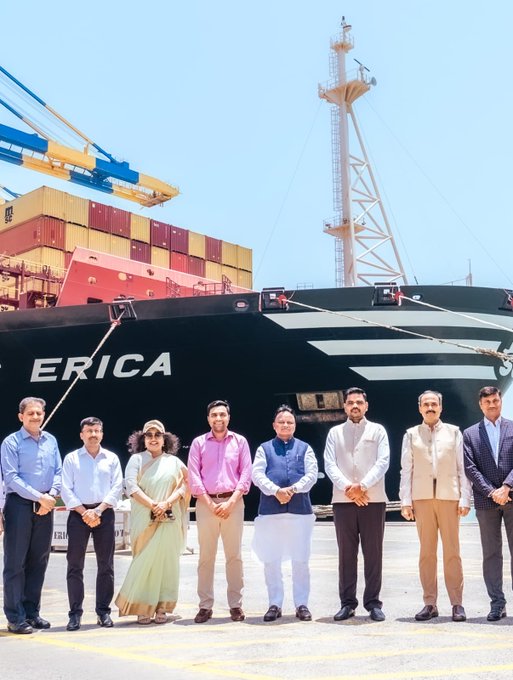
Pic Credit: https://x.com/MohanMOdisha
Speaking during his visit to Gujarat, the Chief Minister said India’s western coast has played a crucial role in driving maritime trade and industrial expansion over the years, but the time has now come to unlock the untapped potential of the East Coast.
During interactions with industry leaders and stakeholders at Mundra Port, Majhi proposed a “two-coast strategy” aimed at strengthening industrial activity across both the western and eastern seaboards to ensure more balanced and sustainable economic growth.
He said Odisha is well-positioned to lead this transformation due to its strategic location, expanding infrastructure network and growing industrial ecosystem. The state’s proximity to Southeast Asia, East Asia and the Indo-Pacific region, he noted, offers strong advantages for trade, logistics and manufacturing.
The Chief Minister emphasised that Odisha is building an investment-friendly environment backed by policy support, faster clearances and improved connectivity. He added that the state is focused on converting investment commitments into on-ground projects within a defined timeframe.
Majhi, accompanied by Industries Minister Sampad Chandra Swain, Chief Secretary Anu Garg and senior officials, showcased Odisha’s industrial potential and infrastructure readiness during meetings with business leaders.
As part of the visit, the delegation toured major facilities at Mundra Port, including container terminals and Very Large Crude Carrier (VLCC) jetties, to study large-scale cargo handling and integrated port operations. They also visited industrial units within the adjoining Special Economic Zone, including facilities linked to copper manufacturing and renewable energy components such as solar cells and wind turbine parts.
On the second day of my Gujarat visit, I visited Mundra Port and engaged with industry leaders, where I proposed a balanced two-coast strategy as a defining framework for India’s next phase of industrial development. India’s growth cannot remain one-sided; the next phase of… pic.twitter.com/2zur2kYtbR
— Mohan Charan Majhi (@MohanMOdisha) May 6, 2026
Highlighting Odisha’s recent investment momentum, the Chief Minister said the state has approved 433 investment proposals worth nearly ₹8.37 lakh crore over the past 22 months. Of these, 148 projects worth around ₹2.86 lakh crore have already moved into the implementation stage.
He noted that sectors such as logistics, petrochemicals, chemicals, downstream industries and manufacturing are witnessing growing investor interest, supported by expanding industrial corridors, logistics parks and port-led infrastructure.
According to officials, Odisha is steadily strengthening its position as a major industrial and logistics hub on India’s eastern coast. Ports including Paradip Port, Dhamra Port and Gopalpur Port are expected to play a key role in driving future industrial growth and regional connectivity.
The visit is being seen as part of Odisha’s broader effort to attract large-scale investments and position itself as a leading growth engine for India’s next industrial decade.
7, May 2026
Bhubaneswar Accelerates Waste Cleanup with Phase 2 of Bhuasuni Bio-Mining Project
Bhubaneswar, May 7 (BNP): Bhubaneswar Municipal Corporation has launched the second phase of its bio-mining project at the Bhuasuni dumping yard, stepping up efforts to tackle decades of accumulated waste and improve the city’s environmental health.

Under the new phase, nearly 9 lakh metric tonnes of legacy waste will be processed in a phased manner using scientific waste-treatment methods. Civic officials said the initiative is expected to accelerate the restoration of the long-used dumping site and strengthen Bhubaneswar’s push towards sustainable waste management.
Over the last three years, the municipal corporation has already processed around 12 lakh metric tonnes of old waste from the Bhuasuni site. With the addition of Phase 2, the total quantity of waste treated at the landfill is expected to reach nearly 21 lakh metric tonnes.
Bio-mining is a process that involves segregating old mixed waste, recovering reusable materials, and scientifically disposing of the remaining debris. The method helps reduce environmental damage caused by open dumping while also reclaiming land for future use.
The Bhuasuni dumping yard served as Bhubaneswar’s primary waste disposal site between 2008 and 2022. However, concerns over pollution, foul odour, and environmental hazards had intensified over the years, prompting authorities to adopt cleaner and more sustainable waste-processing measures.
The transition towards bio-mining gained momentum in 2023 after directives from the National Green Tribunal, which instructed urban local bodies across the country to stop open dumping and implement scientific waste management practices.
Officials said no fresh waste is currently being dumped at Bhuasuni or nearby locations such as Daruthenga, indicating a shift towards more regulated disposal systems.
The successful implementation of the second phase is expected to improve environmental compliance, reduce pollution risks, and create healthier living conditions for residents in nearby areas. Civic authorities believe the project will also play a key role in transforming Bhubaneswar’s long-term urban waste management infrastructure.
7, May 2026
India’s Exports Surge Over 20 pc in April Despite West Asia Tensions
New Delhi, May 7 (BNP): India’s export sector has started the new financial year on a strong note, recording more than 20 per cent growth in the first three weeks of April despite rising geopolitical tensions and disruptions in global trade routes linked to the West Asia conflict.
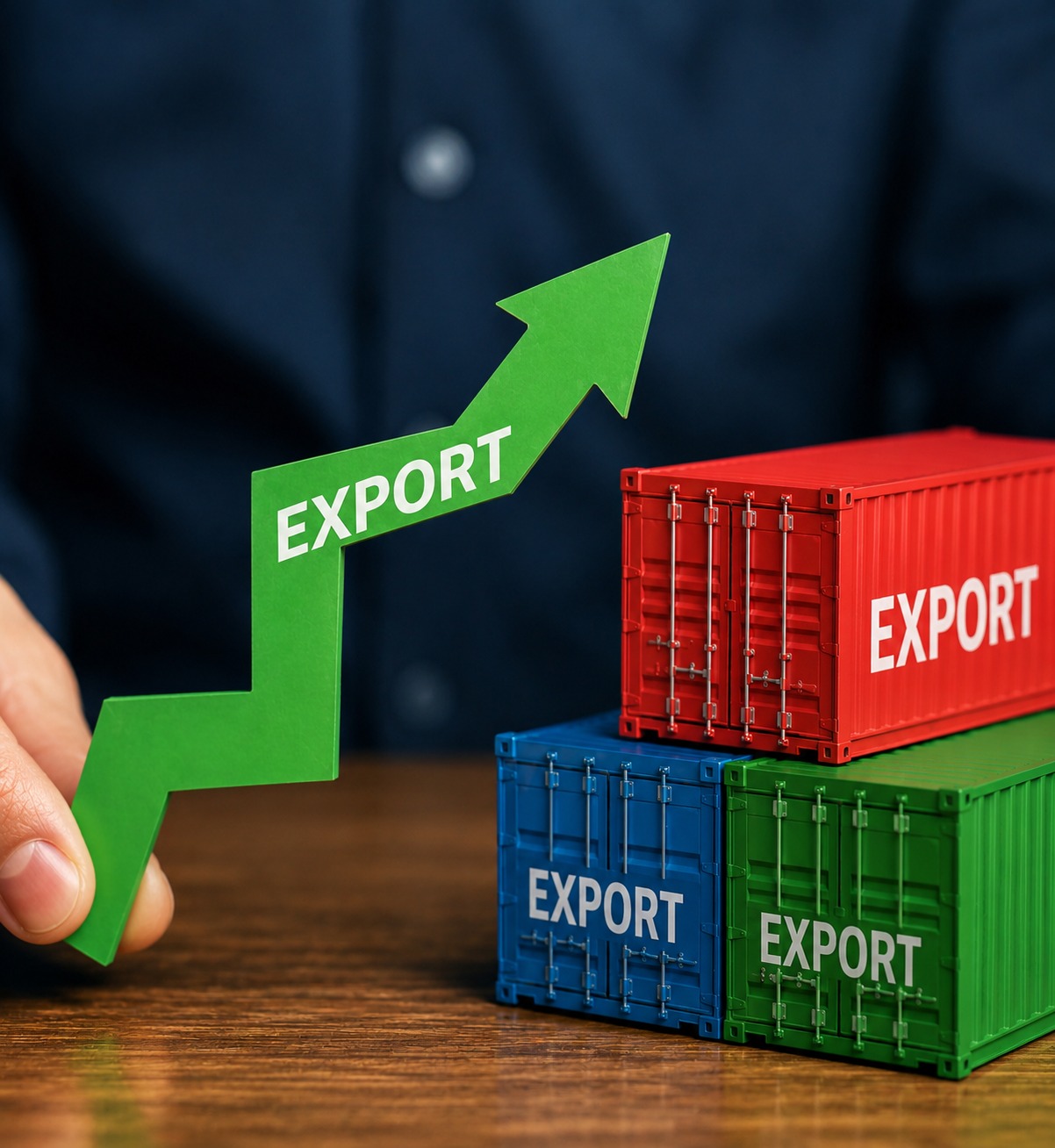
According to the Ministry of Commerce and Industry, the sharp rise in exports reflects resilient global demand for Indian goods even as international supply chains face uncertainty due to the ongoing crisis in the Middle East.
Among the key drivers of growth were petroleum products and electronic goods, both of which witnessed strong overseas demand during the period between April 1 and April 21.
Industry observers said exports of refined petroleum products such as diesel and aviation fuel received a boost as disruptions around the Strait of Hormuz affected normal supply flows from Gulf nations. The strategic waterway remains a critical route for global oil shipments, and tensions in the region have pushed up international energy prices.
India’s coastal refineries appear to have benefited from the shifting trade dynamics, helping increase exports of fuel products to several markets.
At the same time, electronic goods continued to emerge as a major strength for India’s export economy. Growing global demand for smartphones, consumer electronics, and communication equipment has significantly expanded the country’s presence in international markets.
The expansion of manufacturing operations by global technology companies, including Apple, has further accelerated India’s electronics exports in recent years.
Commerce and Industry Minister Piyush Goyal said exporters remain optimistic despite the challenging global environment. He noted that shipments to West Asia are continuing through alternative routes as the Strait of Hormuz remains under pressure.
The minister also expressed confidence that India’s recently concluded free trade agreements would provide long-term support to domestic industries and help expand access to global markets.
India’s electronics exports have witnessed remarkable growth over the past decade. Between 2016 and 2024, exports from the sector increased nearly fivefold to over $42 billion, reflecting the country’s growing role in global manufacturing and supply chains.
A recent report by NITI Aayog highlighted that electronics has now become one of India’s largest export categories, supported by rising investments, policy incentives, and expanding domestic production capabilities.
The sector has also become increasingly important for industries such as telecom, renewable energy, defence, and automotive manufacturing, strengthening its role in India’s broader industrial growth story.
To further support the industry, the Union Budget allocated ₹40,000 crore under the Electronics Components Manufacturing Scheme, aimed at boosting domestic production capacity and reducing import dependence.
7, May 2026
Farmley Turns Healthy Snacking into a 30-Day Habit with Gamified ‘Daily Fuel Challenge’
May 7: Healthy snacking brand, Farmley brought together consumers across the country for its 30-day ‘Daily Fuel Challenge’, generating over 1000 user-created recipe reels, 4.5 million+ views, and 7,000+ follower growth during the campaign period. The initiative saw participation from 50+ creators and consumers, culminating in 27 winners across multiple engagement tiers.
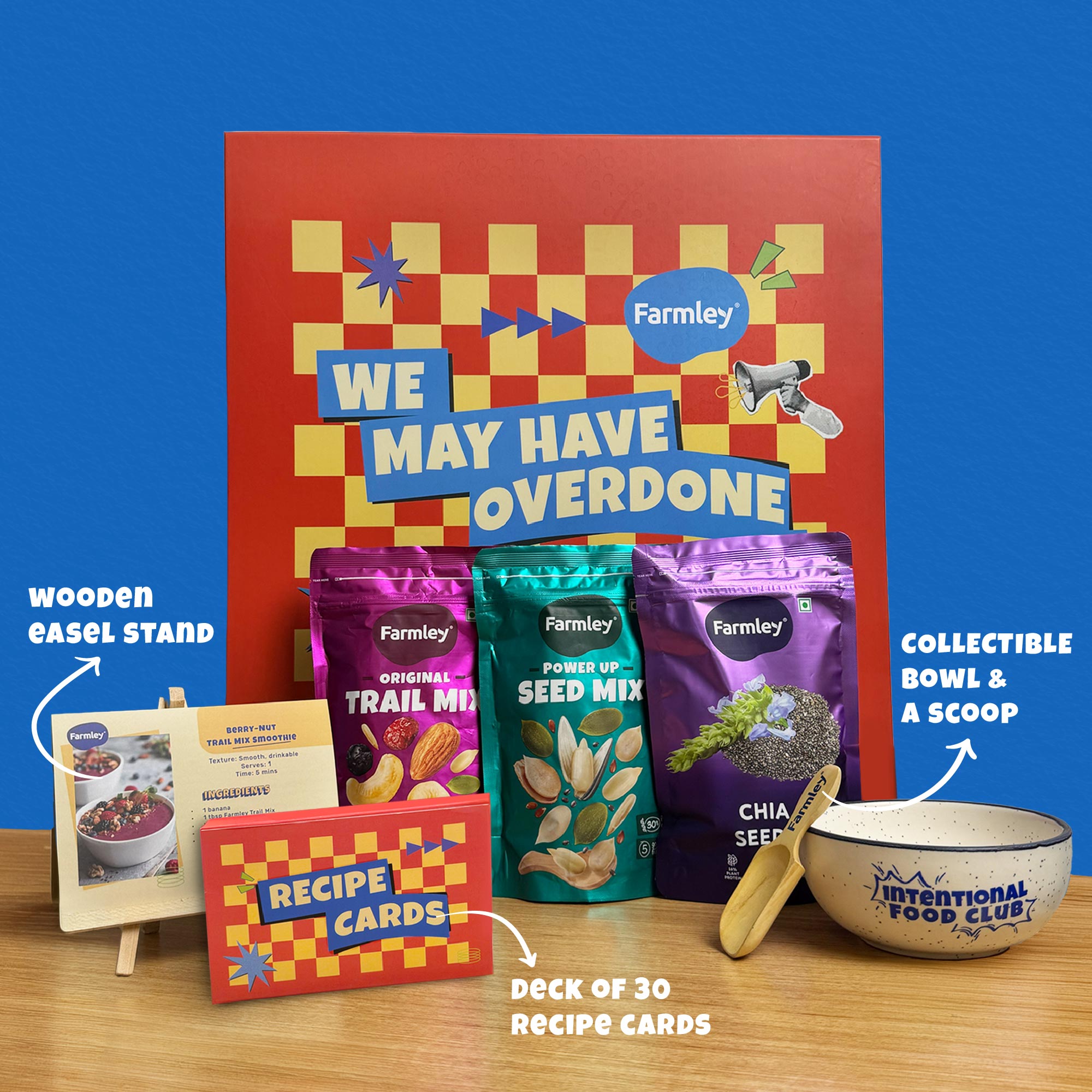
Structured as a month-long digital challenge, the initiative encouraged participants to create and share one recipe reel a day using products from the Daily Fuel Box. Participation ranged from everyday home cooks to creators with audiences exceeding 200,000. The limited-edition Daily Fuel Boxes were sold out during the campaign period, with over 500 boxes sold within a month.
At the centre of the campaign was a guided consumption model. The Daily Fuel Box combined curated products with recipe cards, a wooden easel, a ceramic bowl, a scoop, and a bingo-style tracker, simplifying how consumers could incorporate seeds and mixes into their daily routines and addressing a common category gap between purchase and sustained usage.
Designed around repeat engagement, the challenge introduced 30 recipe prompts and a visual progress format that encouraged consistency over a fixed cycle. Several participants completed all 30 days, reflecting sustained engagement beyond typical short-term digital campaigns.
As the challenge progressed, participants began interacting, exchanging ideas, and amplifying each other’s content, informally building a community often referred to as the ‘Intentional Food Club’. By linking consumption with content creation, the Daily Fuel Challenge reflects how healthy snacking brands are increasingly using participation-led formats to drive both engagement and sustained product usage.


