


28, Apr 2026
“Shwet Shyam” by Project Tantavyaa Celebrates India’s Skilled Artisans and Heritage Crafts
A Celebration of Textile Heritage, Devotion & Artisan Empowerment
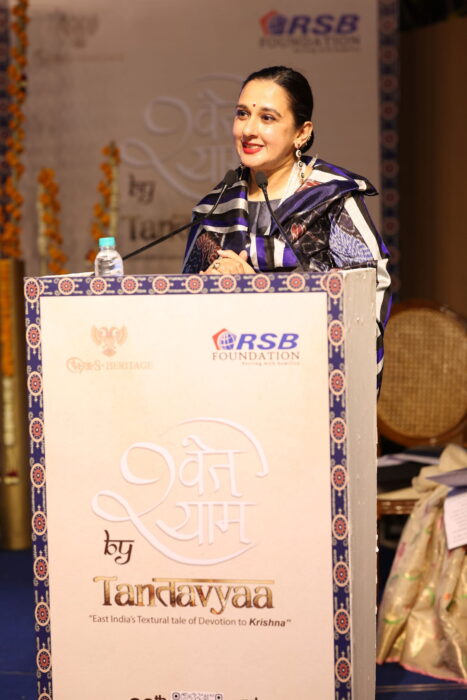
New Delhi, Apr 28: RSB Foundation, the CSR arm of the RSB Group, today unveiled Project Tantavyaa: Shwet Shyam at the National Crafts Museum & Hastkala Academy. The gathering brought together India’s textile legacy, cultural leadership, and artisan communities, with a clear focus on reviving and supporting traditional textiles through sustainable, community-led initiatives.
Rooted in the textile traditions of Odisha, Bengal, and Assam, Shwet Shyam is a craft-led cultural experience inspired by the values of Swabhiman (dignity), Shaktikaran (empowerment), and Sankirtan (devotion). The initiative places strong emphasis on bringing handloom traditions back into focus while creating sustainable livelihoods for artisan communities, particularly women. The showcase will continue until 2nd May 2026, offering an immersive journey into India’s textile heritage and cultural legacy.
The evening opened with a traditional Mangalacharan performance. The inauguration was graced by the Chief Guest, Union Minister Shri Dharmendra Pradhan, who spoke about the importance of preserving India’s craft heritage in line with the vision of Swadeshi 2.0 and the Five-F value chain.
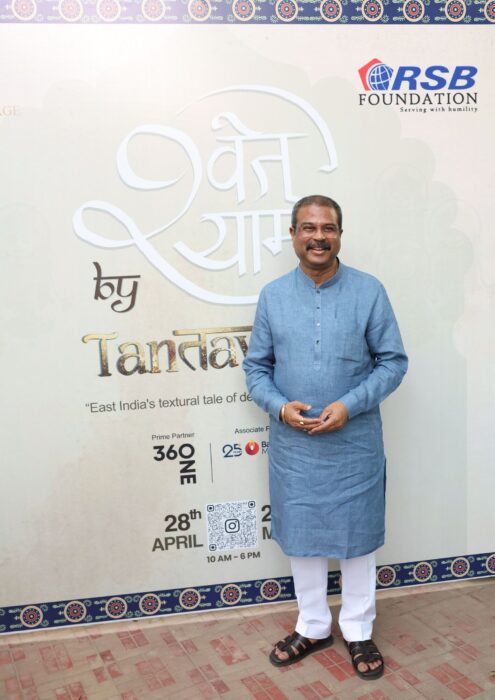
Dharmendra Pradhan, Minister of Education, Government of India said: “As we move towards a more self-reliant India, it is initiatives like these that reinforce the value of Swadeshi, ensuring our traditional crafts continue to thrive in a modern, global context.” This was followed by addresses by Ms. Priyanka Behera, Director – CSR, RSB Group, and Pankaj S. Chadha, outlining how sustainable, community-led approaches can help bring rare textile traditions back into practice.
A key highlight of the evening was the book launch and address by His Holiness Indradyumna Swami Ji, adding a spiritual dimension to the showcase. The event also witnessed the presence of eminent royals, including HH Maharani Radhika Raje Gaekwad of Baroda, Shriji Huzur Dr. Lakshyaraj Singh Ji of Udaipur, Maharani Nivriti Kumari of Udaipur, Yuvrani Meenal Kumari Singh Deo of Dhenkanal, Kunwarani Ritu Ajatshatru Singh and Celebrity Astrologer & Vastu Expert Dr. Jai Madaan , reinforcing the cultural significance of the initiative.

Speaking on the occasion, Priyanka Behera, Director – CSR, RSB Group, said: “Tantavyaa is about restoring pride to our artisans and ensuring that craft becomes a sustainable source of livelihood, especially for women. Shwet Shyam reflects our commitment to reviving traditional textiles through community-led efforts that create long-term impact.”
Curated under Project Tantavyaa, the showcase brings together over 100 handcrafted textile pieces, presenting India’s heritage crafts as living traditions supported by sustainable ecosystems. The evening concluded with a presentation of Dhenkanal’s culinary heritage from Odisha, extending the celebration beyond textiles.

- 0
- By Neel Achary

28, Apr 2026
India’s Fintech Funding Grows Modestly, Late-Stage Firms Lead
New Delhi, Apr 28 (BNP): India’s fintech sector raised $513 million in the first quarter of 2026, registering a slight increase compared to last year, even as the number of funding deals declined.
A recent report indicates a clear shift in investor preference toward larger, established companies, with late-stage funding witnessing strong growth. In contrast, early-stage and seed funding saw a decline, reflecting a more cautious investment approach.
The digital lending segment attracted the majority of investments, accounting for nearly 60% of total funding, highlighting a focus on business models with proven performance.
Mumbai emerged as the leading funding hub during the quarter, followed by Bengaluru, driven by the growth of lending and financial services firms.
Overall, the trend suggests that India’s fintech sector is moving toward a more stable and mature investment phase, with emphasis on scale, sustainability, and profitability.
28, Apr 2026
AR Rahman Makes Royal Albert Hall Debut, Showcases Next-Gen Indian Talent on Global Stage!
Mumbai/London, Apr 28 (BNP): Oscar-winning composer A. R. Rahman marked a major milestone in his international concert journey with a sold-out debut performance at the iconic Royal Albert Hall, celebrating the rise of a new generation of musicians.
The three-night orchestral showcase, titled “AR Rahman x Rushil Ranjan,” was created in collaboration with composer and Associate Artist Rushil Ranjan. The production brought together emerging Indian talent and world-class performers in a unique blend of Indian and Western classical traditions.
A defining highlight of the concert was Rangreza, a newly commissioned composition co-created by Rahman and Ranjan. Rooted in Sufi philosophy, the piece explored shared spiritual and musical connections across cultures. It was performed by the Royal Philharmonic Orchestra and London Voices, alongside Associate Artist Abi Sampa, under the baton of Melvin Tay.
One of the most emotional moments of the evening came with the participation of musicians from Rahman’s KM Music Conservatory and the Sunshine Orchestra, an initiative supporting talented youth from underserved communities in Western classical music. Their performance alongside an international orchestra at one of the world’s most prestigious venues was hailed as a landmark moment of representation.
Rahman said seeing the Sunshine Orchestra share the stage with the Royal Philharmonic Orchestra was deeply special, adding that he was proud of the young musicians for making India proud globally and taking music to new heights.
The programme also featured vocalist Sarthak Kalyani and percussionist Janan Sathiendran, while choreography by Aakash Odedra added a striking visual dimension to the performance.
Audiences were also treated to grand orchestral reinterpretations of Rahman’s celebrated scores from Jodhaa Akbar, Guru, 127 Hours, and Rockstar, among others.
The showcase marked a significant evolution in the global presentation of Indian film music, positioning emerging Indian artists at the forefront of an international cultural dialogue.
28, Apr 2026
Enterprise Presales Gets Its First Structured Framework: Sathish Murthy Launches The Technical Yes
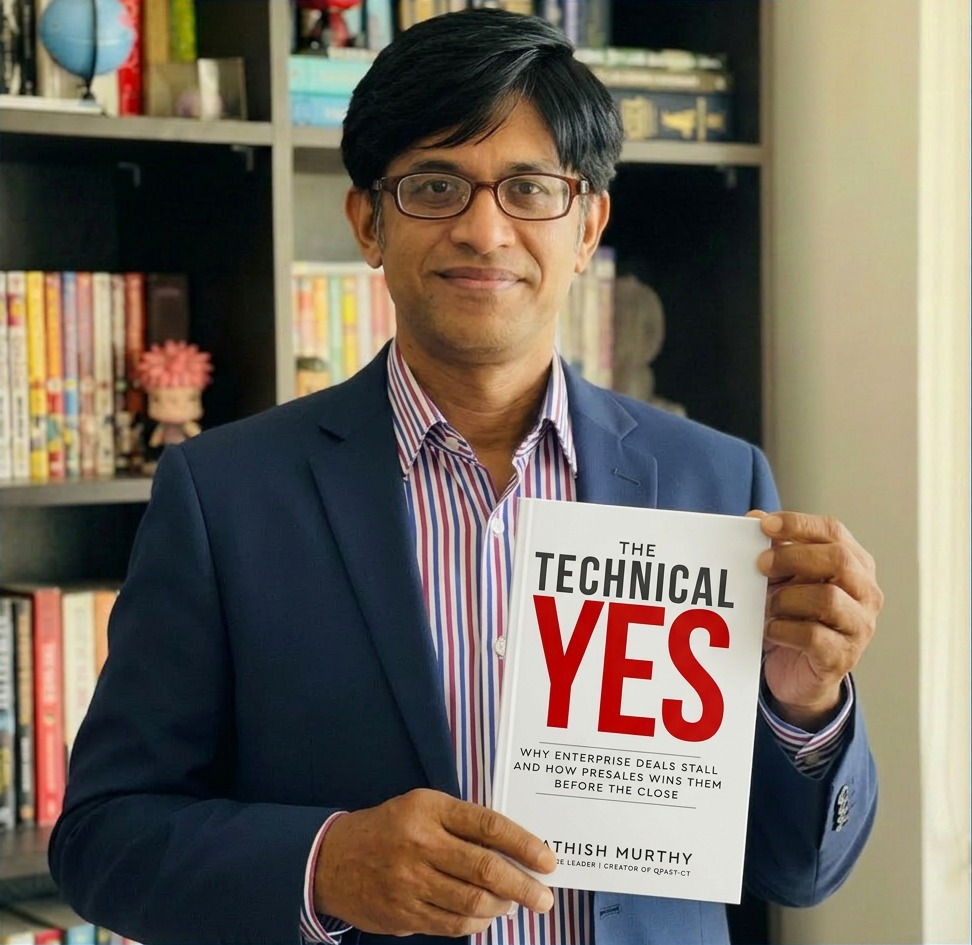
New Delhi, Apr 28: In today’s enterprise sales environment, winning a deal goes far beyond securing a signed contract. Recognising this critical gap, presales expert Sathish Murthy, founder of Presalesforce.ai, has launched his new book, “The Technical Yes” — a practical guide to building technical trust and confidence early in the sales process. The book has already gained early traction, ranking as an Amazon Bestseller in Sales Techniques.
The book is built on a simple yet powerful idea: every successful deal has two components – the sales win and the technical win. While traditional sales approaches focus on closing deals, “The Technical Yes” emphasises the importance of convincing the stakeholders who evaluate, implement, and use the solution. Without this technical validation, deals often stall, face resistance, or fail to sustain long-term success.
Drawing on over two decades of experience across 12 countries, Murthy introduces the QPAST- CT (Questions(Discovery-
Speaking about the book, Sathish Murthy notes that success in modern enterprise sales is less about delivering a compelling pitch and more about fostering genuine understanding. “The answer is not a better pitch. It is better questions, curiosity, and the patience to build trust,” he says.
Targeted at technology sales professionals, presales teams, and business leaders, the book serves as a practical handbook for both newcomers seeking structure and experienced professionals aiming for consistency. It also provides leaders with a common framework to align their teams and improve deal outcomes.
With “The Technical Yes,” Murthy brings real-world insights into a structured approach, offering a valuable perspective on how organizations can navigate increasingly complex buying environments and secure decisions that truly last.
The book is now available globally across leading platforms including Amazon, Flipkart, and WFP stores.
28, Apr 2026
Trump Reviews Iran Hormuz Proposal, US Likely to Issue Counteroffer Soon!
Washington, Apr 28 (BNP): US President Donald Trump on Monday convened a meeting of his national security team to review Iran’s latest proposal concerning the reopening of the Strait of Hormuz, the strategic waterway through which nearly one-fifth of global oil supplies are transported.

According to reports citing US officials, the Trump administration expressed dissatisfaction with Tehran’s proposal, saying it failed to address key concerns surrounding Iran’s nuclear programme, particularly uranium enrichment and commitments against pursuing nuclear weapons.
Officials indicated that while the proposal was not rejected outright, the White House believes Iran has not fully met Washington’s core security conditions. The administration is now expected to prepare a counterproposal in the coming days.
White House representatives reiterated that the United States would not conduct negotiations through the media and said Washington’s red lines on regional security and nuclear issues remain clear. US Secretary of State Marco Rubio also described Iran’s current offer as unacceptable.
Reports suggested Iran had proposed a phased understanding focused first on reopening the Strait of Hormuz and reducing conflict, while postponing discussions on its nuclear programme to a later stage.
Meanwhile, economic pressure on Iran has reportedly intensified, with disruptions to oil exports leading to rising domestic crude inventories and difficulties in maritime shipments.
The Strait of Hormuz remains one of the world’s most critical energy chokepoints, and any agreement on its reopening would have major implications for global oil markets, trade flows, and regional stability.
28, Apr 2026
Google AI Hub Launched in Visakhapatnam with Dollar 15 Billion Investment
Visakhapatnam, Apr 28 (BNP): The foundation stone for the Google Cloud India AI Hub was laid in Visakhapatnam, marking a major milestone in India’s digital infrastructure growth.
The project, backed by an estimated $15 billion investment, was launched by Andhra Pradesh Chief Minister N. Chandrababu Naidu along with Union Minister Ashwini Vaishnaw.
The upcoming facility will feature a 1-gigawatt data centre capacity and will be developed across nearly 600 acres in Andhra Pradesh, aiming to strengthen artificial intelligence and cloud computing capabilities.
The City of Destiny shall shape the destiny of tomorrow’s technology. Welcome to Vizag, @Google!#GoogleBreaksGroundInVizag #ChooseSpeedChooseAP pic.twitter.com/NaOm7iIVyV
— N Chandrababu Naidu (@ncbn) April 28, 2026
Officials said the AI Hub will enhance digital connectivity, support advanced technology services, and generate significant employment opportunities in the region.
The project is also expected to boost India’s global digital presence through improved cloud infrastructure and subsea connectivity linking major international regions.
With this development, Visakhapatnam is set to emerge as a key centre in India’s growing AI and technology ecosystem.
28, Apr 2026
Google Breaks Ground on India AI Hub, Launching a National Industrial Ecosystem Alongside India’s Digital Infrastructure Milestone
April 28: Today, Google officially broke ground on its landmark AI hub in Visakhapatnam (Vizag), Andhra Pradesh. This marks the start of construction on the company’s largest investment in India’s digital future to date, as well as reinforces Google’s commitment to being a long-term partner and catalyst for India’s economic and environmental resilience.
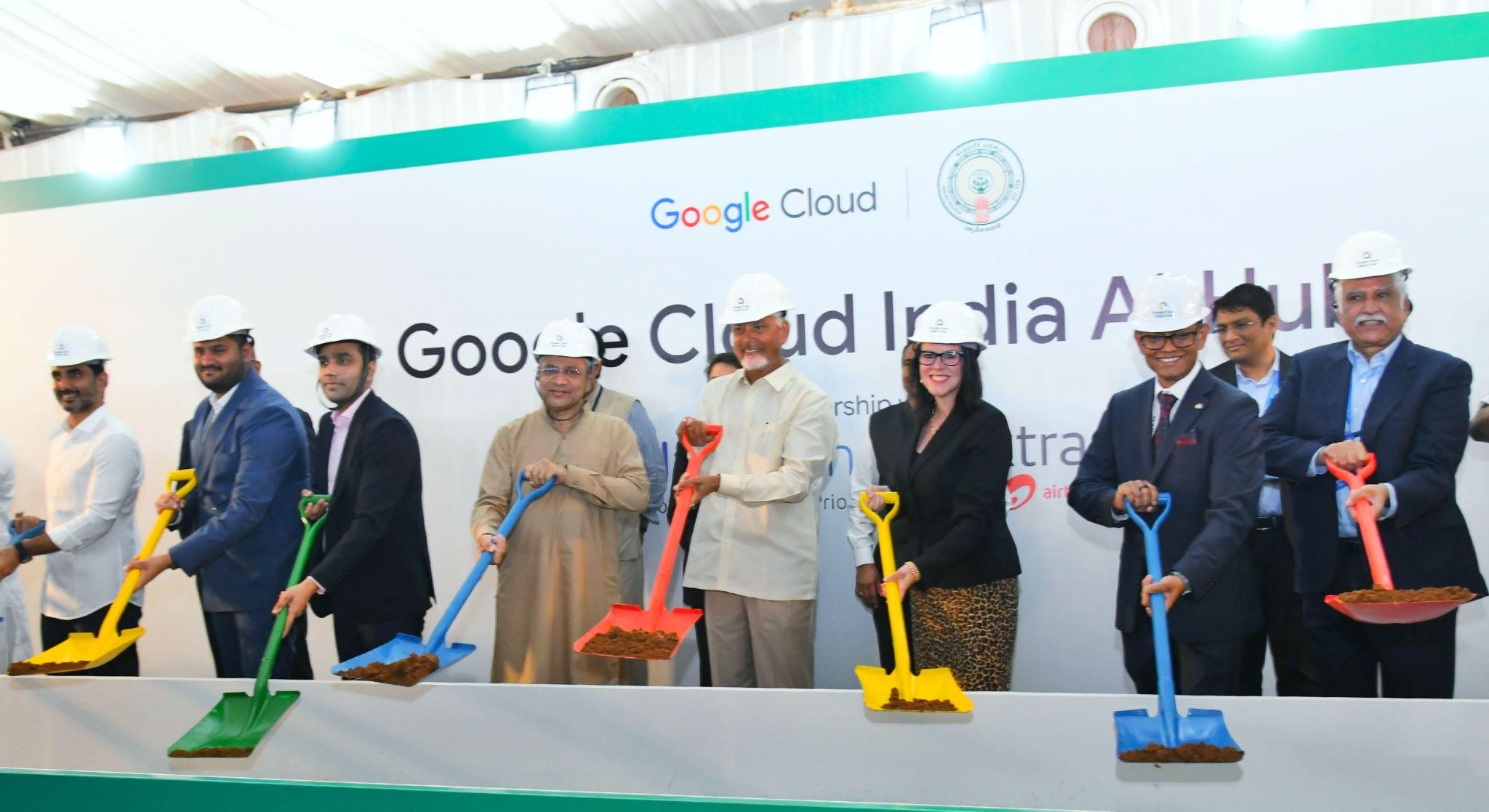
The groundbreaking ceremony, celebrated together with AdaniConneX and Nxtra by Airtel, took place at Tarluvada, Andhra Pradesh, with key dignitaries: Shri Ashwini Vaishnaw, Minister for Railways, Information & Broadcasting and Electronics & Information Technology, Government of India; Shri Nara Chandrababu Naidu, Hon’ble Chief Minister of Andhra Pradesh; Shri Nara Lokesh, Hon’ble Minister for Information Technology, Electronics and Communications, RTG and HRD, Government of Andhra Pradesh; Shri Bikash Koley, Vice President, Google Cloud; Shri Karan Adani, Director, Adani Group; Shri Jeet Adani, Director, Adani Group; and Shri Rakesh Mittal, Vice Chairman, Bharti Enterprises.
From L to R
- Shri. Nara Lokesh – Minister for HRD ITC&E and RTG, Government of Andhra Pradesh
- Shri. Jeet Adani Garu – Chairperson of Adani Group
- Shri. Karan Adani – Managing Director of Adani Ports & SEZ
- Shri. Ashwini Vaishnaw Sir – Hon’ble Union Minister for Railways, Information & Broadcasting, Electronics and Information Technology, Govt. of India
- Shri. Nara Chandrababu Naidu – Hon’ble Chief Minister, Government of Andhra Pradesh
- Smt. Laura Williams Garu – U.S. Consulate General
- Shri. Bikash Koley Garu – Vice President of Google Global Infrastructure, Google Cloud
- Shri. Rakesh Mittal Garu – Vice-Chairman, Bharti Enterprises
Shri Ashwini Vaishnaw, Hon’ble IT Minister, Government of India:
“The groundbreaking ceremony of India AI Hub in Visakhapatnam reflects Hon’ble Prime Minister Narendra Modi Ji’s vision of making India a global leader in technology. Thanks to the support and commitment of Hon’ble Chief Minister of Andhra Pradesh, N. Chandrababu Naidu Ji, in realising this vision.The India AI
Hub and three subsea cables landing in Visakhapatnam will become very important infrastructure for the country’s journey forward.
Thank you Google for your continued trust in India.”
Shri N. Chandrababu Naidu, Chief Minister of Andhra Pradesh:
“Andhra Pradesh is emerging as India’s premier investment destination, powered by speed, trust, and ease of doing business. Google’s AI hub in Visakhapatnam will be a cornerstone of our growing tech corridor, driving innovation, creating high-value opportunities for our youth, and strengthening our position in the global digital economy. Our vision goes beyond attracting investment – we want local talent, startups, and enterprises to become active partners in this technology-driven growth story. With the strong support of the Central Government and in line with the vision of a developed India, this partnership with Google reflects our commitment to combining cutting-edge innovation with inclusive growth, ensuring opportunities reach every community across Andhra Pradesh.”
Thomas Kurian, CEO, Google Cloud:
“Today’s groundbreaking is a powerful realization of our shared vision with the Indian government, and an inflection point for the country’s AI-native future. Together we are laying the foundation for Viksit Bharat, and opening new doors for economic opportunity nationwide. The Google AI hub will serve as a catalyst for growth built on deep community partnerships.”
Jeet Adani, Director, Adani Group:
“India’s AI moment will be defined by infrastructure. What we are building in Visakhapatnam, nearly 1 GW in a single location, signals that shift. When energy becomes more affordable and increasingly powered by clean sources, intelligence becomes more accessible and that is how India will lead the next phase of digital growth.”
Gopal Vittal, Executive Vice Chairman, Bharti Airtel:
“Through our strategic partnership with Google and Adani to build this landmark AI hub, we will help advance India’s digital ambitions. With Visakhapatnam emerging as a new hub on the world’s AI map, we will ensure that India sets the pace for innovation, and sustainable growth, not just for our people, but for the whole world. Our full stack of best-in-class data centers, use of green power, pan-India ultra-low latency fiber and a next-gen cable landing station will enable large-scale, world-class AI infrastructure in Vizag.”
A US$15 Billion Blueprint for “Viksit Bharat”
Today’s groundbreaking marks a significant milestone in Google’s $15 billion investment over five years (2026-2030) to establish a comprehensive AI ecosystem in India, designed to be an important contributor to the government’s Viksit Bharat 2047 vision.
First announced in October 2025, this project includes India’s first gigawatt-scale AI hub comprising three data center campuses. AdaniConnex and Nxtra by Airtel will lead the construction of the data center buildings and connecting infrastructure, enabling Google to deploy advanced AI capabilities and scale digital services across India.
The AI hub also comprises the America-India Connect initiative for an expanded fiber-optic network; and a long-term clean energy strategy that prioritizes bringing new clean energy supply to the electricity grid, accelerating India’s national goal of reaching 500 GW of non-fossil fuel capacity by 2030.
The AI hub will deliver the high-performance, low-latency services that businesses and organizations need to build and scale their own AI-powered solutions, accelerate research and development, and ultimately help India secure its place as a global leader in the AI-driven future.
Driving Multi-Generational Impact and Community Resilience
Beyond technical and industrial significance, the Google India AI hub represents a long-term investment in local job training, community projects, and the responsible stewardship of shared resources.
Everywhere it operates, Google takes a community-first approach that translates global investment into local opportunity. In Vizag, Google conducted a thorough community
impact assessment based on community consultations to guide its investments well before beginning construction.
Today, Google announced a comprehensive set of community development initiatives to protect natural resources and economic security in Visakhapatnam:
- Securing Water Futures: In line with its commitment to water stewardship, Google is partnering with Sponge Collaborative to launch an integrated watershed management and community empowerment plan that addresses existing hydrological stress and coastal ecosystem sensitivities around its data center campuses. This will also link watershed restoration with community needs such as integrating clean drinking water systems like reverse osmosis plants and ‘Water ATMs,’ while enhancing resilient livelihood opportunities in local agriculture and fisheries.
- Modernizing Maritime Trades: Integrating traditional maritime practices into the digital economy is a vital step toward long-term economic security for coastal residents. Through a strategic partnership with the Sambhav Foundation, Google is launching a program to equip over 1,000 individuals from the fishing community with GPS navigation and weather-forecasting applications to enhance safety and operational efficiency, and provide training in cold-chain management and value-added processing. The program also aims to bridge the digital divide by facilitating
UPI-based financial literacy and streamlining enrollment in marine welfare schemes.
- Empowering Grassroots Innovation: Working with ChangeX, the Google Udaan India Fund provides direct grants to local schools and social enterprises to advance community projects in the Visakhapatnam Metropolitan Region. These projects include AI-led skilling labs, digital literacy programs, local entrepreneurship, and climate-focused interventions.
- Scaling Women-Led Enterprises: In collaboration with the Learning Links Foundation, Google is introducing the NARI Shakti program to support women from low-income backgrounds in building sustainable livelihoods and achieving long-term financial self-reliance. This incubator program focuses on transitioning home-based work into a stable source of income for 10,000+ existing and aspiring entrepreneurs. By providing targeted training in financial literacy, business planning, and digital tools, the initiative equips participants with the essential resources needed to successfully establish and grow their own micro-enterprises.
- Building a Future-Ready Workforce: As Visakhapatnam grows into a major digital hub, Google is introducing the Skills Trade and Readiness (STAR) program to create sustainable career paths for local talent while developing a homegrown workforce ready to drive India’s digital acceleration. With hands-on training in high-demand fields like construction, welding, and facility operations, the program aims to prepare more than 1,000 people in the local workforce for vital roles in developing the city’s digital infrastructure. To support long-term career success, the initiative integrates employability coaching and an AI Literacy Mission. In tandem, Google is partnering with ICT Academy to train 1,200+ local students and educators to gain access to specialized tracks in cloud computing and generative AI.
As development of the Google India AI hub progresses, these and other new community-centric programs will continue to scale in direct response to evolving regional needs. This commitment ensures localized investments transcend immediate infrastructure requirements to drive sustainable, generational impact across Andhra Pradesh.
Building India’s AI Industrial Corridor: The Bharat AI Shakti Conclave
The groundbreaking ceremony was accompanied by the Bharat AI Shakti Conclave, a first-of-its-kind conference organized in strategic partnership with the Government of Andhra Pradesh and the Hon’ble Minister Shri Nara Lokesh. The Conclave served as a unique platform for convening suppliers, industry partners, and infrastructure stakeholders to explore how to translate and accelerate Google’s anchor investment into a tangible economic value chain for the region.
Themed ‘Collaborating to Deliver India’s AI Corridor,’ the Conclave reflects a deliberate industrial strategy: Google’s investment in Visakhapatnam is designed not only to build world-class infrastructure, but to catalyze a broader technology ecosystem that multiplies the benefits to the local economy. From prioritizing a local-first procurement approach for vital infrastructure activities, to integrating local small and medium enterprises (SMEs) under Google’s global safety and operational frameworks, the project aims to facilitate capacity building and effectively raise the competitiveness of regional industry players for future large-scale infrastructure work.
28, Apr 2026
Accountants and Financial Advisers Offer Monthly Fee Payments as Their Clients Struggle
Apr 28 – Accountants and financial advisers are increasingly switching to allowing monthly fee payments to help ease the financial pressure on clients and themselves, new research* from Premium Credit, a leading provider of finance for businesses, shows.
Nearly two out of five (37%) questioned said cashflow at their business suffered last year and almost all (95%) said clients struggling to pay fees was the main or a contributory factor in the squeeze on cashflow.
However more than four out of five (85%) expect cashflow to improve over the next 12 months including 15% expecting cashflow to improve significantly over the period. More than half (52%) say that their client base has expanded over the past three years. Just 4% say their client base has shrunk.
The improvements are against a backdrop of more accountants and financial advisers allowing clients to pay fees monthly. Almost all (97%) say they allow clients to pay fees monthly over an extended period of time. Research** last year found just 70% were doing so.
Almost all (96%) questioned say they would consider allowing clients to pay fees monthly if asked – that compares to 68% in last year’s survey. There was similar strong support (98%) for offering clients the option to spread the cost of tax bills through instalments.
The study found that accountants and financial advisers are seeing signs of financial strain among clients as the table below shows. More than 25% say that over five in 10 clients are in poor health or on the verge of failing.
|
Firm’s financial state of health |
Up to 10% accountants and advisers estimate SME clients are in this category |
10% to 24% accountants and advisers estimate SME clients are in this category |
25% to 49% accountants and advisers estimate SME clients are in this category |
50% to 74% accountants and advisers estimate SME clients are in this category |
75% to 100% accountants and advisers estimate SMEs clients are in this category |
|
Very healthy |
3% |
23% |
36% |
37% |
1% |
|
Quite healthy |
7% |
14% |
38% |
39% |
2% |
|
Average health |
6% |
15% |
62% |
14% |
3% |
|
Poor health |
23% |
47% |
22% |
6% |
2% |
|
On the verge of failing |
28% |
46% |
18% |
8% |
0% |
Nearly two out of three (66%) accountants and financial advisers surveyed say HMRC is getting tougher on tax arrears and debts. That is double the 33% who believe HMRC has become more understanding.
Recent tax rises affecting SMEs such as Employers’ National Insurance and increases in the minimum wage have hit SME businesses, the survey found. Around half of accountants and financial advisers surveyed (48%) say the Government changes have reduced staff and recruitment at firms they work with while 47% say it has cut profits.
Jennie Hill, Chief Commercial Officer, Premium Credit (Specialist Finance) said: “Accountants and financial advisers continue to show real flexibility and creativity in how they support clients, while also ensuring their own fees are paid on time.
“We’re seeing increasing use of monthly payment options being offered, and it’s clearly making a difference. More accountants and advisers are feeling optimistic about their cashflow for the year ahead. Enabling clients to spread the cost of fees through convenient monthly payments benefits everyone — it improves affordability for clients, supports timely payment, and reduces risk to both the business and the client relationship.”
28, Apr 2026
Bullet Train Plan for South India to Boost Speed, Connectivity: Railway Minister
New Delhi, Apr 28 (BNP): Railway Minister Ashwini Vaishnaw has said that the proposed bullet train project in South India will be a major step in transforming regional rail connectivity and modernising India’s transport network.

He said the high-speed rail corridor reflects the government’s vision to extend next-generation railway infrastructure beyond western India and strengthen connectivity across key southern cities and economic centres.
The Minister noted that the project is expected to significantly cut travel time, improve passenger experience, and support faster movement between major urban and industrial hubs, thereby boosting economic activity in the region.
Officials indicated that planning and technical assessments are in progress, with focus on advanced rail technology, safety systems, and globally benchmarked infrastructure standards.
The initiative is part of India’s broader push to develop high-speed rail corridors aimed at improving mobility, enhancing regional integration, and supporting long-term economic growth.
28, Apr 2026
India Sees Sharp Rise in Women’s Employment to 39 pc in 2025
New Delhi, Apr 27 (BNP): India has witnessed a strong rise in women’s participation in the workforce, with the women’s employment rate increasing to 39% in 2025 from 22% in 2017, Labour and Employment Minister Mansukh Mandaviya said on Tuesday.
Speaking at an event in the capital, the Minister said the improvement reflects expanding job opportunities for women across sectors and growing inclusion in both formal and informal employment.
He said that under the leadership of Prime Minister Narendra Modi, several enabling reforms and initiatives have helped improve women’s access to employment and economic participation.
Steady Rise in Workforce Participation
Mandaviya also highlighted that the Female Labour Force Participation Rate (FLFPR) has increased from 23.3% in 2017–18 to 40% in 2025, indicating a steady improvement in women’s engagement in the labour market.
He said the trend reflects a broader structural shift in India’s economy, with more women entering diverse sectors, including services, digital platforms, and emerging industries.
Focus on Digital and Platform Economy
The Minister was speaking at the SwigStree event in New Delhi, which focused on women’s participation in the platform and gig economy.
Officials noted that increasing involvement of women in such sectors is contributing to financial independence and broader economic empowerment.
The government said continued focus on skill development, digital access, and employment-linked initiatives will further strengthen women’s participation in India’s workforce in the coming years.


