


28, Apr 2026
PM Modi’s Sikkim Visit: Boosting Infrastructure and Celebrating Ecological Heritage
Apr 28 (BNP): Prime Minister Narendra Modi’s recent visit to Sikkim marked a significant push for the state’s development agenda, alongside a strong emphasis on its rich ecological and cultural identity.
Speaking during the closing ceremony of Sikkim’s 50th Year of Statehood celebrations. Known for its serenity and enterprise, the state has seen rapid progress. https://t.co/hFUftLcfk7
— Narendra Modi (@narendramodi) April 28, 2026
During his visit, the Prime Minister inaugurated and laid the foundation stone for a series of development projects collectively valued at around ₹4,000 crore. These initiatives span key sectors including infrastructure, connectivity, tourism, and public services, and are expected to accelerate Sikkim’s economic growth while improving accessibility in the Himalayan region. Officials noted that the projects are designed to strengthen both urban and rural development, with a focus on long-term sustainability in a sensitive ecological zone.
In addition to the development announcements, PM Modi visited the Orchidarium in Gangtok, where he witnessed Sikkim’s extraordinary floral diversity. The Orchidarium, known for its extensive collection of native orchids and rare plant species, showcases the state’s reputation as one of India’s leading biodiversity hotspots. The Prime Minister expressed appreciation for Sikkim’s efforts in preserving its ecological heritage and promoting sustainable tourism rooted in environmental conservation.
The visit highlighted a dual focus—modern infrastructure development alongside environmental preservation. Sikkim, often recognized for its organic farming practices and green policies, continues to position itself as a model for eco-sensitive development in the northeastern region.
Overall, the Prime Minister’s engagements in Sikkim underscored the Centre’s commitment to enhancing regional development while preserving the natural and cultural wealth of the Himalayas.

- 0
- By Neel Achary

28, Apr 2026
Dr. Hemant Barua Receives Rastriya Ratan Samman for Work in Vedic Astrology
New Delhi, Apr 28 (BNP): Dr. Hemant Barua has been honoured with the prestigious Rastriya Ratan Samman in recognition of his contributions to research and practice in Vedic astrology.
The award ceremony was held on April 25 at Bharat Mandapam, New Delhi, where eminent personalities from various fields gathered to celebrate achievements across specialised domains.
The honour was presented by actress and Member of Parliament Kangana Ranaut at an event organised by VKonnet Star, which recognised individuals for excellence in knowledge-based and cultural fields.
Dr. Barua was acknowledged for his extensive work in modern Vedic astrology, including research efforts aimed at making traditional astrological knowledge more structured and relevant for contemporary audiences. Organisers highlighted his contribution in promoting wider understanding and engagement with the discipline.
The recognition reflects the continued prominence of traditional knowledge systems in India and their evolving role alongside modern academic and analytical frameworks.
28, Apr 2026
DPI 2.0 to Help Offset Energy Shocks: CEA Nageswaran
New Delhi, Apr 28 (BNP): India can mitigate the economic impact of energy disruptions in West Asia by enhancing productivity and competitiveness through the next phase of Digital Public Infrastructure (DPI 2.0), Chief Economic Advisor V Anantha Nageswaran said on Tuesday.
He made the remarks while addressing the launch of the DPI 2047 Roadmap Report prepared by NITI Aayog and the Frontier Technology Hub in New Delhi.
Energy Shocks and Economic Impact
Nageswaran said global energy volatility, particularly disruptions in West Asia, has highlighted India’s dependence on imported fossil fuels. He noted that such shocks can increase inflationary pressures and affect vulnerable groups including small farmers, micro enterprises, and daily wage workers.
He added that India’s high energy demand and exposure to global supply chain risks make economic resilience a key policy priority.
Shift Towards Productivity-Driven Digital Infrastructure
According to him, DPI 2.0 marks a shift from a welfare-oriented digital ecosystem to a productivity-focused framework designed to strengthen economic performance.
He said the aim is to improve overall productivity, reduce inefficiencies, and support broader macroeconomic goals, including long-term growth and resilience.
Key Focus Areas Under DPI 2047
The roadmap outlines sectoral transformation across:
- MSMEs
- Agriculture
- Education and healthcare
- Credit and financial access
- Energy systems
- Social protection frameworks
These initiatives aim to build integrated digital systems that reduce costs, improve access, and enhance efficiency across sectors.
Implementation Plan
The DPI 2047 roadmap proposes a phased rollout, starting with pilot projects in MSMEs and agriculture in 2026–27, followed by wider scaling across states and districts.
Officials said the framework is designed to strengthen India’s digital economy and support its long-term goal of becoming a $30 trillion economy by 2047, while building resilience against global economic shocks.
28, Apr 2026
Nearly 11,000 Odisha Consumers Get Zero Power Bills Under Rooftop Solar Scheme
Bhubaneswar, Apr 28 (BNP): A growing number of households in Odisha are moving towards clean and self-reliant energy use, with nearly 11,000 consumers in western Odisha reporting zero electricity bills in March 2026 after adopting rooftop solar systems, officials said.
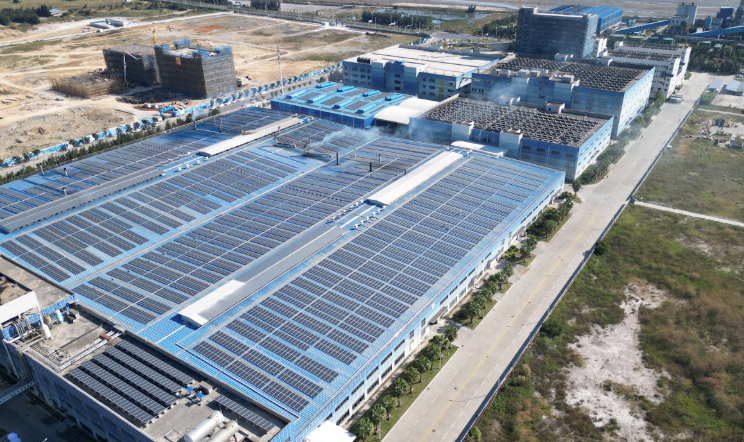
The development comes under the PM Surya Ghar: Muft Bijli Yojana, which promotes installation of rooftop solar panels in residential households to reduce dependence on grid electricity and lower monthly power costs.
According to officials, a total of 18,830 consumers in western Odisha had installed rooftop solar systems as of March 2026, reflecting a steady rise in adoption of renewable energy solutions across the region.
The initiative is increasingly being seen as a major step toward sustainable and decentralised energy generation, allowing households to generate their own electricity and, in many cases, eliminate monthly power bills entirely.
Shift Towards Energy Self-Reliance
Power sector officials said the scheme is encouraging greater awareness about renewable energy, especially in semi-urban and rural areas where sunlight availability is high and rooftop installation is feasible.
Apart from reducing electricity expenses, the adoption of solar systems is also helping reduce pressure on conventional power grids and supporting India’s broader clean energy transition goals.
Experts noted that rooftop solar adoption is expected to grow further as installation costs reduce, subsidies continue, and financing options become more accessible for households.
The government has been promoting the scheme to expand solar penetration at the household level, with an emphasis on long-term energy savings, environmental benefits, and energy security.
Officials added that the trend in western Odisha highlights the potential for large-scale adoption of rooftop solar systems across the state, contributing to greener and more resilient energy infrastructure in the coming years.
28, Apr 2026
Google Cloud AI Hub Launched in Visakhapatnam to Boost India’s AI Push
Visakhapatnam, Apr 28 (BNP): Union Electronics and IT Minister Ashwini Vaishnaw attended the groundbreaking ceremony of the Google Cloud India AI Hub in Visakhapatnam on Monday, marking a major milestone in India’s expanding digital infrastructure ecosystem.
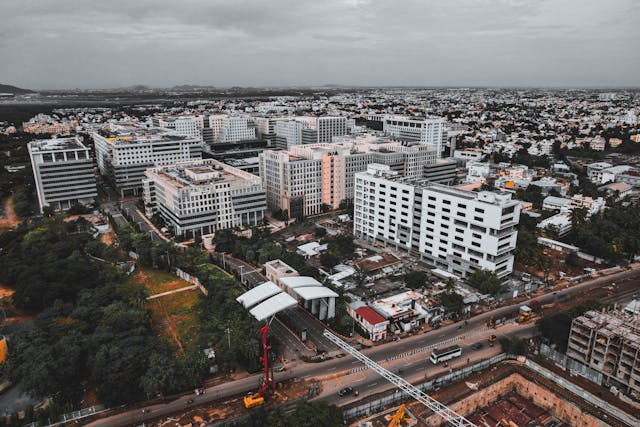
The new facility, being developed by Google, is expected to strengthen artificial intelligence capabilities, cloud computing infrastructure, and data-driven innovation in the country.
Speaking at the event, Vaishnaw highlighted India’s growing digital transformation journey and compared Visakhapatnam’s emerging role in AI to Hyderabad’s evolution into a global IT hub. He noted that just as Cyberabad became synonymous with India’s IT services growth, Visakhapatnam could evolve into a major AI centre in the future.
He described the city’s development trajectory as a significant step toward building a strong “AI and data hub ecosystem” in India, supported by advanced infrastructure and global technology partnerships.
Officials said the AI hub is expected to boost investment in high-end technology infrastructure, create new employment opportunities, and support innovation across sectors such as cloud services, artificial intelligence, and digital platforms.
The initiative is also seen as part of India’s broader strategy to position itself as a global leader in emerging technologies and strengthen its digital economy under the vision of expanding AI-driven growth across major cities.
28, Apr 2026
OptOps AI Delivers Massive Kubernetes Savings with Zero Production Risk
Gurugram, Aprl 28: OptOps.ai today announced the official launch of its autonomous Kubernetes cost and performance intelligence platform, designed to help enterprises reduce cloud waste while maintaining full control and zero production risk.
As Kubernetes adoption continues to grow globally—powering a majority of production containers—enterprises are facing rising cloud costs, with a significant portion attributed to inefficiencies and over-provisioning. OptOps addresses this challenge by combining real-time AI analysis with a safety-first, advisory-driven optimization model.
Redefining Cloud Cost Optimization
Unlike traditional FinOps tools that provide retrospective insights or require deep infrastructure access, OptOps delivers:
- Real-time detection of cost leakages
- Actionable optimization recommendations
- Single-click automation with full user control
The platform ensures that organizations can optimize infrastructure without compromising stability or security.
Leadership Commentary
Prince Khanna, CEO of OptOps.ai, said:
“Enterprises today are forced to choose between visibility and control when it comes to cloud optimization. With OptOps, we are redefining that equation by combining AI-driven intelligence with a safety-first approach, enabling real-time cost optimization without compromising stability.”
Ashutosh Dubey, Co-Founder & CTO, added:
“Cloud waste is not just a cost issue—it’s a visibility and intelligence gap. Our platform empowers engineering teams with actionable insights to eliminate inefficiencies while retaining full control over their systems.”
Advanced Architecture for Enterprise Needs
OptOps is built on a lightweight four-layer architecture, including:
- A deployable in-cluster read-only agent (under five minutes)
- An ML-driven optimization engine
- An advisory-first action layer
- An executive dashboard for DevOps and business teams
The platform operates without accessing sensitive data or impacting production workloads, ensuring zero production risk.
Driving Efficiency and ROI
Key capabilities include:
- Real-time anomaly detection
- Pod rightsizing and node-level optimization
- Automated insights to reduce manual intervention
- Rapid ROI, often within the first week of deployment
By eliminating the need for constant monitoring and manual tuning, OptOps enables teams to focus on innovation while improving infrastructure efficiency.
A New Era in DevOps & FinOps
With a value-based pricing model aligned to customer savings, OptOps.ai positions itself at the forefront of next-generation cloud management where automation, intelligence, and trust are critical to scaling modern infrastructure.
28, Apr 2026
India and Gulf Air Connectivity Set to Improve as Airspace Conditions Stabilise: MEA
New Delhi, Apr 28 (BNP): Flight operations between India and Gulf countries are expected to further normalise as airspace conditions across West Asia continue to improve, the Ministry of External Affairs (MEA) said on Monday.

The MEA informed that airlines such as Air India and IndiGo are planning to resume services between India and Qatar in a phased manner. Qatar Airways has already restarted limited flights as Qatar’s airspace has partially reopened.
Key Developments in the Region
- Around 105 flights are expected between the UAE and India amid limited operations from Dubai and Abu Dhabi
- Services continue from Saudi Arabia and Oman to India
- Kuwait airspace has reopened; Jazeera Airways and Kuwait Airways have resumed limited India-bound flights
- Bahrain operations remain active through Gulf Air
- Iraq and Israel are operating limited regional services enabling onward travel to India
Iran’s airspace remains partially restricted, with only cargo and charter operations permitted. Indian nationals have been advised to avoid travel to Iran and, if required, leave via land routes with embassy assistance.
Indian Nationals Assisted
Indian missions continue to actively support citizens in the region. So far, 2,445 Indian nationals have been evacuated from Iran through land borders.
Since February 28, nearly 12.96 lakh passengers have travelled from the Gulf region to India.
Indian embassies and consulates remain operational round the clock, providing helpline support, coordinating with local authorities, and issuing regular travel advisories to ensure the safety of Indian nationals abroad.
28, Apr 2026
Tragedy in Mumbai: Four Family Members Dead After Dinner; Police Probe ‘Biryani-Watermelon’ Link
Mumbai,Apr28 (BNP): In a tragic incident, four members of a family in South Mumbai’s Pydhonie area died after reportedly falling ill with vomiting and diarrhea following a meal at home. Police have registered an accidental death report and launched an investigation into the circumstances surrounding the incident.
The deceased have been identified as Abdullah Dokadia (40), his wife Nasreen (35), and their daughters Aisha (16) and Zainab (13). The family was residing in the Mughal Building at Ghati Galli in the Pydhonie locality.
According to preliminary information, the family allegedly consumed biryani followed by watermelon before their health suddenly deteriorated. They reportedly developed symptoms of vomiting and diarrhea soon afterwards.
Police officials said food samples have been collected from the residence and sent for forensic examination to determine whether food contamination or any other factor caused the deaths. The bodies have also been sent for post-mortem examination.
The incident has sent shockwaves through the local community, while authorities await medical and forensic reports to establish the exact cause of death.
28, Apr 2026
Odisha Records 83,576 House Sparrows in First Statewide Census
Bhubaneswar/Chhatrapur, Apr 28 (BNP): Odisha has carried out its first-ever statewide census of house sparrows for 2025–26, recording a total population of 83,576 birds across various districts.

The survey was conducted by Bhubaneswar-based organisation Wildlife Odisha Foundation, marking a significant step in tracking the status of the once-common urban bird species.
According to the findings, house sparrows were spotted in both rural and urban habitats across the state, indicating their continued presence despite concerns over declining populations in many parts of the country.
Conservation experts said the exercise will help establish a baseline for future studies and support efforts to protect biodiversity and urban bird habitats. They added that such data-driven monitoring is important for understanding environmental changes and guiding conservation strategies.
Officials involved in the study noted that the census highlights the importance of citizen participation and awareness in wildlife conservation, especially for species closely associated with human settlements.
The initiative is expected to be continued in the coming years to monitor trends and assess changes in sparrow populations across the state.
28, Apr 2026
Historic Milestone for Ladakh: Five New Districts Carved Out to Redefine Himalayan Governance
New Delhi/Leh,Apr28 (BNP): In a landmark administrative move, the Lieutenant Governor of Ladakh has approved the creation of five new districts—Nubra, Sham, Changthang, Zanskar, and Drass—raising the total number of districts in the Union Territory from two to seven.
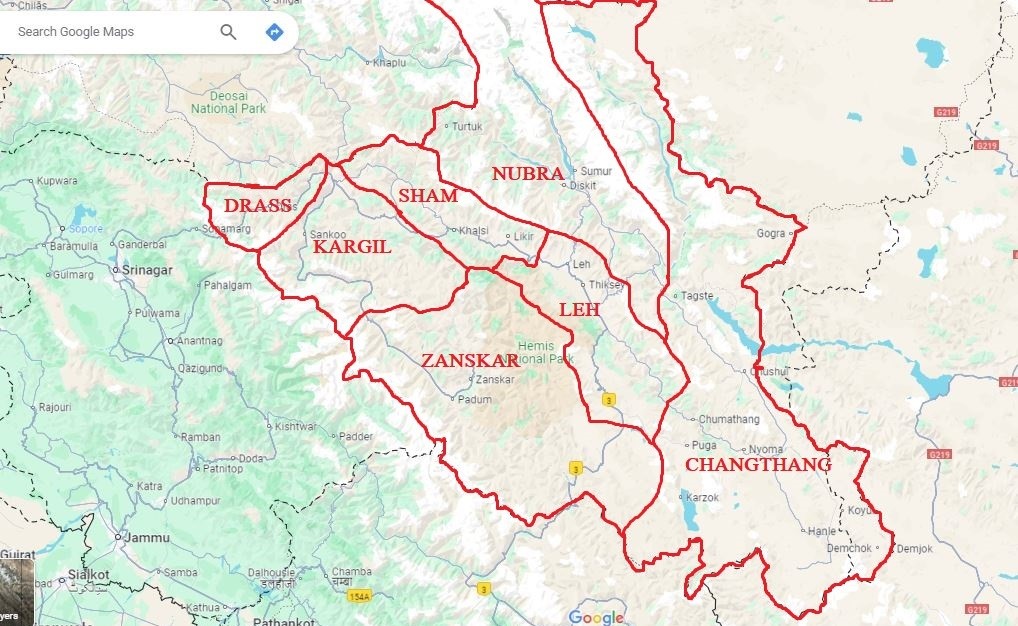
The decision is aimed at decentralising governance, improving administrative efficiency, and bringing government services closer to people living in Ladakh’s remote and far-flung Himalayan regions. The existing districts of Leh and Kargil will now be joined by the five newly carved districts.
Officials said the reorganisation is expected to significantly reduce travel time for residents who currently have to cover long distances to access district headquarters and government offices. Faster service delivery, better implementation of welfare schemes, and improved access to public services are among the key objectives of the expansion.
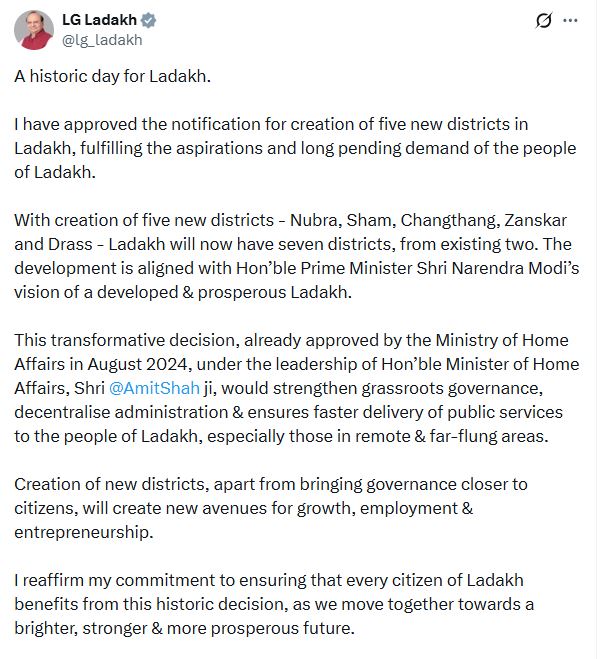
The move is also aligned with the Centre’s broader vision of strengthening grassroots governance and ensuring balanced regional development in strategically important border areas. The proposal had earlier received approval from the Ministry of Home Affairs in August 2024.
Apart from administrative convenience, the creation of new districts is expected to open fresh avenues for infrastructure development, employment generation, tourism promotion, and local economic growth.
The decision has been welcomed as a transformative step that will strengthen governance and accelerate progress across the Union Territory of Ladakh.


