3, Mar 2026
MDI Regenerative Business Research Discussed at International Doctoral Consortium and ICCMRO 2026 at MDI Gurgaon
Gurgaon, Mar 03: Management Development Institute Gurgaon hosted a two-day academic programme from February 20 to 24, 2026, centred on the theme “Beyond Sustainability: Creating and Sustaining Regenerative Businesses.” The programme brought together the International Doctoral & Early-Career Academics Consortium and the 2nd ICCMRO International Conference 2026, convening scholars, journal editors, and industry practitioners from India and overseas, including representation from partner institutions such as BFH Switzerland, led by Prof. Ingrid Kissling, Director, Business School, BFH Switzerland.

Against the backdrop of evolving sustainability conversations—where the focus is shifting from policy commitments and disclosures to measurable outcomes and system-level impact—the discussions examined how businesses can move beyond incremental ESG compliance towards regenerative models that restore social, environmental, and institutional value.
The initiative brought together doctoral scholars, early-career academics, senior researchers, journal editors, and industry representatives to deliberate on regenerative business practices, ESG-linked governance, ethical decision-making, and responsible management education, with an emphasis on analytical rigour and empirical grounding.
The programme opened with the International Doctoral & Early-Career Academics Consortium on February 20. The inaugural session featured remarks by Prof. Tanuja Sharma and Prof. Ritu Srivastava. Keynote sessions explored the evolving relationship between enterprise, accountability, and long-term value creation.
Anil Gupta, Founder of the Honey Bee Network, highlighted the importance of grassroots innovation and community-embedded knowledge systems in building inclusive and resilient enterprises. Karen Maas of the Open University and Erasmus University addressed impact measurement, sustainability reporting, and the growing demand for evidence-based evaluation of ESG outcomes, noting that credibility increasingly depends on methodological robustness rather than narrative intent.
A panel discussion on “Ethics and Principles for Sustainability in Business” featured perspectives from academia and industry, including Abhishek Chandra and Harry Van Buren from the University of Tennessee, Chattanooga. Panellists discussed ethical governance, accountability mechanisms, and the role of academic research in shaping responsible corporate conduct, emphasising that sustainability must be embedded in decision-making structures rather than treated as an adjunct function.
Emphasising the importance of international academic collaboration, Maya Tissafi, Swiss Ambassador, underscored the growing relevance of partnerships between Indian and Swiss business schools in shaping the future of responsible enterprise. She called upon academia to take its rightful place in the global sustainability movement, noting that universities must move beyond observation to leadership. Highlighting the long-term consequences of present-day decisions, she remarked that the choices we make today are the seeds of tomorrow’s growth, and stressed that cross-border collaboration in research, teaching, and leadership development would be critical to advancing regenerative and inclusive economic models.
Subsequent consortium sessions focused on research methodology, community-engaged scholarship, and publication processes, reflecting the growing expectation that sustainability research demonstrate both theoretical depth and practical relevance. Doctoral participants engaged in master classes and feedback clinics aimed at strengthening research design, causal reasoning, and contribution to international scholarship.
The concluding phase comprised the 2nd ICCMRO International Conference 2026, featuring paper presentations and plenary sessions on stakeholder accountability, climate-related disclosures, governance frameworks, and cross-sectoral sustainability challenges. Researchers and practitioners examined how governance systems can support long-term resilience in the face of environmental and social disruption.
Professor Tanuja Sharma, Chairperson, CERO, MDI Gurgaon, added: “Sustainability research today is increasingly concerned with systems, governance, and long-term value creation rather than checklist-based compliance. Academic platforms such as doctoral consortia enable researchers to test ideas rigorously, sharpen methodologies, and situate their work within broader societal and organisational contexts”
The programme concluded with a vote of thanks by Prof. Vanita Singh, who acknowledged the contributions of keynote speakers, panellists, doctoral scholars, research presenters, institutional partners, and organising teams. She highlighted the collective effort that enabled rigorous academic exchange and international collaboration, noting that such platforms play a vital role in advancing thoughtful, evidence-led discourse on sustainability, ethics, and regenerative business practice.
- 0
- By Neel Achary
3, Mar 2026
UH Professor Warns of Dangers of Red-Light Laser Myopia Therapy for Children
HOUSTON, Mar 03: As red-light laser therapy gains popularity in Asia for slowing myopia in children, reports of vision damage have emerged, prompting a University of Houston optometry researcher to evaluate the procedure and call for further study before it becomes more widely adopted.
“Although red laser therapy is a potential intervention for myopia, its rapid clinical adoption has outpaced thorough safety validation,” reports Lisa Ostrin, UH professor of optometry, in JAMA Ophthalmology.
Ostrin’s quality improvement study found that two popular devices, EyeRising and Sky-1201, exceeded national standards for safety classifications.
“We urge eye care professionals, researchers and regulatory agencies to prioritize safety assessments of these devices, including adaptive optics retinal imaging, multi focal electroretinography, and long-term cohort monitoring, before widespread pediatric use,” said Ostrin. “Establishing a balance between therapeutic efficacy and ocular safety remains essential to ensure that this intervention intended to preserve lifelong vision does not itself pose avoidable risks that outweigh benefits.”
Emergence of red-light therapy
Clinical trials in Asia of the repeated low-level red-light therapy have reported significantly slowed myopia progression and axial elongation, which limits the eye’s lengthening, the main cause of worsening myopia, accompanied by choroidal thickening which stabilizes eye growth.
At the same time, there are reports of damage. In one case, structural retinal damage was reported in a 12-year-old patient following repeated red laser therapy with only partial visual recovery after cessation of therapy. Another report described a reduced amount of cone cells in the retina, the very cells responsible for sharp, detailed and color vision.
In both cases, the device used was The Eyerising International device which has gained regulatory approval in several countries and has been reported to have been used for more than 100,000 children for red laser therapy in China and in more than 250,000 sessions completed outside of China.
Ostrin’s quality improvement study consisted of laboratory-based evaluations of the EyeRising, Sky-n1201, Future Vision and AirDoc
“These findings suggest that laser-based red light therapy instruments deliver irradiance levels that reach ANSI safety limits within exposure times below the recommended 180-second treatment time,” Ostrin reported.
“These findings, combined with emerging clinical reports of retinal damage and recent regulatory reclassification of red laser devices as Class III in China, highlight the need for rigorous, independent safety validation before widespread pediatric use.”
Ostrin’s partner on the project is Alexander Schill, a senior research scientist at the University of Houston College of Optometry.
3, Mar 2026
C Holds 10th Summit on Rural Prosperity
Chennai, Mar 03: Mission Samriddhi Convenes Landmark 10th Summit to Redefine the Architecture of Rural Prosperity India’s pioneering social impact platform for holistic rural development, today commenced its landmark 10th Summit – a three-day national convergence designed not merely for dialogue, but for decisive, measurable rural transformation.

Bringing together over 320 grassroots leaders, educators, administrators, development practitioners, and institutional partners from 15 states, Summit 10 marks the return of the Mission’s flagship gathering after a two-year strategic pause. This is not a ceremonial convening. It is a structured laboratory for action, synthesising field insights, refining scalable models, and defining a five-year execution roadmap for the 1,800 villages currently served under the Mission’s umbrella.
Unlike conventional conferences that conclude with recommendations, Summit 10 is outcome-driven by design. Each session is aligned to translate lived rural realities into structured intervention frameworks, cost models, and measurable progress indicators.
Participants represent the frontlines of education reform, local governance strengthening, livelihood creation, ecological restoration, child protection, and financial inclusion. Importantly, the Summit is architected as a radically inclusive platform ensuring that insights from the most remote villages inform national-level development thinking.
The main objective is to move beyond short-term charity efforts and build a long-term, structured approach to rural development. At the 10th Intellect Summit, Mission Samriddhi presented a new way of looking at CSR. Instead of focusing only on visible short-term results like infrastructure or one-time support, it promotes a deeper, five-year development model. Mission Samriddhi believes that lasting rural progress does not come from temporary funding, but from long-term planning, stronger institutions, and meaningful social change.
A key highlight of Summit 10 is the launch of two important publications, Sangam is a practical handbook of tested rural development models, with clear frameworks, cost structures, timelines, and scalable solutions for social impact institutions. Winds of Change is a curated collection of village transformation stories from across India showcasing measurable progress in education, livelihoods, community cohesion, and dignity. Together, these publications turn field experience into replicable models for national scale impact.
Alongside this, a defining theme of Summit 10 is the democratization of Artificial Intelligence as an instrument of rural equity. Just as rural India leapfrogged into mobile commerce, the Summit positions AI as the next frontier for strengthening NGO capacity, improving grant precision, enhancing village-level communication systems, and scaling teacher training.
The focus is not on technology adoption for novelty, but on embedding AI within structured governance frameworks that amplify grassroots effectiveness while preserving community dignity. The intent is to transform episodic volunteering into disciplined, measurable contribution aligned with village-level priorities.
Commenting on the vision behind the Mission, Arun Jain, Chairman and Managing Director of Intellect Design Arena and Founder of Mission Samriddhi, said, “True and lasting societal transformation begins with intent. We see rural communities not as beneficiaries of charity, but as drivers of their own growth. Summit 10 is our collective effort to move from fragmented philanthropy to a structured and empathetic architecture of change that respects the dignity of every village.”
Highlighting the operational depth of the Mission’s work, Ram Pappu, Executive Director of Mission Samriddhi, added,
“Our work is rooted in the belief that sustainable change is an inside-out process. By strengthening the self-worth of marginalized communities and providing them with the requisite competence and connectivity, we are not merely implementing projects; we are fostering a movement of self-actualization. This Summit is the crucible where these diverse learnings are synthesized into scalable models that turn the dream of ‘Samriddhi’, prosperity for all, into a lived reality for the 1,800 villages we serve.”
As Mission Samriddhi enters its second decade, Summit 10 marks a shift from pilot success to structured scale. The Summit will deliver a five-year rural transformation blueprint, replicable Deep CSR frameworks, AI-enabled NGO support models, stronger volunteer systems, and expanded cross-state collaboration. It is not a celebration of the past, but a commitment to measurable progress in the decade ahead.
3, Mar 2026
HANMI Semiconductor Deepens Strategic Partnership with Micron at India ATMP Facility’s Opening Ceremony

Director Jong-Jin Lee and Executive Vice President Myung-Ho Lee of HANMI Semiconductor attended the grand opening ceremony of Micron’s first semiconductor manufacturing facility in India on February 28. During the event, HANMI Semiconductor received a commemorative plaque for DDR5 DRAM produced in India from Micron Chairman and CEO Sanjay Mehrotra.
SEOUL, South Korea (Mar 3) — HANMI Semiconductor today announced that it attended the grand opening ceremony of Micron Technology’s semiconductor facility in Sanand, Gujarat, India, on February 28. The facility marks Micron’s first semiconductor manufacturing plant in India.
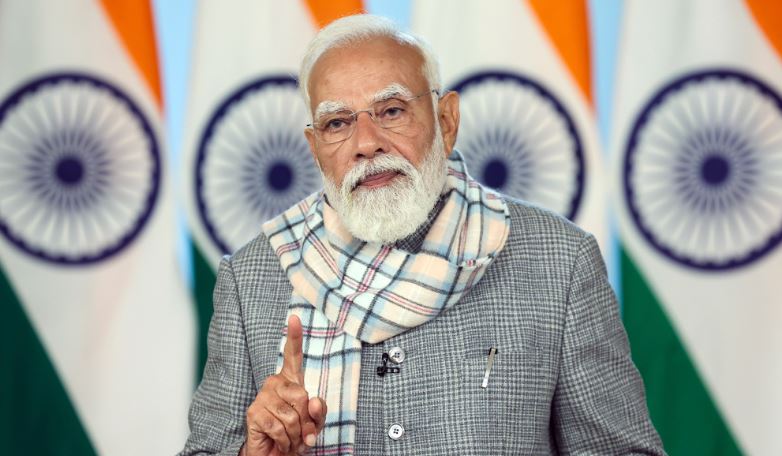
The inauguration ceremony was attended by Indian Prime Minister Narendra Modi, who delivered a commemorative address, along with senior government officials, Micron Chairman and CEO Sanjay Mehrotra, and other key executives.
HANMI Semiconductor was invited as a key equipment supplier to Micron’s India facility, reaffirming its position as a key strategic partner.
Micron’s plant in India is an advanced packaging facility backed by a total investment of USD 2.75 billion and supported by financial incentives from the Government of India. Aimed at strengthening the country’s semiconductor industry, the project has been designated as a national strategic initiative, with the Government of India providing 50% of the investment in subsidies and the State of Gujarat contributing an additional 20%. The facility is expected to serve as a strategic hub for testing and packaging high-performance AI memory products, including multi-die GDDR (Graphics DRAM) and enterprise SSDs (stacked NAND Flash).
The DDR5 DRAM currently being produced in Gujarat, India, is based on Micron’s most advanced DRAM technology, utilizing its latest 1-gamma process node. Micron announced that it plans to begin packaging and testing tens of millions of chips this year, with production expected to scale to hundreds of millions next year. Accordingly, it is expected that KRW 2 trillion (approximately USD 1.4 billion) will be invested in advanced semiconductor packaging equipment, including TC bonders used for stacking AI memory semiconductor chips.
The facility also holds historic significance as the first project approved under the “India Semiconductor Mission 2.0” and as the first semiconductor manufacturing facility established in the country. It is widely regarded as a major milestone in India’s advancement toward becoming a key hub in the global semiconductor supply chain. Through the initiative, the government has introduced an incentive program of approximately USD 10 billion to advance the country’s ambition of becoming a global semiconductor manufacturing hub.
Advanced bonding technology and rapid technical support are critical to ensuring the stable operation of the new facility. As a core supplier to Micron, HANMI Semiconductor plans to fly in engineers to India to provide on-site technical support and operate training programs, reinforcing its long-term strategic collaboration. Building on this partnership, the company received the “Outstanding Supplier Performance Award” from Micron in 2025.
“HANMI Semiconductor’s participation in Micron’s grand opening of semiconductor facility in India and the roundtable reaffirms our position as a key supplier in the global semiconductor supply chain,” said a HANMI Semiconductor official. “As Micron’s key supplier, we will continue to dispatch engineers to India and provide close technical support to ensure the highest level of customer satisfaction.”
2, Mar 2026
Tenable Research Reveals Growing AI Exposure Gap Fueled by Supply Chain Risks and Lack of Identity Controls
Dubai, UAE. – (Mar 2) – Tenable® (NASDAQ: TENB), the exposure management company, today released its Cloud and AI Security Risk Report 2026. The research reveals organizations face a zero‑margin AI exposure gap as they inherit cyber risks faster than they can address them. Engineering velocity — driven by AI adoption, third-party code and cloud scale — has outpaced the human-led ability to assess, prioritize and remediate risks before threat actors exploit them.
The AI Exposure Gap is a largely invisible form of exposure that emerges across applications, infrastructure, identities, agents and data, and that most security teams are not equipped to manage. Tenable’s analysis of cloud environments identifies severe risks across four key security areas: AI security posture, supply chain attack vectors, least privilege implementation and cloud workload exposure — all of which demand immediate attention. The report includes actionable guidance for security and business leaders to reduce risk across cloud and AI environments.
Key findings from the Cloud and AI Security Risk Report 2026 include:
● 70% have integrated at least one AI or Model Context Protocol (MCP) third-party package, embedding AI deep into applications and infrastructure, often without central security oversight.
● 86% host third-party code packages with critical-severity vulnerabilities, making the software supply chain a primary and persistent source of cloud exposure. Furthermore, nearly 1 in 8 (13%) have deployed packages with a known history of compromise, such as the s1ngularity or Shai-Hulud worms.
● 18% of organizations have granted AI services administrative permissions that are rarely audited, creating a “pre-packaged” catalog of privileges for attackers to claim.
● Non‑human identities such as AI agents and service accounts now represent higher risk (52%) than human users (37%), forming “toxic combinations” of permissions and access that fragmented tools fail to connect.
● 65% possess “ghost” secrets—unused or unrotated cloud credentials—with 17% of these tied specifically to critical administrative privileges.
● 49% of identities with critical-severity excessive permissions are dormant.

“AI systems embedded in infrastructure pose a critical risk that CISOs and defenders must address, in addition to anticipating emerging threats from both AI and cloud technologies. Lack of visibility and governance means teams are at the mercy of new exposures, including over-privileged identities in the cloud,” said Liat Hayun, Senior Vice President of Product Management and Research at Tenable. “By focusing on the unified exposure path, organizations can stop managing ‘security debt’ and start managing actual business risk.”
To manage emerging risks, organizations must secure the AI integration process through comprehensive visibility and identity-centric controls. This includes enforcing least privilege for AI roles, neutralizing “ghost” identity risk and eliminating static secret exposure. Third-party code and external accounts are now extensions of organizations’ infrastructure; steps to reduce extended supply chain exposure include unifying visibility across code packages, virtual machines, identity access and cloud environments.
The 2026 Cloud & AI Security Risk Report presents findings from the Tenable Research team, analyzing anonymized telemetry from diverse public cloud and enterprise environments collected from April to October 2025 (AI findings extended through December 2025).
Exposure Management is the practice of identifying, evaluating, and prioritizing the risks posed by all entry points an attacker could exploit. This includes not just software vulnerabilities (CVEs), but also misconfigurations, excessive user privileges (identity risk), cloud security gaps, and the “shadow” assets created by AI and third-party supply chains.
2, Mar 2026
TEDxHRCollege 2026 Explores “Beyond the Horizon” at Its 11th Edition

Mar 2:TEDxHRCollege is the official TEDx platform of HR College of Commerce and Economics, created to bring the global spirit of TED to a student-led stage in Mumbai. Marking its 11th edition, TEDxHRCollege was held at the C.K. Nayudu Banquet Hall, Cricket Club of India, under the theme “Beyond the Horizon.” Independently organized by students and licensed by TED, the event embodied the mission of “Ideas Worth Spreading,” encouraging audiences to challenge boundaries and envision possibilities beyond the visible.
The event commenced with a classical performance followed by welcome addresses by Principal Dr. Pooja Ramchandani and Head Organizer Ms. Palak Gala.
The speaker lineup featured diverse voices across leadership, literature, and corporate foresight:
Mr. Bharat Dash, management professional, reflected on the enduring relevance of the Panchatantra, contrasting its emotional intelligence and storytelling depth with conventional presentation formats.
Mr. Yusuf Poonawala, entrepreneur and author of The Balanced Leader, delivered “When Everything Burns Down, What Remains?”, urging audiences to build character, values, and resilience beyond titles and applause.
Ms. Alpa Vora, Child Protection Specialist at UNICEF India, spotlighted youth-led initiatives in Maharashtra that safeguard children’s rights and strengthen communities.
Ms. Kaveri Ingale explored leadership through cinematic narratives, emphasizing courage, accountability, and authenticity as everyday practices.
Mr. Vesmir, poet and author, examined the cognitive and emotional implications of over-reliance on AI, advocating literature as essential for human resilience.
Ms. Kamayani Nagar, Head of Retail at Aditya Birla Sun Life, spoke on preparing for corporate life in 2036, highlighting adaptability, AI literacy, ethical judgment, and continuous learning as future essentials.
Ms. Priyadarshini Indalkar, acclaimed Marathi actress, addressed the “Fear of Failure,” encouraging resilience, empathy, and authenticity in navigating personal and professional challenges.
The event would not have been possible without the unwavering support and guidance of our Principal, Dr. Pooja Ramchandani, and our Faculty In-Charge, Prof. Chandani Bhattacharjee. Their constant encouragement, trust and thoughtful mentorship laid the foundation for its success. Their belief in our vision empowered us to execute the event with confidence, responsibility, and excellence.
Beyond being a platform for ideas, TEDxHRCollege is a transformative learning experience. It enables students to build strong communities while developing leadership, communication, hospitality, and problem-solving skills. By taking ownership of real responsibilities, students grow not only as organizers but as capable, confident individuals ready to lead beyond the horizon.
2, Mar 2026
First Industry-Integrated MSc in Industrial Biotechnology Graduates in Bengaluru
University of Glasgow and Biocon Academy Celebrate First Graduating Cohort of Industry-Integrated MSc in Industrial Biotechnology
Bengaluru, Mar 02: In a landmark India-UK higher education collaboration, the first cohort of the MSc in Industrial Biotechnology, jointly delivered by the University of Glasgow and Biocon Academy, graduated in Bengaluru on 27 February 2026.
The programme is designed to bridge academic excellence with practical industry experience, combining rigorous classroom learning with structured immersion at Biocon. Graduates gained hands-on exposure to biopharma manufacturing, industrial scale-up, and applied biosciences, equipping them with skills aligned to the needs of India’s growing biotechnology sector.
Addressing the graduates, Kiran Mazumdar-Shaw, Executive Chairperson of Biocon, emphasised the importance of integrating academic knowledge with real-world industry experience to develop globally competitive biotechnology professionals.
The programme reflects a pioneering model of employability-focused education, positioning Bengaluru as a hub for biotech innovation and advanced life sciences training. Graduates of the course now possess a unique combination of theoretical understanding and practical expertise, preparing them for leadership roles in the biopharma and industrial biotechnology sectors.
2, Mar 2026
VST Tillers Tractors Wins Best Farm Machinery Display & State Excellence Award at Global Agro Tech 2026

Uttar Pradesh, India | Mar 2: VST Tillers Tractors Ltd, a pioneer in farm mechanization and an undisputed leader in the power tiller segment, has been conferred with the prestigious State Excellence Award at Global Agro Tech 2026, held in Uttar Pradesh. The award was presented by H.E. Anandiben Patel, Hon’ble Governor of Uttar Pradesh, to senior officials of the company in recognition of its pioneering contribution to advancing small and compact farm mechanization in India. In addition to this recognition, VST also received the Best Stall Display Award for showcasing a comprehensive portfolio of innovative farm mechanization solutions tailored to diverse agricultural needs.
At the exhibition, VST displayed its complete range of products spanning from 5 HP to 50 HP, offering integrated solutions for key segments including sugarcane cultivation, orchard farming, and inter-cultivation operations. The display highlighted VST’s commitment to enabling small and marginal farmers with efficient, cost-effective, and technology-driven farm equipment.
The VST stall at the event attracted significant interest from farmers, agri-entrepreneurs, dealers, and policymakers, demonstrating VST’s leadership in compact tractors, power tillers, and specialized farm machinery designed for Indian farming conditions. The recognition at Global Agro Tech 2026 further reinforces VST Tillers Tractors’ position as a frontrunner in sustainable and scalable farm mechanization, supporting enhanced productivity and rural prosperity across the country.
2, Mar 2026
United Way Bengaluru Announced as Philanthropy Partner for TCS World 10K Marathon 2026

Bengaluru, Mar 2: United Way Bengaluru (UWBe) proudly steps up as the official Philanthropy Partner for the TCS World 10K Marathon, scheduled to be held on April 26, 2026, in Bengaluru.
This year, UWBe provides a structured fundraising platform that empowers participants to support credible grassroots initiatives in education, environment, women empowerment, sports, healthcare, and community development.
As a trusted partner, UWBe ensures every contribution undergoes rigorous due diligence and monitoring, directing funds precisely to the communities that need them most.
For United Way Bengaluru, this is more than just a run; it’s a powerful opportunity for corporates, communities, and individuals to unite and drive meaningful change. Through transparent processes, UWBe connects supporters with NGOs creating real impact on the ground. United Way Bengaluru requests corporates, CSR leaders, NGOs, institutions, and passionate individuals to join hands as changemakers. Participate in the run, fundraise, and turn steps into lasting progress.
2, Mar 2026
Motovolt celebrates Holi with ‘Apni Ride, Apna Rang’ themed multi-regional creator-led digital film campaign
Kolkata, Mar 02: Motovolt Mobility, an advanced and reliable electric two-wheeler solutions provider, welcomes the festive spirit of Holi with a collaborative digital film featuring multiple regional influencers coming together to capture and celebrate the excitement, vibrancy and bonds associated with the festival. The film, conceptualised in-house, follows the theme of Apni Ride, Apna Rang andhas been executed by brandsadvert, the brand’s influencer marketing and campaign partner.

Designed as a high-energy festive moment, the film brings together four creators from different content niches, each adding their own personality and rhythm to the narrative. Shot on the streets of Kolkata, with the colourful Deodar Street forming the visual backdrop, the film captures a festive morning that slowly builds into a shared celebration. What begins with quiet anticipation soon turns into playful colour exchanges, laughter and spontaneous ride moments, reflecting how celebrations unfold naturally in real life. Following the film’s theme, the story moves from individual moments to collective energy, fun chases on electric bikes and playful banter amongst friends.
Commenting on the digital film, Mr Tushar Choudhary, Founder & CEO, Motovolt Mobility,said,
“The celebration of Holi is incomplete without colours, friends, and a trusted mobility companion. This Holi film captures that spirit by placing the e-bike within real, shared moments of celebration, where movement and togetherness naturally come together. At Motovolt, our focus has always been on making mobility feel effortless and approachable. Our URBN e-bikes are designed to fit into everyday routines and moments that matter, not just as a way to move, but as a companion in how people experience their surroundings and connect with others.”
Manoj Kumar, Co-founder, brandsadvert, said,
“Holi is one of the most expressive festivals in India, and for Motovolt, we brought together creators from different niches to build a shared narrative that travels across their communities, making the celebration and the brand’s mobility story more relatable. The idea was to show mobility as something that naturally fits into everyday experiences — whether it’s meeting people, moving through the city or celebrating together.”
The campaign highlights a shift in festive communication, where brands increasingly focus on lived experiences rather than staged messaging. By grounding the story in a real city setting and real creator personalities, Motovolt’s ‘Apni Ride, Apna Rang’ digital film connects celebration with everyday mobility in a way that feels familiar and relatable.