


16, Apr 2026
Prateek Singh to Lead Pocketful as Chief Executive Officer
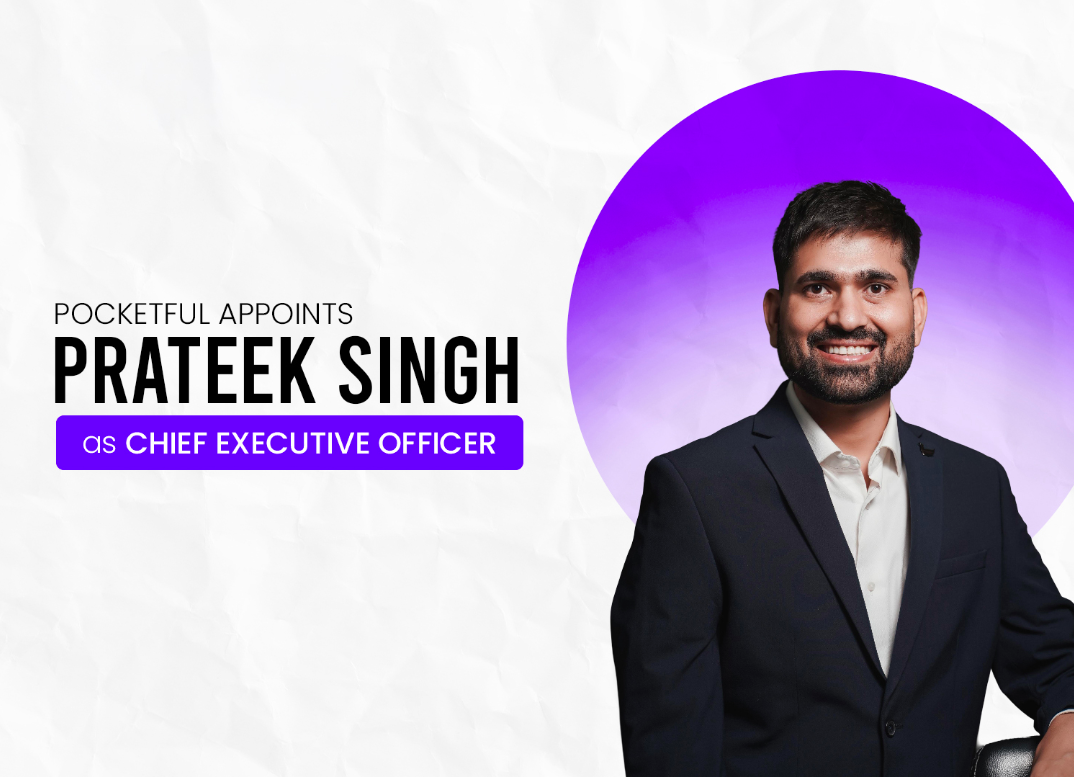
Pocketful, the fast-growing discount brokerage backed by the 30-year legacy of the Pace Group, has appointed Prateek Singh as its new Chief Executive Officer, marking a significant step in the company’s growth journey. The brand introduced this strategic leadership change to achieve its growth objectives while establishing itself as a major player in the changing investment market of India.
Prateek Singh possesses 13 years of experience, which he has used to develop digital financial platforms through his work on customer acquisition, product development, and business growth initiatives. Before starting his work at Pocketful, he spent time at Bajaj Broking as Chief Growth Officer, where he helped the company develop its digital presence and improve its platform functionalities.
Expressing his enthusiasm, Sarvam Goel, Co-Founder of Pocketful said, “Prateek’s appointment represents an essential milestone for Pocketful, which will help the company expand its operations and strengthen its position in the Indian investment market. His successful history of developing digital financial platforms, together with his focus on user experience, perfectly matches our organization’s future objectives. Pocketful will achieve its next phase of growth through his guidance, which will create new technical innovations and improve our market value.”
At Pocketful, Prateek will lead the company’s mission to create an accessible investment platform that enables all investors to use its services. The company delivers an investment process that customers can use without any kind of difficulty.
Commenting on his appointment, Prateek Singh, CEO, Pocketful, said, “I am truly excited to join Pocketful at such a pivotal stage of its growth journey. India’s capital markets are witnessing remarkable momentum, with increasing retail participation and a growing shift towards digital investing. At Pocketful, we have a unique opportunity to simplify and reimagine the investing experience for a wider audience. I look forward to working closely with the team to drive innovation and enable more confident, informed participation in the markets.”
Pocketful offers zero brokerage on equity delivery trades, along with zero account opening charges and lifetime zero AMC fees, making it an attractive choice for retail investors. At the same time, the platform caters to active traders through advanced, institutional-grade tools built for speed, precision, and reliability.
The company also provides a Margin Trading Facility (MTF) starting at 5.99%* per annum, enabling greater flexibility for active participants. A key innovation is Pocketful GPT, a custom-trained intelligence layer that allows users to generate trade ideas, analyze portfolios, and execute trades within a unified interface.
With its recent expansion into mutual funds, Pocketful is evolving into a comprehensive investment platform. Under Prateek Singh’s leadership, the company is well-positioned to accelerate growth and capture a larger share of India’s rapidly expanding investor base.

- 0
- By Neel Achary

16, Apr 2026
Greenland Opens New Airport in Qaqortoq, Expanding Access to South Greenland
Qaqortoq, Greenland – Apr 16: A new airport has opened in Qaqortoq, giving international travellers direct access to the main town of South Greenland for the first time. This marks the opening up of one of the Arctic’s most diverse and lesser-visited areas.
Previously accessible only by helicopter or boat, Qaqortoq now becomes the main gateway to the south, with year-round flights from Nuuk and seasonal connections from Iceland. The airport replaces Narsarsuaq as the primary access point, significantly reducing travel time to the southern hub of Greenland. The 1,500-metre runway can accommodate Dash-8 Q200 and Q400 turboprop aircraft.
South Greenland is often associated with green pastures, sheep farming and wild nature. The area offers fjords, fertile valleys and a rich cultural landscape shaped by Inuit communities and Norse settlers since the time of Erik the Red more than 1,000 years ago. Improved access also opens routes to areas such as Tasermiut Fjord, known for its dramatic peaks and often referred to as “the Patagonia of Greenland”.
Visit Greenland Director Anne Nivika Grødem said:
“South Greenland offers a rare combination of powerful nature and a living culture shaped over generations. Improved access allows us to welcome visitors with greater intention—encouraging travel with curiosity, while creating lasting value for local communities and more meaningful experiences for our guests.
The opening forms part of a wider expansion of Greenland’s airport network, following Nuuk’s airport and ahead of Ilulissat’s new airport later this year—making Greenland increasingly accessible as a multi-destination destination.
Air Greenland expects around two daily flights between Nuuk and Qaqortoq year-round, with up to 17 weekly rotations during the summer period. Icelandair plans four weekly summer flights between Keflavík and Qaqortoq.
Miki Jensen, CEO of Innovation South Greenland, added:“This is a big day for the community. The airport connects South Greenland more closely to both the rest of the country via Nuuk and the world via Keflavik. It creates new opportunities for tourism and business, while strengthening everyday life in the area.”
South Greenland stands out for its relatively “mild” climate, green landscapes and the UNESCO World Heritage Site Kujataa, where over 1,000 years of farming traditions continue today.
Improved air access is expected to support year-round tourism, a key priority for strengthening local businesses, reducing travel times and contributing to more balanced development across Greenland.
“With the opening of Qaqortoq Airport, we are taking an important step in the development of South Greenland. We are proud to contribute to the development of Greenland’s infrastructure and look forward to seeing how these new opportunities translate into tangible growth,” says Jens Lauridsen, CEO of Greenland Airports.
16, Apr 2026
Anant National University Announces Scholarships for UCEED 2026 Rank Holders
Apr 16 ( BNP): Anant National University has announced a merit-based scholarship scheme for UCEED 2026 aspirants, aimed at supporting top-performing design students.
Candidates securing an All India Rank (AIR) up to 250 will receive a 100% scholarship, covering full tuition and hostel fees. The initiative rewards academic excellence and encourages participation in design education at a higher level.
The university has also introduced a tiered scholarship structure for ranks up to 2500, extending financial support to a wider group of deserving students. The move is intended to make quality design education more accessible and inclusive.
The programme reflects the institution’s focus on nurturing creative talent and promoting careers in design and innovation.
16, Apr 2026
transcosmos Wins Salesforce Japan Partner of the Year – Innovation Award
transcosmos Wins Salesforce Japan Partner of the Year – Innovation Award, Showcasing Excellence in the Salesforce Ecosystem
Japan, Apr 16: transcosmos is proud to announce that it has been named Japan Partner of the Year – Innovation – at the Salesforce Japan Partner Award 2026. The company was recognized for its support of Kanagawa Prefecture, a client, in addressing challenges in the #7119 / #8000 Contact Center Project through the effective use of a range of products, including Agentforce for Public Sector, Agentforce Service, Data 360, Tableau, and Agentforce.
transcosmos proactively leverages Agentforce, Salesforce’s AI agent solution, in contact center operations to address potential challenges in continuously securing human agents, standardize service quality, and simplify human agents’ after-interaction work. The company also uses Tableau and Data 360 to help clients analyze accumulated data, as well as to develop and operate systems that drive operational improvement. Upon receiving the award, transcosmos was provided with the following comment from Atsushi Urano, Senior Vice President – Japan, Korea & Taiwan, Alliance & Channels & Global Technology Partners: “transcosmos strives to accelerate clients’ growth and enable them to make a leap forward by helping address their challenges across the entire CX domain, in a world where technologies continue to progress at an unprecedented pace and the AI revolution advances. For Salesforce, all partner companies are essential to driving clients’ success.”
Salesforce Japan Partner Award 2026 marks its 19th anniversary this year. Through this award program, Salesforce recognizes its partners—including consulting firms, digital agencies, sales agencies, and ISV partners—for their significant contributions across cloud, industries and sectors, and a wide range of partner programs.
transcosmos is a trademark or registered trademark of transcosmos inc. in Japan and other countries. Salesforce is a trademark of Salesforce, inc., as are other names and marks. Other company names and product or service names used here are trademarks or registered trademarks of respective companies. Please visit the following link for a list of winners of the Salesforce Japan Partner Award 2026. https://appexchangejp.salesforce.com/learn/fy27-partner-award.
16, Apr 2026
Adani Foundation at ACC Wadi brings healthcare back to the heart the village
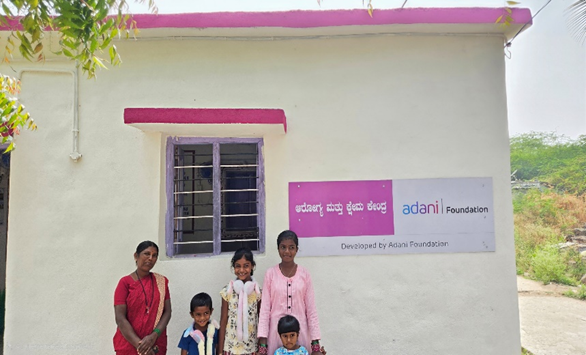
Karnataka, Apr 16: ACC, the cement and building materials company of the diversified Adani Portfolio, along with the Adani Foundation, has revived a long-defunct health centre in Wadi village of Vijay Nagar ward—restoring access to essential healthcare services for nearly 80 SC households who had long lacked a functional facility.
For years, the village struggled with remnants of the healthcare facility. A stalled renovation had made the centre unusable, while an impassable railway track forced villagers walk extra miles to access to nearby facilities To reduce this gap, a lone doctor continued to serve the community under trees and on doorsteps—reflecting both the resilience of the people and the urgent need for proper infrastructure.
Recognising this silent struggle, ACC and the Adani Foundation stepped in with purpose. Their efforts have transformed the health centre into a fully functional and accessible facility, bringing care back to the heart of the village. Alongside the restored building, the installation of a clean drinking water RO system reflects a thoughtful, holistic approach—creating a safe, supportive, and dignified environment for patients.
Today, the change is quietly profound. Residents no longer face long journeys or delays—care is now timely, reliable, and within reach. The centre stands not merely as infrastructure, but as a symbol of trust restored and dignity returned. As one villager shares, “The centre is more than bricks, it is our lifeline reborn.”
Together, ACC and the Adani Foundation continue to reaffirm their commitment to strengthening rural healthcare—ensuring that access, dignity, and trust remain at the centre of every community they serve.
16, Apr 2026
WEF: Global GDP May Rise by Dollar 56 Trillion in 5 Years, Powered by AI and New Technologies
Apr 16 (BNP): The global economy is expected to see a major surge in growth over the next five years, driven largely by rapid advances in artificial intelligence, quantum computing, and other emerging technologies, according to the World Economic Forum (WEF).
The report estimates that global GDP could increase by about $56 trillion over this period, as industries across the world adopt new technologies that improve efficiency, productivity, and innovation.
Artificial intelligence is expected to be the strongest growth driver, reshaping how businesses operate by automating processes, enhancing decision-making, and enabling new digital services. Other frontier technologies, including quantum computing, are also likely to transform sectors such as healthcare, finance, manufacturing, and logistics.
At the same time, the WEF notes that the benefits of this growth may not be evenly shared. Countries that invest early in digital infrastructure, innovation ecosystems, and skill development are expected to gain a stronger advantage.
The report also highlights potential challenges, including job displacement, regulatory gaps, and widening digital inequality, which may require coordinated policy responses.
Overall, the outlook points to a strong but uneven global growth phase, increasingly powered by next-generation technologies that are reshaping the future of the global economy.
16, Apr 2026
Libas Gears Up for IPO While Expanding Retail Footprint Rapidly
Apr 16 (BNP): Indian ethnic wear brand Libas is targeting a public listing by early next fiscal year as it continues to expand its retail presence across the country, according to a top company executive. However, the timing of the initial public offering (IPO) may shift by a few months depending on market conditions.
The company noted that recent volatility in equity markets, driven by geopolitical tensions, renewed global trade uncertainties, and foreign investor outflows, has impacted overall sentiment and valuation trends.
The Chief Executive Officer said the IPO timeline remains flexible and could be delayed if market instability and geopolitical tensions persist, particularly in the Middle East region.
Alongside its listing plans, Libas is also evaluating a potential private equity funding round to support its growth strategy. The company stated that it currently has sufficient financial runway but did not disclose further details.
Libas had previously raised ₹150 crore in 2024 at an undisclosed valuation.
The brand operates 50 stores across 15 cities in India and is pursuing an aggressive expansion strategy, with plans to open at least 70 new outlets annually over the next two years. This would take its total store count beyond 200 locations.
India’s retail sector, currently valued at over $1 trillion, is expected to nearly double by 2030, driven by rising consumption and a growing middle-class population, creating strong growth opportunities for organised retail brands.
16, Apr 2026
PM Modi, Austrian Chancellor Christian Stocker Hold Talks to Strengthen Bilateral Ties
New Delhi, Apr 16 (BNP): Prime Minister Narendra Modi held bilateral discussions with Austrian Federal Chancellor Christian Stocker at Hyderabad House on Thursday, as part of the Austrian leader’s four-day official visit to India.
The two leaders reviewed the overall state of India-Austria relations and discussed ways to further deepen cooperation across key sectors, including trade, innovation, sustainable development, and cultural exchange. The meeting underscored both countries’ interest in expanding their long-standing partnership.
Earlier in the day, Chancellor Stocker visited Rajghat, where he paid tribute to Mahatma Gandhi by laying a wreath. The gesture reflected respect for Gandhi’s principles of peace, non-violence, and global harmony.
The Ministry of External Affairs noted that the visit to Rajghat highlighted shared global values and the continuing relevance of Gandhian ideals in international relations.
The high-level engagement is expected to add further momentum to bilateral cooperation between India and Austria, with both sides expressing commitment to strengthening dialogue and partnership in the coming years.
16, Apr 2026
SIMBA Uproar 2026 Expands to Mumbai, Reinforcing Its Community-Led Culture Platform
Mumbai, April 16: SIMBA Uproar 2026 concluded its Mumbai edition on 11th April at the MMRDA Grounds, bringing together over 4000+ attendees for an immersive celebration of hip-hop, live performance and action sports.

Following a successful edition in Delhi, the platform expanded its scale in Mumbai with a strong focus on community-driven experiences and accessible live entertainment. This year introduced a single-tier, no-VIP format, creating a shared space where artists and audiences experienced the event together, without barriers.
The line-up featured performances by KR$NA, Sambata and Dhanji, alongside DJ sets by Ishani, Bobkat and OG SHEZ, delivering a dynamic mix of live music and high-energy soundscapes.
A major highlight of the event was the FMX stunt showcase, with professional riders performing choreographed aerial routines within a controlled environment that added a visually striking element to the festival. These segments were seamlessly woven into the overall experience, enhancing the scale and excitement of the event.
Beyond music, the festival featured interactive zones, cultural installations and experiential spaces, encouraging audience participation and creating a multi-dimensional environment.
Speaking on the Mumbai edition, Ishwaraj Singh Bhatia, said:
“Mumbai has been an important step in building Uproar as a culture-first platform. We’re constantly listening to our consumers and evolving the experience to make it more inclusive, accessible and rooted in the communities we engage with.”
The Mumbai edition also reflected key learnings from earlier showcases, with an increased focus on accessibility, audience flow and overall on-ground experience. With strong turnout and audience engagement, SIMBA Uproar 2026 continues to establish itself as a growing platform within India’s evolving youth and culture landscape.
The property is set to further expand its footprint with future editions and community-led experiences across cities.
16, Apr 2026
Silver Prices Gain on MCX as Fresh Buying Emerges
New Delhi, Apr 16 (BNP): Silver prices gained in futures trade on Thursday, rising 0.82% to ₹2,53,800 per kilogram, supported by fresh buying interest and global market uncertainty.
On the Multi Commodity Exchange (MCX), silver contracts for May delivery advanced by ₹2,058 per kg, with a total trading volume of 2,095 lots during the session.
Market participants attributed the rise to renewed position-building activity, as traders responded to volatile global cues, including concerns over US trade policy direction.
Analysts said the movement reflects cautious sentiment in the commodity market, where investors continue to take positions in precious metals amid uncertain international conditions.
Overall, silver remained firm in futures trade, tracking global risk sentiment and steady speculative demand.


