


13, Apr 2026
Berger Paints Responds to India’s Heat Challenge with ‘Garmi Gone, Thandak On’ Home Cooling Solutions Range

Apr 13: As temperatures continue to climb year after year, staying cool is no longer just about comfort, it is becoming a daily challenge for millions of households across India. Against this backdrop, Berger Paints India Ltd., the country’s second-largest paint company and a leader in protective coatings, has introduced a more intuitive and immersive way to tackle rising heat through its Home Cooling Paints Range. This is supported by a nationwide campaign, Garmi Gone, Thandak On’, which promotes smarter and more energy-efficient ways of living.
Recognizing that a significant amount of heat enters homes through walls, roofs, and structural openings, Berger Paints’ Home Cooling range offers a practical solution through innovative products such as Berger Anti Dustt Kool and Berger Roof Kool & Seal, which are designed to reduce heat absorption across walls and rooftops. The range also includes Berger Tank Kool, which addresses an often-overlooked source of heat—black synthetic water tanks that tend to overheat during peak summers. Together, the range provides a holistic approach to lowering indoor temperatures at the source.
At the heart of the campaign lies a simple but powerful idea, smarter cooling must go beyond air conditioning. By addressing heat ingress at its origin, Berger Paints is positioning its solutions as not only effective and accessible, but also as a more sustainable alternative to energy-intensive cooling methods. The solutions can help reduce surface and ambient temperatures by up to 10°C, making them especially relevant for heat-prone regions and cost-conscious households.
Taking this commitment a step further, Berger Paints is extending its cooling solutions to underserved communities through a partnership with Smile Foundation. As part of this initiative, the company will undertake a school beautification programme across 30 government schools in Uttar Pradesh and Rajasthan. By applying heat-reflective coatings to school buildings, the initiative aims to lower indoor temperatures and create more comfortable, heat-resilient learning environments, particularly critical during peak summer months when extreme heat can impact attendance, concentration, and overall student well-being.
The rollout will focus on some of India’s most heat-affected regions, aligning with the growing urgency around climate adaptation. As weather patterns continue to shift, Berger Paints’ Kool range signals a broader transition in how India approaches cooling by moving from reactive solutions to preventive ones. It is a step that combines innovation with purpose, helping households and communities better cope with increasingly harsh summers.
Mr. Abhijit Roy, MD & CEO of Berger Paints India Limited, said, “At Berger Paints, we have always believed in staying ahead of consumer needs, and as we are known to launch industry first innovative products, we understand the evolving challenges households face in heat-prone regions. With our Home Cooling range, we are looking at addressing heat where it begins, rather than where it is felt. Through ‘Garmi Gone, Thandak On’ campaign, we want to drive a larger behavioral shift towards more sustainable and accessible cooling practices, while also extending this impact to communities through our partnership with Smile Foundation.”

- 0
- By Neel Achary

13, Apr 2026
ZEISS Digital Partners Note on Building Resilient, Secure, and Future-Ready Digital Ecosystems
Bengaluru, Apr 13: As cloud adoption accelerates across industries, ZEISS India’s ZEISS Digital Partners (ZDP) observe a growing concentration of workloads within a limited number of cloud providers. While this trend continues to deliver advantages such as economies of scale, innovation, speed, and cost efficiency, it also introduces systemic risks that organizations must actively manage. These include potential single points of failure, regulatory and compliance exposure, vendor lock-in, and broader geopolitical dependencies.
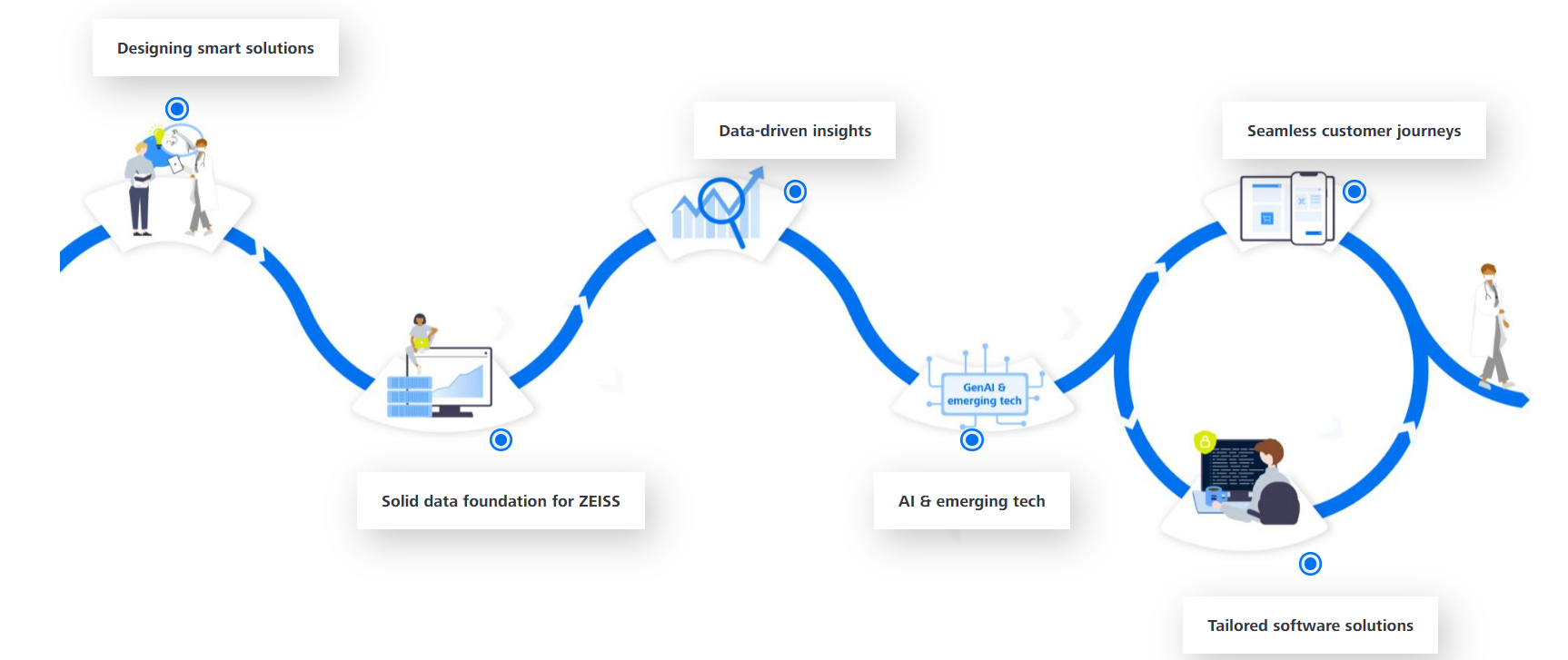
In this context, enterprises are encouraged to move beyond a “cloud-first” approach towards a more balanced “cloud-smart” strategy. This involves aligning cloud decisions with workload criticality, resilience requirements, and regulatory obligations. For mission-critical systems, organizations must evaluate continuity plans in the event of prolonged outages or disruptions. Hybrid and multi-cloud strategies, along with containerization and open standards, are increasingly seen as essential to ensuring flexibility and reducing dependency risks.
From a cybersecurity standpoint, reliance on a small number of cloud providers can create hidden vulnerabilities. A key concern is the false assumption that hyperscaler security extends across the entire enterprise stack. In practice, many breaches continue to stem from misconfigurations, weak access controls, or identity management gaps. Concentration risk can amplify the impact of outages or disruptions, while opaque supply chain dependencies within cloud ecosystems may remain unaddressed until incidents occur. Identity systems, if compromised, can create a significant blast radius across operations, further underscoring the need for strong governance and contingency planning.
Cloud has undoubtedly accelerated innovation and scale, but over-concentration introduces fragility that organizations often underestimate. The shift from cloud-first to cloud-smart is about building resilience through architectural diversity, stronger identity governance, and clear contingency pathways that ensure business continuity even in adverse scenarios.
ZEISS Digital Partners also highlight the role of decentralized decision-making in strengthening resilience. By enabling teams closest to systems and workloads to take immediate action, organizations can significantly reduce response times during incidents. This approach has been effectively implemented across ZEISS India’s Global Capability Centers (GCCs), where localized expertise supports rapid incident response and proactive risk mitigation, while remaining aligned with global governance frameworks.
The need for such agility is even more pronounced in industrial and operational technology (OT) environments. Unlike traditional IT systems, industrial systems prioritize safety and uptime over confidentiality. Many of these systems are legacy-based, operate on proprietary protocols, and cannot be easily patched or restarted without disrupting operations or creating safety risks. This creates a disconnect between conventional cybersecurity practices and real-world industrial requirements.
To address this, ZEISS Digital Partners adopt a layered approach to OT security, incorporating network segmentation, real-time monitoring, and intrusion detection mechanisms designed to minimize risk without impacting operational continuity. Proactive risk management, including simulated testing of updates and strict access controls, remains central to this approach.
Another important shift highlighted is the need to treat cybersecurity as a long-term responsibility. As connected devices remain in operation for extended periods often spanning decades security must be maintained throughout their lifecycle. This includes ensuring products are updateable over time, maintaining transparency through Software Bills of Materials (SBOMs), and clearly defining support timelines for security updates and vulnerability management.
This perspective necessitates a rethinking of both product design and governance. Secure-by-design architectures, modular systems, over-the-air update capabilities, and cryptographic agility are becoming essential considerations. At the same time, organizations must establish extended support policies, continuous vulnerability management practices, and align with global standards and regulatory frameworks.
ZEISS emphasizes the importance of designing systems with the assumption that failures are inevitable. Rather than focusing solely on prevention, organizations should prioritize resilience, containment, and rapid recovery. This includes adopting principles such as zero trust, segmentation, redundancy, and automated detection and response mechanisms. Regular scenario planning and crisis simulations further strengthen preparedness.
In an increasingly complex and interconnected environment, this approach enables organizations to build systems that can withstand disruption while maintaining operational continuity and trust.
13, Apr 2026
Global AR Smart Glasses Shipments Double in 2025: Report
New Delhi, Apr 13 (BNP): Global shipments of augmented reality (AR) smart glasses witnessed a significant surge in 2025, doubling compared to the previous year, according to a recent industry report.

The growth reflects rising demand for wearable technologies that integrate digital information with real-world environments. Improved device design, better processing capabilities, and expanding use cases across sectors such as enterprise, healthcare, and logistics have contributed to the momentum.
The report highlights that companies are increasingly investing in AR-enabled devices as they move toward more immersive and hands-free digital experiences. This trend is also being supported by advancements in display technology and artificial intelligence integration.
Industry analysts suggest that the sharp rise in shipments signals a broader shift toward wearable computing, with AR smart glasses expected to play a more prominent role in both professional and consumer applications in the coming years.
13, Apr 2026
Maharashtra Plans Music Academy as Tribute to Asha Bhosle
Mumbai, Apr 13 (BNP): The Maharashtra government will move ahead with plans to establish a music institute envisioned by legendary singer Asha Bhosle, Chief Minister Devendra Fadnavis announced on Monday.
The decision comes a day after the iconic singer’s passing at the age of 92, marking the end of an extraordinary musical journey that spanned over seven decades and touched generations of listeners.
Fadnavis said the proposed institute would serve as a tribute to her legacy and contribute to nurturing future talent in music.
The state cabinet also paid homage to Bhosle during a meeting, where a condolence resolution was presented in her honour. Senior officials and ministers observed the moment, remembering her immense contribution to Indian music.
The initiative reflects the state’s effort to preserve her legacy while inspiring aspiring artists for years to come.
13, Apr 2026
Samsung Galaxy Z Fold 8 Set to Raise the Bar for Foldable Phones
Apr 13 (BNP): Samsung appears ready to take another big step in the foldable smartphone space with the expected launch of the Galaxy Z Fold 8 in July 2026. After setting high expectations with the previous generation, the company is now looking to refine and upgrade the experience further.
The upcoming device is likely to focus on addressing key user demands. Early reports suggest improvements such as a larger battery for better endurance, a more advanced ultrawide camera, and enhanced processing power to fully utilise the large foldable display.
If these upgrades materialise, the new model could deliver a more balanced and powerful performance, making foldable devices more practical for everyday use.
With growing competition in the premium smartphone segment, Samsung’s next foldable could play a crucial role in shaping buyer expectations and pushing the category forward.
13, Apr 2026
Knowledgeum Academy Hosts Owen Richards at Transcendence 2026 Graduation Ceremony
Bengaluru, Apr 13: Knowledgeum Academy, a premier IB World School, successfully hosted its third annual graduation ceremony, Transcendence 2026 – the beginning of becoming, celebrating the achievements of its International Baccalaureate Diploma Programme (IBDP) cohort. Held near its campus in Jayanagar, the event marked a significant milestone as learners transition from academic excellence to global leadership pathways.
The ceremony underscored the academy’s commitment to delivering a holistic and internationally recognized curriculum, aligned with the IBDP’s mission to nurture independent thinkers equipped to navigate an increasingly complex world.
Distinguished Presence and Global Perspective
The event was graced by Owen Richards, Deputy Head of Mission at the British Deputy High Commission in Bengaluru, as the Chief Guest. Drawing from his extensive international experience across Geneva, Bucharest, Jakarta, Mumbai, and New Delhi, he shared valuable insights on leadership, values, and global citizenship.
Addressing the graduating class, he said:
“Try not to make a short-term gain at the expense of your values. Staying true to your principles is key to long-term success.”
Visionary Leadership and Academic Excellence
Chenraj Roychand, Founder Chairman – JAIN Group and Founder of Knowledgeum Academy, also attended the ceremony, reflecting on the deeper purpose of education.
“The most important life lessons come through experience, reflection, and resilience. What you have gained here is not just education, but a way of thinking,” he said.
Backed by the legacy of the JAIN Group, Knowledgeum Academy has emerged as a leading IB institution in Bengaluru, known for its experiential, project-based, and learner-centric approach.
Strong Academic Outcomes and Global University Placements
Continuing its tradition of excellence, the Class of 2026 has secured early admissions to leading global and national institutions, including:
- University of San Francisco
- University of Edinburgh
- University of Sydney
- Ashoka University
- Krea University
- FLAME University
These outcomes reflect the academy’s robust university guidance framework and focus on strategic profile building tailored to each learner’s aspirations.
A Learner-Centric Educational Ecosystem
Knowledgeum Academy continues to offer a personalized learning environment, characterized by small class sizes, IB-trained educators, and a strong emphasis on critical thinking, inquiry, and global awareness.
As Transcendence 2026 concluded, the graduating cohort stepped forward as confident, future-ready individuals, prepared to make meaningful contributions on a global stage.
13, Apr 2026
SWITCH Mobility Hands Over 100 Electric Buses to Mauritius to Boost Green Transport
New Delhi, Apr 13 (BNP): SWITCH Mobility, the electric vehicle arm of the Hinduja Group, has delivered 100 electric buses to Mauritius as part of an initiative to support cleaner public transport.
The buses have been provided under a government-to-government arrangement, with the Government of India gifting them to Mauritius to help the country move toward sustainable mobility.
This step is expected to strengthen Mauritius’ public transport system while reducing emissions and promoting environmentally friendly travel options.
The move also highlights India’s growing role in supporting green mobility projects globally and expanding its presence in the electric vehicle sector.
13, Apr 2026
Unchecked AI Use May Deepen Risks in Financial Sector: RBI Deputy Governor
Mumbai, Apr 13 (BNP): Reserve Bank of India Deputy Governor Swaminathan J has cautioned that adopting artificial intelligence without proper safeguards could amplify existing vulnerabilities and introduce new risks in the financial sector.
Speaking at a memorial lecture at SASTRA University in Thanjavur, he noted that AI is rapidly transforming how financial institutions operate—from customer service to document processing and decision-making. However, he stressed that this growing reliance on technology must be accompanied by strong regulatory oversight and risk management frameworks.
He highlighted that while AI can improve efficiency and innovation, unchecked use may lead to issues such as bias in decision-making, operational risks, and reduced transparency.
The remarks underline the need for a balanced approach, where financial institutions leverage AI’s benefits while ensuring safeguards are in place to protect stability and trust in the system.
13, Apr 2026
A milestone for green steel: SuSteelAG consortium achieves hydrogen-based ore reduction on an industrial scale
The hydrogen rotary kiln in Oshivela, Namibia. Photo: HyIron.
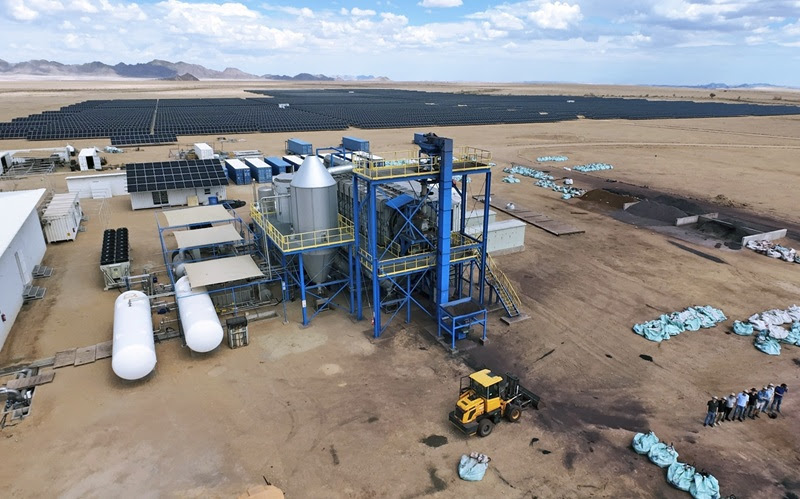
Berlin, 13.04.2026. In 2025, the international SuSteelAG consortium – led by Federal Institute for Materials Research and Testing (BAM) – launched its mission to decarbonize steel production using hydrogen, including when working with lower‑grade ores. Now, the first industrial‑scale pilot test has been successfully completed in Namibia: In an electrically powered hydrogen rotary kiln, 80 tonnes of Australian iron ore were converted climate‑neutrally into direct‑reduced iron (DRI). With this, SuSteelAG is paving the way for a sustainable value chain linking Australia, Namibia, and Germany -from iron production and refinement to green steel.
The steel industry accounts for around seven percent of global CO₂ emissions; transforming it is therefore a central lever of the energy transition. This is where the SuSteelAG project (Sustainable Steel from Australia and Germany) comes in: Coordinated by BAM, the project is developing a hydrogen‑based direct‑reduction process that, for the first time, can also utilize lower‑grade ores – thereby expanding the resource base available for green steel production.
Until now, climate‑neutral steel production has only been feasible using premium ores with an iron content of roughly 70 percent. These ores, however, are scarce and expensive worldwide. Moreover, existing processes require the use of a shaft furnace, which in turn demands cost‑ and energy‑intensive pelletizing of the ore.
In early April 2026, for the first time, untreated Australian iron ore with a comparatively low iron content (~56 percent) was processed into direct‑reduced iron at industrial scale at the Oshivela site in Namibia, where project partner HyIron Green Technologies operates an innovative hydrogen rotary kiln.
For the campaign, 80 tonnes of iron ore supplied by Australian mining and technology company Fortescue – also a SuSteelAG partner – were available. The German industrial furnace manufacturer TS Elino GmbH was primarily responsible for designing and constructing the rotary kiln. Prior to the industrial trial, BAM had extensively studied hydrogen‑based iron reduction at laboratory scale and derived the optimal operating parameters for the large‑scale process. Based on these findings, the Oshivela plant succeeded in refining the Australian ore into iron under climate‑neutral conditions and with a throughput of approximately five tonnes per hour.
“We have now reached a scale that is highly relevant for industrial production and demonstrated that hydrogen‑based direct reduction of lower‑grade ores can be operated economically – an essential step toward accelerating green steel production in Germany and beyond,” says Christian Adam (BAM), who coordinates the international SuSteelAG consortium. “This also means that green steel production need not be constrained by the limited availability of premium ores.”
The next step will be to ship the refined iron from Namibia to Germany. Salzgitter Mannesmann Forschung GmbH will investigate how the refined iron can best be integrated into existing industrial processes in order to eventually produce climate‑friendly steel for cars and other key products.
RWTH Aachen University (Advanced Mineral Processing Technologies Research and Teaching Unit – AMR) will investigate how Australian ores with lower iron content can be further optimized for direct reduction.
In addition to the companies already mentioned, the SuSteelAG consortium includes HyIron GmbH, Fraunhofer Institute for Surface Engineering and Thin Films IST, Fraunhofer Institute for Ceramic Technologies and Systems IKTS, Heidelberg Manufacturing Deutschland GmbH, and HANSAPORT.
SuSteelAG is funded with approximately €4.5 million under the 7th Energy Research Programme of the German Federal Ministry of Research, Technology and Space. The innovative hydrogen rotary kiln operated by HyIron Green Technologies in Namibia was supported by the German Federal Ministry for Economic Affairs and Energy.
13, Apr 2026
India Revises CAFE 2027 Fuel Efficiency Norms, Shifts to Phased Compliance Framework
New Delhi, Apr 13 (BNP): The government has proposed revised fuel efficiency standards under CAFE 2027, moving away from a strict target-based system to a phased and more flexible compliance approach, according to a draft prepared by the Ministry of Power in consultation with the Bureau of Energy Efficiency (BEE).
The updated framework introduces a flatter compliance curve, aimed at creating a more balanced system and reducing the earlier advantage available to heavier vehicles.
CAFE 2027 represents the third stage of India’s Corporate Average Fuel Efficiency roadmap, which is designed to improve vehicle efficiency and support the country’s long-term climate and energy goals. The proposed norms are set to take effect from April 1, 2027, and will be tightened gradually through FY32.
The draft reportedly relaxes earlier proposals made in September 2025 by adjusting the emission curve, allowing slightly higher fuel consumption limits than initially suggested.
To encourage cleaner mobility, the framework includes “super credits” for electric and hybrid vehicles, allowing them to be counted multiple times in fleet emission calculations. Plug-in hybrids and flex-fuel hybrids are also expected to receive higher credit benefits.
In addition, the proposal permits credit trading between manufacturers, giving automakers greater flexibility in meeting compliance requirements.
However, the report cautions that penalties for non-compliance could still run into hundreds of crores for large manufacturers, making adoption of cleaner technologies and effective credit management crucial for the industry.


