


13, Apr 2026
VST Tillers Tractors Showcases Innovative Product Portfolio at National Agriculture Expo 2026
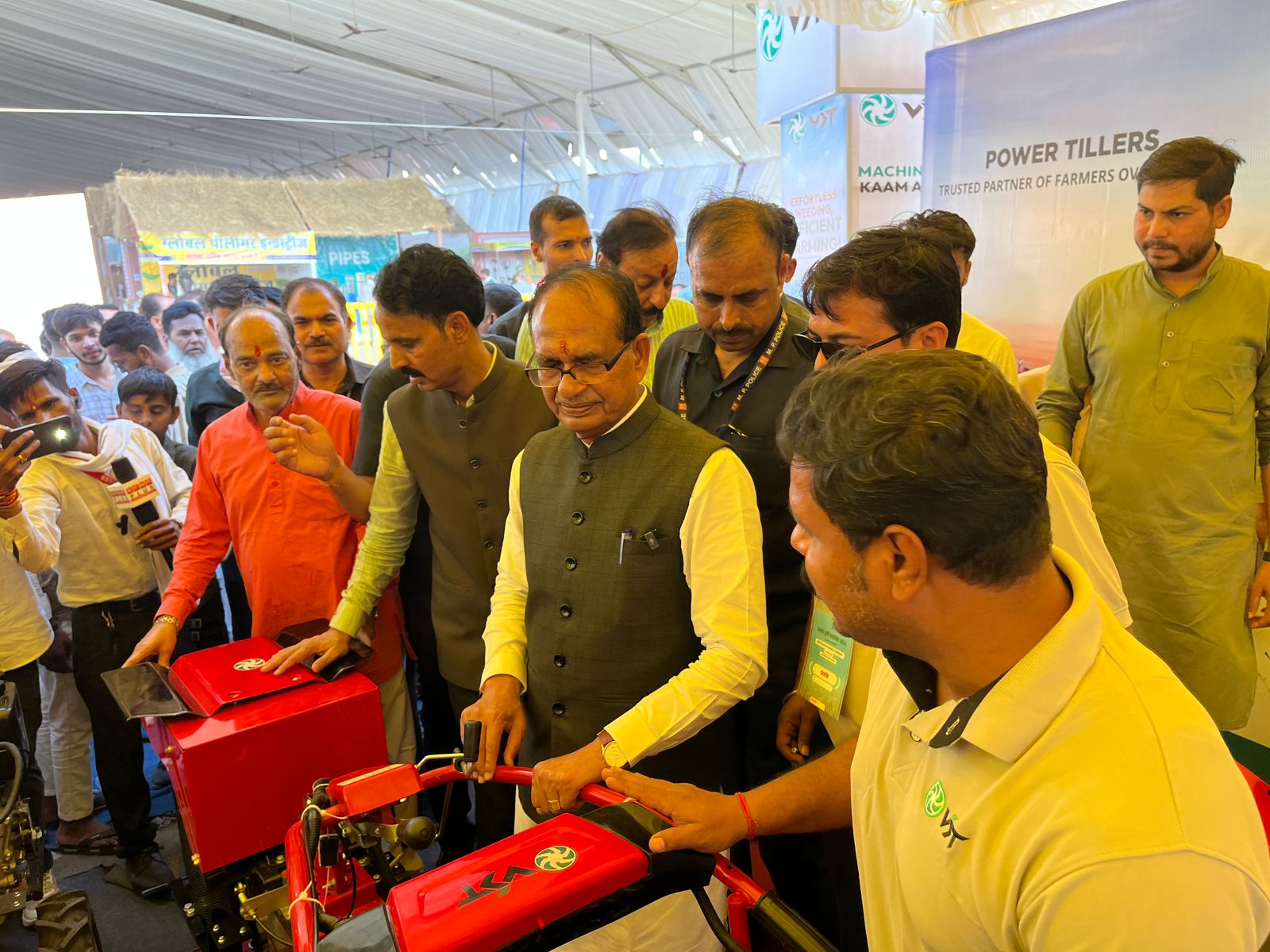
Raisen, Madhya Pradesh | Apr 13: VST Tillers Tractors Ltd., a pioneer in compact agricultural machinery in India, showcased its latest portfolio of innovative farm mechanisation solutions at the National Agriculture Expo 2026 organised by the Union Ministry of Agriculture and Farmers Welfare in association with the Ministry of Agriculture, Madhya Pradesh in Raisen, Madhya Pradesh. Designed to address the evolving needs of modern farmers, VST’s new product range marks a significant advancement in fuel efficiency, performance, and versatility for small and mid-sized farming operations.
Shri Shivraj Singh Chouhan, Minister of Agriculture and Farmers Welfare Government of India and Shri Narayan Singh Kushwaha, Hon’ble Minister for Horticulture, Government of Madhya Pradesh, visited the VST stall at the exhibition and commended the company’s innovations and sustained efforts in advancing horticulture mechanization. At the Expo, the company unveiled its latest innovations, including the FENTM Series Tractors, Electric Power Tiller, and Electric Power Weeder, each reflecting VST’s commitment to sustainable and technology-driven agriculture.
The FENTM Series comprises five high-performance and fuel-efficient models, 180 FENTM, 224 FENTM, 225 FENTM, 270 FENTM, and 929 FENTM, offering a horsepower range of 18.5 HP to 29 HP. Available in both 2WD and 4WD configurations, these tractors are engineered to deliver enhanced productivity, superior operator comfort, and long-term reliability.
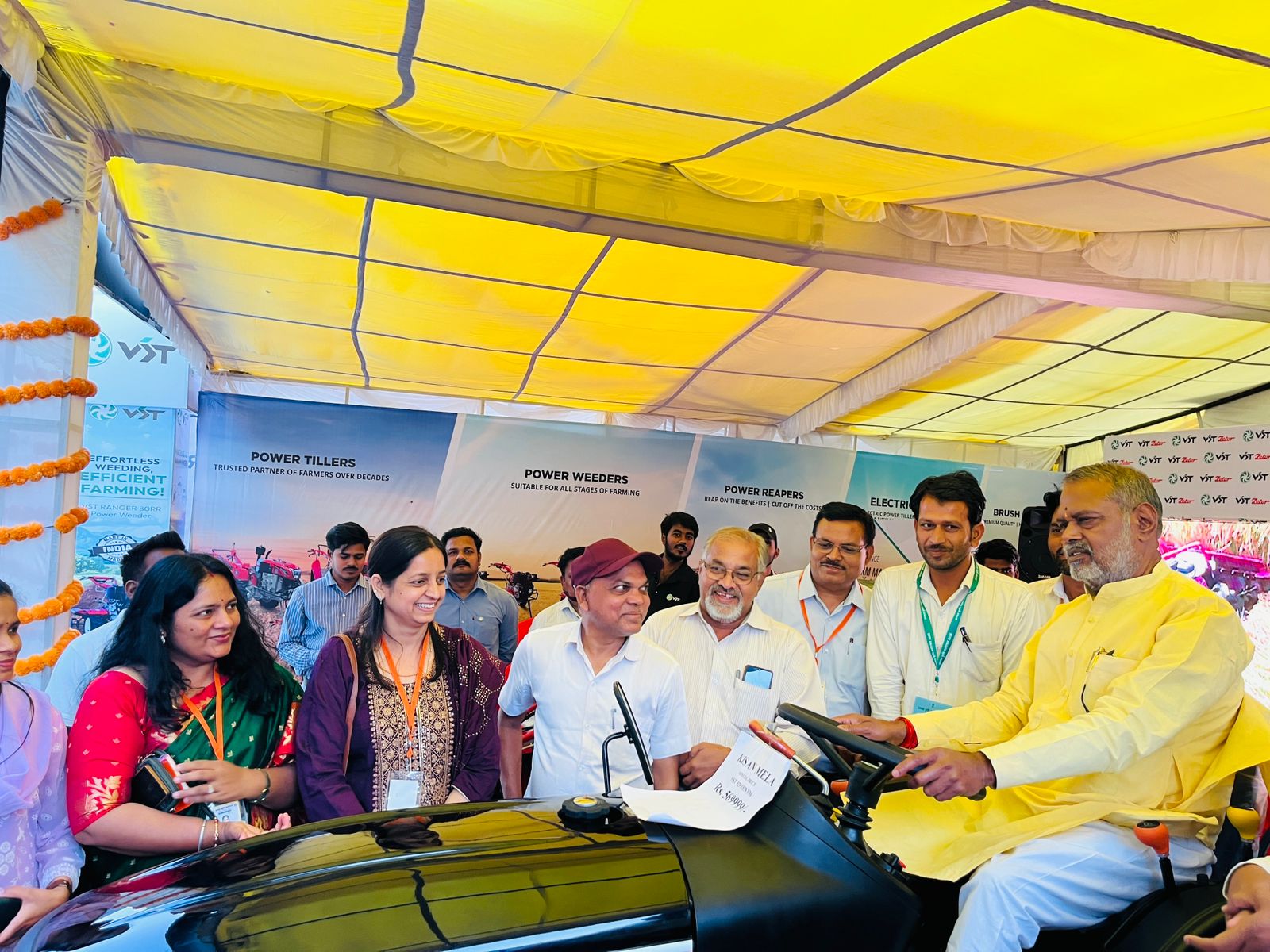
Positioned as compact yet powerful farming solutions, the FENTM Series is designed for versatility across diverse terrains and agricultural applications. Each model delivers an optimal balance of power, manoeuvrability, and fuel efficiency, making it ideally suited for the varied needs of Indian farmers.
VST’s Electric Power Tiller and Electric Power Weeder further underscore the company’s vision to enable sustainable agriculture through advanced mechanisation. These EV solutions are engineered to deliver high performance with minimal environmental impact, aligning with India’s clean energy and decarbonisation goals. The electric range offers farmers eco-friendly operations, lower running costs, and ease of use, heralding a new era of green farming solutions.
Building on its strong legacy of engineering excellence and indigenous innovation, VST is now leveraging global EV learnings to strengthen India’s small-farm mechanisation ecosystem. Through future-ready, locally developed solutions, the company aims to redefine productivity, sustainability, and affordability for the next generation of farmers.
The National Agriculture Expo 2026, a premier three-day agricultural exhibition and training platform, is being held from April 11–13, 2026, at the Dussehra Ground in Raisen. The event brings together farmers, policymakers, researchers, agri-startups, and industry leaders to showcase advancements across the agricultural value chain. With over 300 exhibition stalls, the expo features innovations in farm mechanisation, improved seeds, irrigation technologies, drones, digital agriculture, livestock, fisheries, and food processing.

- 0
- By Neel Achary

13, Apr 2026
Uttarakhand Pageant 2026 Winners Declared in Dehradun
Dehradun. Apr 13 (BNP): The grand finale of Mr and Miss Uttarakhand 2026 was held at Hotel Regenta with participation from contestants across the state, showcasing talent, confidence, and cultural representation.
In the results, Tarushi Dobhal was crowned Miss Uttarakhand 2026, while Harsh Chaudhary won the title of Mr Uttarakhand 2026, emerging as the top performers of the evening.
Other recognitions included Vanshita Kandpal as Miss Uttarakhand Model of the Year and Lokpal Pokhriyal as Mr Uttarakhand Model of the Year.
Among runners-up, Neha Mahara and Prakash Rana secured the first runners-up positions, while Shivam Bhatt and Lata Koranga were named second runners-up.
The event, organised with support from Maya Devi University and Himalayan Buzz in association with Dharma Creation, featured 36 finalists selected through auditions held in Dehradun and Haldwani.
13, Apr 2026
Nepal: Unveils 100-Point Reform Agenda Under Balendra Shah, Signals Gen Z-Led Governance Shift
Kathmandu, April 13: Nepal’s newly formed government under Prime Minister Balendra Shah has unveiled an ambitious ‘Good Governance Blueprint 2082’ alongside a sweeping 100-point reform agenda, marking a decisive push to overhaul governance, digitise public services, and reshape the country’s economic and institutional framework.
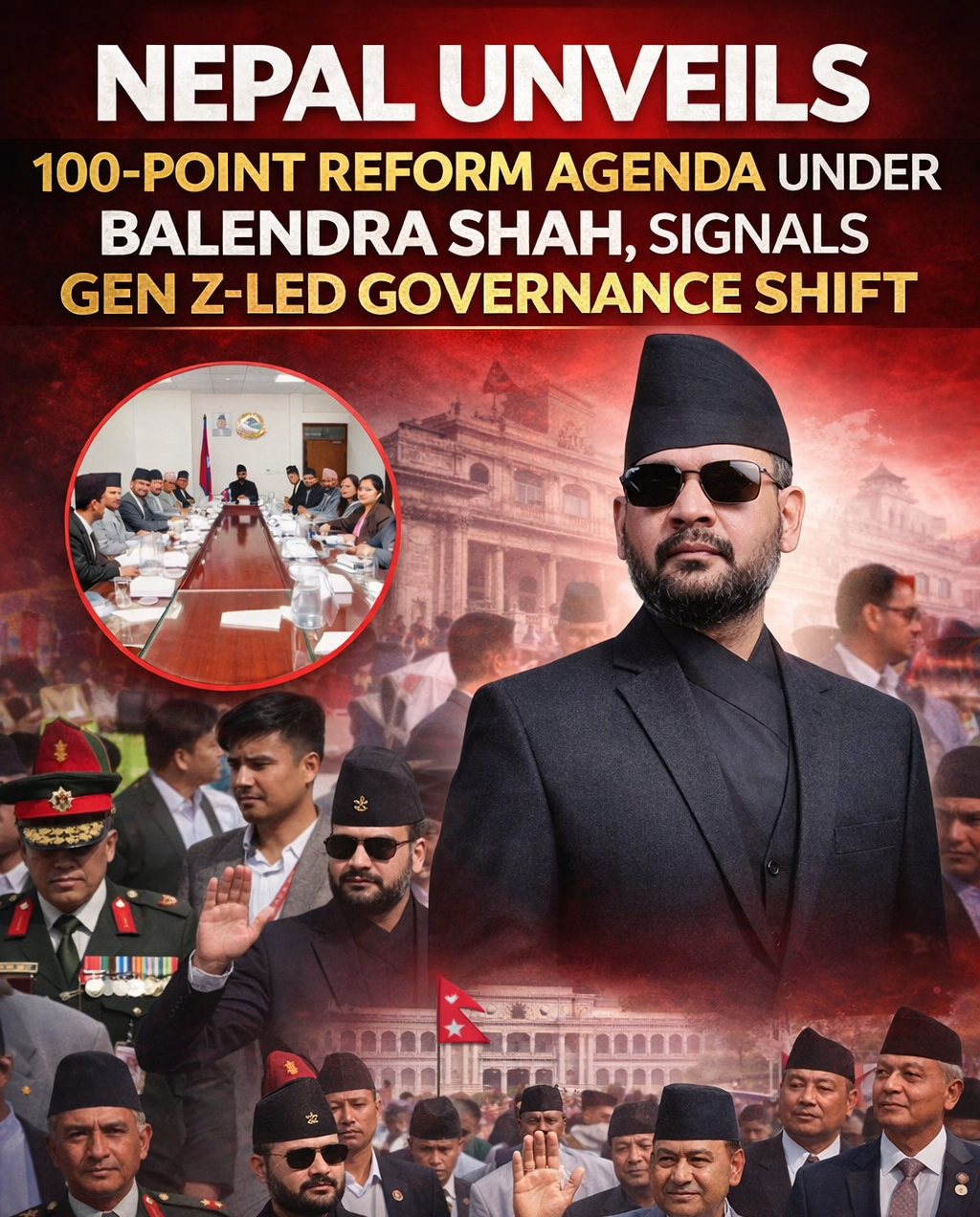
Approved during the first Cabinet meeting at Singha Durbar, the reform package reflects a transition toward efficiency, transparency, and citizen-first governance—aligned with the expectations of a younger, more digitally aware generation.
A Rapid Reform Push
Since taking office on March 27, the administration has moved swiftly to introduce structural and policy changes aimed at transforming the state from a regulator into a facilitator of growth. Key measures include capping the cabinet at 18 members, reducing administrative layers to three, and limiting central ministries to 17 within 30 days.
The government has also initiated wide-ranging reforms across anti-corruption, civil service restructuring, and digital governance to accelerate decision-making and improve institutional accountability.
Governance & Transparency at the Core
A major anti-corruption drive will investigate financial assets of politicians and officials dating back to 1991. Complementing this is a real-time digital platform that will allow citizens to track government promises, monitor execution, and evaluate performance—introducing unprecedented public oversight.
All ministries will operate under defined KPIs with mandatory monthly reporting to the Prime Minister’s Office, reinforcing performance-based governance.
Education & Institutional Reforms
In a landmark move to depoliticise education, political student unions will be phased out and replaced with non-partisan student councils. Additional education reforms include:
- No formal examinations up to Grade 5
- Mandatory government school attendance for children of ministers and senior officials
Civil service reforms further prohibit political affiliations for government employees and teachers, aiming to professionalise institutions and eliminate partisan influence.
Digital Governance & Citizen Services
The blueprint places strong emphasis on digital transformation. A unified governance framework will position the National ID as the primary access point for public services. Key initiatives include:
- 24×7 grievance redressal platforms
- Integrated service centres operating extended hours
- “Ask Once” policy for seamless data usage across departments
These measures aim to reduce bureaucratic friction and enhance service delivery efficiency.
Economic Strategy with Global Expertise
To steer economic reforms, the government has appointed Swarnim Wagle as Finance Minister. The strategy focuses on a digital-first, private sector-led growth model designed to attract domestic and foreign investment, create high-quality jobs, and drive structural transformation.
Reforms also include faster startup approvals, single-window clearance systems, and strengthened infrastructure planning across logistics, energy, and urban development.
A Gen Z-Driven Political Shift
Prime Minister Shah’s rise reflects a broader generational transformation in Nepal’s political landscape. Emerging from the September 2025 Gen Z-led protests, his leadership represents a shift toward accountability, meritocracy, and system-driven governance.
With a largely young cabinet drawn from non-traditional and reform-oriented backgrounds, the administration is positioning itself as a response to evolving public expectations.
Challenges Ahead
Despite the strong mandate, implementation faces notable hurdles. Early actions, including arrests linked to the Gen Z protest crackdown, have drawn legal scrutiny, with Nepal’s Supreme Court seeking clarification.
The government must also navigate structural challenges such as youth unemployment, brain drain, and entrenched institutional inefficiencies. Sustained execution and broad stakeholder alignment will be critical to delivering on reform promises.
A Defining Moment for Nepal
The ‘Good Governance Blueprint 2082’ represents one of Nepal’s most comprehensive reform efforts in recent years. By combining policy reform, digital innovation, and institutional restructuring, the government aims to build a resilient, transparent, and future-ready state.
As Nepal embarks on this transformation, the success of the agenda will depend on its ability to translate ambition into measurable outcomes while maintaining public trust and momentum.
13, Apr 2026
India, Oman Explore Ways to Strengthen Trade and Investment Ties
New Delhi, Apr 13 (BNP): India and Oman have discussed ways to enhance bilateral trade and investment, focusing on expanding economic cooperation between the two countries.
Commerce and Industry Minister Piyush Goyal held discussions with Oman’s Commerce, Industry and Investment Promotion Minister Anwar bin Hilal bin Hamdoun Al Jabri on strengthening economic relations and identifying new areas of partnership.
The talks also centred on leveraging opportunities under the India–Oman Comprehensive Economic Partnership Agreement (CEPA) to further boost trade flows and investment ties for mutual growth.
Officials noted that in recent days, Goyal has also engaged with trade ministers from Saudi Arabia, the UAE, Bahrain, and Kuwait as part of broader efforts to deepen India’s economic engagement with West Asian countries.
13, Apr 2026
Odisha Focuses on Women Empowerment, Highlights Role of ‘Women-Led Development’ Vision
Apr 13 (BNP): Odisha has reiterated its commitment to women empowerment, highlighting the importance of “Women-led Development” as a central pillar of inclusive growth.
Officials said the vision shared by the Prime Minister during a recent address has brought renewed focus on strengthening and empowering women, helping them become more self-reliant and confident. The guidance was described as inspirational, especially in encouraging greater participation of women in the development journey.
The state government noted that women across the country are achieving new milestones through improved opportunities, financial independence, and growing social participation. It said that the goal of building a “Developed India” and a “Prosperous Odisha” cannot be achieved without active involvement of women in all sectors.
As part of its efforts, Odisha has introduced several initiatives aimed at improving the economic and social status of women. Among them is the Subhadra Yojana, which focuses on supporting women’s financial independence and strengthening grassroots empowerment.
ଆଜି ମାନ୍ୟବର ପ୍ରଧାନମନ୍ତ୍ରୀ ଶ୍ରୀ @narendramodi ଜୀଙ୍କ ‘ନାରୀଶକ୍ତି ବନ୍ଦନ ସମ୍ମିଳନୀ’ ଅଭିଭାଷଣକୁ ଆଭାସୀ ମାଧ୍ୟମରେ ଶୁଣିବାର ସୌଭାଗ୍ୟ ମିଳିଲା। ମାନ୍ୟବର ପ୍ରଧାନମନ୍ତ୍ରୀଙ୍କ ଦୂରଦୃଷ୍ଟିସମ୍ପନ୍ନ ମାର୍ଗଦର୍ଶନ ଆମ ମାତୃଶକ୍ତିଙ୍କୁ ସଶକ୍ତ ଓ ସ୍ୱାବଲମ୍ବୀ କରିବା ଦିଗରେ ଏକ ନୂତନ ଉର୍ଜା ପ୍ରଦାନ କରିଛି।
ମୋଦୀ ଜୀଙ୍କ ନେତୃତ୍ୱରେ… pic.twitter.com/4UaGG5cJ1n
— Mohan Charan Majhi (@MohanMOdisha) April 13, 2026
Officials added that the state remains committed to expanding such programmes to ensure women are not only beneficiaries of development but also key contributors to it.
The government emphasized that empowering women is essential for long-term social progress and remains a core priority in its development strategy.
13, Apr 2026
Women’s T20 World Cup Sees Historic Prize Money Boost
Dubai, Apr 13 (BNP): The International Cricket Council (ICC) has announced a record prize fund of ₹82 crore for the upcoming Women’s T20 World Cup, set to be hosted in England and Wales later this year.
The total prize pool marks a 10% increase compared to the previous edition, reflecting the growing investment in women’s cricket globally.
The tournament will feature 12 teams, up from 10 in 2024, and is scheduled to be played from June 12 to July 5 across seven venues, with the final yet to be confirmed.
The ICC said the increased prize money highlights its commitment to expanding and strengthening women’s cricket at the international level.
13, Apr 2026
Women Account for 60 pc of Loans Under Mudra Scheme
Apr 13 (BNP): The Pradhan Mantri Mudra Yojana (PMMY), the government’s flagship scheme for micro and small enterprises, continues to show strong participation from women borrowers, who now hold around 60% of total loan accounts under the programme.
The scheme, aimed at providing collateral-free credit to small entrepreneurs, has played a key role in supporting self-employment and grassroots businesses across India.
Officials say the high share of women beneficiaries highlights the growing role of women in entrepreneurship, particularly in small-scale trade, services, and home-based businesses.
The initiative has helped expand financial inclusion by enabling easier access to credit for first-time borrowers and small business owners.
13, Apr 2026
Indore SEZ Exports Rise 10.5 pc to Cross INR 14,000 Crore in FY26
New Delhi, Apr 13 (BNP): Indore’s Special Economic Zone (SEZ) recorded a steady growth in exports, with shipments rising by around 10.5% to reach ₹14,302 crore in the financial year 2025–26, despite global economic uncertainties.
Officials from the Union Ministry of Commerce and Industry said the growth was supported by strong order pipelines from overseas buyers. They noted that even amid disruptions caused by shifting US tariff policies and geopolitical tensions in West Asia, export momentum remained largely resilient.
The performance highlights the continued strength of export-oriented industries operating out of the Indore SEZ, which have maintained consistent demand in international markets.
13, Apr 2026
Sensex Drops Over 700 Points Amid Global Uncertainty
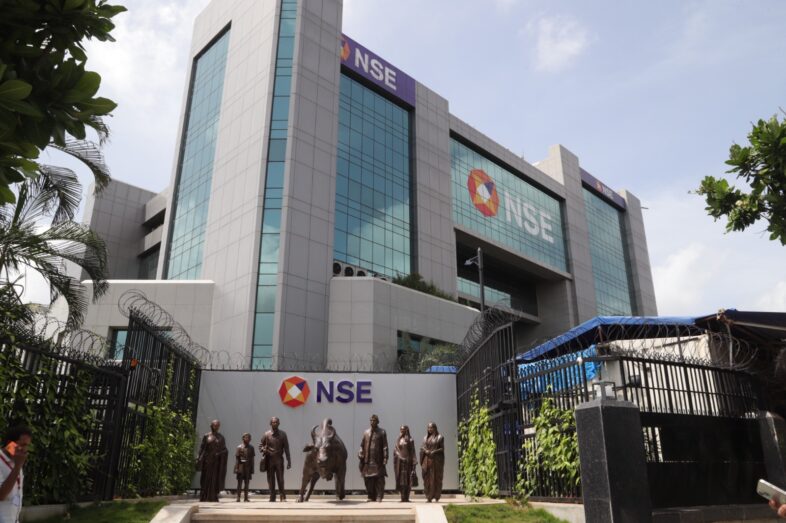
New Delhi, Apr 13 (BNP): Indian equity markets ended lower on Monday, with benchmark indices slipping nearly 1% amid rising global tensions and concerns over crude oil prices.
The decline came after reports of stalled US-Iran negotiations, which heightened fears of a prolonged geopolitical conflict and its potential impact on global energy markets.
The BSE Sensex dropped 702.68 points, or 0.91%, to close at 76,847.57. During intraday trade, it fell as much as 1,681.93 points, or 2.16%, to touch 75,868.32.
Similarly, the NSE Nifty declined 207.95 points, or 0.86%, to settle at 23,842.65.
Market analysts said rising uncertainty in global crude oil prices added pressure on investor sentiment, leading to broad-based selling across sectors.
13, Apr 2026
EU Sustainability Governance: A Solid Foundation for the Rapid Expansion of the Hydrogen Sector
The wars in Ukraine and the Middle East once again highlight the importance of an energy supply free from fossil fuels. Renewable hydrogen is a key component in finding a way out of this dependency and achieving climate targets, including for energy-intensive sectors. A new policy paper from the Research Institute for Sustainability (RIFS) brings good news in this regard: in the EU, as in other countries, there are already governance frameworks in place that can be built upon – and which promote a rapid yet sustainable ramp-up of the global hydrogen economy. Join the online event about this topic and publications on the 15th of April 2026, 10:00 to 11:00 AM (CEST).
Green hydrogen has great potential to replace fossil fuels in energy-intensive industries such as the steel and chemical sectors. However, the roll-out of the hydrogen economy must happen quickly, as the climate crisis demands urgent action. At the same time, hydrogen offers opportunities for value creation, particularly in countries with abundant renewable energy resources.
However, hydrogen production also carries environmental and social risks: for example, expanding hydrogen production capacity could exacerbate existing water shortages. This is because more than 60 per cent of the global onshore production potential of renewable hydrogen is located in regions facing water scarcity.
The recently published policy paper “Strengthening Sustainability Governance for a Rapid Hydrogen Ramp-Up” by Rainer Quitzow and Maximilian Rischer builds on an assessment of sustainability governance mechanisms in the hydrogen sector across various countries. The conclusion: “The rules and mechanisms do not need to be completely reinvented,” says researcher Maximilian Rischer – “as frameworks for environmental and social considerations already exist in other areas, such as development banks, which need to be adapted to the hydrogen sector.”
Sustainability governance (see figure) also helps to ensure transparency and fair competition by ensuring that all economic actors adhere to the same standards and safeguards.
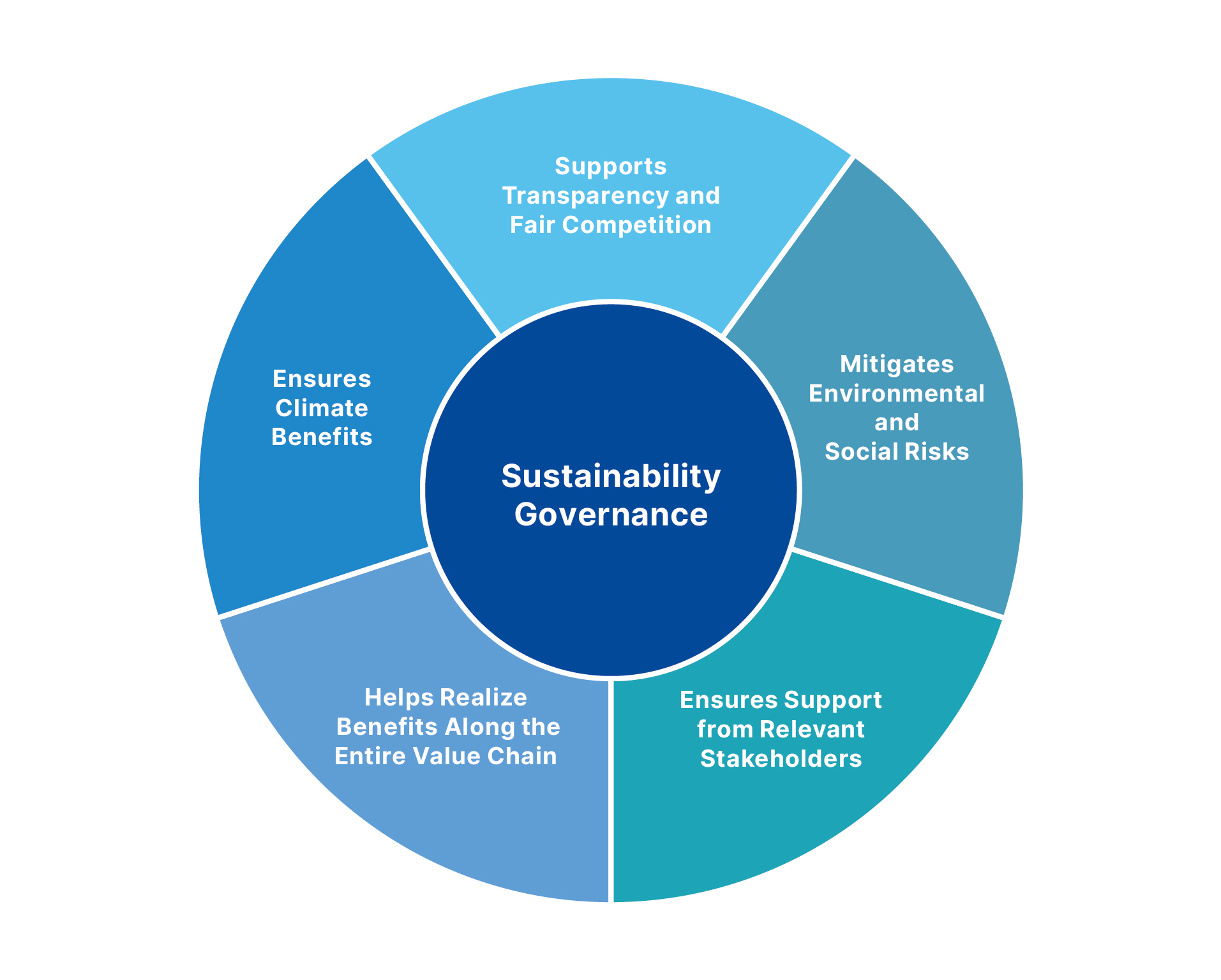
Finally, this policy paper proposes four measures at international and EU level that not only make governance structures more effective in supporting sustainability goals, but also strengthen capacities along the value chain.
1. Recommendation: Develop guidelines for hydrogen to implement sustainability-related due diligence
Guidelines for hydrogen to implement sustainability-related due diligence can help companies gain access to finance whilst strengthening efforts to mitigate environmental and social risks. A joint initiative by the major multilateral development banks and key private financial institutions to develop such guidelines for the hydrogen sector could help establish a global benchmark for this purpose.
2. Recommendation: ISO standard for hydrogen sustainability
In addition to the development of sector-specific guidelines, the introduction of an ISO standard for assessing sustainability in the hydrogen sector could further support the harmonisation and alignment of approaches over time. It also provides certainty for project developers in times of potential regulatory changes. In Germany, a draft sustainability standard for hydrogen has already been developed by the national standards institute DIN, which could be adopted at the international level.
3. Recommendation: Promote best practices in sustainability, capacity building and knowledge sharing
The promotion of best practices in the field of sustainable hydrogen production, combined with capacity building and knowledge sharing, can strengthen the ability of project developers to develop credible and cost-effective approaches to meeting sustainability criteria and due diligence obligations. Stakeholders such as the International PtX Hub are already playing an important role in this regard.
4. Recommendation: Ensuring a level playing field through robust certification systems
Ensure a level playing field for all economic operators by having the European Commission implement the established monitoring and reporting obligations.
Study defining sustainability governance
In their study “Governance for a Sustainable Hydrogen Economy. A Review of the Current State of Play”, published concurrently and forming the basis for this policy paper, the authors examine approaches from various regions in detail. For the first time, the two authors define what sustainability governance entails – a definition that is not limited to the hydrogen economy but can also be applied to other sectors.
Firstly, it encompasses government strategies, rules and regulations designed to ensure sustainability in the hydrogen sector. These include direct requirements for actors in the hydrogen value chain, as well as regulations aimed at creating transparency regarding specific economic activities.
Furthermore, there are sustainability-related rules and framework conditions that apply to the financing of hydrogen-related facilities. This may concern government support programmes as well as financing by public and private financial institutions.
Standards and certification systems serve as the basis for defining and verifying sustainability requirements or claims. These are intended to be core elements of a developing, sustainability-oriented quality infrastructure in the hydrogen sector.
Finally, high-level principles and initiatives serve as reference points for sustainability governance mechanisms and provide guidance to actors along the value chain towards more sustainable practices.
The authors’ conclusion: The European Union’s existing sustainability governance framework provides a basis for the sustainable expansion of the hydrogen sector. To be effective, therefore, there is no need for a multitude of new instruments or mechanisms. Rather, the next step requires targeted adjustments and additions to drive forward the expansion of a sustainable hydrogen sector.