


9, Apr 2026
Haworth Strengthens Distribution and Market Presence to Capitalise on Rising Demand for Workspaces in India
Haworth, a leading provider of design-led workplace solutions, is strengthening its growth strategy with a focus on expanding its distribution network and strengthening local supply chain capabilities, as demand for high-performance workplaces continues to rise across India.
The company has built a strong presence through its experience and design centres in Bengaluru, Mumbai, Delhi/NCR, Chennai and Hyderabad, supported by a robust manufacturing facility in Chennai. This setup enables faster delivery, greater customization, and improved responsiveness to client requirements. India’s importance in Haworth’s global strategy is reinforced by the expansion of Global Capability Centres and multinational operations, which are driving demand for sophisticated, experience-led work environments aligned with global standards.
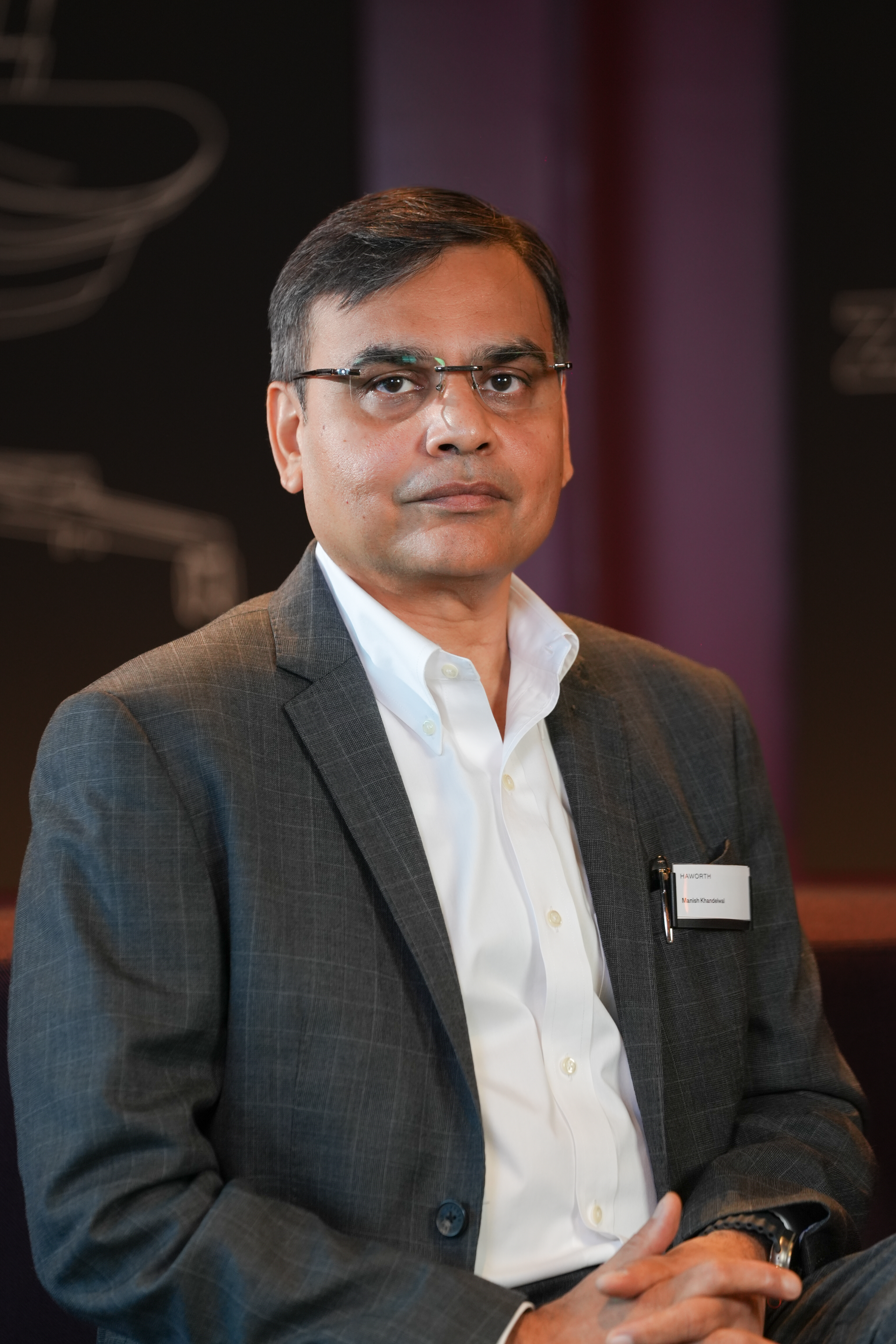
“India is no longer an emerging market for us; it is a strategic growth engine. The scale of opportunity, combined with evolving workplace expectations, is reshaping how organisations design and use office spaces. Our focus is on building local capabilities, expanding our reach, and partnering with clients to deliver integrated workplace solutions that enhance productivity, collaboration, and employee well-being. For Haworth, India also plays a dual role by driving Asia Pacific growth while supporting global accounts with consistency, scale, and innovation. It is a market where we are not just participating, but actively shaping the future of work,” said Manish Khandelwal, Managing Director, Haworth India.
As part of its next phase of growth, Haworth is expanding into emerging cities through a stronger dealership network, improving access to emerging business hubs. At the same time, Haworth continues to strengthen its local operating model, improving agility, delivery timelines, and the ability to deliver customised solutions across markets. Government initiatives such as ‘Make in India’ and ongoing infrastructure expansion are further strengthening the manufacturing ecosystem, improving ease of doing business and enabling greater localisation. This is helping companies like Haworth align more closely with customer expectations for faster delivery and local sourcing, while also supporting expansion into new and emerging business hubs.
This expansion comes at a time when the office furniture market in India is witnessing steady growth, driven by sectors such as IT and ITES, BFSI, consulting, multinational corporations, and the expanding Global Capability Centre (GCC) ecosystem, with education and large Indian enterprises emerging as longer-term opportunities.
Hybrid work is accelerating the shift toward collaborative, flexible, and ergonomic workplaces, increasing demand for integrated, design-led solutions. At the same time, organisations are placing greater emphasis on sustainability, material innovation, and long-term space efficiency, prompting solution providers to rethink design, sourcing, and lifecycle management across workplace environments.
Haworth is responding to this shift through a solution-led approach that combines global design expertise with insights into workplace behaviour. This reflects Haworth’s solution led approach, where design, research, and behavioural insights come together to create meaningful workplace experiences. Its portfolio spans seating, collaborative spaces, workstations & systems and acoustic solutions, enabling organisations to create adaptable, future-ready environments. The company is also sharpening its focus on key solution areas, including ergonomic seating to support employee well-being and performance, collaborative pods and flexible spaces to enable team-based work, and advanced acoustic solutions tailored for hybrid environments. Backed by global design collaborations and research driven insights, Haworth’s integrated ecosystem integrates furniture, design, and workplace intelligence, positioning the company as a solution led workplace partner.
Looking ahead, Haworth will expand its presence in emerging markets, deepen its leadership in the GCC segment, and strengthen engagement with enterprise clients and the design community. The company is also accelerating its shift toward solution-led engagement, working more closely with clients to deliver integrated, high-performance workplaces while shaping conversations around workplace transformation, sustainability, and employee experience in India.

- 0
- By Neel Achary

9, Apr 2026
Sightview Offers ASCRS 2026 Attendees Early Access to Enhanced EHR Solution
New user experience and workflows further advance leading technology for ophthalmologists
Durham, NC — April 9, 2026 — Sightview, the only electronic health record and practice management partner focused solely on eyecare, will offer early demo access to its new flagship EHR platform, named Sightview, at the 2026 ASCRS Annual Meeting. Attendees will get an interactive first look at the enhanced solution, which includes a modern, intuitive design that makes daily operations easier for ophthalmology professionals.
“Sightview is one of the most established technology partners for eyecare, and it’s critical we continue updating our offerings to keep up with the new needs and demands placed on eyecare professionals,” said Tycene Fritcher, CEO of Sightview. “Our new Sightview platform maintains the purpose-built functionality that ophthalmologists rely on, with modernized interfaces and workflows to further reduce frictions in their day-to-day tasks.”
The new solution introduces a cleaner look and feel for Sightview’s end-to-end, ophthalmology-specific EHR and PM offering. Simplified clinical and front-end processes enhance the solution’s existing single-screen exam view and make it easier to access and manage every aspect of the practice. Reimagined on a more agile platform, the new solution natively includes integrations such as automated payments and text-to-pay, clearinghouse support and claims management via TriZetto, and ONC-certified ePrescribe via DrFirst, among others.
“This more unified, streamlined platform has been in the works since my first day at Sightview,” said Fritcher. “We can’t wait for clients to experience our hard work firsthand and play around with a tool that I think will change the game for many eyecare practices across the country.”
Sightview will offer interactive demos of the new Sightview platform, which is expected to be available to existing and new Sightview practices in Q2 2026, in booth #527 at ASCRS Annual Meeting (April 10-13).
9, Apr 2026
Rackspace Technology Appoints Paul Soligon and Marco Tesini to Senior Leadership Roles
SAN ANTONIO, TX | Apr 09 — Rackspace Technology® (NASDAQ: RXT), a leading end-to-end hybrid cloud and AI solutions company, announced the appointments of Paul Soligon as Senior Vice President of Operations and Marco Tesini as Senior Vice President of International for the company’s Private Cloud business unit.
Soligon will be responsible for unifying key operational functions to drive growth and strengthen customer retention. In this role, he will lead Business and Sales Operations as well as Customer Success with a focus on advancing analytics and insights as well as elevating customer experience.
Soligon brings extensive leadership experience from over 25 years in high-growth technology environments. Most recently, he served as Senior Vice President at USAN, where he built and scaled significant new go-to-market partnerships and revenue expansion. Prior to that, he spent nearly a decade at Amazon Web Services (AWS) as Vice President and General Manager of Sales, leading a 700-person organization responsible for more than $2.2 billion in revenue and securing over $4 billion in strategic enterprise agreements.
Tesini will lead all markets outside of the US with a focus on expanding the company’s global presence, deepening customer relationships, and scaling innovative solutions. He brings more than 25 years of experience driving business transformation and profitable growth for leading IT organizations, such as Unisys and Hitachi Vantara. Most recently, Tesini served in senior leadership roles at Hitachi Vantara, where he led large-scale regional turnarounds and consistently delivered double-digit growth.
“Paul and Marco join Rackspace at a moment when demand for a governed, enterprise AI backbone is accelerating faster than most organizations can deliver against it,” said Gajen Kandiah, CEO of Rackspace Technology. He added, “Paul’s experience scaling a multi-billion-dollar business at AWS gives us the operational rigor to match that demand. Marco is a proven growth and turnaround leader who has built and rebuilt international businesses at scale, most recently at Hitachi Vantara. They strengthen our ability to do what the market increasingly needs: put AI into production on governed private cloud with the operational discipline that enterprise customers require.”
8, Apr 2026
Swaranjali Delhi Announces ‘Colours of India 2026’ in Hyderabad Celebrating Classical Arts
New Delhi/Hyderabad, April 2026:
Swaranjali Delhi has announced the upcoming edition of “Colours of India 2026 Hyderabad”, a vibrant celebration of Indian classical music and dance. The event, presented in association with Tatvaa Arts and RMS Audio, will take place on April 25, 2026, at the iconic B M Birla Auditorium.
Part of an ongoing series dedicated to promoting India’s rich artistic heritage, the event will feature an eclectic mix of performances by emerging talents and acclaimed artistes, offering audiences a comprehensive cultural experience.

The programme is divided into two sessions. Session 1 will highlight promising young performers, including a dance presentation by Rhythm Dance Academy, followed by vocal and sitar performances by students of Akshay Vat Sangeet Mahavidyalaya. The session will also feature taal vadya by disciples of Pt. Gajender Shewalker and vocal renditions by disciples of Swarasya Gurukulam.
Session 2 will showcase renowned artists from both Carnatic and Hindustani traditions. The line-up includes Carnatic violin recital by Vid. B. Pavan Singh, Hindustani vocal performance by Smt. Hemangi Bhagat, and a sitar recital by Pt. Rampaparnna Bhattacharjee. Accompanying artists for the evening include Shri Susamoy Mishra, Shri Vivek Kayal, Shri Rahul Deshpande, and Shri Rama Krishna, adding depth and richness to the performances.
The event will be anchored by Smt. Sikha Mahanta Nath, ensuring a seamless and engaging experience for attendees.
With support from Shreyas Webmedia Solutions Pvt. Ltd and RMS Audio Hyderabad, the event underscores a collaborative effort to promote classical arts and provide a platform for both established and emerging talent.
Open to all, Colours of India 2026 Hyderabad invites art enthusiasts, connoisseurs, and the general public to witness an immersive celebration of India’s timeless musical and dance traditions.
For further details and RSVP, interested attendees can visit the official website of Swaranjali or contact the organisers directly.
8, Apr 2026
Middle East disruption could cut global oil demand 20 percent and gas 10 percent by 2050 as energy security drives shift to independence
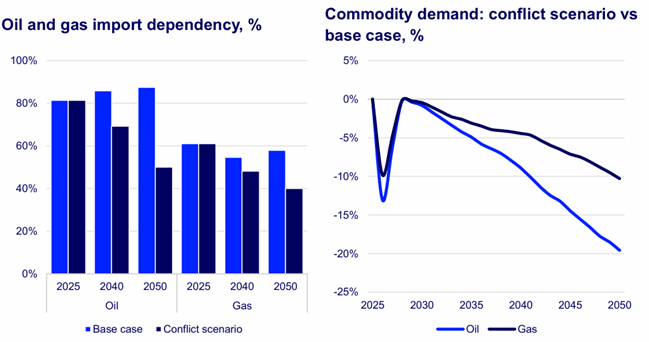
LONDON/HOUSTON/SINGAPORE, April 8, 2026 – Prolonged disruption to Middle East energy supplies could accelerate a structural shift in global energy systems, halving oil and gas import dependence by 2050 and reducing oil demand by 20% and gas demand by 10% relative to the base case. As countries prioritise energy security, demand is increasingly met through electrification, renewables, coal and nuclear, while reliance on globally traded fuels declines, according to Wood Mackenzie.
However, this shift comes with trade-offs. Energy systems become more domestic and diversified, but also more costly, while near-term emissions rise due to increased coal use before converging with the base case over the longer term. These findings are based on a new conflict scenario from Wood Mackenzie, part of its Lens Energy Transition Scenarios, which explores how sustained geopolitical instability could reshape global energy demand, supply and investment through 2050.
Crisis-driven disruption, long-term transformation
The scenario assumes a major geopolitical escalation beginning in early 2026, disrupting 15–20% of global oil and LNG supply. In the near term, oil demand falls by around 9% due to supply outages before recovering to pre-crisis levels by 2030, Wood Mackenzie noted.
Beyond 2030, structural shifts take hold as countries accelerate efforts to reduce reliance on imported fuels. Oil and gas demand declines more rapidly than in the base case, as governments prioritise domestic and diversified energy systems.
“Geopolitical crises can act as powerful catalysts for long-term system change,” said Prakash Sharma, Vice President, Scenarios & Technologies at Wood Mackenzie. “In this scenario, the world moves decisively towards energy independence, with lasting implications for global fuel demand and trade.”
Source: Wood Mackenzie Lens ETS
Electrification and efficiency at the core
Electrification and efficiency emerge as the primary pathways to energy independence. Overall power demand remains broadly in line with the base case, as lower demand from electrolytic hydrogen production is offset by wider electrification across transport, buildings and industry.
This shift reduces reliance on imported fuels while maintaining overall energy service demand.
A rebalanced energy mix
By 2050, the global energy mix shifts significantly under the conflict scenario:
- Oil demand falls 20% and gas 10%, while coal rises 20% as countries diversify supply and prioritise domestic resources
- Nuclear generation increases 40% above the base case, with both conventional and next-generation technologies scaling from the 2030s
- Renewables continue rapid expansion, forming the backbone of domestic power systems
- Hydrogen and carbon capture adoption declines, as policymakers favour more efficient and secure energy pathways
“Energy systems become more local, more diversified and less reliant on complex international trade,” said Jom Madan, Principal Analyst, Scenarios & Technologies. “Electrification and nuclear take priority, while hydrogen and carbon capture are deprioritised due to cost, efficiency and security considerations.”
Near-term coal, long-term nuclear
Coal plays a larger role in the near term as countries respond to supply shocks by maximising domestic energy sources and delaying plant retirements. Over the longer term, nuclear expands significantly, providing stable, fuel-secure baseload power as new capacity comes online from the 2030s.
Gas-fired power and hydrogen-based abatement pathways are scaled back as energy systems favour more secure and proven alternatives.
Security comes at a cost
The shift towards energy independence comes with higher system costs, as countries move away from globally optimised supply chains towards domestic production and diversified sourcing.
“Energy independence reduces exposure to external shocks, but it comes at a structural cost premium,” said Lindsey Entwistle, Principal Analyst, Scenarios & Technologies. “This creates new competitiveness challenges for energy-intensive industries, while advantaging more self-sufficient regions.”
Climate outcomes converge
Despite diverging pathways, cumulative emissions under the conflict scenario remain broadly aligned with Wood Mackenzie’s base case, tracking a 2.6°C warming trajectory. While emissions rise in the near term due to increased coal use, these are offset over time by stronger electrification and nuclear deployment.
“The scenario reaches a similar emissions outcome through a different route,” Sharma concluded. “It reflects a trade-off between near-term energy security and long-term decarbonisation, with countries ultimately relying on proven, domestically controlled technologies.”
8, Apr 2026
Global Citizen Solutions launches Global Atlas of Risk and Readiness 2026
London — 8 April 2026 — Global Citizen Solutions (“GCS”), a leading residency and citizenship planning advisory firm, through its Global Intelligence Unit, has released the Global Atlas of Risk and Readiness 2026 (GARR), a new benchmarking framework assessing how effectively countries combine structural stability with long-term growth capacity across 85 jurisdictions.
The report evaluates countries through a dual lens — structural risk and forward-looking readiness — to provide investors, globally mobile individuals, and policymakers with a clearer picture of where capital is most likely to remain protected while compounding over the long term. In an environment shaped by geopolitical fragmentation, regulatory shifts, and technological disruption, the findings point to a decisive shift: resilience, not size, is what defines investment attractiveness in 2026.
Top 5: Institutional strength defines global leadership
- Switzerland
- Germany
- Singapore
- Ireland
- Finland
Europe leads — but not all European economies equally
Seven of the top ten countries in the GARR rankings are European, with Switzerland (1st), Germany (2nd), Ireland (4th), Finland (5th), Denmark (6th), the Netherlands (7th), and Austria (8th) all placing within the global elite. Europe’s dominance reflects the structural premium now placed on regulatory predictability, institutional depth, and regional integration — characteristics deeply embedded across the continent and reinforced through coordinated policy frameworks.
Switzerland leads the overall ranking with a score of 93.73, combining financial sophistication, innovation capacity, and near-universal strength across governance and human capital indicators. Germany ranks 2nd overall but leads the entire dataset on readiness at 91.87 — the highest readiness score of any country assessed — reflecting industrial depth, economic diversification, and a human capital base unmatched in the region.
The UK at 21st: strong foundations, a widening readiness gap
The United Kingdom ranks 21st globally with an overall score of 88.68, classified by the GARR as ‘Advanced and Stable’. The UK retains genuine structural strengths: deep and liquid capital markets and institutional foundations that continue to attract long-term investment. Its low risk score reflects a country where the fundamentals remain sound.
The GARR measures countries across two equally weighted pillars: structural risk and forward-looking readiness. The UK’s risk score of 63.61 places it among the lower-risk economies globally — a genuine strength. But its readiness score of 80.96 ranks it only 28th, well below its overall position of 21st. It is the strength of the UK’s risk profile that lifts its overall ranking; on readiness alone, the picture is more complex.
Ireland makes the point with force. Ranking 4th overall with a score of 92.45 — seventeen places and nearly four points above the UK — Ireland places 9th globally on readiness, demonstrating what deep regional integration, regulatory alignment, and governance consistency can deliver at scale. For a country of 5.4 million people to outperform the UK by this margin across both pillars is analytically significant. The GARR framework attributes Ireland’s strength to precisely the structural advantages the UK has moved further from since 2016: frictionless access to European capital, talent, and regulatory frameworks, and the institutional confidence that comes with full membership of a coordinated economic bloc.
“In today’s global economy, capital flows to resilience, and the data shows that institutional strength, not size, is the defining factor behind sustainable investment performance. Europe’s dominance in this year’s rankings is no accident — it reflects decades of investment in the institutional foundations that capital increasingly demands. And the performance of economies like Switzerland or Singapore, prove that in a fragmented world, agility and governance depth matter far more than scale,” said Patricia Casaburi, CEO of Global Citizen Solutions.
Singapore: further proof that biggest isn’t best
Singapore ranks 3rd overall with a score of 92.60 — above the United States, and the only Asian economy to break into the global top tier. It records the lowest risk score of any country in the dataset while ranking 11th globally on readiness, with exceptional digital infrastructure, AI capability, and human capital. The report classifies Singapore as a global node of capital, innovation, and connectivity, demonstrating how strategic positioning and institutional coherence can more than compensate for limited geographic or demographic scale.
A world pulling apart – Mind the gap
Across the 85 jurisdictions assessed, the GARR finds a global system that is fragmenting rather than converging. A compact group of highly resilient economies — concentrated in Europe and anchored by strategic hubs in Asia and the Gulf — is pulling further ahead. Below them, a broader set of countries, including several major economies, faces the challenge of converting existing strengths into the kind of structural readiness that long-term capital increasingly demands.
For investors, the implication is clear: the question is no longer where risks are lowest, but where they are most effectively managed.
The full GARR report is available at globalcitizensolutions.com.
8, Apr 2026
Abu Dhabi Maritime Academy and Minexx to Deploy AI-Enabled Mineral Processing in DRC
Abu Dhabi, UAE – 08 April 2026: Abu Dhabi Maritime Academy (ADMA), the region’s leading academic institution for maritime training, and an integral part of AD Ports Group (ADX: ADPORTS), has signed a research, development, and operational deployment agreement with Minexx, a technology-enabled mining and mineral processing company operating in the Democratic Republic of Congo (DRC).
The agreement covers the design and deployment of an advanced, AI-enabled ore sorting machine, engineered to upgrade low-grade mineral material into export-ready products.
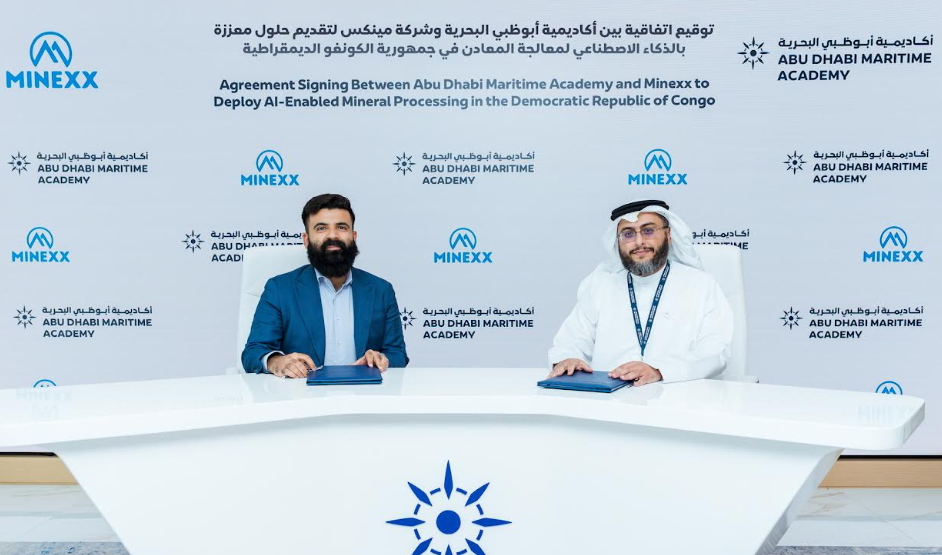
Under the terms of the agreement, ADMA will develop and commission the AI-driven mineral pre-processing unit, featuring proprietary machine-learning models and specialised hardware. Once deployed at Minexx’s operations, the solution will be integrated into live mineral processing workflows to improve recovery rates, enhance operational efficiency, and unlock value from previously uneconomic raw mineral material. This collaboration synergises ADMA’s applied research and artificial intelligence capabilities with Minexx’s established operational footprint in the DRC.
Dr. Yasser Al Wahedi, President of Abu Dhabi Maritime Academy, said: “Deploying applied research and artificial intelligence into live operating environments enables innovation to deliver measurable industrial impact. This collaboration demonstrates how advanced engineering and AI can enhance efficiency, performance, and sustainability in mineral processing, reflecting AD Ports Group’s commitment to technological leadership and value creation.”
Mansoor Hamayun, Co-Founder and Chairman of Minexx, said: “Across the DRC, one of the key challenges in tin, tungsten, and tantalum supply chains is the ability to economically upgrade low-grade material to export standards. This partnership brings together applied AI, long-term capital commitment, and operational execution to address that challenge at scale.”
This initiative aligns with AD Ports Group’s broader strategic engagement in the DRC, following the recent signing of Heads of Terms (HoT) for the development and operation of a multipurpose terminal at Matadi Port. The synergy between port infrastructure and upstream, AI-enabled value addition reinforces the Group’s role as an integrated trade and industrial enabler. In addition, this collaboration highlights AD Ports Group’s growing contribution to African markets, extending its impact beyond port infrastructure and logistics to leverage advanced digital technologies that unlock value across industrial sectors.
Strategically located in Central Africa, the DRC serves as a vital regional trade gateway. These initiatives reflect a shared commitment to strengthening the country’s global connectivity and supporting long-term economic development.
8, Apr 2026
Indian Steel Industry Posts Strong 10.7Pc Growth in 2025–26
India’s steel sector achieved a remarkable 10.7% growth in the financial year 2025–26, reinforcing its role as a key driver of the nation’s industrial and infrastructure development. The growth was fueled by strong domestic demand, ongoing infrastructure projects, and a rise in steel exports.
Both public and private steel producers ramped up production, helping meet rising market needs. Exports surged to new markets, while imports declined, strengthening India’s position in the global steel trade. Leading companies reported record or near-record production, reflecting increased capacity and efficiency improvements across the sector.
Industry experts say this robust performance demonstrates the resilience of India’s manufacturing base. Continued investments in technology, diversification of export markets, and better logistics will be critical to sustaining growth in the years ahead.
8, Apr 2026
India and Bangladesh Explore Stronger Ties Across Multiple Sectors
Apr 8: India and Bangladesh recently held high-level discussions aimed at deepening cooperation across a wide range of areas, from trade and connectivity to culture and security. Leaders from both nations emphasized the importance of working together to address shared challenges and create opportunities that benefit people on both sides of the border.
The talks highlighted initiatives to enhance economic collaboration, improve cross-border infrastructure, and strengthen people-to-people connections, reinforcing a partnership built on trust, history, and mutual respect. Officials noted that such efforts are essential for regional stability and prosperity, and signal a renewed commitment to a forward-looking, mutually beneficial relationship.
For citizens, these developments promise closer economic ties, easier cross-border travel, and expanded cultural exchange, making the bilateral relationship more tangible in everyday life.
8, Apr 2026
CM Fadnavis Announces Global Push for Urban Development
Apr 8: Maharashtra is set to witness a new phase of modern and integrated urban development, with a Vietnamese firm joining hands with the state government to implement cutting-edge projects. Chief Minister Devendra Fadnavis highlighted that this collaboration aims to bring world-class urban planning, smart infrastructure, and sustainable living solutions to cities across the state.
The partnership reflects Maharashtra’s commitment to combining global expertise with local needs, creating urban spaces that are both efficient and citizen-friendly. According to CM Fadnavis, the initiative will not only modernize infrastructure but also generate employment opportunities and boost the overall quality of urban life.
This collaboration marks a significant step in Maharashtra’s vision to transform its cities into sustainable, future-ready hubs that meet the demands of a rapidly growing population.


