


28, Jan 2026
Samsung Unveils Galaxy Z Flip7 Olympic Edition for Milano Cortina 2026 Athletes
Bengaluru, Jan 28: Samsung Electronics Co., Ltd., a Worldwide Olympic and Paralympic Partner, today unveiled the Galaxy Z Flip7 Olympic Edition, specially designed for athletes competing at the Olympic and Paralympic Winter Games Milano Cortina 2026. Nearly 3,800 Olympians and Paralympians from around 90 countries will receive the device, which will support their daily life in the Olympic Village and enable them to capture and share key moments—from competition to celebration.

For the first time at a Winter Games, the Victory Selfie will extend to team sports, allowing athletes to document and share podium celebrations together. Additionally, select National Olympic Committees (NOCs) will participate in the Victory Profile, a new storytelling initiative using the Galaxy S25 Ultra to showcase athletes’ personal passions and journeys.
Samsung Galaxy Z Flip7 Olympic Edition: Built for Athletes
The Galaxy Z Flip7 Olympic Edition combines cutting-edge mobile technology with Olympic-inspired design, offering athletes an intuitive, one-handed experience and AI-powered features, including:
-
Dual Rear Camera System: 50MP Wide and 12MP Ultra-Wide lenses for clear photos in any lighting.
-
Now Brief: Personalized daily updates, including reminders, calendar events, fitness summaries, and health data insights.
-
Photo Assist: AI-powered image enhancements for object editing, angle adjustments, and background improvements.
-
On-device Interpreter: Real-time translation without network dependency for seamless communication.
Distinctive Olympic Design
The device features a signature blue back glass, reflecting Milano Cortina 2026 and Samsung’s identity, paired with a gold metal frame symbolizing excellence and podium moments. It comes with a clear magnet case decorated with gold laurel leaves, along with custom Olympic wallpapers and animations inspired by winter sports.
Enhanced Athlete Experience
Athletes can make moments memorable using features such as Dual Recording, capturing both the scene and their reactions simultaneously. The device also preloads a curated suite of apps and services to support their Games experience:
-
Galaxy Athlete Card: Connects athletes, fosters community, and allows interactive exchanges.
-
100GB 5G eSIM & Samsung Wallet Services: Facilitates connectivity and daily needs, including access to beverages via the Coca-Cola Free Beverage Key.
-
Athlete365 & Fitness Applications: Delivers performance, mental health support, and training insights, integrated with Galaxy AI.
-
Official Olympic Apps: Includes the Olympic Games™ app, IOC Hotline, and PinQuest to enhance convenience and competition readiness.
Marking the Moment of Victory
The Victory Selfie, first introduced at Paris 2024, will debut at the Winter Games, enabling athletes to capture and share individual and team podium moments with fans and loved ones worldwide.
Celebrating the Athlete Journey
The Victory Profile, developed in collaboration with nine NOCs, showcases curated portraits captured on the Galaxy S25 Ultra to highlight each athlete’s unique personality, preparation, and journey. The first edition features approximately 490 athletes from countries including France, Germany, Italy, Korea, Norway, the Netherlands, Sweden, the U.K., and the U.S.
Supporting a Seamless Games-Time Experience
Samsung will distribute the Galaxy Z Flip7 Olympic Edition at Olympic Villages across six cities starting 30 January 2026, supported by Samsung Open Station on-site services for activation, data transfer, and technical assistance.
Stephanie Choi, EVP and Head of Mobile Marketing Center, Mobile eXperience (MX) Business, Samsung Electronics, said:
“Athletes are at the heart of the Olympic and Paralympic Games, and Samsung has supported them for nearly 30 years through meaningful mobile innovation. The Galaxy Z Flip7 Olympic Edition will help athletes connect with fans, family, and teammates while celebrating their Games-time achievements.”
Samsung continues to innovate to enhance the Olympic and Paralympic experience, enabling athletes to share their journeys while bringing fans closer to the moments and people that define the Games.
- 0
- By Neel Achary

28, Jan 2026
CK Birla Hospital Delhi Saves 2-Year-Old Child with Severe Breathlessness Using Advanced Nasal Endoscopy
Delhi, Jan 28: Doctors at CK Birla Hospital Delhi successfully treated a two-year-old boy who was brought to the emergency department after accidentally inserting a peanut into his nose while playing at home. The child presented with discomfort, continuous crying, and severe breathlessness. Considering the risk of bleeding, infection, and airway obstruction associated with nasal foreign bodies in young children, the case was managed on priority by the hospital’s highly skilled emergency and ENT teams.
The child, a resident of Delhi, visited the hospital with his parents and was rushed immediately to the emergency. Seeing the seriousness of the child’s condition, an advanced nasal endoscopy was performed to accurately locate and safely remove the foreign object. The doctors opted for this minimally invasive procedure, considering the child’s tender age and the potential risks of bleeding, infection, or airway obstruction. The minimally invasive procedure, which lasted for 15 minutes, was completed successfully without any bleeding or complications, providing immediate relief to the child.
Speaking about the case, Dr. Deepti Sinha, Consultant, ENT Department, CK Birla Hospital Delhi, said,
“Foreign body insertion in the nose is common among young children, but it can become serious if not addressed promptly. Parents should avoid attempting removal at home, as this may push the object deeper or cause injury. Early medical intervention ensures safe removal and prevents complications. In this case, nasal endoscopy enabled precise and trauma-free removal, allowing the child to recover quickly.”
Following the procedure, the child was monitored briefly and discharged in stable condition on the same day, bringing immense relief to his parents.
Adding to this, Mr. Amit Sharma, Vice-President, CK Birla Hospital Delhi, stated,
“Child safety extends beyond the home and depends on timely access to appropriate medical care. This incident highlights the importance of parental awareness, trained specialists, and advanced medical technology in managing paediatric emergencies. At CK Birla Hospital Delhi, our teams are equipped to handle such delicate situations with clinical expertise and compassion, ensuring the best possible outcomes for our youngest patients.”
The incident serves as an important reminder for parents and caregivers to seek immediate medical attention in cases involving foreign body insertion in children, as timely treatment can prevent serious complications.
28, Jan 2026
HIL Begins Toll Operations at Kaza Fee Plaza, Marks Largest Single Toll Mandate
Madhya Pradesh, India, Jan 28: Highway Infrastructure Limited (“HIL”), a leading integrated infrastructure development and management company with expertise in Toll Operations, EPC Infrastructure, and Real Estate, has commenced toll operations at Kaza Fee Plaza on the Chilakaluripet–Vijayawada section of NH-16 in Andhra Pradesh, effective 23 January 2026.
The project spans 82.5 km (from 355.0 Km to 437.5 Km) along NH‑16, a key north–south corridor connecting major economic hubs across southern and eastern India. Notably, Kaza Toll Plaza records the highest toll collection among public-funded plazas in South India (Source: IHMCL).
First-of-Its-Scale Toll Operations Contract
This marks HIL’s first toll operations contract of this scale, with a contract value of ₹328.77 crore, awarded by the National Highways Authority of India (NHAI). It also represents the company’s largest single toll mandate to date, reflecting a significant expansion of its toll operations vertical. HIL will operate the plaza for a one-year period, translating this order win into immediate operational activity and revenue generation.
The project aligns with HIL’s asset-light toll operations model, enabling:
-
Efficient scaling with limited capital commitment
-
Strong operating cash-flow visibility
-
Rapid conversion of order book into executed revenues
Strengthening Presence on a Strategic Corridor
NH‑16 is among India’s busiest highway corridors and a vital part of the national logistics and passenger transport network. HIL’s entry into this stretch:
-
Expands its pan-India toll operations footprint
-
Strengthens long-term engagement with NHAI
-
Reinforces its credentials as a scalable partner for large national projects
Robust Order Book Growth
With the addition of Kaza Fee Plaza and other recent wins, HIL’s consolidated order book now stands at ₹1,209 crore, reflecting:
-
EPC Order Book: Up 52% since March 2025, from ₹417 crore to ₹633 crore
-
Tollways Collection Order Book: Up ~404% since March 2025, from ₹114 crore to ₹575 crore
This growth enhances medium-term revenue visibility and demonstrates HIL’s ability to scale efficiently across segments.
Outlook
HIL continues to strengthen its resilient and scalable infrastructure delivery platform, leveraging a growing order pipeline and balanced EPC and toll operations to capitalize on India’s ongoing highway development initiatives.
Commenting on the milestone, Mr. Arun Kumar Jain, Managing Director, Highway Infrastructure Limited said:
“The commencement of toll operations at Kaza Fee Plaza marks our first-ever contract of this scale and represents a significant milestone in HIL’s growth journey. This project underscores NHAI’s confidence in our operational capabilities and strengthens our presence on a strategically important national corridor in Andhra Pradesh. With a rapidly expanding order book and an asset-light execution model, we remain focused on disciplined operations, technology-driven efficiency, and sustainable long-term value creation for our investors.”
28, Jan 2026
India Emerges as Key Investment Hub Amid Global Real Estate Capital Rebound
Global Real Estate Capital Rebounds in 2026 Global R; India Strengthens Position as a Strategic Investment Market: Knight Frank Active Capital 2026
Mumbai, Jan 28: Global institutional investors are set to deploy USD 144 billion into commercial real estate in 2026, marking a clear rebound in investment activity, according to Knight Frank’s latest Active Capital Survey. The research captures the views of 119 of the world’s largest real estate investors, representing more than USD 1.4 trillion in assets under management, and signals renewed confidence underpinned by easing interest rates, improving occupier demand and long-term demographic trends.
The survey reveals that 87% of investors (by AUM) intend to increase direct commercial real estate investment in 2026, while 62% expect to be net buyers, highlighting strong acquisition appetite globally. Against this backdrop, India is emerging as an increasingly relevant destination for global capital seeking scale, income visibility and long-term growth. The resurgence of investor interest is being led globally by a renewed focus on Core and Core-plus strategies, with USD37 billion of planned global investment targeting Core assets.
Shishir Baijal, International Partners, Chairman and Managing Director, Knight Frank India,
“Global capital is returning, but it is far more disciplined than in previous cycles, India is increasingly being viewed as a defensive growth market, supported by strong occupier demand, improving asset quality and long-term structural drivers. This shift closely aligns with India’s evolving commercial real estate market, particularly in Grade A office assets across major cities such as Mumbai, Bengaluru, Delhi-NCR, Hyderabad, Pune and Chennai. Structured partnerships and programmatic platforms are becoming the preferred route to scale and risk management”.
Harry Chaplin-Rogers, Director, International Capital, Knight Frank India,
“Global capital is clearly returning, but with far greater discipline than in previous cycles. India is increasingly being viewed as a core, long-term market, underpinned by resilient occupier demand, a rapidly improving stock of institutional-grade assets, and scalable partnership structures that allow global investors to manage complexity while achieving sustained growth.”
While the UK and Germany currently top global capital destination rankings, India is steadily transitioning from an emerging allocation to a strategic component of Asia-Pacific real estate portfolios, particularly for investors focused on long-term growth and diversification.
Knight Frank’s Active Capital Programme delivers global insights into capital flows, investor sentiment and real estate strategies, enabling clients to navigate market cycles with clarity and confidence.
Offices Reclaim Leadership, Supported by Occupier Confidence
Globally, offices have re-emerged as the most targeted asset class, with 69% of investors planning allocations in 2026. However, investors are highly selective, favouring well-located, ESG-compliant assets that meet modern workplace requirements, while avoiding assets facing long-term obsolescence. This trend mirrors India’s experience, where leasing momentum continues to be driven by Global Capability Centres (GCCs), technology firms and domestic corporates, collectively accounting for approximately 75%, thereby reinforcing confidence in high-quality office stock.
Living, Logistics and Retail Reinforce India’s Long-Term Appeal
Beyond offices, living sectors are the second most targeted globally, with 65% of investors planning allocations, attracted by demographic tailwinds and defensive income characteristics. While institutional living segments such as rental housing and student accommodation remain nascent in India, they represent a significant medium- to long-term opportunity given rapid urbanisation and a young population profile.
Industrial and logistics assets remain a high-conviction sector, targeted by 63% of investors globally, supported by supply-chain reconfiguration, e-commerce growth and infrastructure investment, trends that are particularly pronounced in India.
Retail has also returned to investor focus globally, with 56% of investors planning allocations, reflecting stabilisation and opportunities in dominant, experience-led Shopping Centres.
Partnerships and Joint Ventures Central to India Strategy
The survey highlights a growing preference for collaboration, with 68% of investors, collectively representing USD94 billion of planned investment, willing to consider joint ventures or capital partnerships in 2026. This approach is especially relevant in India, where local expertise, platform scale and execution capability are critical to investment success.
Operational Real Estate Gains Momentum
Operational real estate sectors, including data centres, infrastructure and healthcare, are gaining traction globally as investors seek exposure to long-term structural tailwinds. In India, rising digital adoption, expanding healthcare needs and sustained public infrastructure investment are translating into growing interest across these segments.
Nick Braybrook, Partner and Global Head of Capital Markets, said:
“This is empirical evidence of a turnaround in the global real estate investment market. The nuances within the findings are fascinating – after several torrid years for the global office market, the undeniable return of the occupiers has finally spurred a return of the investors, and the sector has gone from almost last place to now first. The return of core investors is the missing piece of the jigsaw, being the pricing that the rest of the market builds from. Capital remains selective, concentrating in locations where confidence in values, liquidity and exit prospects are highest, but in those markets the growing imbalance between buyers and net sellers points to clear competitive tension. The wide spread of target returns reported in the survey also bodes well for overall global turnover levels going forward.”
Victoria Ormond, CFA, Partner and Head of Capital Markets Insight at Knight Frank said.
“Interest rates are the single most influential factor shaping real estate investment decisions, followed by occupier demand and bond yields. In the year ahead, investors are targeting early-cycle opportunities alongside longer-term thematics, set against a backdrop of global uncertainty. Many are looking beyond short-term volatility to pursue a mix of repriced assets and sectors set to benefit from long-term structural tailwinds. Joint ventures and capital partnerships are emerging as critical tools for accessing scale, managing complexity and entering new geographies and sectors. These structures are particularly relevant for operational segments such as infrastructure, data centres, senior living and single-family rental – areas driven by demographic and technological shifts but requiring specialist expertise. Beyond enabling access, partnerships may also help resolve capital misallocations arising from the downturn. While investors are increasingly prepared to look through geopolitical noise, rigorous sensitivity analysis and scenario planning remain essential to mitigate risk and build resilience.”
28, Jan 2026
Wellness Trends You’ll See Everywhere This Year

Personalized Health: A Tailored Approach to Well-Being
One of the most significant developments in wellness is the move toward personalization. Advances in technology now allow individuals to understand their bodies better and make informed health choices based on their unique biological and lifestyle needs.
Genetic testing, for instance, offers insights into dietary preferences, fitness responsiveness, and potential health risks. Rather than following generalized advice, individuals can adopt routines aligned with their genetic makeup. This approach reinforces the idea that wellness is deeply personal—what works for one person may not be effective for another.
Personalized nutrition is also gaining momentum. Instead of rigid diet trends, people are choosing flexible, goal-oriented plans that support energy, performance, and long-term health. Mental wellness, too, is becoming more customized, with stress-management techniques and mindfulness practices tailored to individual preferences and emotional patterns.
While these tools offer immense value, expert guidance remains essential. When used thoughtfully, personalized wellness strategies can significantly enhance both physical and mental well-being.
Mental Wellness and the Rise of Mindful Living
Mental health has become a central pillar of wellness, with increasing emphasis on practices that support emotional resilience and inner calm. Meditation, mindfulness, and breathwork are now widely embraced for their ability to reduce stress, improve focus, and promote self-awareness.
Mindfulness encourages individuals to remain present and engaged, helping them navigate daily challenges with greater clarity. Meditation, in its many forms, provides space for reflection and mental stillness, allowing the mind to reset and recharge. Breathwork techniques further complement these practices by calming the nervous system and easing anxiety.
Technology has played a key role in expanding access to mental wellness tools. Guided meditation apps and digital wellness platforms make it easier for individuals to integrate mindful practices into busy routines, making mental well-being more approachable than ever before.
Sustainable Wellness: Caring for Self and the Planet
Environmental awareness has reshaped consumer behavior, and the wellness industry is no exception. People are increasingly choosing products that support both personal health and environmental responsibility.
Sustainable wellness products—such as natural skincare, eco-friendly fitness accessories, and plant-based supplements—are gaining popularity. Brands that prioritize ethical sourcing, clean ingredients, and recyclable packaging are setting new standards for conscious consumption.
Choosing sustainable options extends wellness beyond the individual, contributing to healthier ecosystems and reduced environmental impact. This alignment of personal care and planetary care reflects a growing understanding that well-being is interconnected on a global scale.
Digital Detox: Reclaiming Balance in a Screen-Driven World
As digital devices dominate daily life, many individuals are recognizing the need to step back and reassess their relationship with technology. Digital detoxing—intentionally limiting screen time—has emerged as a powerful wellness practice.
Excessive digital exposure can contribute to mental fatigue, anxiety, and reduced focus. By setting boundaries around device usage, such as screen-free meals or tech-free evenings, individuals can create space for rest, reflection, and real-world connections.
Mindful alternatives like spending time outdoors, practicing yoga, or engaging in creative hobbies help replace passive screen use with meaningful experiences. A balanced digital lifestyle supports mental clarity while allowing technology to remain a helpful tool rather than a constant distraction.
Holistic Health Practices: Healing the Whole Self
Holistic wellness approaches emphasize treating the individual as a whole rather than addressing isolated symptoms. Practices such as acupuncture, herbal therapies, and energy healing are gaining recognition for their role in supporting physical and emotional balance.
Acupuncture, rooted in traditional medicine, aims to restore harmony within the body and is commonly used to relieve pain, stress, and fatigue. Herbal remedies harness natural ingredients to support immunity, reduce inflammation, and promote relaxation. Energy-based practices like Reiki focus on balancing internal energy, encouraging emotional release and mental calm.
As holistic health becomes more mainstream, individuals are increasingly blending traditional and alternative approaches to create wellness routines that feel intuitive and sustainable.
Community-Centered Wellness and Social Well-Being
Wellness is not solely an individual pursuit—it thrives in connection. Community-based wellness initiatives are gaining traction as people recognize the impact of social bonds on mental and physical health.
Group activities such as outdoor fitness sessions, community yoga, and wellness workshops foster a sense of belonging while encouraging healthy habits. Community gardens, support groups, and shared wellness spaces create opportunities for collaboration, emotional support, and shared growth.
These initiatives highlight the importance of collective well-being, reminding us that strong social connections are a vital component of holistic health.
Redefining Fitness: Movement Beyond Traditional Gyms
Fitness trends are shifting away from rigid gym routines toward more enjoyable and accessible forms of movement. Outdoor workouts, dance-based fitness, and social fitness challenges are transforming how people stay active.
Exercising in natural environments enhances mood and motivation, while dance classes combine creativity with physical activity, making fitness feel less like a chore and more like a celebration. Online and community fitness challenges further encourage consistency through shared goals and mutual encouragement.
This evolution reflects a broader understanding that sustainable fitness thrives on enjoyment, flexibility, and community engagement.
Conclusion: The Future of Wellness
The future of wellness is rooted in balance, personalization, and inclusivity. As mindfulness, technology, sustainability, and holistic practices continue to shape the wellness landscape, individuals are empowered to take ownership of their health journeys.
Rather than chasing perfection, wellness is increasingly viewed as a lifelong process of learning, adapting, and aligning with what truly supports well-being. By staying open to new approaches and honoring individual needs, people can cultivate healthier, more fulfilling lives—one mindful step at a time.
28, Jan 2026
Union Budget Push Accelerates India’s Infrastructure Momentum, Focus Shifts to Water and Urban Growth

Mr Sunil Nair, CEO, Ramky Infrastructure Ltd.
” India’s infrastructure journey has gained remarkable momentum, and what’s commendable is the government’s steadfast commitment demonstrated in the Union Budget 2025-26. Key initiatives included a massive INR 11.21 lakh crore capex allocation, fueling projects like the ₹1 trillion Urban Challenge Fund for cities as growth hubs and water sanitation, alongside the second Asset Monetisation Plan targeting ₹10 trillion for new builds. Outcomes have been tangible: accelerated progress on Bharatmala highways, 1,000+ railway station modernisations, and metro expansions, reducing logistics costs and boosting urban connectivity—evident in our own INR 215 crore sewage contracts in Hyderabad.
For Budget 2026, the sector anticipates sustained capex at INR 12-13 lakh crore with sharper focus on water infrastructure, including viability gap funding for PPPs in 7,000 MLD sewage treatment under Namami Gange and circular reuse mandates across urban areas. Enhanced support for HAM models in industrial parks, green bonds for STPs, and digital twins for O&M will accelerate nationwide execution. These steps will drive resilient growth, aligning with Viksit Bharat@2047 through sustainable urban transformation.”
28, Jan 2026
Feeding India Serves 23 Crore Meals in 2024–25, Expands Fight Against Hunger
Feeding India Releases 2024-25 Annual Report: Over 23 Crore Meals Served, Highlights Fight Against Hunger Beyond Classrooms
New Delhi, Jan 28: Feeding India, a not-for-profit, released its Annual Report for the fiscal year 2024-2025, highlighting its cumulative impact of serving over 23 crore meals to underprivileged communities across India in the last seven years. Operational in more than 150 cities, the organisation has solidified its role as a key player in the fight against child malnutrition, supporting over 140,000 children daily through its partner network.
The report, titled “A Year of Nourishing Dreams,” highlights a strategic expansion that ranges from eliminating classroom hunger to holistic early childhood development through the revitalisation of Anganwadis.
Key Operational Highlights
Daily Feeding Program: The organisation’s flagship program now supports 1,097 partner schools and 726 Anganwadi centres, reaching 275 formal schools, 720 informal learning centers, 58 schools for children with disabilities, and 32 orphan homes. By adapting menus to local tastes (such as serving Rajma Chawal in the North and Idli Sambhar in the South), Feeding India ensures meals are culturally accepted, wholesome, diverse and nutritious. Meals are delivered either through on-site cooking with dry rations or via centralised kitchens.
Anganwadi Transformation: Recognising that malnutrition often starts before school age, the organisation has intervened in 726 Anganwadi centres across key districts like Gurugram, Kushinagar, and Varanasi, impacting ~27,000 young children aged 0-6 years. This includes infrastructure upgrades of over 30 Anganwadis using “Building as Learning Aid” (BaLA) concepts (vibrant spaces, improved sanitation, and child-friendly environments) and providing nutrient-dense supplementary nutrition. In Varanasi, a pilot initiative currently provides full breakfast and lunch meals, marking a significant upgrade from supplementary snacks.
Disaster Response: In 2024-25, Feeding India deployed rapid emergency relief across multiple states, including distributing nearly 2,000 ration kits during the Assam floods and Kerala landslides, and serving over 190,000 hot meals following the Uttarakhand cloudburst. Relief efforts also extended to Bihar, Andhra Pradesh, and Tamil Nadu following Cyclone Fengal.
Community Mobilisation & Transparency
The report underscores the power of community, notably through the Zomato Feeding India Concert featuring Dua Lipa, which united 28,000 attendees for the cause in 2024. Innovative initiatives like the Poshan Potli nutrition kits supported TB patients in Varanasi during treatment recovery.
The report further highlights the power of platform-driven impact: Zomato customers contributed nearly 80% of total funds (INR 74 crore), with Blinkit customers adding 15% (INR 14 crore). Institutional donors, employees, and website contributions combined account for ~5%. To bridge the gap between contribution and impact, the initiative focuses on “empowering dreams” through digital transparency. Donors can verify their impact directly on the Zomato or Blinkit apps by searching for ‘Feeding India’. This feature allows users to track the exact number of meals they have served and provides a window into partner schools, connecting donors personally to the mission.
Impact Stories
The report features success stories like that of the Malvi Educational and Charitable Trust in Gujarat, where students showed an average BMI improvement of 9.50% after the introduction of daily nutritious meals.
A Feeding India spokesperson said,
“Every meal represents hope, dignity, and opportunity for a child who might otherwise go hungry. As we scale our operations, we remain committed to not just feeding children, but nourishing their potential through holistic interventions in nutrition, infrastructure, and care.”
28, Jan 2026
Akme Fintrade Broadens Financial Services, Reinforces Capital Structure
Akme Fintrade Enters Life Insurance Distribution Through Axis Max Life Reinforces Capital Base Through NCD Issuances
Mumbai, Jan 28: Akme Fintrade (India) Limited (AFIL) today announced that it has entered into a Corporate Agency Agreement with Axis Max Life Insurance Limited to solicit and procure life insurance products on behalf of Axis Max Life. Through this strategic partnership, Akme Fintrade will leverage its nationwide customer base to tap cross-selling opportunities in the life insurance segment, thereby expanding its non-interest income portfolio. The initiative is expected to contribute to incremental operating income and support improvement in the Company’s overall profitability, while strengthening the diversity and resilience of its revenue streams.
Elaborating on the development, Mr. Akash Jain, CEO, Akme Fintrade, said,
“Our partnership with Axis Max Life is closely aligned with our long-term strategy of building diversified and sustainable revenue streams, while deepening customer relationships through a broader and more integrated suite of financial solutions. Life insurance represents a natural extension of our existing offerings, and we believe this collaboration will create enduring value for all stakeholders. We see strong potential in cross-selling life insurance products to both existing and new customers, further strengthening the overall value proposition we deliver.”
Strengthening Capital Through NCD Issuances
In parallel development, Akme Fintrade has continued to strengthen its capital base through timely fund-raising in the debt market. In December 2025 and January 2026, the Company successfully raised Rs 50.00 crore through the issuance of Non-Convertible Debentures (NCDs) at a coupon rate of 11.50%.
In addition, during the financial year 2025–26, the Company has raised an aggregate amount of Rs 180.00 crore through multiple tranches of NCDs via the private placement route. The proceeds from these issuances are being utilised to support business growth, improve asset-liability maturity and further enhance liquidity and capital adequacy.
28, Jan 2026
Samsung Opens Gurugram Business Experience Studio to Showcase AI-powered Solutions for Enterprises
GURUGRAM, India, Jan 28: Samsung, India’s largest consumer electronics brand, today announced the launch of its state-of-the-art Business Experience Studio (BES) in Gurugram, creating a future-ready destination for enterprises to experience Samsung’s AI-powered, connected B2B solutions in real-world business environments. With an existing BES in Mumbai, the Gurugram studio further reinforces Samsung’s commitment to enabling next-generation enterprise transformation in India.
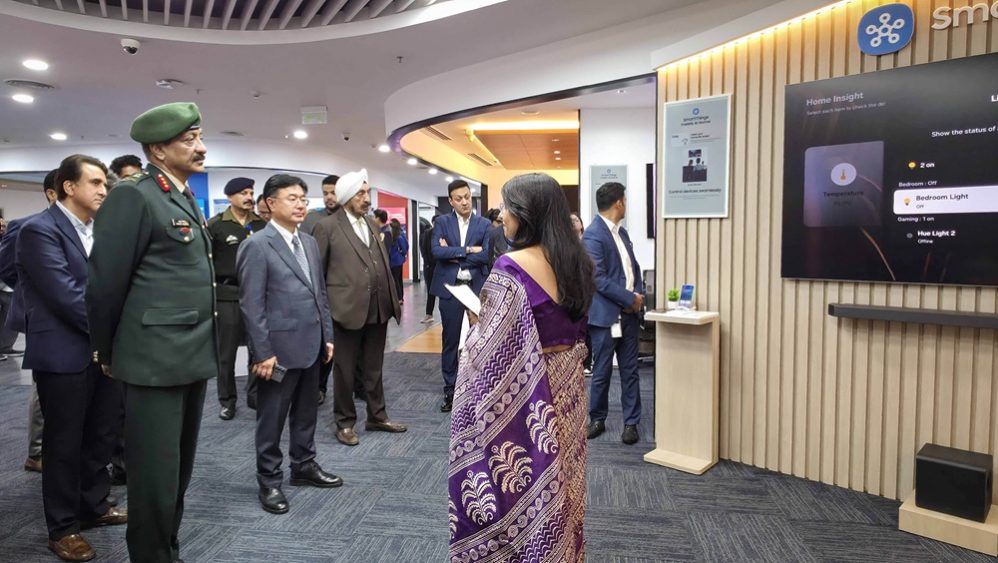
Designed as a high-impact experience centre, the BES brings together Samsung’s advanced portfolio of mobile devices, displays, healthcare technologies, and smart solutions, demonstrating how businesses can enhance productivity, operational efficiency, and digital transformation through seamless interoperability and enterprise-grade security.
Spanning 6,700 square feet, the BES, Gurugram offers a curated, immersive walkthrough for decision-makers across sectors including startups, education, hospitality, healthcare, retail, and banking. The studio features multiple experience zones that simulate real-world business scenarios, helping partners and customers visualise scalable deployment of Samsung technologies across modern workplaces.
“At Samsung, we believe the future of business will be shaped by AI-driven, intelligent experiences that are human-centric, connected, and sustainable. The Business Experience Studio in Gurugram reflects this vision by offering enterprises a space to engage with our AI-powered ecosystems in real-world settings. From smart classrooms and automated hotels to intelligent healthcare solutions and paperless banking, we are demonstrating how applied AI—embedded across devices and platforms—can enable meaningful, efficient, and scalable digital transformation. This studio is not just a showcase of technology, but a testament to our long-term commitment to building the future of enterprise, with AI at the core, alongside our partners in India and globally,” said JB Park, President & CEO, Samsung Southwest Asia.
Built on AI, Connectivity, and Trust
The BES, Gurugram highlights Samsung’s leadership in developing AI-driven solutions that work seamlessly together, enabling enterprises to modernise rapidly while maintaining high standards of reliability, manageability, and data security. Powered by Samsung’s connected ecosystem and supported by enterprise platforms such as Samsung Knox, VXT, and LYNK Cloud, these solutions enable secure, scalable deployments across distributed environments—from classrooms and hospitals to banks, retail chains, and hospitality networks.
Experience Zones at BES, Gurugram
Zone 1: Industry Solution
This zone showcases sector-specific intelligent solutions for education, retail, finance, and healthcare. The education experience features smart classrooms, teaching automation, and campus management solutions powered by next-generation interactive displays, integrated tablets, and digital notice boards, all secured through Knox.
The retail zone highlights Spatial Signage, an innovative display technology that transforms 2D content into immersive 3D viewing experiences. It also features digital advertising solutions, soft POS systems, air quality management solutions, and rugged smartphones and tablets designed to meet MIL-STD-810H durability standards.
For banking, Samsung demonstrates AI-powered finance and branch automation solutions supported by VXT-secured displays and Knox-protected mobile devices and laptops, enabling seamless and secure multi-device workflows.
Healthcare demonstrations include AI-enabled productivity tools such as voice-to-text, Note Assist, and Interpreter, enhancing clinical documentation and patient communication. DICOM-compliant display devices support medical-grade imaging, while AI-powered Digital Radiography systems—featuring capabilities like Vision Assist and Motion Alarm—are showcased for advanced diagnostics.
Zone 2: Unified Solutions
SmartThings Pro illustrates how connected, AI-powered solutions can redefine modern meeting rooms, workspaces, and hospitality environments. The hospitality experience, powered by LYNK Cloud, enables self-check-in and check-out and automated guest services. The studio also showcases Samsung’s 21:9 Front Row meeting room solution for immersive collaboration and optimised workspaces.
System air conditioners designed for residential, commercial, and industrial use demonstrate intelligent, energy-efficient cooling, powered by the AI-enabled DVM S2 Variable Refrigerant Flow (VRF) system that autonomously optimises performance based on environmental conditions.
The software section highlights the Knox Suite for secure device management, Knox Guard for device financing solutions, and Samsung’s hardware-embedded security capabilities.
The zone also features The Wall, Samsung’s revolutionary large-format display powered by Ultra Chroma Technology, Micro HDR, Black Seal Technology, and the Micro AI Processor. Customisable for automotive, government, hospitality, and corporate use cases, it is complemented by an AI Control Room concept offering unified monitoring with high-definition visualisation and Knox-backed security.
Zone 3: AI Home & Immersive Experiences
This zone brings Samsung’s connected lifestyle ecosystem to life through simulations of smart bedrooms, kitchens, living rooms, and work-from-home environments, alongside immersive gaming and home cinema experiences—demonstrating how AI and connectivity are transforming modern living and entertainment.
Accelerating Enterprise Transformation in India
With the launch of the BES in Gurugram, Samsung strengthens its commitment to empowering organisations in India with future-ready technologies that drive innovation, enhance customer experiences, and support sustainable growth—backed by Samsung’s leadership across devices, displays, and connected platforms.
28, Jan 2026
Tiger Analytics Joins Snowflake to Power the Future of AI-Driven Energy Operations
Chennai, India, Jan 28: Tiger Analytics, a global leader in AI and advanced analytics, today announced its collaboration with Snowflake, the AI Data Cloud company, to support the launch of Snowflake’s new Energy Solutions. Through this collaboration, Tiger, Snowflake, and other industry leaders are empowering oil, gas, and utility providers to navigate a volatile market with real-time, actionable intelligence.
As the energy sector faces intensifying pressure to strengthen operational resilience and meet ambitious sustainability goals, Tiger Analytics is delivering end-to-end Energy and ESG intelligence solutions powered by Snowflake Cortex AI. By unifying disparate IT, OT, and IoT data streams, the collaboration enables joint customers to activate AI-powered insights that drive safer, more efficient operations and accelerate the transition to a lower-carbon future.
“At Tiger, we don’t just provide insights; we bridge the critical gap between complex operational data and strategic Net-Zero objectives,” said Badrish Prakash, Global Head of Alliances at Tiger Analytics. “By combining our deep energy domain expertise with Snowflake’s cloud-native capabilities, we are redefining how the industry approaches sustainability. Our Energy & ESG Intelligence Platform transforms fragmented data into a strategic asset, enabling our customers to achieve measurable outcomes at scale.”
Transforming Energy Operations Through AI-First Innovation
Through this collaboration, Tiger Analytics and Snowflake are helping energy organizations solve their most complex challenges:
- Unified Data Intelligence: Break down silos by consolidating business, operational, and market data into a single, secure platform for end-to-end visibility across the value chain.
- Predictive Asset Performance: Use Tiger’s advanced AI/ML models to monitor asset health, proactively detect risks, and significantly reduce unplanned outages and maintenance costs.
- Safety and Emissions Optimization: Integrate field sensor data with enterprise systems to streamline operations and support the protection of life, property, and the environment.
- Governed AI at Scale: Scale AI innovation with built-in security and governance, supporting data consistency and regulatory compliance across complex energy environments.
- Ecosystem Collaboration: Leverage Snowflake Marketplace for secure data sharing between suppliers, regulators, and service partners to foster multi-party collaboration.
“Energy companies are redefining how the world energizes the future,” said Fred Cohagan, Global Head of Energy, Snowflake. “Snowflake and partners like Tiger Analytics are helping organizations build the trusted data foundation required to run more reliable operations and create long-term advantages in a dynamic energy landscape.”