


8, Nov 2025
PVR INOX Offers 50 Percent Discount for Patna Voters to Celebrate Civic Spirit
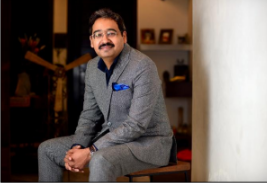
By: Mr. Gautam Dutta, CEO Revenue & Operations, PVR INOX
“Every vote strengthens our democracy, and we are proud to play a small part in encouraging citizens to step out and cast their vote. To celebrate this civic spirit, PVR INOX is delighted to offer a special 50% discount on movie tickets for all voters in Patna who show the indelible ink mark on their finger. The offer will be valid on 6th and 7th November 2025 at INOX City Centre and Ashok INOX, KP Mall, for tickets bought at the box office counters.
We ran this initiative last year as well, and the positive response from moviegoers was heartening. This time too, we hope to see Patna’s voters turn up in large numbers at the polling booths and then at our cinemas to enjoy a well-earned movie break. Voting and entertainment can go hand in hand when the goal is a more aware and active community.”
- 0
- By Neel Achary

8, Nov 2025
Workday Completes Acquisition of Sana
Mumbai, November 8, 2025 — Workday, Inc. (NASDAQ: WDAY), the enterprise AI platform for managing people, money, and agents, announced it has completed its acquisition of Sana, a leading AI company building the next generation of enterprise knowledge tools. The addition of Sana will make Workday the new front door for work – bringing a company’s most critical applications and insights into Workday’s platform, enabling employees to start and complete their day in Workday — without needing to switch contexts.

“By bringing Sana’s leading enterprise knowledge and learning to Workday, we’re creating a single, intelligent interface that connects the systems, data, and actions employees rely on — becoming the new front door for work,” said Gerrit Kazmier, president, product and technology, Workday. “We’re unlocking a new era of productivity, focus, and flow across our customers’ organizations with a complete AI solution for the next-generation enterprise.”
“Sana exists to build the UI for AI and bring superintelligence to work,” said Joel Hellermark, CEO, Sana. “Joining Workday means we can drastically accelerate our vision and together create a seamless way for organizations to access knowledge, automate repetitive work, and learn with agentic AI.”
The New Front Door for Work: An AI-Native Employee Experience
With Sana’s leading enterprise knowledge and Workday’s unique data and context around people and money – as well as a rich ecosystem of builders and partners – Workday is establishing a horizontal intelligence layer across the enterprise. This layer will unify data and workflows from across applications and platforms, providing a consistent, AI-powered experience where knowledge, data, and actions converge. The work experience will become more personalized and proactive, intelligently anticipating employee needs based on their role, team, and project.
Launching next year, this transformative experience will become the home base for work and empower employees with AI agents that provide access to tailored information, anticipate needs before they arise, and take action across a company’s most critical systems.
Unlocking a New Era of Enterprise AI and Learning
Sana Agents extends enterprise AI beyond basic search and chat. Users can use the platform’s no-code agent builder to create AI agents grounded in organizational data that accelerate work by automating repetitive workflows, analysing data, and acting proactively on their behalf.
Sana Learn brings learning management, analytics, content generation, and personalised tutoring into an end-to-end AI-native learning platform. Sana Learn will complement Workday Learning’s robust learning system of record, governance, and compliance capabilities. Together, Sana Learn and Workday Learning provide a holistic, enterprise-grade learning suite designed for an AI-first world.
7, Nov 2025
Plum introduces CeraSense™: The smart way to winter-proof your skin barrier, minus heaviness
Mumbai, 07th November, 2025: Plum, one of India’s most admired new-age beauty and personal care brands, has launched CeraSense™, a breakthrough winter care innovation that helps skin rebuild barrier, retain moisture, and resist damage all while staying feather-light on the skin.
Powered by the next-gen technology, CeraSense™ is a proprietary ceramide blend that retrains the skin barrier at a molecular level. The smart formula combines Ceramides that rebuild, Peptides that repair, Acai that defends against stressors, Prebiotics that balance the microbiome, and 1% NMF that delivers lasting hydration.
The range features two essentials the CeraSense™ Moisturizing Crème and the CeraSense™ Milky Toner. Clinically proven to strengthen the skin barrier, the moisturizing crème locks in moisture for up to 72 hours while supporting microbiome balance and protecting against environmental stressors. The Milky Toner, specially designed for Indian skin instantly replenishes hydration with a silky, non-sticky texture, leaving skin supple, balanced, and refreshed.
Speaking about the launch, Shankar Prasad, Founder & CEO, Plum, said,
“With CeraSense, we wanted to go beyond just moisturizing dry skin, our goal was to help skin relearn how to protect and repair itself first. Think of your skin like a cake. Most creams are just frosting—they sit on top. CeraSense goes deeper, like a layered cake, reaching every layer to hydrate, strengthen, and help your skin relearn how to protect and repair itself. With Plum’s clean, effective formulations, every ingredient plays a precise role, giving long-lasting comfort without the heaviness or greasiness of typical winter creams. Skincare that works smarter, feels lighter, and truly gets what your skin needs – that’s CeraSense.”
With CeraSense™, Plum once again brings together smart science and thoughtful care because when it comes to skin and chemistry, Plum gets it right.
7, Nov 2025
Creative Economy Forum 2025 Unites India’s Cultural and Business Leaders to Build the Future of Creative Bharat
New Delhi, 07th November, 2025: The third edition of the Creative Economy Forum (CEF) opens today at the Indira Gandhi National Centre for the Arts (IGNCA), Janpath, New Delhi, bringing together India’s leading creative minds, entrepreneurs, policymakers, and innovators to shape the future of Creative Bharat a vision of economic growth rooted in culture, innovation, and entrepreneurship.
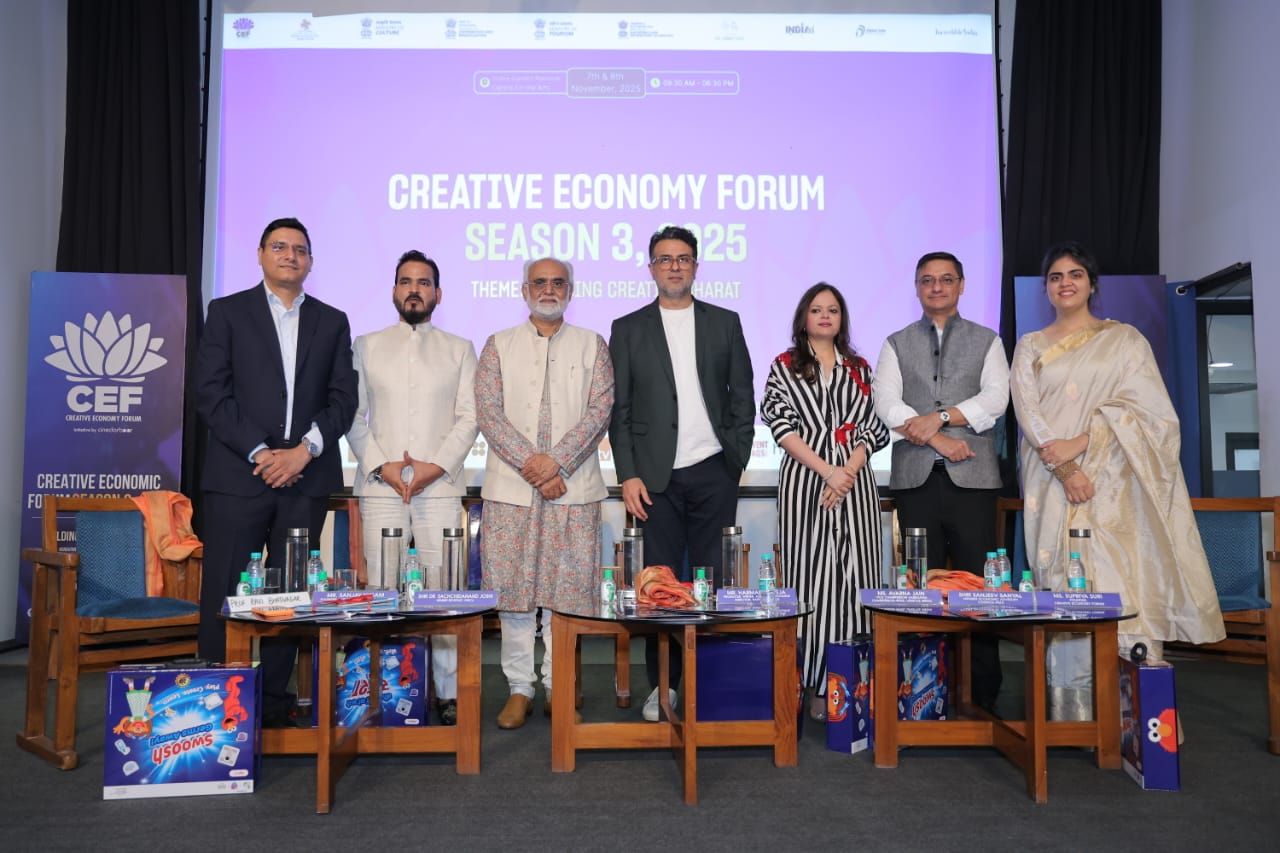
Supported by the Ministry of Culture, Ministry of Information & Broadcasting, Ministry of Tourism, and the AI Impact Summit (Ministry of Electronics and Information Technology), this two-day forum serves as a flagship platform celebrating and advancing India’s creative and cultural industries. With IGNCA as the Venue Partner, CEF 2025 features high-level dialogues, keynotes, and spotlight sessions that explore the intersections of film, fashion, art, design, technology, and policy.
Celebrating Building Creative Bharat
“Our third season celebrates the theme Building Creative Bharat,” said Ms Supriya Suri, Founder, Creative Economy Forum, Film Director & Producer. “The forum was founded on the pillars of policy, business, and creativity and this year, we continue to strengthen those connections. Through CEF, we aim to highlight the business of creativity, helping people recognize its infinite potential and India’s growing influence as a global hub for the creative economy.”
Echoing his views, Mr. Harman Baweja, Actor, Producer, and Entrepreneur, said, “India’s creative sector is poised for exponential growth. The journey of creative entrepreneurs today mirrors that of startups we’re seeing creators build intellectual properties with real commercial value. The Creative Economy Forum is the perfect stage to share, learn, and collaborate on this new wave of creative entrepreneurship.”
Adding an industry perspective, Ms. Avarna Jain, Chairperson, RPSG Group, shared, “India’s creative economy is a force multiplier for innovation, cultural diplomacy, and job creation. Platforms like CEF enable meaningful dialogues that drive both recognition and investment into the creative industries.”
Distinguished Voices and Industry Leaders
This year’s forum features prominent leaders and creative pioneers, including:
-
Sanjeev Sanyal, Economic Advisory Council to the Prime Minister
-
Dr. Sachchidanand Joshi, Member Secretary, IGNCA, Ministry of Culture
-
Rajat Sharma, Chairman & Editor-in-Chief, India TV
-
Harman Baweja, Actor, Producer & Entrepreneur
-
Avarna Jain, Chairperson, PRSG Group
-
Sanjay Nigam, Founder, Fashion Entrepreneur Fund & Creator of Pitch to Get Rich
-
Amish Tripathi, Author & Broadcaster
-
Dr. Anurag Batra, Editor-in-Chief, Businessworld & Founder, exchange4media Group
-
Shefalee Vasudev, Editor-in-Chief, The Voice of Fashion
-
Rina Dhaka, Fashion Designer
-
Rajiv Chilaka, Founder, Chhota Bheem & Green Gold Animation
-
Charuvi Agrawal, Founder, Charuvi Design Labs
International voices include Gayle McPherson and Marie McPartlin, Director, Somerset House Studios, UK, among others.
Marquee Sessions
Some of the key sessions at this year’s forum include:
-
The Road to IPO for India’s Creative Businesses with Harman Baweja
-
Creative Capital: Investing in India’s Design Future with Sanjay Nigam
-
Aap Ki Adalat: The Journey of India’s Iconic Non-Fiction IP with Rajat Sharma
-
Building Trust in Creative Bharat: Rights, Reputation & Recognition with Hon’ble Justice Tej Karia, Delhi High Court
-
Crafting Commerce: The Business Journeys of Creative Professionals featuring Rina Dhaka, Charu Shankar, and Shefalee Vasudev
-
Pop Culture Merch & Building Indian Labubu Dolls featuring Nitesh Rohit, Rajiv Chilaka, Charuvi Agrawal; moderated by Aleena Qureshi
-
Cinema Theatre Economics: Encouraging Business Growth and the Future of Screens with Akshay Rathie and Deepak Kumar Sharma, moderated by Uday Pratap Singh
-
Empowering the Creative Economy: AI in Action — spotlighting leaders in India’s AI and creative tech ecosystem.
7, Nov 2025
Southampton & McGraw Hill Launch 2nd Edition for Civil Service IR
University of Southampton Delhi and McGraw Hill India unveil second edition of International Relations for Civil Service Aspirants
National, 07th November, 2025: University of Southampton Delhi and McGraw Hill India, hosted the release of the second edition of the book International Relations For Civil Services and State Services Examinations, a comprehensive guide crafted to help aspirants strengthen their understanding of global affairs and excel in the international relations component of competitive exams. The book was unveiled by Governor of Haryana, Prof. Ashim Kumar Ghosh, in the presence of the authors Shri Ashok Kumar, IPS (Retd.), Former Director General of Police, Uttarakhand and Vice Chancellor, Sports University of Haryana, and Dr Rajesh Mohan, IPS, Deputy Commissioner of Police, Gurugram.
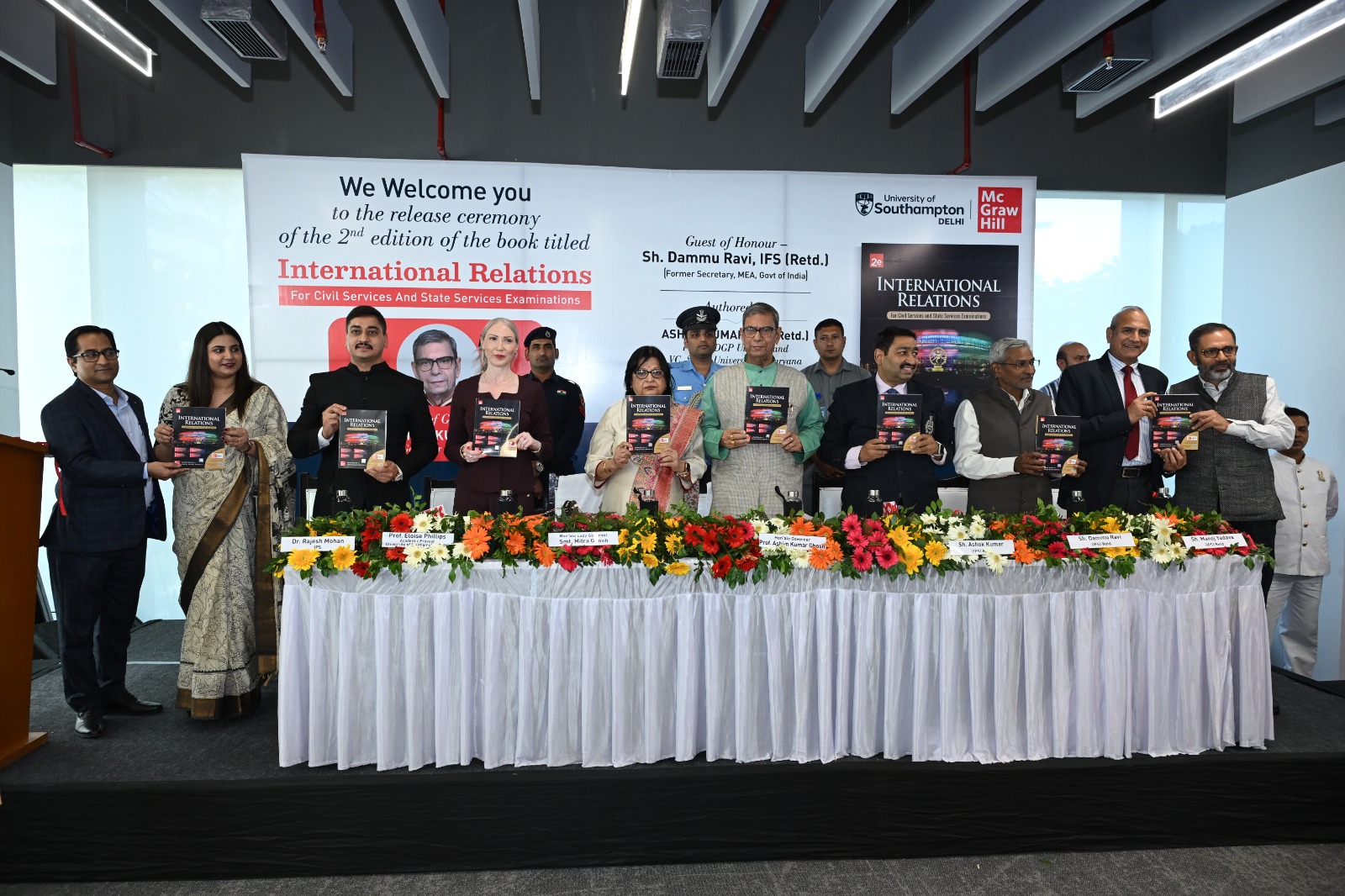
The ceremony also witnessed the gracious presence of Shri Dammu Ravi, IFS, Secretary (Economic Relations), Ministry of External Affairs (MEA), Government of India, as Guest of Honour.
Professor Eloise Phillips, Academic Provost, University of Southampton Delhi said:
“We are delighted to celebrate the book launch with McGraw Hill India and the distinguished authors. International Relations is a valuable resource for civil service aspirants, equipping them with the knowledge and analytical perspective needed to interpret complex global developments and make informed decisions as future leaders in public services. University of Southampton Delhi plays a key role in nurturing such future leaders by providing them with the skills, global exposure, and academic foundation required to build impactful careers on the world stage.”
Addressing the gathering, Hon’ble Governor Prof. Asim Kumar Ghosh said,
“I am delighted to be part of this meaningful occasion that celebrates knowledge, dedication, and public service. I wholeheartedly laud the authors for their academic contribution. This book will serve as a valuable resource for young learners and civil service aspirants, offering them clarity and perspective on global affairs.
International relations is a dynamic field, more relevant today than ever before. It enables us to understand the interconnected world we live in and to approach global challenges with balance and cooperation. India’s foreign policy today reflects confidence, balance, and strategic maturity, promoting global partnerships while safeguarding national interests.
Diplomacy, in its truest sense, is not just about politics but about values, vision, and global responsibility. A strong understanding of international relations encourages young minds to think critically, act wisely, and serve society with integrity and purpose. I also appreciate McGraw Hill for publishing such an insightful and timely edition that will guide aspirants and educators alike. University of Southampton deserves appreciation for fostering such academic excellence and nurturing globally aware citizens.”
The authors shared their reflections on the motivation behind the book and its second edition. They highlighted the book’s role in connecting theoretical understanding with practical insights from diplomacy and strategy, positioning it as a meaningful contribution to public service education and civil services preparation. This session also provided an engaging opportunity for University of Southampton Delhi students to interact directly with the authors through a Q&A session, allowing them to gain valuable first-hand insights into the complexities of international relations and its relevance to contemporary global affairs.
The event also featured insightful discussions on leadership, collaboration, and the relevance of international relations in global management education.
7, Nov 2025
Archies Celebrates International Men’s Day with a Meaningful Gifting Collection category

Archies proudly celebrates International Men’s Day with a thoughtfully curated gifting collection designed to honour the strength, individuality, and everyday presence of men in our lives. The collection features the Archies Parfume Original Travel Pack For Him, a compact and stylish fragrance essential for men on the move, along with the Archies 01 Men Original Perfume (100 ML) a bold, long-lasting scent crafted for those who carry confidence as their identity. The fragrance range also extends to multiple refreshing and distinctive perfume options, offering something for every personality and mood. Complementing the fragrance line, Archies offers an extensive range of stylish and everyday-use accessories and lifestyle gifts. The products in this collection start at just Rs. 179, making thoughtful gifting both meaningful and accessible. Whether celebrating a friend, brother, colleague, partner, or mentor, this collection is a simple yet heartfelt way to acknowledge the men who inspire us. The International Men’s Day Collection is available across Archies stores nationwide and on the official Archies website.
7, Nov 2025
Intellect Reports 34 Percent YoY Revenue Growth and 68% EBITDA Jump in Q2 FY26
Intellect Delivers Consistent Growth Momentum with 34% YoY Revenue Increase to INR 789 Cr and 68% Surge in EBITDA to INR 184 Cr in Q2 FY26
Chennai/New Delhi, 07th November, 2025: Intellect Design Arena Ltd, a global leader in enterprise-grade financial technology, today announced its Q2 FY26 results, reporting strong growth across revenue, profitability, and platform adoption.
Financial Highlights Q2 FY26
-
Revenue: ₹789 crore, up 34% YoY, driven by flagship platforms eMACH.ai and Purple Fabric.
-
EBITDA: ₹184 crore, up 68% YoY.
-
Profit After Tax (PAT): ₹102 crore, up 94% YoY.
-
License-Linked Revenue: ₹423 crore, up 69% YoY.
-
Platform Revenue: ₹137 crore, up 200% YoY.
-
Annual Recurring Revenue (ARR): ₹1,080 crore, up 53% YoY from H1 FY25.
-
Cash & Cash Equivalents: ₹927 crore, up from ₹755 crore in Q2 FY25.
-
Collections: ₹753 crore (vs ₹550 crore in Q2 FY25).
-
Deal Funnel: Exceeds ₹12,000 crore, demonstrating strong growth visibility.
For H1 FY26, total income reached ₹1,523 crore (+26% YoY), EBITDA was ₹360 crore (+46% YoY), and PAT stood at ₹197 crore (+55% YoY).
Leadership Perspective
Arun Jain, Chairman and Managing Director, said:
“Q2 was marked by strong execution and platform synergy. Our 34% YoY growth underscores global institutions’ confidence in the combined power of eMACH.ai for composable transformation and Purple Fabric for governance-first Business Impact AI. With accuracy, traceability, and open architecture at the core, we are helping financial institutions modernize with lower risk and higher velocity. This performance validates our strategic investments and reinforces confidence in a robust pipeline and future growth trajectory.”
Suraj Prasad, Chief Financial Officer, added:
“Our disciplined execution and financial resilience position us to continue scaling AI-led digital transformation globally. Strong cash reserves enable strategic investments in innovation, automation, and talent, ensuring sustainable growth.”
Platform Highlights
-
eMACH.ai: Intellect’s intelligent open finance platform continues to redefine global financial transformation. Built on 386 microservices, 2,015 APIs, and 650 pre-integrated events, it powers agility and modernization across banking and financial enterprises. Q2 saw 15 strategic eMACH.ai-led deal wins, including 10 multi-million-dollar Destiny Deals and 19 digital transformations spanning Europe, Africa, North America, and Mauritius. Key deployments include virtual accounts for a leading European bank, digital payments modernization in Africa, corporate treasury transformation in the U.S., and lending solutions across five African countries.
-
Purple Fabric: The world’s first Open Business Impact AI platform expanded its footprint across the U.S., South Africa, and India’s GIFT City. Launches included PF Credit (AI-driven lending experts) and PF Cloud at GIFT City. During the quarter, the platform secured a multi-million-dollar Destiny Deal with a U.S. national casualty insurance provider, along with two additional strategic wins and three digital transformations, accelerating decision-making, operational efficiency, and regulatory compliance for clients.
Industry Recognition
-
Received The Economic Times ‘Making AI Work’ Award 2025 for pioneering AI initiatives in financial services.
-
Awarded the National AI Award 2025 for multi-agent AI deployment for a UK wealth management client through Purple Fabric, enhancing speed and compliance aligned with FCA Consumer Duty standards.
Leadership Appointments & Infrastructure Expansion
-
Vivek Gupta appointed President & Global Head of Consulting, to lead Intellect Consulting across growth, simplification, and innovation using eMACH.ai and Purple Fabric.
-
Rakesh Srivastava appointed President & Chief Revenue Officer for the Americas, driving expansion in the U.S., Mexico, and South America.
-
Investment in a 7.25 lakh sq. ft. facility at Siruseri, housing Purple Fabric AI Lab & Academy and eMACH.ai Lab & Academy, along with residential learning and collaboration spaces to accelerate innovation and co-creation.
Intellect’s strong Q2 FY26 performance, backed by platform-led growth, global expansion, and strategic investments, positions the company for sustained growth and continued leadership in AI-driven financial technology.
7, Nov 2025
New Relic Unveils Agentic AI Monitoring and MCP Server to Boost Enterprise AI Adoption
New Relic Launches Agentic AI Monitoring and MCP Server to Accelerate AI Adoption and Observability Workflows in the Enterprise
San Francisco, CA , 07th November, 2025: New Relic today announced two major innovations Agentic AI Monitoring and the New Relic AI MCP Server designed to help enterprises accelerate AI adoption and bring observability into every layer of their AI-driven operations. These capabilities empower organizations to monitor complex AI systems, optimize performance, and deliver measurable business value with confidence.
“The convergence of AI workloads, cloud-native architectures, and real-time data processing has created a perfect storm of complexity,” said Brian Emerson, Chief Product Officer, New Relic. “Our platform uses intelligent automation and unified data correlation to diffuse that complexity so businesses can operate confidently at scale. These innovations empower enterprises to adopt AI systems that deliver real value not costs.”
According to the 2025 Observability Forecast, AI monitoring adoption has risen from 42% in 2024 to 54% in 2025, as enterprises grapple with rising downtime costs now averaging $2 million per hour. Without modern observability built for AI, silent issues in large language model (LLM) and agentic AI systems can cascade through workflows unnoticed.
Observability for Agentic AI
As organizations deploy sophisticated agentic AI systems, complexity scales rapidly. Agents often depend on each other’s outputs, shared memory, and multiple MCP servers, making debugging increasingly difficult. A single hallucination can cascade across interconnected agents, obscuring the root cause.
New Relic Agentic AI Monitoring delivers full visibility into these intricate multi-agent interactions. The solution provides granular insights into tool usage, performance, and error rates, allowing teams to pinpoint issues faster and reduce downtime. An Agents Service Map visualizes inter-agent dependencies and workflows, while a unified AI Inventory View consolidates data on agent names, latency, and errors.
Unlike traditional LLM monitoring solutions, New Relic’s approach provides end-to-end observability across agents, tools, services, and infrastructure. Built on New Relic’s proven APM and infrastructure monitoring foundation, this capability enables DevOps teams to accelerate root cause analysis, optimize performance, and maintain resilience across their AI stack.
Introducing the New Relic AI MCP Server
The New Relic AI MCP Server extends observability directly into AI agents, making telemetry data instantly accessible within MCP-compatible workflows. By integrating New Relic data with AI assistants, engineers gain real-time performance insights without switching platforms — enhancing productivity, uptime, and response times.
“Enterprises deploying agentic AI to accelerate software delivery have lacked direct access to observability data within their workflows,” said Stephen Elliot, Group Vice President at IDC. “By integrating observability capabilities with MCP-compatible agents, platforms like New Relic create an intelligent feedback loop making AI systems more reliable while observability itself becomes more proactive. This builds the confidence enterprises need to innovate at speed.”
Enhanced Detection with Outlier Analysis
Alongside these launches, New Relic introduced Outlier Detection, which complements anomaly detection by identifying and analyzing unusual patterns that could signal issues or system failures. The tool not only flags outliers but also prioritizes them for proactive remediation enabling teams to address incidents before they impact end users.
7, Nov 2025
TANDANANA Annamacharya International Music Competition 2025 to Host Grand Finale on December 20
TANDANANA Annamacharya International Music Competition 2025 Grand Finale on 20th December 2025
Hyderabad, 07th November, 2025: Annamacharya Bhavana Vahini (ABV), founded by Padma Shri Dr. Shobha Raju, is delighted to announce the Grand Finals of “TANDANANA, Annamacharya International Music Competition 2025”, to be held on 20th December 2025 at 6:00 PM onwards at Annamayyapuram, NAC Road, Hitech City, Hyderabad.
 “Tandanana”, the refrain found in Saint Annamacharya’s Sankeertana, represents the spirit of universal harmony, devotion, and equality. This international competition, organized by ABV, has drawn participants from across the globe, celebrating Annamacharya’s timeless compositions that transcend barriers of caste, creed, and culture.
Dr. Shoba Raju, Founder President, Annamacharya Bhavana Vahini (ABV); said, The main purpose of my teaching is to educate the people about the true spirit of music. I want to give them encouragement in a good way. I want to educate them about the values of our culture in a positive way. I want to educate them about the importance of Annamacharya. Why only Annamacharya Sankirtanas? I believe that Annamacharya Sankirtanas spoke about Bhagavat Tattva in a very profound way. Venkateshwara Swamy is not just a statue on a hill. He is the energy of the universe. He is bright in the sun and moon. He is hot and bright in the fire that we see in the world. Annamacharya Sankirtanas taught us a lot of things in a logical way. We are not different from others. We have the same power and they have the same power. Sometimes we believe it, sometimes we don’t. Belief is also a kind of superstition, But this is the truth. If we know this and practice it in the world, then there will be no ignorance, no confusion, no discrimination. Even if one person is conscious and the other is not conscious, there will be some confusion in the world. If you want to switch on the TV, if you want to switch on the social media phone, you have to have some kind of power to switch it on. Otherwise it will be scary. Such news is coming. Such events are happening in the world. Have you ever heard of a wife killing her husband? a son killing his mother? a father torturing his daughter? There are many such events happening in the world. There are also many natural disasters happening. The root cause of all these is the wrong thoughts and selfish thoughts. The more we live in harmony with nature, the more the obstacles will be removed. When we live in harmony with nature, we will find peace and contentment, This is what we are doing. To achieve this, I am giving great importance to Annamacharya Sankirtana. Annamacharya Sankirtana is a great way to achieve this. All of you must have experienced Annamacharya Sankirtana.
Ms. Jyotsna Kompalli, Program Director, Tandanana – Annamacharya International Music Competition 2025; said, we have received entries from 18 countries. We have sent auditions to 600 plus participants. We have sub-juniors below 6 years, juniors from 7 to 15 years, and seniors above 16 years. We have divided the auditions into three categories. We have received good participation in all three categories. This shows how popular and spiritually our generation is inclined. We have screened the auditions. After screening, three finalists are shortlisted from each category. These three finalists perform live on the day of the grand finale. After the grand finale, the finalists announce the winner from each category. The winners get a prize distribution on the hands of Chandra Babu in Amaravathi. This is the plan. We have taken the initiative of Tandanana Annamacharya International Music Competition at this scale.
Mr. Subba Rao, Program Advisor, Tandanana – Annamacharya International Music Competition 2025; said, When I first came to America, I did not know that this was a Kacheri. A lot of youngsters teach this Kacheri to their children. They teach this Kacheri because it is a way of singing. That is why, there are a lot of fun musical directors like Ilaiyaraaja, Devi Sri Prasad & Smita. There are a lot of people who come to America and do musical Kacharis does is a lot of fun. The Saturdays and Sundays are a waste of time. How should the children feel when they hear this name? How should they feel when they hear the name Sankirtanas? It is the feeling that the children feel when they hear this name. It is a very big problem. Even today, there are so many reasons for the issues.
We announced singing competitions in three age groups to encourage participation from young, aspiring, and senior vocalists alike. We received over 600+ valid entries from 12 countries, including Dubai, Singapore, and the USA, as well as from various States across India.
These entries were meticulously scrutinized by a panel of experienced musicians, and nine singers shall be selected for the Grand Finals.
A team of popular playback singers will conduct the Finals on 20th December 2025 at Annamayyapuram, Hyderabad, during the Grand Finale, and the winners will be announced on the same day.
The three finalists will receive Gold Medals graciously sponsored by Margadarsi Chit Funds Pvt. Ltd., led by Smt. Sailaja Kiron. We are also privileged to share that Sri N. Chandrababu Naidu, Hon’ble Chief Minister of Andhra Pradesh, has consented to present the Gold Medals to the winners at a special ceremony in Vijayawada.
The Grand Finale will be graced by revered Sri Chinna Jeeyar Swamiji as the Chief Guest, and other eminent dignitaries and patrons of art and spirituality. The event promises to be a grand confluence of music, devotion, and cultural unity.
Under the dynamic leadership of Padmasri Awardee Dr. Shobha Raju garu, the event aims to reach a global audience through extensive media and community participation.
As we prepare for this historic celebration, Annamacharya Bhavana Vahini warmly invites sponsors, patrons, and well-wishers to join hands in supporting this divine mission. Your generous contributions will help sustain the legacy of Saint Annamacharya and inspire future generations through music rooted in devotion and human values.
7, Nov 2025
Zomato and Blinkit Launch Nationwide Drive to Help Delivery Partners Access Govt Welfare Schemes
Zomato, Blinkit Kick Off Nationwide Drive to Enable Delivery Partners’ Access to Government Welfare Schemes
Bengaluru, 07th November, 2025: Eternal companies Zomato, India’s food ordering and delivery platform, and Blinkit, a quick commerce platform, in collaboration with Haqdarshak, organised the first in a series of Government Scheme Facilitation Camp in Bengaluru. The initiative aims to enable delivery partners to access critical central and state government welfare schemes. The event was graced by the esteemed presence of Dr. G Manjunath, Additional Labour Commissioner, Government of Karnataka, as Chief Guest.

Since its launch in April 2025, this initiative has felicitated registrations for over 6,000 delivery partners across India under various government welfare schemes unlocking more than INR 150cr in entitlements. The Bengaluru camp helped an additional 280+ delivery partners enroll for relevant central and state government schemes, taking the number of Bengaluru- based delivery partners enrolled to more than 1,000 to date.
Delivery partners have expressed greater interest in schemes like Pradhan Mantri Jan Arogya Yojana (health insurance), Ration cards, e-Shram (centralized database of Unorganized Workers), Pradhan Mantri Jeevan Jyoti Beema Yojana (life insurance), Pradhan Mantri Suraksha Bima Yojana (personal accidental insurance) and Karnataka State Gig Workers Insurance Scheme. A growing number of partners are now opting for multiple coverages combining health insurance, personal accidental insurance and life insurance, reflecting a growing preference for layered protection.
Speaking at the event, Anjalli Ravi Kumar, Chief Sustainability Officer, Eternal,
“Delivery partner wellbeing has been at the heart of everything we do at Eternal. This, a first of many, Government Scheme Facilitation Camp has been critical in bridging the gap between delivery partners and the government welfare schemes that safeguard their and their family’s futures. We’re also constantly learning and evolving our outreach effort with our facilitation partner – Haqdarshak. For example, we’ve seen that women and PwD delivery partners are more keen on registering for these benefits, revealing the need to enable multi-channel access to these schemes so they are truly accessible for all. We look forward to working closely with Central and State ministries to scale this effort and create lasting impact across the country.”
Umavati, who has been a Zomato delivery partner for over three years, shared,
“I was able to register for benefits like Ayushman Bharat, pensions and the e-Shram card. These will prove very helpful for me and my family and have given me a sense of security and stability. The Government Scheme Facilitation Camp organised by Zomato and Blinkit made the process simple and easy to understand and I encourage other delivery partners to make use of such camps as well.”
Manoj Joshi, Vice President, Product at Haqdarshak, said,
“Our collaboration with Zomato and Blinkit is making welfare schemes accessible at scale. Through Haqdarshak’s digital platform and eligibility screening engine, we’re simplifying benefit access for delivery partners, combining technology with human support. We’ve observed that delivery partners want comprehensive protection that bundles health, accident and life insurance. These camps are also raising awareness about schemes that support the wellbeing of delivery partners, a growing segment of India’s gig workforce. Together with Zomato and Blinkit, we will continue building scalable social security access for gig workers.”
In the coming weeks, Zomato and Blinkit along with Haqdarshak will be hosting Government Scheme Facilitation Camps in Mumbai, Pune and Delhi.
This initiative is a part of Eternal’s broader efforts to ensure delivery partners’ wellbeing including – 24/7 SOS ambulance services available in over 800 cities, accidental insurance, assistance with income tax filing among others. Eligible women delivery partners also have access to maternity benefits.


