


3, Mar 2026
MDI Regenerative Business Research Discussed at International Doctoral Consortium and ICCMRO 2026 at MDI Gurgaon
Gurgaon, Mar 03: Management Development Institute Gurgaon hosted a two-day academic programme from February 20 to 24, 2026, centred on the theme “Beyond Sustainability: Creating and Sustaining Regenerative Businesses.” The programme brought together the International Doctoral & Early-Career Academics Consortium and the 2nd ICCMRO International Conference 2026, convening scholars, journal editors, and industry practitioners from India and overseas, including representation from partner institutions such as BFH Switzerland, led by Prof. Ingrid Kissling, Director, Business School, BFH Switzerland.
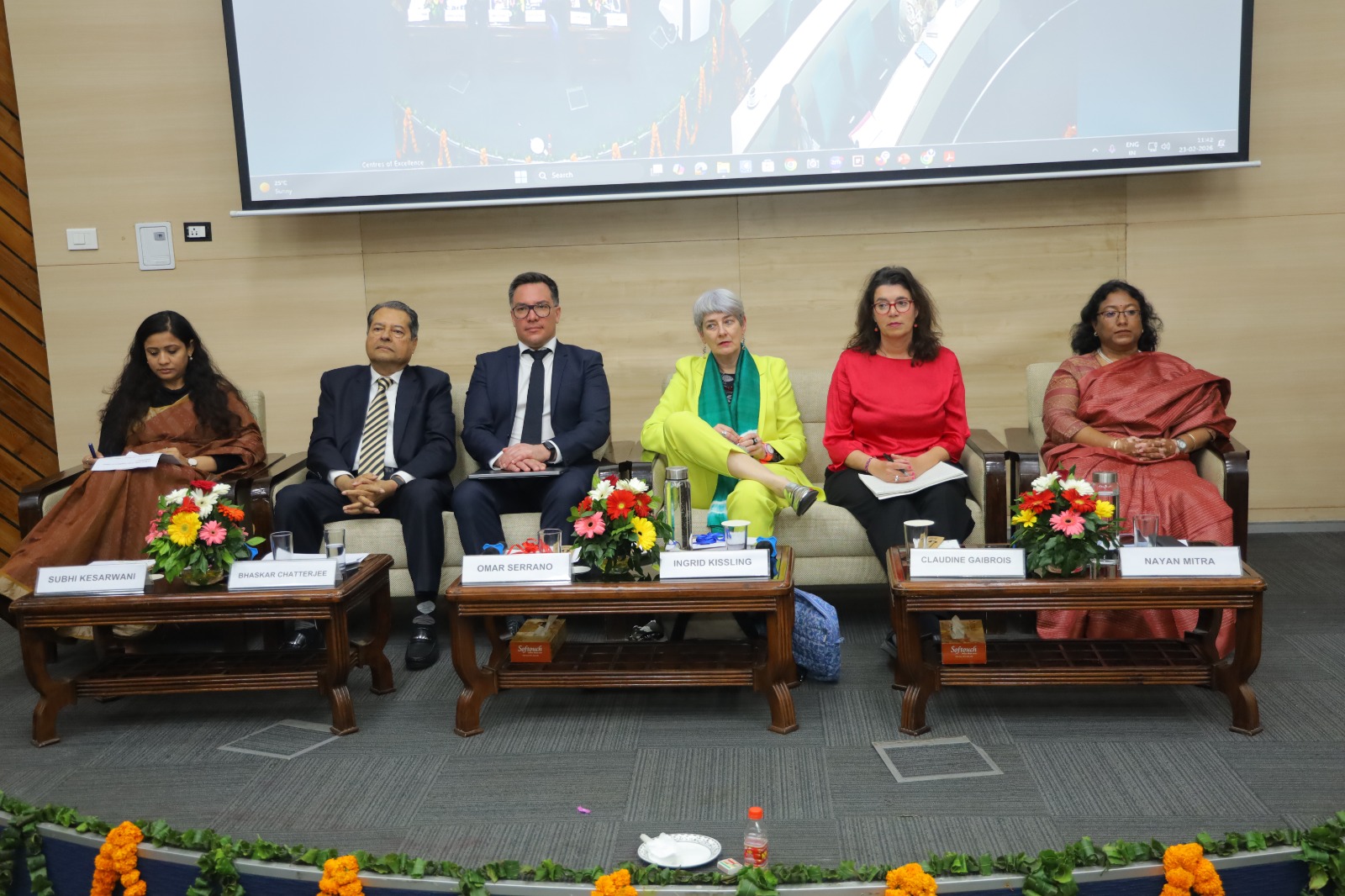
Against the backdrop of evolving sustainability conversations—where the focus is shifting from policy commitments and disclosures to measurable outcomes and system-level impact—the discussions examined how businesses can move beyond incremental ESG compliance towards regenerative models that restore social, environmental, and institutional value.
The initiative brought together doctoral scholars, early-career academics, senior researchers, journal editors, and industry representatives to deliberate on regenerative business practices, ESG-linked governance, ethical decision-making, and responsible management education, with an emphasis on analytical rigour and empirical grounding.
The programme opened with the International Doctoral & Early-Career Academics Consortium on February 20. The inaugural session featured remarks by Prof. Tanuja Sharma and Prof. Ritu Srivastava. Keynote sessions explored the evolving relationship between enterprise, accountability, and long-term value creation.
Anil Gupta, Founder of the Honey Bee Network, highlighted the importance of grassroots innovation and community-embedded knowledge systems in building inclusive and resilient enterprises. Karen Maas of the Open University and Erasmus University addressed impact measurement, sustainability reporting, and the growing demand for evidence-based evaluation of ESG outcomes, noting that credibility increasingly depends on methodological robustness rather than narrative intent.
A panel discussion on “Ethics and Principles for Sustainability in Business” featured perspectives from academia and industry, including Abhishek Chandra and Harry Van Buren from the University of Tennessee, Chattanooga. Panellists discussed ethical governance, accountability mechanisms, and the role of academic research in shaping responsible corporate conduct, emphasising that sustainability must be embedded in decision-making structures rather than treated as an adjunct function.
Emphasising the importance of international academic collaboration, Maya Tissafi, Swiss Ambassador, underscored the growing relevance of partnerships between Indian and Swiss business schools in shaping the future of responsible enterprise. She called upon academia to take its rightful place in the global sustainability movement, noting that universities must move beyond observation to leadership. Highlighting the long-term consequences of present-day decisions, she remarked that the choices we make today are the seeds of tomorrow’s growth, and stressed that cross-border collaboration in research, teaching, and leadership development would be critical to advancing regenerative and inclusive economic models.
Subsequent consortium sessions focused on research methodology, community-engaged scholarship, and publication processes, reflecting the growing expectation that sustainability research demonstrate both theoretical depth and practical relevance. Doctoral participants engaged in master classes and feedback clinics aimed at strengthening research design, causal reasoning, and contribution to international scholarship.
The concluding phase comprised the 2nd ICCMRO International Conference 2026, featuring paper presentations and plenary sessions on stakeholder accountability, climate-related disclosures, governance frameworks, and cross-sectoral sustainability challenges. Researchers and practitioners examined how governance systems can support long-term resilience in the face of environmental and social disruption.
Professor Tanuja Sharma, Chairperson, CERO, MDI Gurgaon, added: “Sustainability research today is increasingly concerned with systems, governance, and long-term value creation rather than checklist-based compliance. Academic platforms such as doctoral consortia enable researchers to test ideas rigorously, sharpen methodologies, and situate their work within broader societal and organisational contexts”
The programme concluded with a vote of thanks by Prof. Vanita Singh, who acknowledged the contributions of keynote speakers, panellists, doctoral scholars, research presenters, institutional partners, and organising teams. She highlighted the collective effort that enabled rigorous academic exchange and international collaboration, noting that such platforms play a vital role in advancing thoughtful, evidence-led discourse on sustainability, ethics, and regenerative business practice.
- 0
- By Neel Achary