


15, Nov 2026
Advanced Technologies Key to India’s Defence Future, Says Rajnath Singh
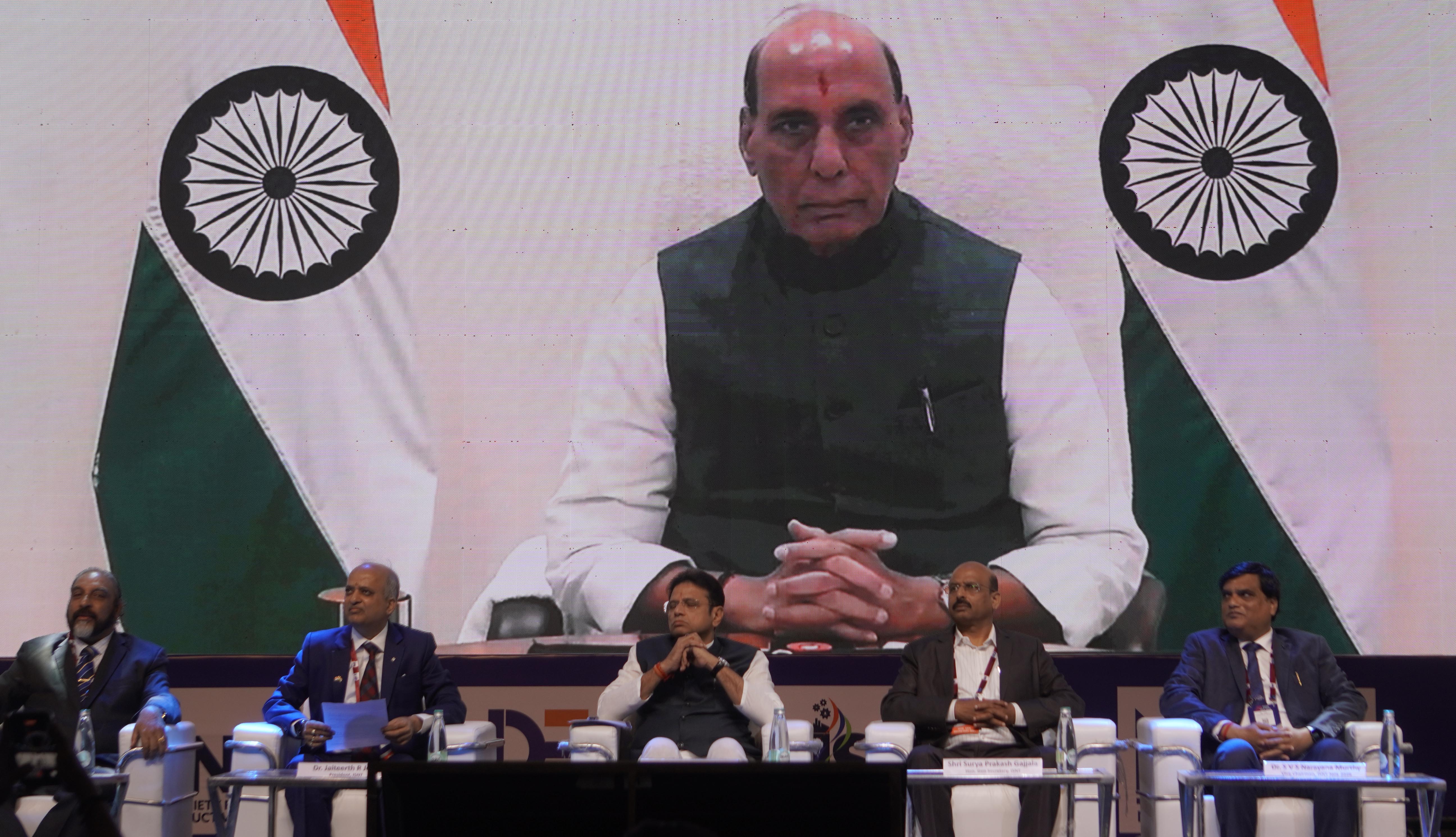
Hyderabad, November 15, 2026: India must move beyond being merely a user of advanced technologies and emerge as a developer, innovator and global leader in critical technological domains, Defence Minister Shri Rajnath Singh said on Sunday, emphasising the need to strengthen the country’s indigenous capabilities in Non-Destructive Testing (NDT) to enhance defence preparedness and self-reliance.
Virtually addressing the inaugural session of NDE 2026 – the 36th Annual Conference on Non-Destructive Evaluation and Enabling Technologies, and AeroNDT 2026 – the 15th International Symposium on NDT in Aerospace, he stressed that indigenous capabilities in advanced inspection technologies, consistent quality assurance practices and reliable testing results are essential to strengthening India’s NDT ecosystem.
The three-day international conference, being organised by the Indian Society for Non-Destructive Testing (ISNT) from November 15 to 17 at HITEX Exhibition Centre, Hyderabad, have brought together over 2,000 professionals, researchers, industry experts and students, along with more than 100 exhibitors from India and abroad.
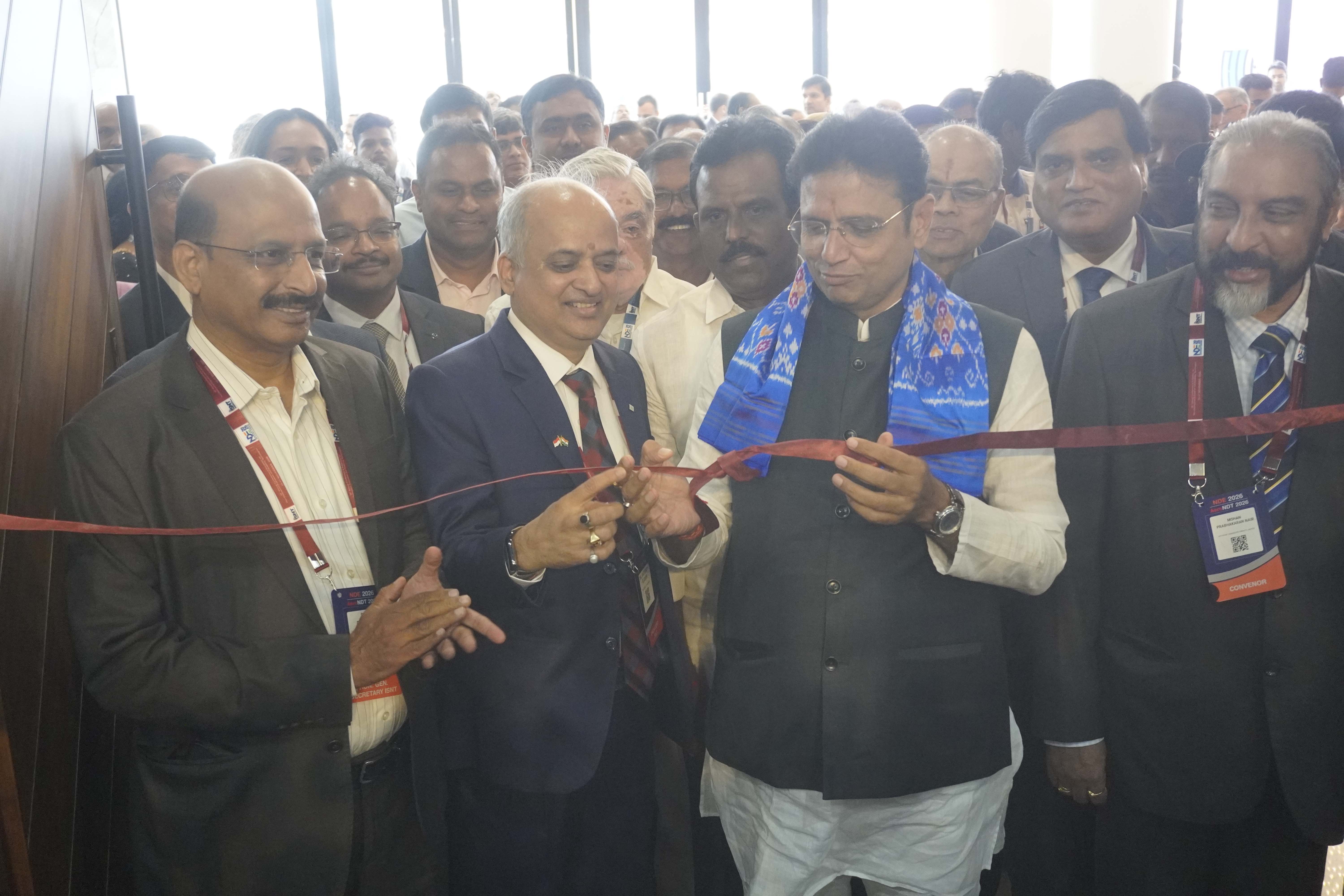
Defence Minister Rajnath Singh, joined the inaugural ceremony virtually from New Delhi and released the conference souvenir. Telangana Minister for IT and Industries D. Sridhar Babu graced the occasion as Guest of Honour and unveiled the digital version of NDE 2026.
Dr Jaiteerth R. Joshi, President, ISNT; Director General, DRDO; and CEO & Managing Director, BrahMos Aerospace; Dr S.V.S. Narayana Murty, CMD, MIDHANI and Co-Chairman, NDE 2026; Shri G. Surya Prakash, Chairman, NDE 2026 and Chairman, Archimedes Engineering; and Shri Mohan P. Nair, Convenor, NDE 2026, were among those present.
Addressing the gathering virtually, Raksha Mantri Shri Rajnath Singh said India’s pursuit of Aatmanirbharta in defence was not merely an economic objective but a strategic necessity.
“We must strengthen our indigenous capabilities in advanced inspection technologies, specialised sensors, evaluation equipment and associated software. Developing domestic capabilities in these areas is essential for reducing technological dependencies and securing critical defence supply chains,” he said.
He emphasised the need to promote consistent quality assurance practices across the entire defence industrial ecosystem, including Public Sector Undertakings, private manufacturers, start-ups and MSMEs.
“We must ensure that inspection results are accurate, reliable and traceable, and are based on robust procedures and appropriate standards, followed by assessment by qualified professionals,” he said, asserting that there could be no compromise on the integrity of testing results in strategic applications.
Explaining the significance of NDT, Shri Rajnath Singh said these technologies enable the examination of materials, components and structures without causing any damage to them. Just as ultrasound and X-rays help doctors examine the human body without surgical intervention, NDT techniques help identify internal defects in critical components without dismantling or damaging them.
He pointed out that as India’s defence systems become increasingly sophisticated, every critical material, component, assembly and manufacturing process must meet the highest standards of quality and reliability.
“Hidden defects can affect operational availability, increase maintenance requirements, reduce the service life of equipment and, in critical situations, jeopardise mission success. We need to move beyond a culture of merely identifying defects towards actively preventing them by embedding quality at every stage of the manufacturing process,” he said.
Highlighting the importance of quality in strategic applications, he observed that in defence systems such as missiles, aircraft, naval platforms and spacecraft, quality was not merely a manufacturing requirement but an essential element of operational reliability and national security.
Referring to the rapid transformation taking place in NDT, the Defence Minister said Artificial Intelligence, Machine Learning, Robotics, Advanced Sensors, Digital Twins and Predictive Analytics were significantly expanding the possibilities of inspection and structural health monitoring.
These technologies could improve inspection speed and consistency, facilitate the analysis of complex data and identify patterns that might not be easily detectable through conventional methods, he said.
“The future lies in the intelligent integration of established inspection techniques with advanced digital technologies to make inspection processes more accurate, efficient and responsive to emerging industrial requirements,” he observed.
He called upon India to move beyond merely adopting these technologies and develop indigenous solutions suited to its strategic and industrial requirements. Investment in research, advanced equipment, software and skilled manpower would strengthen domestic capabilities and enable Indian technologies to find markets internationally.
Citing India’s achievements in missile development, naval platforms, aerospace engineering, radar systems and space applications, he said the commissioning of INS Vikrant, India’s first indigenous aircraft carrier, was an important milestone in the Aatmanirbhar Bharat journey.
He also highlighted initiatives such as Innovations for Defence Excellence (iDEX) and the Technology Development Fund (TDF), which have encouraged innovation, technological development and experimentation in the defence sector.
Calling for greater collaboration, Shri Rajnath Singh said innovation flourished when Government, Industry, Academia and Research Laboratories worked together. He urged all stakeholders to adopt a whole-of-government and whole-of-ecosystem approach to technological advancement and strategic self-reliance.
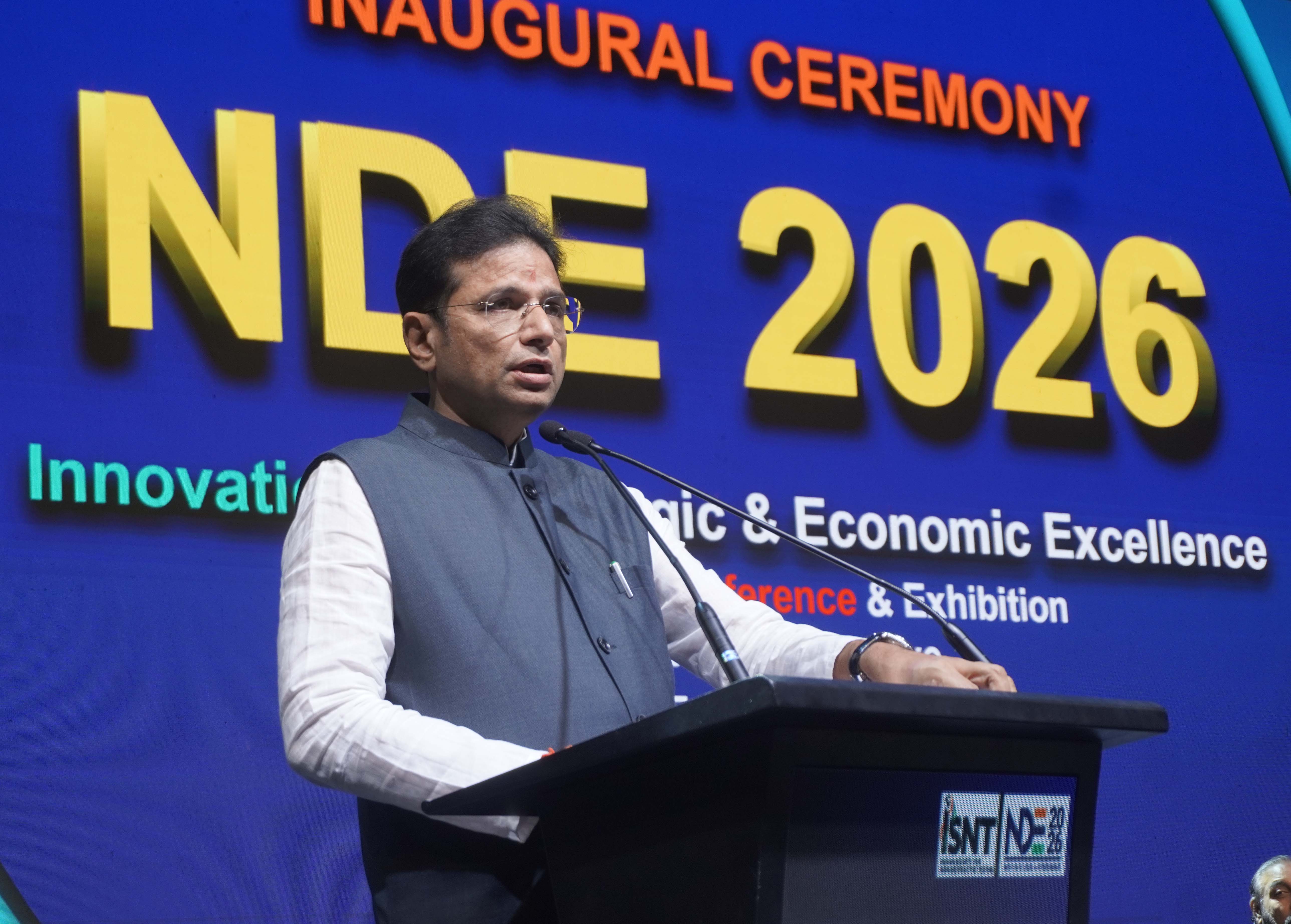
Describing NDT professionals as the “Doctors of the Manufacturing World” and the “Invisible Heroes of the Manufacturing Industry”, Telangana Minister for IT and Industries D. Sridhar Babu highlighted their critical role in ensuring the safety and reliability of products and infrastructure.
“Just as doctors diagnose illnesses that may not be visible externally, you identify hidden defects in materials and components and ensure that aircraft, defence equipment and other critical products are safe and reliable. Your contribution may not always be visible, but it is indispensable,” he said.
Addressing the gathering as Guest of Honour, said Hyderabad was rapidly emerging as a major aerospace and defence manufacturing hub.
Referring to the city’s growing aerospace ecosystem, he cited Tata Boeing Aerospace’s manufacturing of Apache helicopter fuselages and Boeing 737 vertical fin structures, Safran’s aero-engine MRO facility and the work being undertaken by space technology companies such as Skyroot Aerospace.
Telangana has more than 1,500 aerospace, defence and space MSMEs, while aircraft, spacecraft and their components accounted for 29.4% of the state’s merchandise exports in 2024–25, valued at nearly ₹63,000 crore, he said.
As aerospace and defence technologies become more sophisticated, the importance of testing, evaluation and certification will only increase. Artificial Intelligence, digital twins and advanced inspection technologies will transform the industry, he observed.
Stressing the need to develop skilled professionals, strengthen testing infrastructure and encourage closer collaboration between industry, academia and research institutions, he said Telangana had significant opportunities to expand its capabilities in these areas.
Responding to ISNT’s request for Government support in establishing a Centre of Excellence in Non-Destructive Testing in Telangana, Sridhar Babu assured the NDT fraternity of the State Government’s full support for the proposed initiative.
Under the Telangana Rising 2047 vision, the Government aims to make Telangana a global hub for aerospace and defence, with capabilities across design, engineering, manufacturing, testing, certification and research.
He invited the NDT fraternity to partner with the State Government in this journey and help strengthen India’s aerospace and defence capabilities.
Dr Jaiteerth R. Joshi, President, ISNT, Director General, DRDO and CEO & Managing Director, BrahMos Aerospace, described NDT professionals as the unsung guardians of safety and reliability.
“NDT professionals are not just experts; they are the pillars behind the structural safety of critical equipment. They protect lives and safeguard infrastructure. They are the experts working behind the seamless functioning of jet engines, nuclear reactors, missiles, bridges and several other critical systems,” he said.
He highlighted ISNT’s contribution to developing professional capabilities in the country, stating that the Society had trained around three lakh people over the last 40 years and played a significant role in building India’s NDT professional ecosystem.
Pointing to the participation of students in the conference, he said today’s students were tomorrow’s guardians of safety and reliability. NDT had applications across virtually every critical industrial and strategic sector, making the development of young talent particularly important.
The inaugural ceremony also witnessed the presentation of the ISNT National NDT Awards 2026, recognising excellence in research and development, industrial applications, scientific publications, young scientist achievements and lifetime contributions to the field.
Shri Balaji Srinivasan of IIT Madras received the ISNT-EEC Award for Excellence in R&D, while Shri Dilip Kumar Singh of BHEL, Trichy, was honoured with the ISNT-P-MET Award for Excellence in Industrial Applications.
The ISNT-CHOKSI ASIA Young Scientist Award was presented to Shri Subhash N. of the Institute for Medical Sciences and Technology, Trivandrum.
The ISNT-IXAR Award for Best Paper in the R&D category went to Mr. Rohan Soman of the Institute of Fluid Flow Machinery, Polish Academy of Sciences, Gdańsk, Poland, along with co-authors Mr. Shishir Kumar Singh and Mr. Pawel Malinowski.
The ISNT-Eastwest Award for Best Paper in the Industrial Applications category was presented to Mr. Boddapati Ganesh Kumar of L&T Construction Research and Testing Center, Chennai, along with co-authors Mr. M.S. Senthilkumaran and Mr. V. Govindaraj.
The Society also conferred Honorary Fellow Membership on Mr. Alexander Mullin, Dr. Steve Mahaut, Mr. Rajul R. Parikh and Mr. Uday Kale.
Shri P. Vijayaraghavan received the ISNT Lifetime Achievement Award 2026.
Adding special significance to the occasion, the ISNT Hyderabad Chapter received the ISNT-CHOKSI ASIA Best Chapter Award for 2026, recognising its contribution to the Society.
The joint conference brings together two specialised technical platforms. While NDE 2026 addresses the wider applications of non-destructive evaluation across industries, AeroNDT 2026 focuses on the specific challenges and emerging technologies associated with aerospace inspection, certification, structural integrity and maintenance.
The three-day programme features scientific presentations, plenary sessions, technical discussions, poster presentations, industry interactions and an exhibition showcasing the latest products, technologies and solutions in NDT.
Reliance Industries Limited, BrahMos, DRDO, MIDHANI, MR Chime, Larsen & Toubro, Godrej, the Indian Air Force, CECI Technologies, Ooga Technologies, TPAC, Modsonic, The Welding Institute (TWI) and McGean, among others, are supporting the event.
Established in 1972, the Indian Society for Non-Destructive Testing is a non-profit professional organisation dedicated to promoting the science and technology of NDT through education, research and the exchange of technical information. With more than 5,000 members across 19 chapters in India, ISNT works towards advancing inspection technologies that enhance industrial safety, quality assurance, reliability and asset integrity.
The conference and exhibition are being organised by ISNT, with the ISNT Hyderabad Chapter hosting the event, in collaboration with BINDT, DGZfP and COFREND.
- 0
- By Neel Achary



