



26, Feb 2026
Pan IIT Urges Strategic Expansion to Make India a Global Education Hub
By:- Prabhat Kumar, Chairman (IRS), Pan IIT Alumni India
Pan IIT welcomes the Knight Frank – Deloitte report identifying India as the world’s most strategic higher education growth market, driven by its 155 million-strong youth cohort. To harness this potential, we advocate for a dual strategy: vertical expansion through world-class research and specialisation, and horizontal expansion via accessible education hubs across India. These hubs will integrate academia, industry, and innovation, positioning India as a leader in the Global South for educational collaboration and opportunity.
Enabled by 100% automatic-route FDI and supportive budget provisions for research and skill development, we urge the adoption of further streamlined policies to attract private and foreign university investment. Our focus must be on scaling technical and vocational education while deeply integrating Indian Knowledge Systems. Pan IIT is committed to partnering with all stakeholders to transform India into a global knowledge exporter and destination.
- 0
- By Neel Achary

26, Feb 2026
KEZAD Group Signs 50-Year Land Lease with Galadari Brothers’ Heavy Equipment Division to Establish AED 75 Million Facility
The 150,000 sqm facility will establish operations for storage and distribution of heavy machinery and industrial equipment in KEZAD – Abu Dhabi
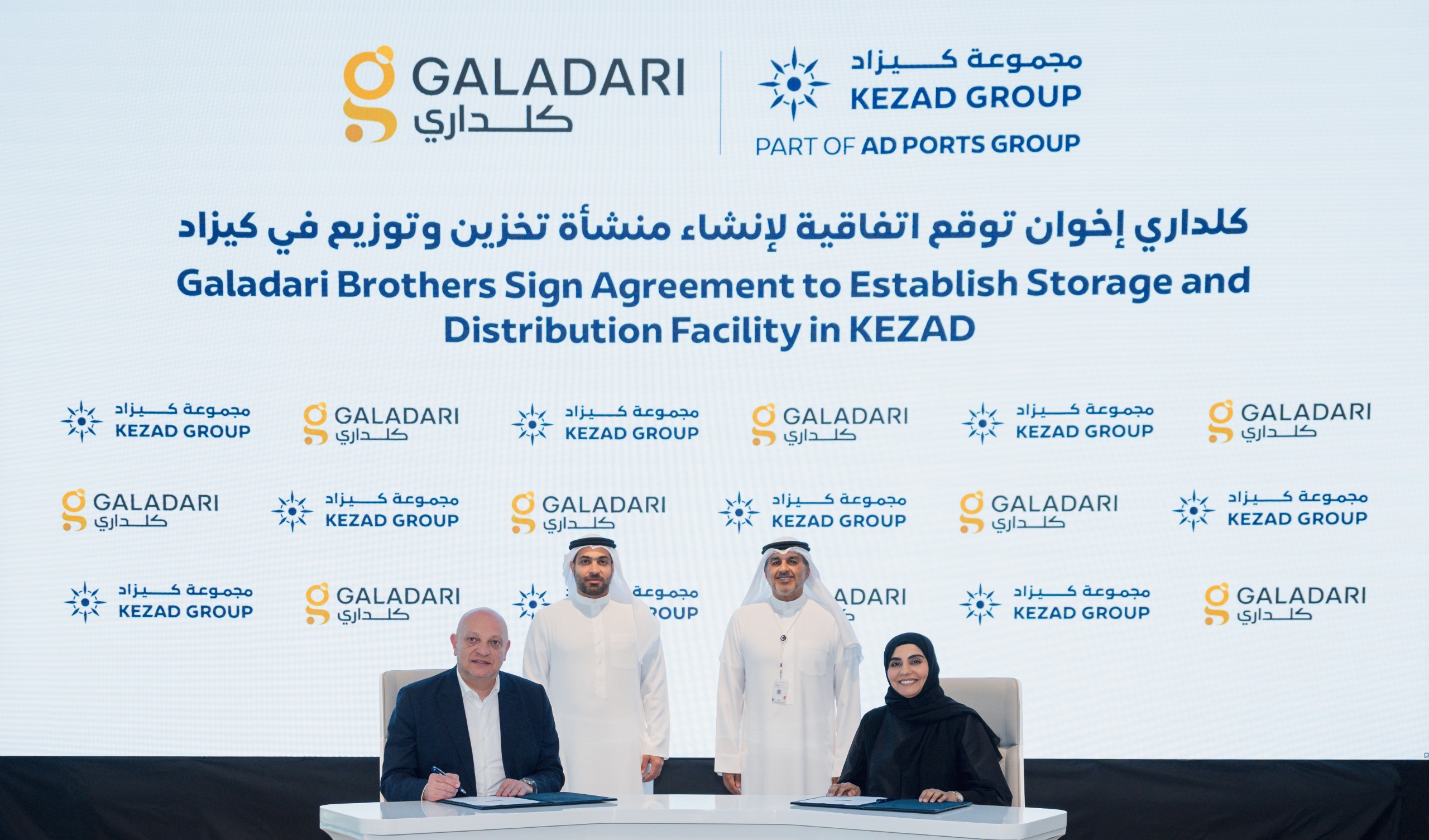
Abu Dhabi, United Arab Emirates – Feb 26: Khalifa Economic Zones Abu Dhabi – KEZAD Group, one of the largest operators of integrated and purpose-built economic zones in the region and Galadari Brothers’ Heavy Equipment Division have signed a 50-year land lease agreement for the establishment of a state-of-the-art facility in KEZAD A (KEZAD Al Ma’mourah).
Galadari is investing AED 75 million in the proposed 150,000 sqm facility that will establish operations for storage and distribution of heavy machinery and industrial equipment in the region. The group’s Heavy Equipment Division is a leading dealer and distributor of commercial vehicles and specialised construction machinery from international brands in the UAE. Headquartered in Dubai, Galadari Brothers is a diversified conglomerate with a legacy spanning more than 60 years and a presence across multiple sectors and international markets.
Since its inception more than four decades ago, the Heavy Equipment Division of Galadari has grown from being a single-product distributor to steadily build an expansive product portfolio constituting a wide range of construction equipment. The move to KEZAD comes as part of Galadari’s strategic plans to expand its business in the region, and its commitment to delivering excellence in services by joining a thriving economic zone with dedicated industrial clusters and practices.
Mohamed Al Khadar Al Ahmed, CEO, Khalifa Economic Zones Abu Dhabi – KEZAD Group said: “We welcome Galadari Brothers to KEZAD, and look forward to a fruitful partnership, as we support them in expanding their foothold in the region with our tailored services. By being in KEZAD, Galadari organically becomes an integral part of a cohesive industrial structure, designed for innovation, collaboration and delivery of outstanding services.
“As we continue on our growth path, we are hopeful that this association will be mutually beneficial for business – contributing to the growth of Galadari as well as the economic development of Abu Dhabi.”
Mohammed Galadari, Co-Chairman and Group CEO of Galadari Brothers said: “The establishment of this facility marks a significant step in advancing Galadari Brothers’ Heavy Equipment capabilities and scaling our operational infrastructure in the UAE. Located within KEZAD’s integrated industrial ecosystem, the facility enhances our ability to support large-scale projects while strengthening the logistics and supply chain networks that underpin regional growth. This investment reflects our long-term confidence in the UAE’s vision for economic diversification and industrial advancement while reinforcing our commitment to delivering the capacity, reliability, and expertise required to serve a rapidly evolving industrial landscape.”
26, Feb 2026
Keturah Ardh sells out first phase for AED1 billion
All 558 townhouse plots snapped up in six months, underscoring strong demand for luxury residential land in Dubai
Dubai, UAE, Feb 26: The first phase of Keturah Ardh, Dubai’s first heritage-wellness integrated luxury community, has sold out, with all 558 luxury townhouse plots acquired in just six months for AED1 billion.
fäm Properties, the exclusive master agency for master developer MAG Group, today confirmed the milestone, which reflects solid demand for premium residential land in Dubai, particularly freehold townhouse plots, one of the most limited and sought-after asset classes in the city’s luxury market.
“The sellout speaks for itself,” said Firas Al Msaddi, CEO of fäm Properties. “Residential plots with approvals for luxury townhouses are among the scarcest product types in Dubai, and buyers and investors responded accordingly.”

“True heritage-wellness communities are rare, and over the past four years, this segment has consistently led the market in both performance and investor interest.”
Located in the Al Rowaiyah First District, Keturah Ardh brings together traditional Arabic architectural principles with a fully integrated modern wellness approach. The 558 luxury townhouse plots are spread across 93 meticulously planned clusters, and phase one was brought to market with attractive payment plans.
The broader master plan blends Arabic heritage with advanced wellness concepts to create a self-contained lifestyle community. The name ‘Ardh,’ meaning ‘earth’ or ‘land’ in Arabic, reflects its ties to culture and nature.
The project reflects MAG Group’s 45-year dedication to quality and innovation, with amenities including spa and sauna facilities, yoga and pilates areas, running and cycling tracks, and extensive green spaces. Mature landscaping includes trees sourced from Italy, Spain, Thailand, and Africa.
Infrastructure is being delivered in Q1 2026, with construction starting in Q4 2026, and full completion expected by 2030.
Keturah Ardh is the fourth major project in the Keturah luxury portfolio, following Keturah Reserve, Keturah Resort: The Ritz-Carlton Residences at Al Jaddaf, and Keturah Bahar.
26, Feb 2026
India Inc Embraces Smarter Benefits and Preventive Healthcare Amid Talent Race
MUMBAI, Feb 26: With health cost trends in India projected to reach 9.9% in 2026, organisations are overhauling benefits strategies, prioritising preventive healthcare, flexible benefits and digital enablement to attract and retain talent, according to the findings from Mercer Marsh Benefits’ Future of Benefits 2026 and Beyond report.
The study draws on perspectives from over 700 organizations, representing more than 3.5 million employees and 8.5 million insured lives across 14 industries. In parallel, the voices of over 82,000 employees were captured across career stages, generations, function and geographies providing a 360-degree understanding of benefit priorities, emerging trade-offs, and the strategic levers organizations must now deploy.
Sanjay Kedia, CEO and President Marsh India said,
“India is at a structural inflection point where regulatory reform, demographic shifts and rising healthcare costs are converging to reshape the employer–employee compact. Benefits are no longer a peripheral HR lever; they are becoming the foundation of workforce resilience, trust and productivity. The message from our data is clear, employers want to care for their people in ways that are compassionate yet financially sustainable, while employees are ready to share responsibility when benefits deliver real value.”
As a result, employers are moving away from fully employer-funded models towards shared funding, smarter plan design and flexible benefits to balance cost pressures with employee value. This shift is already visible: Co-sponsorship of parental insurance premiums has climbed to 29%, from just 4% three years ago, underscoring a growing focus on shared accountability.
The report also reveals organisations are prioritising preventive healthcare to support workforce longevity, with 62% operating a defined wellbeing framework and greater emphasis on early intervention, Outpatient Department (OPD) care and structured wellbeing frameworks. 43% of employers now offer OPD coverage, three-quarters of which are fully sponsored.
42% of organisations now offer health cover between INR 6 lakhs and INR 10 lakhs, while 41% have increased sum insured levels in the past year. At the same time, flexibility and digital enablement are accelerating this shift. One in three organisations has rolled out flexible benefits programmes, while 55% use benefits platforms and 25% are deploying AI-led solutions to manage compensation and benefits.
Commenting on the findings, Prawal Kalita, Managing Director, Mercer Marsh Benefits, India Leader, said,
“The future of employee benefits is increasingly being shaped by digital experience. Employees expect seamless, on-demand access to their benefits, clear navigation during moments of need and personalized guidance across health and wellbeing journeys. What we are seeing is a shift from fragmented platforms to integrated, technology-led ecosystems where data, automation and human support come together to make benefits simpler, more relevant and more impactful.”
The report also highlights the growing influence of Global Capability Centres (GCCs), which are raising benchmarks across the market. One in two GCCs now offers OPD insurance, and one in three has embedded mature flexible benefits models, intensifying competition for skilled talent.
From the employee perspective, expectation is to receive meaningful benefits. While one in three employees still reports limited flexibility, 85% are willing to spend out of pocket for benefits they value, reinforcing demand for more personalised, value-driven designs.
As India’s services economy continues to expand, the Future of Benefits 2026 and Beyond report calls on organisations to reimagine how they support their people, aligning preventive health, flexibility and digital enablement with long-term business resilience.
26, Feb 2026
Pentair Foundation and Safe Water Network India Partner to Install Water ATMs in Noida
Noida, Feb 26: Safe Water Network India, along with Pentair Foundation, today inaugurated Water ATMs at Composite Sr. Primary School, Navada Rasoolpur, Noida, and Primary School, Sarfabad, Noida. The Water ATMs were inaugurated by Mr. Ajit Tulo, Vice President, Global Engineering Centre, Pentair, in the presence of Mr. Ravindra Sewak, Country Director, Safe Water Network India, and Ms. Poonam Sewak, Vice President, Programs and Partnerships, Safe Water Network India, along with other officials and dignitaries.
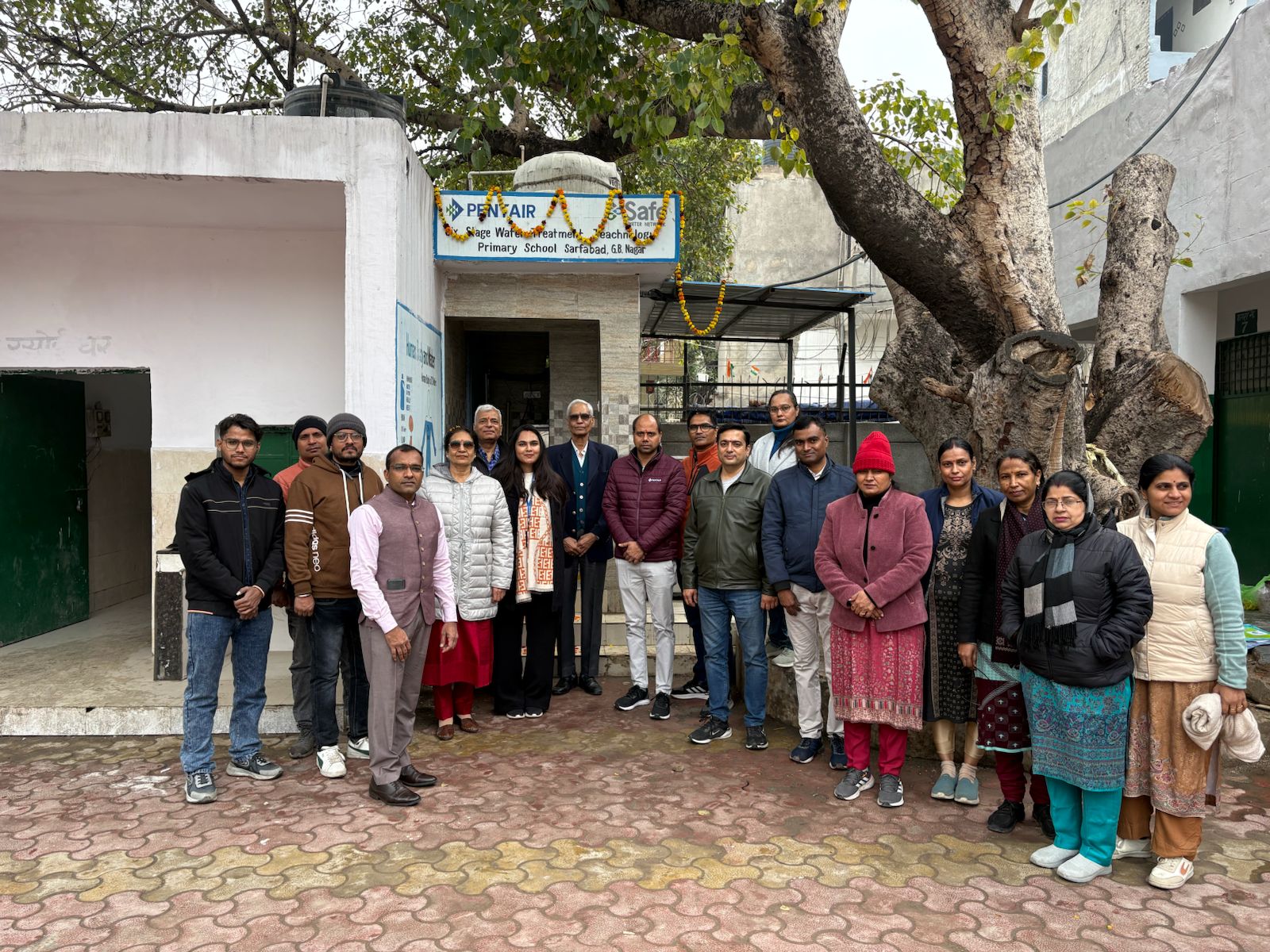
Speaking on the inauguration Mr. Ajit Tulo, Vice President, Global Engineering Centre, Pentair said,
“At the very outset, every citizen of the country has a right to have access to clean and safe drinking water, especially our young citizens who are the future of the country. We are pleased and honoured to have a partner like Safe Water Network India, with whom we have successfully commissioned similar water ATMs in 49 Government schools across NOIDA, Telangana, and Haryana which have benefitted about 20,000 students, 760 teachers and support staff across these states. We look forward to continue this partnership further, and have an intervention program in every district in the country.”
Elaborating further, Mr. Ravindra Sewak, Country Director, Safe Water Network India said,
“We have had a great start to 2026 with the inauguration of two Water ATMs in the first month itself and we hope to maintain the momentum throughout the year. With this successful commission, the students, teachers and support staff of both schools are assured of a dependable and clean supply of drinking water. My heartiest congratulations to everyone and a special thanks for Pentair for all their support over the years.”
The inauguration was marked with fun, frolic, and festivities. The students presented a skit on drinking safe water for good health and saving water, amongst other activities.
Pentair Foundation has been a core partner of Safe Water Network for the past 15 years, enabling innovative technological solutions for safe drinking water in underserved communities in India. In addition to Water for Schools and Institutions, Pentair has supported 17 decentralized safe drinking water stations called iJal stations, which bring water access to 55,000 people across 17 communities, and 19 ACOM – Automatic Chlorination and Online Monitoring Systems for piped water safety, delivering safe drinking water to 18,700 people across 19 communities.
26, Feb 2026
Solar Service Searches Rise 43% Across India: Justdial Data Reveals
Bengaluru, Feb 26: Justdial Limited has reported a significant year-on-year increase in searches for solar-related and electrician services across India, based on an analysis comparing search volumes between February 2024 – January 2025 and February 2025 – January 2026. The data reflects rising consumer interest in energy upgrades, infrastructure readiness and long-term power solutions across both metropolitan and emerging cities.
At a national level, Solar-related Services recorded a robust 43% growth, indicating heightened adoption of solar installations and allied solutions. Electrician Services followed with a 9% increase, suggesting parallel demand for technical expertise to support installations, upgrades and maintenance requirements.
City-wise data reveals sharp momentum in select markets within the Solar-related Services category. Patna registered a remarkable 206% increase, more than tripling year-on-year search interest. Delhi followed with a 153% surge, while Bangalore recorded an 81% rise. Hyderabad saw a 53% increase, and Chennai posted a 35% growth. Pune (+21%), Surat (+17%), Lucknow (+14%), Mumbai (+13%) and Nagpur (+32%) also reported steady upward trends, signalling widespread traction across regions.
Within Electrician Services, Ahmedabad led with a 14% increase in searches. Chennai, Pune and Surat each recorded a 12% rise, while Delhi, Mumbai and Indore posted 11% growth respectively. The data indicates consistent demand for skilled electrical services across urban centres.
The parallel growth in solar and electrician-related searches points to a broader shift towards energy-conscious investments and infrastructure preparedness. Rising electricity costs, increased awareness of renewable energy benefits and a growing focus on long-term operational efficiency may be contributing factors. The trend may also reflect commercial and industrial expansion alongside sustained residential demand.
The findings underscore evolving consumer behaviour, with users actively exploring structured energy solutions and professional services to support power transitions across India.
26, Feb 2026
Indian School of Hospitality Launches B.Sc. in Global Business & Entrepreneurship
Gurugram, Feb 26 : The Indian School of Hospitality has launched a four-year B.Sc. in Global Business and Entrepreneurial Leadership, expanding its academic portfolio beyond hospitality-focused pathways into integrated business leadership education aligned with India’s evolving economic structure.
India’s services sector contributes over half of the country’s GDP and is supported by complex networks of logistics, digital infrastructure, capital flows and consumer markets. As enterprises operate within increasingly interconnected environments, industry demand is shifting toward graduates who understand how pricing, supply chains, working capital and governance decisions influence one another.
The new program has been structured around that integrated view of business.
Rather than organising learning around isolated management functions, the B.Sc. in Global Business and Entrepreneurial Leadership (GBEL) is designed to help students understand how business decisions create consequences across an entire enterprise. Students will examine how consumer demand shapes revenue models, how operational design affects margins, how capital allocation influences growth and how governance frameworks shape long-term performance.
Academic progression moves from foundational business literacy in the first year to enterprise-level strategy and capstone integration in the final year. The curriculum includes structured internships and applied decision exercises across all four years.
The degree will be awarded by Gurugram University and operates under academic direction from Les Roches, part of the Sommet Education network.
Kunal Vasudeva, Managing Director and Co-founder of the Indian School of Hospitality, said the launch reflects a broader institutional alignment.
“India’s next phase of growth will be shaped by professionals who understand how complex enterprises function. Business is not a collection of subjects. It is a chain of consequences. Pricing affects demand. Demand affects operations. Operations affect cash. Cash affects growth. Education must prepare students to think in that interconnected way. This program extends our liberal hospitality philosophy into broader business leadership aligned with India’s economic direction.”
With this launch, ISH extends its academic framework beyond hospitality-focused pathways into integrated business leadership education while sustaining its liberal hospitality philosophy and allied services foundation.
26, Feb 2026
Africa’s Green Economy Summit 2026 Charts a Course from Vision to Viability
The gathering is built on a singular premise, that Africa’s environmental challenges are, in fact, its greatest economic opportunities
CAPE TOWN, South Africa, Feb 26– The Africa’s Green Economy Summit (AGES) 2026 opened its doors in Cape Town today, marking a pivotal moment in the continent’s economic trajectory. Convening a powerful coalition of policymakers, financiers and innovators, the summit signals a decisive shift from conceptual ambition to concrete, bankable action in the pursuit of a sustainable African future.
Under the banner of “From Ambition to Action: Scaling Opportunities in Africa’s Green and Blue Solutions,” AGES 2026, proudly sponsored by Sanlam Investments, is not merely a forum for discussion but a catalyst for deal-making and partnership. The gathering is built on a singular premise, that Africa’s environmental challenges are, in fact, its greatest economic opportunities.
“Ambition lights the path, but it does not pave it. To transform our economies and uplift our communities, we must move beyond rhetoric to robust execution,” said Lerato Mbele, Summit Moderator. “This summit is a marketplace of ideas where we connect visionaries with investors, ensuring that Africa’s green transition is not just sustainable, but also scalable and profitable.”
The strategic focus of this year’s agenda is underpinned by compelling data. The summit is shining a spotlight on the blue economy, a colossal yet often under-leveraged asset that already injects nearly $300 billion annually into the continent’s GDP and sustains 46 million livelihoods through fisheries, tourism and logistics. Simultaneously, the green economy, with agriculture and renewable energy at its core, is projected to unlock a staggering $10 trillion in global business value over the next decade, positioning Africa to generate an estimated 300 million new jobs for its burgeoning youth population.
These are not distant prospects, but immediate frontiers for investment and innovation.
Echoing this sentiment, the Honourable Naren Singh, Deputy Minister of Forestry, Fisheries and Environment, addressed delegates with a call for holistic progress. “Our journey towards a low-carbon future must be defined by a fundamental truth: sustainability is a three-legged stool, balancing the health of our planet, the prosperity of our people and the creation of shared value,” he stated. “By investing in our natural capital, we are investing in the most resilient infrastructure of all our communities.”
Over the next two days, the summit floor will be a hive of activity. Attendees will engage in high-level interactive sessions, witness live project pitches from Africa’s most promising green entrepreneurs, and participate in curated networking forums designed to fast-track collaboration and knowledge transfer.
AGES 2026 is more than an event, it is a declaration that Africa is ready to build a future where economic resilience and environmental stewardship are the same.
26, Feb 2026
Odisha State Museums: Budget Push, Preservation Efforts and the Road Ahead

Odisha’s 2026–27 state budget has placed renewed emphasis on cultural preservation, with major announcements centered on heritage conservation, museum development and digitization initiatives. Chief Minister Mohan Charan Majhi, while presenting the budget in the state Assembly, proposed the establishment of a world-class Shree Jagannath Museum and Library in Puri, reinforcing the government’s stated priority of preserving and propagating Jagannath culture.
A World-Class Museum in Puri
- The proposed museum in Puri will complement the historic Shree Jagannath Temple, one of India’s most revered 12th-century shrines. With an allocation of ₹1,000 crore for initiatives linked to Jagannath culture, the project aims to:
- Create a global-standard museum and research library
- Digitally connect devotees through the ‘Samarpan’ digital hundi platform
- Restore the spiritual and architectural heritage of the Gundicha Temple
- Undertake conservation work at Emar Mutt, Pramod Udyan and Raghunandan Library
- Prepare a detailed inventory of the Ratna Bhandar ornaments
This initiative signals a broader shift toward integrating heritage conservation with tourism development and digital accessibility.
Condition of Odisha’s Existing Museums
Odisha houses several state-managed museums that preserve its rich maritime, tribal, artistic and archaeological heritage. However, many institutions face infrastructural and modernization challenges.
1. Odisha State Museum, Bhubaneswar
The Odisha State Museum holds valuable collections of palm-leaf manuscripts, sculptures, inscriptions, coins and folk art. While it remains a key cultural institution, sections of the museum require upgraded galleries, improved lighting, climate control systems and digital cataloguing facilities. The budget allocation of ₹10 crore for maintenance of galleries is a step toward modernization.
2. Odisha State Maritime Museum, Cuttack
Located at Jobra in Cuttack, the Odisha State Maritime Museum highlights Odisha’s ancient maritime trade links across Southeast Asia. Recent maintenance activities, including work on its aquarium facility, indicate ongoing infrastructural needs. Although operational, the museum requires technological upgrades, interactive displays and enhanced visitor services to meet contemporary standards.
3. District and Thematic Museums
Several district-level and thematic museums across Odisha face common issues:
- Limited funding for upkeep
- Shortage of trained museum professionals
- Lack of digitization of collections
- Minimal public engagement and outreach programs
Central Scheme for Museum Development: Objectives and Scope
The broader national scheme for museum development aligns closely with Odisha’s current initiatives. The scheme aims to provide financial assistance for:
Objectives
- Setting up new museums at regional, state and district levels
- Strengthening and modernizing existing museums
- Digitizing art objects and creating online catalogues
- Capacity building and training of museum professionals
Scope
Financial assistance covers museums managed by Central and State Governments, societies, autonomous bodies and trusts. The scope includes:
- Museums with collections of antiquities, numismatics, paintings, ethnology, textiles and crafts
- Online Virtual Museums
- Theme-based museums
- Virtual Experiential Museums (VEM)
- Projects of National Importance
Monitoring Mechanism
Museums receiving assistance must report annual visitor footfall for five years after project completion. A Project Monitoring Committee under the Ministry periodically reviews progress to ensure effective implementation.
Steps Toward New Museums in Odisha
The proposal for a Shree Jagannath Museum reflects a strategic cultural vision. Discussions around new museums in Odisha increasingly focus on:
- Digitization and Virtual Access
- Creating online archives and virtual walkthroughs to attract global audiences.
- Experiential and Theme-Based Museums
- Developing immersive storytelling spaces around Jagannath culture, maritime history and tribal heritage.
- Capacity Building
- Training curators, conservators and archivists in modern museum management practices.
- Public-Private Partnerships
- Involving trusts, academic institutions and autonomous bodies to strengthen governance and funding.
- Tourism Integration
- Linking museums with pilgrimage and heritage circuits to boost visitor engagement and revenue.
The Way Forward
Odisha stands at a critical juncture in cultural infrastructure development. While existing museums preserve invaluable heritage, many require modernization to remain relevant and engaging. The proposed Jagannath Museum in Puri could serve as a benchmark for future museum projects in the state—combining tradition, technology and tourism.
If effectively implemented, the new initiatives may transform Odisha into a leading cultural hub, where heritage preservation coexists with digital innovation and global outreach.


