



26, Feb 2026
Benin Tourism agency to join ITB Berlin 2026 to advance Benin’s international reach and tourism growth
Cotonou, Feb 26 — Benin Tourism announces its participation in ITB Berlin, the leading trade show for the global travel and tourism industry, taking place March 3–5, 2026, in Berlin, Germany. Through this strategic presence, Benin aims to further strengthen its position as a forward-looking destination on the international stage by combining institutional visibility, industry engagement, market development of its tourism offering, and the promotion of its cultural identity. This participation builds on Benin’s recent presence at major international tourism events, following its participation in IFTM in Paris and FITUR in Madrid in recent months. It extends the country’s broader international outreach strategy to enhance Benin’s attractiveness, deepen relationships with travel industry stakeholders, and accelerate the commercialization of the destination across priority markets.
ITB Berlin: A key international platform for promoting Destination Benin
ITB Berlin is a must-attend event for any destination seeking to build a lasting position on the global tourism stage. Since 1966, the show has established itself as the world’s leading platform for the travel industry, and the 2026 edition will be especially significant as it marks the event’s 60th anniversary, taking place March 3–5 in Berlin under the theme, “Discover the stories behind 60 years of legacy.” With its structure organized both geographically (by destination) and by market segment (including adventure tourism, business travel, luxury travel, medical tourism, travel technology, and more), ITB offers a unique environment for visibility, strategic intelligence, and business development. The scale of the event underscores its importance: the previous edition brought together more than 170 countries and territories, 5,800 exhibitors, and nearly 100,000 trade visitors. Benin’s participation in 2026 is the result of long-term planning: after attending last year as an observer, Benin Tourism returns this year with a fully structured pavilion, building on preparatory work launched in 2025.
A delegation structured around experience and commercialization
For the 2026 edition of ITB Berlin, Benin Tourism has chosen to work alongside partners that reflect the growing strength of Benin’s tourism ecosystem, bringing together complementary stakeholders from across the value chain. The Benin pavilion will feature Benin Tours S.A., which is being mobilized to support the commercialization of Destination Benin and the structuring of its tourism offering, with the goal of expanding distribution opportunities and partnerships with international travel professionals. Alongside it, Ouidah Golf Club will highlight Benin’s potential across leisure, experiential tourism, and hospitality segments, while Sofitel Cotonou Marina Hotel & Spa, a flagship property, will showcase the rising quality of the country’s hospitality infrastructure and its ambition in the high-end travel segment. Together, these partners reflect a clear objective: to present in Berlin a destination that is not only inspiring, but also market-ready, programmable, and well-positioned for integration into international tour operators’ catalogs and travel offerings.
A pavilion designed as a living showcase of Benin
Beyond its institutional dimension and B2B engagement, the Benin pavilion will offer an immersive discovery experience designed to leave a lasting impression on visitors, spark the
interest of travel professionals, and embody the full richness of Beninese hospitality. A dedicated tasting area will be set up to introduce visitors to flavors and products from Benin as part of a sensory storytelling approach to the destination. This tasting experience will play a central role in telling Benin’s story, highlighting the quality of its products, the diversity of its culinary traditions, and the refinement of its culture of hospitality. The goal is to give visitors a tangible first encounter with Benin through an experience that engages the senses and creates lasting recall. Conceived as a space for exchange, discovery, and projection, the pavilion will bring together the cultural, tourism, and commercial dimensions of the destination within a scenographic concept aligned with Benin’s positioning.
An artistic and cultural program at the heart of the pavilion’s identity
Benin’s presence at ITB Berlin will be brought to life through an ambitious artistic and cultural program designed as a central driver of differentiation, visibility, and appeal. The program is intended to make the Benin pavilion a vibrant, recognizable space deeply rooted in the country’s cultural expressions.
In this spirit, Pépit’Arts will play a major role in the pavilion’s artistic and musical programming through the presentation of FAADJI, a percussion-based creation presented in formats tailored to visitor flow and the trade show environment. This performance concept will establish a strong sonic and stage presence, creating an experience that is immediately distinctive and memorable.
The pavilion will also welcome Akonhoun Delidji, a cultural ensemble from Abomey renowned for its traditional dance performances, including Zinli and the Akonhoun dance. The sequences presented will highlight the expressive power, symbolic depth, and heritage significance of these dances, echoing the history of the Danxomè Kingdom and the imagery of strength, courage, and pride associated with the Amazons. Through this presence, Benin will deliver a powerful cultural performance that is identity-driven, visually striking, and fully aligned with the story it is bringing to the international stage.
More broadly, these cultural performances will strengthen the identity of the Benin pavilion, showcase the country’s intangible cultural heritage, and affirm Beninese artistic creation as a core pillar of the national narrative presented in Berlin.
A clear objective: elevating and selling Destination Benin
Through its participation in ITB Berlin, Benin Tourism is pursuing a clear ambition: to combine international visibility with the market development of the destination. The trade show will provide a strategic platform to engage with tour operators, travel agencies, key industry influencers, specialized media, and institutional partners, while presenting a tourism offer that is more clearly defined, more competitive, and more distinctive.
Benin’s participation in this major international event reflects a resolutely modern approach to destination promotion, one that goes beyond simply showcasing assets. It is an approach that builds connections, creates emotion, structures commercialization, and establishes a lasting brand image. By leveraging the complementarity between public and private stakeholders, and between hospitality, culture, and distribution, Benin is affirming its ambition to claim its full place in the global tourism conversation.
Sindé CHEKETE, CEO of Benin Tourism, said: “Benin’s participation in ITB Berlin 2026 is part of a consistent strategy to strengthen our presence on the world’s leading tourism stages, following our participation in IFTM in Paris and FITUR in Madrid. It reflects our determination to steadily advance the visibility, credibility, and commercialization of Destination Benin. In
Berlin, we will present a structured tourism offering, supported by complementary stakeholders from across our ecosystem, and a pavilion designed as a space for engagement, experience, and forward-looking dialogue.”
- 0
- By Neel Achary

26, Feb 2026
Best Companies to Work For in India 2026: NVIDIA, Google, and Apple Lead Employee Satisfaction Rankings
Feb 26: Workplace community platform Blind has released its 2026 rankings of the Best Companies to Work For in India, revealing key insights into employee satisfaction, employer desirability, compensation trends, and job market sentiment.
Highest-Rated Companies in India (2026)
Based on overall satisfaction, the top 15 highest-rated companies in India this year are:
NVIDIA, Google, Apple, Akamai Technologies, VMware, Adobe, Target, CRED, Nokia, ThoughtWorks, Airbnb, Lowe’s, Autodesk, Zoho, and ServiceNow.
Compared to last year, NVIDIA, Google, Apple, Akamai Technologies, VMware, Target, Zoho, and ServiceNow maintained their top-rated status, while Adobe, CRED, Nokia, ThoughtWorks, Airbnb, Lowe’s, and Autodesk newly entered the top 15.
Lowest-Rated Companies in India (2026)
The 15 lowest-rated companies based on overall satisfaction are:
DP World, Ola, Sprinklr, Groupon, Tekion Corp, Paytm, OYO, Zeta, Samsung Electronics, HCL Enterprise, Deliveroo, Compass, Rippling, Infosys, and Cashfree.
DP World, Paytm, Tekion Corp, Zeta, and Sprinklr remained on the lowest-rated list, while the other companies newly appeared in 2026.
Best to Work For vs. Most Desired to Work At
Blind also analyzed where Indian professionals most aspire to work. The most desired employers in 2026 are:
Amazon, Google, Microsoft, Atlassian, Flipkart, Zeta, InMobi, Tekion Corp, Uber, Walmart, Salesforce, Adobe, Meta, Oracle, and ShareChat.
While there is overlap, some globally recognized firms such as Amazon, Microsoft, and Meta rank high in desirability but do not feature among the top satisfaction leaders. Conversely, NVIDIA, Apple, and Akamai Technologies lead in satisfaction but do not rank among the most desired employers — suggesting brand perception and prestige influence job interest independently of employee experience.
Top Paying Companies and Satisfaction Correlation
The companies reporting the highest median total compensation packages in India for 2026 include:
Meta, Broadcom, Apple, Amazon, Uber, Google, LinkedIn, AMD, Atlassian, Salesforce, Intuit, Confluent, Palo Alto Networks, VMware, Cohesity, Twilio, NVIDIA, Walmart, Adobe, and Intel Corporation.
Fewer than a third of the top-paying companies appear among the highest-rated employers, highlighting that compensation alone does not consistently translate into employee satisfaction.
Search Trends: Layoffs, Mobility & Global Aspirations
The most searched companies by India-based professionals over the past year were:
Microsoft, Google, Uber, Amazon, Salesforce, Meta, Atlassian, Apple, Qualcomm, and eBay.
Trending search keywords included “layoff,” “offer,” “H-1B,” “Meta India,” “Google India,” and “Meta London,” reflecting job security concerns and strong global mobility aspirations.
Since May 2020, Blind has collected verified employee reviews and compensation data across approximately 248,000 companies worldwide, enabling professionals to make informed career decisions.
Methodology
The rankings are based on 40,686 cumulative verified employee reviews submitted through 2025 by Indian professionals on Blind. Only companies with at least 50 reviews were included. Companies were evaluated across overall satisfaction, career growth, work-life balance, compensation and benefits, company culture, and trust in management.
The “Would you work here?” rankings reflect cumulative poll responses visible only to non-employees of the evaluated company.
Compensation rankings reflect median total compensation submissions through 2025 from companies with at least 100 verified entries.
Search rankings reflect the most searched companies and workplace-related keywords by India-based Blind users across web and app platforms over the past year.
26, Feb 2026
Lightrun Launches Industry’s First AI SRE With Live Dynamic Runtime Context
NEW YORK, Feb 26 — Lightrun, a leader in software reliability, announced the industry’s first and only real-time AI SRE built on live, in-line runtime context. This allows AI agents and engineering teams to create missing evidence dynamically without redeployments, prove root causes with live execution data (“ground truth”), and validate fixes directly in live environments.
The mass adoption of AI agents and coding assistants has accelerated code generation, outpacing reliability. This has shifted developer time from writing code to verifying and fixing issues, and moved the development bottleneck to runtime, where behavior is complex and often non-deterministic. As enterprises accelerate investment in AI-driven reliability and autonomous operations, this has created a market for AI SREs valued at billions of dollars.
Despite this growth, most available ‘AI SRE’ tools are optimized for post-incident workflows and limited to relying on traditional, static telemetry that was already captured. When logs are missing, traces are incomplete, or execution context is unclear, teams are left to guess. Engineers are forced into long reactive cycles of redeploys, rollbacks, and manual validation.
Lightrun’s AI SRE closes this gap by bringing live, code-level runtime context directly into the reliability loop. Lightrun has been recognized in the 2026 Gartner® Market Guide for AI Site Reliability Engineering Tooling.
Instead of passively observing telemetry, the Lightrun AI SRE can safely interact with live systems via Lightrun’s patented Sandbox to create new evidence, test hypotheses, and validate outcomes against real execution behavior. This capability transforms AI SRE from a reactive post-incident advisor into a trusted, runtime-verified autonomous engineer that ensures reliability by design.
Built on Lightrun’s Runtime Context engine, the AI SRE supports reliability across the entire SDLC, from proactive issue detection during development and testing (“peace time”) to autonomous investigation and remediation during live incidents (“war time”). It enables teams to understand how code truly behaves in runtime, close visibility gaps without redeploying, and resolve issues with confidence. Lightrun is designed for every team responsible for the behavior, reliability, or outcomes of running software.
“Lightrun addresses a structural visibility gap in the emerging AI site reliability engineering workflows (SRE) market,” said Jim Mercer, Program Vice President, Software Development, DevOps, and DevSecOps at IDC. “By integrating dynamic instrumentation into SRE workflows, the company enables validation of root cause and remediation against live execution, reducing reliance on static, pre-instrumented telemetry and strengthening reliability across the software development lifecycle.”
With Lightrun’s AI SRE, engineering and reliability teams benefit from:
● Root cause analysis based on new evidence from live environments, without requiring prior instrumentation.
● Runtime-validated code changes to eliminate guesswork and reduce rollback-and-redeploy cycles.
● Live issue debugging in safe remote sessions with execution-level behavior inspections.
● Dynamic telemetry to running systems to fill visibility gaps that traditional observability tools cannot address.
● Reduced reliance on expensive war rooms, due to autonomous remediation and the ability to receive a code fix of incidents before escalating to a human.
● Resilience to “unknown unknowns” introduced by multiple AI agents across the SDLC.
Zahi Kapeluto, AVP Engineering, AT&T, stated, “Modern, AI-driven software reliability depends on connecting telemetry to real execution context. Without understanding how code behaves in live environments, alerts and metrics alone don’t tell the full story. Lightrun helps our teams close that gap by exposing runtime behavior directly, enabling faster investigation and more confident remediation.”
“AI cannot resolve what it cannot see. Lightrun’s runtime context engine allows AI to see application behavior at a single line level of granularity, which positions us to streamline remediation for any software issues in real-time,” added Ilan Peleg, CEO of Lightrun. “Trusted by Fortune 100 companies and the largest enterprises in the world, Lightrun is proud to lead the way in making self-healing software a reality.”
26, Feb 2026
GitHub Selects Codio as Exclusive Commercial Partner to Extend Use of GitHub Classroom Benefits to Codio’s Advanced CS Learning Platform
CAMBRIDGE, MA – Feb 26 – Codio, the cloud-based teaching platform built to scale computer science and technical skills education, today announced it has been selected by GitHub as the exclusive commercial partner extending the options available to GitHub Education users to use cutting-edge CS-specific learning tech for course management and the hands-on student experience. Codio has supported major universities and tech companies globally at scale, delivering evidence-based tools designed to support and streamline instructor workflows, enhance the student learning experience, and integrate AI responsibly into teaching and learning.
Under this partnership, more than 3,000 instructors and 500,000 students who currently use GitHub Classroom will be eligible to transition their assignments and courses to Codio’s proven, enterprise-grade learning platform while retaining their GitHub-native workflows, including course materials, assignments, and grading scripts stored in Git repositories. Codio’s platform offers a robust environment for instruction and assessment, trusted for reliability at scale by hundreds of CS teaching institutions, with greater compute flexibility and modern AI tools, designed to help scale high-quality computing and tech skills programs.
“This partnership reflects our shared vision with GitHub to keep the computing and tech skills learning experience at the forefront of advances in edtech and learning experience design, while embracing the use of AI to enhance the learner experience,” said Doug Hughes, CEO of Codio. “We’re working closely with the GitHub Education team to give instructors an easy, disruption-free path to use Codio while retaining the workflows they rely on, and in doing so gain access to tooling, support, and learner experiences at the forefront of modern computing education.”
GitHub Classroom users will also gain access to Codio’s AI teaching assistant, Coach, which provides immediate feedback to help students with common challenges, such as programming error messages, without giving away answers. This approach has been shown to improve assignment completion rates, lower DWF rates, and raise median grade performance by 15%, while reducing the manual grading load. Codio’s platform also delivers advanced autograding, LLM rubric-based evaluation, and learner behavior insights across entire programs, features that make it possible to scale high-quality instruction to thousands of learners.
In partnering with GitHub, Codio is launching a dedicated onboarding program that includes migration tools, live sessions, and two flavors of free access, giving users the option to continue to use GitHub Codespaces or migrate fully to the Codio platform. Beyond the free tiers, institutions can enjoy preferential pricing with enhanced support options for the largest-scale users.
26, Feb 2026
IR Power launches derisked solution for factory energy loss and smart opex savings
LONDON, UK – Feb 26: IR Power, a Scottish energy tech firm owned by MWNW Group, introduces its cutting-edge solution to the vast industrial energy waste experienced when factory machines slow down – helping manufacturers to achieve extensive energy savings using a rental model where manufacturers pay nothing upfront and only pay from proven savings.
In modern factories, many large machines constantly speed up and slow down as part of normal operation; automotive presses lifting and lowering, conveyor systems starting and stopping, industrial mixers ramping up and down. Every time these machines decelerate, they generate electricity that’s currently wasted.
IR Power’s plug-and-play systems work like regenerative braking in electric cars, but for industrial equipment. They capture this energy (that would otherwise be burned off as heat) and feed it back into factory power grids for immediate reuse. On large automotive press lines typically consisting of machine clusters cycling every six seconds, this recaptures 10-20% of total electricity consumption – representing up to £50,000-100,000 in annual savings per machine cluster at current UK energy prices.
The problem: Proven technology, broken business model
While energy recovery technology has existed for years, previous solutions required expensive custom engineering that typically demanded weeks or months of install and interrupted operations, high upfront costs, and longer integration cycles – particularly where drive systems had to be modified or replaced. At historical electricity prices of £50/MWh, the complexity wasn’t justified. At today’s prices of £100-150/MWh – combined with binding net-zero commitments – the economics have fundamentally changed.
The solution: Redesigned technology and commercial model
IR Power has eliminated the adoption barriers that prevented previous solutions from scaling:
Standardised sizing – Three standard product sizes work across different applications, replacing expensive custom engineering that previously cost £30-40k or more.
Plug-and-play installation – Systems connect to existing equipment in hours. No modifications to machines, no changes to operations, and no production downtime.
Rental model – Customers pay nothing upfront. Monthly fees are based only on measured energy savings. If the system doesn’t save energy, customers don’t pay.
Equipment agnostic – Unlike solutions locked to one manufacturer’s drives or motors, IR Power’s systems integrate with any supplier. Factories can connect multiple machines into a single energy recovery network, optimising across the entire site.
Fail-safe design – When braking energy exceeds system capacity, excess safely routes to existing waste resistors while the system continues operating. Competitor systems often shut down completely when overloaded, requiring manual restarts.
Why now: Energy prices and net-zero create perfect storm
With industrial electricity prices doubling and manufacturers facing binding net-zero commitments, energy efficiency has shifted from ‘nice-to-have’ to business-critical. IR Power’s technology addresses both imperatives simultaneously: cutting costs and carbon.
Industrial machines have 20–30-year lifespans and even upgrading drive systems can cost £1m or more, making retrofit the viable route for capturing immediate savings. The rental model, typically approved as operating expense rather than capital, removes approval barriers and aligns incentives perfectly – IR Power only succeeds when customers save money.

Richard Bradshaw, Founder and Managing Director of IR Power, said:
“For years, energy recovery systems existed but didn’t deploy at scale because they cost too much and put all the risk on customers. We’ve inverted that model completely. Our customers pay zero upfront – no capital expenditure, just operating expense. Installation takes hours with no production downtime. And here’s the key: if our system doesn’t save them money, we don’t get paid; we take all the performance risk. The equipment lasts 15-20 years, so customers get over a decade of pure savings. The technology works – it always has. Our job was removing every barrier that prevented adoption: the cost, the complexity, the risk, and the disruption.”
Commercial deployment
IR Power is beginning commercial deployments in 2026, prioritising press applications including tier-one automotive and construction materials manufacturing. The company deliberately chose diverse sectors to prove the technology across different operating conditions before accelerating deployment.
The addressable market includes thousands of suitable machines across automotive, construction materials, food processing, and other sectors in the UK alone, with global expansion planned once the model is proven. Target applications include motor-driven machinery with frequent start/stop or speed-change cycles where braking energy is highest and most consistent.
Prospective customers can currently request a complimentary, no-obligation site assessment by contacting the IR Power team at info@i-r-power.com.
26, Feb 2026
Liquid Intelligent Technologies Announces Debt Repayment and Agrees New Credit Facilities
LONDON, United Kingdom, Feb 26 — Liquid Intelligent Technologies, a business of Cassava Technologies (www.CassavaTechnologies.com), has confirmed the full repayment of its ZAR term loan and USD revolving credit facility.
In tandem with this repayment, Liquid has agreed $410 million in new ZAR and USD credit facilities from a syndicate of commercial and development finance lenders. Cassava Technologies is further reinforcing Liquid’s financial position by injecting $195 million in fresh capital into the business.
Commenting on these developments, Hardy Pemhiwa, President and Group CEO stated: “These transactions, alongside the recent sale of a minority stake in a data centre subsidiary in South Africa, are part of a significant strengthening of our capital structure as we position the Group for accelerated growth. Through our One Cassava ecosystem, we are delivering innovative AI, cloud, data centre, payments, and low latency broadband connectivity solutions to enterprise customers across Africa.”
Africa Data Centre Holdings (“ADCH”) remains a wholly owned subsidiary of Cassava Technologies as the minority stake sale was in the ADCH South Africa business.
Looking ahead, Liquid intends to issue a new $300 million bond to replace its existing $620 million bond in advance of its maturity in September 2026. This move will reduce Liquid’s overall leverage and further strengthen the company’s balance sheet.
26, Feb 2026
Wordly Introduces Mobile-First Enhancements to Translation App, Expanding Onsite and Hybrid Event Accessibility
Los Altos, CA, Feb 26: As events become more global and multilingual, organizers are under increasing pressure to deliver seamless, inclusive experiences without adding operational complexity. Wordly, the pioneer and leader in live AI translation and captioning, on February 25 announced new mobile-first enhancements to the Wordly Translation App designed specifically for conference, tradeshow, and events.
The latest updates include background audio and screen-lock functionality, allowing attendees to listen to live translations while multitasking and conserving battery life, along with instant language search for faster onboarding. Speakers also benefit from push-to-talk and automatic language detection, enabling seamless, two-way multilingual communication in dynamic sessions, all at no additional cost to existing customers.
“Event professionals are rethinking accessibility as a core part of the attendee experience,” said Lakshman Rathnam, Founder and CEO of Wordly. “These mobile enhancements give organizers a scalable way to provide inclusive, multilingual access without additional hardware, staffing, or logistical burden.”
Designed for the Realities of Live Events
The updated Wordly Translation App introduces several features tailored to how attendees and speakers engage during events, including:
- Background Audio for Multitasking: Attendees can now continue listening to translated audio while switching between apps on their mobile device. Whether checking the event app, reviewing presentation materials, or responding to messages, participants remain connected to the session without interruption.
- Screen-Lock Battery Optimization: With extended conference days in mind, the app now allows translated audio to continue playing while a device screen is locked. This feature helps conserve battery life, critical for multi-session agendas and large-scale conventions.
- Instant Language Search: A newly added search function enables users to quickly locate their preferred language from dozens of options, reducing onboarding friction and minimizing the need for onsite support.
New Capabilities for Speakers and Session Leaders
In addition to enhancing the attendee experience, Wordly has expanded functionality for presenters and facilitators, including:
- Push-to-Talk Functionality: Speakers can now use push-to-talk directly within the app, allowing for two-way communication in multilingual settings. The feature is particularly well-suited for breakout discussions, workshops, hosted buyer meetings, and small-group sessions, where interactive dialogue is essential.
- Automatic Language Detection and Switching: For sessions where presenters shift between languages, the app automatically recognizes language changes and adjusts translations accordingly to ensure a smooth experience for diverse audiences without manual resets.
Scalable Language Access Without Headsets or Booths
Unlike traditional interpretation models that require physical equipment, interpreters onsite, or dedicated booths, the Wordly mobile app operates on attendees’ own iOS or Android devices. Participants simply enter a Session ID provided by the organizer and select their language, no account creation is required. For speakers, access to advanced features such as push-to-talk is granted through a secure passcode.
Meeting Industry Demand for Inclusive Design
With international attendance rebounding and hybrid formats remaining standard, language accessibility has become a strategic priority for event organizers, associations, and corporate planners. Wordly’s mobile enhancements support:
- Global events and tradeshows seeking to broaden international participation
- Corporate events connecting distributed teams
- Association meetings aiming to increase member engagement
- Education and campus events serving multilingual communities
- Government and civic gatherings prioritizing public access
By eliminating hardware requirements and simplifying user onboarding, the updated Wordly Translation App enables planners to scale multilingual access across general sessions, breakouts, and ancillary meetings with minimal operational lift.
25, Feb 2026
Thimme Gowda D.T. Meets Gurdeep Singh Sappal, Signals Strong Commitment to Party Principles
New Delhi, Feb 25: Thimme Gowda D.T., a senior Congress leader from Mysuru, on Wednesday met senior party leader and CWC member Gurdeep Singh Sappal in Delhi and discussed issues relating to organisational coordination and cadre strengthening.
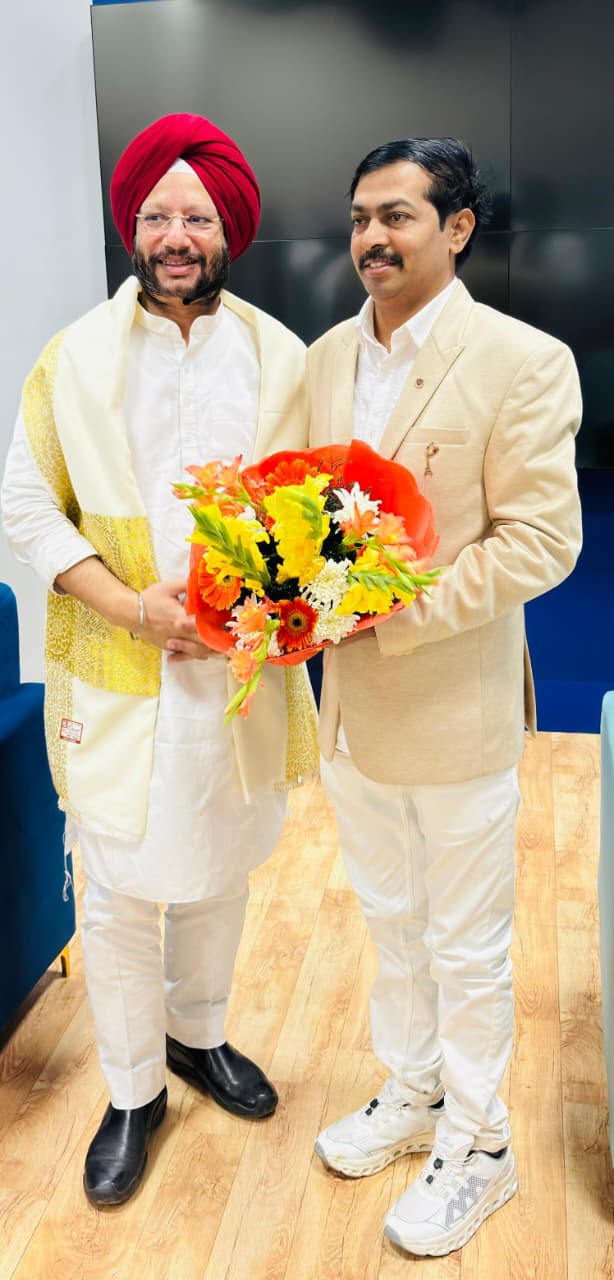
Mr. Gowda lauded Mr. Sappal’s role as a permanent member of the Congress Working Committee and his responsibilities as the administration-in-charge at the All India Congress Committee (AICC). He said structured administrative functioning and coordination at the central level play a key role in maintaining institutional continuity within the party.
He lauded Mr. Sappal’s role as adviser to Congress president Shri Mallikarjun Kharge and his coordination of the party president’s office. According to Mr. Gowda, effective alignment between national leadership and State and district units remains essential for strengthening the party’s outreach.
Mr. Gowda, who has been associated with the Congress for over 25 years, has worked with the Youth Congress and the Mysuru District Congress unit in various organisational capacities. Party members in the district describe him as a grassroots worker who has remained engaged in booth-level management, voter outreach and campaign coordination during Lok Sabha, Assembly and Panchayat elections.
Over the years, he has focused on strengthening local networks and maintaining communication between party leadership and cadre at the block and village levels. Colleagues attribute to him a consistent presence in organisational activities rather than pursuit of formal positions.
Apart from electoral responsibilities, Mr. Gowda has participated in social initiatives and relief activities, particularly during periods of crisis. Party sources said his engagement combines organisational discipline with community outreach.
25, Feb 2026
Bacterial pathogens build antibiotic-resistant “bunkers” using filament scaffolds
Researchers have discovered and characterized at the atomic level a mechanism that enables bacterial pathogens—including hospital bacteria Acinetobacter baumannii and Pseudomonas aeruginosa—to assemble antibiotic-resistant three-dimensional (3D) biofilms. These findings open a new avenue for developing therapies against multidrug-resistant bacterial infections by targeting the biofilm assembly. Many pathogenic bacteria form 3D biofilms to protect themselves from the immune system, antibiotic treatments, and drying on environmental surfaces. Some of the most problematic hospital bacteria, such as multidrug-resistant A. baumannii and P. aeruginosa, use specialized hair-like filaments called adhesive pili to attach to tissues or abiotic surfaces. After attaching, the bacteria then grow into thick 3D biofilms consisting of multiple layers of bacteria. This process is also mediated by adhesive pili, but until now it has been unclear how they prevent the growing 3D biofilm from falling apart.
Using a combination of advanced electron microscopy methods, the researchers at the MediCity Research Laboratory of the University of Turku in Finland, led by S. Jusélius Senior Researcher Anton Zavialov, discovered that adhesive Csu pili from neighboring A. baumannii bacteria attach to each other in an antiparallel manner. These pili rapidly assemble into flat sheets that link bacteria together and shield them from hostile environments.
“Impressively, Csu pili can self-assemble into huge, complex networks connecting hundreds of bacterial cells,” says Dr. Zavialov.
The team demonstrated that Csu pili can form at least two types of flat structures and resolved them at a near-atomic resolution.
“Cryo-electron microscopy methods are developing very rapidly. To obtain the first model, I initially developed a manual approach, and only later did we apply computational tools to solve these exceptionally large assemblies in 3D,” explains first author, Doctoral Researcher Henri Malmi.
The researchers also found that the pilus network becomes embedded in a less defined matrix composed of polysaccharides and DNA secreted by the bacteria.
“This final structure somewhat resembles reinforced concrete: the pili act like steel bars, while polysaccharides and DNA form the concrete. In this way, the bacteria effectively hide in a bunker,” adds Dr. Zavialov.
The team is now focused on developing inhibitors that target the connections between pili. Such inhibitors could be used in combination therapies to prevent 3D biofilm assembly and help antibiotics eliminate the pathogens more effectively.
25, Feb 2026
Wootzwork raises $6.6M to bring predictability to offshore manufacturing
Wootzwork is scaling a new manufacturing model that gives global OEMs a single, accountable partner for complex industrial programs across India and Southeast Asia.
Houston, Dallas – Feb 25; As global manufacturing shifts across regions, supply chains, and regulatory environments, execution risk has quietly become one of the biggest constraints on industrial growth. For many OEMs, the challenge is no longer access to factories, but the complexity of coordinating dozens of suppliers, quality systems, timelines, and interfaces across borders. Wootzwork was built to solve that problem. Today, the company announced a $6.6 million Series A round to scale a new model of manufacturing execution built around single-point accountability.
The round was led by Z47, with continued participation from Nexus Venture Partners and AdvantEdge Founders, and the addition of Stride Ventures. The capital will be used to expand Wootzwork’s global engineering and program teams, support larger and more complex OEM programs, and scale its manufacturing control systems across regions.
As industrial supply chains globalise, execution has become increasingly fragmented. Programs now span multiple countries, dozens of suppliers, and different quality frameworks, creating coordination gaps that lead to delays, rework, and cost overruns. It is estimated that 15 to 30 percent of anticipated offshore savings are typically lost through these breakdowns. What should be a strategic advantage often turns into an operational burden that absorbs time, talent, and leadership attention.
Wootzwork was built as an alternative to that model. The company operates as a single, accountable manufacturing partner to global OEM’s for complex industrial programs across India and Southeast Asia, with on-shore manufacturing where required in customer markets. This allows OEMs to execute at scale without managing factories, interfaces, or execution risk internally. Wootzwork operates with engineering and program teams across India, the United States, the United Kingdom, and Germany, enabling close coordination with enterprise customers while retaining deep on-ground manufacturing control.
“Most companies treat manufacturing complexity as a risk to be minimised,” said Karan Anand, co-founder and CEO of Wootzwork. “We treat it as a competitive advantage. When the system is engineered properly, complexity becomes leverage – not chaos.”
No factory in the world is fully efficient for any complex product. Modern OEM programs involve high-mix parts, specialised processes, and sequencing that rarely exist under one roof and often shouldn’t, for economic reasons. Even when capacity exists, the right machine, process maturity, or quality discipline is usually fragmented across suppliers. By mapping, qualifying, and governing manufacturing capacity across regions, Wootzwork orchestrates the journey of a product from concept to factory-level output in weeks rather than years. For global enterprises, this translates into faster time to production, fewer internal teams tied up in supplier coordination, and full visibility and control from raw materials through final delivery which allows them to stay focused on product, engineering, and customers instead of execution complexity.
Over the past year, Wootzwork has executed highly complex, cross-border manufacturing programs for more than 22 global enterprises across 12 international trade lanes spanning North America, Europe, and APAC. These include the US, UK, Germany, Italy, Switzerland, Australia, and New Zealand.
The company has activated a network of more than 300 suppliers, executing over 30 million parts and assemblies across precision components, heavy and structural fabrication, industrial fasteners and hardware, custom industrial machines, process equipment and skids, and multi-part assemblies. Programs span industries including food processing, packaging, renewable energy, data centres, automotive engineering, material handling, warehousing, and industrial hardware. Across these programs, Wootzwork has maintained greater than 98 percent on-time delivery and quality compliance under stringent international quality frameworks.
“Even as a relatively new partner, Wootzwork moved very quickly to support us across a broad range of work, including programs tied to demanding end customers,” said Felix Franke, managing director at Saxonia-Franke GmbH & Co. KG. “Their ability to ramp up fast while maintaining quality gave us confidence early on.”
“Working with Wootzwork has been a seamless experience,” added Curtis Bishop, director of sales at AFC Industries. “The team stands out for its responsiveness and ability to stay flexible as our requirements evolve. Their quoting process is extremely thorough, and they remain highly adaptable to our needs. We look forward to continuing our partnership with Wootzwork in 2026 and beyond.”
Under the hood, Wootzwork overlays its proprietary engineering, governance, and execution systems on top of existing factory infrastructure, enabling manufacturing partners to operate at global standards without being replaced or rebuilt. “Scale usually breaks quality because systems don’t scale with it,” explains Himanshu Uniyal, co-founder and COO of Wootzwork. “We built the system so quality scales with execution, not against it.”
“Wootzwork represents the kind of founder-led global ambition in advanced manufacturing that we want to back from India,” said Sudipto Sannigrahi, Managing Partner and Investor at Z47. “Karan and Himanshu have built deep execution capability in a space where trust is earned over years, not quarters. We are happy to see the AI driven manufacturing engine that Wootzwork has built and the quality of global customers they are adding value to. We’re proud to support them with patient capital, conviction, and partnership as they build a globally relevant manufacturing company.”
The Series A will enable Wootzwork to expand its engineering footprint, deepen its manufacturing control capabilities, and take on larger, more mission-critical OEM programs. As global supply chains continue to rebalance, the company believes the next phase of industrial manufacturing will be defined less by geography and more by who owns execution.