


9, Jul 2026
FICCI opposes blanket US tariff, advocates evidence-based action on forced labour
July 9: The Federation of Indian Chambers of Commerce and Industry (FICCI) has urged the United States to reconsider its proposed economy-wide tariff on Indian imports, stating that an evidence-based and sector-specific approach would be more effective in addressing concerns related to forced labour.
Presenting the views of Indian industry during a hearing before the US Trade Representative (USTR), FICCI reaffirmed its commitment to eliminating forced labour from global supply chains. The industry body, however, expressed concerns over the proposal to impose a uniform 12.5% tariff across all Indian products and sectors, arguing that such a measure does not distinguish between compliant and non-compliant industries.
FICCI stressed that targeted enforcement based on credible evidence, combined with stronger collaboration between governments and businesses, would better address labour rights issues while minimising disruptions to legitimate trade. It also noted that broad-based tariffs could adversely affect businesses, supply chains, and consumers without effectively addressing the underlying concerns.
The industry body called for continued dialogue between India and the United States to strengthen trade relations while promoting responsible business practices and internationally accepted labour standards.
- 0
- By Neel Achary

9, Jul 2026
Global economy stays resilient amid Middle East tensions
July 9: The global economy has continued to demonstrate resilience despite the ongoing conflict in the Middle East, with businesses, financial markets, and policymakers adapting to a challenging geopolitical environment.
The tensions have created concerns over energy supplies, crude oil prices, inflation risks, and global trade flows. However, strong economic fundamentals in several major economies, supported by consumer demand and continued investment activity, have helped limit the broader impact of the crisis.
Financial markets have remained watchful, with investors closely tracking developments in the region and assessing their potential impact on commodities, currencies, and economic growth. While volatility remains a concern, the global economic system has shown the ability to absorb external shocks.
Experts believe the future outlook will depend on the duration of geopolitical uncertainties, the direction of energy prices, and policy responses from governments and central banks. Despite these challenges, the global economy continues to maintain stability, reflecting improved resilience compared with previous periods of global disruption.
9, Jul 2026
Nearly 3,000 LPG cylinders swept away in Raigad floods after HPCL wall collapse
July 9: Intense monsoon rains in Maharashtra’s Raigad district led to a major incident after a boundary wall at an HPCL LPG bottling facility collapsed, causing nearly 3,000 LPG cylinders to be carried away into a nearby river by strong floodwaters.
Authorities have initiated recovery operations and are closely monitoring the situation to ensure public safety. Emergency teams are working to locate and retrieve the displaced cylinders, while precautionary measures are being taken to prevent any possible risks.
The incident comes amid heavy monsoon activity across Maharashtra, which has caused flooding and damage to infrastructure in several areas. Officials have advised residents to remain alert and follow safety guidelines as rescue and recovery efforts continue.
9, Jul 2026
PM Modi welcomes AustralianSuper’s Dollar 500 million India investment
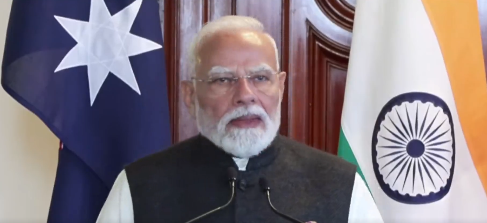
Pic Credit: https://x.com/narendramodi
July 9: Prime Minister Narendra Modi welcomed AustralianSuper’s planned $500 million investment in India, describing it as a strong vote of confidence in the country’s long-term growth potential and investment environment. The investment reflects growing interest from global institutional investors in India’s expanding economy.
Australian Prime Minister Anthony Albanese reaffirmed his government’s commitment to deepening economic ties with India, saying Australia will continue working closely with its strategic partner to strengthen trade, investment, and business cooperation.
AustralianSuper CEO Paul Schroder praised Prime Minister Modi’s understanding of business and long-term investing, highlighting India’s strong growth prospects and the fund’s confidence in expanding its investments in the country. The announcement underscores the strengthening India-Australia economic partnership and growing collaboration between the two nations.
9, Jul 2026
India advances free trade agenda after breakthrough EU deal
July 9: India is stepping up efforts to expand its network of free trade agreements (FTAs) following the landmark trade pact with the European Union, marking a significant milestone in the country’s global trade strategy. The agreement is expected to strengthen India’s access to international markets, boost exports, and attract greater foreign investment.
Building on this momentum, the government is pursuing trade negotiations with several key economies to deepen economic ties and create new opportunities for Indian businesses. Expanding the FTA network is aimed at improving market access for goods and services, enhancing supply chain integration, and increasing India’s competitiveness in global trade.
The broader strategy aligns with India’s vision of becoming a leading global manufacturing and export hub while supporting long-term economic growth. Businesses across sectors are expected to benefit from reduced trade barriers, improved market access, and stronger cross-border commercial partnerships as India advances its trade agenda.
9, Jul 2026
Indian shares open higher as investors buy on dips despite geopolitical concerns

July 9: Indian equity markets opened on a positive note on Thursday, with benchmark indices recovering from the previous session’s decline as investors returned to buy stocks at attractive valuations. The gains reflected improved risk appetite in early trading, although caution persisted amid renewed geopolitical tensions.
Most sectoral indices traded in positive territory, led by gains in pharma and healthcare stocks, while IT shares remained subdued ahead of the quarterly earnings season. Investors continued to monitor developments in global crude oil prices and broader macroeconomic trends, which are expected to influence market sentiment in the coming sessions.
Market participants are also focusing on the upcoming corporate earnings announcements for further cues on the strength of the economic recovery and the outlook for Indian equities.
9, Jul 2026
SUD Star Union Dai-ichi Life Insurance Reaches Over 3,000 Citizens Across Goa Through Statewide Insurance Awareness Campaign
Panaji, July 9: Reinforcing the Government of India’s vision of “Insurance for All by 2047,” Star Union Dai-ichi Life Insurance , the Lead Life Insurer for Goa, successfully conducted a comprehensive insurance awareness campaign across the state during the first quarter of FY 2026–27. The initiative reached more than 3,000 citizens through grassroots awareness programs, financial literacy sessions, interactive community engagements, and free health check-up camps.
The campaign aimed to strengthen insurance awareness, improve financial resilience, and promote the adoption of social security schemes among rural and semi-urban communities. During the quarter, SUD Life organised 25 Gram Panchayat Seminars and 25 Market Activations across North and South Goa, creating a widespread outreach platform to educate citizens on the importance of financial protection.
A key highlight of the initiative was the organisation of free health check-up camps at Gram Panchayats. These camps witnessed encouraging public participation and served as an effective platform to engage residents on the importance of preventive healthcare alongside financial security, reinforcing the close link between health and long-term financial well-being.
The awareness sessions focused on educating citizens about the Pradhan Mantri Jeevan Jyoti Bima Yojana and the critical role of life insurance in safeguarding families against unforeseen financial risks. Participants were informed about affordable insurance solutions, government-backed protection schemes, and the importance of long-term financial planning in building household financial stability.
To further strengthen awareness at the grassroots level, SUD Life distributed PMJJBY awareness leaflets and Claims and Grievance Redressal Information Leaflets to help citizens better understand insurance benefits, claim settlement procedures, and grievance registration mechanisms. All awareness materials and communication were provided in local languages to ensure greater accessibility and community engagement.
The campaign also introduced a series of interactive insurance-themed games, quizzes, and community engagement activities designed to simplify insurance concepts for rural audiences. These innovative initiatives helped participants better understand risk protection, policy benefits, and social security schemes in an engaging and relatable manner, generating enthusiastic participation across villages and market locations.
Speaking on the initiative, Mr. Abhay Tewari, MD & CEO, Star Union Dai-ichi Life Insurance, said:
“Insurance awareness is the first step towards building financially resilient communities. Through our grassroots initiatives in Goa, we are empowering citizens with the knowledge and confidence to make informed financial protection decisions. By combining financial literacy with community health initiatives, we are creating meaningful engagement that supports the national vision of ‘Insurance for All by 2047.’ We remain committed to expanding insurance inclusion and ensuring that every family has access to financial security.”
As the Lead Life Insurer for Goa, SUD Life remains committed to working closely with Gram Panchayats, banking partners, local administration, and community stakeholders to deepen insurance penetration, enhance financial literacy, and contribute towards building a financially secure and well-protected Goa.
9, Jul 2026
Railway Engineers Raise Career Stagnation and Pay Scale Concerns Ahead of 8th Pay Commission
New Delhi, July 9 (UDN): Railway engineers have urged the Central Government and the forthcoming 8th Central Pay Commission to address long-standing concerns over career stagnation, pay disparities and limited promotional opportunities within the Indian Railways.
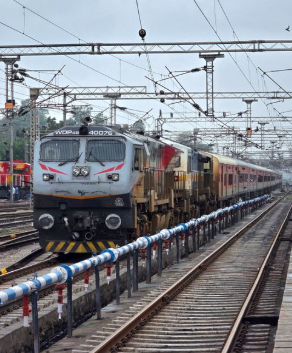
Representatives of railway engineers’ associations have submitted their demands, highlighting that prolonged delays in career progression and anomalies in the existing pay structure have adversely affected employee morale and professional growth. They argued that despite shouldering critical responsibilities in the planning, execution and maintenance of railway infrastructure, engineers continue to face slower promotions compared to several other organised services.
Among the key demands are the introduction of a more time-bound promotion mechanism, rationalisation of pay scales, removal of pay anomalies arising from previous pay commission recommendations and greater parity with other Central Government engineering services.
The associations have also sought a comprehensive review of the Modified Assured Career Progression (MACP) framework to ensure that employees who remain in the same grade for extended periods receive adequate financial and career advancement.
Railway engineers expressed hope that the 8th Pay Commission would recommend structural reforms to improve career prospects, enhance job satisfaction and ensure equitable compensation for technical personnel across the Indian Railways.
The government is expected to examine representations from various employee organisations as part of the consultation process before the 8th Pay Commission finalises its recommendations.
9, Jul 2026
Three Trekkers Go Missing on Malyagiri Hill in Odisha’s Angul; Search and Rescue Operation Underway
Angul, July 9 (UDN): A major search and rescue operation is underway after three trekkers reportedly went missing while trekking on Malyagiri Hill, the highest peak in Odisha, located in Angul district.

According to official sources, the group had ventured into the hilly terrain for a trekking expedition when three members lost contact with the rest of the team. Following information from fellow trekkers and local residents, district authorities, police, forest personnel, and trained rescue teams were immediately mobilised to trace the missing individuals.
Rescue teams are combing the dense forest and rugged hill slopes despite challenging terrain and adverse weather conditions. Officials said every effort is being made to locate the trekkers safely, with search operations continuing on multiple routes leading to the hilltop.
Authorities have appealed to the public to avoid spreading unverified information and urged trekkers and tourists to exercise caution while venturing into forested and mountainous areas, particularly during the monsoon season when trails become slippery and visibility is reduced.
The identities of the missing trekkers have not yet been officially disclosed. Further details are awaited as the rescue operation continues.
9, Jul 2026
International Workshop on AI-Driven Semiconductor and Energy Efficient Hardware, Concludes Successfully at T-Hub, Hyderabad
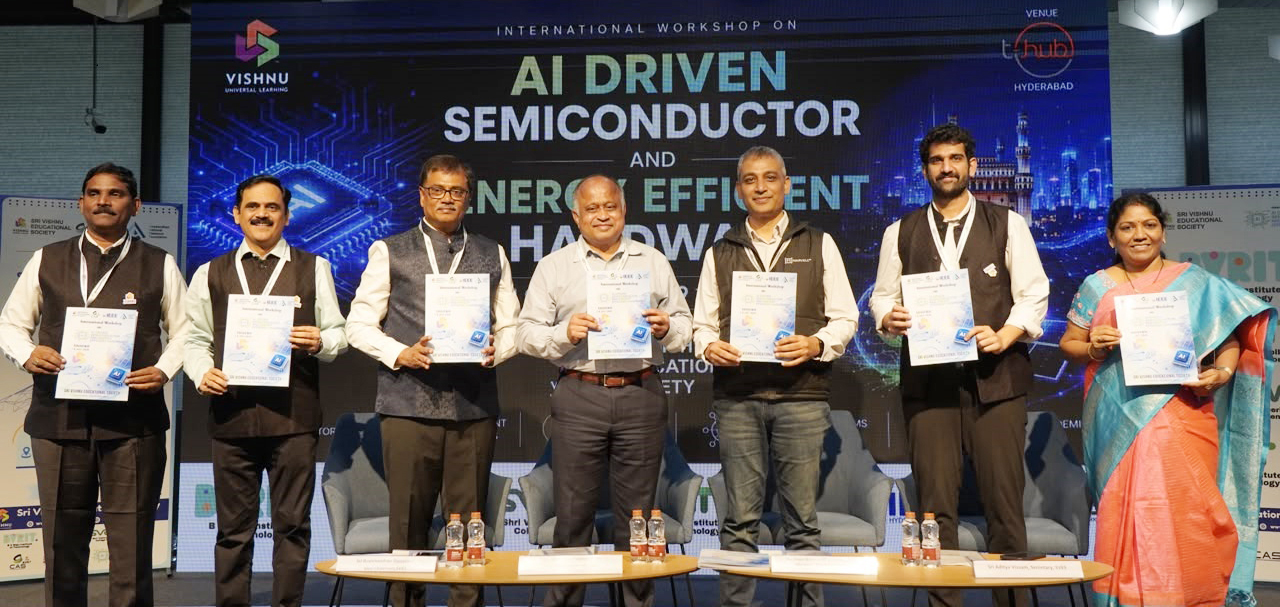
Hyderabad, July 09: A two-day International Workshop on Artificial Intelligence Driven Semiconductor and Energy Efficient Hardware was successfully organized on 7–8 July 2026 at T–Hub, Hyderabad; by the Sri Vishnu Educational Society (SVES), with active contribution from Penn State University, USA. SVES comprising Vishnu Institute of Technology (VIT), Shri Vishnu Engineering College for Women (SVECW), BVRIT Hyderabad College of Engineering for Women (BVRITH), and B V Raju Institute of Technology (BVRIT) technically cosponsored by Anusandhan National Research Foundation (ANRF), IEEE CAS Chapter Hyderabad section.
The workshop brought together more than 350 eminent academicians, researchers, industry leaders, policymakers and students from across India and abroad to deliberate on the rapidly evolving landscape of Artificial Intelligence, Very Large-Scale Integration, semiconductor technologies, advanced packaging, photonics, edge computing and intelligent power electronics and hardware systems.
The workshop commenced with an inspiring inaugural session, during which Mr. Aditya Vissam, Secretary, Sri Vishnu Educational Society (SVES), addressed the gathering. He highlighted the visionary initiatives undertaken by SVES in transforming its educational institutions to meet the demands of the Artificial Intelligence era. Elaborating on the revolutionary measures introduced across SVES institutions, he emphasized the integration of AI into teaching, learning, research, innovation, and skill development to prepare students for emerging technologies and future careers. He also underscored India’s growing opportunities in semiconductor manufacturing, chip design, advanced packaging, and AI–driven technologies, stressing the need for engineering graduates to acquire industry-relevant competencies. Motivating the participants, he encouraged students to actively engage with the eminent speakers, make the most of the learning opportunities offered by the workshop, and equip themselves to contribute meaningfully to India’s vision of becoming a global semiconductor powerhouse. His inspiring address set an enthusiastic tone for the two-day workshop and was warmly appreciated by the participants.
The inaugural session was followed by an address by Mr Ravichandran Rajagopal, Vice chairman of SVES. An inspiring keynote address by Prof. Madhavan Swami Nathan of Penn State University, USA, who highlighted the future of 3D Heterogeneous Integration and its transformative role in next-generation semiconductor systems. Technical sessions throughout the first day featured and distinguished experts including Mrs. Nupur Shah, Mr. Navin Bishnoi of Marvell Technology, Prof. Sharath Sriram of RMIT University, Mr. Ravikanth Reddy of NXP, Dr. Charan Gurumurthy of Tata Electronics, Dr. Bhagwati Prasad of IISc Bangalore, Dr. Suraj Rengarajan of Applied Materials India, Dr. Nikita Ambasana of SimYog Technology, and Mr. Sharat Babu Kotamraju of AMD. Their presentations covered AI-enabled network transformation, semiconductor innovation, bio sensing, edge computing, memory technologies, advanced packaging, semiconductor testing, and Physical AI.
A major highlight of the first day was an engaging panel discussion on “Education, Research, and Innovation Ecosystem for VLSI & Semiconductors” where experts from leading universities and industries deliberated on strengthening India’s semiconductor ecosystem through collaborative research, industry-academia partnerships, and skill development. Another thought-provoking panel focused on Edge AI in Semiconductors, addressing FPGA acceleration, chip validation, processor architectures, and future semiconductor design paradigms.
The second day featured advanced technical sessions by national and internationally acclaimed speakers including Prof. Rohit Sharma (IIT Ropar), Dr. Manish Kumar Hooda (India Semiconductor Mission), Prof. Christos Argyropoulos (Penn State University, USA), Dr. Yutaka Uematsu (Hitachi, Japan), Mr. Paul Ilanghovan (Kaynes Semicon), Dr. Sai Rama Krishna Malladi (IIT Hyderabad), and Dr. Harsha Sanjeev (CMTI, Bangalore). The deliberations focused on signal and thermal co-design, startup ecosystems, graphene-based terahertz photonics, advanced semiconductor devices, MEMS technologies, and photonics characterization.
The workshop also featured an insightful panel discussion on “From Silicon to Systems: Power-Aware AI Computing through Algorithm and Hardware Co-Optimization” emphasizing sustainable AI hardware development and next-generation computing architectures.
The concluding technical sessions included lectures on VLSI design for neural networks, energy–efficient FPGA accelerators, advanced packaging for SiC and GaN technologies, AI-enabled metrology tools, power electronics for AI infrastructure, and advanced glass substrate metallization delivered by Prof. Asral of UNIMAP, Malaysia, Dr. Akshay of IIT Bhubaneswar, Prof. Satya Savithri, Director R & D, JNTUH, Mr. Vijay of IVP Semiconductors, Mr. Parikshit Sengupta of Horiba India, Prof. Pradeep Dixit, IIT Bombay.
The speakers were honoured by Mr. K. Sai Sumanth, Joint Secretary, SVES. These sessions provided participants with valuable insights into emerging research directions and industrial practices shaping the future semiconductor ecosystem.
The workshop served as an excellent platform for knowledge exchange between academia, industry, and research organizations, inspiring students and faculty to pursue innovation in semiconductor technologies and AI-enabled hardware systems. The event concluded with a Vote of Thanks by Dr. Sanjay Dubey, Principal BVRIT and SVES Team, expressing gratitude to all the distinguished speakers, panellists, organizers, participants, and supporting institutions for making the workshop a grand success.