


8, Jul 2026
Indonesian President Bids Farewell to PM Modi Ahead of Australia Visit
Jakarta, July 8: Prime Minister Narendra Modi departed Indonesia for Australia after completing his official visit, with Indonesian President Prabowo Subianto seeing him off before his departure.
The visit highlighted the strong friendship and growing partnership between India and Indonesia. Both countries discussed ways to further strengthen cooperation in areas such as trade, investment, defence, technology and regional development.
The farewell ceremony reflected the close relationship between the two nations and their shared commitment to expanding cooperation in the future.
Following his Indonesia visit, Prime Minister Modi will continue his international engagements in Australia, focusing on strengthening ties and exploring new areas of collaboration.
- 0
- By Neel Achary

8, Jul 2026
KEZAD Group to Host Touchdown Middle East 2026 in Abu Dhabi for the First Time
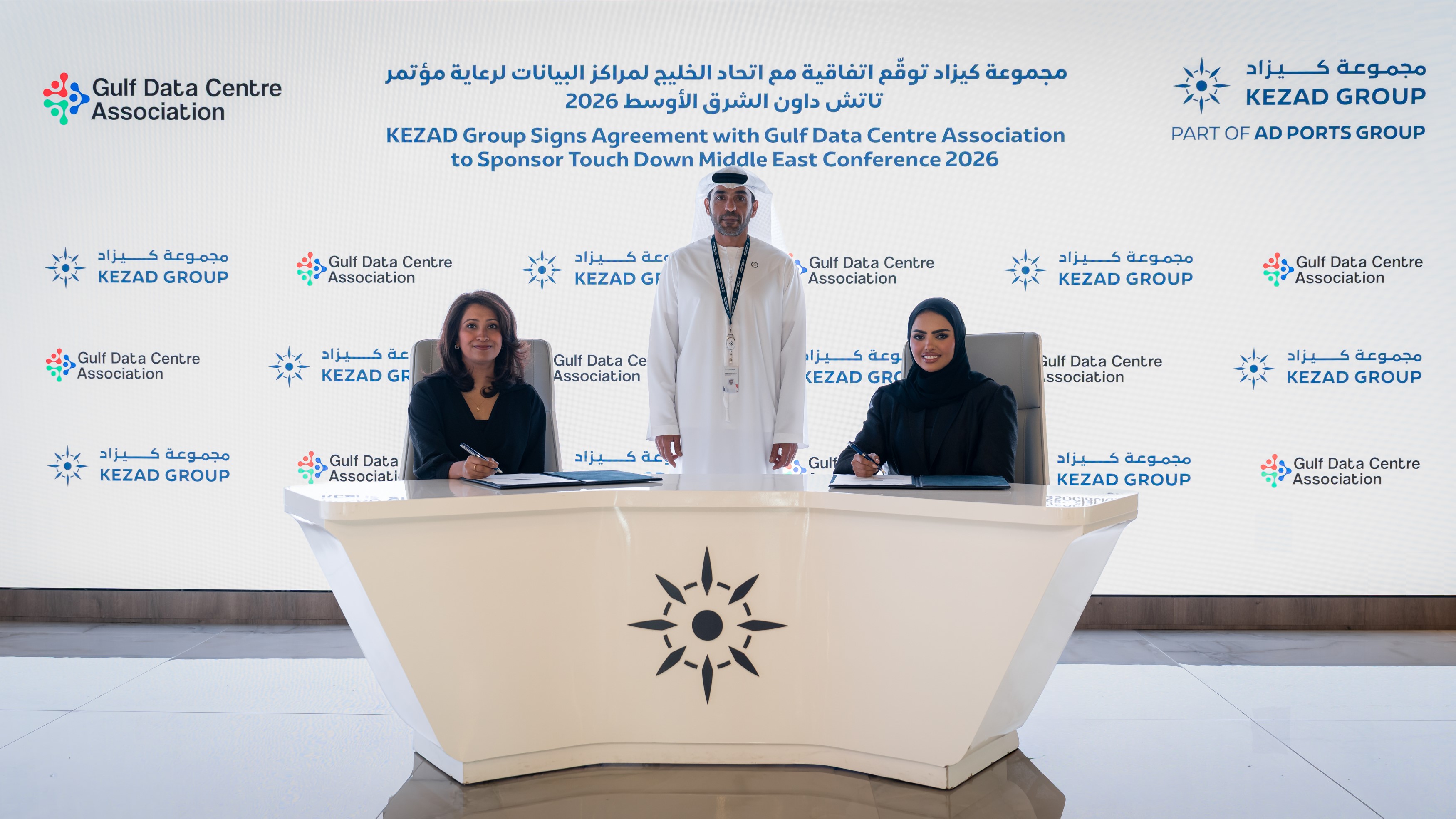
Fourth edition of regional data centre conference moves to the UAE, bringing digital industry leaders together in Abu Dhabi
Abu Dhabi, UAE, July 8: Khalifa Economic Zones Abu Dhabi – KEZAD Group, one of the largest operators of integrated and purpose-built economic zones in the region, will host Touchdown Middle East 2026 in Abu Dhabi, marking the first time the region-wide data centre conference will take place in the UAE.
Organised by the Gulf Data Centre Association (GDCA), the fourth edition of Touchdown Middle East 2026 will take place on 18–19 November 2026 at Conrad Abu Dhabi Etihad Towers. Following three consecutive years in Bahrain, the conference’s move to Abu Dhabi reflects its growing regional footprint and positions the UAE’s capital as its first new host venue.
The conference will attract data centre operators, investors, technology providers, government stakeholders, real estate leaders, energy specialists and digital infrastructure decision-makers from across the Middle East and international markets. The event is expected to attract more than 1,500 visitors, over 400 companies, 70 speakers and participants from more than 30 countries.
Abdullah Al Hameli, CEO, Economic Cities & Free Zones Cluster — AD Ports Group, said: “Hosting Touchdown Middle East 2026 in Abu Dhabi reflects the Emirate’s growing role in the digital infrastructure economy. Data centres are now central to industrial growth, AI adoption, cloud services, advanced manufacturing and secure digital trade. At KEZAD Group, we see this conference as a practical platform to connect investors, operators and infrastructure partners with Abu Dhabi’s industrial base, logistics strength and long-term growth environment.”
The two-day conference will feature keynote sessions, panel discussions, networking meetings and industry-led conversations on the key issues shaping the sector, including power availability, connectivity, site readiness, regulation, investment, AI demand, cloud growth and sustainable data centre development.
Henry Sutton, Director of the Gulf Data Centre Association and Touchdown Middle East, said: “Touchdown Middle East was created to bring the region’s data centre industry together, with a clear focus on knowledge, partnerships and market growth. After three successful years in Bahrain, bringing the fourth edition to Abu Dhabi is an important step for the event and for the wider regional industry. We are delighted to have KEZAD Group as our main sponsor and we look forward to welcoming leaders from across the data centre value chain to discuss the next phase of digital infrastructure growth in the Middle East.”
Abu Dhabi is placing digital infrastructure at the centre of its next phase of economic growth, with a clear focus on AI demand, sovereign cloud, hyperscale compute, power planning and industrial land readiness. The Emirate’s Digital Strategy 2025 to 2027 commits AED 13 billion to digital transformation and targets full sovereign cloud adoption for government operations, full automation of government processes and more than 200 AI-led solutions across public services. Abu Dhabi has also moved into large-scale AI compute through Stargate UAE, a planned 1GW compute cluster within the wider 5GW UAE and US AI Campus, with the first 200MW expected to go live in 2026. Together, these steps make Abu Dhabi a strong host for a regional data centre conference focused on the next wave of AI, cloud and digital infrastructure investment.
The conference comes at a time when demand for digital infrastructure is rising across the region, driven by AI, cloud computing, data sovereignty, smart industry, enterprise digital services and the growth of high-capacity connectivity. As main sponsor, KEZAD Group will leverage the platform to foster dialogue on how industrial zones, logistics platforms, energy infrastructure and real estate can work together to support the next wave of data centre investment.
8, Jul 2026
Digital Growth to Drive India’s Economic and Social Progress
New Delhi, July 8: Experts have said that the digital economy will be a major force behind India’s future economic growth and social development.
The rapid expansion of digital technology is changing the way businesses operate, improving access to services and creating new opportunities across different sectors. Digital platforms, innovation and technology-based solutions are helping strengthen economic activities and improve connectivity.
Experts highlighted that sectors such as digital payments, artificial intelligence, e-commerce and digital infrastructure will continue to support India’s development and contribute to a more inclusive economy.
The growth of the digital ecosystem is also expected to encourage entrepreneurship, generate employment opportunities and help more people access financial and public services.
With increasing focus on digital infrastructure and innovation, India is moving towards a technology-driven economy that can support long-term growth and development.
8, Jul 2026
Investments in Indian Real Estate Diversify Geographically Amid Global Headwinds – Vestian
New Delhi, July 08:
Geographical Diversification on the Rise
Unlike the previous quarter, institutional investments in India’s real estate sector witnessed broader geographic diversification in Q2 2026. Multi-city transactions accounted for nearly 60% of the total investment inflows, while the remaining 40% was distributed across India’s top seven cities. Among individual markets, Chennai attracted the largest share of investments at approximately 16%, followed by Bengaluru at 11%. This shift reflects investors’ growing preference for geographically diversified portfolios and underscores the expanding investment potential across India’s major metropolitan markets despite persistent global economic headwinds.
|
City |
% Share in Institutional Investments (Q2 2026) |
|
Multi-city |
60.3% |
|
Chennai |
16.3% |
|
Bengaluru |
11.3% |
|
NCR |
3.1% |
|
Hyderabad |
3.0% |
|
Mumbai |
2.3% |
|
Pune |
2.0% |
|
Kolkata |
1.4% |
|
Goa |
0.2% |
Source: Vestian Research
Robust Investments Amid Geopolitical Challenges
Institutional investments in India’s real estate sector surged to USD 2.7 Bn in Q2 2026, registering a two-fold increase over the previous quarter and 49% rise compared to the same period last year. This strong growth underscores continued investor confidence in the sector despite prevailing geopolitical and economic challenges. Moreover, cumulative investments reached USD 4.1 Bn in H1 2026, the highest first-half inflow recorded since the COVID-19 pandemic. Going forward, a gradual improvement in global economic and geopolitical conditions is expected to bolster foreign investor participation, while domestic investors are likely to further intensify capital deployment across asset classes.
|
Quarter |
Institutional Investments (USD Bn) |
Quarterly Change (%) |
|
Q2 2025 |
1.80 |
122% |
|
Q3 2025 |
1.76 |
-2% |
|
Q4 2025 |
3.73 |
112% |
|
Q1 2026 |
1.41 |
-62% |
|
Q2 2026 |
2.68 |
90% |
Source: Vestian Research
Office Assets Led Investments on the back of Heightened Demand from GCCs
Commercial assets continued to dominate institutional investments in Q2 2026, accounting for 70% of the total inflows. Supported by robust occupier demand from Global Capability Centers (GCCs), the segment attracted approximately USD 1.9 Bn in investments, registering 67% quarterly and 72% yearly rise.
Investments in residential assets nearly doubled over the previous quarter, attracting USD 0.4 Bn. Despite the strong sequential rise in investment value, the share remained largely stable at 15%.
Diversified assets emerged as the fastest-growing category, with investment inflows surging 566% quarter-on-quarter to USD 0.37 Bn, primarily driven by a low base effect. In contrast, investment activity in the industrial and warehousing segment remained relatively subdued, attracting USD 0.03 Bn during the quarter.
|
Asset Type |
Institutional Investments |
% Share |
% Change |
|||||
|
(USD Mn) |
||||||||
|
Q2 2026 |
Q1 2026 |
Q2 2025 |
Q2 2026 |
Q1 2026 |
Q2 2025 |
Q2 2026 vs |
Q2 2026 vs |
|
|
Q1 2026 |
Q2 2025 |
|||||||
|
Commercial |
1,880 |
1,125 |
1,092 |
70% |
80% |
61% |
67% |
72% |
|
Residential |
400 |
206 |
378 |
15% |
15% |
21% |
94% |
6% |
|
Industrial & Warehousing |
27 |
22 |
32 |
1% |
1% |
2% |
26% |
-14% |
|
Diversified |
372 |
56 |
297 |
14% |
4% |
16% |
566% |
25% |
|
Total |
2,679 |
1,408 |
1,799 |
100% |
100% |
100% |
90% |
49% |
Note: Values depicted are in USD Mn, rounded to the nearest whole number
Commercial assets include office, retail, co-working, and hospitality projects. Diversified assets include commercial, residential, and/or industrial & warehousing
Source: Vestian Research
Participation of Foreign Investors Increased as Global Uncertainty Subsided
Domestic investors accounted for the largest share of institutional investments in Q2 2026 at 58%, although their contribution declined from 72% in the previous quarter. In value terms, domestic investments reached USD 1.5 Bn, registering annual and quarterly growth of 363% and 53%, respectively.
Foreign investors contributed 38% to the total investments during the quarter, with inflows surpassing USD 1 Bn following a 454% quarter-on-quarter increase. Meanwhile, the share of co-investments declined to 4%, indicating a growing preference for independent capital deployment.
Shrinivas Rao, FRICS, CEO, Vestian said, “India’s real estate sector attracted significant institutional investments during the second quarter of 2026, mainly driven by robust domestic capital deployment and a revival in foreign investor participation. While commercial assets continue to attract the lion’s share of investments on the back of sustained GCC expansion, increased diversification across asset classes reflects growing investor confidence in the broader real estate ecosystem. As geopolitical and economic uncertainties gradually ease further, investment activity is expected to remain buoyant, reinforcing India’s position as a preferred global real estate investment destination.”
|
Investor Type |
Institutional Investments |
% Share |
% Change |
|||||
|
(USD Mn) |
||||||||
|
Q2 2026 |
Q1 2026 |
Q2 2025 |
Q2 2026 |
Q1 2026 |
Q2 2025 |
Q2 2026 vs |
Q2 2026 vs |
|
|
Q1 2026 |
Q2 2025 |
|||||||
|
Foreign |
1,029 |
186 |
1,197 |
38% |
13% |
66% |
454% |
-14% |
|
India-dedicated |
1,555 |
1,015 |
336 |
58% |
72% |
19% |
53% |
363% |
|
Co-investment |
95 |
208 |
266 |
4% |
15% |
15% |
-54% |
-64% |
|
Total |
2,679 |
1,408 |
1,799 |
100% |
100% |
100% |
90% |
49% |
Note: Values depicted are in USD Mn, rounded to the nearest whole number
Co-investment refers to joint funding by foreign and domestic investors
Source: Vestian Research
8, Jul 2026
Argentina, Switzerland Secure Quarterfinal Spots in FIFA World Cup 2026
July 8: The quarterfinal teams for the FIFA World Cup 2026 have been confirmed after Argentina and Switzerland recorded important victories in their Round of 16 matches.
Argentina reached the last eight after making a strong comeback against Egypt in a thrilling encounter. The team’s star player Lionel Messi once again played a crucial role in helping Argentina move forward in the tournament.
Switzerland also secured a quarterfinal place after defeating Colombia in a tense penalty shootout. The match ended in a goalless draw before Switzerland won 4-3 on penalties.
With the quarterfinal line-up now complete, the tournament enters a crucial stage where teams will compete for a place in the semifinals and continue their journey towards the World Cup title.
8, Jul 2026
Rajkummar Rao’s Look as Sourav Ganguly Revealed in Upcoming Biopic
Mumbai, July 8: The first-look poster of the upcoming biopic ‘Dada: The Sourav Ganguly Story’ has been released, featuring actor Rajkummar Rao in the role of former Indian cricket captain Sourav Ganguly.
The poster was unveiled on Sourav Ganguly’s birthday and recreates one of the most memorable moments of Indian cricket — his iconic shirtless celebration at Lord’s after India’s victory in the 2002 NatWest Trophy final.
Rajkummar Rao’s appearance as the cricket legend has generated excitement among fans. The film will showcase Sourav Ganguly’s inspiring journey, his rise in international cricket, leadership qualities and contribution to Indian cricket.
The biopic is expected to highlight important milestones from Ganguly’s career and offer audiences a closer look at the life of one of India’s most celebrated cricketers.
8, Jul 2026
New Initiative Launched to Support Growth of India’s Handloom Sector
New Delhi, July 8: The Government has launched the Handloom Hackathon 2026 to encourage new ideas, innovation and technology-based solutions for the growth of the handloom sector.
The initiative will provide a platform for weavers, designers, entrepreneurs and innovators to develop solutions that can improve the quality, productivity and market reach of handloom products.
The programme will focus on promoting modern designs, digital solutions, sustainable practices and better production techniques while supporting traditional weaving communities across the country.
The hackathon aims to connect artisans with young innovators and industry experts to create practical solutions that can strengthen the handloom sector and preserve India’s rich textile heritage.
The government expects the initiative to generate new opportunities for weavers and help the sector adapt to changing market needs.
8, Jul 2026
Innovation Comes Into Focus
July 8 : A state-of-the-art facility where researchers can explore biological processes and new materials at the molecular level opened recently on the first floor of the Frost Institute for Chemistry and Molecular Science at the University of Miami.
Named the Advanced Tools for Observing Molecules and Materials, or the ATOMM facility, the lab’s five high-performance electron microscopes allow researchers to observe and explore biological and material systems at a minuscule scale. This is a key part of the development process for creating new therapeutics or novel materials that may help produce smaller, more energy-efficient batteries, computer chips, or even new substances that make airplanes and spacecraft safer and lighter.
“These are instruments that can detect and characterize what is happening at a very, very high resolution between atoms in materials and in biological systems, which can lead to new discoveries and new drugs that can be used in humans,” said Sylvia Daunert, co-interim director of the Frost Institute for Chemistry and Molecular Science and chair of the Department of Biochemistry and Molecular Biology at the Miller School of Medicine. “You can see what happens with these materials, how they are built, and what kind of architecture they have. This is important because knowing how they are built structurally can lead to new materials that can be used in many different capacities.”
The shared facility is open to University scientists but will also be available to private industry and other institutions looking to conduct electron microscopy research.
Video: Matthew Rembold/University of Miami
“We hope that University researchers, as well as other researchers in the community, will take advantage of these amazing new tools to advance scientific discovery at our world-class facility,” said Marc Knecht, co-interim director of the Frost Institute and chair of the Department of Chemistry.
Electron microscopy is a cutting-edge imaging strategy used by instruments in the ATOMM facility that helps researchers understand the interactions between individual molecules using a focused beam of electrons to help visualize samples. The five specialized instruments at the Frost Institute were all produced by Thermo Fisher, and each is housed in its own individual room, with 10-foot ceilings built to accommodate the equipment. Many are geared toward biological research and drug discovery, but two of the instruments also provide strong insight into materials science work, said Maciej Jagielnicki, facility manager of the ATOMM facility.
Macief Jagielnicki
The instruments are set up in order of their ability to capture finite details, Jagielnicki added.
“As you move up to each new microscope, you are able to get more detailed information on whatever you are studying,” he said.
The first microscope, the Talos F200C, is an accessible and durable transmission electron microscope, well suited for routine imaging and screening of biological and materials science samples. It provides reliable, high-quality images with resolution appropriate for a broad range of research needs, facility managers noted. The second instrument, the Spectra 300, is the center’s most advanced microscope for materials science research, offering state-of-the-art resolution, as well as multiple analytical capabilities for studying structure, composition, and chemistry at extremely small scales. The Krios G4 and Glacios 2 microscopes are specialized cryogenic electron microscopes, or cryo-EM instruments, designed primarily for biological and molecular samples that are rapidly frozen and imaged at extremely low temperatures. The final instrument, Aquilos 2, is not just a typical imaging microscope; it is a cryo-focused ion beam system that is used to prepare ultrathin frozen sections of samples, enabling their internal structures to be studied in greater detail.
In addition:
- Talos F200C is a screening microscope for soft and hard materials and gives researchers information about whether a project is feasible. For example, Jagielnicki said, scientists can see “if a potential drug molecule will bind to proteins in the body.” It can also give good atomic resolution of a materials science sample, such as a metal-organic framework, for instance,” added Muchuan Hua, a staff scientist and electron microscopy expert focused on materials science at the ATOMM facility. Before coming to the U, Hua worked at Argonne National Laboratory, where today’s lithium-ion batteries were developed.
- Spectra 300 is a top-of-the-line electron microscope for materials science and can help researchers “distinguish individual atoms,” said Knecht. “With this tool, you can literally pinpoint gold and silver atoms, where they are in the material, and see what they are doing. We need to know this information because where atoms are oriented can change the properties of a material, which can also change the reactivity, or how it catalyzes a chemical reaction,” he added.
- Krios G4 is a microscope used for illustrating proteins in the body and their interactions with molecules, a key part of the testing process for therapeutic drug discovery.
- Glacios 2 offers insight and high-resolution images that reveal the structure of complex proteins and macromolecules.
- Aquilos 2, housed on the second floor, enables researchers to observe cellular structures from various angles.
There are many things that make the ATOMM facility unique, University scientists noted. What sets it apart from the University’s other facilities at the Miller School of Medicine is that after biomedical researchers formulate a new therapeutic, they can then test it at the ATOMM facility with cells from the area of the body that it is designed to impact and see whether this interaction is beneficial, Daunert said. The facility is also distinct because it offers electron microscopy for both materials and biological samples, Jagielnicki and Hua added.
“These are some of the most powerful tools human beings have made for getting the finest resolution and images of anything you create, and they allow you to directly analyze how atoms are constructed in molecules,” Hua said. “Since we want to make chips smaller, this could help us to examine how to make semiconductors even smaller, show where the defects are, and also how the conductivity is preserved to perfect its properties.”
Iga Kucharska, research assistant professor of chemistry and a structural biologist, is helping to manage the ATOMM facility. But she is also working to understand how some of the body’s most vital protein groups operate so she can develop drugs to combat the spread of heart disease and cancer. Kucharska is eager to utilize the ATOMM facility more for her research.
“Electron microscopy helps you understand how and where the drug molecules bind to proteins – knowing this can help you to develop even better more effective drugs because the process allows you to understand these interactions at the atomic level, so you can then design therapeutics that will bind even better,” Kucharska said.
8, Jul 2026
Navi Mumbai Airport Approved for Import of Medicines
New Delhi, July 8: The Government has approved Navi Mumbai International Airport as an authorised point for importing medicines into India, providing pharmaceutical companies with an additional gateway for drug shipments.
The decision will help improve the movement of medicines by offering better logistics support, faster transportation and more options for pharmaceutical importers.
The approval is expected to benefit drug manufacturers, healthcare companies and importers by making the supply chain process smoother and more efficient. It will also support the growing needs of India’s healthcare sector by strengthening infrastructure for the import of essential medicines and pharmaceutical products.
The inclusion of Navi Mumbai Airport as an approved drug import facility is part of the government’s efforts to improve ease of doing business and enhance the country’s pharmaceutical trade infrastructure.
8, Jul 2026
India–ASEAN Trade Grows to USD 128 Billion in 2025–26
New Delhi, July 8: Trade between India and ASEAN countries has reached USD 128 billion during 2025–26, reflecting stronger economic cooperation and growing business ties between the two regions.
The rise in bilateral trade highlights the importance of ASEAN as one of India’s key trading partners. Both sides have continued to expand cooperation in areas such as manufacturing, agriculture, technology, services, pharmaceuticals and supply chain development.
The growing trade relationship is supported by efforts to improve connectivity, promote investment and create more opportunities for businesses. India and ASEAN are also working towards strengthening trade cooperation and ensuring a more balanced and mutually beneficial economic partnership.
The increase in trade reflects the continued progress of India’s engagement with Southeast Asian nations under the Act East Policy, which focuses on enhancing economic, strategic and cultural relations with the ASEAN region.
The strong trade growth is expected to create new opportunities for exporters, industries and investors while contributing to regional economic development.


