


31, Jul 2026
From School Tiffins to Weekend Hangouts – The Snacks That Have Stayed with Every Friendship
July 31: Some friendships are built on endless conversations. Others on shared secrets. But almost all of them, if you trace them back far enough, are built on shared snacks; the ones swapped over tiffin lids, split during exam-week study sessions, and passed around during long train rides and longer gossip sessions. Snacks have witnessed more friendship milestones than we give them credit for: the first sleepover, the reunion after years apart or the impromptu evening when a friend just showed up at your door.
This Friendship Day, look at some of the timeless Indian snacks that have travelled alongside friendships, from school tiffins to weekend reunions.
1. Methi Fulwadi: Feels Like Home
Every friend group has that one person whose presence instantly puts everyone at ease. Jagdish Farshan’s Methi fulwadi carries that same comforting familiarity. Its distinctive flavour and satisfying crunch have made it a staple during friends’ festive gatherings, or even casual evening get-togethers.
2. Coin Khakhra: The Reliable One
Some friends don’t demand attention. They are the reliable, low-maintenance kind who show up exactly when needed, without fuss. Coin khakhra is like that friend: crisp, unassuming, and always the first thing reached for during a lazy evening chai session when nobody wants anything too heavy.
3. Mini Bhakharwadi: Small Bites, Big Memories
Some friendships begin with a simple question: “Can I have one?” Jagdish Farshan’s Mini bhakharwadi has long been one of those snacks that disappears almost as quickly as it’s opened. Its bite-sized format makes it perfect for passing around, whether during school breaks or while catching up with friends years later.
4. Peri Peri Chakri: The Firecracker One
Every group has that one friend who brings the energy, dares everyone to try something new, and keeps the excitement alive. With its bold peri peri seasoning and irresistible crunch, Peri Peri Chakri is that friend on the snack table. Fiery, fun, and full of personality, it is the snack that sparks conversations, livens up game nights, and keeps everyone reaching back for just one more bite.
5. Masala Papdi: The Conversation Starter
As friendships grow, so do the conversations. Weekend catchups often stretch over cups of tea and plates of crunchy snacks. Masala papdi brings the right balance of flavour and crunch, making it the perfect companion for those long conversations with friends who somehow never run out of topics.
6. 3 Vegetable Chips: The Balanced One
Every group has that one friend who effortlessly brings everyone together. Thoughtful, dependable, and full of colour, they know how to strike the perfect balance. Just like them, 3 Vegetable Chips combine the goodness of palak, pumpkin, and beetroot into one vibrant snack. Crisp, wholesome, and packed with natural flavour, they add variety to every gathering, proving that the best moments are often made when everyone brings something unique to the table.
7. Roasted Chana Jor Garam: The Nostalgic One
Some friends may not be part of your everyday routine but meeting them feels like nothing has changed, instantly familiar and comforting. Roasted Chana Jor Garam captures that same feeling. Tangy, flavourful, and full of nostalgia, it’s the kind of snack that brings back memories of shared childhood moments and carefree afternoons.
This Friendship Day, as you catch up with the people who have stuck around through everything, let the snacks do the talking. Whether it’s Jagdish Farshan’s peri peri chakri straight out of the box or a bowl of chevdo passed around during old-friend gossips, some things, like good company and good snacks, are simply meant to be shared.
- 0
- By Neel Achary

31, Jul 2026
MahaRERA 2.0 – Reforms Without Compromising Buyer Protection

– by Anil Pharande, Founder & Chairman – Pharande Spaces
MahaRERA was constituted with a view to making Maharashtra’s real estate market transparent, accountable and reliable. It must remain strongly committed to that goal and to protecting the interests of homebuyers. But nearly a decade later, it is becoming increasingly evident that MahaRERA needs a serious operational reset – one that protects homebuyers without turning legitimate project development into an open-ended compliance exercise.
While substantial progress has been made towards the objectives of the Act, serious modifications are now needed to accelerate that progress and make the system work better for all stakeholders. The first years of MahaRERA showed what was possible. The authority became functional in May 2017, with Gautam Chatterjee as its first chairman. Its original digital-first registration model helped Maharashtra take an early lead in RERA implementation.
The legal position is clear – a promoter cannot advertise or sell a real estate project without registration, and each phase of a phased development is treated as a separate real estate project for registration purposes. The crucial lesson from that period was not that oversight was unnecessary. Rather, it was that regulation could be fast, transparent and largely based on promoter disclosures, with clear consequences for incorrect or misleading declarations. The promoter was responsible for compliance, while the regulator ensured public visibility and enforcement.
This balance appears to have gradually broken down.

Shri Manoj Saunik is the current Chairman of MahaRERA. He took charge in September 2024 after the tenure of Shri Ajoy Mehta came to an end. Shri Mehta had taken the helm in February 2021, at a difficult time for the sector, when the aftermath of COVID-19 was still affecting construction, finances and dispute resolution.
The pressure on him and on the institution is tangible. MahaRERA’s 2023-24 annual report recorded 24,906 complaints, including 23,932 against registered projects.
Excessive Complexity Harms RE Industry
A strong regulator is necessary when dealing with such volumes. But volume alone does not justify a system in which every registration, correction, extension or amendment becomes slower, more document-heavy and reliant on intermediaries. A regulator should not become a parallel planning authority, a proxy for municipal bodies, or an additional procedural layer on top of an already crowded approval framework. We, Maharashtra’s developers, do not ask for less accountability. Rather, what we seek is clarity, proportionality and predictability in regulation. Buyers, too, benefit when viable projects are registered early, financed properly, constructed on time and delivered with fewer disputes.
Reinstating Declaration-Based Registration
The state government and MahaRERA need to revisit whether project registration has drifted too far from the declaration-based framework envisaged under RERA. Registration should focus on whether the required disclosures, approvals and professional certifications have been submitted in the prescribed form. Detailed verification and enforcement can then follow through risk-based audits, complaints, inspections and penalties for false disclosure.
This is especially relevant in relation to development potential and revisions to approved plans. In many large developments, plans evolve because of legitimate design changes, updated approvals, infrastructure conditions or implementation requirements. Where a project’s stated FSI position changes within the permissions allowed by the planning regime, the promoter should be able to update the registration through a defined, time-bound process rather than having to enter a correction cycle repeatedly.
MahaRERA should also issue a clear policy on phase-wise and vertical registration. The Act itself acknowledges that a phased project may be registered in stages. The ability to register a logically independent vertical or phase – with clear disclosure of common infrastructure, access, obligations and timelines – can lead to better funding discipline and greater buyer transparency in high-density urban markets such as Mumbai and Pune.
The question is not whether this should be permitted without safeguards. It should not. The question is whether those safeguards can be standardised rather than determined afresh in every application.
Cut Down Unnecessary Complexity
MahaRERA’s circulars and orders are useful when they clarify the law. Public records from the authority show that circulars have addressed matters ranging from approvals and complaint hearings to project grading, quality assurance, bank accounts and stakeholder training for the MahaCRITI software system.
But every new requirement should pass a simple test: Is it clearly supported by the Act or rules? Is it necessary to protect buyers? And can it be complied with through the portal without leaving room for subjective interpretation?
If the answer is no, the requirement should be reviewed or withdrawn. Compliance through circulars cannot quietly grow into a second set of rules. Frequent changes to forms, IT processes and documentation requirements create uncertainty for everyone involved – developers, homebuyers, lenders, architects, lawyers and project consultants.
The government should commission an independent audit of MahaRERA’s registration processes, technology contracts, staffing levels, response times and user experience. This audit should examine vendor performance, transparency, procurement compliance, data security and measurable delivery outcomes.
It should not be directed at any specific company unless a proper investigation establishes a specific concern. Claims about individual contractors, including claims of blacklisting elsewhere, cannot be treated as conclusive without official records and should not, by themselves, drive policy decisions.
Technology can reduce delay and discretion. A well-designed portal can flag missing documents, identify inconsistent disclosures, track approvals, provide standardised amendment pathways and publish application-stage timelines. The state may consider engaging specialised technology and process-management firms through transparent procurement, while regulatory decisions remain with MahaRERA.
In today’s world, such processes should be the norm, leaving little scope for discretion at junior levels. Excessive discretion can create inconsistent interpretations, avoidable subjectivity and, at times, coercive practices. The goal should be a lean and accountable institution – not an office where applicants must navigate multiple desks, departments and consultants simply to understand what is required of them.
Recognise Genuine Delays
Another important issue that must be addressed is delays beyond the promoter’s control. Planning authorities, utilities and other public agencies can cause administrative delays that stall projects even when construction is substantially complete.
Delays in MHADA processes can be especially damaging in redevelopment and social-housing projects, where occupation certificates and possession may depend on actions outside the developer’s control. MHADA has acknowledged issues relating to occupation certificates in certain redeveloped colonies and introduced a six-month amnesty arrangement for specified cases in 2024.
Regulatory responses to external supply-chain disruptions also need to be more realistic. Recent reports have highlighted how trade and energy disruptions in the Middle East have placed pressure on tiles, sanitaryware, marble, steel and cement. Gas constraints, for instance, can affect manufacturing and supply timelines.
These events should not automatically excuse delay, nor should they be used as a blanket defence. But MahaRERA should establish a transparent framework for assessing force majeure and government-related delays – one that distinguishes between avoidable project mismanagement and events genuinely beyond a project’s control.
If a public authority fails to fulfil an obligation linked to an OC or social-housing requirement, an automatic compensation order against the promoter may be financially unfair and, in the longer run, may harm buyers as well. The answer is not to deny buyers relief. It is to establish a process that correctly identifies responsibility, clearly records the delay and, where necessary, brings the responsible public agency into the process.
A Time-Bound Reform Plan
We therefore urge the Maharashtra government to constitute a 30-day reform committee comprising former MahaRERA leaders, consumer representatives, planners, legal experts, lenders, technology specialists and developer bodies.
Its mandate should be practical: simplify registration, set timelines for amendments, standardise phase-wise and vertical-registration rules, rationalise circulars, improve portal accountability, and establish a fair mechanism to address delays caused by government agencies or force majeure events.
MahaRERA remains one of Maharashtra’s most important institutions. It has processed more than 52,000 project registrations and over 25,000 complaint orders, demonstrating both its scale and public importance. If the objective of the Act is to regulate and support the industry while protecting homebuyers, accountability must extend beyond developers alone. Planning authorities and other public agencies are integral stakeholders in the real estate-development process. Bringing their actions, timelines and delays within a suitable RERA-led accountability framework would significantly improve time-bound project delivery in the interests of homebuyers.
It is time for RERA 2.0 – an approach that makes meaningful procedural changes, enables real estate to deliver better outcomes for customers, and allows the sector to function as a stronger economic engine for Maharashtra. Reforming the way MahaRERA functions is not an argument against regulation. It is an argument for faster, clearer and more credible regulation. After all, the housing market cannot adequately serve buyers if compliant projects become unviable before they are completed.
Anil Pharande is Chairman of Pharande Spaces, a leading real estate construction and development firm famous for its township projects in Greater Pune and beyond. Pharande Promoters & Builders, the flagship company of Pharande Spaces and an ISO 9001-2000 certified company. Established in 1994, the company has built a substantial footprint over three decades by transitioning from standalone bungalows to premium gated communities and massive integrated townships and high-grade commercial office and retail projects. Pharande Spaces is are widely recognized for its focus on systematic town planning, green living concepts, and high-quality construction .
Disclaimer: The views expressed in this article are solely those of the author and do not necessarily reflect the views of the publisher. References to organisations, authorities, data and regulatory matters are based on information available at the time of writing and are intended for discussion and commentary. The article does not constitute an allegation of wrongdoing or liability against any organisation or authority.
31, Jul 2026
Jabra Introduces Evolve3 Headset Series and PanaCast U30 to Transform Hybrid Collaboration in India
New Delhi, July 31: Jabra, a global leader in professional audio and video solutions, announced the launch of the Jabra Evolve3 headset series and the Jabra PanaCast U30 video bar in India. Designed for today’s flexible workplaces, the new solutions combine AI-powered personal audio and intelligent video to help organizations create more seamless, productive, and inclusive collaboration experiences across personal workspaces and meeting rooms.

As Indian organizations continue to embrace flexible work models and invest in AI-enabled collaboration, the need for enterprise-grade communication solutions has never been greater. From Global Capability Centres and IT services firms to large enterprises embracing hybrid work, businesses are looking for technologies that enable employees to collaborate effortlessly, regardless of where they work.
Jabra Evolve3: Professional Audio Reimagined
The Jabra Evolve3 series is the company’s most advanced professional headset portfolio, purpose-built for today’s hybrid professionals. Available in over-the-ear and on-the-ear variants, the series introduces a discreet boomless design powered by next-generation audio intelligence.
Powered by Jabra ClearVoice and deep neural network technology trained on more than 60 million real-world sentences, the Evolve3 series isolates the user’s voice from surrounding noise without the need for a visible boom arm. Adaptive Active Noise Cancellation continuously adjusts to the surrounding environment, helping users stay focused during calls and while listening.
Key features include:
- Boomless AI-powered microphone technology
- Adaptive Active Noise Cancellation
- Spatial Sound for a more natural listening experience
- Replaceable batteries and parts to extend product lifecycle
- Up to 37 hours of battery life with fast charging
- Secure Bluetooth Low Energy with Google Fast Pair and no dongle required
- Certified for leading collaboration platforms including Microsoft Teams and Zoom
Jabra PanaCast U30: Intelligent Video for Small Meeting Spaces
Jabra also introduced the PanaCast U30, a USB video bar designed for bring-your-own-device collaboration in huddle rooms and small meeting spaces for up to six people.
Built for a simple plug-and-play experience, users can connect their laptop using a single USB-C cable and launch meetings instantly on platforms such as Microsoft Teams and Zoom. The PanaCast U30 combines a 120-degree field of view with Intelligent Zoom, Virtual Director, and Dynamic Composition to ensure every participant remains clearly visible throughout the meeting, while a built-in speaker and six microphones deliver professional-quality, full-duplex audio.
Commenting on the launch, Peter Jayaseelan, Vice President & Managing Director – South Asia and Channels , Jabra, said,
“India is one of the fastest-evolving enterprise collaboration markets, with organizations increasingly investing in technologies that enable more flexible, intelligent, and inclusive ways of working. Whether employees are collaborating from their desks, meeting rooms, or remote locations, they expect technology to work effortlessly. With the Evolve3 series and PanaCast U30, we’re helping businesses create collaboration experiences that are built for the way people work today while preparing them for the future of AI-enabled workplaces.”
31, Jul 2026
India Seeks Global Regulatory Unity to Boost Access to Quality Medicines
New Delhi, July 31: India has called for closer collaboration among medicine regulators worldwide to strengthen global healthcare systems, improve regulatory harmonisation, and ensure faster access to safe, effective, and high-quality medicines.
Speaking on the need for greater international cooperation, Union Minister Piyush Goyal said stronger coordination among global regulatory authorities is essential to address emerging healthcare challenges, promote innovation, and build resilient pharmaceutical supply chains.
He emphasised that collaborative regulatory frameworks can help accelerate the approval of medicines, encourage scientific research, and improve the availability of affordable healthcare solutions across countries.
India, one of the world’s largest producers of generic medicines and vaccines, reiterated its commitment to supporting global public health through high-quality pharmaceutical manufacturing, innovation, and adherence to international quality standards.
The minister also highlighted the importance of knowledge sharing, regulatory convergence, and capacity building to strengthen trust in healthcare systems and facilitate the movement of quality medicines across international markets.
The call for enhanced cooperation reflects India’s growing role in the global pharmaceutical sector and its commitment to ensuring accessible, affordable, and safe medicines while fostering international partnerships in healthcare regulation
31, Jul 2026
Bolt.Earth Puts the Spotlight on Its Technicians Powering EV Charging
Hyderabad, July 31: When a Bolt.Earth charger goes down in Guwahati or a connector fails in a Pune apartment complex, someone has to show up and fix it, usually within hours, often in heat, traffic, or rain. That someone is one of over 5,000 certified technicians at Bolt.Earth deployed across Bharat, a workforce that has become as central to the company’s growth as the chargers themselves. These professionals, often working quietly in the background, are the reason drivers can plug in with confidence every day.
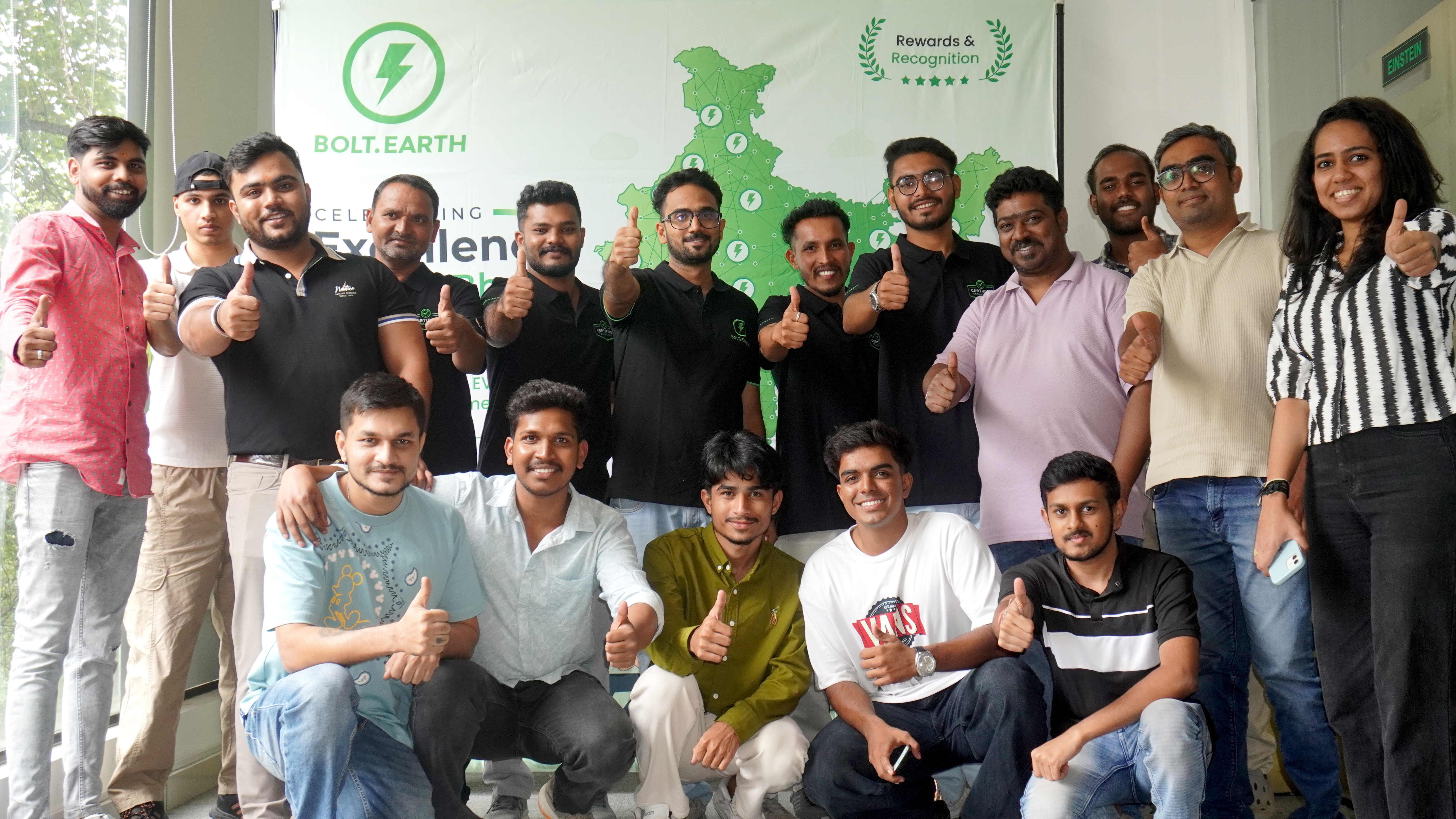
Last month, Bolt.Earth brought those unsung heroes into the spotlight through its first Rewards & Recognition program. The company honored technicians for everyday work that rarely gets noticed: showing up on time, fixing what’s broken, and making sure a charger works exactly when someone needs it to. It’s not glamorous work, but it’s what turns a charging network that exists on paper into one people actually trust.
This year’s program invited and felicitated 17 technicians from 17 states, including Andhra Pradesh, Assam, Bihar, Chhattisgarh, Gujarat, Jammu and Kashmir, Jharkhand, Karnataka, Kerala, Madhya Pradesh, Maharashtra, Orissa, Rajasthan, Tamil Nadu, Telangana, Uttar Pradesh, and West Bengal.
It reflected the scale of job creation within Bolt.Earth’s network, with its technician workforce growing from 800 in 2024 to more than 5,000 certified technicians in 2026. The network has grown more than six‑fold, representing one of the largest skilled employment footprints created by any player in India’s EV charging space. These jobs span metros and smaller towns where formal technical work is still hard to come by.
“Every charging point that stays online does so because a technician showed up to fix it. They are the reason a charger works when someone needs it, not just when it’s installed. Every new charger we deploy is also a skilled job we’re creating somewhere in India. Building a skilled workforce has been just as important to Bolt.Earth’s growth as building chargers,” said Mohit Yadav, Founder and CEO, Bolt.Earth.
Among those recognized was Abdul Moin from Maharashtra, who has been working with Bolt.Earth for over two years installing EV chargers for three-wheelers. He has built a team of 500+ on‑field technicians who work across Andhra Pradesh, Chhattisgarh, Jammu & Kashmir, Madhya Pradesh and Maharashtra.
“Bolt.Earth’s support has encouraged me and my team a lot. If we encounter any problem in the field, we get a quick solution. Together, my team and I install around 3000 chargers per month; this is the kind of opportunity and demand we see. A lot of people often ask me if buying an EV was the right choice. I tell them it’s a cleaner, greener alternative, and when they see the savings themselves, their perspective changes,” says Abdul.
Recognizing technicians isn’t a one‑off for Bolt.Earth — it’s built into how the company thinks about scale. As India’s charging network grows, reliability is non‑negotiable. Bolt.Earth understands that having someone there when a charger breaks is essential.
31, Jul 2026
Mumbai Real Estate Gets Fresh Boost as Property Registrations Rise Over 8 pc
Mumbai, July 31: Mumbai’s real estate sector is showing renewed momentum, with property registrations rising by over 8 per cent in July, reflecting improved buyer confidence and steady demand in one of India’s most important property markets.
The growth in registrations highlights the resilience of Mumbai’s housing sector, supported by factors such as infrastructure development, improved connectivity, changing lifestyle preferences, and continued demand for residential properties.
Experts said the city’s expanding transport network, including metro projects and improved road connectivity, has increased the attractiveness of several residential locations. Better accessibility has encouraged buyers to explore properties beyond traditional hubs, creating new growth centres across the Mumbai metropolitan region.
The demand for quality housing has also contributed to market growth, with buyers increasingly looking for homes offering modern amenities, better facilities, and improved living standards. Redevelopment projects in established areas have further supported the availability of upgraded housing options.
Mumbai’s limited land availability, strong employment opportunities, and position as a financial hub continue to make real estate a preferred choice for both end-users and investors.
The growth of the property sector is also benefiting allied industries, including construction, infrastructure, finance, and building materials, contributing to broader economic activity.
Industry experts believe that continued infrastructure expansion, stable demand, and evolving consumer preferences will remain key factors supporting Mumbai’s real estate growth in the coming years.
The latest rise in property registrations reflects growing confidence in the market and reinforces Mumbai’s position as one of India’s leading real estate destinations.
31, Jul 2026
Toing’s ‘Pizza Squad Challenge’ Campaign Turns Friendship Day Into a Game of Pizza and Perks
July 31: This Friendship Day, affordable food delivery app Toing is transforming the everyday act of ordering food into a highly interactive experience. With the launch of the four-day in-app ‘Pizza Squad Challenge, Toing is celebrating a simple truth: food just tastes better with your squad. Live July 30 to August 2, 2026, the campaign is supplemented by ‘Squad Steals’, a weekend of unbeatable deals designed for groups to enjoy together over the Friendship Day weekend.

In the Pizza Squad Challenge, users are tasked with completing a virtual 12-slice pizza. By sharing an invite link, users can rally their friends to join the fun. Each time a friend accepts the invitation, both users unlock a slice and instantly receive ₹5 in Free Cash. The challenge continues until the entire pizza is in place. As squads hit key milestones along the way, they unlock bonus rewards and earn up to ₹100 in total Free Cash.
Through this initiative, Toing aims to connect with the true essence of Friendship Day for Gen Z and Millennials. The campaign celebrates the “squad culture”, reinforcing that it is those small, recurring everyday moments spent with friends that make all the difference. Whether it is building a virtual pizza together or planning a weekend feast with your squad, Toing ensures no group is left out of the celebration.
To make the Friendship Day weekend more special, Toing will also be rolling out Squad Steals, live on August 1 and 2 across all Toing cities. With deals starting at ₹29 on pizzas, burgers and rolls, this initiative is perfectly tailored for the casual, low-stakes hangouts that friends genuinely enjoy, whether that means roommates ordering in on a Saturday night or college study groups meeting up over the weekend.
31, Jul 2026
Tata Mutual Fund celebrates Friendship Day with ‘Dost Hi Sikhaate Hain’, a heartwarming campaign on friendship
Mumbai, July 31: This Friendship Day, Tata Mutual Fund has unveiled ‘Dost Hi Sikhaate Hain‘, a heartwarming Pomedy performance launched under its investor education platform ‘Mehfil e-fund‘. The initiative uses humour, relatable storytelling and spoken-word poetry to encourage investors to appreciate the value of long-term, disciplined investing through Systematic Investment Plans.

Mehfil e-fund is Tata Mutual Fund‘s unique content platform that brings together Kahaniyan, Kavita, Comedy aur Zyada, using engaging and culturally relevant formats to simplify personal finance and make investing more relatable for audiences across age groups.
The latest edition, released to mark Friendship Day, blends humour, poetry and relatable storytelling to celebrate one of life’s most cherished relationships. Through a warm and engaging narrative, it encourages audiences to appreciate the value of trust, consistency and long-term commitment—both in life and in their financial journey.
The campaign concludes with a simple yet powerful message: good friends are like SIPs—their value may not be visible every day, but over time, they become one of life’s greatest investments.
Commenting on the Friendship Day campaign, Ashish Pawar, Chief Marketing Officer, Tata Asset Management, said:
“Friends influence some of the most important decisions we make in life. They guide us, support us and teach us lessons that stay with us forever. ‘Dost Hi Sikhaate Hain‘ celebrates these everyday moments of friendship and reminds us that, much like strong friendships, meaningful journeys are built on trust, patience and consistency, qualities that also lie at the heart of investing through SIP.
The Friendship Day special is the latest offering from Mehfil e-fund, Tata Mutual Fund‘s investor education initiative that leverages creative expression—including stories, poetry, comedy and performances—to make financial concepts simple, engaging and memorable. By moving beyond conventional financial communication, the platform aims to encourage more people, especially young investors, to begin their investment journey with confidence.
The campaign will be promoted across Tata Mutual Fund‘s digital and social media platforms as part of its ongoing commitment to making investor education more accessible, relatable and impactful.
The film has been produced by Adsto Media House, bringing together humour, poetry and relatable storytelling to communicate the importance of disciplined investing.
31, Jul 2026
Family Offices Turn to Third Parties for Specialist Expertise to Overcome New Challenges and Go Global
July 31: Family offices are increasingly turning to specialist third parties for sophisticated, specialist services in order to overcome new challenges and expand internationally, global research* from Ocorian, the specialist global provider of services to high-net-worth individuals and family offices, financial institutions, asset managers and corporates, shows.
Ocorian’s study among family members and senior family office employees responsible for total wealth of $119.37 billion found that advice on illiquid investments (55%) and cyber security (49%) is currently most received from third parties, closely followed by advice on personal finances (48%).
At the other end of the spectrum, only 3% of family offices surveyed say they currently receive third-party support on extended family services, such as concierge needs, global insurance programmes and extended family financial support.
However, demand is set to rise, with over three quarters (77%) of respondents citing their use of third-party support for key services will increase across the board over the next three years, with just 21% saying it will stay the same as it is today. The main reason given is a desire for more sophisticated services (74%), followed by a lack of expertise in-house as family offices grow (62%) and the realisation that third parties are more cost-effective (55%).
More specifically, 70% said the plan to increase third party support for extended family services as their needs and requirements change and they are faced with new, emerging challenges. More than two-thirds (68%) said their use of outsourcing around wealth planning will increase in the next three years.
The study in 16 countries or territories including the UK, UAE, Singapore, Switzerland, Hong Kong, South Africa, Saudi Arabia, Mauritius and Bahrain found that when looking to appoint third party specialists, the most important factor cited by 62% of family offices is the capability to operate across multiple regions followed by the ability to establish a strong, trusted relationship (58%). This is followed by their technology and reporting proficiency (53%) and then cost (52%).
Lana So Wan Yuen, Head of Private Clients – Mauritius, at Ocorian said: “Family offices are facing new challenges as they grow and become increasingly international. That means they are looking for third-party specialist expertise which can not only support them with the skills they need but also operate across multiple jurisdictions. In addition to still needing support with core services, our research findings also point towards family offices increasingly looking for support with extended services as they grow, such as concierge needs and global insurance programmes.”
Rebecca Thrope, Global Head of Regulatory Consulting at Ocorian added: “Outsourcing to a third-party not only provides family offices access to specialist technical advice, but also can help reduce cost, increase efficiency and help manage risk. Choosing the right partner is critical, and the upfront due diligence and ongoing monitoring and oversight is equally important to ensure the benefits of outsourcing are realised.”
Ocorian’s award winning dedicated family office team provides a seamless and holistic approach to the challenges and opportunities families face. Its service is built on long-term personal relationships that are founded on a deep understanding of what matters to family office clients. Its global presence means Ocorian can provide bespoke structures and services for international families no matter where they live.
Key services include formation and administration of family offices, HR support services, support with lifestyle and luxury assets, family governance, resident and relocation services and specialist support with immigration, visas, payroll, marine and aircraft crew management and financial reporting.