


6, Jul 2026
Flood Alert Issued as Water Levels Rise in Mahanadi, Bansadhara and Baitarani Rivers
Bhubaneswar, July 6 (UDN): The Odisha Government has intensified flood monitoring measures as water levels continue to rise in the Mahanadi, Bansadhara and Baitarani rivers following incessant rainfall across the state and heavy inflows from upstream catchment areas.
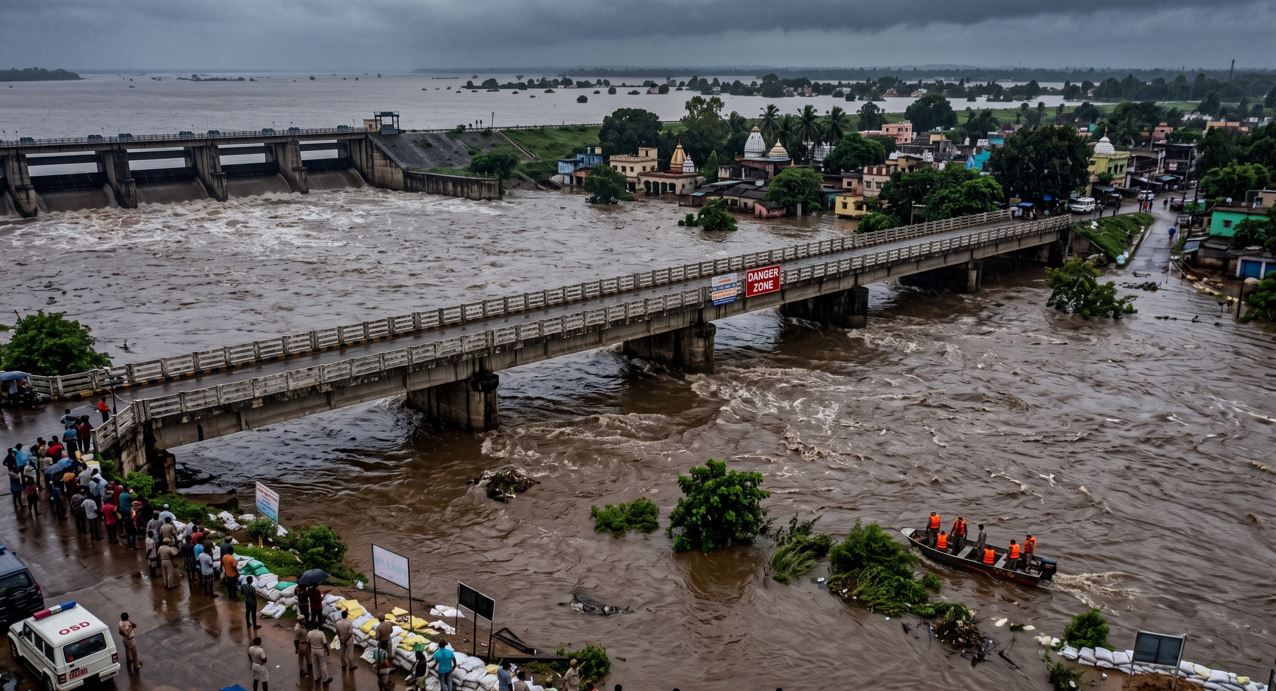
Representational image
The situation is particularly critical in the Mahanadi basin, where the Hirakud Dam has recorded a sharp increase in inflow over the past 24 hours due to widespread rainfall in Chhattisgarh and western Odisha. To regulate the reservoir level, dam authorities have been releasing floodwater through multiple sluice gates in a phased manner. The discharge is being closely monitored at the Mundali barrage near Cuttack to assess its downstream impact.
In southern Odisha, the Bansadhara River has crossed the danger mark at Kasinagar in Gajapati district, raising concerns over possible inundation of low-lying villages along its banks.
Similarly, the Baitarani River is flowing above the danger level at Akhuapada in Bhadrak district, resulting in flooding of adjoining agricultural land and low-lying areas. Water Resources Department officials are maintaining round-the-clock surveillance as the river continues to swell.
In view of the evolving situation, the State Government has placed district administrations across vulnerable river basins on high alert. Authorities in Sambalpur, Subarnapur (Sonepur), Nayagarh, Cuttack, Puri, Jagatsinghpur, Kendrapada, Jajpur and Bhadrak have been directed to remain prepared for any flood-related emergency. District Collectors are coordinating with the State Emergency Operation Centre to monitor river conditions and ensure prompt response wherever required.
Officials have advised residents living in low-lying and riverside areas to remain vigilant and avoid venturing into swollen rivers. People have also been urged to keep livestock away from embankments, closely follow official advisories, and cooperate with local authorities in case evacuation becomes necessary.
The India Meteorological Department (IMD) has forecast continued rainfall over several parts of Odisha under the influence of a low-pressure system over the Bay of Bengal, prompting authorities to closely watch the flood situation over the coming days.
- 0
- By Neel Achary

6, Jul 2026
Indian Stocks Open in Green on Improved Monsoon and FII Buying
Mumbai, July 6: Indian equity markets opened on a positive note on Monday, supported by improving monsoon conditions and sustained foreign institutional investor (FII) inflows, boosting overall market sentiment.
Benchmark indices traded higher in early sessions as investor confidence strengthened on expectations of better rural demand and stable macroeconomic conditions. Market participants noted that the revival of monsoon activity is likely to support agricultural output, which in turn could lift consumption-driven sectors.
Foreign institutional investors continued to show buying interest in Indian equities, adding to the upward momentum and reinforcing optimism about the country’s growth outlook amid global market uncertainty.
Analysts said the combination of domestic weather-driven optimism and steady foreign inflows has helped improve risk appetite in the near term, even as investors remain watchful of global economic cues, interest rate trends, and commodity price movements.
Broader market sentiment remained firm, with sectoral gains led by financials, auto, and consumption-related stocks.
Market experts expect volatility to persist but believe that underlying fundamentals, including rural recovery and liquidity support, may continue to provide stability in the coming sessions.
6, Jul 2026
Global Oil Prices Dip as OPEC Boosts Production for August
New Delhi, July 6: Global crude oil prices declined by up to 1 per cent in early trade after OPEC+ members agreed to increase production targets for August, adding fresh supply expectations to an already cautious market.
The decision by the oil-producing alliance has eased supply concerns, leading to a softening of benchmark crude prices as traders reacted to the prospect of higher output in the coming month. Market participants are closely monitoring the move amid ongoing volatility in global energy markets.
Analysts suggest that the price decline reflects short-term sentiment driven by supply-side adjustments, even as demand outlook remains influenced by global economic conditions, inflation trends, and geopolitical developments.
Energy experts note that OPEC+ production decisions continue to play a key role in shaping crude price movements, with markets highly sensitive to changes in output policy.
The latest development underscores the delicate balance between supply management and market stability as global economies navigate fluctuating energy demand and price pressures.
Traders and investors are expected to keep a close watch on upcoming economic indicators and OPEC+ policy signals for further direction in crude oil prices.
6, Jul 2026
Another Young IPS Officer Quits Service: Bhubaneswar DCP Jagmohan Meena Latest in Series of High-Profile Resignations
Bhubaneswar, July 6 (UDN): The resignation of Bhubaneswar Deputy Commissioner of Police (DCP) Jagmohan Meena has drawn significant attention, making him one of the latest young Indian Police Service (IPS) officers to step away from the force in recent years.
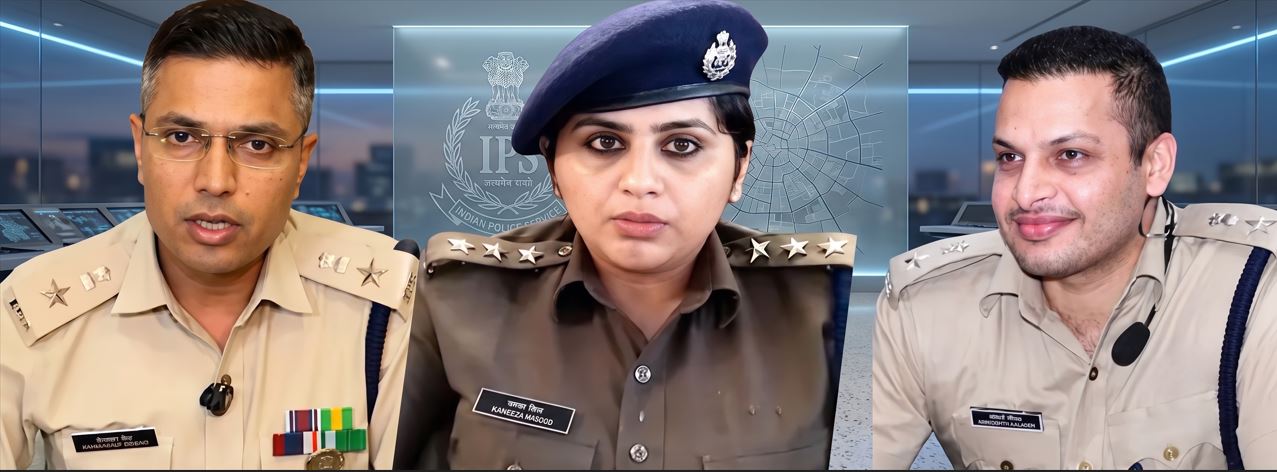
A 2013-batch IPS officer of the Odisha cadre, Meena has submitted his resignation to the Odisha Government, citing personal reasons. While the government is yet to formally accept his resignation, sources indicate that he may be considering opportunities outside government service. However, there has been no official confirmation regarding his future plans.
Meena’s exit comes after a relatively short tenure as Bhubaneswar DCP, a position he assumed in February 2025. During his service, he was widely recognised for his proactive policing initiatives, emphasis on public engagement, and efforts to strengthen crime investigation and law enforcement in the state capital. Prior to his current assignment, he served as Superintendent of Police in Angul and Ganjam districts and as DCP of the Cuttack Urban Police District.
His resignation has triggered widespread discussion within administrative and public circles, with many expressing surprise over the decision of a relatively young officer holding one of Odisha’s most important policing assignments. While speculation over his future has surfaced on social media, Meena has publicly maintained that his decision is based on personal reasons.
The development also comes amid a broader trend of young IPS officers opting to leave the service before completing a full career.
Earlier, former Bihar cadre IPS officer Kamya Mishra, who earned the nickname “Lady Singham” for her policing style, resigned citing personal and family reasons. Her resignation was subsequently accepted by the competent authority.
Similarly, Siddharth Kaushal, an IPS officer of the Andhra Pradesh cadre, sought voluntary retirement, stating that his decision was driven by personal aspirations and long-term career goals. He had also dismissed speculation linking his exit to any external or administrative pressure.
Although each resignation has been attributed to individual circumstances, the departure of several young IPS officers from the service has reignited discussions on career choices, work-life balance, and the evolving aspirations of officers in India’s premier civil services.
The Odisha Government has not yet issued an official statement on Meena’s resignation or announced his successor as Bhubaneswar DCP.
6, Jul 2026
Assam Opens New Opportunities for Rural Youth Under Agri Land Use Policy Reform
Guwahati, July 6: In a significant move aimed at promoting rural entrepreneurship and improving the ease of doing business, the Assam government has introduced a special provision allowing rural youth to utilise agricultural land for select non-agricultural economic activities, subject to regulatory permissions.
The initiative is designed to encourage self-employment, startup development, and local enterprise creation in rural areas, while ensuring that land use changes are carried out in a regulated and sustainable manner.
Officials stated that the policy aims to unlock economic potential in villages by enabling young entrepreneurs to set up small-scale ventures, agri-based industries, and allied activities closer to their communities. The move is expected to reduce migration pressure to urban centres and create local employment opportunities.
The government has emphasised that all activities under this provision will remain subject to applicable land use norms, environmental safeguards, and administrative approvals to ensure balanced development and protection of agricultural interests.
State authorities believe the reform will strengthen Assam’s ease of doing business framework by simplifying access to resources for rural youth and encouraging innovation at the grassroots level.
Further guidelines and implementation details are expected to be issued by the concerned departments in a phased manner.
6, Jul 2026
India Seen as Contrarian Winner in Emerging Markets Amid Global Uncertainty
New Delhi, July 6: India has emerged as a strong contrarian investment opportunity within emerging markets, according to a recent report that highlights the country’s relative economic resilience and long-term growth potential.
The report notes that while several emerging economies are facing headwinds from global uncertainty, inflationary pressures, and uneven capital flows, India continues to stand out due to its strong domestic demand, stable macroeconomic fundamentals, and ongoing structural reforms.
Analysts suggest that India’s growth story is being supported by robust consumption trends, expanding manufacturing capacity, and sustained infrastructure development, positioning the country as a preferred destination for long-term investors seeking stability amid global volatility.
The findings further indicate that India’s improving financial ecosystem, policy continuity, and digital transformation initiatives are strengthening investor confidence, even as global markets remain cautious.
Experts quoted in the report describe India as a “contrarian bet” because it is outperforming expectations relative to broader emerging market trends, driven largely by domestic economic strength rather than external demand.
The report concludes that India’s medium- to long-term outlook remains positive, with continued opportunities in sectors such as manufacturing, technology, infrastructure, and financial services.
6, Jul 2026
Amarnath Yatra Draws Strong Devotee Crowd as Darshan Crosses 56,000 in 3 Days
July 6, 2026: The ongoing Amarnath Yatra 2026 has witnessed an overwhelming response from devotees, with more than 56,000 pilgrims completing darshan within the first three days, reflecting strong faith and devotion among participants.
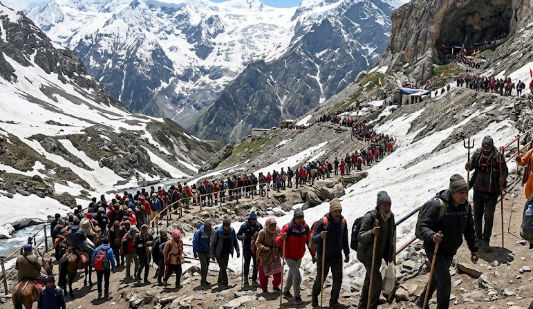
Authorities reported a heavy influx of pilgrims on both traditional routes, leading to increased crowd density and movement pressure along key transit points. Despite the surge, the yatra is progressing in a well-coordinated manner under tight security and administrative supervision.
Security forces, along with disaster management teams and medical support units, have been deployed along the pilgrimage routes to ensure the safety, health, and smooth movement of devotees. Officials are closely monitoring weather and track conditions to manage the flow of pilgrims efficiently.
The administration has urged pilgrims to follow scheduled guidelines, maintain discipline during the journey, and cooperate with on-ground personnel to ensure a safe and orderly pilgrimage experience.
The Shri Amarnath Shrine Board continues to oversee arrangements, focusing on crowd management, medical assistance, and essential facilities along the route.
Authorities have reaffirmed their commitment to providing a secure and well-organised Yatra, ensuring that devotees can complete the sacred pilgrimage without inconvenience.
6, Jul 2026
NSTI , Noida Opens Admissions for NCVET Approved CTS Skill Courses for Academic Session 2026–27
Mumbai, July 6: The National Skill Training Institute for Women –NSTI, Sector-1, Noida, under the Directorate General of Training , Ministry of Skill Development and Entrepreneurship , Government of India, has invited applications for admission to its NCVET approved skill development programmes under the Craftsmen Training Scheme for the 2026–27 academic session.
Interested candidates can check the detailed eligibility criteria, available trades, and other admission guidelines, and submit their applications online through the institute’s admission portal at https://nstiwnoida.dgtmsde.in by selecting the CTS Online Registration link for the 2026–27 academic session. The last date for submission of online applications is 12 July, 2026 until 06:00pm.
As a premier institution dedicated to empowering women through quality vocational education, NSTI Noida offers industry-oriented training in a wide range of conventional and emerging sectors, including Artificial Intelligence, Drone Technology, Semiconductor Technology, 5G Networks, Fashion Design, Computer Applications, Computer Aided Embroidery & Designing, Interior Design, Cosmetology, and Front Office Operations, among others.
These programmes are aligned with the National Skills Qualifications Framework , enabling trainees to pursue higher education and access various employment opportunities.
Committed to the vision of the Skill India Mission, NSTI, Noida is empowering women with industry-aligned skills, nurturing future-ready talent, and contributing to India’s emergence as the Skill Capital of the world.
6, Jul 2026
India’s Vehicle Sales Surge in June, Marking Best-Ever Monthly Performance
New Delhi, July 6: India’s automobile retail sector recorded its strongest-ever performance for the month of June, with vehicle sales crossing 25.5 lakh units, marking a robust 21.83 per cent year-on-year growth, according to the latest industry data.

The impressive sales performance reflects sustained consumer demand, improved vehicle availability, favourable financing conditions, and rising economic confidence across both urban and rural markets. Growth was witnessed across multiple vehicle segments, including passenger vehicles, two-wheelers, commercial vehicles, and three-wheelers, highlighting the sector’s broad-based recovery.
Industry stakeholders attributed the record-breaking June performance to increased customer demand, a healthy supply chain, and continued infrastructure development, which have collectively strengthened the country’s automotive market.
The strong retail momentum is expected to provide a positive outlook for the coming months, with manufacturers and dealers anticipating continued demand supported by festive season purchases, expanding mobility needs, and improving market sentiment.
The latest figures underscore the resilience of India’s automobile industry and its significant contribution to the country’s manufacturing sector, employment generation, and overall economic growth.
Industry experts believe the record June sales reinforce India’s position as one of the world’s fastest-growing automobile markets and signal sustained momentum for the sector in the months ahead.
6, Jul 2026
Mumbai Battles Heavy Rainfall; Rail Routes Hit, University Exams Cancelled

Mumbai, July 6: Torrential monsoon rains lashed Mumbai on Monday, severely disrupting normal life across the city as waterlogging, traffic congestion, and transport delays affected thousands of residents. Authorities remained on high alert as heavy rainfall continued across several parts of the financial capital.
Suburban rail services, considered Mumbai’s lifeline, were impacted on multiple routes due to water accumulation on tracks and reduced visibility. Commuters faced delays and disruptions during the morning rush, while several roads were either closed or witnessed slow-moving traffic because of flooding.
In view of the adverse weather conditions, Mumbai University postponed scheduled examinations to ensure the safety of students and staff. Fresh examination dates are expected to be announced through official channels.
The iconic Mumbai Dabbawalas also suspended their lunchbox delivery services for the day, citing safety concerns and challenging commuting conditions. The temporary suspension reflects the severity of the weather, as the century-old delivery network rarely halts its operations.
The India Meteorological Department (IMD) has advised residents to remain cautious, avoid unnecessary travel, and stay updated with official weather alerts. Civic authorities are monitoring vulnerable areas, while emergency teams have been deployed to respond to incidents of flooding, fallen trees, and waterlogging.
Citizens have been urged to cooperate with local authorities and follow safety advisories until weather conditions improve.


