



24, Feb 2026
Indira IVF Expands in Haryana with the Inauguration of a New Fertility Clinic in Gurugram

Gurugram, Feb 24: Indira IVF Hospital Limited announced the inauguration of its new fertility clinic in Sector 51, Gurugram, further strengthening access to organised fertility and reproductive healthcare services across Haryana and the National Capital Region.
Located on the First Floor, the centre will offer a comprehensive range of fertility and assisted reproductive services. The clinic will operate with standardised clinical protocols and technology-enabled systems designed to ensure consistency, patient safety, and transparency across every stage of treatment.
The inauguration ceremony was graced by Ms. Neha Rathi, Indian Professional Wrestler, as the Chief Guest, Dr. Arvind Vaid, Zonal Business Director, Gynaecologist & IVF Specialist, Indira IVF Patel Nagar, Delhi as the guest of Honour & Dr. Abhilasha Mehta, Consultant Gynaecologist & IVF Specialist Centre Head, Indira IVF, Sector 51, Gurugram, & other dignitaries of Gurugram region.
Addressing the gathering, Ms. Neha Rathi said, “Access to specialised healthcare plays a crucial role in shaping healthier futures for families. The opening of Indira IVF in Gurugram strengthens the availability of structured fertility services in the region and underscores the importance of early evaluation and informed medical care.”
Commenting on the expansion, Mr. Nitiz Murdia, Managing Director, Indira IVF Hospital Limited, said, “The launch of our Gurugram centre reflects our continued commitment to improving accessibility to structured fertility care across growing urban hubs. As awareness around reproductive health increases, it is important that patients have access to evidence-based treatment supported by experienced clinical teams and standardised systems.”

Dr. Arvind Vaid, Centre Clinical Director, Zonal Business Director, Gynaecologist & IVF Specialist Indira IVF, Patel Nagar, Delhi, added, “Urban lifestyles, delayed parenthood, and underlying medical conditions are contributing to rising fertility concerns. The presence of a dedicated, technology-enabled fertility centre in Gurugram will encourage early consultation and structured treatment, which significantly improves clinical outcomes.”
Dr. Abhilasha Mehta, Consultant Gynaecologist & IVF Specialist and Centre Head, Indira IVF, Sector 51, Gurugram, said, “Fertility care requires timely diagnosis, scientific precision, and compassionate counselling. Our focus at the Gurugram centre is to provide personalised treatment plans backed by consistent protocols and advanced laboratory support, ensuring that couples receive comprehensive care under one roof.”
With this launch, Indira IVF continues to expand its national footprint, adding to its network of 200+ clinics across India. The Gurugram centre will offer a full range of fertility and assisted reproductive services for both male and female infertility, supported by standardised laboratory practices, electronic medical records and patient safety systems.
- 0
- By Neel Achary

23, Feb 2026
SBI Life strengthens its footprint in Telangana with three new branch inaugurations
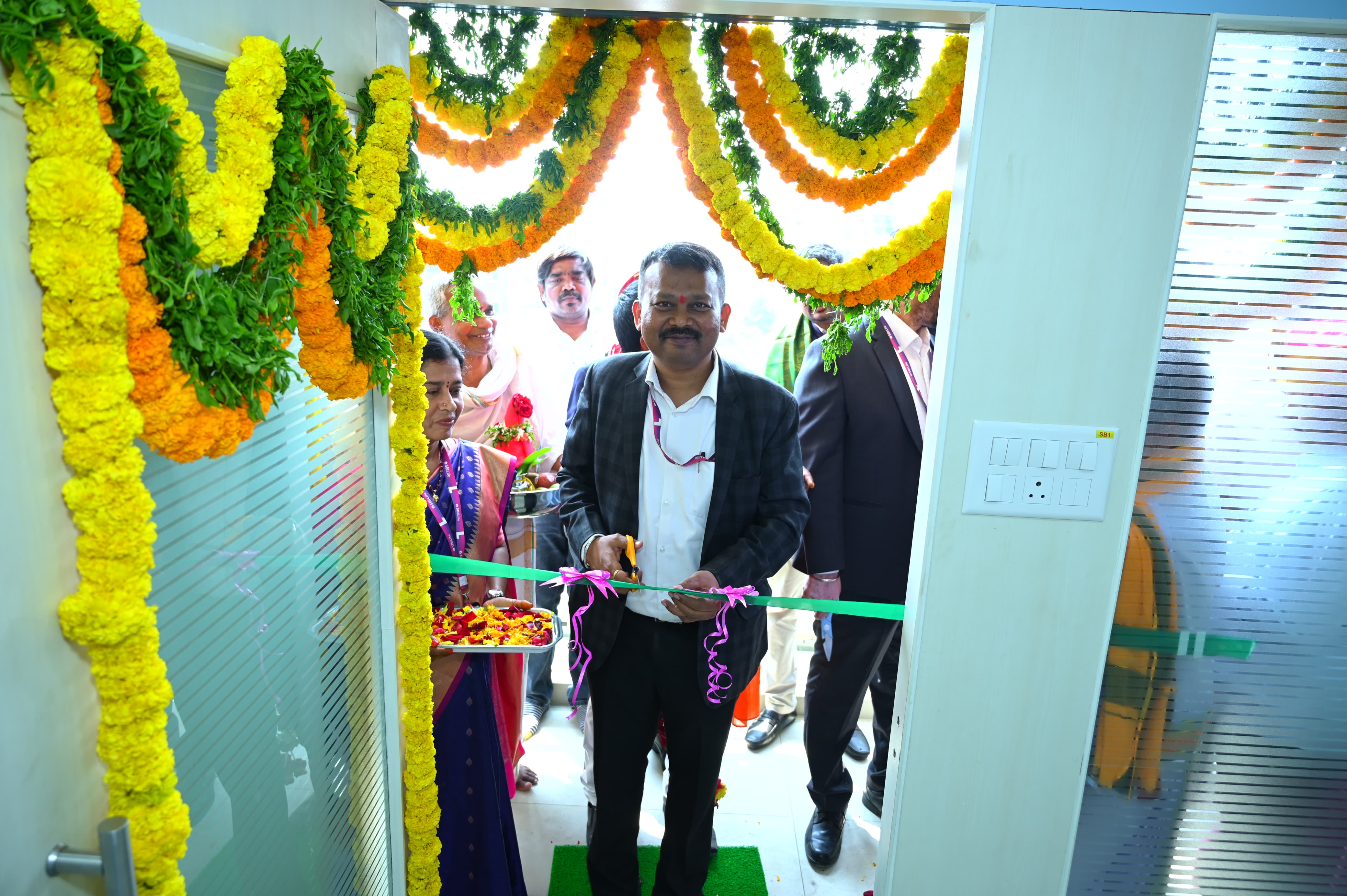
Telangana, Feb 23: SBI Life Insurance, one of India’s most trusted private life insurers, has further strengthened its presence in Telangana with the inauguration of three new branches in Bhupalapalli, Khammam, and Nagarkurnool districts. This expansion underscores the company’s continued commitment to enhancing insurance accessibility and delivering need-based financial solutions to individuals and families across the state.
The newly inaugurated branches are located at:
-
Bhupalapalli: First Floor, H.No. 21-5-66/12, Manjoor Nagar Main Road, Bhupalapalli, Jayashankar Bhupalapalli District, Telangana – 506169
-
Khammam 2: Fourth Floor, H No 11-10-860/4, Bye Pass Road, Plot No 17, Sy No 73, Bhurhanpuram, Khammam District, Telangana – 507001
-
Nagarkurnool: 2nd Floor, H.No. 15-93/2/A/1, Raghavendra Colony, Besides Telephone Exchange, Nagarkurnool Municipality, Nagarkurnool District, Telangana – 509209
The branches were inaugurated by Mr. Abhishek Kar Majumdar, Regional Director – Telangana, SBI Life Insurance, in the presence of Mr. P Vamseedhar Reddy, Regional Manager – Retail Agency, SBI Life along with Mr. Eppa Ravinder, DRM – Retail Agency, SBI Life and Mr. Srinivas Kurmala, DRM – Retail Agency, SBI Life and other esteemed dignitaries.
With these new additions, SBI Life now operates 56 branches across Telangana, reinforcing its strong distribution network and deep-rooted presence in the region. The new branches will offer a comprehensive suite of services, including policy issuance, premium collection, policy servicing, and claims assistance, ensuring convenient and seamless support for customers at every step of their journey.
Complementing its commitment to enhancing insurance accessibility in the region, SBI Life brings a comprehensive suite of protection, savings and retirement solutions backed by strong digital capabilities and a robust service framework. The newly inaugurated branches will offer end-to-end support including policy issuance and servicing, premium renewals and assistance with claim-related queries, ensuring customers receive timely guidance and dependable service at every stage of their journey
23, Feb 2026
Mitsubishi Electric India hosts 6th ME Cup, Sona College of Technology emerges winner among 35 selected teams

Pune, 21st February, 2026: Mitsubishi Electric India, a global leader in Electric & Electronic Equipment, announced the winners of the 6th Mitsubishi Electric Cup on Saturday, 21st February 2026. The two-day National Level Automation Competition, returning after a five-year gap post Covid, saw 35 teams compete on the theme ‘Automating the World through Digital Innovation’. Organised annually, the competition challenges engineering students to design, build, and demonstrate innovative working models using Mitsubishi Electric factory automation technologies.
The virtual registration for the 6th Mitsubishi Electric Cup began in July 2025 and received 288 proposals from 140 institutions across 19 states and 2 Union Territories. Participating teams were mentored by Mitsubishi Electric India’s technical team and provided with essential Factory Automation products such as PLCs, HMIs, Servo Motors, VFDs, and CNCs to develop smart manufacturing solutions.
“The Mitsubishi Electric Cup’s core vision is to cultivate future-ready engineers who can innovate, automate, and contribute to a technologically advanced and sustainable world. The idea is to strengthen students’ innovative consciousness, cooperative spirit, and engineering practice abilities by encouraging hands on technological and automation-based projects,” said Mr. Atsushi Takase, Managing Director, Mitsubishi Electric India, speaking of the 2026 edition. “Response for the event was very positive, and quality of received proposals were in various domains such as IoT, Energy efficient automation, Smart manufacturing solutions, AgriTech, and Application-specific industry problems that are suitable for a host of industries, besides accruing social benefits like energy management and reusable waste management,” he added.
The competition featured innovative project models addressing areas such as building automation, industrial manufacturing processes, and societal challenges. Team “Nexus AI” from Sona College of Technology, Tamil Nadu, won the 6th Mitsubishi Electric Cup, receiving Rs. 1,00,000 and a Winner Trophy. “Recycron” from MKSSS Cummins College of Engineering for Women, Pune secured second place with Rs. 75,000 and a Runner-up Trophy, while Team “Pegasus” from COEP Technological University, Pune secured third place, receiving Rs. 50,000 and a Trophy. The ‘Most Popular Team’ award went to Team “Trisense Innovators” from Dr Vishwanath Karad MIT-WPU, Pune. The top 15 teams received appreciation prizes of Rs. 10,000 each along with certificates. The winning team will represent Mitsubishi Electric India at the global MECA competition. All participating teams received participation certificates.
Teams were evaluated on two key parameters: System Design (innovation, implementation, safety, and digitalisation concepts) and Overall Presentation (system demo, presentation skills, and FA knowledge). Teams were required to design and build complete working models aligned to the competition theme, ‘Automating the World through Digital Innovation’ using Mitsubishi Electric Factory Automation products, based on the e-F@ctory concept, while demonstrating strong product and application understanding. The participating teams had to independently design and produce a complete set of devices/models using Mitsubishi Electric Factory Automation products. The control system was to be built based on the-F@ctory concept.
“The 2025-26 Mitsubishi Electric Cup centred on the theme ‘Automating the World through Digital Innovation’, which directly mirrors the current transformation underway in global and Indian manufacturing. The competition’s focus areas highlight several critical industrial challenges that companies are actively trying to solve today,” said Dr. S. Sriram, Director & Head, Factory Automation & Industrial Division (FAID), Mitsubishi Electric India. He referred to the students receiving hands on training and mentorship from Mitsubishi engineers, strengthening their practical understanding of automation technologies. “Through this platform, students were exposed to modern Industry 4.0 and Society 5.0 environments. By building complete working models, students learned how advanced technologies interact in real factory ecosystems, fostering industry ready skills. Mitsubishi Electric is not only helping a world of industries, but also a world of societies to apply automation for the greater benefit,” he emphasized.
“I extend my heartfelt congratulations to Team Nexus AI from Sona College of Technology, for emerging as the winners of the 6th Edition of the Mitsubishi Electric Cup. I would also like to commend all participating teams for demonstrating exceptional technical capability, creativity, and innovative thinking throughout the competition. Mitsubishi Electric India is proud to engage with young talent and academic institutions across the country, fostering the development of innovative automation solutions that have the potential to create meaningful societal impact. Through platforms like the Mitsubishi Electric Cup, we aim to empower young minds to transform ideas into practical solutions, while gaining valuable mentorship from experienced professionals in the field of Factory Automation,” said Mr. Atsushi Takase, summing up the proceedings of the 6th edition of the Mitsubishi Electric Cup.
Competitions like the ME Cup support India’s national skill development initiatives and contribute to building a highly skilled workforce capable of driving industrial and technological growth. Mitsubishi Electric India will continue to inspire young innovators to push boundaries, excel in advanced technologies, and strengthen India’s position on the global innovation landscape.
23, Feb 2026
VESIT inaugurates its Maker- centric Tinkerers’ Lab in Collaboration with Maker Bhavan Foundation
Feb 23: Vivekanand Education Society’s Institute of Technology (VESIT) today inaugurated its new Tinkerers’ Lab, aimed at facilitating students with hands-on, project-based learning in engineering education. This initiative is powered by the Maker Bhavan Foundation (MBF). The inauguration ceremony was held on the VES HAMC campus and was attended by distinguished guests, Academic and Industry leaders, faculty members, students, and representatives of the Maker Bhavan Foundation.
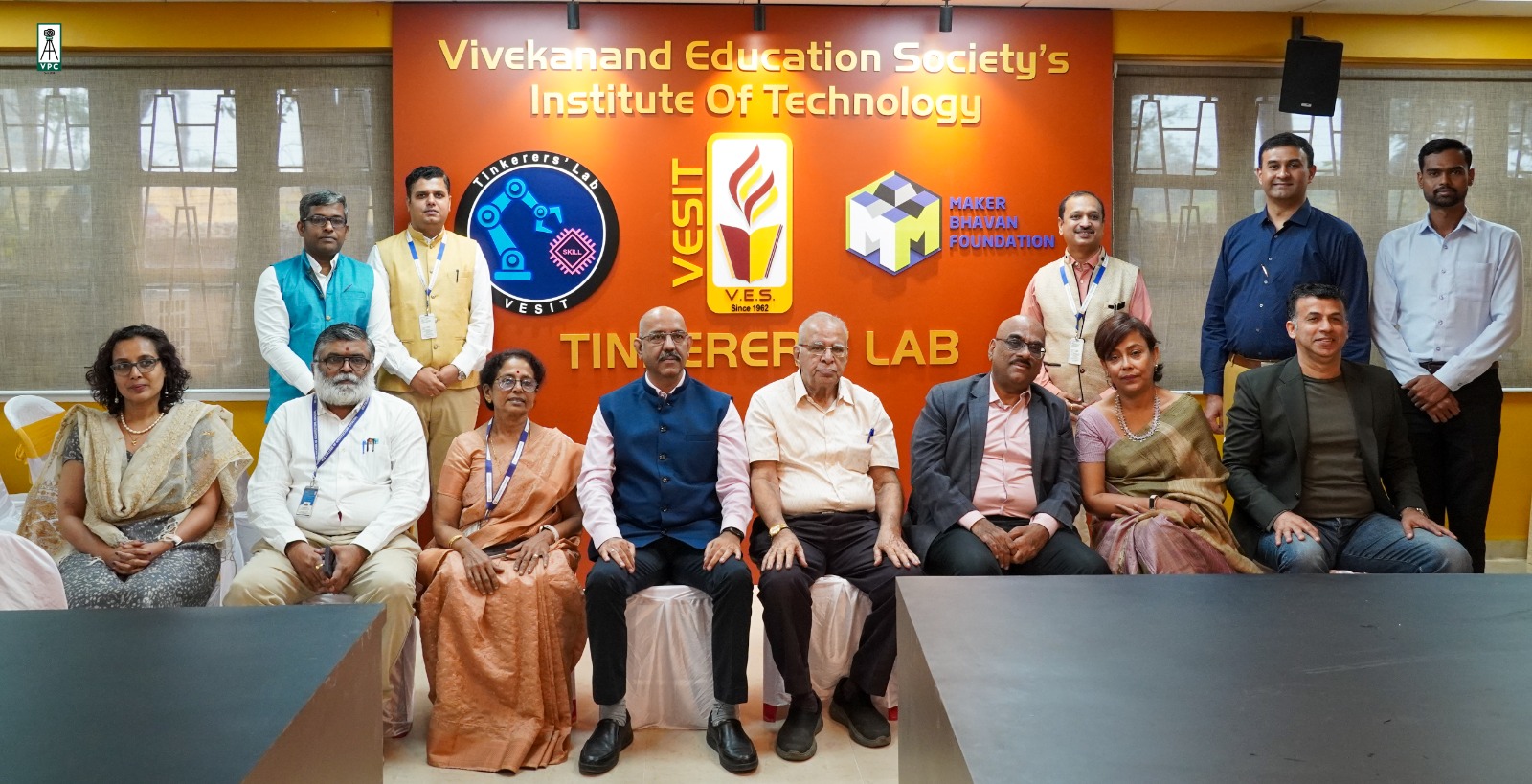
This occasion coincides with the Centenary Celebration of our revered founder of Vivekanand Education Society, Karmayogi Late Shri. Hashuji Advani. To honor his inspiration, enduring legacy, visionary leadership, and strong value systems, the Vivekanand Education Society is organizing a series of meaningful academic and cultural initiatives under the theme “Gen Z for Nation Building.” The inauguration of this Tinkerer’s Lab stands as a true reflection of that spirit, empowering young minds to innovate, create, and contribute meaningfully to society.
Dr. (Mrs.) J. M. Nair, Principal, Vivekanand Education Society’s Institute of Technology (VESIT).
“At VESIT, we see engineering as an act of curiosity in motion. The Tinkerers’ Lab creates a culture where students are encouraged to question assumptions, dismantle ideas, rebuild them, and discover solutions that are both inventive and responsible.”
Chief Guest Shri. Anil Bhatia, Vice President and Managing Director, Emerson Automation Solutions, said,
“In today’s landscape, technical knowledge alone is not a differentiator. What truly sets future engineers apart is their ability to experiment without hesitation. Platforms like this lab cultivate that confidence, which is essential for leadership in modern industry.”
Gautam Khanna, President & CEO, Maker Bhavan Foundation, said,
“Engineering talent flourishes when students are trusted with real tools and real challenges. When students are given the autonomy to experiment, the responsibility to execute, and the space to learn from iteration, they develop not just technical competence, but professional maturity that stays with them long after graduation.”
The lab creates a dynamic place where students can freely experiment, build prototypes by applying their theoretical knowledge practically, and engage across disciplines. This will help them develop both engineering expertise and an entrepreneurial mindset to tackle real- world problems. Through partnership with Maker Bhavan Foundation, VESIT is cultivating a robust culture of innovation and entrepreneurship, producing engineers equipped for tomorrow’s dynamic tech landscape.
23, Feb 2026
Yellow Capital Launches TradePoint to Streamline Token Distribution for Web3 Projects
LONDON – Feb 23:: Yellow Capital, a leading market-making firm with a venture arm focused on supporting Web3 projects, today announced the launch of TradePoint, a proprietary platform for token distribution, CEX visibility, and algorithmic liquidation.
The platform addresses persistent challenges faced by projects for token distribution through unlocks, airdrops, or treasury sales. Manual selling can trigger sharp price declines, while working with traditional market makers may require giving up custody and accepting opaque processes. These approaches frequently result in wider spreads and damaged market confidence.
TradePoint provides an alternative through programmatic distribution connected directly to trading algorithms. The platform monitors real-time market conditions and releases tokens only when sufficient buying activity is present. This non-custodial approach allows projects to maintain control of their assets while executing distributions that align with natural market demand.
The TradePoint platform provides full execution visibility and automated settlement infrastructure, enabling projects to track every token movement in real time. It replaces manual selling with algorithmic liquidation that responds to live market conditions, distributing tokens efficiently to minimize price impact.
“We built TradePoint because the existing options for token distribution were fundamentally broken,” said Diego Martin, CEO of Yellow Capital. “Projects need no more choosing between crashing their own market or handing over custody to opaque intermediaries. TradePoint gives them a third option – an algorithmic distribution that works with market conditions. The vision is to empower projects with the infrastructure they need to manage token supply efficiently.”
This launch is part of Yellow Capital’s broader offering to support Web3 projects across their full lifecycle. The firm provides liquidity solutions across more than 140 centralized exchanges, combining market-making services with treasury management and strategic advisory. TradePoint completes this offering by addressing the final critical challenge, managing token supply during distribution events.
23, Feb 2026
AlUla Skies Festival Returns 17–26 April 2026: A 10-Day Celebration of Balloons, Stars and Spectacle in AlUla

From sunrise balloon ascents over ancient desert landscapes to moonlit cinema beneath some of the clearest skies in the region, the AlUla Skies Festival is set to transform the heavens into a stage from 17 April to 26 April 2026.
Recognised as Saudi Arabia’s—and the Gulf’s—first officially certified International Dark Sky Park, AlUla offers a rare celestial canvas protected from light pollution. For adventurers, culture seekers and stargazers alike, the 2026 edition promises perspective as grand as its landscapes.
SKYRISE: Mass Morning Hot Air Balloon Flights
One of the festival’s most anticipated highlights, SKYRISE, will see 30 hot air balloons ascend together in a breathtaking coordinated display. Ten balloons will accommodate paying guests, who will be collected from 4- and 5-star hotels in AlUla and transported to the launch site before dawn.
The flight path offers panoramic views over the UNESCO-listed Hegra, Saudi Arabia’s first World Heritage Site. From intricate Nabataean tombs carved into sandstone cliffs to sweeping desert valleys, the experience delivers unmatched photographic opportunities before guests are returned to their hotels.
Hot Air Balloon Glow Show
17 & 18 April | 24 & 25 April 2026
As daylight fades, the sky transforms into a luminous theatre. The Glow Shows combine music, acrobatics, projection mapping and choreographed light displays with up to 12 illuminated hot air balloons firing their burners in synchronised rhythm. The result is a dramatic spectacle of light, sound and fire set against AlUla’s iconic desert backdrops.

VOX Moonlight at Maraya
Cinema meets desert magic at VOX Moonlight Cinema, hosted at the world’s largest mirrored building, Maraya. Guests can enjoy the latest film releases under open skies, surrounded by panoramic desert views.
Classic VOX favourites—popcorn, sliders, soft drinks and slushes—are available, while those seeking an elevated culinary experience can dine at Maraya Social by Michelin-starred chef Jason Atherton.
Tethered Hot Air Balloon Experience
17–26 April 2026
For visitors seeking a shorter yet equally thrilling experience, tethered balloon rides at Al Manshiyah Plaza will lift guests up to 50 metres into the air, offering panoramic views of AlUla’s dramatic sandstone formations and oasis landscapes.
House of Constellations
17 April – 02 May 2026
Returning to AlUla Old Town, the House of Constellations blends astronomy with storytelling heritage. This immersive activation features:
- Interactive installations
- A 360° planetarium with specially narrated content
- Telescope observations from Old Town Fort
- Guided celestial storytelling sessions led by Rawis
Anchored in AlUla’s historic amphitheatre, the experience bridges science and culture under pristine night skies.

Festival Concert: Nancy Ajram Live at Thanaya
23 April 2026
Arabic pop icon Nancy Ajram will headline a major festival concert at Thanaya. With 11 studio albums, multiple chart-topping hits and over 4 billion YouTube views, Ajram is widely recognised as one of the most influential female artists in the Arab world. A three-time World Music Award winner, she has helped elevate Arabic pop to global audiences and continues to shape the region’s contemporary music landscape.
About AlUla
Located approximately 1,100 km from Riyadh in north-west Saudi Arabia, AlUla spans 22,561 km² of extraordinary natural and cultural heritage.
Its highlights include:
- Hegra – Saudi Arabia’s first UNESCO World Heritage Site
- Dadan – Capital of the Dadan and Lihyan kingdoms
- Jabal Ikmah – Home to thousands of inscriptions and rock art carvings
- AlUla Old Town – A labyrinth of over 900 mudbrick homes dating back to the 12th century
- Hijaz Railway – A key chapter in regional history
With towering sandstone mountains, lush oasis valleys and archaeological treasures spanning millennia—including Nabataean and Roman eras—AlUla is fast becoming one of the Middle East’s most compelling cultural destinations.
23, Feb 2026
Wave Cinemas now at I-Thum’s Mall, Greater Noida
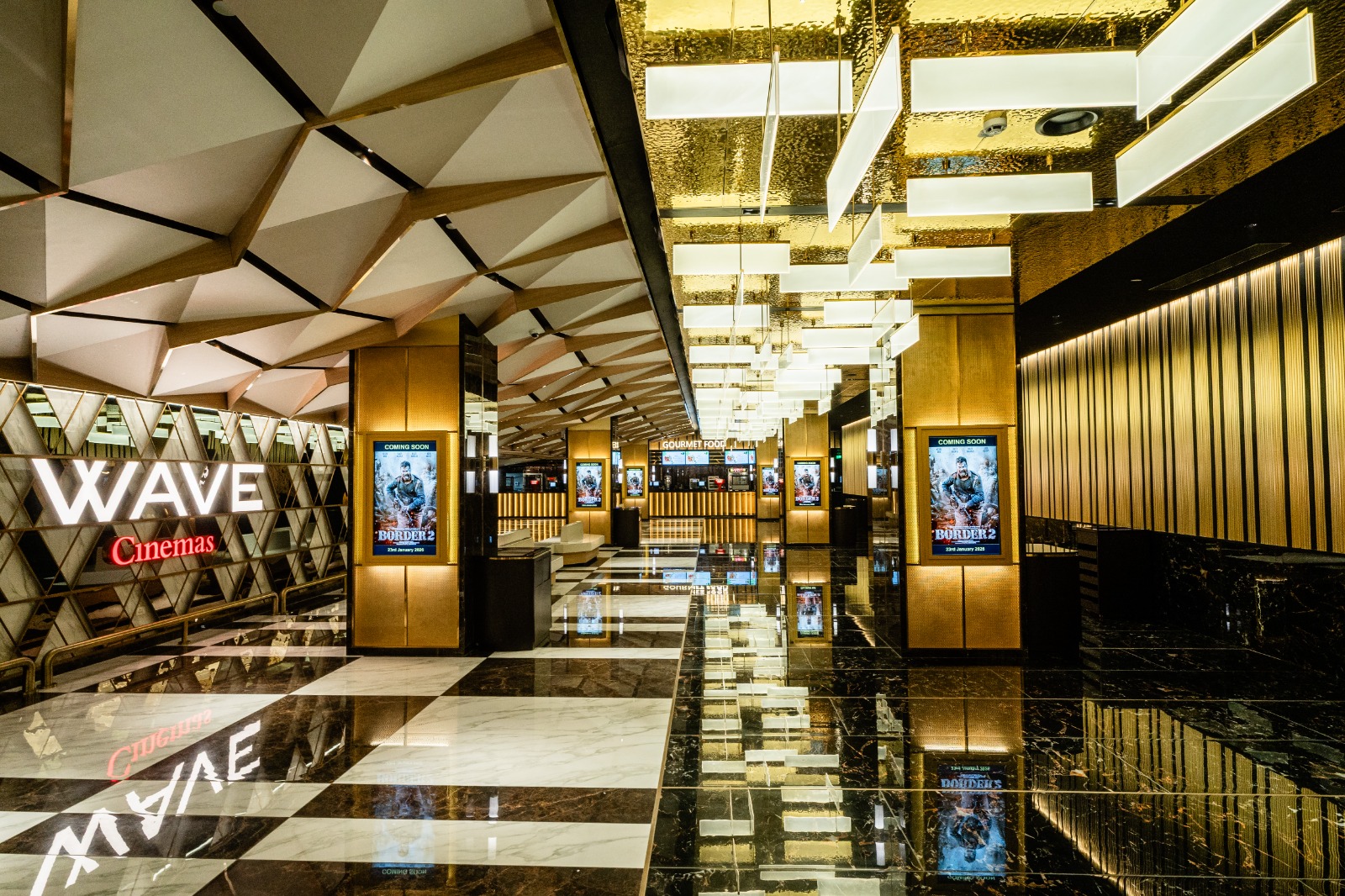
Greater Noida, Feb 23: In line with the rapid transformation of Greater Noida into a major commercial and residential hub following the announcement of Jewar Airport, Wave Group has announced the opening of Wave Cinemas at I-Thum’s Mall, Greater Noida. The new multiplex features four screens with a total seating capacity of 974, including 17 platinum category seats, and is set to elevate the movie-going experience in the region.
Speaking on the occasion, Rajiv Gupta, Managing Director, Wave Group, said,
“Cinema in India has evolved into an immersive, experience-driven format where technology, comfort, and ambience play a critical role in consumer choice. At Wave Cinemas, we see this shift as a significant growth opportunity. Along with upgrading viewing experiences through advanced technology, premium seating, and curated food offerings, we are aggressively expanding our footprint. Over the next year, we plan to increase our screen count by nearly 50%, strengthening our presence across key markets.”
He further added, “This launch reflects our broader strategy to scale responsibly while delivering a contemporary, high-quality cinema experience for today’s audiences and families.”
Wave Cinemas, Greater Noida is equipped with state-of-the-art laser projection, advanced sound systems, and cutting-edge technology to deliver an exceptional cinematic experience. The multiplex also features an in-house multi-cuisine kitchen offering freshly prepared food and beverages, complemented by in-seat butler service for personalised comfort.
Mr. Yogesh Raizada, Director, Wave Cinemas, said:
“At Wave Cinemas, our constant endeavour has been to elevate the movie-watching experience by combining cutting-edge technology with unmatched comfort and hospitality. With every new launch, we aim to create more than just a cinema — we create a destination where families and friends come together to celebrate entertainment. We are excited to bring this experience to our audiences and look forward to redefining cinema culture in the region.”
Strategically located near Pari Chowk, the cinema boasts a refined luxury aesthetic, premium recliner seating, illuminated food trays, and seamless service at the seat—ensuring enhanced comfort, safety, and indulgence for patrons, and making it a preferred choice for family outings.
Wave Cinemas, one of North India’s leading cinema chains, entered the exhibition business in 2003 with its first multiplex in Noida. Since then, the brand has consolidated its presence with 11 multiplexes and 42 operational screens across North India (excluding Greater Noida), comprising 10,526 seats. The company plans to add 20 more screens and approximately 4,000–5,000 seats by next year. Upcoming projects in Gurugram (5 screens), Delhi (2 screens), Raj Nagar Extension (5 screens), and Noida Extension (4 screens) are currently underway.
23, Feb 2026
RAKEZ and EPDA partner to streamline environmental approvals for key industrial sectors
Ras Al Khaimah, 23 February 2026: Ras Al Khaimah Economic Zone (RAKEZ) has signed a strategic Memorandum of Understanding (MoU) with the Environment Protection and Development Authority (EPDA) to establish a structured and efficient approval framework for new industrial activities across priority sectors in the emirate.
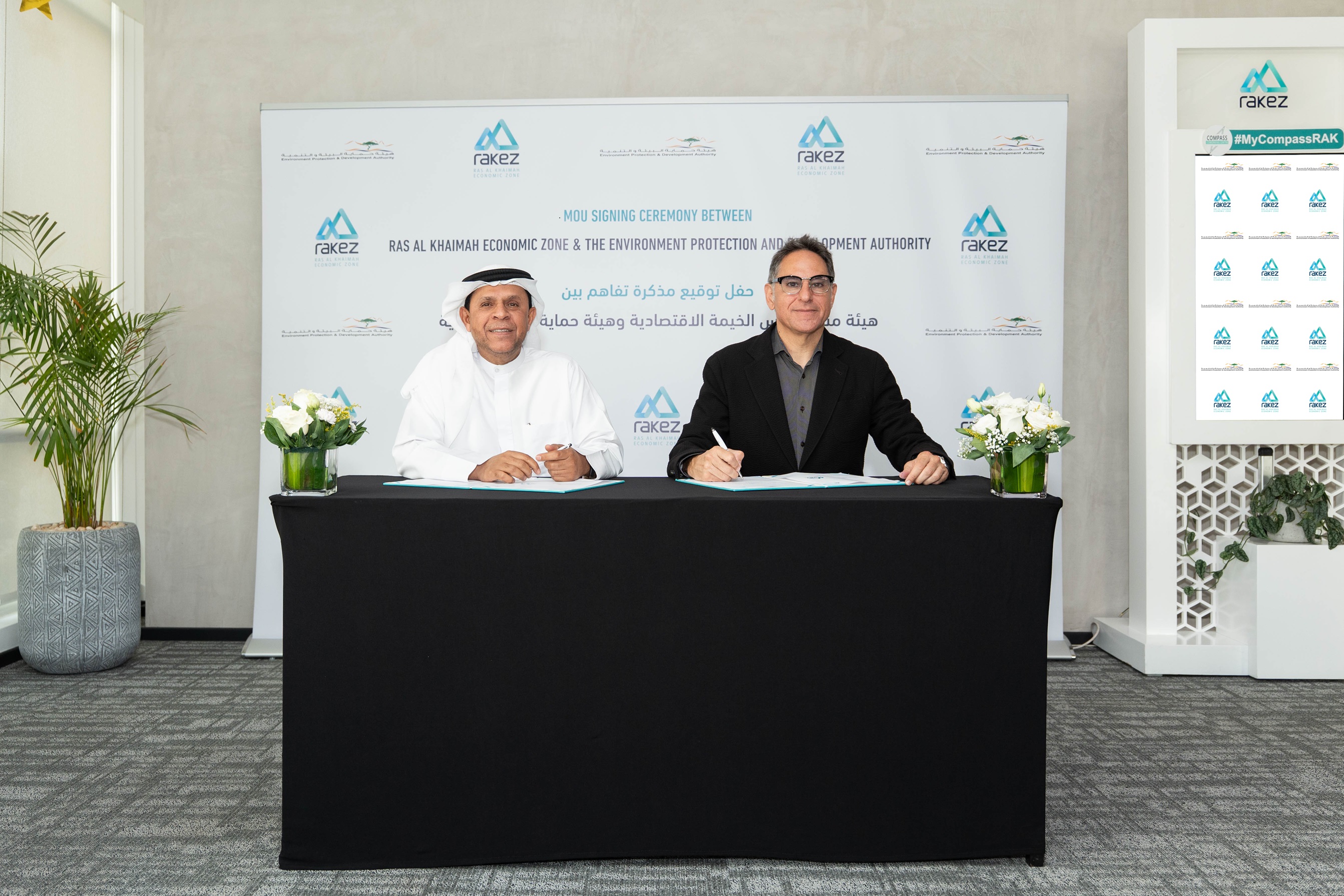
The MoU was signed by Ramy Jallad, Group CEO of RAKEZ, and H.E. Dr. Abdulrahman Al Shayeb Al Naqbi, Acting Director General of EPDA. The agreement introduces a streamlined verification and environmental approval process covering the cement, chemical, and general industrial sectors. The framework has been developed in close alignment with RAKEZ’s HSE Department to ensure seamless coordination between regulatory and operational functions. The collaboration aims to enhance regulatory clarity, accelerate licensing procedures, and ensure full compliance with environmental standards while supporting sustainable industrial growth in Ras Al Khaimah.
Under the new framework, industrial companies will benefit from a faster and more streamlined environmental approval process, making it easier to move projects forward with greater clarity and efficiency. The MoU also ensures coordinated handling of expansion and modification requests, with clear guidance on environmental requirements from the outset. This structured approach enhances transparency for investors, and strengthens collaboration between EPDA and RAKEZ HSE to support sustainable industrial growth.
Beyond approvals, the partnership enables enhanced knowledge sharing, technical alignment, and joint training initiatives between EPDA and RAKEZ’s HSE teams to further strengthen environmental governance and promote best practices across the industrial ecosystem.
Commenting on the partnership, Ramy Jallad, Group CEO of RAKEZ, said, “This collaboration reflects our shared commitment to balancing industrial growth with environmental responsibility. By aligning processes and enhancing coordination with EPDA, we are creating a more predictable and efficient framework that benefits investors while upholding the highest environmental standards.”
H.E. Dr. Abdulrahman Al Shayeb Al Naqbi, Acting Director General of EPDA, added: “This Memorandum of Understanding with RAKEZ represents a significant step forward in our shared vision of integrating world-class environmental stewardship with streamlined industrial development. By establishing clear, time-bound approval frameworks, we are not only enhancing regulatory clarity for investors in the cement, chemical, and industrial sectors but also reinforcing our commitment to protecting Ras Al Khaimah’s environment. This collaboration ensures that as we facilitate faster business setup and expansion, we do so with the highest standards of compliance and technical oversight, ultimately fostering a sustainable and competitive industrial ecosystem for the emirate.”
RAKEZ is home to nearly 40,000 companies across diverse sectors and continues to strengthen its ecosystem through strategic partnerships that enhance operational efficiency, regulatory clarity, and long-term sustainability.
23, Feb 2026
Probus Secures its Legacy as a Great Place To Work with an Elite 96% Rating Two Years in a Row
Mumbai, Feb 23: Work was once a simple, cold equation: a barter of time for a pay check. For years, companies and employees operated within this transactional understanding. But as workplaces evolved, people began seeking more than just roles and salaries; they wanted purpose, belonging and to be valued as individuals. In the demanding world of insurance broking, where numbers often take the spotlight, Probus, one of India’s leading insurance broking platforms is proving that when you prioritize the human element, excellence follows naturally. This people-centric culture has earned Probus the Certified™ Great Place To Work® recognition for 2026–2027 for the second year in a row, supported by an outstanding 96% employee satisfaction score – proof that when people feel valued, excellence is not just an objective; it becomes the very engine of the organization’s success.
While insurance is often driven by metrics, Probus chooses a different route. Across 40+ branches throughout India, the firm maintained a 94% average across every survey category. This consistency is the real story; whether a team member is navigating the energy of the Mumbai headquarters or supporting a client from a regional office, the narrative of being “backed” remains the same. A major part of this heart is the workforce, where women comprise over 40% of the Probus family – an effort that has also been recognised with Probus being named one of India’s Best Workplaces™ for Women 2025 by Great Place to Work® India. Probus achieved this by moving past traditional norms to offer flexible arrangements and career initiatives that truly support women’s growth.
Ultimately, this Certification is more than just a badge; it is a representation of the Great Place To Work® global standard, which is so rigorous that it has become the definitive word on workplace excellence. By passing the proprietary Trust Index™ Survey, Probus has been measured against a gold standard built on 30 years of data from over 100 million employees worldwide. This acknowledgement confirms that the culture it has built – which is based on inclusivity and genuine career growth, it is not just an internal goal but a world-class standard that has been proven to drive innovation and long-term stability.
Commenting on the certification, Mr. Rakesh Goyal, Director at Probus, said,
“A strong business is ultimately about people. Certifications are a great milestone, but what truly counts is how our teams feel every day. Our culture has led to over 40% growth in the last few years and consistent profits. This is because we have created an environment where happy, engaged people feel empowered to do their best work, which naturally boosts productivity and innovation”
This certification acts as a North Star for Probus as it continues its rapid expansion across India. It is a promise that the company’s commitment to transparency and empowerment will always be at the heart of everything it builds, even as it grows
23, Feb 2026
APSEZ, NMDC and Vale Brazil Sign MoU on Iron Ore
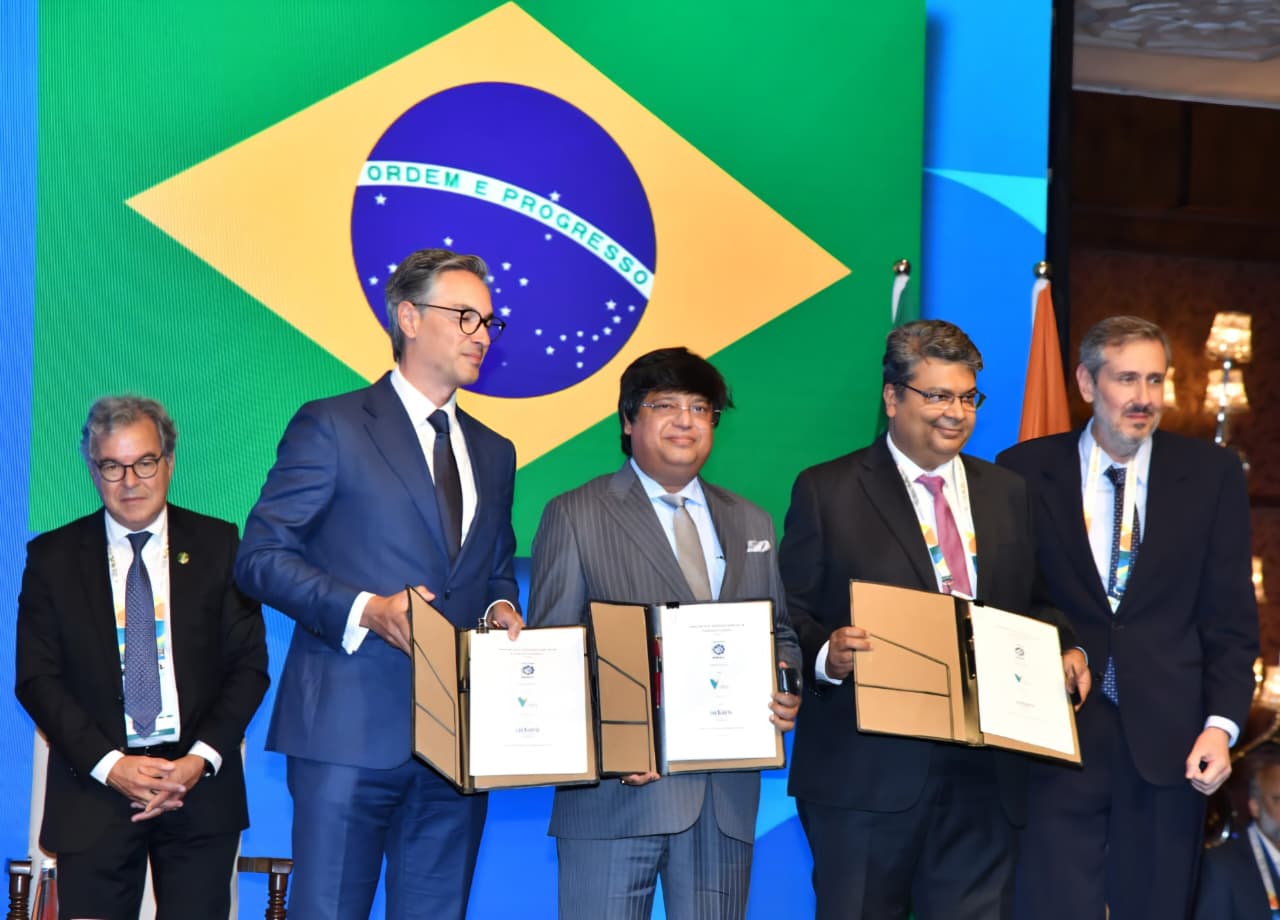
Hyderabad, Feb 23: Adani Ports and Special Economic Zone Ltd (APSEZ), the world’s fastest-growing integrated transport utility, through its subsidiary Adani Gangavaram Port Limited (AGPL), has signed a strategic Memorandum of Understanding (MoU) with NMDC Limited (A Government of India Enterprise) and Vale S.A. (Brazil) at the India–Brazil Business Forum Summit held in New Delhi.
The MoU was signed during the official visit of H.E. Luiz Inácio Lula da Silva, President of Federative Republic of Brazil to India, and in presence of Shri Piyush Goyal, Minister of Commerce and Industry of India, underscoring the deepening India–Brazil strategic partnership.
The agreement establishes a strategic framework for the development of an iron ore blending facility and a dedicated Special Economic Zone (SEZ) at Gangavaram Port. Under this collaboration, the parties will jointly develop, operationalize, and manage an integrated SEZ‑based ecosystem for the blending, value addition, and commercialisation of iron ore. This initiative is designed to strengthen the iron ore export value chain on India’s East Coast while enhancing efficiency, scale, and global competitiveness in mineral processing and trade. With this development, the capacity of Gangavaram Port will increase up to 75 MMT, and it will become a hub for iron ore exports for India and the region.
“This collaboration reflects a shared commitment to building resilient, future-ready infrastructure that strengthens India’s position in global supply chains,” said Mr. Ashwani Gupta, Whole-time Director & CEO, APSEZ. “By integrating high-quality mineral logistics with advanced port capabilities, we are supporting industry requirements while contributing to the country’s broader economic growth. Our partnership with NMDC and Vale will help establish a modern, efficient, and sustainable ecosystem for the iron ore sector on the East Coast. Gangavaram Port is poised to become the first port in India capable of handling Valemax vessels — the world’s largest Very Large Ore Carriers (VLOCs).”
The collaboration will involve:
· Development of an integrated iron ore blending and value-addition ecosystem within a dedicated SEZ at Gangavaram Port.
· Establishment of fully mechanised berthing and cargo‑handling facilities capable of accommodating Valemax vessels with a carrying capacity of up to 400,000 MMT.
· End-to-end yard management, blending operations, and vessel discharge and loading to enhance supply chain efficiency.
· Strengthening Gangavaram’s position as a consolidated export hub for iron ore and port-led industrial growth.
Together, this partnership positions Gangavaram Port as a strategic gateway for global iron ore trade and reinforces India’s emergence as a competitive, future-ready maritime hub.


