


3, Jun 2026
COLORFUL Launches Interactive Four-Zone Experience Showroom for COMPUTEX 2026

Mumbai, India, June 03 – Colorful Technology Company Limited, a leading brand in gaming PC components, gaming laptops, and HiFi audio products, today introduced the upcoming iGame M15 and M16 Origo flagship gaming laptops ahead of COMPUTEX 2026. Designed to deliver next-generation gaming, AI-powered interaction, and creator-focused performance, the new iGame Origo series combines cutting-edge Intel Core Ultra processors with NVIDIA GeForce RTX 50 Series graphics in a sleek and portable chassis.
The iGame Origo series highlights COLORFUL’s latest advancements in high-performance mobile computing. Featuring ultra-fast 300Hz high-refresh displays, advanced cooling technologies, intelligent AI interaction systems, and premium aerospace-grade construction, the iGame M15 and M16 Origo are built to meet the demands of gamers, creators, and power users alike. COLORFUL will showcase the complete iGame Origo gaming laptop lineup at COMPUTEX 2026.
iGame M15/M16 Features
• Intel Core Ultra 9 290HX Plus (iGame M15 Origo) and Intel Core Ultra 9 386H processors (iGame M16 Origo)
• NVIDIA GeForce RTX 5070 Laptop GPU with 115W full-power design
• Advanced Blackwell architecture with DLSS 4.5 and NVIDIA Reflex 2 support
• Upgraded 300Hz 2.5K displays with 16:10 aspect ratio
• 500 nits brightness and 100% sRGB colour gamut
• Advanced cooling system supporting up to 200W combined power output
• Aerospace-grade aluminium chassis available in Ink Black and Starry White
• AI voice startup, proximity unlock, and multi-device connectivity features
• Slim 19.9mm profile and lightweight 2.35kg design
Flagship Silicon for Gaming and Creation
The iGame M15 Origo is powered by the flagship Intel Core Ultra 9 290HX Plus processor featuring an 8P+16E hybrid architecture with up to 24 cores, 24 threads, and boost clocks reaching 5.5GHz. The iGame M16 Origo features the latest Intel Core Ultra 9 386H processor built on Intel’s advanced 18A process technology with integrated AI acceleration capabilities for next-generation workloads and intelligent computing applications.
Both models are equipped with a 115W full-power NVIDIA GeForce RTX 5070 Laptop GPU based on the Blackwell architecture, delivering enhanced gaming performance with support for DLSS 4.5 multi-frame generation and NVIDIA Reflex 2 low-latency technologies for smoother and more responsive gameplay experiences.
Built to Stay Cool Under Pressure
The iGame M15/M16 Origo features an advanced cooling architecture engineered for sustained high-performance operation. Dual silent fans, six reinforced heat pipes, phase-change thermal materials, and a quad-exhaust airflow system work together to support stable 200W combined CPU and GPU power output under heavy workloads.
A New Era of High-Frame Visuals
The iGame Origo series is equipped with upgraded 15-inch and 16-inch 2.5K displays featuring a 16:10 aspect ratio, 300Hz refresh rate, 500 nits peak brightness, and 100% sRGB color gamut coverage. Designed for competitive gaming and content creation, the displays deliver smoother visuals with low-latency response while minimizing ghosting and screen tearing.
Cosmic Design Meets Everyday Portability

Inspired by cosmic ring aesthetics, the iGame Origo gaming laptops will be available in Ink Black and Starry White color options. The laptops feature aerospace-grade aluminum construction with a refined frosted finish, combining portability with premium craftsmanship. The chassis measures as thin as 19.9mm and weighs as little as 2.35kg.
AI-Powered Interaction for Modern Users
The iGame M15 and M16 Origo flagship gaming laptops feature a full-scenario AI intelligent interaction system powered by the new COLORFUL Netsite (七彩虹互联) Android AI application. Designed to create a smarter and more connected ecosystem between smartphones and laptops, COLORFUL Netsite enables seamless cross-device interaction for gaming, entertainment, and productivity.
Features include AI voice control for instant power-on and wake-up commands, electronic fence technology that automatically unlocks the laptop when nearby and locks it when away, and smartphone connectivity for remote presentation control and multi-device collaboration. The platform is designed to break down device barriers, delivering a more intuitive and seamless user experience across work and play.
Coming to COMPUTEX 2026
COLORFUL will reveal more details, specifications, and availability information for the iGame Origo gaming laptop series during COMPUTEX 2026.
- 0
- By Neel Achary

3, Jun 2026
Puri Welcomes the World: Odisha Hosts Its First-Ever BRICS Conference on Disaster Risk Reduction
Puri, June 3, 2026: The historic city of Puri has become the focal point of global discussions on disaster resilience as it hosts the Second Technical Meeting of the BRICS Disaster Risk Reduction (DRR) Working Group from June 3 to 5. For Odisha, the occasion is far more than an international conference—it is a recognition of a remarkable journey from vulnerability to global leadership in disaster management.
For the first time, Odisha is hosting a BRICS-level conference, bringing together delegates from 11 countries—Brazil, Russia, India, China, South Africa, Egypt, Ethiopia, Iran, Saudi Arabia, the United Arab Emirates, and Indonesia. Convened under India’s BRICS Presidency, the meeting seeks to strengthen cooperation in disaster preparedness, climate resilience, technological innovation, risk reduction, and sustainable recovery.

Pic Credit: https://x.com/MohanMOdisha
The gathering reflects the international community’s growing acknowledgment of Odisha’s pioneering role in disaster management. Over the past two decades, the state has transformed its approach to disasters through early warning systems, resilient infrastructure, community participation, and effective evacuation strategies that have saved countless lives.
Welcoming the delegates, Chief Minister Mohan Charan Majhi described the event as a proud milestone for Odisha. He noted that the state’s selection as host demonstrates global confidence in Odisha’s disaster management capabilities and offers an opportunity to showcase its internationally acclaimed resilience model to the world.
“Odisha’s experience has shown that preparedness, community engagement, and timely action can significantly reduce the impact of disasters. We are honoured to share our learnings and contribute to a stronger global framework for disaster risk reduction,” he said.
Former Chief Minister Naveen Patnaik also expressed pride in the state hosting the prestigious gathering. Reflecting on Odisha’s transformation since the devastating Super Cyclone of 1999, he emphasized that the state’s disaster management philosophy has always been guided by one principle: every life is precious.
He highlighted how Odisha’s globally recognized zero-casualty approach, backed by robust infrastructure and community preparedness, has turned the state into an international reference point for disaster resilience. Extending a warm welcome to all delegates, he called for greater global solidarity in addressing the growing challenges posed by climate change and natural disasters.
The technical meeting, the first in-person gathering of the BRICS DRR Working Group during India’s 2026 Chairmanship, is expected to facilitate meaningful exchanges on strengthening early warning systems, improving emergency response mechanisms, promoting innovative technologies, and building resilient communities across nations.
Beyond policy discussions, the conference also offers an opportunity for delegates to experience Odisha’s rich cultural heritage and renowned hospitality. The choice of Puri—the abode of Mahaprabhu Shri Jagannath—as the venue adds a unique dimension to the event, symbolizing unity, inclusiveness, and collective strength.
Extensive arrangements have been made by the state government, district administration, and security agencies to ensure the smooth conduct of the conference. Senior officials, led by Director General of Police Yogesh Bahadur Khurania, have overseen comprehensive security and logistical preparations for the international gathering.
As climate-related disasters become increasingly frequent and intense across the world, the discussions in Puri carry significance far beyond national boundaries. The meeting serves as a platform for nations to learn from one another, forge stronger partnerships, and develop practical solutions for a safer and more resilient future.
For Odisha, the conference stands as a powerful affirmation of how a state once defined by disaster vulnerability has emerged as a global leader in resilience, preparedness, and community-centered disaster management. Hosting this prestigious BRICS gathering marks not only a proud moment for Odisha but also an important contribution to the global conversation on protecting lives and livelihoods in an era of growing climate uncertainty.
3, Jun 2026
Jentic Launches Tool That Scores APIs for AI Readiness
Jentic, the AI infrastructure company bridging AI agents into the enterprise API landscape, today launched its API Scoring tool: a free CLI and web UI that evaluate whether a company’s APIs are ready for use by AI agents. Both tools score APIs across six readiness dimensions and are available immediately at no cost.

The CLI is designed to integrate directly into developer workflows. Teams can run an initial scan to see where their APIs stand, then configure the tool to generate a fresh score automatically each time code is updated, giving engineering leaders a clear, trackable record of their API landscape’s AI-readiness over time.
The scoring framework was developed with input from senior figures in the API standards community, including a member of the OpenAPI Initiative’s Business Governance Board and an OpenAPI Initiative Ambassador, both of whom have joined Jentic.
Why AI readiness requires a new standard
Most APIs were designed with human developers in mind. A developer can interpret ambiguous documentation, ask a colleague, or make an informed guess when an API description is incomplete. AI agents have much less context to work with . They require precise, machine-readable descriptions, predictable behaviour, and they should be given clear security guardrails. The vast majority of deployed APIs were not designed with those requirements in mind.
Until now, there has been no standardised way for engineering teams to measure that gap or track progress in closing it. The Jentic API Scoring tool is built to fill that role.
The six scoring dimensions assess whether an API’s descriptions are technically correct, clear enough for an agent to interpret, whether its behaviour is consistent and predictable, whether appropriate security controls are in place, and whether an AI system can discover and execute against it without human intervention.
“What does ‘good’ look like for agent experience and developer experience? The industry has conflated validity with usability for too long. Sure, your linter may not shout at you anymore, but a syntactically correct API description guarantees one thing: conformance to the spec’s grammar. It says nothing about whether an agent can discover, understand , and execute against that API reliably. That gap is measurable. This tool gives teams that metric, and a path to improving it.” Frank Kilcommins, Head of Enterprise Architecture, Jentic and Member, OpenAPI Initiative Business Governance Board
“We all know that AI is taking off in a big way. Whether it’s coding agents or business agents, every organization out there is using AI in some way. We need to make sure our API landscape evolves to match the needs of these new consumers. Scoring is the perfect starting point, and while scoring gets you started with clear goals, Jentic is working on additional tooling to accelerate your path towards an AI-ready API landscape.” Erik Wilde, Head of Enterprise Strategy, Jentic and OpenAPI Initiative Ambassador
“In the AI era, the API is king, and APIs must be built for agents, not just for developers. This tool gives every engineering team a free compass to help them navigate through that transition.” Sean Blanchfield, CEO, Jentic

Open source and free to use
The scoring framework underpinning the tool is published under the Apache 2.0 licence. The methodology is fully open to inspection, contribution, and extension by any developer, researcher, or organisation.
Teams needing custom configurations, on-premise deployment, or organisation-wide controls can contact Jentic directly.
Get the tool
3, Jun 2026
Study Suggests Popular GLP-1 Drug May Slow Biological Aging
Glucagon-like peptide-1 receptor agonist medications have gained widespread attention for effectively treating obesity, lowering blood sugar and decreasing the risk of cardiovascular disease. Some researchers have proposed that these drugs may also influence the biology of aging, but direct evidence in humans has remained limited. Now, a new study provides the first randomized, placebo-controlled clinical evidence that semaglutide, a widely used GLP-1 drug, slows down the accumulation of biological aging markers in the DNA of adults with HIV. The study is published in Nature Communications.
Researchers at the University of California San Diego and several partner institutions analyzed data from a previously published clinical trial of 108 adults with HIV‑associated lipohypertrophy, a condition in which excess fat builds up around the abdomen. About half of the participants received weekly injections of semaglutide, with the rest receiving placebo injections.
The team used a set of biological “epigenetic clocks” to track cellular aging over the 32-week treatment period. These clocks detect DNA methylation, chemical marks on DNA that help regulate how genes are turned on or off without changing the genetic sequence itself. By measuring changes in these marks, the team could assess whether the treatment was associated with a slower or faster biological aging pattern.
People with HIV often experience accelerated aging, even if it is well-controlled with antiretroviral therapy, according to first author Michael Corley, PhD, associate professor at UC San Diego School of Medicine and the Stein Institute for Research on Aging. However, the study found compared to the placebo group:
- Participants treated with semaglutide exhibited a broad pattern of slower biological aging across epigenetic clocks linked to inflammation and blood, brain, heart, kidney, liver and metabolic health.
- The drug slowed the pace of biological aging by 9 %, as measured by the DunedinPACE epigenetic clock.
- The drug significantly slowed biological processes associated with the risk of all‑cause mortality and age-related disease, as measured by the PCGrimAge epigenetic clock.
Research suggests there are several mechanisms by which semaglutide may influence biological aging. By reducing inflammation and metabolic stress, GLP-1 drugs decreased chronic immune activation, a primary driver of accelerated aging in people with HIV. They also reduce visceral and ectopic fat that accumulates around the abdomen and organs, which may help curb the inflammatory and metabolic signals that promote aging.
“Emerging data also suggest that GLP-1 drugs may reprogram certain cells in different organs, which could help explain why we see effects across multiple aging clocks,” said Corley.
While the study focused on people with HIV‑associated lipohypertrophy, Corley says it may also offer lessons for the wider population.
“Many of the biological processes we study in HIV are also central to aging in the general population,” he said. “Because these processes can emerge earlier or be more pronounced in people with HIV, this community can help us identify interventions that may improve healthspan more broadly.”
In a related pilot study published in npj Aging last month, Corley and another team of researchers found that taking semaglutide for 24 weeks:
- Reduced the rate of biological aging for 42% of participants with HIV and metabolic dysfunction-associated steatotic liver disease (MASLD) — also known as fatty liver disease — as measured by the DunedinPACE epigenetic clock. Those participants also had a greater reduction in liver fat compared with participants whose pace of aging sped up.
- Slowed aging associated with the risk of all‑cause mortality in 34% of participants as measured by the PCGrimAge epigenetic clock.
- Increased the length of telomeres — repetitive DNA sequences at the ends of chromosomes that protect genetic material — in nearly 49 % of participants as measured by the PCDNAmTL epigenetic clock. Those participants also tended to walk faster after treatment, suggesting better physical function.
Together, these studies add to growing evidence that GLP-1 drugs may influence pathways involved in biological aging.
“We are not saying that semaglutide reverses aging or makes people younger,” said Corley. “What we are seeing is a signal that it may slow some of the biological processes associated with aging. With newer GLP-1–based therapies now emerging, the field has an opportunity to test whether different drugs in this class have distinct effects on aging biology and to identify which patients may benefit most.”
Larger clinical trials are needed to confirm the findings, determine how long treatment effects last, and establish optimal dosing and treatment duration for both people with HIV and the broader population. Future studies will also be needed to test whether the effects of GLP-1 effects on aging biology are enhanced when combined with lifestyle interventions such as diet, exercise and sleep optimization.
The Stein Institute for Research on Aging plans to translate these results into individualized “aging dashboards” to track biological aging with epigenetic clocks, enabling clinicians to design personalized therapies that target the underlying mechanisms of aging and help prevent age‑related diseases.
|
|
3, Jun 2026
Manipal Hospital Gurugram Performs Haryana’s First Robot-Assisted Ceramic Total Knee Replacement
Gurugram, June 2: In a significant advancement for joint replacement surgery, Manipal Hospital Gurugram has successfully performed Haryana’s first Robot-Assisted Ceramic Total Knee Replacement on a 54-year-old woman suffering from advanced osteoarthritis, obesity, and complications arising from a previous anterior cruciate ligament and meniscal injury due to a fall.
Over time, the injury altered the natural mechanics of the knee, accelerating cartilage wear and leading to advanced osteoarthritis. The situation was further complicated by obesity, which placed additional stress on the damaged joint, making movement increasingly painful and significantly impacting her overall well-being. Given her condition, the team led by Dr. Sanjay Kapoor, Consultant – Robotic Joint Replacement & Orthopaedic Surgery, opted for a next-generation ceramic knee implant combined with robot-assisted surgery to achieve the highest possible precision and longevity.
Speaking about the case, Dr. Sanjay Kapoor, Consultant – Robotic Joint Replacement & Orthopaedic Surgery, Manipal Hospital Gurugram, said,
“This was a particularly challenging case because the patient was relatively young, obese, and had a previous ACL and meniscal injury. Our aim was not only to help her walk pain-free again but also to provide a solution that could support her lifestyle and remain reliable for decades. Robot-assisted surgery helped us to achieve exceptional precision in implant positioning and soft tissue balancing, while the ceramic implant offered a highly durable and wear-resistant solution. Together, these factors helped us deliver a highly personalised treatment approach for the patient to improve her quality of life.”
Robotic Ceramic Total Knee Replacement represents the next generation of joint replacement, combining sub-millimetre robotic precision with advanced ceramic implant technology. The approach offers improved alignment accuracy, faster rehabilitation, reduced inflammation, and enhanced patient comfort, while eliminating concerns related to metal ion release. With superior wear resistance and an expected longevity of more than three decades, ceramic implants provide a durable, future-ready solution for patients requiring knee replacement surgery.
Mr. Navin Pascal, Hospital Director, Manipal Hospital Gurugram, said,
“The true value of medical innovation lies in its ability to help people return to the lives they want to lead. At Manipal Hospitals, we are committed to bring globally advanced technologies and clinical expertise closer to patients. The successful completion of this Robot-Assisted Ceramic Total Knee Replacement reflects this commitment and makes an important step forward in the evolution of orthopaedic care in the region. By combining robotic precision with next-generation implant technology, we can offer personalised treatment solutions that address immediate clinical needs and support long-term mobility and well-being of the patients.”
Following the surgery, the patient has recovered well and has started her rehabilitation journey. Doctors are expecting significant improvement in mobility, comfort and overall function, enabling her to return to everyday activities with greater confidence and independence.
3, Jun 2026
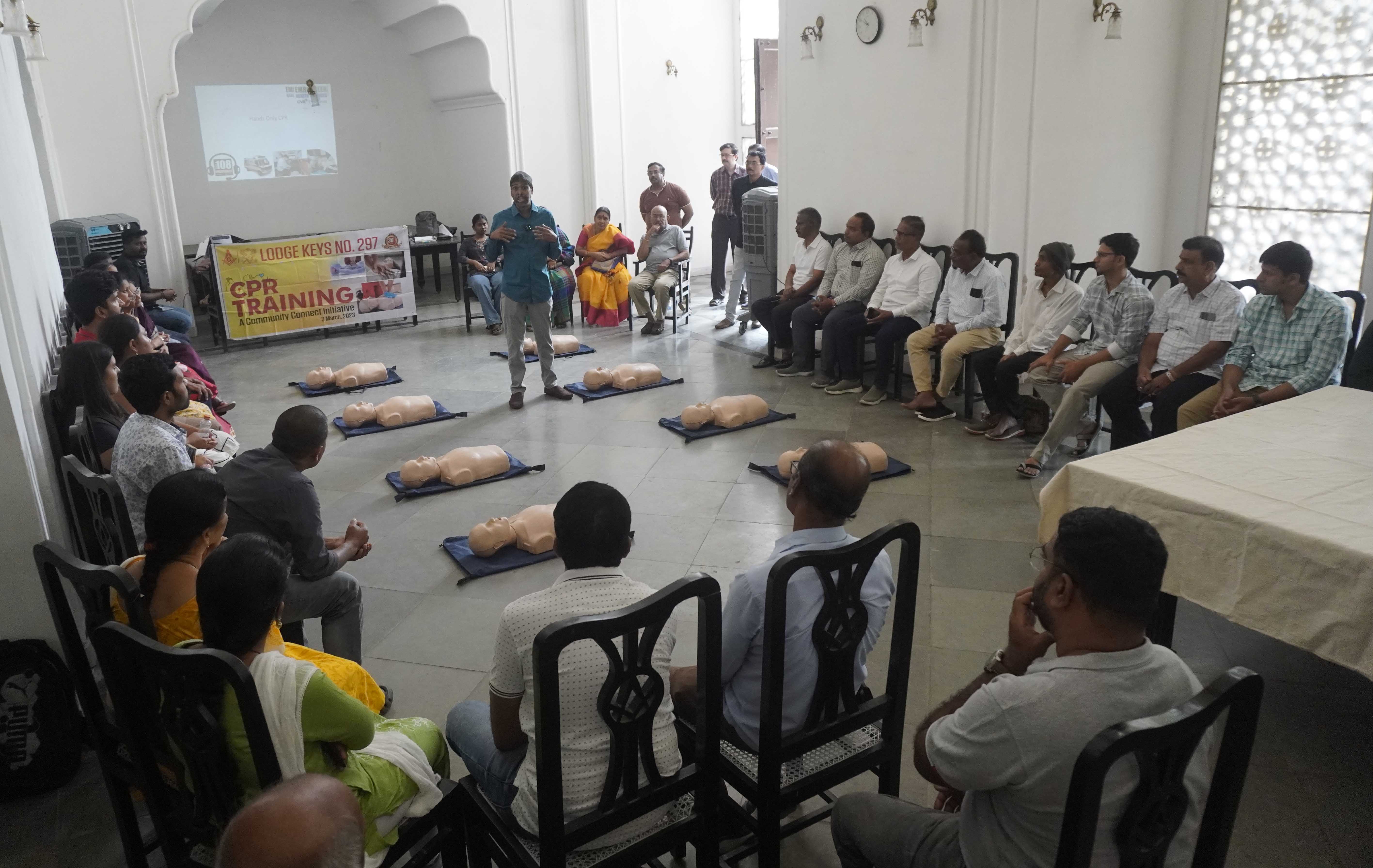
Learn CPR, save a life: Lodge Keys and GVK Green Health Services offer hands-on training on June 6
Watchmen, domestic servants, street vendors, auto/cab drivers, security guards, and students are especially invited
Hyderabad, June 3: Lodge Keys No. 297, the city’s primary unit of Freemasonry, will organise a CPR Training Programme on June 6, 2026, from 2:00 PM to 5:30 PM at the Goshamahal Baradari Masonic Building, Goshamahal, in collaboration with GVK Green Health Services (formerly GVK EMRI).
The programme is part of Lodge Keys’ community outreach initiative, “Be a CPR Ambassador”, which aims to train 1,000 citizens in the life-saving skill of Cardiopulmonary Resuscitation (CPR).
CPR is a critical first-aid technique used when a person’s heart stops beating or when breathing ceases. Immediate CPR administered during the “golden minutes” before professional medical help arrives can significantly improve the chances of survival.
Over the past one-and-a-half years, Lodge Keys has successfully trained 758 citizens in CPR free of cost and is now just 242 participants away from achieving its target of 1,000 CPR Ambassadors. In addition, more than 1,400 people have been reached through awareness seminars, and the organisation aims to educate over 10,000 citizens through public awareness programmes eventually.
The June 6 programme will feature hands-on practical training conducted by certified trainers from GVK Green Health Services. Participants will practise CPR on mannequins, enabling them to gain confidence and develop the skills required to respond effectively during emergencies.
In addition to CPR, participants will also receive AED (Automated External Defibrillator) familiarisation training. An AED is a portable device used during sudden cardiac arrest. While CPR helps maintain blood circulation to the brain and other vital organs, an AED can analyse the heart’s rhythm and, when necessary, deliver an electric shock to help restore a normal heartbeat.
The AED module will cover: Recognition of sudden cardiac arrest, Safe operation of an AED, Correct placement of electrode pads, Understanding and following AED voice prompts, When to administer CPR and when to use an AED and How CPR and AED work together to improve survival outcomes
The organisers believe that CPR and AED training should be accessible to all sections of society. Therefore, individuals who can afford the training are requested to contribute a participation fee of ₹1,000. Those who are unable to pay will be accommodated free of cost.
“We do not want the ability to save a life to depend on one’s ability to pay. Anyone willing to learn CPR should have the opportunity to do so,” said the organisers.
Lodge Keys especially invites security guards, watchmen, auto and cab drivers, street vendors, domestic workers, housekeeping staff, students, and other community members to take advantage of this opportunity. Employers and institutions are also encouraged to nominate such individuals for free training.
Participation is limited to 40 persons on a first-come, first-served basis. Prior registration and confirmation are mandatory.
For registration and participation, please contact: D. Ramchandram – 98480 42020; P. Veerabhadrudu – 93910 39047; Arun Selgam – 98491 75197 and G. Ashok Kumar – 94402 26960
Individuals, NGOs, philanthropists, and corporations interested in supporting this life-saving initiative are encouraged to contact D. Ramchandram at 98480 42020 and partner with Lodge Keys to create more CPR Ambassadors.
3, Jun 2026
Planned Dismantling of Ocean Observational System is Devastating Blow to Science, American Economy and Disaster Readiness
WASHINGTON [June 3, 2026] – The Trump administration has announced that it plans to dismantle the Ocean Observatories Initiative, a deep-ocean observation system that provides essential data to monitor coastal environments, marine ecosystems and powerful currents that shape the world’s climate. The move comes on the brink of what is expected to be one of the worst El Niño cycles in a century, which will require careful monitoring of ocean conditions to understand implications for marine wildlife, fisheries and coastal communities.
Chris Robbins, Ocean Conservancy’s associate director of scientific initiatives said “Walking away from a $368-million investment in a state-of-the-art system, a feat of engineering already paid for by the American people, is absolutely myopic. This system is a vital scientific asset that quietly protects American lives, communities and the economy through unfettered access to world-class scientific data. Its loss would create an irreparable blind spot for our country in predicting earthquakes, fishery health, storm forecasting, coastal flooding and more. It just doesn’t make sense.”
2, Jun 2026
ICBA Statement on Executive Order on Promoting AI Innovation and Security
Washington, D.C. (June 2, 2026) — Independent Community Bankers of America (ICBA) President and CEO Rebeca Romero Rainey issued the following statement on today’s executive order on promoting advanced artificial intelligence innovation and security.
“ICBA and the nation’s community bankers thank the administration for expressly recognizing community banks as a critical infrastructure component and adopting elements of our joint AI action plan in directing federal agencies to secure their systems and to promote access to AI security tools.
“The president’s explicit inclusion of community banks in today’s executive order directly aligns with ICBA’s ongoing advocacy for equitable access to federal AI security resources and coordination. It reflects the priorities we have advanced in meetings with the administration and in our action plan, particularly our calls for adopting effective AI-driven cybersecurity, modernizing security operations, building an AI-ready workforce, and establishing a voluntary clearinghouse in collaboration with the AI industry and critical infrastructure operators to facilities AI cyber readiness and response.
“Today’s executive order is an important demonstration of how the community bank voice is being heard on behalf of the local communities we serve. ICBA looks forward to continuing to work with the administration toward a secure and AI-ready America.”
2, Jun 2026
Ecobank Group Launches World First Nature Bond Mobilising Global Capital to Protect Africa’s Natural Ecosystems
LOMÉ, Togo, June 2, 2026/ – Ecobank Group (www.Ecobank.com) has launched the world’s first ICMA commercial bank-issued Nature Bond on the London Stock Exchange, creating a new route for international and African capital to protect Africa’s biodiversity. Moody’s awarded the transaction its highest possible sustainability quality score, SQS1 Excellent. The bond will support African farmers, sustainable agriculture businesses and water systems, protecting some of the planet’s most important ecosystems.
Impact on the ground in Africa
Africa is home to some of the world’s most important natural capital, including arable land, tropical forests, freshwater systems and biodiversity across hundreds of millions of hectares. But, until now, private nature capital has not flowed to Africa at the scale the continent’s ecological significance warrants in global ecological resilience. Despite hosting 25% of global biodiversity, Africa receives less than 3% of nature finance.

Ecobank’s Nature Bond is a direct response to this gap. It will support smallholder farmers adopting sustainable agricultural practices, agri-processors with verified deforestation-free supply chains, and water infrastructure protecting freshwater ecosystems relied upon by millions of people. Unlike many conservation-focused financing vehicles, Ecobank’s Nature Bond channels capital directly through Africa’s real economy — financing businesses and communities whose day-to-day activities shape environmental outcomes at scale.
The investments will be made in 24 markets, with significant deployment in biodiversity-priority countries such as Côte d’Ivoire, Burkina Faso and Ghana. Importantly, 81% of the eligible lending pool is allocated to countries where agricultural land-use change is the primary driver of biodiversity loss, helping direct capital to the areas where it can have the greatest environmental impact.
The framework also incorporates independent monitoring and verification mechanisms, including deforestation screening and supply chain traceability requirements, helping ensure that financed activities deliver measurable nature-positive outcomes. Every eligible loan carries seven independently verified sustainability conditions.
The launch of this bond also comes as governments and investors worldwide face mounting pressure to mobilise private capital for biodiversity protection and sustainable land use.
What is a Nature Bond?
A Nature Bond, under the ICMA secondary designation, requires proceeds to actively contribute to nature-positive outcomes, including transforming economic activities to reduce the drivers of nature loss at scale.
The Nature Bond was designed to reach those that conservation-focused instruments were not designed to serve – farmers, agri-processors and water operators whose daily activities collectively determine ecosystem outcomes.
While green bonds typically finance a broad range of environmental objectives, the Nature Bond designation focuses the use of proceeds specifically on nature-related outcomes, including biodiversity, sustainable agriculture, land use and water infrastructure.
The transaction
The USD 450 million bond was priced following strong investor demand with the final orderbook exceeding USD 1.36 billion – 3.9x the original target size. The strength of demand enabled Ecobank to increase the transaction by USD 100 million and tighten pricing by 50 basis points.
The transaction attracted support from both international and African investors, demonstrating Ecobank’s unique ability to mobilise capital across global and African markets.
For the first time, international and African capital markets have a credible, scalable mechanism for financing the protection of African natural capital through the communities who depend on it.
Jeremy Awori, Group Chief Executive Office, Ecobank Transnational Incorporated, commented:
“This transaction is a defining moment for African sustainable finance. Investors did not just support this bond. They demanded more of it, allowing us to increase the size and tighten pricing.
We are not a bank that simply labels bonds. We have spent four years building the systems, governance and accountability needed to make nature finance credible and scalable in Africa.
This bond is ultimately about the farmers, cooperatives and communities whose livelihoods depend on healthy ecosystems.”
Rachael Antwi, Group Head of Sustainability and ESRM, Ecobank Transnational Incorporated, added:
“Nature finance will only scale in Africa if it is practical, measurable and connected to the real economy. This bond is designed to do that by linking international capital to eligible lending for sustainable agriculture and water infrastructure across 24 countries. It reflects the systems and standards Ecobank has built to ensure nature finance supports both environmental resilience and the communities whose livelihoods depend on healthy ecosystems.”
2, Jun 2026
ITS America Conference & Expo Reveals Record 2026 Detroit Program
DETROIT, Mich. (June 2, 2026) — ITS America Conference & Expo, organized in partnership by RX Global and ITS America, has released its full program for the 2026 annual event, scheduled June 9-12 at Huntington Place in Detroit, Michigan, bringing together more than 3,000 transportation leaders from 23 countries, regions and territories to advance safer, smarter and more connected transportation systems.
The four-day expo, themed “Empowering Innovation,” features more than 100 conference sessions, plenary presentations led by industry visionaries, and state DOT roundtable discussions that give transportation leaders a platform to exchange strategies and share lessons from the field. Sessions cover topics ranging from connected vehicle deployment and AI-driven traffic management to accessible transportation and smart infrastructure. The exhibit hall, open June 10-12, will welcome close to 200 exhibitors and sponsors showcasing the latest advances in traffic management, autonomous mobility, connected vehicle systems and smart infrastructure.
New this year, the Cybersecurity & Data Zone brings together 10 exhibitors highlighting innovative solutions that protect connected vehicles and secure smart infrastructure as transportation networks become more digital and automated. Palo Alto Networks, one of the zone’s featured exhibitors, will present its AI-driven cybersecurity platforms designed to protect connected transportation infrastructure from evolving threats. The new StartUp Zone gives emerging companies a dedicated platform to introduce breakthrough technologies directly to decision-makers and procurement leaders. Start-up companies including Mobito, Neuweb, Inex.net, ASX, ViaSight and Intreelligent will bring a stronger presence to the show floor, representing the next generation of transportation innovation. Exhibiting alongside the industry’s most established players, these rising companies gain direct access to the agencies, investors and partners capable of moving their technologies from concept to real-world deployment.
“The ITS America Conference & Expo is where our industry comes to move forward, together,” said Laura Chace, President and CEO, ITS America. “The pace of change in transportation technology demands that leaders gather each year to share what works and build the relationships that drive real-world deployment. Detroit is the right city for this conversation, and the 2026 program reflects the depth, urgency and opportunity that defines this moment in mobility.”
This year’s event features a record number of outdoor demonstrations, sponsored by Integral Blue and located directly outside Huntington Place, offering five immersive experiences that bring intelligent transportation to life across Detroit. The I-94 Freeway Experience shows how V2X communication and cloud-based systems make high-speed travel safer and more efficient in real time, while the M-1 Intelligent Woodward Experience puts connected intersections and advanced sensors to work along Detroit’s iconic Woodward Avenue, demonstrating how vehicles, pedestrians and infrastructure communicate to improve urban safety and traffic flow.
On Thursday, June 11, Emergency Response Tech & Demo Day, brought to you by GFT Infrastructure Inc. and Michigan DOT sponsored by Skydio, connects the worlds of ITS and emergency response through live demonstrations featuring infrastructure-based V2X communications for incident scene warnings, drone delivery integration for emergency operations and a close-up look at an autonomous freight vehicle from TORC. Three Tech Tours, available on Tuesday, June 9, take small groups to active ITS facilities across the region, including a behind-the-scenes visit to Integral Blue’s Auburn Hills operations center where attendees witness live demonstrations of ITS equipment integration, V2X applications and network incident response that keep Michigan’s transportation systems running.
The Transportation Hub, sponsored by Palo Alto Networks and located on the exhibit hall floor, serves as the event’s destination for learning and networking. Attendees can join expert-led fireside chats, watch a live recording of the Transportation Channel Podcast and receive a complimentary professional headshot, all while connecting with peers and industry leaders shaping the future of transportation. The Future Leaders Program, sponsored by Southwest Research Institute (SwRI), connects students and young professionals with industry pioneers through essay competitions, hands-on workshops, campfire-style career development sessions and direct mentorship from transportation leaders.
“From the plenary stage to the exhibit floor to the streets of Detroit, attendees will see, experience and discuss the technologies reshaping how people and goods move across our communities,” said Jaime McAuley, Event Vice President, ITS America Events. “Every session, demonstration and Tech Tour is designed to give attendees practical knowledge and new perspectives they can bring home and put to work immediately. This is where the industry comes to learn what is next and how to get there.”
The conference draws architects, engineers, public agency officials, state departments of transportation, metropolitan planning organizations, investors and mobility innovators, representing a 50-50 split between the public and private sectors. Registration is open now at itsamericaevents.com.


