


21, May 2026
Turn Idle Gold into Timeless Elegance: Joyalukkas Launches its Bigges Jewellery Festival with 0 percent Deduction on Old Gold and 40 percent off wastage/making charges

New Delhi, May 21: Joyalukkas, the world’s favourite jeweller, has unveiled ‘The Biggest Jewellery Festival of the Year’ — a landmark celebration that rewards customers for giving their old, idle gold a magnificent new life. Running from 15 May to 14 June 2026 across all Joyalukkas showrooms, the festival offers two headline benefits: a flat 0% deduction* on old gold exchange from any jeweller, and a flat 40% off on Wast-age / making charges across gold, diamond, precious stone, platinum and silver jewellery.
Announcing the initiative, Dr. Joy Alukkas, Chairman and Managing Director of Joyalukkas Group, said, “Old gold holds immense value — not just for individual families, but for our nation as a whole. Every piece of idle gold that re-enters circulation strengthens India’s economy and keeps its precious resources working for its people. Through this festival, we want to give our customers a wonderful opportunity to transform that latent value into beautiful new jewellery, while enjoying exceptional savings. We invite everyone to visit their nearest Joyalukkas showroom and experience a truly rewarding jewellery journey.”
- 0
- By Neel Achary

21, May 2026
Silver Trak Digital and Media Room Connect win IAMT Best Products and Services Award
At BroadcastAsia, 20-22 May at Singapore Expo on IAMT Pavilion, on stand 5A3-3
SINGAPORE, 21 May 2026 – Media asset management specialists Silver Trak Digital have won the IAMT Best Products and Services Award for their Media Room Connect solution at BroadcastAsia 2026. Media Room Connect allows users to create and manage secure, branded screening rooms directly on their company domain.
It is a key part of the Media Room Media Asset Management solution which enables secure sharing, global content delivery and screener campaigns for broadcast and production assets.
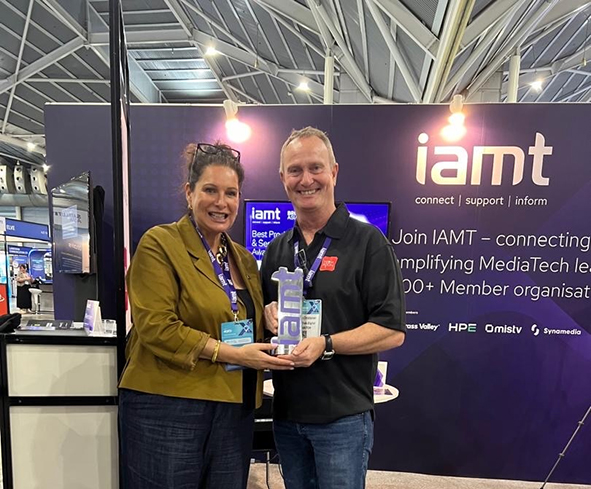
(l-r) IAMT CEO Saleha Williams and Silver Trak Digital COO Christian Christiansen
IAMT CEO Saleha Williams said, “A huge congratulations to Silver Trak Digital for winning the IAMT Best Products and Services Award with Media Room Connect. Celebrating those driving changes across the APAC region, the IAMT Awards are judged by an independent panel of industry experts and recognises standout achievement, innovation and industry impact.”
Silver Trak Digital is demonstrating its next gen Media Room Suite solutions at Broadcast Asia 2026 from 20-22 May at the Singapore Expo on the IAMT Pavilion, stand 5A3-3.
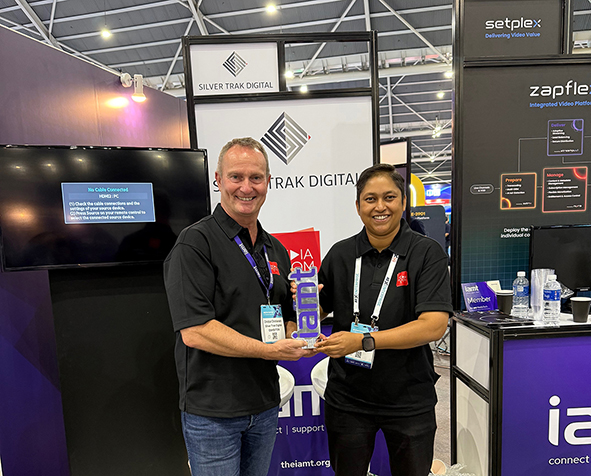
(l-r) Christian Christiansen and Karlz Varma, VP Business Development for Silver Trak Asia with their IAMT Award
Silver Trak COO Christian Christiansen said, “We are delighted and honoured to have won the IAMT Best Products and Services Award for Media Room Connect, which is a product that has been developed very much with industry requirements in mind. Our thanks go to the IAMT, the awards’ judges and our clients who have helped make Media Room and Media Room connect such a success across the Asia Pacific region.”
Silver Trak Digital are demonstrating two products from their latest, cutting-edge Media Room suite at BroadcastAsia this year – Media Room covering Media Asset Management, distribution and screeners (and more) and Media Room Connect which creates and manages a secure screening room on your company domain.
They are also discussing two new products under development including Media Room Screeners, a secure screener campaigns product with enhanced artwork capabilities and Media Room Transport, our SaaS large file, high speed transport solution.
Media Room is the affordable, secure, cloud-based media asset management and delivery platform that enables content owners to upload, manage, market and distribute content globally, faster, more efficiently and with complete control.
Due to its flexibility and affordability, media organisations can easily start small and scale with Media Room as their business grows.
To get a demo of Media Room Connect see Silver Trak Digital at BroadcastAsia 2026 on the IAMT Pavilion, stand 5A3-3.
21, May 2026
C. Joseph Vijay Flags Off 40 Health Vehicles to Strengthen Rural Medical Services in Tamil Nadu
May 21 (BNP): Tamil Nadu Chief Minister C. Joseph Vijay on Wednesday flagged off a fleet of 40 new Bolero ambulances and utility vehicles for the Directorate of Medical and Rural Health Services at the Secretariat in Chennai, marking a significant step toward strengthening public healthcare delivery in the state. Procured at a cost of ₹2.90 crore, the vehicles are aimed at improving healthcare accessibility and emergency medical response in rural and underserved regions.

The initiative is designed to modernise healthcare mobility infrastructure, enabling medical teams to reach remote villages more efficiently while enhancing the delivery of essential public health services. Officials said the deployment of the vehicles would help strengthen grassroots healthcare outreach and improve response time during emergencies.
During the launch event, Tamil Nadu Chief Minister C. Joseph Vijay formally handed over keys to designated drivers in the presence of senior officials and health department personnel. Adding a personal touch to the programme, the Chief Minister later stepped into the driver’s seat and test-drove one of the newly launched vehicles within the Secretariat premises, a moment that quickly drew public attention.
The move reflects the government’s continued commitment to reinforcing rural healthcare systems and ensuring improved medical connectivity for communities across Tamil Nadu.
21, May 2026
Filium names former Seattle Mayor Bruce Harrell as CEO
FILIUM CORP. AND FORMER SEATTLE MAYOR BRUCE HARRELL ANNOUNCE STRATEGIC LEADERSHIP TRANSITION AND ESTABLISHMENT OF EXECUTIVE ADVISORY BOARD, POSITIONING THE COMPANY FOR ACCELERATED GLOBAL GROWTH
Filium names former Seattle Mayor Bruce Harrell as CEO and establishes an Executive Advisory Board with industry leaders, as retailers and brands, including Bass Pro Shops, Cabela’s, O’Neills and North Face, adopt Filium Activated technology.
Seattle, Washington — May 21, 2026 — Filium, the Seattle-based award-winning material science innovator transforming textile performance through sustainable technology, today announced a series of strategic leadership and organizational developments designed to accelerate the company’s next phase of growth and reinforce its position as a leader in advanced textile solutions.
Filium has developed breakthrough PFAS-free textile technology engineered to deliver water repellency, soil release, and odor resistance while preserving breathability and fabric hand feel. The company’s proprietary solutions are helping redefine modern textile manufacturing by reducing water consumption, lowering energy use, extending fabric lifespan, and supporting healthier, more sustainable consumer products and ensuring that all communities benefit from this technology.
Filium technology has recently been featured in product lines carried by major global retailers and brands, including Bass Pro Shops, Cabela’s, O’Neills, and North Face.
As part of today’s announcement, Filium confirmed that Bruce Harrell will assume the role of Chief Executive Officer, succeeding Founder Raj Shah, who will continue to guide the company as Chairman of the Board.
“Raj Shah and his brother Ahkil Shah’s decades of leadership in the apparel and textile industry, combined with their deep understanding of sustainability and innovation, have positioned Filium at the forefront of a transformational movement in material science,” said Harrell, former Mayor of the City of Seattle. “I am honored to step into this leadership role at such an exciting moment for the company and the industry. Consumers and global brands are demanding products that perform at the highest level while reflecting modern environmental and wellness values, and Filium is uniquely positioned to help lead that evolution. The Shahs have been respected for decades as leading innovators and disruptors in the apparel industry. Their unprecedented success in brands like Mecca, supply chain innovation and record breaking 24% market share, gives Filium a unique advantage in material science.”
Harrell continued, “Filium’s game-changing and award-winning technology is designed for every fabric type and every community. I am thrilled to join the team that is bringing this revolutionary approach to sustainable, innovative textiles to its next stage with new retailers, brands, and consumers.”
Doug Lynch, President of Filium, added, “Bruce brings a unique combination of visionary leadership, operational discipline, AI integration and relationship-building expertise. Over the past several weeks, I have seen firsthand his commitment to collaboration, innovation, and performance excellence. His leadership will be instrumental as Filium scales its global growth strategy.”
Filium also announced the formation and expansion of its Executive Advisory Board, bringing together highly accomplished leaders from the global apparel, retail, sports, and brand marketing industries to support the company’s strategic initiatives and long-term expansion.
New members of the Executive Advisory Board include:
-
Bob Philion, former President and CEO of Puma North America and COBRA PUMA Golf
-
Laurie Black, longtime senior executive at Nordstrom, including service as President of Nordstrom Rack
-
Chris Overholt, Chief Commercial Officer of Vinik Sports Group and the Tampa Bay Lightening, and former Senior Vice President and Head of Global Partnerships for Madison Square Garden Sports
-
Dr. Badri Narayanan Gopalakrishnan, Founder of Infinite Sum Modeling, LLC.
In addition, Larry Miller, Chairman of Jordan Brand at Nike and former President of Jordan Brand, who also serves on Filium’s Board of Directors, continues to provide strategic guidance to the company, commented, “The Shah brothers decades of stellar success in the apparel industry and with Bruce Harrell’s highly accomplished background will accelerate company’s mission. The Filum team understands innovation, culture and how to effectively build partnerships which will be key to their success.”
Investor Brian Levine commented, “Filium has positioned itself as a true innovator within the textile industry by aligning performance, health, sustainability, and environmental responsibility in a way that is increasingly demanded by consumers and global brands alike. The company is challenging legacy assumptions in an industry historically driven primarily by cost and appearance.”
Chairman Raj Shah, who alongside Akhil Shah is a co-founder of Filium, added, “These leadership and organizational changes, coupled with their novel AI applications, reflect Filium’s unwavering commitment to innovation, sustainability, and long-term industry leadership. For decades, I have witnessed the environmental and human impact of traditional textile manufacturing. Filium was created to help change that reality, and I believe the company is exceptionally well positioned for continued growth and global influence in the material sciences sector.”
21, May 2026
InCred Alternative Investments leads INR 185 crore growth capital investment in VEM Technologies

The investment reflects InCred Alternative Investments’ conviction in India’s rapidly evolving defence manufacturing ecosystem, driven by increasing indigenisation, strong policy support, rising defence capital expenditure, and growing export opportunities. The transaction comprises primary growth capital to support VEM Technologies’ expansion plans.
Founded in 1988 and promoted by Mr. V. Venkata Raju and family, VEM Technologies is a leading private-sector defence and aerospace company with expertise across system engineering, integration, design, manufacturing, and quality assurance for defence, aeronautics, and space systems and sub-systems. The company contributes critical components and systems to strategic missile programmes including BrahMos, Akash, and Prithvi, and has established itself as a key private-sector partner within India’s defence manufacturing ecosystem.
The investment comes at a time when India’s defence manufacturing sector is witnessing accelerated localisation, increasing order visibility, and growing export momentum. The capital will be utilised towards capacity expansion, strengthening advanced manufacturing infrastructure, and establishing a state-of-the-art manufacturing facility to support the company’s next phase of growth and anticipated opportunities across domestic and export markets.
Commenting on the investment, Vivek Singla, Managing Partner & CIO, InCred Alternative Investments, said,
“India’s defence and aerospace sector presents a compelling long-term investment opportunity, supported by structural policy reforms, increasing localisation, and rising focus on indigenous manufacturing capabilities. VEM Technologies stands out for its strong technological expertise, execution track record, and strategic positioning within India’s evolving defence ecosystem. We look forward to partnering with the management team as the company scales its manufacturing capabilities and strengthens its role within India’s growing defence and aerospace landscape.”
V. Venkata Raju, Founder, Chairman and Managing Director, VEM Technologies Private Limited, said,
“Over the last several years, the Indian defence sector has witnessed a meaningful shift towards indigenous design, development, and manufacturing. This investment will support us in strengthening our manufacturing infrastructure, enhancing our capabilities across complex defence and aerospace systems, and addressing the growing demand from both domestic and international markets. We are pleased to partner with InCred Alternative Investments as we enter the next phase of growth and expansion.”
InCred Growth Partners Fund (IGPF) is a series of private equity funds sponsored by InCred Capital Financial Services, focused on investing in high-quality founder-led Indian businesses operating in sectors of national importance. The strategy follows a high-conviction, concentrated portfolio approach with investments across select companies aimed at generating long-term value creation. The investment in VEM Technologies aligns with InCred Alternative Investments’ strategy of backing scalable businesses benefiting from long-term structural growth themes.
Launched in 2023, IGPF-I is the maiden private equity fund under the platform and a SEBI-registered Category II AIF, while IGPF-II was launched in late 2025.
21, May 2026
Struddys Apparel becomes first global site to install new Epson SureColor F20060
BRISBANE, May 21 – Struddys Apparel, a manufacturer specialising in custom teamwear, sportswear and branded garments, has become the first site and company globally to purchase and install the new Epson SureColor F20060 dye sublimation platform, strengthening its position as one of Australia’s leading vertically integrated apparel producers.
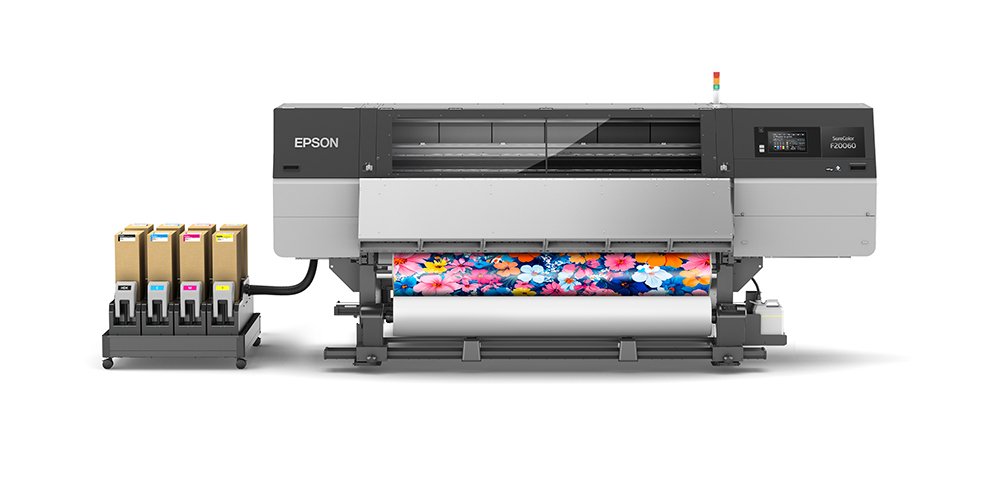
The investment represents the latest step in Struddys’ growth from a small custom operation into a large-scale, Australian-made production facility with a strong focus on quality, speed and full in-house control. It also highlights how strategic technology adoption is helping local manufacturers scale output while maintaining the flexibility needed for custom and short-run work.

Struddys has been a strong example of organic growth through dye sublimation. The business began with a single 64-inch printer (delivering approximately 20 sqm/hr) and expanded to three units as customer demand increased. As production volumes grew, however, the company reached the practical limits of adding smaller-format devices.
At that point, Struddys made a deliberate move to higher-volume production capability rather than continuing to scale incrementally. The company adopted a 76-inch Epson SureColor F10060, a production platform capable of up to 255 sqm/hr and specifically 100 sqm/hr in apparel production, enabling a major increase in throughput and operational efficiency.
That shift gave Struddys a more effective production model: high-volume work could be concentrated on the larger-format platform, while its 64-inch printers remained ideal for short runs, custom programs and bespoke jobs.
As demand has continued to grow, Struddys has now added a second 76-inch platform with the purchase of the new SureColor F20060.
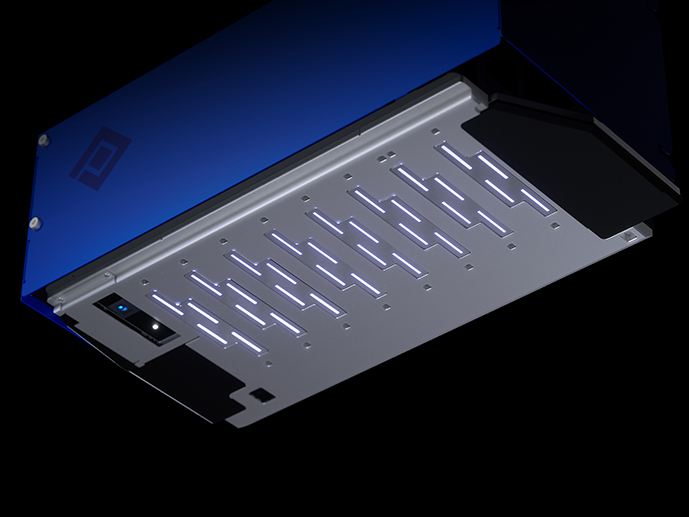
The new installation makes Struddys the first global site to adopt the Epson SureColor F20060 and positions the company at the forefront of dye-sublimation production capability.
The additional capacity will support faster turnaround times, greater production resilience and further growth as the business expands across teamwear, sportswear and branded apparel markets.
The Epson SureColor F20060 is a dye-sublimation printer designed for textile manufacturers and print service providers requiring fast turnaround times. Built for demanding production environments, it combines consistent output quality, reliable operation and printing speeds of up to 300 sqm/h. It is suited to industrial-scale production including fashion apparel, sportswear, home furnishings and soft signage.
For Struddys, the addition of the F20060 is about more than just speed alone. It supports a production strategy that combines scale with agility allowing the business to meet larger volume orders efficiently while preserving the responsiveness needed for custom, bespoke and short-run apparel work.
This balance is increasingly important for manufacturers serving customers who expect both rapid delivery and tailored product offerings.
By bringing the F20060 into its operation, Struddys is reinforcing a model built on local manufacturing, controlled workflows and production flexibility. With Epson technology underpinning both its high-volume and specialty output, the company is well placed to continue growing without compromising the quality and service standards that have driven its success.
Struddys’ journey from a single-printer operation to a scaled production business illustrates how investment in the right technology at the right time can transform manufacturing capability. Its latest move, becoming the first global site to install the Epson SureColor F20060, signals not only confidence in future demand, but a clear commitment to staying ahead of the curve in Australian apparel production.
21, May 2026
Averlon Launches Precog to Stop Exploitable Risk Before It Reaches Production
New predictive remediation capability helps security teams prevent exploitable risk before it reaches production
Redmond, WA, May 21, 2026 — Averlon today announced Precog, a predictive remediation capability that identifies exploitable risk in proposed code and infrastructure changes and delivers the fix to developers before the change reaches production. Precog addresses a widening gap: AI is accelerating both code delivery and vulnerability discovery, and security teams can no longer manage risk only after it lands in production.
The need for this shift is becoming urgent. Google Cloud’s Mandiant M-Trends 2026 report found that mean time to exploit collapsed from 63 days in 2018 to an estimated minus seven days in 2025, meaning exploitation now often begins before a patch is available. New frontier models such as Claude Mythos and GPT-5.5-Cyber are making it increasingly clear that AI will compress the time required to discover, validate, and exploit vulnerabilities. The result is a widening gap between the speed at which risk is discovered and exploited, and the speed at which security teams can triage and fix it.
The industry is converging on a new operating model: Remediation Operations, or RemOps. The premise is simple: finding risk and closing risk are different problems. Security teams do not need more alerts; they need a way to understand what is truly exploitable, prioritize by business impact, and drive safe fixes through developer workflows.
Averlon’s Remediation Operations platform addresses the full lifecycle of risk reduction: ingesting security findings, determining what is truly exploitable, prioritizing by business impact, and driving agentic remediation through developer workflows. The platform has helped customers reduce remediation time by up to 90 percent and alert noise by up to 95 percent, helping security teams move from backlogs of thousands of findings to the handful that need fixing.
With Precog, Averlon extends that model earlier in the lifecycle by preventing exploitable risk before it becomes production exposure. Unlike security scanners that flag findings based on generic severity scores, Precog evaluates whether a proposed change would actually be exploitable in the customer’s real environment, accounting for internet reachability, exposed services, and existing compensating controls. This contextual analysis means Precog surfaces the changes that genuinely create exposure, not the long tail of theoretically risky findings that wouldn’t be exploitable in production. Precog integrates into CI systems such as GitHub, evaluating proposed changes before they reach production.
When risky changes are detected, Precog identifies the issue, explains the exploitable path, and generates a remediation directly in the developer workflow. Developers receive the proposed fix at the same time they are notified of the risk, reducing friction between security review and software delivery.
“AI is changing both sides of the software lifecycle. It is accelerating development while also introducing code that is often not ready for production. With AI also accelerating the discovery and exploitation of weaknesses in that software, security teams can no longer rely only on post-production detection and backlog management. Capabilities like Averlon’s Precog point to where the market is headed: identifying risky changes earlier and helping developers fix them before they become production exposure.”
Chris Steffen, VP Research, Enterprise Management Associates
Complementing Precog is Vulnerability Intelligence, Averlon’s CVE research feed at research.averlon.ai, which gives teams the context they need to triage emerging vulnerabilities, including exploitability, attacker requirements, required privileges, user interaction, and evidence of exploitation in the wild.
“Security teams have relied on finding and fixing vulnerabilities after they reach production. AI has made that untenable from both directions: it is generating new vulnerabilities faster than teams can triage them, and it is collapsing the window between exposure and exploitation. You cannot remediate your way out of that. The only way to stay ahead is to prevent exploitable risk from reaching production in the first place. That is what Precog does.”
Sunil Gottumukkala, CEO, Averlon
Learn more and see Precog in action:
· Precog: Preventing Exposure Before the Backlog (blog): averlon.ai/blog/averlon-
· Vulnerability Remediation: Down and Up We Go (blog): averlon.ai/blog/vulnerability-
· Vulnerability Intelligence Brief #1 (research): averlon.ai/blog/vulnerability-
· Vulnerability Intelligence (live research feed): research.averlon.ai
· RemOps End-to-End Demo (recording): averlon.ai/webinars/
· Averlon Platform: averlon.ai/platform
Averlon is pioneering Remediation Operations, helping security teams move from vulnerability findings to safe, prioritized fixes. Its agentic AI identifies what is truly exploitable and automates remediation directly within developer workflows. Averlon is trusted by security teams at enterprises and fast-growing companies to efficiently scale their security programs. Founded in 2022, Averlon is backed by Salesforce Ventures, Voyager Capital, and Outpost Ventures.
21, May 2026
MathWorks Launches New Renesas Hardware Support Packages for Faster Embedded Systems Prototyping
Bengaluru, May 21 : MathWorks, the leading developer of mathematical computing software for designing engineered systems, today announced new Hardware Support Packages that directly connect Model-Based Design and simulation to execution on Renesas‘ RH850/U2A microcontroller for automotive applications and the RA6T2 microcontroller for industrial controls. The new MATLAB® and Simulink® integrations enable engineering teams to move from simulation to running embedded code on hardware with automated build, flashing, and on-target execution while also accelerating development cycles through the elimination of many manual integration steps.

“Our customers expect a straightforward path from simulation model to microcontroller, and the new integration with MATLAB and Simulink delivers exactly that,” said Brad Rex, Senior Director of System Solution Team, UX (User Experience) Group at Renesas. “By working with MathWorks, we’ve removed the need to assemble toolchains and device drivers by hand so teams can simulate and validate designs earlier, iterate faster, and reduce integration effort across ECU and industrial-control projects.“
The new support packages give engineering teams a consistent Model-Based Design workflow across both automotive and industrial programs, reducing integration effort and accelerating deployment. Renesas’ RA microcontroller platform is optimized for industrial and robotics applications that require flexible connectivity, real-time responsiveness, and scalable embedded control. The integration with the RA family enables rapid prototyping of servo and variable-speed drive applications, with one-click deployment that streamlines hardware bring-up and on-bench validation for motion profiles and closed-loop tuning.
The Renesas RH850/U2A microcontroller, widely used in automotive electronic control units, provides the deterministic performance and safety-critical features required for EV motor control, advanced driver-assistance systems and body electronics. Automotive engineers developing traction motor control for electric vehicles can deploy field-oriented control and regenerative braking algorithms directly from Simulink to RH850/U2A-based ECUs. This shortens the time from concept to vehicle-level testing, supports smoother torque delivery during rapid transients, and speeds calibration across drive cycles—without writing initialization code or custom build scripts.
“Our collaboration with Renesas strengthens the level of interoperability that engineers expect when using MATLAB and Simulink,” said Anuja Apte, India Product Marketing Manager, MathWorks.
“By providing a direct path from Simulink models to optimized microcontroller deployment, we help engineering teams move from design to hardware more efficiently while staying integrated with the broader toolchains they rely on. This approach reflects the MathWorks Connections program, which brings partners and customers together to accelerate innovation and reduce time to market within a widely adopted engineering and scientific platform.”
21, May 2026
WellSpan Health Reports 66% Reduction in Workplace Violence Following Systemwide Safety Initiative with Canopy
PALO ALTO, CA. May 21 – Canopy, a connected safety platform for hospitals and health systems focused on protecting nurses and staff, announced a new case study today with Pennsylvania health system WellSpan Health, showing measurable shifts after rolling out a systemwide workplace violence prevention strategy supported by Canopy’s technology.
According to the joint case study, WellSpan Health saw a 66% reduction in workplace violence-related DART (Days Away, Restricted or Transferred) injuries within a year of implementation. The initiative centralized public safety operations and emergency response protocols into a unified system, supported by wearable and RTLS technology that allows staff to quickly signal for help during escalating situations.
“One of WellSpan’s organizational goals is zero harm, not just in workplace violence but across all injuries,” said Bill White, Vice President of Public Safety at WellSpan Health. “We have an obligation to provide a safe environment for anyone who enters our facilities,” White noted that before Canopy, alerts were often delayed, and staff didn’t have a dependable way to quickly signal for help. “That’s changed with Canopy,” he said. “Our team members now have immediate access to support at the push of a button, which helps us respond faster and makes them feel more supported in real time.”
WellSpan identified several operational gaps across its growing network of hospitals and care sites before launching the initiative. Emergency alerts varied by location, and staff often had to locate a phone or secondary device before requesting security support, which slowed response during critical moments. After implementing Canopy, WellSpan rolled out instant notifications, integrated the DASA (Dynamic Appraisal of Situational Aggression) framework, and enhanced data validation tools to improve response times and increase staff visibility during incidents.
Workplace violence in hospitals continues to be one of healthcare’s fastest-growing operational and workforce challenges. The WellSpan and Canopy report was released during National Nurses Month, highlighting this ongoing, yet underrecognized issue throughout U.S. health systems. WellSpan leaders noted that the initiative was designed to reduce physical incidents while also shifting the organization toward a more proactive safety model across departments and campuses.
“Healthcare organizations everywhere are looking for better ways to support and protect frontline staff,” said Shan Sinha, CEO of Canopy Works. “The kind of impact Canopy and WellSpan have achieved together is exactly what Canopy strives for: creating environments where staff can get help quickly, feel supported in high-stress situations, and focus on delivering care safely. We’re proud to partner with WellSpan in building a stronger culture of safety for healthcare workers every day.”
Healthcare workforce safety has become an increasingly important area of focus nationally as organizations seek new approaches to meet evolving expectations around workforce well-being and retention in clinical environments. Industry analysts and healthcare leaders have pointed to workplace safety as a key component of long-term workforce sustainability.
Canopy is creating a standardized process for emergency response and safety across its expanding network. With WellSpan as a strong example of success, Canopy continues to support healthcare organizations in building safer environments for nurses, staff, patients, and visitors.
21, May 2026
The Silent Cost of Postponing Oral Hygiene – Oral Health Analysis by Leading Health Expert Dr. Sonia Datta

Kolkata | May 21: While many individuals wait for an acute toothache to signal a problem, dental experts are highlighting a growing concern regarding the “silent” progression of oral health issues. Most dental complications, from cavities to gum disease, begin without immediate pain or visible symptoms, leading to a dangerous cycle of postponement. This delay often allows minor issues to transform into significant long-term damage before a patient even realizes a problem exists.
The hidden progression of neglect begins when hygiene is overlooked, allowing plaque to harden into tartar within a matter of days. Once tartar forms, it cannot be removed by standard brushing, creating a foundation for chronic inflammation, enamel erosion, and eventual tooth loss. Dentists point out that the biggest mistake is equating the absence of pain with the absence of a disease. By the time discomfort finally manifests, the condition has often advanced to a stage that requires complex, invasive, and costly intervention rather than simple preventive maintenance.
In response to these risks, there is a renewed focus on preventive care that integrates time-tested natural solutions with modern science. Ayurvedic ingredients such as clove and neem have long been recognized for their potent antibacterial and anti-inflammatory properties, which help control harmful bacteria and soothe gum tissue. Dabur Red Paste incorporates these traditional botanicals into a clinically tested daily formulation that carries the IDA Seal of Acceptance, providing a scientifically backed tool to combat plaque and prevent the onset of serious dental conditions.
Maintaining long-term oral health requires a shift from reactive treatment to proactive habits. Consistent brushing twice daily with a validated toothpaste like Dabur Red Paste, combined with daily flossing and reduced sugar intake, forms a critical defense against acid exposure and bacterial buildup. When these daily habits are supported by regular professional check-ups, oral diseases can be identified and managed in their earliest stages. Choosing a proactive regimen is the most effective way to protect one’s smile and avoid the inevitable physical and financial costs of dental neglect –Oral Health Analysis by Leading Health Expert Dr. Sonia Datta.


