


20, May 2026
Insurance Investment Outsourcing Surpasses $5.5 Trillion as Private Markets and Global Expansion Reshape the Industry
IIOR Shows Record Outsourced Insurance AUM, Private Assets Near $1 Trillion, and Europe Emerging as a Global Growth Engine
BOISE, Idaho, NEW YORK, CHICAGO, LONDON and HONG KONG, May 20 – Clearwater Analytics (NYSE: CWAN) today released the 2026 Insurance Investment Outsourcing Report (IIOR), produced in partnership with DCS Financial Consulting. The report captures $5.5 trillion in third-party general account insurance assets under management across 96 asset managers, a 23% increase year-over-year and a 65% increase since 2021, alongside $1.8 trillion in assets under advisement across 12 investment consultants. The findings point to an outsourcing market that has become larger, more global, and materially more complex.
The 2026 IIOR reveals defining trends reshaping insurance investment management:
Private Markets Cross a Threshold. Third-party private insurance AUM has more than doubled since 2021, reaching $947 billion and approaching one-third of outsourced insurance allocations alongside public assets. Insurers have moved steadily beyond traditional private placements into middle-market lending, infrastructure debt, and structured credit, and 67% of participating managers now offer private fixed income capabilities alongside their public strategies.
Europe Rewrites the Map. Europe and the UK represent a major and expanding force in insurance outsourcing, with reported AUM growing 32% year-over-year and more than doubling since 2021, from $1.0 trillion to $2.1 trillion, reflecting both organic growth and broader manager participation in the IIOR. Europe and the UK now account for 38% of total outsourced insurance AUM. On a percentage basis, APAC and offshore markets grew even faster year-over-year, each significantly outpacing North America’s still-solid 12% gain. The findings reflect an outsourcing market that is no longer centered primarily in North America. Managers are increasingly winning mandates through global scale, regional specialization, or both.
“The 2026 IIOR captures a transformation that no single number can fully convey. Private markets have crossed a threshold, Europe has reshaped the map, and the sophistication this industry now demands across asset classes, geographies, and regulatory environments is compounding,” said Sandeep Sahai, Chief Executive Officer of Clearwater Analytics. “We believe the power of partnership is what allows insurers and their managers to move with the confidence this moment requires. We invite you to read the full report and see what this transformation means for your business.”
“What the 2026 IIOR makes clear is that insurance outsourcing is the prevailing model for how insurers deploy capital globally,” said Steve Doire, owner of DCS Financial Consulting and Strategic Advisor to Clearwater Analytics. “The near doubling of consultant AUA in two years tells you that insurers are engaging experts to build and manage increasingly diverse and complex strategic investment programs. The European surge is equally significant. This market has moved well beyond North American dominance, and the managers best positioned for what comes next are those who recognized this global shift and invested in the capability and presence to win across regions.”
A More Competitive Market Takes Shape
The growth of the IIOR reflects the growth of the market itself. What began as a report covering 40 participants now includes 108 managers and consultants and $5.5 trillion in assets under management. Over the past decade, the top 10 managers’ share of total AUM has declined from 70% to 59%, showing that more firms are competing for insurance mandates. Specialized and mid-sized managers are gaining ground through insurance expertise, private markets capabilities, and regional strength. Consultant AUA has also nearly doubled in two years, as insurers turn to outside expertise to help manage more complex investment programs.
What the Report Covers
The 2026 IIOR includes 96 asset manager profiles, 12 investment consultant profiles, global and regional rankings, and data on asset allocations, client types, and regional growth across major insurance investment markets. Together, these findings provide a clear view of where insurance assets are being managed, which firms are gaining share, and how the market is changing. The report is produced with DCS Financial Consulting, with Institutional Investor serving as industry engagement partner.
- 0
- By Neel Achary

20, May 2026
CM of Sikkim Travels by SNT City Runner Bus to Attend Sikkim Premier League Final

New Delhi, May 20: In line with the Government’s austerity measures and commitment towards responsible governance, Chief Minister Prem Singh Tamang on Monday travelled by the SNT City Runner bus to attend the final match of the Sikkim Premier League at Paljor Stadium.
The Chief Minister stated that the initiative was aimed at encouraging greater public participation in the use of public transport and promoting responsible practices in daily life.
He emphasised that such small yet meaningful efforts can collectively contribute towards strengthening administrative efficiency and conserving valuable resources.
The gesture also reflected the State Government’s continued focus on sustainable and people-centric governance practices.
20, May 2026
Nitika Gujral To Make Her Debut At The Cannes Film Festival 2026
New Delhi, May 20: Indian luxury bridal label Nitika Gujral is set to make its presence felt on the global stage as founder and designer Nitika Gujral makes her debut at the 79th edition of the Cannes Film Festival in Cannes, France. Taking place from May 12 to 23, 2026, the internationally celebrated festival continues to serve as one of the world’s most influential cultural and cinematic platforms, bringing together global voices across fashion, film, and art.
Representing a contemporary vision of Indian couture, Nitika Gujral will participate in multiple fashion-led showcases and appearances during the Cannes period, including the prestigious Red Carpet Stair Walk at the Palais des Festivals on 21st and 22nd May 2026. She will be accompanied by her husband and co-founder Amit Gujral, as the duo walks the Cannes red carpet together representing the brand on an international platform.
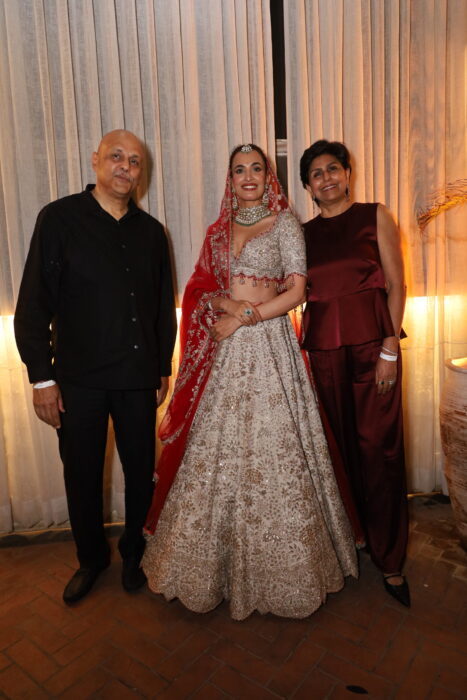
At the intersection of heritage and modernity, the Nitika Gujral label has become synonymous with contemporary bridalwear rooted in Indian craftsmanship. Known for its lightweight couture, intricate hand embroidery, and modern silhouettes, the brand reinterprets traditional techniques through a refined and contemporary lens for today’s bride. Each ensemble reflects a strong focus on craftsmanship, customization, and wearability while celebrating India’s rich textile heritage.
For Cannes 2026, the label will showcase Noor d’Or, a collection inspired by the interplay of light, heritage, and modern glamour. Rooted in the richness of Indian bridal craftsmanship and infused with the cinematic elegance of the French Riviera, the collection brings together jewel-toned silks, intricate embellishments, and fluid contemporary silhouettes. Through Noor d’Or, the label explores a dialogue between tradition and modernity, creating couture that feels both globally relevant and deeply connected to Indian artistry.
Founded by Nitika Gujral, with Amit Gujral serving as co-founder, the label has evolved from a bespoke design studio into an independent couture brand with a growing digital and international presence. Over the years, the brand has built a strong identity within the bridal couture space through detailed craftsmanship, contemporary occasionwear, and a signature aesthetic that balances tradition with modern elegance.
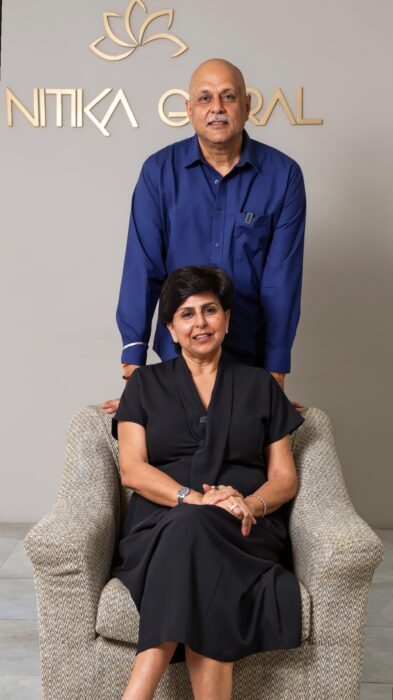
Speaking about her Cannes debut, Nitika Gujral shared, “For me, fashion has always been about craftsmanship, detail, and creating pieces that feel timeless yet relevant. Representing my label at Cannes is an exciting opportunity to showcase Indian couture and craftsmanship on an international platform alongside so many talented creatives.”
Her Cannes appearance marks another milestone for the label as it continues to expand its presence within international fashion and luxury conversations, bringing contemporary Indian bridal couture to a global audience.
20, May 2026
Yanis Varoufakis to Headline Web3 Summit 26 as Leading Voices Gather to Reclaim Digital Freedom in Berlin
Yanis Varoufakis – economist, political thinker, and one of the world’s most outspoken critics of concentrated economic and technological power will headline Web3 Summit 2026 in Berlin. He joins Gavin Wood, co-founder of Ethereum and creator of Polkadot, among the leading voices gathering to advance privacy, self-sovereignty, and the future of user-centric decentralised technology.
BERLIN, May 20 – Web3 Summit 2026 today announced a wave of headline speakers for its return to Funkhaus Berlin on 18 and 19 June 2026. Billed as a festival for digital freedom, the Summit will bring together leading voices in economics, decentralised infrastructure, platform critique and Web3 culture.
Organised by the Web 3.0 Technologies Foundation, the Summit will convene artists, founders, technologists, and cultural thinkers to examine how privacy, digital sovereignty and decentralised usability can move from principle to practice. The speaker selection aims to deepen that conversation at a moment when public concern over centralised digital infrastructure, platform power and the erosion of privacy continue to grow.
Economist and former Greek Finance Minister Yanis Varoufakis, co-founder of Ethereum and creator of Polkadot and Kusama Gavin Wood, will join the Summit’s programme alongside Joan Westenberg, Friedrike Ernst and Amir Taaki, as it explores how technology can be built around people and not platforms.
“Web3 Summit is not your run-of-the-mill tech conference – it’s a rally for digital freedom, and this year it arrives at a defining moment. Europe is debating chat control and Germany is pushing back against mass scanning of private messages. Surveillance is the default. At a time when platform extraction and dependency define most people’s digital lives, we’re bringing together the critics, builders and pioneers who are actually changing that – not in theory, but in practice.” said Thomas Fecker Boxler, Managing Director of the Web3 Foundation.
Vaourfakis will bring a controversial, political and economic lens to the question of who owns and governs digital systems shaping everyday life. Wood, one of the originators of Web3, will speak to the technical and philosophical foundations of a user-controlled internet. And To ground the programme in Web3 culture and practice, the Summit will also feature Joan Westenberg, writer and technology critic, Friederike Ernst, co-founder of Gnosis, and Amir Taaki, cypherpunk, early Bitcoin developer and privacy-tech pioneer.
Westenberg offers cultural commentary on platform dependency and what it means to be human online. Ernst connects the Summit’s themes of privacy and self-sovereignty to the practical challenge of making decentralisation usable, drawing on her work across Gnosis Chain, Safe and the broader self-custody ecosystem. Taaki represents Web3’s radical roots: cryptography, free software, and resistance to centralised control, a thread that runs through Berlin’s own history of hacker culture and political experimentation.
For the first time, Web3 Summit put these voices in the same room – critics of concentrated power, builders of decentralised infrastructure, cultural observers, and cyberpunk pioneers – to confront one of the defining questions of our time: who controls our digital future?
As part of Berlin Blockchain Week, Web3 Summit 2026 will put Web3 values into practice through talks, workshops, activations and open collaboration, with an evolving line-up built around openness, participation and experimentation. That same focus on Web3 values extends to the event’s ticketing: tickets with crypto payment are now available through a newly built ticketing app powered by the Polkadot blockchain.
Programme details and tickets are available at the event website.
20, May 2026
Godrej Enterprises Group records 19 percentage rise in biodiversity index at Vikhroli campus
India, May 20 : On International Day of Biodiversity, Godrej Enterprises Group reaffirmed its commitment to biodiversity conservation across its operations and communities, guided by its Good & Green vision and science-led sustainability approach. Biodiversity conservation is encapsulated within the company’s broader sustainability agenda, which focuses on resource efficiency, climate action and responsible sourcing. It is also embedded in its environmental strategy, alongside goals such as zero waste to landfill, water positivity and net-zero buildings. At the heart of Godrej’s conservation initiatives, remains protection of the mangrove ecosystems at Vikhroli in Mumbai through a 3-pronged approach of Research, Conservation, and Awareness. This critical Mangrove ecosystem along with the industrial and residential township hosts over 1,500 species across plants, birds, animals, amphibians, reptiles and aquatic fauna.
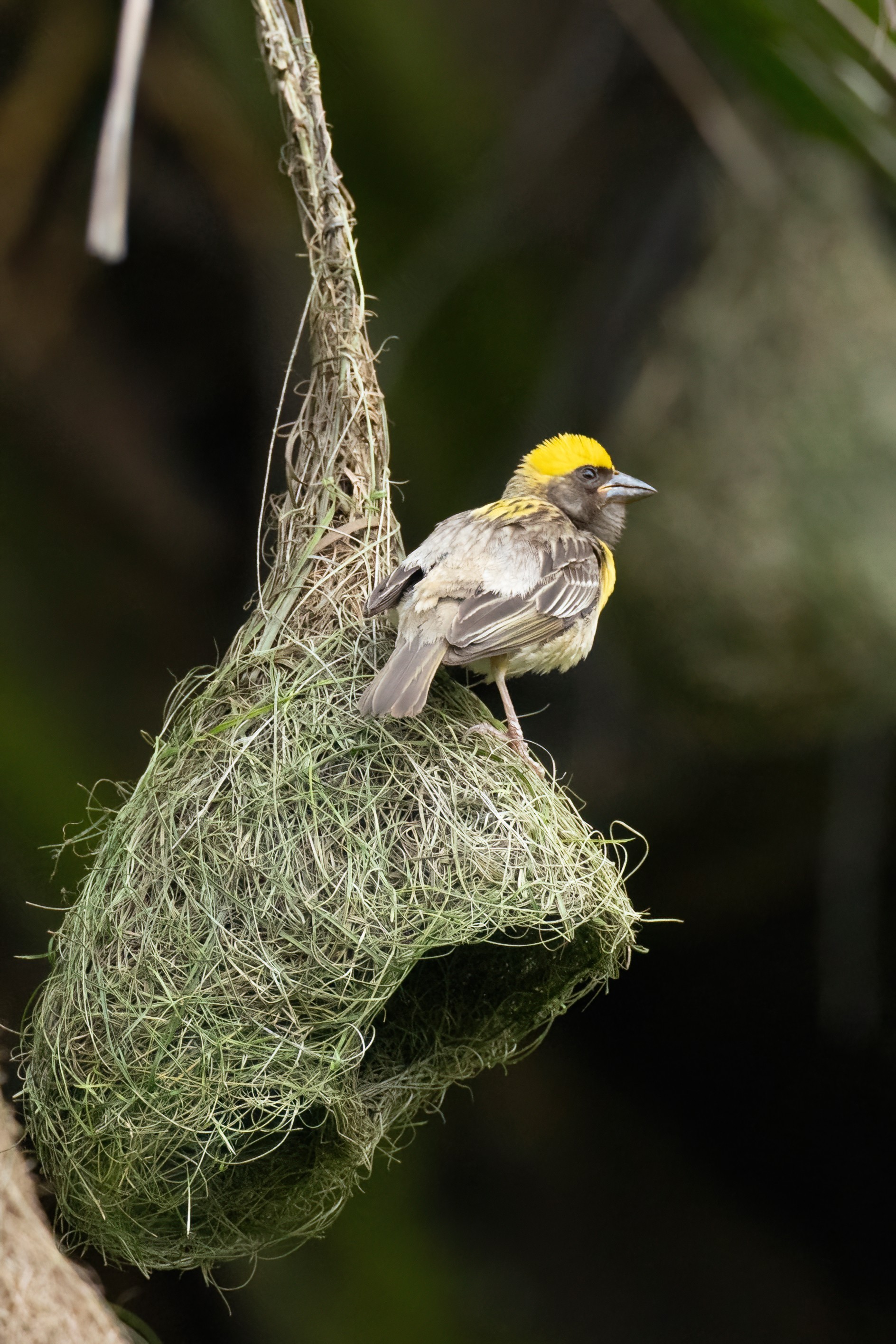
“The International Day of Biodiversity is an apt occasion to reinforce our commitment to integrating biodiversity conservation into business practices through measurable, science-led and outcome-oriented initiatives. We believe that protecting ecosystems is not separate from business growth, but essential to building long-term resilience, operational efficiency and sustainable value creation. As industries evolve, businesses that invest in nature-positive practices will be better positioned to drive responsible growth, strengthen stakeholder trust and future-proof operations,” said Tejashree Joshi, Head of Environmental Sustainability, Godrej Enterprises Group.
Decades long continuous scientific efforts have resulted in improving the biodiversity index of Godrej’s Vikhroli campus, by 19% in FY 2024-25. This critical mangrove habitat provides various ecosystem services including Carbon sequestration.
The Vikhroli mangroves currently holds over 23lakhs tCOe of sequestered carbon significantly contributing to mitigating the impacts of climate change for the city of Mumbai The awareness initiatives around mangroves reached nearly 1,20,000 beneficiaries over last three years, through various Mangrove Awareness programme, including Magical Mangroves in collaboration with WWF-India, underscoring the Group’s effort to combine on-ground action with public engagement. Its involvement and support to the India Business & Biodiversity Initiative aligns its operations with global biodiversity goals and integrates nature-positive practices across its value chain.
Further strengthening its efforts, Godrej Enterprises Group supports collaborative initiatives such as the India Wetlands Coalition aimed at corporate participation in conserving critical wetlands ecosystems and addressing nature loss beyond the campus and statute, and the Mangroves Coalition that aims to support stakeholders like government, citizens, and local communities to better protect, manage, and coexist with their city’s mangroves
20, May 2026
RAK Central Square hits major milestone as demand grows for Grade A office space in Ras Al Khaimah
Significant structural works completed with construction progressing on target for Q4 2027 opening
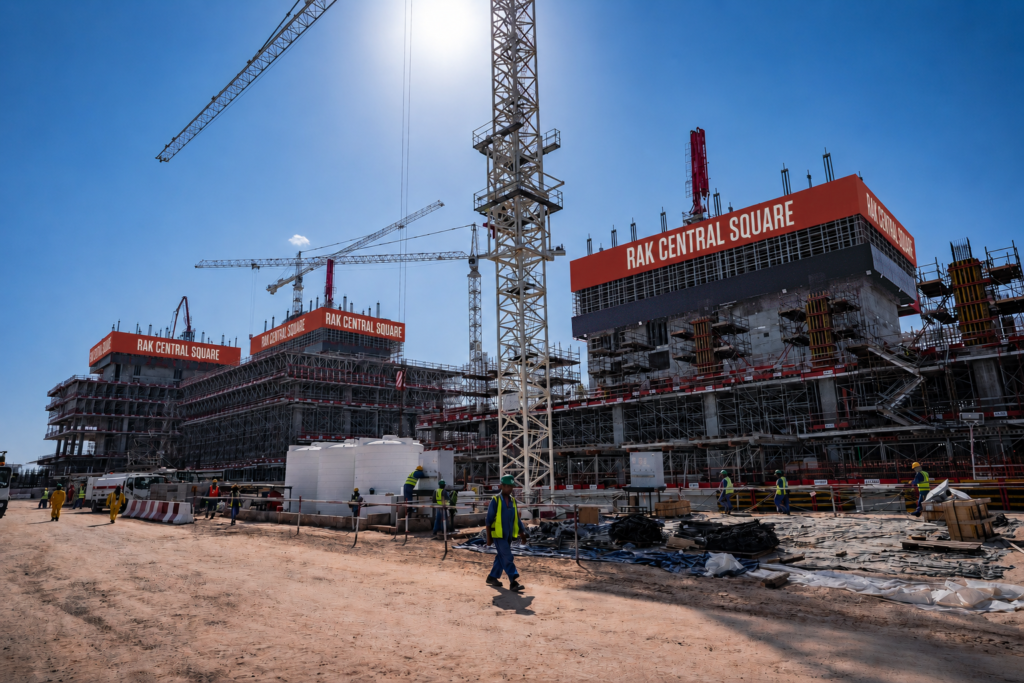
Ras Al Khaimah, May 20: Major structural works have been completed at Ras Al Khaimah’s first luxury Grade A office complex, RAK Central Square, with construction progressing in line with the delivery programme. The development will deliver 2.27 million sq ft of high-quality workspace across five buildings, providing modern, flexible floors designed for tier-one businesses.
Superstructure works remain on schedule and are expected to top out (reach full structural height) in Q4 2026, marking a key milestone toward the planned Q4 2027 opening. This construction progress aligns with rising demand for premium Grade A office space in Ras Al Khaimah among regional and international businesses.
RAK Central Square will bring a new generation of Grade A office space to Ras Al Khaimah, featuring large, efficient floorplates of around 16,000 sq ft, modern building systems and high-specification workspace for international companies. The five-building development is designed to meet tier-one occupier requirements, supported by F&B and retail offerings, and a LEED Gold certified design.
Arch Abdulla Al Abdouli, Group CEO of Marjan, said: “RAK Central Square embodies our vision for a new generation of high-quality, Grade A office space in Ras Al Khaimah. It will sit at the heart of RAK Central, a community that integrates regional and international corporates, lifestyle and hospitality to create a future-ready centre. As we deliver this landmark project, we are laying the groundwork for a city that competes on a global stage, attracts world-class companies, enhances livability and supports the emirate’s long-term growth ambitions.”
As part of the wider RAK Central masterplan, the complex is being developed as a mixed-use destination combining Grade A offices with residential, hospitality and retail components in a connected, walkable environment. This growth is supported by new hospitality and residential developments that expand accommodation and amenity capacity for corporate tenants and visiting delegations. Recent announcements include the Radisson Blu Hotel and Radisson Blu Residences by BNW Developments, alongside projects such as One RAK Central by Pantheon Development, Colibri Views by Major Development and Juna by Dara Development.
Ramy Jallad, Group CEO of Ras Al Khaimah Economic Zone (RAKEZ), said: “RAK Central Square is a critical step in addressing the growing demand for prime office space in Ras Al Khaimah. As investor activity accelerates and more regional and international companies look to establish a presence in the emirate, developments like this will play a central role in supporting business growth and strengthening Ras Al Khaimah’s position as a competitive investment destination. This momentum comes as the emirate continues to attract significant investment across tourism, hospitality, and industry, driving increased demand for premium commercial infrastructure.”
RAK Central offers direct access to key destinations across the emirate, including Al Hamra Golf Course, Al Hamra Mall, The Ritz-Carlton Al Hamra Beach and Wynn Al Marjan Island. The complex is also well connected to regional and international gateways such as Ras Al Khaimah International Airport and Dubai International Airport, aligning with the emirate’s broader economic and tourism ambitions, including its target of attracting 3.5 million visitors annually by 2030.
20, May 2026
ASUS Celebrates One Year of Free Service Camps, Brings Customer Experience Initiative to Indore
The service camp will be held at ASUS Exclusive Store – Sigma Peripherals, UG 8, Silver Block, Silver Mall, RNT Marg, Indore, Madhya Pradesh – 452001 and will be open to customers from 11 AM to 5 PM.
Indore, 20 May 2026: ASUS, a Taiwanese tech giant, will hold a one-day free service camp in Indore on May 23rd as part of ASUS Assurance, which is ASUS India’s promise of worry-free ownership, combining quality engineering with dependable support, protection, and service (the 4As) across the entire device lifecycle. ASUS Service camp, now marking its one-year milestone, will deliver hands-on technical support, comprehensive device health checkups, and expert guidance to help customers optimize performance and extend the life of their ASUS devices.
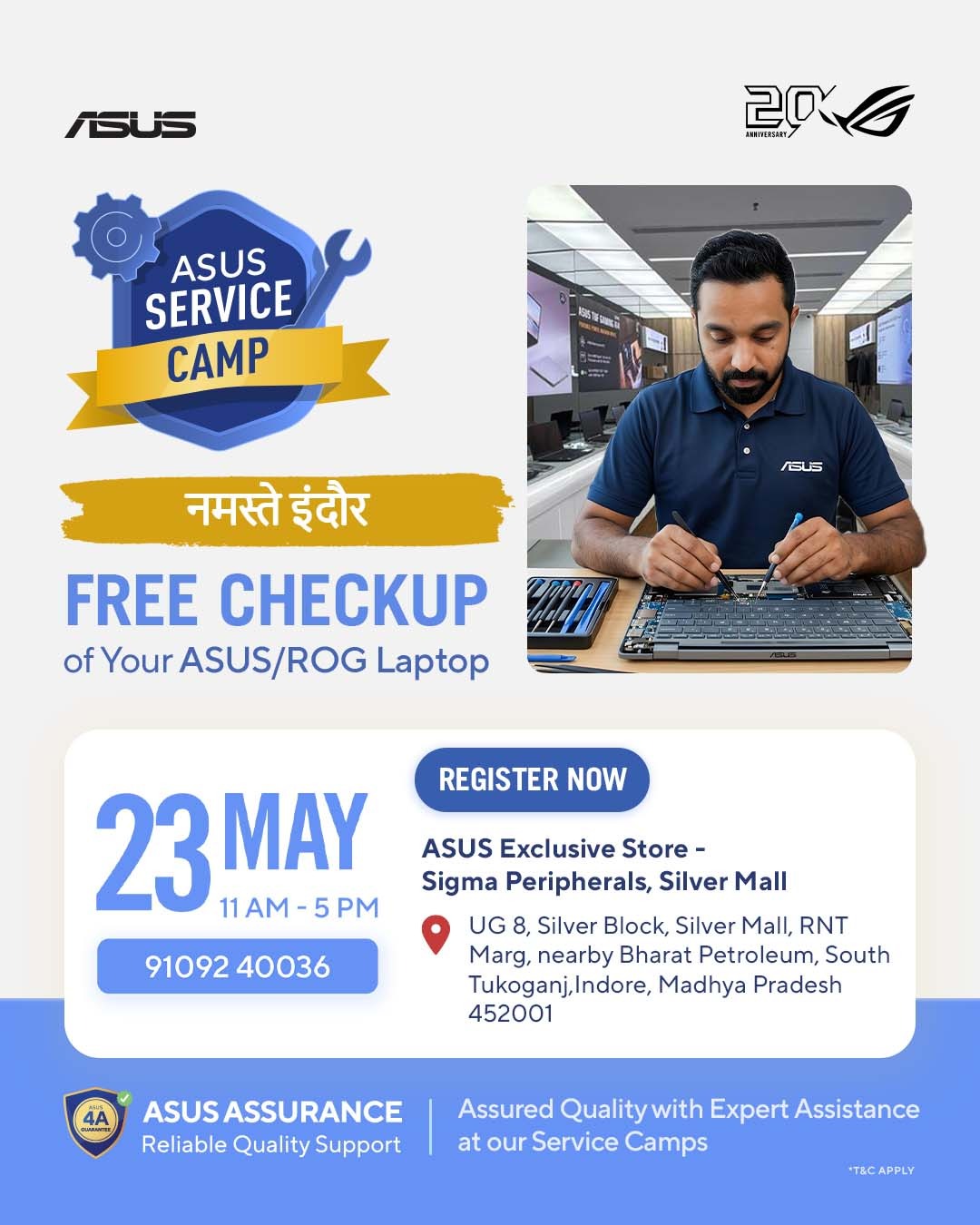
The service camp will be held at ASUS Exclusive Store – Sigma Peripherals, UG 8, Silver Block, Silver Mall, RNT Marg, Indore, Madhya Pradesh – 452001, and will be open to customers from 11:00 AM to 5:00 PM.
As part of the initiative, ASUS customers can avail a wide range of complimentary services designed to enhance device performance and longevity. These include professional dust cleaning, heating issue checks, and overall system health evaluations. ASUS experts will also assist customers with MyASUS app setup, troubleshooting, and performance optimization, ensuring a smoother and more efficient user experience.
The service camp is designed as a VIP care experience for ASUS laptops, offering hands-on technical support and proactive maintenance completely free of cost. Customers will also receive expert guidance on best practices for device care, helping them maintain optimal performance over time. As ROG is also celebrating its 20th Anniversary, a special initiative this time has been included in the service. Each attendee especially ROG customers will receive a complimentary Liquid Thermal Paste replacement, a professional grade upgrade that significantly improves processor cooling and overall system efficiency.
To enhance the overall experience, souvenirs will be provided to participants attending the service camp.
This initiative reflects ASUS continued focus on strengthening its after-sales ecosystem and delivering accessible, high-quality service experiences across key markets. Backed by its robust 4A framework, Assured Quality, Always-on Support, All-around Coverage, and Added-value Experience, ASUS continues to expand its service footprint with over 200+ service centres, on-site support capabilities, and comprehensive customer care programs.
ASUS has successfully held free service camps across Chennai, Pune, Bhilwara, Hazaribagh, Shillong, Delhi, Calicut, Kolkata, Bangalore, Mumbai and Surat demonstrating commitment to nationwide continue future camps scheduled in other cities.
20, May 2026
Consistent Expands Product Range on Government e-Marketplace
New Delhi, May 20 : Consistent Infosystems, a fast-growing Indian IT hardware and security solutions brand,has announced the availability of its Graphic Card and Pen Drive range on the Government e-Marketplace (GeM). This initiative will enable government departments, public sector undertakings (PSUs), educational institutions, and authorized buyers across India to conveniently procure its products through the official digital procurement platform.
Government sector organizations are focusing on digital transformation and infrastructure improvements. To support this, the Government e-Marketplace (GeM) helps make buying products easier, faster, and more transparent. Through its latest GeM onboarding, Consistent Infosystems aims to expand access to its high-performance Gaming solutions and storage solutions and strengthen its presence across government and institutional sectors nationwide.
Consistent graphics card range is designed to deliver stable visual performance, enhanced productivity, and seamless computing experiences, making it suitable for professional workstations, institutional systems, and day-to-day operational requirements. Complementing this lineup, the Pen Drive range offers portable, secure, and high-speed storage solutions designed to meet the growing data transfer and storage demands of offices, educational institutions, and government organizations.
Commenting on the development, Mr. Yogesh Agrawal, CMD and Co-Founder, Consistent Infosystems, said:
“At Consistent Infosystems, our vision has always been to make quality technology products more accessible across every segment of India. The availability of our Graphic Cards and Pen Drives on GeM is another milestone towards supporting public sector and institutional technology needs with dependable, affordable, and future-ready technology solutions backed by strong nationwide service support.”
With a rapidly growing portfolio, expanding national presence, and continued focus on innovation, Consistent Infosystems remains committed to delivering technology solutions that combine performance, reliability, and value for customers across India and global markets.
20, May 2026
TSF Investments (Formerly Sundaram Finance Holdings) posts 28.66% increase in consolidated net profit for the year ended 31st March 2026
Chennai, May 20: TSF Investments Limited (“TSF Investments”) has registered a consolidated net profit of ₹530.21 crores for the year ended 31st March 2026, which includes gain of ₹40.99 crores from fair valuation of previously held equity interest in Axles India Limited on account of business combination, as compared to ₹412.09 crores registered in the previous financial year, resulting in an increase of 28.66%
The increase in consolidated net profit is partly because of Axles India Limited, becoming a subsidiary during the year on account of TSF group acquiring shares held by Dana Global Products Inc. for a consideration of ₹365.37 crores.
TSF Investments operates as a core investment company, investing in a portfolio of automotive businesses including foundries and manufacturers of wheels, brakes, turbo chargers, axles and distribution of spare parts. As a result, dividend from portfolio companies forms a substantial part of the financial results. Dividend received from portfolio companies is ₹207.67 crores for the year ended 31stMarch 2026.
Name change:
Reflecting the consolidation of the T.S. Santhanam Family group, Sundaram Finance Holdings Limited has been renamed TSF Investments Limited with effect from 23rdSeptember 2025. This change reaffirms the group’s strategic alignment and century-old legacy.
Dividend:
The Board of Directors have recommended a final dividend of ₹4.45/- per share (89%) for FY 25-26. This together with the Interim Dividend of ₹6.70/- per share (134%) paid during February 2026 aggregates to a total dividend of ₹11.15/- per share (223%) for the F.Y. 25-26.
Dis-investments:
As part of the company’s strategy to exit from non – core investments and invest the proceeds in the core investments in group companies, the company had during the financial year 2025 -26 exited the following investments,
1.TVS Holdings Limited (partial exit)
2.Fettle Tone LLP (partial exit)
3.Sundaram Composite Structures Private Limited
The realized gain (net of tax) from the exit of these investments was ₹461.18 crores which was transferred from OCI to retained earnings.
TSF: A Century of Legacy
TSF Group represents the T. S. Santhanam family’s businesses, with its heritage dating back to 1911. The group traces its lineage to the erstwhile T. V. Sundram Iyengar & Sons, under the leadership of Late Shri T. S. Santhanam, a pioneer of India’s non-banking financial services industry. TSF Group carved out its independent identity consequent to the partition of TVS Group.
The journey began with the acquisition of Madras Auto Service (MAS) in 1936, followed by the founding of Sundaram Finance and India Motor Parts & Accessories Ltd. (IMPAL) in 1954. Over the decades, the group diversified into manufacturing through companies such as Brakes India and Wheels India, building a strong presence across automotive components, distribution, car dealerships, and financial services. With more than ₹30,000 crore in revenues, a ₹3,556 crore bottom line, over 42,000 employees, 1,200+ branches, and 36 factories, TSF Group is a trusted partner for marquee customers across India, North America, Europe, and Asia Pacific.
20, May 2026
Gati 2026: A Grand Celebration of Indian Classical Dance and Music in Siliguri
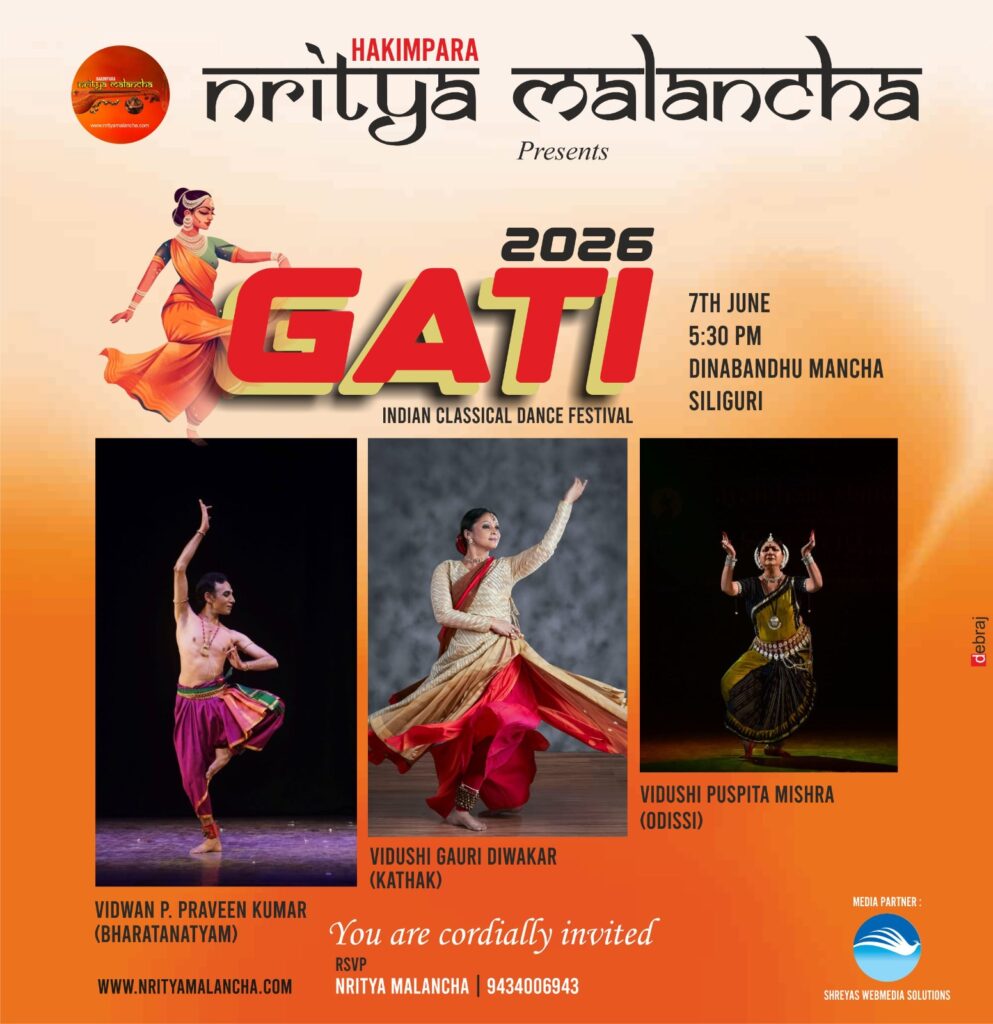
May 20 | Siliguri, West Bengal: Hakimpara NrityaMalancha Siliguri proudly announces the 42nd edition of GATI 2026, a prestigious Festival of Indian Classical Dance and Music, to be held from 5th to 7th June 2026 at Dinabandhu Mancha, Siliguri, from 5:30 PM onwards each evening.
Organised under the visionary guidance of Guru Vidushi Sangita Chaki, Founder of Hakimpara NrityaMalancha Siliguri, the festival has been celebrating the rich heritage of Indian classical arts for over four decades. Derived from the Sanskrit word meaning “movement” and “rhythm,” GATI embodies the spirit of India’s timeless artistic traditions while offering a vibrant cultural platform for artists, students, and connoisseurs of classical dance and music.
The three-day festival will feature an extraordinary line-up of renowned dancers, musicians, and guest artists from across India, presenting a diverse repertoire of Bharatanatyam, Kathak, Odissi, folk performances, instrumental recitals, vocal music, and thematic productions.
A special segment of Indian classical instrumental and vocal music will showcase performances by eminent artistes including:
- Sitar: Pt. Sandeep Neogi
- Sarod: Pt. Sunondo Mukherjee
- Tabla: Pt. Subir Thakur, Pt. Subir Adhikari & Shri Riju Saha
- Harmonium & Vocal: Pt. Sourav Chakraborty
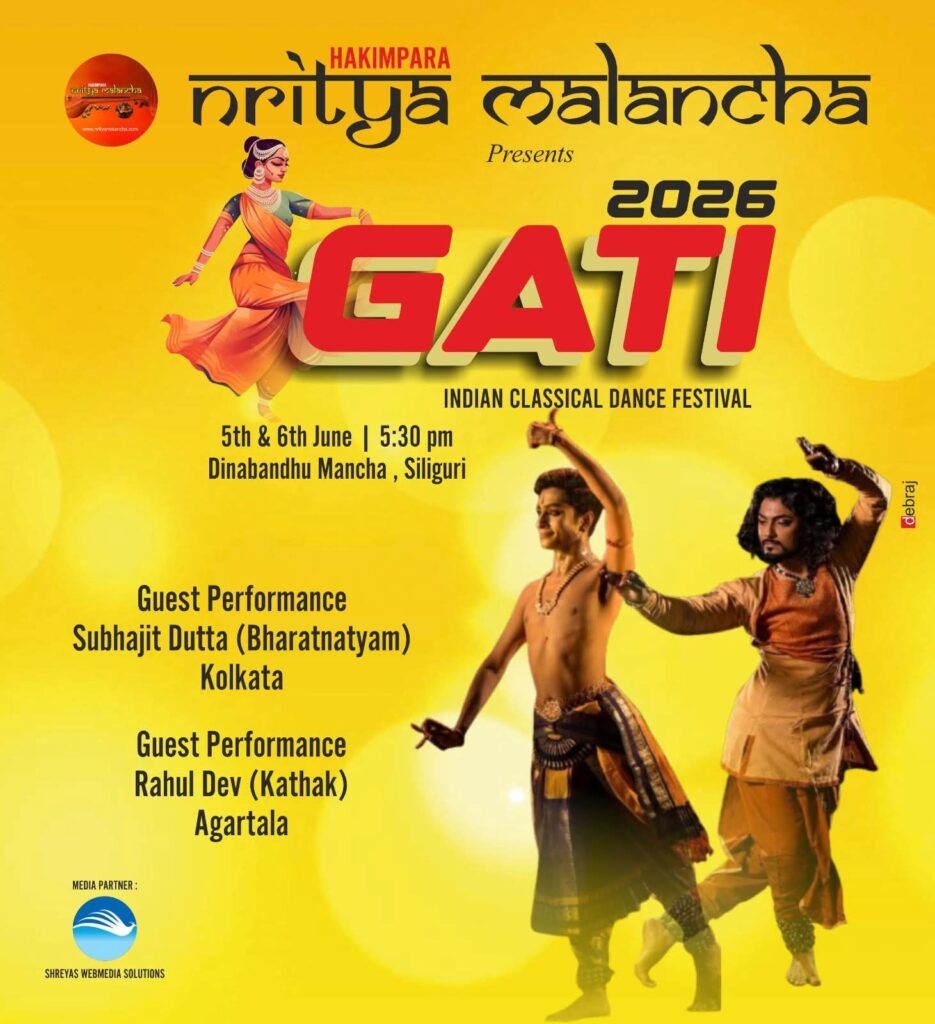
Gati Festival 2026 | Day 1 | 5th June 2026
The inaugural evening will begin with traditional invocations including Ganesh Vandana, Maha Ganapati Shlokam, Pushpanjali, and Nagendra Haray Shiva Stotram, followed by classical dance presentations such as Jatiswaram and Tillana. The audience will also witness provincial folk dances representing different states of India.
The special guest performance of the evening will feature renowned Kathak artiste Shri Rahul Dev from Agartala.
Gati Festival 2026 | Day 2 | 6th June 2026
The second day will present an elaborate Kathak repertoire including Guru Charanam in Trital, Jhaptal Shudhonritya, Darbari Tarana, Ektal Shudhyonritya, Rupak Shudhyonritya, and Thumri. Folk dance performances from various Indian states will further enrich the cultural experience.
The evening’s guest artiste will be acclaimed Kathak exponent Shri Shuvojit Dutta from Kolkata.
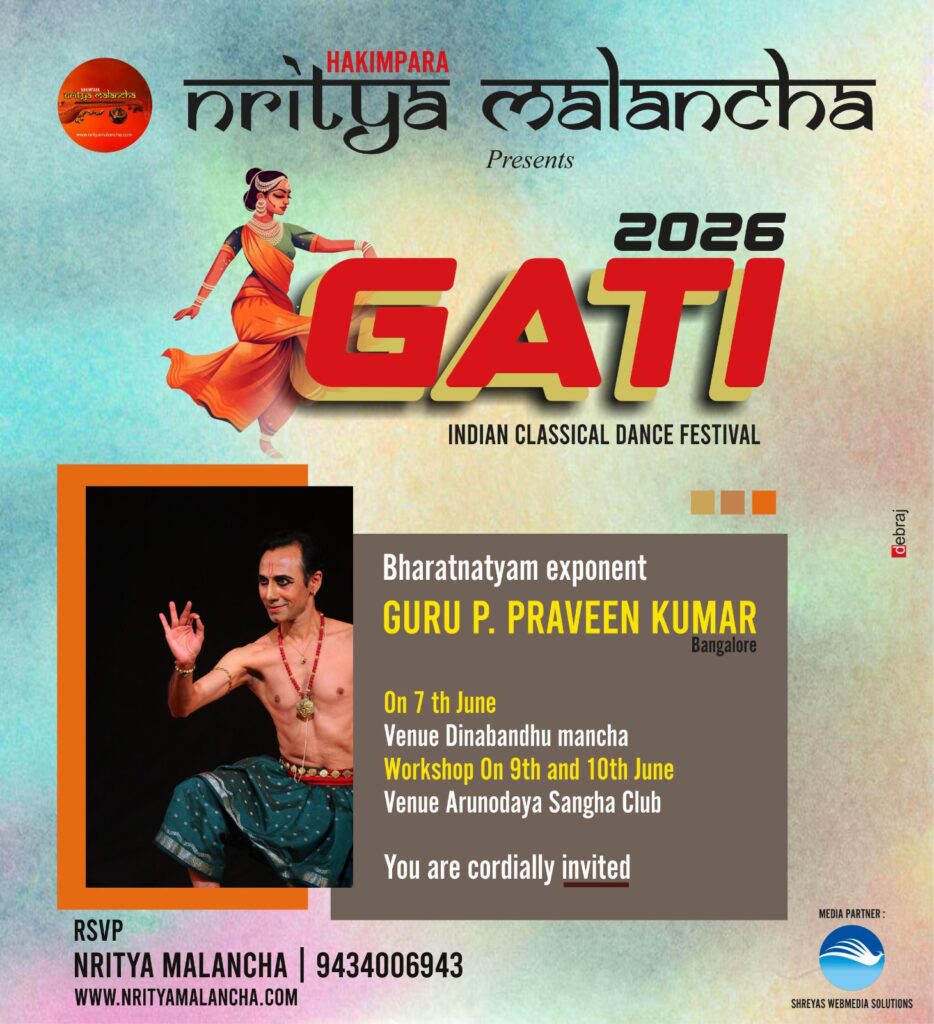
Gati Festival 2026 | Day 3 | 7th June 2026
The concluding day promises a grand culmination with performances including Kalyani Jathiswaram, Prabhumpranath Keertanam, Vasant Jathiswaram, and Niratata Shankara. Distinguished performances by eminent artistes include:
- Kathak: Guru Sangita Chaki
- Odissi: Smt. Pushpita Misra
- Bharatanatyam: Guru Vidwan Praveen Kumar
- Kathak: Guru Vidushi Gouri Diwakar
A special highlight of the evening will be “Ganga – A Musical Journey”, conceptualised and musically arranged by Shri Subrata De with choreography and dance direction by Vidushi Sangita Chaki.
The festival will conclude with a stirring presentation of “Vande Mataram”, featuring voice and script by Shri Anshuman Paul and Ms. Sanchita Bhattacharya, with dance direction by Guru Vidushi Sangita Chaki.
Hakimpara NrityaMalancha Siliguri warmly invites art lovers, students, cultural enthusiasts, and patrons of Indian classical traditions to witness this magnificent celebration of rhythm, grace, devotion, and artistic excellence.
RSVP: 9434006943
Vidushi Sangita Chaki
Founder, Hakimpara NrityaMalancha Siliguri
Media Partner: Shreyas Webmedia Solutions


