


8, Apr 2026
Critical Manufacturing to Demonstrate MES-Powered Industrial Operations Platform for AI-Driven Manufacturing at Hannover Messe 2026
PORTO, Portugal, 08.04.2026 – Critical Manufacturing, the Industrial Operations Platform company that unites execution, connectivity, analytics and trusted AI, will exhibit at Hannover Messe 2026, demonstrating how manufacturers can transform production complexity into confident, intelligent operations.
At the event, the company will showcase more than MES. As the execution core, the Manufacturing Execution System (MES) is the foundation of a broader Industrial Operations Platform where execution, data, and intelligence are continuously connected. This creates a closed feedback loop in which data captured on the shopfloor is transformed into insights and actions that are fed back into operations in real time.
A connected platform for complex manufacturing
As manufacturing environments become more complex, companies across industries such as industrial equipment, semiconductors, electronics, and medical devices are under increasing pressure to manage variability, maintain strict quality standards, and respond quickly to operational changes. Critical Manufacturing addresses these challenges with a a unified system that captures and contextualizes production data at the source, creating the trusted operational foundation needed for visibility, analytics, and continuous improvement.
At Hannover Messe, visitors will see how this foundation powers the Critical Manufacturing Industrial Operations Platform, which combines MES with a built-in Enterprise Data Platform and a growing native ecosystem of applications. Together, these capabilities enable manufacturers to connect machines, processes, and operational data across the factory while extending insight and intelligence across plants and enterprise systems. More importantly, it enables a continuous feedback loop between data and execution, where insights generated from the data platform can directly trigger and optimize actions within MES.
From coffee to copilots: experience the platform in action
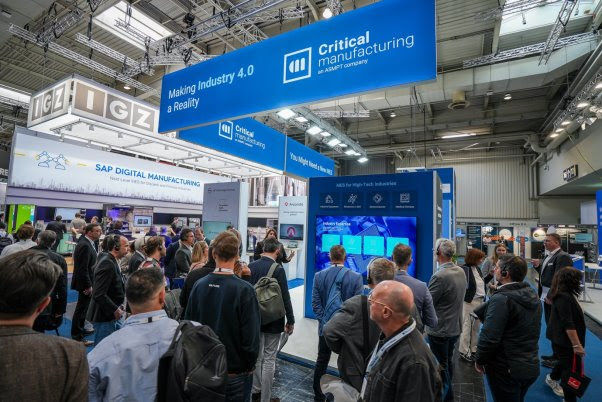
Live demonstrations at the booth will bring this vision to life through a connected journey. Visitors will see how MES coordinates shopfloor execution, experiencing a coffee machine scenario that highlights execution and connectivity, while the Enterprise Data Platform structures and organizes manufacturing data across systems and sites. Built on the operational layer, applications and analytics tools provide teams with the visibility needed to monitor performance, identify trends, and respond more quickly to operational challenges. Additionally, visitors will experience AI Copilots within the MES environment, allowing users to ask questions about manufacturing data in natural language and instantly generate charts, dashboards, and insights that make operational decision-making faster and more intuitive. From execution to intelligence, visitors will discover how Critical Manufacturing goes beyond MES providing a unique and connected Industrial Operations Platform.
Extending the partner ecosystem
The journey at the booth extends into the partner area to explore Critical Manufacturing’s global partner ecosystem, including FrontWell, Athena, Regenesia, LTTS and Manufacture Next. These partners deliver and integrate the Industrial Operations Platform worldwide. This space also features Twinzo, a digital twin application that integrates seamlessly with Critical Manufacturing MES, reinforcing the value of connectivity and real-time operational insight.
“Our industry has reached a point where execution, data, and analytics can no longer operate in isolation,” said Francisco Almada Lobo, CEO and Co-founder of Critical Manufacturing. “Manufacturers need a system that connects what happens on the shopfloor with the intelligence needed to improve performance across the organization. MES provides that operational backbone by capturing and contextualizing production data at its source. At Hannover Messe, we are demonstrating how this platform enables manufacturers to turn operational data into actionable intelligence that drives better decisions and continuous improvement.”
Ask Jeff: conversations on the future of manufacturing
Visitors will also have the opportunity to join the “Ask Jeff” area on April 20 and 21st, where Jeff Winter will attend as a Strategic Advisor to Critical Manufacturing. During those days, attendees can engage in informal conversations about manufacturing leadership, digital transformation, and the evolving role of software platforms in modern production environments.
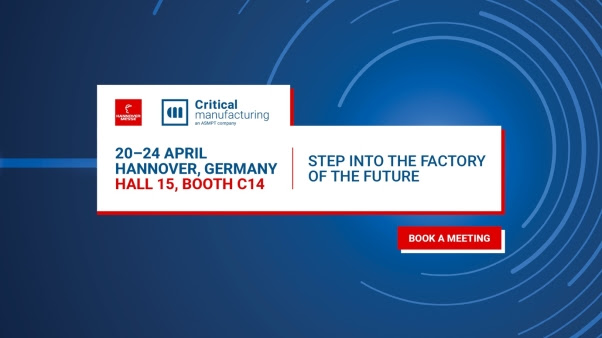
Visit Critical Manufacturing at Hall 15, Booth C14 to experience the platform in action. Attendees can claim a complimentary Hannover Messe ticket through the company’s event page and book a meeting or live demonstration with Critical Manufacturing experts to explore how MES-driven operations help manufacturers connect systems, gain clearer operational insight, and improve performance across their factories.
To book a meeting or demo in advance, visit: https://www.

- 0
- By Neel Achary

8, Apr 2026
Veolia celebrates 25 years at Hoskote in Bangalore: a world-class hub for advanced water technologies and global innovation
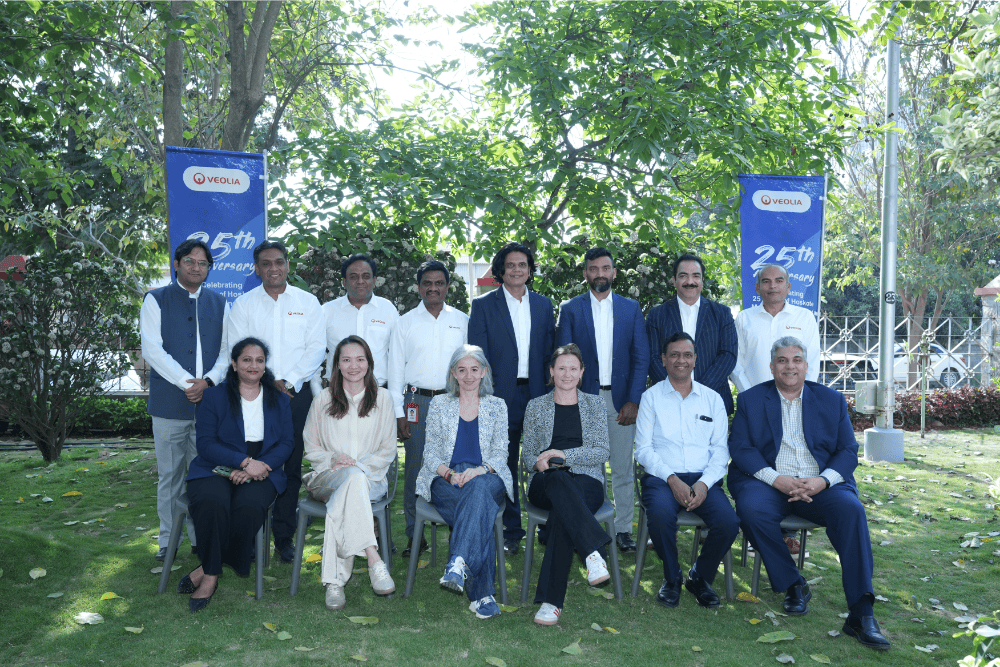
Veolia celebrated a landmark moment in its India journey on 1st April with the inauguration of its new Customer Experience Center at the company’s Hoskote plant in Bangalore, a world-class hub for membrane manufacturing, specialty chemicals and advanced water technologies. The event also marked the 25th anniversary of the Hoskote manufacturing and technology facility and the launch of a solar panel decarbonization initiative — underscoring Veolia’s long-term commitment to India as a global hub for water technology, innovation, and sustainable operations.
Anne Le Guennec, CEO of Veolia’s water technologies activities, said: “India holds a unique place in Veolia’s global strategy, not only as a dynamic market, but as a true center of excellence for engineering, digital innovation and manufacturing. Today’s milestones at Hoskote reflect 25 years of dedication, talent and ambition, in line with our GreenUp strategic program. Water is at the heart of environmental security, and as India faces growing water challenges, we are committed to delivering the technologies and solutions that will help cities and industries become more resilient, more efficient and more sustainable.”
The Hoskote plant: a quarter century of innovation
Established in 2001, the Hoskote plant has evolved into a world-class hub for membrane manufacturing, specialty chemicals and technology development, exporting to more than 20 countries. Its co-located Technology Center stands as a unique asset for global innovation, having generated over 100 patents. Located in a region renowned for its strong engineering expertise and talent pool, the site is driven by a highly skilled team of engineers and scientists developing innovative water solutions that advance environmental security for communities and industries worldwide.
As part of Veolia’s GreenUp strategy and its broader commitment to ecological transformation, the Hoskote plant has also inaugurated a new solar panel installation, marking a significant step in its decarbonization journey. The installation is expected to avoid more than 600 tonnes of CO2 equivalent per year, a tangible demonstration of Veolia’s determination to reduce the carbon footprint of its own operations while guiding customers towards the same goal: transforming sustainability pledges into measurable results.
Inauguration of the Veolia Customer Experience Center
The newly inaugurated Customer Experience Center at Hoskote is designed to bring Veolia’s technological capabilities, innovations and customer solutions to life in an immersive, interactive environment. It will serve as a hub for collaboration, knowledge exchange and joint innovation with customers across South Asia and beyond.
The center brings together an interactive technology showcase spotlighting Veolia’s smart water solutions with live demonstrations of remote monitoring, data analytics and digital systems. Visitors can engage directly with industry experts, explore service and support capabilities — from onsite engineering to remote inspection, auditing and operator training — and experience firsthand the innovations that are shaping the future of water management. A dedicated training facility accommodating up to 50 participants further cements the center’s role as a place for learning and capability-building.
Veolia in India: a track record of excellence in water technologies
As the largest industrial water company in South Asia, Veolia has delivered more than 500 projects for municipalities and industries across the region, spanning drinking water, sewage treatment and zero liquid discharge (ZLD). Recent municipal contracts in Mumbai — including the Bandra wastewater treatment project, one of India’s largest greenfield sewage treatment plants using advanced membrane bioreactor technology, and the Bhandup drinking water plant upgrade integrating smart clarifier technology and real-time monitoring — further demonstrate Veolia’s growing footprint in India’s urban water infrastructure.
Irshaad Hakim, Executive Vice President of Veolia’s water technologies activities in Asia Pacific, said: “South Asia faces a pivotal moment in its pursuit of water security. The magnitude of the challenge, from declining groundwater to undertreated municipal wastewater, demands bold, scalable solutions. Veolia’s track record in India proves that we have both the expertise and commitment to make a lasting difference. Our goal is clear: to deliver performance and sustainability while supporting safe, healthy communities across the region.”
8, Apr 2026
IPL 2026: Delhi Capitals Aim Hat-Trick at Kotla; Gujarat Titans Boosted by Shubman Gill’s Return
New Delhi, April 8, 2026:
The stage is set for an exciting clash in IPL 2026 as Delhi Capitals (DC) take on Gujarat Titans (GT) at the iconic Arun Jaitley Stadium. Riding high on momentum, Delhi Capitals will look to secure a hat-trick of victories and turn their home ground into a stronghold.

Delhi’s confidence is soaring after a convincing win over Mumbai Indians. Skipper Axar Patel has already set the tone, urging his side to “make Kotla our fortress,” signaling a strong intent to dominate at home this season. On the other hand, Gujarat Titans receive a timely boost with the return of captain Shubman Gill, who had been sidelined due to neck muscle spasms. His comeback is expected to significantly strengthen both leadership and batting at the top order.
Confirming the development, Sai Sudharsan stated that Gill has fully recovered and looked in excellent touch during practice sessions, even clearing the stands with ease. His return restores Gujarat’s regular opening combination and provides much-needed stability to a side currently struggling in the tournament.
The Titans, placed near the bottom of the IPL 2026 points table after a narrow defeat to Rajasthan Royals, will be eager to break their losing streak and revive their campaign.
With Delhi aiming to extend their winning run and Gujarat desperate for a turnaround, today’s encounter promises to be a high-intensity battle with significant early-season implications.
8, Apr 2026
Gartner Forecasts Worldwide Semiconductor Revenue to Exceed USD 1.3 Trillion in 2026
STAMFORD, Conn., April 8: Global semiconductor revenue is projected to exceed $1.3 trillion in 2026, exhibiting the highest growth in the last two decades, according to Gartner, Inc., a business and technology insights company.
“Amid high demand for AI processing, data center networking and power, and memory price inflation (memflation), the semiconductor industry is projected to achieve a third consecutive year of double-digit growth in 2026 – a milestone that underscores the sector’s pivotal role in the AI technology stack,” said Rajeev Rajput, Senior Principal Analyst at Gartner.
Gartner forecasts semiconductor revenue will grow 64% in 2026, with memory revenue expected to increase threefold amid memflation (see Table 1). Gartner analysts said that memflation is profound, but it is not perennial. Gartner estimates DRAM and NAND flash annual prices in 2026 will increase by 125% and 234%, respectively, and any meaningful pricing relief is not expected until late 2027.
Table 1. Semiconductor Revenue Forecast, Worldwide, 2025-2027 (Billions in U.S. Dollars)
|
2025 |
2026 |
2027 |
|||||
|
Memory |
216.3 |
633.3 |
748.1 |
||||
|
Nonmemory |
589.0 |
686.9 |
806.4 |
||||
|
Total Market |
805.3 |
1,320.2 |
1,554.5 |
Source: Gartner (April 2026)
AI Semiconductors Will Represent 30% of Total Semiconductor Revenue in 2026
AI semiconductors are expected to account for approximately 30% of total semiconductor revenue in 2026 and will remain the driving force behind the overall industry growth. Hyperscaler investment in AI infrastructure buildouts remains strong with spending expected to increase by more than 50% in 2026, driving demand for AI accelerators, including GPUs and custom non‑GPU chips.
“Memflation will destroy, or at least delay, non-AI demand into 2028, to varying degrees depending on the application,” said Rajput. “Technology suppliers should prepare for higher prices during the first half of 2026, followed by persistent but moderating price increases throughout the rest of the year. CIOs and IT leaders should be cautious about signing supply agreements with unfavourable pricing terms that extend beyond 2027.”
Gartner clients can read more in Forecast: Semiconductors and Electronics, Worldwide, 2024-2030, 1Q26 and How Long Will AI Demand Sustain Memory Prices.
A complimentary webinar on 1Q26 Semiconductor Reset: Who Wins in a Constrained Market? will take place on April 22 at 11:00 AM ET.
Gartner Is the World Authority on AI
Gartner is the indispensable partner to C-Level executives and technology providers as they implement AI strategies to achieve their mission-critical priorities. The independence and objectivity of Gartner insights provide clients with the confidence to make informed decisions and unlock the full potential of AI. Clients across the C-Level are using Gartner’s proprietary AskGartner AI tool to determine how to leverage AI in their business. With more than 2,500 business and technology experts, 6,000 written insights, as well as more than 1,000 AI use cases and case studies, Gartner is the world authority on AI.
8, Apr 2026
Mahima Group MD Nikhil Madan Says RBI’s Pause Signals Stability Amid Global Uncertainty
Mr. Nikhil Madan, MD Mahima Group on RBI MPC
“RBI’s decision to hold rates and maintain neutral stance signals a calibrated pause not complacency. Amid rising global uncertainties, geopolitical tensions to crude driven inflation risks and currency pressures, central bank is clearly prioritising macroeconomic stability over short term stimulus. For real estate, this translates into continued demand resilience supported by strong credit growth and steady end user sentiment, even as rate cuts remain off the table in the near term. Equity markets may see intermittent volatility, but the underlying growth trajectory hovering around the 6.7to 7.2% range keeps India firmly positioned as a relative bright spot. The real inflection now hinges on how sustainably private capex cycles and consumption momentum can offset external shocks.”
8, Apr 2026
Aziro and Databricks Announce Strategic Partnership to Accelerate Enterprise AI and Data Innovation
April 08: Aziro, an AI-native Product Engineering Company, has announced a strategic partnership with Databricks to help enterprises modernize their data platforms and scale artificial intelligence initiatives. The collaboration brings together Aziro’s AI-native engineering capabilities and the Databricks Platform to enable organizations to unify data, analytics, and AI within a single governed ecosystem.
The partnership is designed to help enterprises apply AI more effectively to their data while maintaining strong privacy, governance, and operational control. By combining Databricks’ ability to democratize data insights through natural language access and unify data, governance, and AI workflows with Aziro’s engineering expertise and reusable machine learning accelerators, organizations can move toward more integrated and cost-efficient data operations.
Through the collaboration, enterprises will be able to transition to the Databricks platform for end-to-end data modernization, build future-ready data strategies, and streamline complex architectural migrations. The partnership also supports the development of predictive and generative AI applications, enabling companies to deploy intelligent systems more quickly and reliably while building a unified data backbone to drive measurable business outcomes.
Customers adopting the joint approach gain a unified operating layer for data and AI powered by the Databricks platform and supported by Aziro’s engineering capabilities. This combination can help organizations reduce infrastructure costs, shorten machine learning deployment cycles, and strengthen data-driven decision-making across functions. Industry sectors, including independent software vendors, financial services, retail, and logistics, are expected to benefit through capabilities such as faster fraud detection, hyper-personalized customer insights, real-time supply chain visibility, and production-grade generative AI solutions.
“At Aziro, we believe that strong data and AI foundations will define the next decade of enterprise innovation. Our partnership with Databricks brings engineering strength, data intelligence, and scalable AI together so companies can move from fragmented analytics to real-time, AI-powered decision systems,” said Sanjay Sehgal, Founder, Chairman, and CEO of Aziro.
As part of the partnership roadmap, the two companies will focus on several key initiatives. These include modernizing enterprise data estates by migrating customers to the Databricks platform , which unifies batch and streaming data for faster analytics and AI workloads. The collaboration will also support organizations in developing scalable data architecture strategies through structured assessments and migration roadmaps aimed at eliminating technical debt and building governed data foundations.
Another focus area will be engineering predictive and generative AI applications using Databricks’ data-centric approach to improve model accuracy and accelerate deployment. The partnership will also strengthen enterprise MLOps capabilities through certifications, CI/CD pipelines, automated monitoring, and model governance frameworks that enable the development of reliable, production-grade AI systems.
In addition, Aziro and Databricks plan to co-develop industry-specific AI accelerators for customer intelligence, fraud detection, supply chain visibility, and observability, helping organizations reduce the time required to deploy advanced analytics solutions. The companies will also pursue joint go-to-market initiatives to expand adoption across high-growth sectors.
Together, the partnership aims to help enterprises move beyond fragmented analytics environments toward unified data ecosystems that support scalable AI innovation and long-term digital transformation.
8, Apr 2026
New Metro Lines 9 and 2B Begin Services, Cutting Travel Time Across Mumbai
Mumbai, April 8 — Commercial services on the first phases of Mumbai Metro corridors 9 and 2B began Wednesday morning, a day after they were inaugurated by Maharashtra Chief Minister Devendra Fadnavis, officials confirmed.
The new lines mark significant milestones in Mumbai’s mass-transit network. Metro Line 9 provides the first direct metro connectivity between Mira-Bhayandar in Thane district and Mumbai, while Line 2B introduces metro services to the Harbour Line for the first time.
The Phase 1 stretch of Metro Line 9 spans 5.6 km with four stations: Dahisar East, Pandurangwadi, Miragaon, and Kashigaon. According to the Mumbai Metropolitan Region Development Authority (MMRDA), Line 9 is expected to cut travel time between Mira-Bhayandar and Mumbai to about 30 minutes, compared with the current journey of one to two hours. Built at a cost of ₹6,607 crore, the line will eventually link to other corridors, offering seamless connectivity to South Mumbai.
Metro Line 2B (Phase 1) covers 5.53 km and includes five stations: Deshbhakt N G Acharya Udyan (Diamond Garden), Chhatrapati Shivaji Maharaj Chowk, Deonar, Mankhurd, and Maharashtra Nagar–Mandale. Services commenced at 6 am, providing a vital new option for commuters on the eastern side of the city.
With these additions, Mumbai’s operational Metro network now spans six corridors, including:
- Line 1 (Ghatkopar-Andheri-Versova)
- Line 2A (Andheri West-Dahisar East)
- Line 7 (Dahisar East-Andheri East)
- Line 3 (Colaba-Bandra Kurla Complex–SEEPZ, underground)
- Newly opened Line 9 and Line 2B
The MMRDA also implemented revised timetables for Line 2A and Line 7 to improve frequency, predictability, and the overall commuter experience. Line 2A will now operate as a standalone corridor between Andheri West and Dahisar East, from 5:50 am to 11 pm, with a peak frequency of six minutes.
Additionally, the integrated Line 7–9 corridor, stretching 19.79 km from Gundavali to Kashigaon, will run from 5:50 am to 11 pm, with a peak frequency of under six minutes, providing 276 services on weekdays.
The inauguration of Lines 9 and 2B marks a new chapter in Mumbai’s urban mobility, promising faster, more efficient, and reliable transportation for commuters across the metropolitan region.
8, Apr 2026
Global Disruptions Push RBI to Revise India’s Growth Estimate to 6.9%
New Delhi, Apr 8: The Reserve Bank of India (RBI) on Wednesday projected the country’s GDP growth for 2026-27 at 6.9%, slightly lower than the 7.6% estimated for 2025-26. The downward revision reflects concerns over elevated commodity prices and supply chain disruptions stemming from the ongoing West Asia crisis.
Announcing the first bi-monthly monetary policy for the new financial year, RBI Governor Sanjay Malhotra highlighted that India’s merchandise exports could face challenges due to interruptions in key shipping routes, alongside rising freight and insurance costs.
Governor Malhotra noted that while India’s domestic economy remains resilient, global uncertainties, particularly in energy and logistics, are likely to influence growth and inflation trends. The RBI continues to monitor external pressures closely to maintain macroeconomic stability while supporting sustainable growth.
The central bank’s cautious outlook underscores the importance of strategic fiscal and trade measures to mitigate the impact of global disruptions and sustain India’s growth momentum in the coming year.
8, Apr 2026
RBI Holds Repo Rate at 5.25 percent, Signals Stability in Borrowing Costs and Reinforces Disciplined Asset Allocation Strategy
By Mr. Raghvendra Nath, Managing Director of Ladderup Asset Managers.
Quote: “The RBI’s decision to hold the repo rate at 5.25%, while inflation remains close to the 5% threshold, signals a cautious stance to balance growth and price stability. For investors, this translates into continued stability in borrowing costs and relatively anchored bond yields, with the 10-year G-sec yield currently in the ~7.0–7.2% range. In the near term, we expect debt portfolios to remain resilient, while equities could remain range bound as markets look for clearer cues on inflation and global developments, reinforcing the need for disciplined asset allocation.”
8, Apr 2026
Steel Industry Must Go Green and Circular, Says Kumaraswamy
New Delhi, Apr 8: Union Steel Minister H. D. Kumaraswamy has emphasized the urgent need for India’s steel sector to embrace sustainability, green practices, and a circular economy.
Speaking at an industry workshop, he said that traditional growth models are no longer sufficient. The sector must reduce carbon emissions, optimize resource use, and adopt eco-friendly technologies to align with India’s vision of becoming a “Viksit Bharat” (developed nation).
Kumaraswamy also highlighted the role of innovation and research in building a globally competitive steel industry. Encouraging startups and indigenous solutions, he stressed that sustainable practices will not only support growth but also safeguard the environment.
Officials noted that with rising demand for steel in infrastructure and construction, India has a unique opportunity to lead in environmentally responsible manufacturing. By investing in cleaner technologies and efficient processes, the steel industry can achieve growth while minimizing its ecological footprint.
The minister’s message is clear: the future of India’s steel sector lies in smart, sustainable, and inclusive growth, paving the way for a stronger and greener nation.


