


7, Apr 2026
Sei Whales Take Their Spring Break in Waters Off New York and New Jersey
New York April 07: A new study led by scientists from the Wildlife Conservation Society (WCS) and Woods Hole Oceanographic Institution (WHOI) reveals that endangered sei whales regularly use the New York Bight as a key spring habitat, underscoring the importance of this heavily trafficked region for one of the world’s fastest and most elusive baleen whales.
Using acoustic monitoring data collected with WHOI-developed technology from 2017 to 2020, researchers documented strong seasonal and daily patterns in sei whale presence and vocal activity. The findings suggest that the waters off New York and New Jersey may serve as an important migratory corridor—and potentially a feeding area—during early spring.
The study, Seasonal and Diel Acoustic Activity of Sei Whales (Balaenoptera borealis) in the New York Bight, was conducted by researchers from WCS’s New York Bight Program and WHOI.
“This is the first detailed analysis of daily and seasonal acoustic patterns for sei whales in the New York Bight,” explained Maria Papadopoulos, lead author of the study with WCS and graduate researcher at Columbia University. “We found that 95 percent of sei whale vocalizations were detected between March and May, with activity peaking in the late spring, when temperatures are between 41 and 48 degrees Fahrenheit. This highlights a narrow environmental window when the whales are most likely to be present, potentially linked to prey availability.”
Sei whales are listed as Endangered under U.S. and international laws, yet they remain one of the least-studied large whales in the North Atlantic. Adult sei whales, with a dark gray to black body, a white colored belly, and irregular light gray to white markings, are on average 47 feet long, weighing 44,000 pounds (a similar weight to four African elephants). They are the third largest whale species after blue and fin whales. They produce loud, low-frequency sounds that go down in pitch and are generally produced in doublets (pairs) or triplets.
The study found that sei whales vocalize more frequently during daylight hours, a pattern consistent with reduced calling at night when whales are thought to be feeding. This daily rhythm allows us a better understanding of times when sei whales may be more sensitive to disruption by human activities. For example, elevated noise levels during the daytime when sei whales are more vocal may make vital communication between sei whales challenging.
“These results suggest that sei whales may not just transit through the New York Bight but may also use these waters more seasonally in certain years,” said Papadopoulos. “Continuing to document trends in sei whale presence will help inform policies and practices to improve protections for this endangered species.”
The New York Bight encompasses the busiest port complex in the United States. By establishing a clear baseline for when sei whales are present and how they may use the area, the study provides critical information for managing human activities in ways that reduce risks to whales.
The authors note that sei whales are already being detected in near-real time by the same acoustic systems (deployed and managed by the Woods Hole Oceanographic Institution) used to protect critically endangered North Atlantic right whales.
“Acoustic monitoring provides us with an amazing opportunity 24/7/365 to learn about whales and dolphins in the waters off New York and New Jersey,” said Dr. Howard Rosenbaum, co-author and Executive Director of the WCS New York Bight Program. “That capability is especially important for species like sei whales that are rarely seen but clearly present. Understanding when and where whales occur is essential for effective conservation. This study gives us that knowledge about sei whales—and an opportunity to act on it.”
WCS has conducted research in the New York Bight for more than a decade, informing policy recommendations to protect sei whales and several other species of whales, including fin, North Atlantic right, humpback, and minke.

- 0
- By Neel Achary

7, Apr 2026
Setting Standards of Care for Brain Injuries in First Responders
COLUMBUS, Ohio, Apr 07: Management of sports-related concussions has come a long way in the past 25 years: Once considered a minor problem involving minimal time out of the game, a severe knock to the head is now assessed as a potential traumatic brain injury and, if confirmed, requires a structured recovery and an average wait of 13 days before play resumes.
Many of the academic experts who have advanced the science behind concussions in student-athletes – and, in collaboration with the Department of Defense, in soldiers as well – are now focused on addressing these head injuries in a population that’s similar, but different: first responders.
The considerations are many, spanning from a first responder’s potential sports or military injuries in a previous life to the factors that signal when it’s safe to return to duty after a strike to the head. Getting a clinical diagnosis is key to putting an injured first responder on the proper trajectory of recovery – not just working safely, but also maintaining a satisfying quality of life, experts agree.
Researchers will soon publish the first evidence-based guidelines for traumatic brain injury (TBI) recognition and management and return to duty in first responders – a group encompassing law enforcement officers, corrections personnel, firefighters and emergency medical technicians (EMTs).
The authors will be the nearly 60 experts who convened at The Ohio State University in late March to pursue consensus on protocols surrounding six frameworks: workplace policies, injury prevention measures, challenges of recognizing injuries, diagnosis and treatment of the injury, mental health monitoring, and steps needed to get a concussed first responder back to work.
“This is a critical step in improving the care and support for our first responders who risk so much for us every day,” said Jaclyn Caccese, associate professor in the School of Health and Rehabilitation Sciences (HRS) at The Ohio State University.
Caccese co-hosted the 1st International Conference on TBI in First Responders with James Oñate, interim director of HRS, interim vice dean for health and rehabilitation sciences in the College of Medicine, and a professor in the HRS Division of Athletic Training.
One universally accepted fact drove the work: Brain health in first responders is a matter of public safety – for the injured personnel, their colleagues, their families and the public they are sworn to protect.
After working together for several months in six workgroups, the scholars, clinicians and first responders met March 26-27 to share what they’ve learned and vote on a series of recommended guidelines. The final recommendations and consensus statement will be published early next year in the Journal of Head Trauma Rehabilitation.
While head injury data on first responders is minimal, a meta-analysis of studies to date suggests that about 60% of law enforcement and corrections officers have suffered at least one traumatic brain injury in their lifetime, and 17% have experienced a TBI on the job. Among firefighters, lifetime TBI prevalence ranges from 62% to 77%. There have been no studies of head injuries in EMTs.
Though what has been learned by studying sports and military concussions has given these teams a head start, most workgroups indicated that the need for more research specific to the first responder workforce is apparent.
“We’ve lumped first responders together. We’re going to stop doing that,” Oñate said. “This is the beginning, and we’re starting with many things we’ve advanced already. We’re not starting from scratch.”
In a first-of-its-kind survey of Ohio law enforcement officers in 2024, Caccese, Oñate and colleagues reported that 74% of officers had a lifetime history of one or more head injuries, and 30% had a head injury that happened on the job. Further analysis showed post-traumatic stress disorder and depressive symptoms were higher in those who had experienced one or more head injuries.
At the conference, each of the six workgroups brought forward four to five recommendations for a vote. Consensus was reached on all but two, though many will undergo refinements before publication.
Overarching themes included standardizing methods of recognizing and treating TBIs and assessing return-to-duty readiness; ensuring no punitive actions are taken against an injured and recovering first responder; protecting the head as much as possible during training intended to expose new personnel to risks linked to blasts and being hit at work; and educating agencies, first responders, families and health care providers about TBI risks, prevalence and potential lasting effects when they’re not managed well.
“Almost every workgroup talked about the importance of education,” Caccese said.
The educational component is critical because this effort is still very new. Many agencies are unaware that an international effort is afoot to address TBI in first responders. In addition to publishing the conference outcomes in a scientific journal, the group plans to present at academic and first responder-specific conferences and approach publications targeted to first responder agencies.
Conference attendees acknowledged TBI in this workforce is a delicate subject for so many reasons, not the least of which is the stigma linked to injuries that affect performance in a profession characterized by a mission-first mindset that leads to underreporting. First responders served on every workgroup alongside the academic researchers to help keep suggestions realistic for the workplace cultures and practices that are being asked to change.
The conference featured a panel discussion with three law enforcement officers who had received a head injury on the job. They described symptoms including double vision, dizziness, chronic migraines, short-term memory loss, speech problems and temporary paralysis, as well as complications navigating recovery – with one eventually losing her job as a result of her occupational injury.
Hearing from these officers “helps give us context about the stakes to come up with recommendations for first responders to return to full capacity,” said Nathan Edwards, a research scientist in Ohio State’s Human Performance Collaborative.
Improving care for first responders isn’t stopping with the brain: Researchers are investigating musculoskeletal issues, physical performance and heart health in the first responder population as well, Oñate said.
“It’s on us to get the level of evidence much higher,” he said. “It’s also on us to communicate with the first responder community to look at what impacts they’re looking for and what they need to have happen.”
This work was supported by the Assistant Secretary of Defense for Health Affairs endorsed by the Department of Defense, through the Traumatic Brain Injury and Psychological Health Research Program. The conference was also supported by HRS and Ohio State’s Center for Brain Injury Recovery & Discovery.
7, Apr 2026
AAEON Bring Live Demos, New Products, and More to Japan IT Week at Embedded, Edge & IoT Development Expo Tokyo

Join AAEON at Booth #W22-22 of Tokyo Big Sight, West Hall 3 from April 8 – 10, 2026.
Taipei, Taiwan – Apr 07: AAEON (Stock Code: 6579), a leading provider of advanced industrial robotics and edge AI platforms, will present a range of new product demonstrations at the Embedded, Edge & IoT Development Expo, held as part of Japan IT Week (Spring).
Date: April 8, 2026 – April 10, 2026
Booth: #W22-22
Venue: Tokyo Big Sight, West Hall 3 (3-11-1 Ariake, Koto-ku, Tokyo, Japan 135-0063)
Japan’s largest tradeshow dedicated to IT and digital transformation, the exhibition is an indispensable fixture in the calendar of industry pioneers in the Japanese market, who are provided a wealth of product demonstrations and opportunities to discover new ways to optimize their business operations through the integration of edge computing solutions.
At booth #W22-22, AAEON will present a variety of live demonstrations focused on the core themes of robotics and edge AI, showcasing how its scalable AI platforms are able to accelerate the development of intelligent systems across industries.
Among its most anticipated demonstrations will be an intelligent frozen food vending machine controlled by a MediaTek Genio 510-powered custom AAEON Pico-ITX motherboard. Meanwhile, AAEON’s UP Xtreme ARL, powered by Intel® Core™ Ultra Series 2 Processors (formerly Arrow Lake), will be deployed alongside MIPI cameras as part of a versatile AI vision monitoring application. Utilizing the Intel® Core™ Ultra processor platform’s integrated CPU, GPU, and NPU in conjunction with the board’s MIPI camera support, this demonstration illustrates how power-efficient, fully embedded platforms can be used for applications such as access control and contactless health monitoring.
Also on show will be the BOXER-8645AI, powered by NVIDIA Jetson AGX Orin module, which will be deployed as part of an object recognition application. AAEON notes that this solution is one that is already being used in the smart agriculture sphere.
In addition to its live demonstrations, the event will also feature a broad range of new and upcoming static product showcases featuring the most advanced technologies from leading providers, including NVIDIA and Intel. One such example will be the BOXER-8741AI, built on NVIDIA Jetson T5000 module demonstrating AAEON’s technological breakthroughs in providing advanced platforms for humanoid robotics. Meanwhile, AAEON will present a number of boards and systems equipped with the latest Intel Core Ultra Series 3 (formerly Panther Lake) platform. One such product, the MIX-PTLWV1 Mini-ITX motherboard, will also be used as part of a live demonstration.
AAEON invites all interested parties to join them at Booth #W22-22, where attendees can discuss their needs and discover how best to integrate embedded solutions to their projects.
7, Apr 2026
OZEN LIFE MAADHOO Redefines Wellness Travel with Personalised Archetype-Led Journeys at ELE|NA Elements of Nature
Personalised Wellness Archetypes, Elemental Healing, and Conscious Luxury at ELE|NA Elements of Nature

Apr 07: Wellness travel today is no longer about one-size-fits-all spa rituals. It is about intention, individuality, and experiences that respond intuitively to who you are. At OZEN LIFE MAADHOO, this philosophy comes to life through a deeply personalised approach to well-being, one that recognises that every guest’s journey is distinct.
At the heart of this evolution lies ELE|NA Elements of Nature, where bespoke experiences are thoughtfully crafted around defined wellness archetypes. Rather than offering standardised treatments, OZEN LIFE MAADHOO exemplifies its dedication to personalised wellbeing by tailoring each journey to individual needs, whether guests seek restoration, vitality, balance, or transformation.
Wellbeing at ELE | NA Elements of Nature extends far beyond the spa. Guests are invited to explore a range of restorative healing modalities including sound healing sessions using a combination of handpans and Tibetan bowls, energy healing therapies, breathwork, meditation, and mindful movement practices designed to restore balance between body and mind.
Education is also a central part of the experience. Through engaging wellness and sustainability workshops, guests gain practical knowledge they can integrate into everyday life, from conscious living practices to holistic self-care rituals. These sessions empower individuals to deepen their understanding of wellbeing while reconnecting with simple, meaningful habits that support long-term health.
In collaboration with the resort’s culinary team, a dedicated wellness menu blends Ayurvedic wisdom with expert culinary craftsmanship. Emphasising nourishment, sustainability, and conscious sourcing, each dish is thoughtfully designed to support the guest’s healing journey, ensuring that restoration continues well beyond the treatment room.
Guests experience these offerings within serene overwater treatment rooms where skilled therapists deliver deeply personalised care using carefully selected products aligned with holistic wellbeing principles.
“Today’s discerning traveller seeks more than relaxation; they seek alignment,” said Mei P. Pun, General Manager of OZEN LIFE MAADHOO. “At OZEN LIFE MAADHOO, wellness is deeply personal. Through ELE|NA Elements of Nature’s archetype-led journeys, elemental therapies, and mindful culinary collaborations, we offer a destination where luxury and well-being exist in complete harmony—allowing our guests to reconnect with themselves in a truly meaningful way.”
Complementing this immersive philosophy is the resort’s signature INDULGENCE™ Plan an all-encompassing holiday plan, which seamlessly integrates wellness experiences, curated dining, and island discoveries into one effortless journey. Designed to remove logistical distractions, it allows guests to fully surrender to restoration where every detail is considered and every moment intentional.
In this serene enclave of the Maldives, wellness is not a programme, it is a way of being. OZEN LIFE MAADHOO invites travellers to experience a sanctuary where personalised care, elemental balance, and refined island luxury redefine what it means to truly travel for well-being.
7, Apr 2026
UPSC Topper Laxmi Rachana Inspires Aspirants at Vision IAS Hyderabad Seminar
Hyderabad, Apr 07: Vision IAS hosted an engaging and motivational seminar at its Hyderabad centre, featuring UPSC Civil Services Examination 2025 achiever Laxmi Rachana, who shared her preparation journey, strategies, and key insights with civil services aspirants.
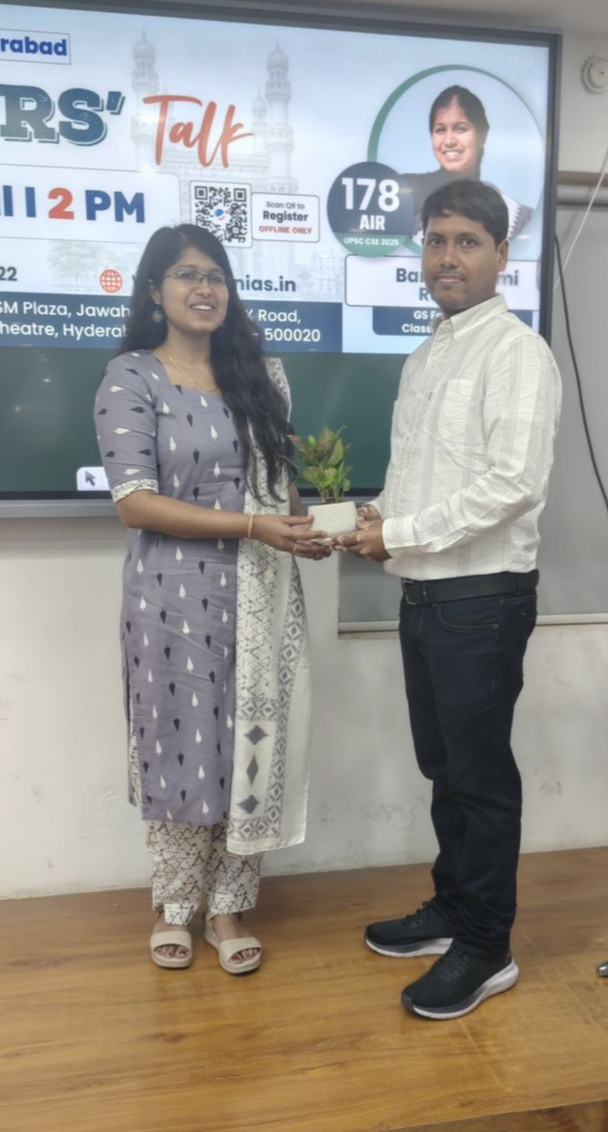
A native of Hyderabad, Laxmi Rachana secured an impressive All India Rank 178 in her fourth attempt, exemplifying perseverance and dedication. She holds a degree in Electrical Engineering from Indian Institute of Technology Indore and previously worked in Research & Development with Bajaj, contributing to advanced research including an international journal publication on rasorber structures in stealth technology.
Currently serving as an Assistant Director in the Ministry of Youth Affairs and Sports—a position she secured through her UPSC 2023 performance—Laxmi’s journey stands as a testament to resilience. After narrowly missing the final selection list in 2023, she demonstrated remarkable determination to achieve success in 2025.
A former classroom foundation student of Vision IAS Hyderabad, she highlighted the importance of consistency, disciplined study routines, and mental resilience in cracking the UPSC examination. The seminar provided aspirants with practical insights into preparation strategies, answer writing techniques, and maintaining mental well-being.
The event was presided over by Harekishna Singh, South Region Branch Head, Vision IAS, who congratulated Laxmi Rachana and described her as a role model for aspirants. “We are extremely proud of her achievement. She embodies the excellence and determination we strive to cultivate in our students. Her journey is truly inspiring for all civil service aspirants,” he said.
The session proved especially beneficial for students enrolled in the “GS Foundation Course” and other UPSC aspirants, offering both guidance and motivation.
7, Apr 2026
IInvenTiv 2026 Opens at IIT Dhanbad, Driving India’s Innovation Pipeline to Bharat Innovates 2026
Apr 07: In a major step towards positioning India’s innovations on the global stage, IInvenTiv 2026 commenced at IIT (ISM) Dhanbad as a key national feeder platform to Bharat Innovates 2026, setting in motion a powerful ecosystem to transform research into scalable, market-ready technologies. The flagship R&D fair brings together top academic leaders, industry experts, startups, and investors to create a seamless pathway from Indian laboratories to global deployment.
Aligned with national missions such as Atmanirbhar Bharat and Make in India, the event reflects India’s growing ambition to become a global hub of deep-tech innovation. By linking domestic innovation platforms with Bharat Innovates 2026, IInvenTiv is enabling structured pathways for global partnerships, capital access, and international market integration.
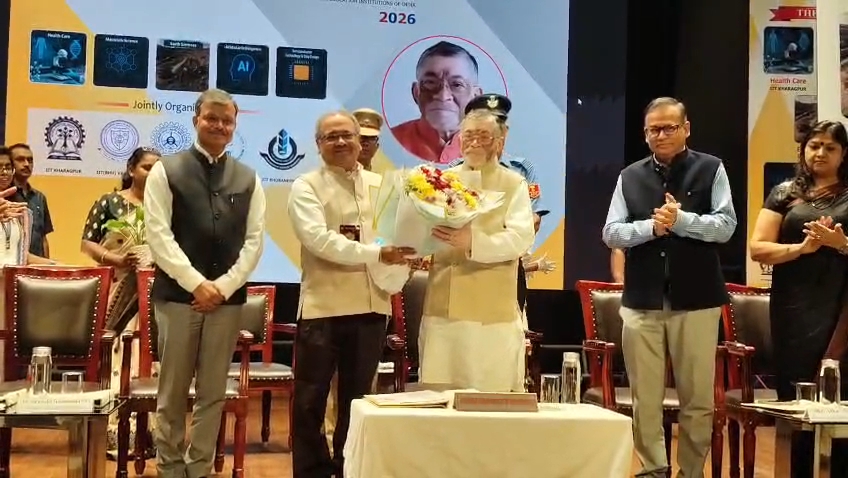
The formal inaugural session was graced by the Governor of Jharkhand, Shri Santosh Kumar Gangwar, who inaugurated the event as the Chief Guest, in the presence of distinguished Guests of Honour including Shri Athar Shahab, Managing Director, Zuari Industries Limited; Ms. Vaishali Nigam Sinha, Co-Founder, ReNew; Shri Sandeep Kumar, Vice President, Tata Steel; and Dr. Sunil K. Barnwal (IAS), CEO, National Health Authority. The dignitaries collectively emphasized the importance of innovation-led growth, sustainability, and strong industry- academia linkages in shaping India’s technological future.
The inaugural day also featured a high-level Roundtable on Research, Development and Innovation (RDI), bringing together leading academic figures including Prof. Sukumar Mishra (Director, IIT ISM Dhanbad) along with Directors of IITs, NITs, and premier institutions, alongside industry leaders and venture capitalists. The discussions focused on scaling innovation in strategic sectors, building robust commercialization pipelines, and accelerating the transition of research into deployable technologies.
Delivering the welcome address, Prof. Sukumar Mishra, Director, IIT (ISM) Dhanbad, said:
“IInvenTiv 2026 reflects our commitment to transforming research into real-world impact. By bringing together academia, industry, startups, and investors, we are building a seamless pipeline where innovations can be validated, scaled, and taken to the global stage through Bharat Innovates 2026.”
In his address, Shri Santosh Kumar Gangwar, Governor of Jharkhand, described IInvenTiv 2026 as a transformative platform shaping India’s innovation-driven future. Recalling India’s legacy as a global knowledge leader, he emphasized the need to convert research into societal solutions and enterprise, and highlighted advancements across AI, healthcare, semiconductors, and materials. He underscored national initiatives such as Atmanirbhar Bharat and NEP 2020, urging youth to innovate with discipline and vision towards a developed India by 2047.
Ms. Vaishali Nigam Sinha, Co-Founder, ReNew, termed IInvenTiv 2026 as a reflection of New India’s intellectual ambition, noting that innovation is now a necessity amid climate and technological transitions. She highlighted India’s rapid progress in clean energy and emphasized that the ReNew Centre of Excellence will play a key role in skilling, inclusion, and enabling a just energy transition, particularly in coal-bearing regions.
Shri Sandeep Kumar, Vice President, Tata Steel, described IIT (ISM) as a cradle of innovation, stressing that curiosity-driven thinking is the foundation of progress. He highlighted the importance of industry-academia collaboration in driving meaningful R&D, and encouraged students and researchers to pursue bold ideas that can translate into scalable industrial solutions.
Dr. Shirshendu Mukherjee, Managing Director, Wadhwani Innovation Network, emphasized that true progress lies in translating science into societal impact. He noted that the Wadhwani Centre of Excellence will act as a bridge between research, industry, and national capability, fostering a systems-driven approach to innovation, skilling, and entrepreneurship.
Shri Athar Shahab, Managing Director, Zuari Industries Limited, highlighted India’s dependence on imported industrial technologies and stressed the need for indigenous innovation and manufacturing capabilities. He called for deeper collaboration between academia and industry to create self-reliant, innovation-driven industrial ecosystems.
Dr. Sunil K. Barnwal, CEO, National Health Authority, spoke about India’s strong digital health foundation under Ayushman Bharat and the Ayushman Digital Mission, highlighting the potential of AI-driven predictive and preventive healthcare. He emphasized that innovation built on digital public infrastructure can enable a connected, intelligent healthcare system for the future.
Centres of Excellence Inaugurated
A major highlight of the inaugural day was the inauguration of two key Centres of Excellence. The ReNew Centre of Excellence is focused on enabling a coal-to-green transition, providing skilling opportunities and sustainable livelihoods for communities dependent on coal-based economies.
The Wadhwani Innovation Network Centre of Excellence on Critical Minerals, backed by significant investment, aims to drive research, innovation, and capacity building across the critical minerals value chain, strengthening India’s capabilities in clean energy technologies, advanced manufacturing, and strategic resources. Both centres reflect a strong emphasis on sustainability, inclusivity, and future-ready innovation ecosystems.
Technology Demonstration and Innovation Showcase
The event also witnessed the unveiling of Technology Demonstration Zones, showcasing over 150 innovations across sectors such as Artificial Intelligence, healthcare, semiconductor technology, materials science, and earth sciences—demonstrating India’s growing strength in deep-tech innovation and readiness for global scaling.
Plenary Session 1 (Day 1): Semiconductor Technology and Chip Design
The first plenary session focused on semiconductor technology and chip design, moderated by Prof. Devendra Jalihal (Director, IIT Guwahati). Speakers including Prof. V. Kamakoti, Prof. Rangan Banerjee, Shri Raghu Panicker, and Dr. Wasi Uddin deliberated on building a robust domestic semiconductor ecosystem, emphasizing indigenous capabilities, policy support, talent development, and integration into global supply chains.
Plenary Session 2 (Day 1): Artificial Intelligence
Moderated by Prof. T. N. Singh (Director, IIT Patna), this session brought together leading voices from academia, industry, and investment. The panel deliberated on scaling AI innovations, highlighting applications in infrastructure, energy, and digital systems, while stressing the importance of ethical AI, data governance, and investment frameworks.
Plenary Session 3 (Day 1): Material Sciences
The session on material sciences, moderated by Prof. Amit Patra, explored next-generation materials and their industrial applications. Experts emphasized the need for global collaboration, commercialization pathways, and sustainable material innovations to support sectors such as clean energy and advanced manufacturing.
Plenary Session 4 (Day 1): Healthcare Innovations
Moderated by Prof. Suman Chakraborty, this session focused on healthcare and life sciences innovations, with discussions on digital health ecosystems, biotech advancements, and scalable healthcare delivery models. The integration of public digital infrastructure with innovation ecosystems emerged as a key theme.
Plenary Session 5 (Day 1): Earth Sciences
The final plenary session, moderated by Prof. Sukumar Mishra, highlighted sustainable mining, advanced exploration technologies, and resource management strategies. Experts emphasized balancing economic growth with environmental sustainability, supported by technology and policy innovation.
The day concluded with a fireside chat with venture capitalists, offering insights into investment trends, startup scaling strategies, and global market integration.
On the concluding day (Day 2), the programme will feature academia-to-business (A2B) matchmaking and startup pitching sessions, which will deliberate on bridging innovation with industry adoption and investment opportunities. Expert sessions on innovation ecosystems and digital public infrastructure will further enrich the discourse, followed by a concluding session outlining the roadmap ahead.
As a strategic precursor to Bharat Innovates 2026, IInvenTiv 2026 is poised to identify and elevate India’s most promising innovations to the global stage, reinforcing the country’s emergence as a leader in deep-tech innovation, collaboration, and entrepreneurship.
7, Apr 2026
Seeti 2.0 puts Meghalaya on the global culinary map through deep cultural immersion
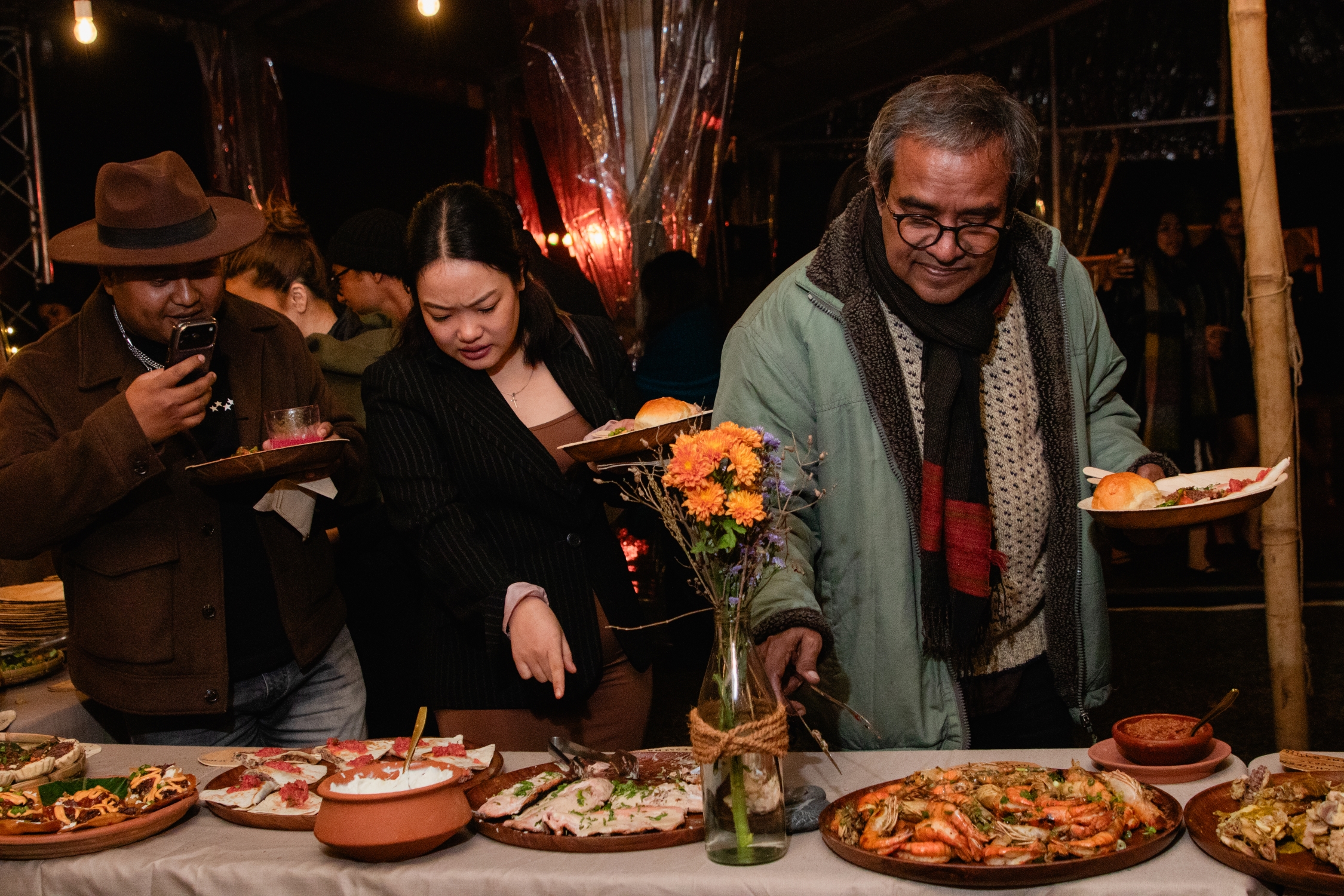
Shillong, April 6, 2026: Seeti 2.0, a never-before-seen five-day culinary immersion initiative, brought together around 50 chefs, creators, and storytellers for an experience designed to go beyond conventional food tourism in Meghalaya. Unlike typical food festivals, Seeti 2.0 focused on deep cultural engagement, with participants experiencing Meghalaya through its communities, landscapes and traditions.
Seeti Movement is a platform for people in the food industry to come together at different locations and experience not only the space, but also celebrate the generosity of feeders. The guests give back to each other or to the environment. Rooted in a pillar of generosity, it seeks to reawaken the spirit of Atithi Devo Bhava, fostering a culture of respect, openness, and shared value. Rather than fleeting engagement, it builds lasting ideas, collaborations, and intellectual capital beyond the event itself.
“This year, Seeti 2.0 Meghalaya Experience decided to do things differently. Keeping our mission in mind, we explored how we could work in the North East and introduce it to our storytellers, so they can carry the food, craft, and culture of Meghalaya forward. We wanted to understand what we could give to Meghalaya, and what we could introduce to the rest of the world as well. This year, Seeti 2.0 Tables in the Clouds not only focused on the food of India and the food industry, but also directly invited local chefs to curate experiences, and to share and participate in our panel discussions,” said Priyadarshini Raje Scindia, Co-Founder of the Seeti Movement.
The Seeti 2.0 Meghalaya experience was preceded by nearly a year of on-ground research and curation, with the team mapping Meghalaya’s landscapes, communities and food systems to identify locations and narratives that best represent the state’s diversity. This translated into carefully designed experiences set in unique and context-rich environments, from curated meals following the visit to the sacred forest, to immersive sessions at tea estates overlooking Umiam Lake, allowing participants to engage with the cultural and ecological significance of each setting rather than viewing them as standalone destinations. The programme was also structured around the cultural identities of Meghalaya’s Khasi, Jaintia and Garo communities.
“Designed as a cultural platform rather than a conventional food event, Seeti focused on creating deeper connections between our Storytellers and local contexts. In many food-led events, the deeper conversation gets lost if it is only about food. We wanted each experience to reflect something iconically rooted in the place. A key aspect of the initiative was its emphasis on participation over observation, allowing visitors to experience food within its cultural and social context. People begin to feel a sense of ownership when they experience something meaningful, whether it is an experience at the sacred forest, a tea estate or a community meal,” said Sid Mewara, Co-Founder of the Seeti Movement.
Mewara also noted, “Many visitors arrived with a limited understanding of regional cuisines. There is a perception that it is only very spicy or non-vegetarian food, but once people experience it, they realize the depth and diversity, from vegetarian dishes to subtle flavours that can be cherished among the locals at breathtaking venues”.
The Seeti 2.0 Meghalaya programme also highlighted how local food systems are inherently sustainable. Organizers pointed to practices such as local sourcing, low carbon consumption, use of whole ingredients and community-based food systems as examples of long-standing ecological balance.
“The initiative also reinforced the importance of responsible and respectful tourism, encouraging visitors to engage with heritage spaces such as sacred forests and community-owned ecosystems. The initiative also highlighted how food can serve as an entry point into larger conversations around identity, sustainability and responsible tourism. The idea was to balance heritage and modernity, with visits to contemporary dining spaces alongside traditional settings, offering a holistic perspective on the evolving Northeastern urban culture,” said Priyadarshini.
While the on-ground programme involved around 50 participants, organizers said its impact is designed to scale through Live and post-event storytelling through its carefully selected guests, which included world-renowned chefs, hoteliers, investors, traditional media, new age content creators, and marketing professionals. Seeti 2.0 aimed to enable its guests to become its storytellers, to accelerate inbound tourism for the State.
Seeti 2.0 Meghalaya Experience was also designed to merge with Meghalaya Government’s existing food festival, Culinary Cascades, where Seeti 2.0 storytellers were again able to directly meet farm-to-table vendors and chefs, as well as hold a panel on the future of Meghalaya’s food, craft, and journey.
The founders of Seeti 2.0 also highlighted the role of Meghalaya Government’s Support in enabling the initiative, noting that proactive coordination by state agencies helped facilitate access and logistics across locations. When a state comes forward and supports an initiative like this, it allows us to build something much larger than an event. It creates an ecosystem that organically surpasses the event.
Following the success of Seeti 2.0 Meghalaya edition, the experience has emerged as a scalable model for cultural tourism in India, with organizers positioning the platform as a format that can be adapted across states by combining food, community engagement and storytelling at offbeat locations. The event also includes a long-form film documenting the experience, with participants serving as storytellers, carrying narratives to wider audiences.
6, Apr 2026
Onix Expands Google Cloud Partnership to Accelerate Enterprise AI & Data Transformation
New York, April 6, 2026 — Onix, a leading Data and AI services-as-software company, today announced a major expansion of its strategic collaboration with Google Cloud, aimed at accelerating enterprise-scale cloud, data, and AI transformation.
At the core of this collaboration is Onix’s proprietary Wingspan platform, an agentic AI and data modernization solution that enables enterprises to achieve business outcomes up to three times faster than traditional consulting models. The platform introduces an industry-first Semantic Twin model, designed to provide enterprise context and business ontology for AI agents, enabling faster and more accurate decision-making.
As organizations move beyond AI experimentation toward full-scale production, demand is rising for partners that can deliver speed, accountability, and measurable return on investment. Onix addresses this shift through its structured AI Innovation Hub and outcome-driven delivery model, which allows enterprises to transition from concept to production at greater speed and scale. The company reports that thousands of AI agents powered by its platform are already deployed across Fortune 500 environments.
“AI success is defined by what runs at scale, solving business workflows,” said Sanjay Singh, CEO at Onix. “Through our expanded collaboration with Google Cloud, we are redefining how enterprises execute cloud, data, and AI transformation. Our AI-assisted, IP-led approach is built for speed, scale, and accountability, enabling organizations to unlock the full ROI of the AI-powered enterprise.”
The expanded collaboration is anchored around three key pillars:
- Joint Go-to-Market and Vertical Investment: Focused expansion of Onix’s Google Cloud business units, supported by joint GTM strategies and investments to address enterprise demand across multiple industry verticals.
- Unified Platform Power: Deployment of the Wingspan platform to automate data modernization and accelerate AI enablement, turning AI-ready data into reality within weeks rather than years.
- Outcome-Based Enterprise Model: Transition from traditional large project teams to AI-assisted, IP-driven delivery pods that prioritize measurable business KPIs and deliver outcome-based results.
“Generative AI is fundamentally changing how businesses operate, fueling a new era of cloud innovation,” said Victor Morales, Vice President, GSI and Consulting Partnerships at Google Cloud. “By leveraging Google Cloud’s advanced generative AI capabilities, Onix can help customers unlock insights, improve operations, and drive productivity.”
Through this strengthened collaboration, Onix and Google Cloud aim to help enterprises move from AI ambition to operational reality, delivering scalable and validated solutions that create long-term competitive advantage.
6, Apr 2026
Europe accounts for half of the world’s top 10 seasonal chocolate markets: Euromonitor International
London, UK – From Easter eggs in the UK and Germany to refined gifting boxes in France and Switzerland, Europe continues to dominate the seasonal chocolate industry, accounting for half of the world’s top 10 seasonal chocolate markets by value, according to market intelligence company Euromonitor International.
Among those top markets, the fastest value growth in 2025 is being recorded in Switzerland (23%), Germany (18%) and France (18%). However, this surge is largely price-driven rather than demand-led, reflecting the impact of tariffs and the passthrough of high cocoa commodity costs. Outside of Europe, the US, Japan, Canada, Brazil and Australia appear on the ranking.
Meanwhile, the global seasonal chocolate market reached USD 16 billion globally in 2025, underlining the category’s enduring importance even as consumers become more price conscious. According to Euromonitor International’s Voice of the Consumer: Lifestyle Survey, fielded January to February 2026, 29% of global consumers tend to eat snacks during the holidays, a figure that remains unchanged from 2025.
Carl Quash III, global insights manager for snacks at Euromonitor International, said: “Despite chocolates made with costly cocoa still in market and evolving geopolitical risks, like global conflicts and SNAP food restrictions, demand for seasonal chocolate is holding up better than others because of the strong emotional and tradition-driven value assigned to it.”
Retail takes the lead as supermarkets shape Easter chocolate innovation
Supermarket retailers have emerged as some of the most dynamic innovators in the seasonal chocolate space, with retailers such as Aldi, M&S, Waitrose and Costco driving growth through curated collections, limited-edition ranges and experience-led products that tap into consumer demand for novelty and shareability.
According to Quash: “Supermarkets are uniquely positioned in that they hold large consumer reach with real-time visibility into purchasing behaviour, emerging preferences and now more tapped into social media trends – even displaying visually striking ‘Dubai-style’ chocolates and other pistachio-infused creations for example. Unlike traditional retailers, supermarkets provide scale for testing limited editions, rotating seasonal offerings and fulfilling consumer affordability demands through private labels. Retailers are also evolving to quickly reposition brand identity and create in-store experiences that feel fresh, relevant and exclusive.”
Climate change and geopolitical tensions impact the market in the coming years
While seasonal chocolate continues to show strong global growth, the underlying story is less about rising consumption and more about rising costs. Value gains across key markets are being driven primarily by higher prices linked to the ongoing cocoa supply crisis, itself exacerbated by climate change and sharp harvest decline in major producing countries. At the same time, geopolitical tensions, including trade disruptions and tariffs on key inputs such as cocoa butter, sugar and dairy are adding further pressure to already strained supply chains.
Quash added: “Behind the headline growth in Easter chocolate lies a more complex reality. Climate-related disruptions to cocoa production, combined with geopolitical pressures on trade and inputs have pushed prices higher globally, meaning consumers are often paying more for less, even as the emotional importance of seasonal chocolate remains unchanged.”
Read more insights on Chocolate Confectionery at Euromonitor’s Insights Hub to explore how global trends, pricing pressures and innovation are shaping the future of seasonal chocolate.
6, Apr 2026
Darjeeling to Host ‘Colours of India 2026’ Showcasing Classical Music and Dance on April 15
Darjeeling is set to witness an evening steeped in India’s rich cultural heritage as Swaranjali Delhi presents Colours of India 2026 Darjeeling, a celebration of Indian classical vocal, instrumental music, and dance. The event is being organised in association with Hakimpara Nritya Malancha and Himalaya Kala Mandir.
Scheduled for April 15, 2026, the programme will take place at the Himalaya Kala Mandir, Donovan Park on Hill Cart Road, beginning at 5 PM onwards. The event aims to bring together renowned artists and emerging talents on one stage, offering audiences a vibrant glimpse into India’s diverse classical traditions.

The evening will feature performances by noted artists, including Smt Sangita Chaki, Shri Subrata De, Pt Subir Adhikary, Ms Roushni Sarkar, Ms Hrishita Das, and Ms Sampurna Biswas, along with disciples of Smt Iswari Chhettri. The event will be anchored by Smt Moumita Biswas.
Organisers say the initiative is part of an ongoing effort to promote and preserve Indian classical arts while creating platforms for both established performers and young disciples to showcase their talent.
Open to all art enthusiasts, the event invites audiences from Darjeeling and nearby regions to experience an enriching cultural evening.
For further details and RSVP, interested attendees can contact Swaranjali Delhi and NrityaMalancha Siliguri at 9910300319 or 9434006943, or visit www.swaranjali.org and www.nrityamalancha.com.
Shreyas Webmedia Solutions is the official media partner.


