


6, Apr 2026
Crypto, Compliance, and Clarity: India’s Parliamentary Discourse Since 2025
India’s relationship with crypto assets has never been simple, but what is unfolding inside Parliament reflects a shift beyond the usual debates around bans and permissions. The sessions running through 2025 and into early 2026 have taken on a more structured tone. Lawmakers are no longer focused on defining virtual digital assets; instead, discussions are increasingly centred on financial flows, compliance mechanisms, and the broader potential of the underlying technology for public use. This shift suggests that India’s crypto policy is becoming more structured and enforcement-oriented, while conversations continue around enabling innovation and participation.
One of the more notable data points to emerge from recent sessions is the state-wise breakdown of TDS collected on crypto transactions. The numbers indicate strong growth. Nationwide collections rose from roughly 221 crore rupees in 2022–23 to over 511 crore rupees by 2024–25. Maharashtra alone contributed 293.40 crore rupees of that latest figure, accounting for a significant share of the country’s crypto tax revenues. Karnataka also recorded substantial growth, increasing from just under 39 crore rupees to nearly 134 crore rupees during the same period.

The regional trends are equally revealing. Delhi, which recorded relatively low collections in 2023–24, saw a sharp increase to over 28 crore rupees the following year, indicating growing participation in crypto-related activities. Telangana, on the other hand, saw a decline in collections, while states such as Uttar Pradesh and Bihar continued to report comparatively lower figures. Overall, the data reflects a market that is expanding but remains concentrated in key financial and technology-driven regions rather than being evenly distributed across the country.
The regulatory response has focused on strengthening oversight and compliance. Virtual digital assets have been brought under the framework of the Prevention of Money Laundering Act, providing greater regulatory clarity for stakeholders. Authorities have also taken steps to address non-compliant offshore platforms by issuing notices and restricting access where necessary. In parallel, enforcement agencies have acted against instances of financial misconduct linked to digital assets, with investigations leading to asset seizures and legal proceedings in certain cases.
In early 2026, onboarding requirements for crypto platforms were further strengthened. The updated KYC framework now includes measures such as liveness verification, geo-tagged data, and bank account validation to enhance user authentication. These steps are aimed at improving transparency and traceability within the ecosystem. Additionally, over 13,800 law enforcement personnel have been trained to handle crypto-related investigations, supported by digital forensic capabilities.
At the same time, discussions in Parliament continue to highlight the potential of blockchain technology beyond trading. The National Blockchain Framework is being explored for applications in public administration, with examples such as e-stamp systems in Maharashtra and mobile-based authentication solutions in Madhya Pradesh already in operation. These developments point to a broader approach that balances regulatory oversight with the exploration of technological use cases.
Taken together, recent parliamentary discourse reflects a more defined policy direction. The focus is on enhancing transparency, strengthening compliance, and exploring practical applications of blockchain technology. As the ecosystem evolves, the emphasis will likely remain on maintaining this balance while supporting sustainable growth.

- 0
- By Neel Achary

6, Apr 2026
AIIMS Delhi Introduces Virtual Reality Facility to Enhance Medical Training
All India Institute of Medical Sciences Delhi has introduced a state-of-the-art virtual reality (VR) training centre aimed at enhancing medical education and clinical training for students.
The new facility uses immersive VR technology to simulate real-life medical scenarios, allowing students to practice procedures and decision-making in a controlled, risk-free environment. This approach is expected to strengthen practical skills and improve confidence before handling actual patients.
According to institute officials, the initiative is part of a broader effort to integrate advanced technology into medical training and keep pace with global standards in healthcare education. The VR centre will support learning across multiple disciplines, offering interactive modules tailored to various medical specialties.
The launch marks a significant step toward modernizing medical education in India, providing students with innovative tools to gain hands-on experience and improve patient care outcomes.
6, Apr 2026
Harshit Rana Reaches Kolkata Ahead of KKR vs PBKS Clash in IPL 2026
Indian pacer Harshit Rana has arrived in Kolkata ahead of the upcoming Indian Premier League 2026 match between Kolkata Knight Riders and Punjab Kings.
Although not part of the playing squad for this fixture, Rana is expected to be present to support his team from the sidelines. His arrival has generated excitement among fans, especially in Kolkata, where KKR enjoys strong local backing.
The much-anticipated clash between KKR and PBKS is set to draw significant attention, with both teams aiming to strengthen their position in the tournament. Rana’s presence is likely to boost team morale as they prepare for the crucial encounter.
6, Apr 2026
Major Boost to Pilgrimage: Telangana CM Initiates ₹225 Crore Basara Temple Upgrade
The Chief Minister of Telangana, A. Revanth Reddy, laid the foundation stone for a ₹225 crore redevelopment project at the Gnana Saraswati Temple in Basara.
The project is aimed at improving infrastructure and providing better facilities for devotees visiting the temple. Key plans include upgrading amenities, expanding accommodation, and enhancing the overall environment while preserving the temple’s cultural and spiritual significance.
Speaking on the occasion, the Chief Minister highlighted the government’s focus on promoting religious tourism and ensuring a comfortable experience for pilgrims. The initiative is also expected to boost tourism and support the local economy.
The temple, dedicated to Goddess Saraswati, is one of the most important pilgrimage sites in the region and attracts thousands of devotees every year.
6, Apr 2026
The Potbelly Curates an Evening of Live Sarod and Dining in Delhi
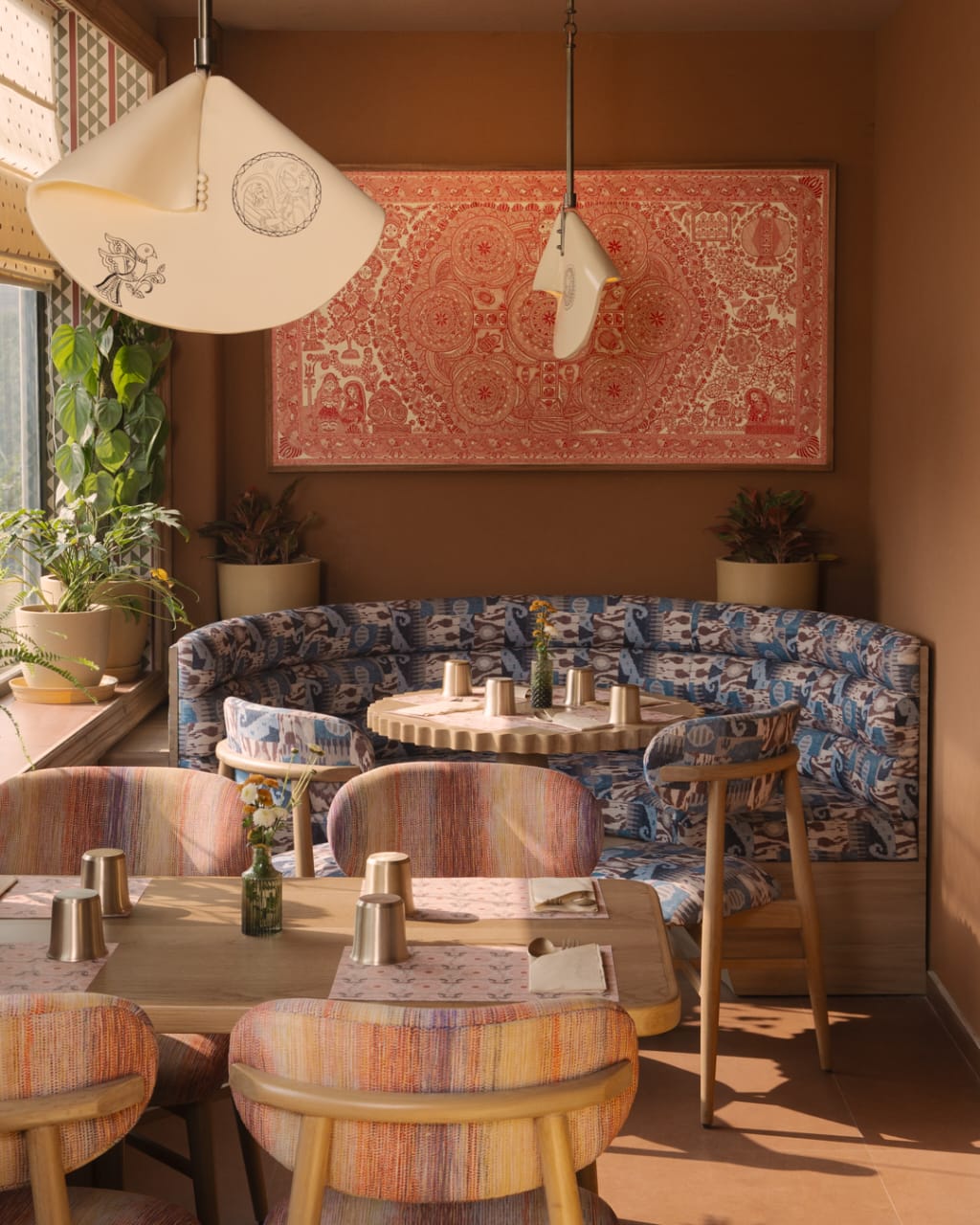
New Delhi, 6th April 2026: The Potbelly, a restaurant brand with over 15 years of experience in bringing regional Indian cuisine into the mainstream, will host a live performance by sarod player Madhav Kalra at its Delhi outlet. The initiative reflects the brand’s continued effort to extend its space beyond dining, creating a platform for emerging artists while remaining rooted in the culinary traditions of Bihar.
6, Apr 2026
KEZAD Group Attracts AED 147 Million in New Projects Across Al Ain and Abu Dhabi
Five new projects span more than 84,000 sqm and create 500 jobs, extending KEZAD’s strong 2025 growth momentum
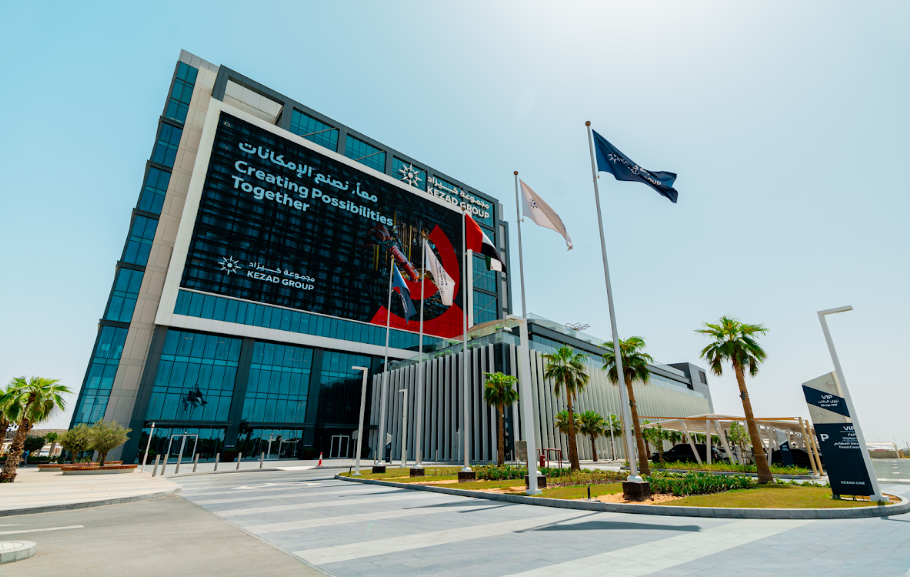
Abu Dhabi, UAE – 06 April 2026: Khalifa Economic Zones Abu Dhabi – KEZAD Group, one of the largest operators of integrated and purpose-built economic zones in the region, today announced that it has attracted five new industrial and logistics projects across KEZAD Al Ain and KEZAD Al Ma’mourah – Abu Dhabi, with investors committing a combined investment of AED 147 million, a total footprint of over 84,000 square metres, and the creation of 500 jobs.
The projects include Haber/Elixir, which will establish an oilfield chemicals blending facility; Grand Line Industries, which will set up a car cleaning products manufacturing facility; Precent Enterprises Metals Coating, which will develop a metal forming and coating facility; Unibal Group Investment, which will develop its second industrial and logistics warehousing project in the Emirate of Abu Dhabi and its first project in KEZAD Al Ain (Unibal Park II). Meanwhile, Al Lul Transport & General Contracting, will develop a major industrial and logistics warehousing project in KEZAD Al Ma’mourah.
The projects add to the momentum KEZAD built in 2025, when it reached 73.6 sq km of leased land, recording 3.3 sq km of net new land leases, with 67 per cent of total land leases linked to industrial and manufacturing activity. The AD Ports Group’s Economic Cities & Free Zones cluster, which KEZAD Group is a part of, also reported AED 2.87 billion in revenue in 2025, up 45 per cent year on year.
Abdullah Al Hameli, Chief Executive Officer, Economic Cities & Free Zones, AD Ports Group, said: “These new projects reflect steady demand for industrial and logistics assets that support real economic activity in Abu Dhabi. The combined scale of investment, the diversity of sectors involved, and the 500 jobs these projects are expected to create are the highlights of these projects. This is the kind of growth that strengthens Abu Dhabi’s industrial base in practical terms, adding production capability, warehousing capacity, and long-term value across the wider trade ecosystem.”
Four of the projects are in KEZAD Al Ain, where they represent a little more than a combined 37,400 square metres, AED 47 million in investment, and 200 jobs. The fifth project, located in KEZAD Al Ma’mourah in Abu Dhabi, represents more than 46,500 square metres, AED 100 million in investment, and 300 jobs, making it the largest of the five by both value and employment.
The latest agreements show that businesses continue to choose KEZAD for infrastructure that is ready, connected, and built for growth. From specialist chemicals and metal processing to warehousing and logistics development, these projects add depth to KEZAD’s industrial offering and support its role in enabling investors to scale with confidence in the emirate of Abu Dhabi.
The new agreements come at a time when KEZAD continues to expand its industrial and warehousing base. In 2025, the Economic Cities & Free Zones cluster delivered 146,000 square metres of new warehouse capacity, while maintaining 91 per cent warehouse occupancy despite this additional supply. KEZAD also continued to advance specialised hubs including Metal Park, Rahayel Auto and Mobility City, Agtech Park, and Abu Dhabi Food Hub, widening its offer across core industrial sectors.
As Abu Dhabi continues to strengthen its industrial and logistics base, KEZAD Group remains focused on enabling investors with integrated solutions that bring together industrial land, warehousing, utilities, and connectivity within one operating environment.
6, Apr 2026
SUD Life puts customers at the center of its technology-led transformation
Mumbai, Apr 06: Star Union Dai-ichi Life Insurance (SUD Life) has strengthened its customer experience with the deployment of a proprietary AI-enabled voice bot and a series of operations-led enhancements to improve service efficiency. The Voice Bot is designed to bridge the gap between the insurer and its customers by enabling faster access to policy-related information, quicker service resolution, and reducing reliance on manual touchpoints.
These initiatives support the company’s goal of making insurance simpler and more accessible to customers across life stages.
The AI-powered voice bot is a significant addition to SUD Life’s technology–led customer experience transformation, as the company eyes deeper insurance penetration in the country.
Available in 2 Indian languages—English and Hindi and offering 24×7 assistance, the Voice Bot simplifies insurance interactions by helping customers access policy details, check premiums due and payment status, and get answers to policy-related queries and services, and the Voice Bot will help you raise the service requests. It supports existing policyholders with faster servicing while also assisting new customers with product information. By reducing reliance on human intervention, the innovation reduces wait times and delivers accurate information, thereby enhancing service efficiency and customer trust.
The solution received external validation when it was awarded “Best Use of Technology to Enhance Customer Experience” at the UBS Forums (Insurance Summit), reinforcing the company’s leadership in insurance tech adoption.
For SUD Life, the initiative reflects its focus on leveraging automation and conversational AI to create seamless, scalable, and efficient service models.
Complementing this innovation, SUD Life has bolstered its backend operations to ensure faster and more efficient service delivery. Increased adoption of ECS and auto-debit mandates have streamlined premium collections, reduced policy lapses, and improved persistency ratios.
Process automation in payouts, including workflow-enabled systems and auto-receipting of online renewal premiums, has minimized manual errors, ensured timely premium updates, and reduced administrative burden for both customers and service teams.
SUD Life has also simplified its operations to enable a clearer and more transparent premium handling process that is aligned with the recent regulatory and tax changes.
Further enhancing its customer-first approach, SUD Life’s “You Matter” wellness and self-service app serves as an integrated platform that allows policyholders to seamlessly access policy details and self-service options but also gain from wellness tips such as guided yoga and fitness sessions.
Together, these digital and operational enhancements reflect a shift towards a more customer-centric insurance ecosystem that goes beyond traditional servicing.
“At SUD Life, we are constantly innovating to enhance customer experience and strengthen feedback mechanisms as we take insurance to the hinterland. Our focus is not just on leveraging technology, but also on making it simple even for those who are not tech-savvy. We will continue to drive operational improvements to make insurance more affordable and accessible, while ensuring that more people are financially protected,” said Abhay Tewari MD & CEO, SUD Life .
SUD Life remains committed to its broader goal of scalable growth while maintaining service quality across its expanding customer base. With over 1.52 crore lives covered, 6000+ employees, and 170+ offices, robust technology-driven operations are critical to sustaining consistency, and speed. The company will continue to develop future-ready insurance services that blend human support with intelligent automation.
6, Apr 2026
Varun Dhawan Unboxes Fossil’s Big Tic, Bringing the Y2K Energy Back
Following the reintroduction of its iconic Big Tic collection, Fossil brings the spotlight onto the relaunch through a candid unboxing moment featuring India brand ambassador Varun Dhawan. Reviving a cult-favourite from the late ’90s and early 2000s, the Big Tic returns with its signature ana-digi display and animated scrolling seconds blending nostalgia with a fresh, contemporary edge with two collections: Machine and Y2K.

In a recently released Instagram Reel, Varun Dhawan is seen unboxing a Fossil box two distinct iterations from the Big Tic collection, offering a first-hand take on how the watches translate into everyday style.
He first picks up the Big Tic Machine FS6165, calling out its “Y2K watch vibe” and noting that it feels like “not just a time-telling watch, but something that has a personality of its own.” With its gold-tone stainless steel case and signature animated digital seconds, the piece leans into a bold, expressive aesthetic that taps into the resurgence of retro-inspired style.
He then styles the Big Tic Machine FS6157, highlighting its versatility, sharing that he “likes it a lot,” especially for how seamlessly it pairs across looks “whether you’re wearing boots or shoes,” adding that “if you want to look formal, it fits the bill.” Designed with a black stainless steel case and brown leather strap, the watch brings a more grounded, wearable take on the Big Tic design, balancing statement with everyday ease.
6, Apr 2026
Noatum Ports Safaga Terminal – Egypt Receives STS and RTG Cranes, Enhancing Connectivity Across the Red Sea
Abu Dhabi, UAE – 06 April 2026: Noatum Ports, the international ports operating arm of AD Ports Group (ADPORTS:ADX), today confirmed the delivery of three new ship-to-shore (STS) and six rubber tyred gantry (RTG) cranes to its new multipurpose terminal in Safaga, Egypt, marking a crucial step ahead of the opening later this year of a major new commercial maritime gateway on the Red Sea in southern Egypt.
The Super Post-Panamax-class cranes made by Shanghai Zhenhua Heavy Industries Co. Ltd (ZPMC), a leading global manufacturer of industrial cranes, were successfully delivered following ocean transport from China, confirming the commencement of phased operational activities at Noatum Ports – Safaga Terminal, subsequent to the completion of major infrastructure development works.
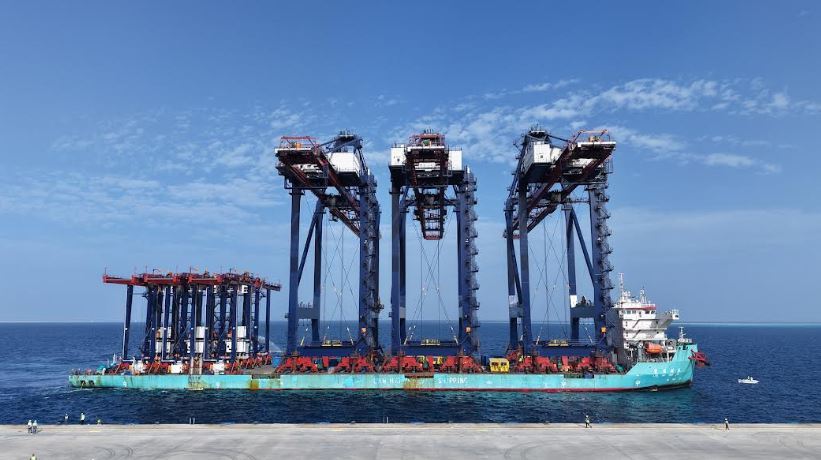
Strategically located on Egypt’s Red Sea coast, Noatum Ports – Safaga Terminal is poised to be the first internationally operated port terminal in the Upper Egypt region of southern Egypt, serving as a key gateway for the region and strengthening connectivity across Egypt, the Middle East, Africa, and global shipping routes. Designed to handle containers, general cargo, dry and liquid bulk, and Ro-Ro cargo, the terminal will support regional and international trade flows while delivering high productivity, deep draft capabilities, and best-in-class port operations, in addition to playing a central role in enabling industrial development across Upper Egypt and the wider Red Sea region, including container trade, project cargo for industrial and green energy infrastructure, and mining logistics.
Mohammed Al Tamimi, Chief Executive Officer of Noatum Ports, said: “The arrival of the STS and RTG cranes marks a key operational milestone for Noatum Ports – Safaga Terminal, ahead of its opening later this year as a major gateway for economic development in southern Egypt. This milestone signals the transition from development to operations at a strategically important location. The terminal will serve as a key Red Sea gateway, supporting global trade flows and contributing to Egypt’s economic growth.”
Noatum Ports – Safaga Terminal will span approximately 810,000 m2, featuring a 1,000-metre quay wall designed to handle up to 450,000 TEUs, alongside 5 million tonnes of dry bulk and general cargo, 1 million tonnes of liquid bulk, and 50,000 CEUs of Ro-Ro cargo.
The development includes administration buildings, workshops, warehouses, and authority facilities, supported by comprehensive infrastructure, including roads, utilities, and integrated security systems.
AD Ports Group has invested AED 193 million to procure the cranes for Noatum Ports – Safaga Terminal, which is expected to commence operations in the second half of 2026. The cranes form a part of a total investment of USD 200 million committed by the Group for the Safaga Terminal, following the award in 2023 of a 30-year concession to develop and operate the multipurpose terminal in partnership with Egypt’s Red Sea Ports Authority (RSPA).
The project is partially financed through a USD 115 million facility from the International Finance Corporation (IFC), with participation from the National Bank of Kuwait – Egypt (NBK – Egypt) and other institutional investors, as announced by the Group in February 2026. The IFC managed co-lending portfolio programme carries a tenor of 15 years and reflects strong international confidence in AD Ports Group, as well as Egypt’s strategic role in the global supply chain.
The new terminal forms part of AD Ports Group’s broader strategy to develop and operate high-performance port assets across high-growth trade corridors, particularly in Egypt, one of the Group’s most important international markets. The successful delivery of the cranes reflects Noatum Ports’ long-term commitment to investing in advanced infrastructure and state-of-the-art equipment, reinforcing its role in delivering safe, efficient, and reliable terminal operations worldwide.
6, Apr 2026
Keturah Resort to reinforce UAE’s place among world’s fastest-growing wellness destinations
Developer reveals four ultra-luxury waterfront mansions and 110 luxury apartments secured at Ritz-Carlton Residences
Dubai, UAE, 6th April; 2026: Investors have secured four ultra-prime waterfront mansions and more than half of the luxury apartments at The Ritz-Carlton Residences at Keturah Resort, the Middle East’s first fully wellness-certified resort in Dubai.
Located on the shores of Dubai Creek and adjacent to the Ras Al Khor Wildlife Sanctuary, the Resort continues to advance steadily, with construction activity continuing as planned in recent weeks, luxury developer Keturah said in a project update today.
The gated community comprises 12 Creek-side mansions of 42,000 sq ft, eight residential buildings with 193 apartments – 110 now sold – a five-star Ritz-Carlton boutique hotel, a standalone wellness centre, and a private marina with moorings for yachts up to 120 feet.
With eight remaining mansions priced in the AED335 million to AED363 million range, Keturah is confident of continued interest from buyers, many aiming to make Dubai their home. The developer also believes the resort will help reinforce the UAE’s $40.8 billion wellness economy.
The UAE ranks first in the latest global five-year wellness growth figures, and Talal M. Al Gaddah, CEO and Founder of the Keturah luxury brand, says this reflects the UAE’s Wellbeing 2031 agenda to make the country a global leader in quality of life.
“The UAE’s wellness economy is already the fastest-growing in the MENA region, as a direct result of genuine intent, and Keturah Resort is our contribution to that vision,” says Talal.
“Dubai recognises that there has been a clear shift in how luxury real estate is defined and valued, with buyers now asking whether a home will improve their health, enhance sleep, lift mood, support family wellbeing, and strengthen their connection to nature.”
Added Talal: “Dubai’s luxury property market has always emerged from periods of uncertainty with renewed momentum. We see high-net-worth capital continuing to flow from international buyers, particularly those seeking freehold assets underpinned by a globally recognised hospitality brand.”
A recent Keturah survey of Dubai real estate brokers showed that the majority of global investors in luxury real estate want to live in the city, not just own property. It also found that lifestyle quality and wellness are key factors shaping luxury purchasing decisions.
According to the latest Global Wellness Institute (GWI) rankings, the UAE is No.1 globally for five-year wellness growth. In the GWI’s 2025 report it also led the MENA region in wellness real estate ($1.4 billion), spa revenue ($2.9 billion), and personal care and beauty ($14.8 billion).
Meanwhile, the Emirates has been growing faster than any other MENA country in public health, prevention and personalised medicine, physical activity and workplace wellness. Reflecting these trends, the Keturah Resort, is certified by Delos, the US-based wellness real estate and technology firm, and the International WELL Building Institute.
Management under The Ritz-Carlton brand brings residents a full range of personalised attention, including dedicated concierge and butler services and in-residence dining. They also have access to the Keturah Wellness Centre featuring a 5-star Spa, health & fitness club, multiple yoga rooms and organic health care facility.
The resort features over 550 meters of waterfront promenade and 80,000 sqm of landscaped green spaces. The nearby sanctuary’s natural mangroves attract over 20,000 birds of 67 species, including the renowned greater flamingo.


